
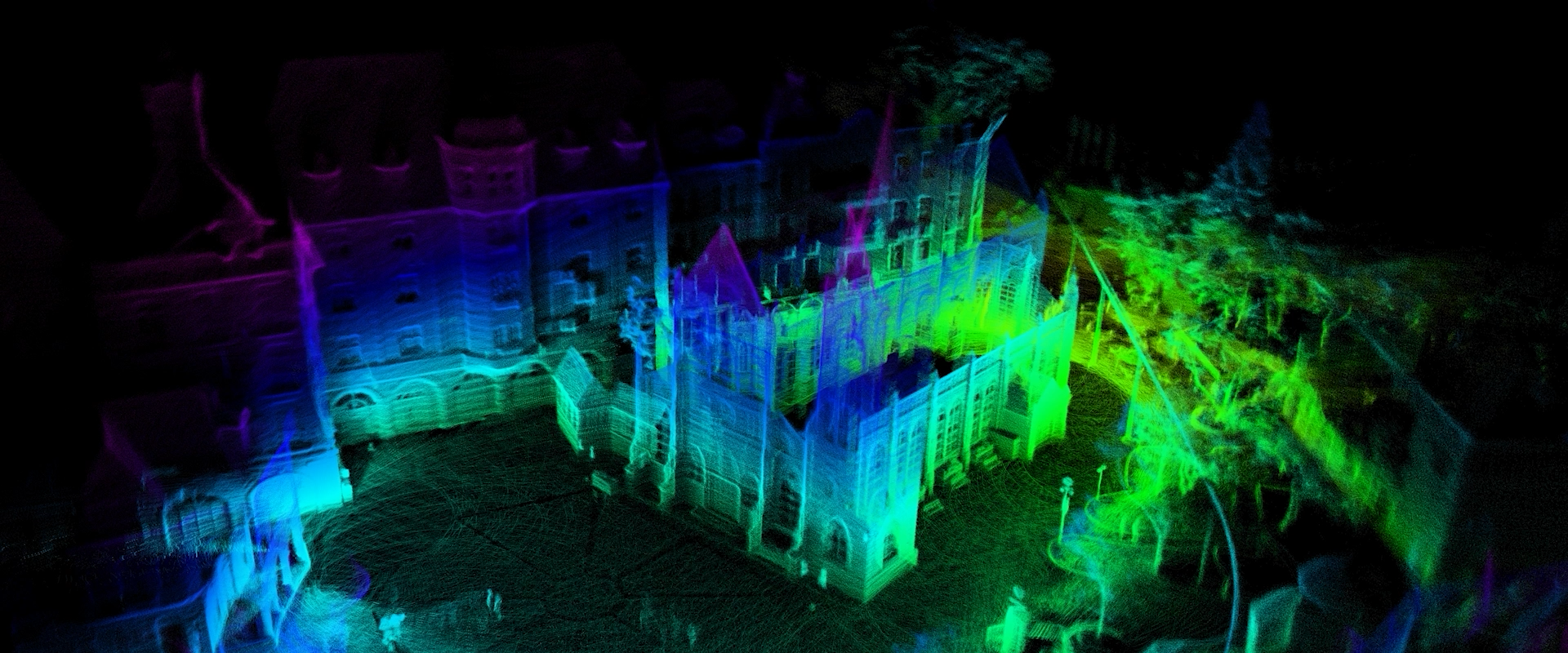
Industrial automation is rapidly becoming the foundation of modern manufacturing, logistics, warehousing, and smart infrastructure. As factories move toward Industry 4.0, companies are searching for technologies that improve operational efficiency, increase workplace safety, reduce downtime, and support autonomous decision-making.
Among all advanced sensing technologies, LiDAR (Light Detection and Ranging) has emerged as one of the most important tools for industrial automation. By providing real-time distance measurement, 3D environmental perception, obstacle detection, and precision mapping, LiDAR enables robots, AGVs, AMRs, and automated production systems to operate safely and intelligently.
According to the industrial automation solutions and LiDAR product ecosystem presented on the official Lidarseek industrial automation platform, modern LiDAR systems are now being widely deployed in:
- Smart warehouses
- Automated guided vehicles (AGVs)
- Autonomous mobile robots (AMRs)
- Factory safety monitoring
- Robotic navigation
- Industrial obstacle avoidance
- Smart logistics
- Precision positioning systems
- Automated inspection systems
- Intelligent manufacturing facilities
Lidarseek focuses on providing high-performance and affordable LiDAR sensors for industrial automation, robotics, autonomous driving, smart mapping, and machine vision applications. The platform includes products such as 2D TOF LiDAR, 3D mechanical LiDAR, blind-spot compensation LiDAR, automotive-grade LiDAR, and compact navigation LiDAR sensors. (lidarseek.com)
In this article, we will explore how industrial automation LiDAR systems are changing global industries, analyze major deployment scenarios, discuss practical implementation strategies, and examine why businesses increasingly rely on advanced LiDAR sensors for future-ready automation.

What Is Industrial Automation LiDAR?
Industrial automation LiDAR refers to laser-based sensing systems designed to provide machines and robotic systems with real-time spatial awareness. Unlike traditional sensors that may only detect simple object presence, LiDAR creates highly accurate digital representations of the surrounding environment.
LiDAR works by emitting laser pulses and measuring the time required for the reflected light to return to the sensor. This Time-of-Flight (ToF) measurement allows the system to calculate precise distances and generate high-resolution point cloud data.
Modern industrial LiDAR solutions can provide:
- Millimeter-level distance accuracy
- Real-time obstacle detection
- Simultaneous Localization and Mapping (SLAM)
- Dynamic route planning
- Autonomous navigation
- 2D and 3D environmental modeling
- Collision avoidance
- Machine perimeter protection
- Inventory volume scanning
- Human-machine interaction awareness
Industrial environments are often dynamic, crowded, and hazardous. Forklifts, mobile robots, conveyor systems, workers, and production equipment operate simultaneously in limited spaces. Traditional sensors like ultrasonic sensors or cameras alone are often insufficient under low-light, dusty, reflective, or rapidly changing conditions.
LiDAR solves many of these problems by offering:
- Stable operation under varying lighting conditions
- High-speed scanning performance
- Wide-angle environmental detection
- Reliable detection of moving and static objects
- Accurate long-range sensing
- Better environmental adaptability
These capabilities make LiDAR an essential technology for modern industrial automation systems.
Why LiDAR Matters in Smart Manufacturing
Smart manufacturing requires machines to understand their environments with high accuracy and minimal latency. Traditional factory automation relied heavily on fixed programming, predefined movement paths, and physical barriers.
However, modern smart factories require flexibility.
Production lines now change rapidly to accommodate:
- Customized manufacturing
- Dynamic warehouse layouts
- Collaborative robotics
- Autonomous logistics systems
- Flexible assembly workflows
- Real-time inventory management
LiDAR provides the environmental intelligence required for this transition.
According to industrial automation deployment scenarios discussed within the Lidarseek ecosystem, LiDAR technology supports:
- Real-time navigation
- Autonomous material transport
- Virtual safety perimeter monitoring
- Smart warehouse optimization
- Machine coordination
- Industrial mapping and inspection (lidarseek.com)
Factories using LiDAR-enabled automation systems benefit from:
1. Increased Productivity
Autonomous systems reduce manual intervention and optimize operational workflows.
2. Enhanced Safety
LiDAR-based safety zones help prevent collisions between humans, robots, forklifts, and machinery.
3. Lower Operational Costs
Automation minimizes labor-intensive tasks and improves long-term efficiency.
4. Better Data Visibility
LiDAR-generated point cloud data provides real-time operational insights.
5. Flexible Scalability
Factories can reconfigure robotic workflows without rebuilding physical navigation infrastructure.
AGV and AMR Navigation Using LiDAR
One of the most important industrial automation applications for LiDAR is autonomous navigation.
AGVs (Automated Guided Vehicles) and AMRs (Autonomous Mobile Robots) are now widely used in:
- Warehouses
- Manufacturing facilities
- Distribution centers
- Hospitals
- E-commerce logistics hubs
- Smart factories
Traditional AGVs often relied on magnetic strips or QR code guidance systems installed on factory floors.
These methods had several limitations:
- Expensive infrastructure modification
- Limited flexibility
- Difficult maintenance
- Inability to adapt to changing environments
LiDAR-based navigation eliminates these limitations.
By combining LiDAR with SLAM algorithms, AGVs and AMRs can:
- Build real-time maps
- Determine precise positioning
- Detect dynamic obstacles
- Recalculate routes instantly
- Navigate without physical guidance infrastructure
Lidarseek offers multiple LiDAR solutions suitable for robotic navigation and industrial mobility systems. Products such as the PAVO-LS-10H provide high-precision 2D scanning, 270° coverage, and ROS compatibility for robotic integration. (lidarseek.com)
The advantages of LiDAR-guided AGVs include:
Flexible Path Planning
Robots can dynamically avoid temporary obstacles.
Reduced Infrastructure Costs
No need for magnetic strips or floor markers.
Higher Warehouse Efficiency
Autonomous systems optimize transport routes.
Improved Safety
Robots slow down or stop when people or equipment enter safety zones.
Accurate Positioning
LiDAR supports centimeter-level navigation accuracy.
As warehouse automation continues growing globally, LiDAR-powered AGVs are becoming standard infrastructure for modern logistics operations.
Industrial Obstacle Avoidance Systems
Industrial obstacle avoidance is critical for preventing workplace accidents and equipment damage.
Factories contain many potential hazards:
- Moving forklifts
- Robotic arms
- Conveyor systems
- Human operators
- Automated vehicles
- Storage racks
- Temporary obstacles
LiDAR sensors continuously monitor surrounding environments and create virtual safety zones.
When objects or personnel enter predefined areas, the system can:
- Trigger alarms
- Slow machine operation
- Stop robotic movement
- Redirect autonomous vehicles
- Notify operators
Unlike traditional safety systems, LiDAR-based safety monitoring provides:
- Adjustable safety boundaries
- Real-time environmental awareness
- Multi-object tracking
- Better adaptability to layout changes
- Reduced false alarms
The commercial industrial automation examples published within Lidarseek’s technical content demonstrate how LiDAR-based safety systems significantly reduce near-miss incidents and improve factory safety management. (lidarseek.com)
LiDAR obstacle avoidance systems are especially important in:
- Smart warehouses
- Automated logistics facilities
- Heavy machinery environments
- Mining operations
- Port automation
- Industrial transportation systems
- Robotic manufacturing cells
3D LiDAR in Industrial Automation
While 2D LiDAR is commonly used for navigation and perimeter detection, 3D LiDAR provides much richer environmental perception.
3D LiDAR systems generate dense point cloud data that allows machines to understand:
- Object shape
- Surface geometry
- Environmental depth
- Multi-layer obstacle information
- Vertical clearance
- Complex industrial environments
Industrial automation increasingly requires 3D awareness because many operational environments are vertically complex.
For example:
- Warehouses contain multi-level shelves.
- Production lines include elevated equipment.
- Autonomous forklifts operate in varying height conditions.
- Robotic arms require spatial depth awareness.
Lidarseek offers advanced 3D LiDAR solutions including the LSLidar CX128 and Hesai XT32M.
The LSLidar CX128 provides:
- 128 laser channels
- 200-meter detection range
- High-resolution point cloud generation
- Rain, fog, and dust filtering capabilities
- Industrial Ethernet communication (lidarseek.com)
Meanwhile, the Hesai XT32M delivers:
- 360° field of view
- 300-meter detection capability
- High point cloud density
- Zero blind range performance
- Industrial-grade reliability (lidarseek.com)
These capabilities are ideal for:
- Large industrial facilities
- Autonomous logistics systems
- Outdoor industrial robotics
- Smart port operations
- Mining automation
- High-end industrial inspection
Smart Warehousing and Logistics Automation
The rise of e-commerce has dramatically increased demand for warehouse automation.
Modern logistics centers must process:
- High inventory volumes
- Rapid shipping cycles
- Dynamic storage allocation
- Real-time inventory tracking
- Autonomous transport system









