

Introduction: Why LiDAR Supply Chain Reliability Is a Strategic Procurement Issue

LiDAR sensors have become critical components in automotive perception systems, autonomous mobile robots (AMRs), industrial automation, intelligent transportation systems, and other advanced sensing applications.
For automotive OEMs, Tier 1 suppliers, robotics manufacturers, and industrial system integrators, selecting a technically suitable LiDAR sensor is only one part of a successful procurement strategy.
The greater challenge often emerges after product selection.
A sensor may perform well during engineering evaluation, but what happens when the project moves into pilot production? Can the required quantity be supplied on schedule? Will the same hardware configuration remain available? Can replacement units maintain compatibility with the validated system? What happens if the original product reaches end-of-life (EOL)?
These questions directly affect engineering schedules, manufacturing continuity, purchasing costs, and long-term product support.
Unlike standard commodity purchasing, LiDAR procurement involves both technical and commercial dependencies. Product revisions, firmware compatibility, manufacturer production schedules, documentation availability, and sourcing arrangements can all influence supply continuity.
For enterprise procurement teams, supply chain management should therefore begin during product selection rather than after a purchase order has been issued.
This guide examines the major risks in LiDAR sourcing and provides a practical framework for managing supplier qualification, inventory planning, product lifecycle changes, alternative sourcing, and international procurement.
The objective is to help automotive and robotics OEMs establish a more resilient, traceable, and commercially predictable LiDAR supply chain.
1. Understanding the Major Risks in LiDAR Supply Chains
LiDAR supply chain risks generally fall into four interconnected categories: availability risk, manufacturing and delivery risk, product lifecycle risk, and technical configuration risk.
Understanding these categories helps procurement and engineering teams determine which controls should be established before production requirements increase.
1.1 Inventory Shortages and Supply Allocation
One of the most common procurement challenges is the difference between sample availability and production-level supply capability.
A supplier may be able to provide a small quantity for engineering evaluation but may not have sufficient inventory or confirmed replenishment capacity for a larger order.
Consider an illustrative automotive development program:
| Project Stage | Required Quantity |
|---|---|
| Initial Evaluation | 5 units |
| Prototype Development | 30 units |
| Pilot Production | 200 units |
| Subsequent Production | 500 units |
The initial requirement may be relatively easy to fulfill. However, the cumulative demand introduces different inventory and supply planning requirements.
Enterprise buyers should distinguish between four types of supply information:
- Available inventory: Units physically available and suitable for immediate allocation.
- Reserved inventory: Units already committed to existing purchase orders or customers.
- Confirmed replenishment: Additional supply supported by a confirmed procurement or production arrangement.
- Estimated future availability: A forecast that remains subject to manufacturer capacity and market conditions.
These categories should never be treated as interchangeable.
Before issuing a purchase order, buyers should request an updated availability statement covering the exact product model, quantity, configuration, and expected dispatch schedule.
For larger projects, it is also important to understand whether supply is being allocated from existing inventory, newly manufactured units, or multiple batches.
1.2 Manufacturing Lead Time and Delivery Uncertainty
A quoted lead time is not necessarily the same as a confirmed delivery commitment.
LiDAR delivery schedules may be influenced by:
- Manufacturer production capacity
- Availability of electronic and optical components
- Existing customer orders
- Product configuration requirements
- Quality inspection and release procedures
- Export documentation and international logistics
Procurement teams should request a breakdown of the supply timeline rather than relying on a single estimated number of days.
| Supply Stage | Information to Confirm |
|---|---|
| Order Processing | PO acceptance and commercial confirmation |
| Product Allocation | Inventory reservation or production allocation |
| Manufacturing | Estimated production completion |
| Quality Release | Inspection and product release status |
| Dispatch | Expected shipment date |
| Transportation | Shipping method and estimated transit time |
| Delivery | Destination and agreed Incoterms |
A useful procurement practice is to distinguish between order confirmation, dispatch commitment, and estimated arrival.
These are three different milestones.
For projects with strict development or production deadlines, buyers should also establish an escalation procedure for material changes to the delivery schedule.
1.3 Product Discontinuation and End-of-Life Risk
Product lifecycle management is especially important in automotive and industrial applications, where system development and deployment may extend over multiple years.
A LiDAR model selected during early development may eventually be discontinued, replaced, or modified by its manufacturer.
The consequences can extend beyond simply purchasing a different sensor.
Potential impacts include:
- Mechanical mounting changes
- Electrical interface differences
- Modified communication protocols
- Firmware compatibility issues
- SDK or software integration changes
- Additional validation and engineering work
- Changes to approved purchasing documentation
OEMs should establish a product lifecycle monitoring process for critical LiDAR components.
Where manufacturers provide Product Change Notifications (PCN) or End-of-Life (EOL) notifications, procurement and engineering teams should define how these notices are received, reviewed, and approved.
A practical lifecycle control process should cover:
- Product status monitoring.
- Review of manufacturer change notifications.
- Assessment of technical and commercial impact.
- Identification of potential replacement products.
- Engineering validation and approval.
- Final purchasing or last-time-buy decisions, where appropriate.
A newer model should not automatically be considered a drop-in replacement.
Even products within the same manufacturer’s product family may require separate engineering evaluation.
1.4 Hardware, Firmware, and Configuration Changes
Product model numbers alone may not provide sufficient configuration control for long-term procurement.
Two LiDAR units carrying the same model designation may require additional verification if their hardware revisions, firmware versions, accessories, or configuration settings differ.
Relevant control information may include:
- Product model and part number
- Hardware revision
- Firmware version
- Serial number
- Interface and connector configuration
- Approved accessories
- SDK or software version
- Manufacturing or inspection records, where available
For projects involving repeated purchases, engineering should establish an approved configuration baseline.
Procurement teams can then use this baseline when placing subsequent orders and checking delivered products.
The objective is to prevent an unverified configuration change from entering a system that has already completed engineering validation.
2. Build a Stage-Gate Procurement Strategy
A reliable LiDAR procurement strategy should follow the development and production lifecycle of the application.
Purchasing requirements during engineering evaluation are different from those during pilot production or commercial deployment.
A stage-gate approach helps ensure that technical approval, commercial commitments, and supply planning remain aligned.
Stage 1: Engineering Evaluation and Product Selection
The initial stage focuses on determining whether a LiDAR product meets the application’s technical requirements.
Engineering and procurement teams should review:
- Detection range under specified conditions
- Horizontal and vertical field of view
- Point cloud output characteristics
- Frame rate and measurement performance
- Communication interfaces
- Power requirements
- Environmental operating conditions
- Mechanical dimensions and mounting
- SDK availability and software compatibility
Procurement should also confirm the exact product model, available accessories, documentation, and sample delivery arrangements.
Recommended gate: Do not move into larger purchasing commitments until the engineering team has identified the approved product configuration and completed the necessary evaluation.
Stage 2: Prototype Development and Integration
Once the initial product has been selected, the LiDAR sensor is integrated into the prototype system.
At this stage, supply chain management should become more closely connected with engineering change control.
Key activities include:
- Maintaining the approved product specification.
- Recording hardware and firmware revisions.
- Confirming connector and cable requirements.
- Reviewing mounting and electrical compatibility.
- Tracking SDK and integration dependencies.
- Coordinating additional evaluation quantities.
Procurement should also identify whether the selected model has potential lifecycle or availability concerns that could affect subsequent project stages.
Recommended gate: Establish an approved product configuration record and a documented process for reviewing any proposed changes.
Stage 3: Pilot Production and Supply Validation
Pilot production introduces a different level of procurement risk.
Demand increases, delivery schedules become more structured, and consistency between purchasing batches becomes increasingly important.
Procurement teams should verify:
- Quantity availability
- Replenishment arrangements
- Expected production lead times
- Batch and serial number traceability
- Approved product revisions
- Incoming inspection requirements
- Warranty and replacement procedures
- Shipment scheduling
A supplier that can support sample purchases may not necessarily be able to support larger, time-sensitive requirements.
This is why pilot production should also be treated as a supply capability validation stage.
Recommended gate: Confirm that the proposed sourcing arrangement can support the expected production schedule, with clear responsibilities for availability updates and delivery coordination.
Stage 4: Commercial Production and Long-Term Support
Once a product enters commercial deployment, procurement becomes a continuous supply management activity.
The organization should establish:
- Periodic demand forecasting
- Repeat order procedures
- Inventory and replenishment reviews
- Product lifecycle monitoring
- Approved configuration control
- Alternative sourcing assessments
- Warranty and RMA procedures
- Supplier performance reviews
The purpose is to move from reactive purchasing to planned procurement.
This becomes particularly important when the LiDAR sensor is integrated into a product that will remain in production for an extended period.
3. How to Qualify and Evaluate a LiDAR Supplier
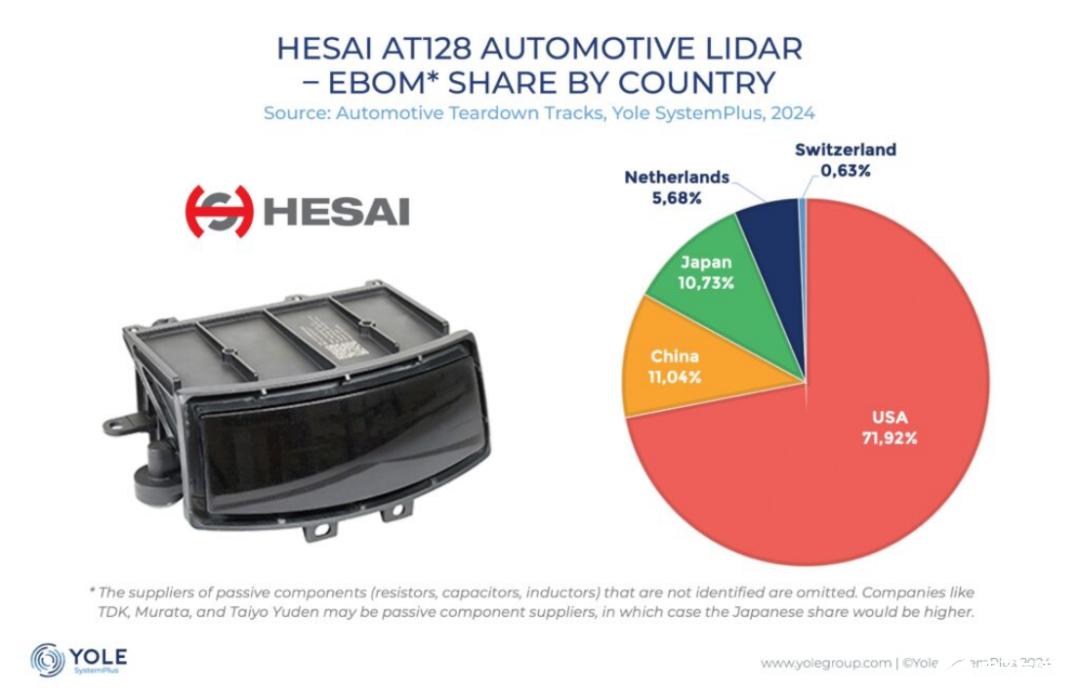
Supplier qualification should go beyond comparing unit prices or checking whether a product is listed on a supplier’s website.
For enterprise purchasing, the key question is whether the supplier can provide the required product, documentation, commercial clarity, and support within the project’s actual constraints.
A structured evaluation framework can help procurement teams compare potential suppliers consistently.
3.1 Supplier Qualification Scorecard
The following is an illustrative evaluation framework that buyers can adapt to their internal purchasing procedures.
| Evaluation Dimension | Suggested Weight | Evaluation Focus |
|---|---|---|
| Product and Technical Fit | 20% | Model accuracy, specification, configuration |
| Supply Availability | 20% | Inventory, replenishment, lead time |
| Product Traceability | 15% | Serial numbers, revisions, documentation |
| Quality and Warranty | 15% | Inspection, warranty, RMA arrangements |
| Technical Support | 10% | Documentation and engineering assistance |
| Commercial Terms | 10% | Pricing, payment, Incoterms |
| Communication and Logistics | 10% | Order updates and international delivery |
Total: 100%.
Buyers can assign a score from 1 to 5 for each category.
A possible interpretation is:
- 1: Insufficient evidence or significant gaps
- 2: Limited capability
- 3: Acceptable for the current requirement
- 4: Strong capability
- 5: Well-documented and consistently demonstrated capability
The weighted score can be calculated as:
Weighted Score = Sum of (Category Score ÷ 5 × Category Weight)
However, a high overall score should not override a critical failure.
For example, a supplier that cannot provide the required product configuration or meet a mandatory technical requirement should not be approved simply because its commercial score is high.
For automotive and other highly regulated programs, additional customer-specific qualification requirements may apply.
These may include formal quality system requirements, process audits, engineering change procedures, and documented traceability obligations.
3.2 Verify Product Source and Commercial Responsibilities
Enterprise buyers should understand the relationship between the supplier, product manufacturer, and any intermediaries involved in the sourcing process.
Useful verification questions include:
- Who is the original manufacturer?
- Can the product model and source be verified?
- What documentation accompanies the shipment?
- Who is responsible for warranty coordination?
- Who handles technical inquiries?
- What happens if the requested model becomes unavailable?
Not every sourcing partner has the same authorization status or commercial responsibilities.
Buyers should evaluate these arrangements transparently and request supporting documentation appropriate to the project.
Clear communication about sourcing arrangements is preferable to unsupported claims about official authorization or manufacturing capabilities.
4. Inventory Planning: Balancing Availability, Lead Time, and Working Capital
Inventory planning is one of the most important parts of bulk LiDAR procurement.
Holding too little inventory may expose a project to delivery interruptions. Holding too much inventory can increase working capital requirements and create risks if product configurations change or demand is reduced.
The objective is to establish a purchasing plan that reflects actual consumption, replenishment lead time, and demand uncertainty.
4.1 Understand Reorder Point and Safety Stock
A basic inventory planning method uses the reorder point.
Reorder Point = Expected Demand During Replenishment Lead Time + Safety Stock
For example, assume an integrator expects to consume 40 LiDAR sensors per month and the replenishment lead time is approximately two months.
Expected demand during lead time:
40 × 2 = 80 units.
If the company establishes an illustrative safety stock of 20 units, the reorder point becomes:
80 + 20 = 100 units.
When available inventory approaches 100 units, the purchasing team should review whether a replenishment order is required.
This is a simplified planning example. Actual safety stock should account for demand variability, lead-time variability, supplier reliability, and the business’s acceptable service level.
It should also distinguish between physically available inventory, allocated inventory, and open purchase orders.
4.2 Use Forecasts and Firm Orders Differently
Forecasts and confirmed purchase orders serve different purposes.
A forecast communicates expected future demand. A firm purchase order represents a commercial purchasing commitment, subject to its agreed terms.
For multi-stage LiDAR projects, buyers should communicate:
- Confirmed near-term purchasing quantities
- Expected future requirements
- Potential volume changes
- Required delivery windows
- Critical project milestones
Suppliers should avoid treating an uncommitted forecast as guaranteed demand.
Likewise, buyers should avoid assuming that an informal availability estimate constitutes a reserved inventory allocation.
Clear distinctions help both sides plan purchasing and supply capacity more effectively.
4.3 Consider Phased Procurement
For larger projects, phased purchasing and delivery can provide greater flexibility.
An illustrative procurement schedule might look like this:
| Project Stage | Quantity | Procurement Objective |
|---|---|---|
| Engineering Evaluation | 5 units | Initial testing |
| Prototype Development | 20 units | System integration |
| Pilot Production | 100 units | Supply validation |
| Commercial Deployment | 300 units | Planned replenishment |
The quantities are illustrative and should be adjusted to the actual program.
Phased delivery may reduce unnecessary inventory accumulation while keeping purchasing aligned with project milestones.
However, buyers should confirm whether future quantities are actually available or merely estimated.
If a supplier agrees to reserve inventory or support scheduled deliveries, the reservation period, quantity, pricing, cancellation conditions, and shipment schedule should be documented in the commercial agreement.
5. Alternative Sourcing and Multi-Brand Risk Management
Relying on a single LiDAR model or sourcing channel can expose an organization to availability, lifecycle, and commercial risks.
However, adopting a second source is not as simple as identifying another product with a similar detection range.
LiDAR products from different manufacturers may differ significantly in their measurement characteristics, mechanical design, interfaces, software dependencies, and configuration requirements.
5.1 Define Functional Equivalence Before Comparing Models
Engineering teams should first establish the application’s mandatory requirements.
These may include:
- Detection range and target reflectivity assumptions
- Field of view
- Point cloud density and output behavior
- Frame rate
- Measurement accuracy
- Environmental protection
- Power consumption
- Ethernet or other communication interfaces
- Mechanical dimensions
- Software and SDK compatibility
The alternative product should be evaluated against these requirements rather than selected solely on headline specifications.
5.2 Conduct Controlled Engineering Validation
A suitable alternative sourcing process should include:
- Technical specification comparison.
- Interface and mechanical review.
- SDK and software integration assessment.
- Performance testing under representative conditions.
- Configuration and revision verification.
- Engineering approval before production use.
Depending on the application, products from Hesai, RoboSense, Seyond, Livox, and other manufacturers may be considered.
However, different models should not be presented as automatically interchangeable.
The final selection must depend on application-specific engineering validation.
5.3 Maintain an Approved Alternative Matrix
A useful internal document is an approved alternative matrix.
| Requirement | Primary Model | Potential Alternative | Validation Status |
|---|---|---|---|
| Detection Performance | Approved model | Candidate model | Pending |
| Communication Interface | Approved configuration | Candidate configuration | Under Review |
| Mechanical Installation | Approved dimensions | Candidate dimensions | Pending |
| SDK Compatibility | Validated version | Candidate SDK | Pending |
| Environmental Performance | Approved specification | Candidate specification | Pending |
This matrix helps procurement identify alternative sourcing options without bypassing engineering approval.
It also provides a structured basis for discussions when a preferred product becomes unavailable.
6. Product Change Management, Traceability, and Quality Control
A resilient supply chain requires more than knowing how many units are available.
It also requires confidence that the delivered products match the approved configuration.
This is particularly important when LiDAR sensors are purchased in multiple batches or used in systems that have already completed validation.
6.1 Establish Product Configuration Control
A procurement specification should identify the relevant product details, including:
- Manufacturer
- Exact model and part number
- Hardware revision, where applicable
- Firmware requirements, where applicable
- Required accessories
- Cable and connector configuration
- Documentation requirements
- Applicable inspection criteria
Any proposed deviation should be reviewed before the product is accepted for use.
6.2 Implement Batch and Serial Number Traceability
For projects requiring repeat orders, procurement and quality teams should maintain appropriate records of received units.
Depending on the product and supplier documentation available, records may include:
- Purchase order number
- Manufacturer and model
- Serial numbers
- Shipment or batch references
- Hardware and firmware versions
- Receipt date
- Inspection results
- Warranty information
Traceability can help identify affected units if a technical or quality issue emerges after delivery.
6.3 Define Incoming Inspection Requirements
Inspection requirements should be proportionate to the product and application.
A receiving inspection may include:
- Packaging and transport condition
- Model and part number verification
- Quantity reconciliation
- Serial number recording
- Accessory verification
- Visual inspection
- Basic power-on or functional checks, where appropriate
- Documentation review
Not every buyer has the equipment or authority to conduct manufacturer-level performance testing.
In such cases, acceptance criteria should clearly distinguish between receiving inspection, functional verification, and formal product qualification.
This avoids assuming that a basic incoming inspection establishes complete technical conformity.
7. Total Cost of Ownership: Why the Lowest Unit Price May Not Be the Best Option
Comparing LiDAR quotations solely by unit price can create an incomplete picture of procurement cost.
For international B2B purchases, the total cost may include:
- Product price
- International freight
- Insurance, where applicable
- Customs duties and import taxes
- Customs clearance
- Local delivery charges
- Inspection and handling
- Integration and engineering costs
- Warranty and replacement logistics
- Costs associated with delivery delays
A consistent quotation comparison should use the same product configuration, quantity, destination, warranty assumptions, and Incoterms.
7.1 Compare Commercial Terms Consistently
For example, when evaluating quotations under DAP terms, buyers should confirm the named destination and understand the allocation of responsibilities.
Under DAP (Delivered at Place) Incoterms 2020:
- The seller arranges and pays for transportation to the agreed destination.
- The seller bears the delivery risk until the goods are placed at the buyer’s disposal at the destination, ready for unloading.
- The buyer generally handles import clearance and pays applicable import duties and taxes.
- Unloading is generally the buyer’s responsibility.
The named place of destination and the applicable Incoterms version should be stated clearly in the quotation and purchase agreement.
7.2 Evaluate Supply Risk Alongside Purchase Price
A lower product price may not be advantageous if the proposed supply arrangement introduces significant schedule uncertainty, configuration risk, or additional logistics costs.
Enterprise buyers should evaluate commercial competitiveness alongside product suitability, delivery reliability, documentation, and support.
The goal is not necessarily to select the most expensive or lowest-priced supplier, but to identify the sourcing arrangement that best meets the project’s overall requirements.
8. A Practical LiDAR Supply Chain Risk Monitoring Framework
For ongoing procurement programs, risk monitoring should be a continuous activity rather than a one-time supplier evaluation.
The following risk register provides a practical starting point.
| Risk Category | Early Warning Indicator | Recommended Control |
|---|---|---|
| Inventory | Available quantity falls below forecast demand | Review replenishment and allocation |
| Lead Time | Repeated changes in estimated delivery | Update project supply schedule |
| Product Lifecycle | Manufacturer announces product changes | Initiate lifecycle impact review |
| Configuration | Hardware or firmware revision changes | Require engineering approval |
| Quality | Increased incoming inspection failures | Investigate batch and supplier records |
| Supplier Dependency | No validated alternative exists | Conduct alternative sourcing assessment |
| Logistics | Shipment delays or documentation gaps | Establish shipment milestones |
| Commercial | Unclear warranty or delivery responsibilities | Clarify contractual terms |
8.1 Prioritize Risks by Probability and Impact
A simple risk assessment can use two dimensions:
Probability: How likely is the risk to occur?
Impact: How serious would the consequences be for the project?
An illustrative scoring system assigns each dimension a value from 1 to 5.
Risk Priority Score = Probability × Impact.
For example:
| Risk | Probability | Impact | Score |
|---|---|---|---|
| Short-Term Inventory Shortage | 3 | 4 | 12 |
| Product Discontinuation | 2 | 5 | 10 |
| Minor Shipment Delay | 3 | 2 | 6 |
| Unapproved Hardware Revision | 2 | 5 | 10 |
Higher scores indicate risks that deserve closer attention.
This is a simplified management tool, not a substitute for a formal FMEA or a customer-specific risk management procedure.
The important point is to identify risks early, assign responsibility, define mitigation actions, and review them regularly.
9. How LIDARSEEK Supports Global LiDAR Procurement
For international automotive, robotics, and industrial customers, sourcing LiDAR products across multiple manufacturers can involve substantial coordination between engineering, purchasing, and logistics teams.
LIDARSEEK focuses on multi-brand LiDAR sourcing and intelligent sensing solutions for B2B customers.
Our product portfolio includes solutions from manufacturers such as Hesai, RoboSense, Seyond, Livox, and other sensing technology providers.
We support customers with several procurement-related activities.
Multi-Brand LiDAR Sourcing
We help customers identify and source requested LiDAR models based on manufacturer, part number, application, quantity, and project requirements.
Technical Product Selection
Our team can assist with product comparisons, available technical documentation, interface information, and application-related product selection questions.
Inventory and Lead-Time Coordination
We coordinate availability checks and estimated lead times according to the requested model and quantity.
For larger purchasing requirements, we can discuss supply arrangements and phased delivery based on confirmed sourcing conditions.
Prototype and Bulk Procurement
Whether a customer requires a small quantity for engineering evaluation or a larger quantity for an industrial project, we can discuss appropriate sourcing and commercial arrangements.
International Shipping and Commercial Coordination
We support international quotations and coordinate shipping arrangements according to destination, order quantity, and agreed delivery terms.
Our focus is to help purchasing and engineering teams manage multi-brand product sourcing with clearer technical and commercial information.
10. Frequently Asked Questions
What are the biggest supply chain risks when purchasing LiDAR sensors?
The most common risks include inventory shortages, manufacturing lead-time fluctuations, product discontinuation, hardware and firmware revisions, supplier dependency, and delivery uncertainty.
How can automotive OEMs reduce LiDAR supply chain risks?
OEMs should integrate procurement planning with engineering validation, supplier qualification, inventory forecasting, configuration control, and product lifecycle monitoring.
What is the difference between LiDAR sample availability and production supply capability?
Sample availability refers to the quantity that can currently be supplied for evaluation. Production supply capability concerns whether the required quantity can be sourced or manufactured repeatedly within the project’s delivery schedule.
These should be evaluated separately.
Should OEMs qualify alternative LiDAR suppliers?
Where technically and commercially justified, evaluating alternatives can improve sourcing flexibility. However, alternative products must undergo application-specific engineering validation before being approved for production.
How should companies manage LiDAR product discontinuation?
Buyers should monitor manufacturer lifecycle notifications, evaluate the impact of product changes, identify potential alternatives, and establish an engineering approval process for replacements.
What information should be included in a bulk LiDAR RFQ?
A comprehensive RFQ should identify the manufacturer, exact model, part number if available, quantity, application, technical requirements, destination, target delivery date, documentation requirements, and commercial terms.
11. Plan Your Next LiDAR Procurement Program
A reliable LiDAR supply chain is built through coordinated technical evaluation, supplier qualification, inventory planning, configuration control, and ongoing procurement management.
For automotive OEMs, Tier 1 suppliers, robotics manufacturers, and industrial system integrators, these activities are essential when moving from initial development to pilot production and commercial deployment.
A structured approach helps reduce sourcing uncertainty, improve delivery planning, and maintain better control over product configurations and purchasing requirements.
Looking for a reliable sourcing partner for your LiDAR procurement project?
LIDARSEEK welcomes inquiries from international OEMs, Tier 1 suppliers, robotics manufacturers, system integrators, and industrial procurement teams.
To help us evaluate your requirements and prepare a relevant quotation, please share:
- Required LiDAR manufacturer and model
- Estimated purchasing quantity
- Application or project background
- Destination country
- Target delivery schedule
- Technical documentation or integration requirements
Our team will review your request and assist with product sourcing, availability confirmation, technical information, and commercial quotations.
LIDARSEEK – Multi-Brand LiDAR Sourcing & Technical Support for Global B2B Projects
Website: https://lidarseek.com/
Email: sales@lidarseek.com
Contact our team to discuss your next LiDAR procurement requirement.









