

Introduction: Why Supplier Qualification Matters in Enterprise LiDAR Procurement
For automotive OEMs, Tier 1 suppliers, robotics manufacturers, and industrial automation companies, selecting a LiDAR supplier is not simply a purchasing decision. It is also a supplier risk management decision.
A company may identify a LiDAR product that meets its technical requirements and receive a competitive quotation. However, before approving a new supplier, procurement teams must answer several additional questions:
- Is the supplier’s legal business entity clearly identified?
- Can the supplier demonstrate a credible product sourcing process?
- Are the quoted models and configurations verifiable?
- Can the supplier provide the required commercial and technical documentation?
- Are delivery arrangements and product availability clearly communicated?
- Does the supplier have an appropriate process for handling quality issues and product changes?
- Can the supplier support the company’s purchasing and compliance requirements?
These questions become particularly important when purchasing involves multiple product models, international transactions, high-value orders, or recurring production requirements.
A supplier that can provide an attractive quotation may not necessarily meet an enterprise buyer’s vendor onboarding requirements.
For this reason, professional procurement organizations should establish a structured supplier qualification process before adding a new LiDAR sourcing partner to their approved vendor list.
This guide explains how to build a practical LiDAR supplier qualification framework, what documents to review, how to assess sourcing and commercial risks, and how to maintain an approved supplier base as purchasing requirements evolve.
1. Understand the Purpose of an Approved LiDAR Supplier List
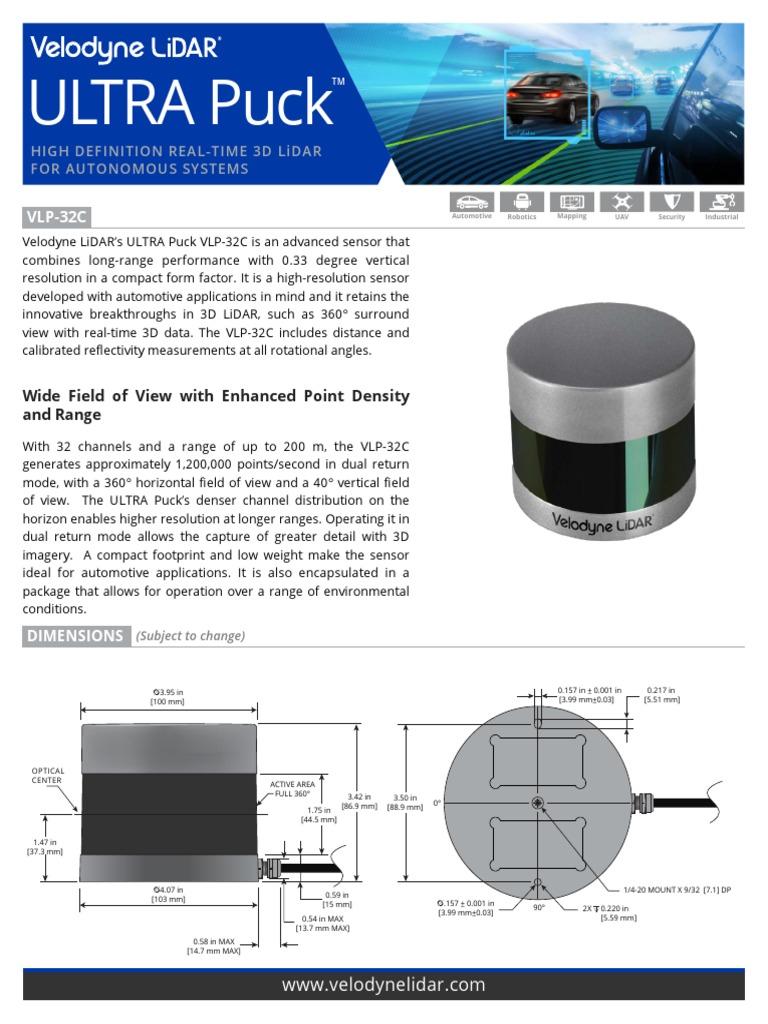
An Approved Vendor List (AVL), also referred to as an Approved Supplier List (ASL), is a controlled record of suppliers that have completed an organization’s required evaluation and approval process.
For LiDAR procurement, the list may include:
- Original equipment manufacturers
- Authorized distributors
- Independent sourcing companies
- Specialized technology suppliers
- Qualified logistics or service partners, where relevant
Not every supplier performs the same function.
For example, a LiDAR manufacturer develops and produces the sensor. An authorized distributor sells products under a manufacturer’s distribution arrangement. An independent sourcing company may coordinate product procurement, commercial quotations, and international delivery through its supply channels.
These business models should not be treated as interchangeable.
The purchasing organization should understand the actual role of each supplier and approve it according to the responsibilities it will perform.
Why Enterprise Buyers Need an Approved Supplier List
A structured AVL helps procurement organizations:
| Objective | Business Value |
|---|---|
| Supplier Consistency | Use suppliers that have passed internal qualification |
| Commercial Control | Standardize purchasing and payment arrangements |
| Product Traceability | Maintain records of product models and sourcing information |
| Risk Management | Identify supplier-related risks before purchasing |
| Procurement Efficiency | Reduce repeated onboarding work |
| Supply Flexibility | Maintain qualified alternatives where appropriate |
| Audit Readiness | Keep supplier approval records organized |
An approved supplier list should not simply be a directory of companies that have provided quotations.
It should be a controlled purchasing resource supported by documented evaluation and approval.
2. Verify the Supplier’s Legal Entity and Business Information
The first step in supplier qualification is confirming who the purchasing organization is actually doing business with.
This is particularly important in international procurement, where the sales brand, legal company name, manufacturing entity, and exporting entity may be different.
For example, a company may operate an international sales brand while issuing quotations and invoices through a registered legal entity.
This arrangement is not automatically problematic. However, the relationship between the commercial brand and the contracting entity should be clearly explained.
Key Information to Verify
| Verification Item | What Procurement Should Review |
|---|---|
| Legal Company Name | Exact registered business name |
| Registration Information | Business registration or incorporation details |
| Registered Address | Official business registration address |
| Business Scope | Whether the business activities are relevant to the transaction |
| Contracting Entity | Which legal entity will sign the agreement |
| Invoice Entity | Which entity will issue the commercial invoice |
| Payment Beneficiary | Whether the beneficiary matches the agreed contractual arrangement |
| Contact Information | Official company email, telephone, and business address |
For cross-border purchasing, procurement teams should also confirm whether the proposed supplier can legally and practically perform the agreed export and delivery arrangements.
Important: Distinguish Between Brand Name and Contracting Entity
A trading name or website brand does not necessarily represent the legal entity that will sign the purchase contract.
Before approving a supplier, procurement should document:
- The commercial name used during communication.
- The legal entity issuing the quotation.
- The legal entity signing the purchase agreement.
- The entity issuing the invoice.
- The entity receiving payment.
- The party responsible for delivery and after-sales obligations.
If these entities differ, the commercial relationship and responsibilities should be explained and documented.
This reduces uncertainty during supplier onboarding, payment approval, and future dispute resolution.
3. Verify the Supplier’s Relationship with the LiDAR Manufacturer

One of the most important questions in LiDAR procurement is how a supplier obtains the products it offers.
Enterprise buyers should distinguish between different supplier relationships instead of assuming that every company selling a manufacturer’s product is an authorized distributor.
Common supply models include:
A. Original Manufacturer
The manufacturer designs or produces the LiDAR product and may sell directly to customers or through its sales network.
B. Authorized Distributor
An authorized distributor has a formal distribution relationship with the manufacturer, subject to the scope and terms of the relevant authorization.
C. Independent Sourcing or Trading Company
An independent sourcing company may obtain products through commercial supply channels and coordinate purchasing, export, delivery, and customer communication.
These models can all appear in international procurement markets, but their responsibilities and documentation may differ.
What Should Procurement Request?
| Verification Item | Purpose |
|---|---|
| Manufacturer Identity | Confirm the original product manufacturer |
| Exact Product Model | Verify the model being quoted |
| Supplier Relationship | Understand whether the supplier is a manufacturer, authorized distributor, or independent sourcing company |
| Authorization Evidence | Request manufacturer-issued evidence if authorized status is claimed |
| Product Sourcing Information | Understand the proposed supply channel |
| Product Documentation | Verify the relevant technical documents |
| Transaction Responsibility | Identify the party responsible for the sale and delivery |
If a supplier claims to be an authorized distributor, procurement should verify the claim through manufacturer-issued documentation or the manufacturer’s official confirmation channels.
If the supplier is not an authorized distributor, it should not present itself as one.
A transparent explanation of the actual supply model is more useful than an unsupported authorization claim.
Procurement principle: Verify the supplier’s actual role rather than relying on marketing descriptions.
4. Assess Product Authenticity, Traceability, and Documentation
For specialized sensing equipment, product identity and documentation are important parts of supplier qualification.
Procurement teams should establish a process for verifying that the products supplied match the quoted manufacturer, model, and configuration.
Depending on the product and purchasing requirements, relevant documents may include:
- Official product datasheets
- User manuals
- Product labels and model identification
- Manufacturer part numbers
- Hardware or firmware revision information, where applicable
- Warranty information
- Available compliance documentation
- Packing lists and commercial invoices
- Batch or serial number records, where available and required
Product Traceability Questions
Before approving a supplier, consider asking:
- Can the exact manufacturer and model be identified?
- Can the supplier confirm the product configuration?
- Are the available technical documents consistent with the quoted model?
- Can relevant serial numbers or batch details be recorded when available?
- Can the supplier explain the product sourcing and delivery process?
- Is there a procedure for handling discrepancies between ordered and delivered products?
For larger procurement programs, traceability requirements should be agreed before the purchase order is issued.
Not every LiDAR product or supplier offers the same level of batch documentation or traceability. Buyers should define what is mandatory for their application and verify availability in advance.
For automotive and other regulated or customer-controlled projects, additional customer-specific quality and traceability requirements may apply.
5. Evaluate Supplier Quality Management and Issue Resolution
Supplier qualification should not stop at reviewing company registration documents and product datasheets.
Procurement teams also need to understand how the supplier handles problems after an order is placed.
A practical evaluation should cover four areas.
5.1 Incoming Product Verification
Clarify whether the supplier can support the required checks before shipment or upon receipt.
Depending on the product and contract, these may include:
- Model and quantity verification
- Packaging inspection
- Label and serial number checks
- Visual inspection
- Review of available product documentation
- Customer-specific inspection requirements
Do not assume that a supplier performs formal factory testing or product certification unless it can provide evidence.
5.2 Nonconformance Handling
Ask how the supplier manages incorrect, damaged, or nonconforming products.
A documented process should identify:
- How issues are reported
- What evidence is required
- How the issue is investigated
- Who coordinates with the manufacturer
- What corrective action may be available
- How repair or replacement responsibilities are determined
5.3 Warranty Coordination
Confirm the warranty terms applicable to the specific product and transaction.
The purchasing agreement should identify the responsible party, warranty period, exclusions, and applicable return or replacement procedures.
5.4 Corrective Action and Communication
For recurring purchasing programs, evaluate whether the supplier can communicate issues clearly and provide progress updates.
A supplier’s ability to coordinate problem resolution can be important when procurement, engineering, and quality departments are working across different countries and time zones.
6. Review Commercial Stability and Payment Risk

Payment risk is an important part of international supplier onboarding.
Before making an advance payment or issuing a significant purchase order, procurement and finance teams should verify the commercial details.
Recommended Commercial Checks
| Item | Procurement and Finance Review |
|---|---|
| Quotation | Correct legal entity, products, quantities, and currency |
| Purchase Order | Consistent with the accepted quotation |
| Contract | Clear responsibilities and commercial conditions |
| Payment Terms | Agreed payment schedule and milestones |
| Bank Details | Independently verified beneficiary information |
| Invoice | Issued by the agreed legal entity |
| Delivery Terms | Clearly stated Incoterms and named place |
| Warranty | Defined coverage and responsible party |
| Quotation Validity | Confirmed price validity period |
Bank Account Verification Is Essential
A change in bank account information should be treated as a potential payment risk.
Before transferring funds, verify any new or revised banking instructions through an independent communication channel already known to the purchasing organization.
Do not rely solely on an email requesting an urgent payment change.
For high-value transactions, finance teams should follow their internal supplier bank verification and approval procedures.
This is particularly important in international supply chains, where fraudulent payment instructions can create substantial financial losses.
7. Evaluate Delivery Capability and Supply Continuity
A supplier may be able to provide a competitive quotation for a small order but may have different capabilities when the required quantity increases.
Enterprise buyers should therefore evaluate supply capability according to actual project demand.
Key Areas to Review
Product Availability
- Is the requested quantity physically available?
- Is the inventory confirmed or estimated?
- Are the units reserved for other orders?
- Does the stock match the required product configuration?
Lead Time
- What is the estimated processing time?
- Is replenishment required?
- What is the expected manufacturer lead time?
- When can the dispatch schedule be confirmed?
Large-Volume Procurement
- Can the supplier coordinate the required quantity?
- Are partial shipments possible?
- Can delivery batches be aligned with project milestones?
- Is there visibility into future replenishment?
Product Lifecycle
- Is the model currently in production?
- Are there announced product changes?
- Is an end-of-life notice available?
- Are alternative models subject to engineering approval?
Do Not Confuse Stock Availability with Supply Forecasts
A supplier should distinguish clearly between:
| Status | Meaning |
|---|---|
| Confirmed Physical Stock | Units currently available, subject to final confirmation |
| Reserved Stock | Units allocated to a purchasing commitment |
| Replenishment in Progress | Supply being arranged but not yet available |
| Estimated Future Supply | Forecast based on expected availability |
| Confirmed Delivery Schedule | Agreed delivery arrangement supported by the relevant supply commitment |
This distinction helps procurement teams avoid making production plans based on unconfirmed inventory.
8. Establish a Practical LiDAR Supplier Qualification Scorecard
To make supplier onboarding more consistent, procurement teams can use a structured qualification scorecard.
The following is an illustrative framework that can be adjusted to internal procurement policies.
| Qualification Category | Example Weight |
|---|---|
| Legal Entity and Business Verification | 15% |
| Manufacturer and Product Sourcing Transparency | 20% |
| Product Documentation and Traceability | 15% |
| Quality and Issue Resolution | 15% |
| Commercial and Payment Controls | 15% |
| Delivery and Supply Capability | 15% |
| Communication and Technical Coordination | 5% |
| Total | 100% |
Each category can be evaluated using a 1–5 scoring scale.
Weighted Qualification Score = Sum of (Category Score × Category Weight)
However, a weighted score should not override mandatory compliance requirements.
For example, an unresolved legal entity discrepancy, unverified bank beneficiary, or unsupported authorization claim may need to result in a qualification hold regardless of the overall score.
Recommended Qualification Outcomes
| Result | Suggested Action |
|---|---|
| Approved | Supplier meets the required qualification criteria |
| Conditionally Approved | Supplier can be used subject to defined limitations or corrective actions |
| Pending Review | Additional documents or clarification are required |
| Rejected | Supplier does not meet mandatory requirements |
This approach makes supplier approval more transparent and provides an audit trail for future purchasing decisions.
9. Build a Multi-Source LiDAR Supplier Strategy
Relying on only one sourcing channel can create challenges when product availability changes or project requirements expand.
However, adding multiple suppliers without a qualification process can create more work for procurement and quality teams.
The objective should be to establish a qualified supplier base that provides purchasing flexibility without compromising product control.
A Practical Multi-Source Structure
Primary Supplier
The supplier selected for regular purchasing based on product suitability, commercial conditions, delivery capability, and internal approval.
Alternative Supplier
A qualified alternative that may support additional demand or provide another sourcing option.
Specialized Supplier
A supplier used for specific models, accessories, or technical requirements that are not covered by the primary sourcing arrangement.
Important Controls for Multi-Source Procurement
When using multiple suppliers, procurement teams should standardize:
- Approved manufacturer and model numbers
- Product configuration requirements
- Technical documentation
- Warranty expectations
- Inspection requirements
- Delivery conditions
- Product substitution approval
- Supplier performance records
A second supplier should not automatically be treated as an approved alternative for an already-qualified product.
If the proposed sourcing channel changes, procurement should review the supplier and product requirements again.
The objective is not to maximize the number of suppliers. It is to maintain enough qualified sourcing flexibility to support business continuity.
10. Maintain and Review the Approved Supplier List
Supplier qualification is not a one-time activity.
A supplier that met the company’s requirements during onboarding may experience changes in its business structure, product sourcing arrangements, delivery performance, or commercial conditions.
Enterprise procurement teams should therefore establish a periodic supplier review process.
Suggested Review Triggers
| Trigger | Recommended Review |
|---|---|
| Legal Entity Change | Reconfirm contracting and invoicing information |
| Bank Account Change | Repeat independent bank verification |
| Product Model Change | Review technical and sourcing documentation |
| Manufacturer Relationship Change | Reassess supplier role and evidence |
| Repeated Delivery Problems | Review supply capability |
| Quality Issues | Evaluate corrective actions |
| Major Commercial Changes | Review quotation and payment conditions |
| Product Discontinuation | Assess replacement and lifecycle risks |
For critical suppliers, periodic reviews may be conducted according to the company’s internal risk classification and purchasing policy.
Supplier records should include the approval date, review date, responsible department, qualification status, and supporting documents.
This helps maintain a reliable and auditable procurement process.
11. Common Mistakes in LiDAR Supplier Onboarding
Mistake 1: Treating Every Product Seller as an Authorized Distributor
Selling a manufacturer’s product does not automatically establish authorized distributor status.
Better approach: Verify the actual supplier relationship and request manufacturer-issued evidence when authorization is claimed.
Mistake 2: Approving a Brand Instead of a Legal Entity
A commercial website or sales brand may differ from the entity signing the purchase contract.
Better approach: Verify the exact contracting, invoicing, and payment entities.
Mistake 3: Accepting Incomplete Product Information
A quotation with only a general product description may be insufficient for technical and quality approval.
Better approach: Confirm the exact model, configuration, relevant documents, and traceability requirements.
Mistake 4: Ignoring Payment Verification
Unverified changes to bank details can create significant financial exposure.
Better approach: Apply independent beneficiary verification and internal payment approval procedures.
Mistake 5: Approving Suppliers Without Reviewing Delivery Capability
A supplier may support small quantities but have limitations when demand increases.
Better approach: Evaluate availability and lead time against the actual purchasing quantity and schedule.
Mistake 6: Failing to Reassess Suppliers
Supplier approval does not guarantee that all future products, configurations, and transactions remain unchanged.
Better approach: Establish review triggers and maintain updated supplier records.
12. How LIDARSEEK Supports Enterprise LiDAR Sourcing
Enterprise procurement teams often need access to multiple LiDAR product categories and manufacturers while maintaining clear commercial and technical information.
LIDARSEEK supports international customers sourcing LiDAR sensors and related intelligent sensing products for automotive, robotics, autonomous systems, and industrial automation applications.
Our sourcing portfolio covers products from manufacturers and brands including Hesai, RoboSense, Seyond, Livox, and other relevant technology providers, subject to the requested model and supply conditions.
We can assist with:
Multi-Brand Product Sourcing
Coordination of product inquiries across different LiDAR manufacturers based on customer requirements.
Model and Configuration Verification
Assistance with confirming exact product models, part numbers, and available technical documentation.
Commercial Quotations
Project-based quotations with product quantities, currency, delivery conditions, and quotation validity clearly identified.
Availability and Lead-Time Checks
Review of available stock and estimated replenishment schedules before order confirmation.
Bulk Procurement Coordination
Discussion of quantity-based purchasing requirements and potential phased delivery arrangements, subject to confirmed supply.
International Delivery Coordination
Assistance with international shipping arrangements and relevant commercial documentation according to the agreed transaction terms.
We understand that enterprise buyers need more than a product price. They need clear product information, transparent commercial communication, and realistic delivery expectations.
For companies evaluating new LiDAR sourcing options, we welcome inquiries involving individual product models, multi-item BOMs, and larger procurement requirements.
13. What Information Should You Prepare When Evaluating a New LiDAR Supplier?
If your organization is reviewing new LiDAR sourcing partners, preparing a structured supplier inquiry can make the evaluation process more efficient.
We recommend including:
| Information | Details |
|---|---|
| Required Manufacturer | Hesai, RoboSense, Seyond, Livox, or other |
| Exact Model | Product model or part number |
| Quantity | Sample, pilot, or production quantity |
| Application | Automotive, robotics, AMR, AGV, or industrial automation |
| Destination | Country and city |
| Required Delivery Schedule | Target dispatch or arrival date |
| Documentation Requirements | Datasheets, manuals, compliance or quality documents |
| Commercial Requirements | Currency, Incoterms, payment conditions |
| Supplier Onboarding Requirements | Company profile, registration, banking, or other documents required by your organization |
If your company has a standard supplier registration questionnaire or vendor onboarding checklist, you can also share the applicable requirements.
This allows the sourcing discussion to focus on the information your procurement team actually needs.
Frequently Asked Questions
1. What is an Approved Vendor List (AVL)?
An Approved Vendor List is a controlled record of suppliers that have passed an organization’s required qualification and approval process. It helps procurement teams manage supplier selection, purchasing controls, and supply chain risk.
2. How should OEMs qualify a new LiDAR supplier?
OEMs should review the supplier’s legal entity, manufacturer relationship, product sourcing information, technical documentation, quality procedures, commercial arrangements, payment controls, and delivery capability.
3. Is every company selling Hesai, RoboSense, or Livox products an authorized distributor?
No. A company may sell or source products through different commercial channels. Authorized distributor status should be verified through manufacturer-issued evidence or official manufacturer confirmation.
4. What documents should procurement request during supplier onboarding?
Common requirements include company registration documents, company profile, quotation, banking information, product datasheets, warranty information, and applicable compliance or quality documentation. Exact requirements depend on the purchasing organization’s internal policies.
5. Should a company maintain multiple LiDAR suppliers?
For some projects, maintaining more than one qualified sourcing option can improve purchasing flexibility and reduce dependence on a single channel. However, each alternative should meet the organization’s technical, commercial, and compliance requirements.
6. How often should an approved LiDAR supplier be reviewed?
Review frequency should reflect supplier criticality, purchasing volume, risk exposure, and internal procurement policy. Major changes to legal entities, bank details, product sourcing, or delivery capability should trigger an additional review.
7. Can LIDARSEEK support enterprise supplier inquiries and bulk LiDAR sourcing?

LIDARSEEK supports international B2B sourcing inquiries for multiple LiDAR brands and models. Customers can share their required products, quantities, delivery schedules, and documentation needs for review and quotation coordination.
Conclusion: Supplier Qualification Is the Foundation of Reliable LiDAR Procurement
For large OEMs, Tier 1 suppliers, robotics manufacturers, and industrial automation companies, an approved LiDAR supplier list should be more than a collection of company names and contact details.
It should be a structured procurement resource supported by legal entity verification, transparent sourcing information, product documentation, commercial controls, and ongoing supplier review.
By establishing clear qualification criteria, organizations can reduce onboarding uncertainty, improve supplier accountability, and build a more flexible sourcing strategy.
The most suitable supplier is not necessarily the company offering the lowest quotation or the broadest product catalog. It is the supplier whose business model, product sourcing, documentation, delivery arrangements, and commercial responsibilities meet the organization’s actual requirements.
Reviewing New LiDAR Sourcing Partners?
If your procurement team is evaluating LiDAR suppliers, sourcing multiple product models, or preparing a new purchasing program, LIDARSEEK welcomes your inquiry.
Send us your required product list, BOM, or RFQ, together with your target quantities and delivery destination.
Our team can help review the sourcing requirements, check product availability, and prepare a project-based quotation.
Contact LIDARSEEK
Email: sales@lidarseek.com
Website: https://lidarseek.com/
For enterprise procurement inquiries, please include your company requirements and supplier documentation checklist where applicable.









