
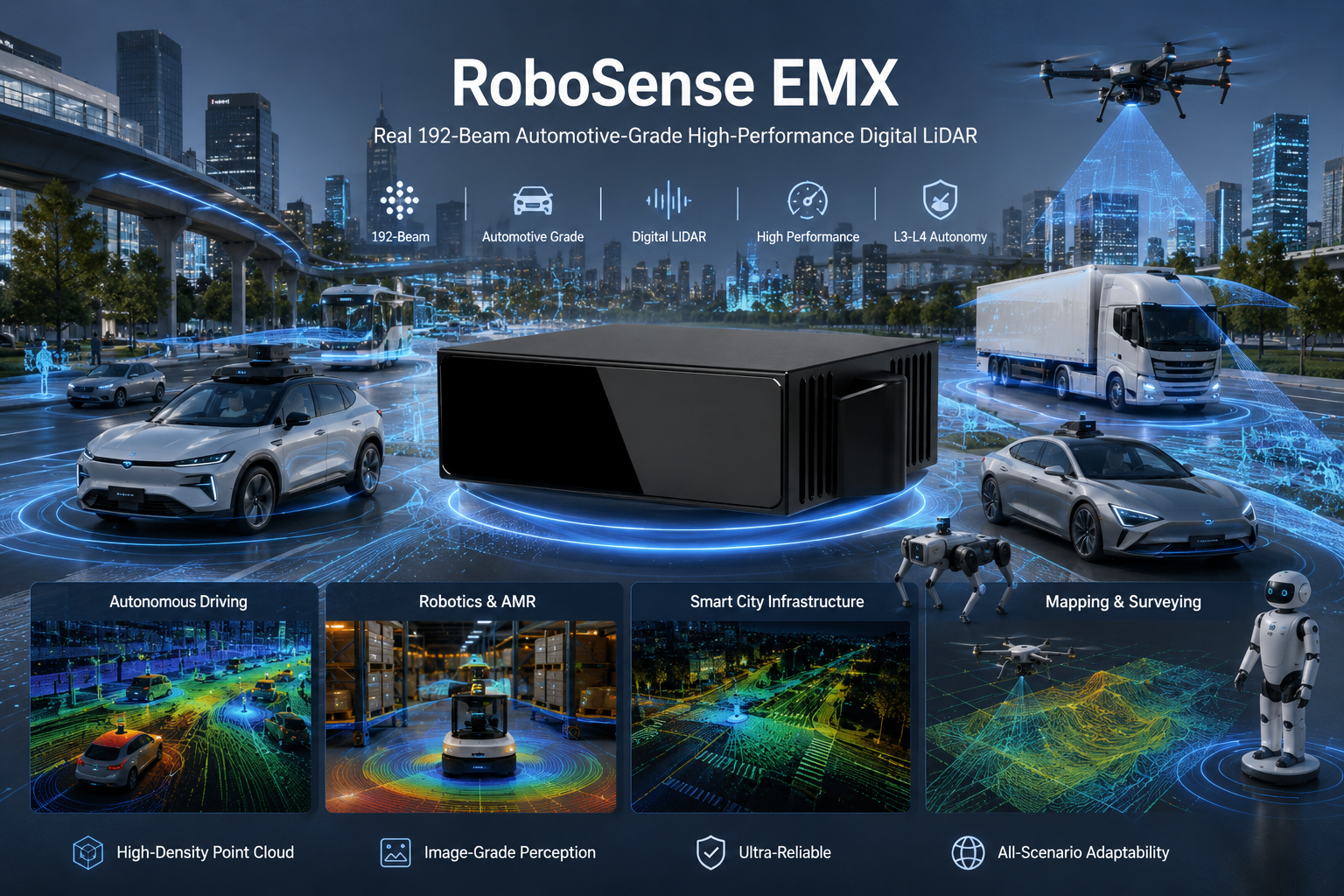
Introduction: The Autonomous Driving Revolution Is No Longer About Vehicles—It’s About Perception
The global race toward autonomous driving has entered a completely new phase. Over the past decade, vehicle manufacturers, robotics companies, and artificial intelligence developers have invested billions of dollars into creating intelligent machines capable of navigating complex environments without human intervention. While public attention often focuses on autonomous vehicles themselves, industry experts understand that the true challenge lies elsewhere. The future of autonomy depends not on how a machine moves, but on how accurately it understands the world around it.
Perception has become the most critical component of modern autonomous systems. A self-driving vehicle must continuously detect vehicles, pedestrians, cyclists, road barriers, traffic signals, lane markings, construction zones, and unexpected obstacles. More importantly, it must understand these objects in real time and make safe decisions based on constantly changing conditions. This requirement is driving unprecedented demand for advanced LiDAR sensors capable of generating highly detailed three-dimensional representations of the surrounding environment.
The RoboSense EMX was developed specifically to address this challenge. As a next-generation 192-beam automotive LiDAR sensor, the EMX combines image-level perception, long-range detection, high-density point cloud generation, and automotive-grade reliability. These capabilities make it a compelling solution for autonomous driving, robotics, intelligent transportation systems, digital mapping, and smart city infrastructure projects.
Why the LiDAR Industry Is Entering Its Most Important Growth Phase
The LiDAR market is experiencing one of the fastest growth periods in its history. Several trends are accelerating demand simultaneously. The automotive industry is pushing toward Level 3 and Level 4 autonomous driving. Logistics companies are deploying autonomous delivery robots. Manufacturing facilities are investing in intelligent automation. Governments are launching smart city initiatives. Surveying companies are creating large-scale digital twins of entire metropolitan areas.
Each of these applications depends on accurate environmental perception.
Unlike cameras, which rely on ambient light, LiDAR actively measures the environment by emitting laser pulses and calculating precise distances to surrounding objects. Unlike radar, which excels at long-range detection but often lacks fine detail, LiDAR generates dense three-dimensional point clouds that provide rich spatial information. This combination of accuracy and environmental awareness has positioned LiDAR as one of the most important sensor technologies of the coming decade.
As industry requirements become increasingly sophisticated, demand is shifting away from basic obstacle detection systems toward image-level LiDAR solutions capable of generating detailed environmental models. The RoboSense EMX represents this transition, providing a level of perception quality that aligns with the future needs of intelligent mobility and automation.
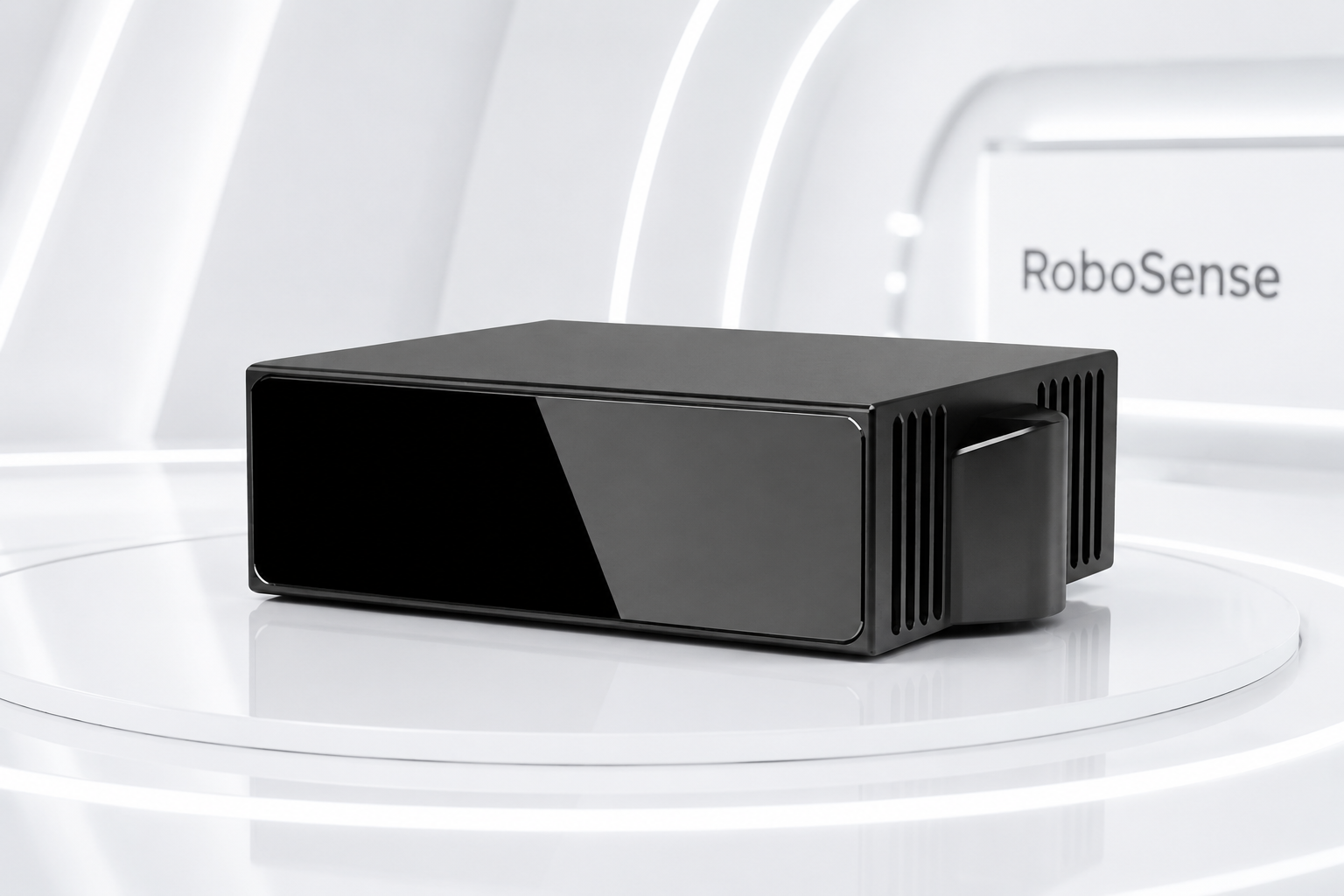
From Mechanical LiDAR to Digital LiDAR: A Fundamental Technology Transformation
The history of LiDAR development can be divided into several major generations. Early systems relied heavily on mechanical scanning architectures that rotated or moved physical components to capture environmental data. These sensors played an essential role in demonstrating the viability of autonomous driving, but they also introduced challenges related to durability, maintenance, scalability, and vehicle integration.
As the industry matured, manufacturers began pursuing digital LiDAR architectures capable of delivering higher performance while reducing complexity. This transition mirrors the evolution of digital photography, where modern imaging sensors replaced traditional film-based technologies.
The RoboSense EMX embodies this next stage of LiDAR evolution. By combining a highly optimized digital architecture with a true 192-beam configuration, the EMX provides exceptional point cloud density while maintaining the reliability standards required for automotive deployment. This combination is critical because future autonomous vehicles will require sensors that can perform consistently across millions of kilometers under diverse environmental conditions.
The shift toward digital LiDAR is not merely a technological upgrade—it represents a fundamental change in how perception systems are designed, manufactured, and integrated into intelligent platforms.
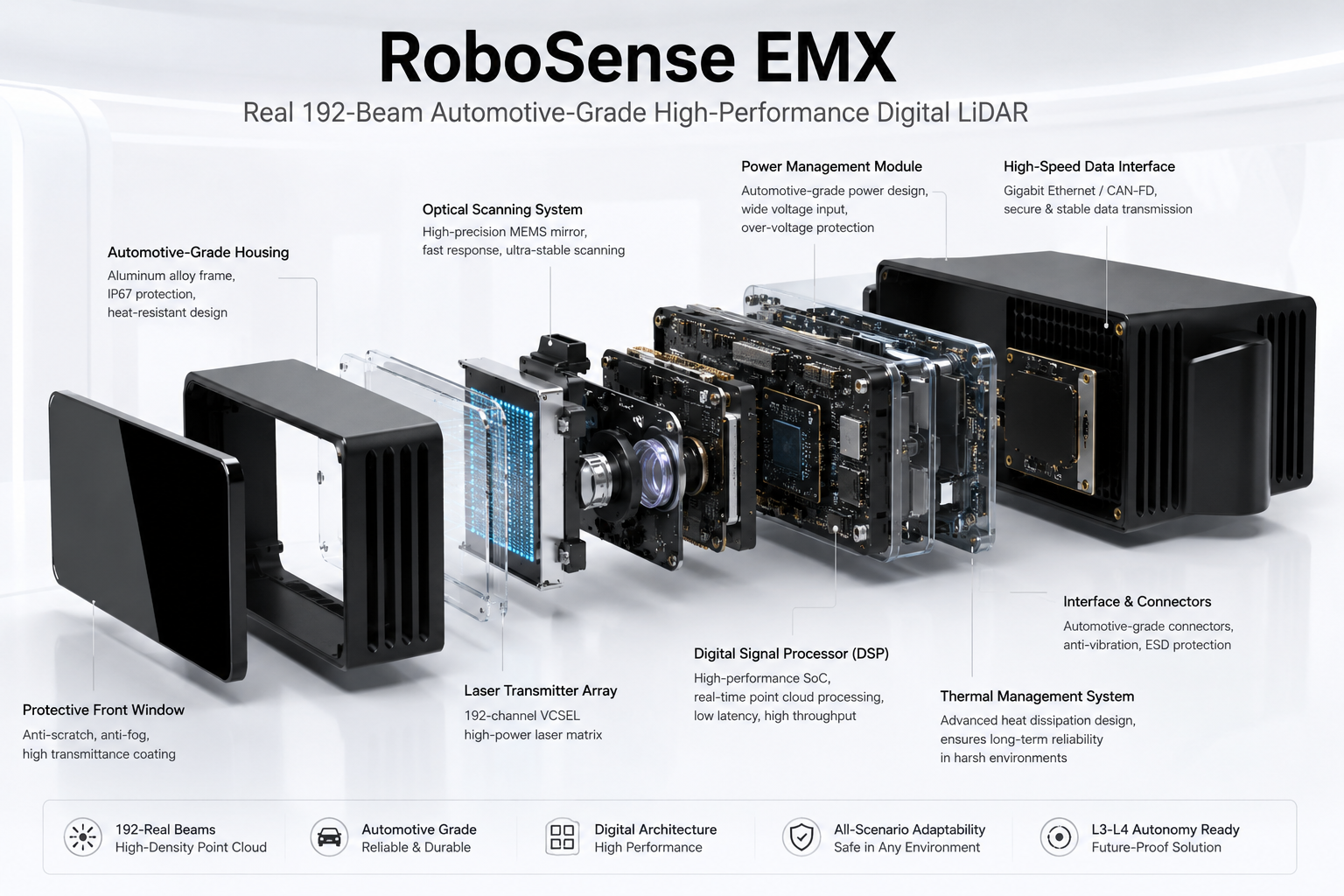
Why 192-Beam LiDAR Is Becoming the New Benchmark for Autonomous Driving
When evaluating LiDAR sensors, many buyers focus primarily on detection range. While range is important, beam count often has an even greater impact on overall perception quality. The number of beams determines how much environmental information can be captured during each scan cycle.
A higher beam count generates denser point clouds. Denser point clouds allow autonomous systems to identify smaller objects, improve classification accuracy, reduce perception blind spots, and create more detailed environmental models. These improvements directly affect the ability of autonomous systems to operate safely in complex environments.
The RoboSense EMX utilizes a true 192-beam architecture, enabling it to capture a significantly greater amount of environmental data than lower-channel alternatives. This capability becomes particularly valuable in urban driving scenarios where vehicles must navigate crowded intersections, detect vulnerable road users, and interpret highly dynamic surroundings.
As Level 3 and Level 4 autonomous driving systems continue to advance, 192-beam LiDAR is increasingly viewed not as a premium feature but as a necessary component for achieving reliable autonomous perception.
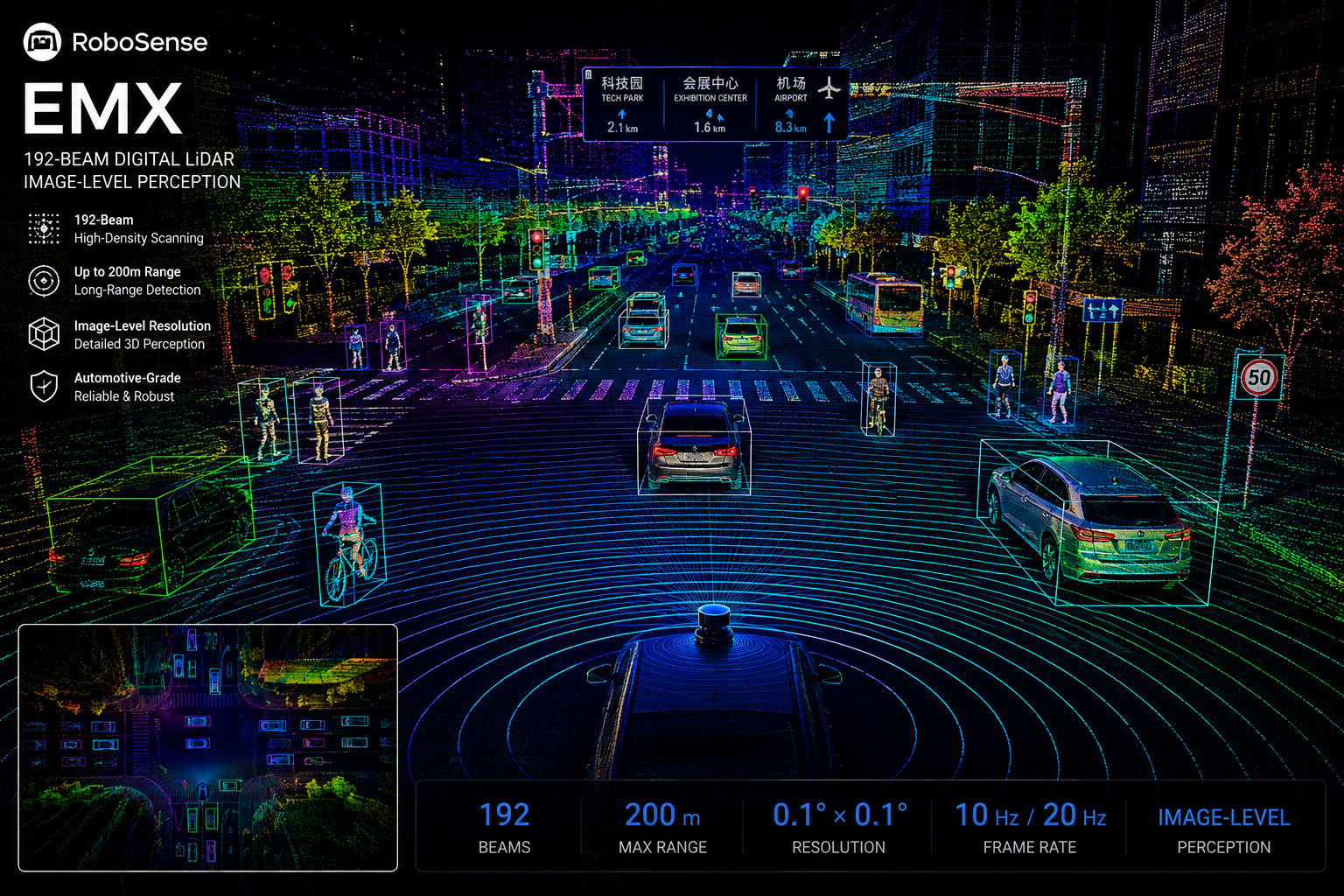
Image-Level LiDAR: Bridging the Gap Between Vision and Spatial Intelligence
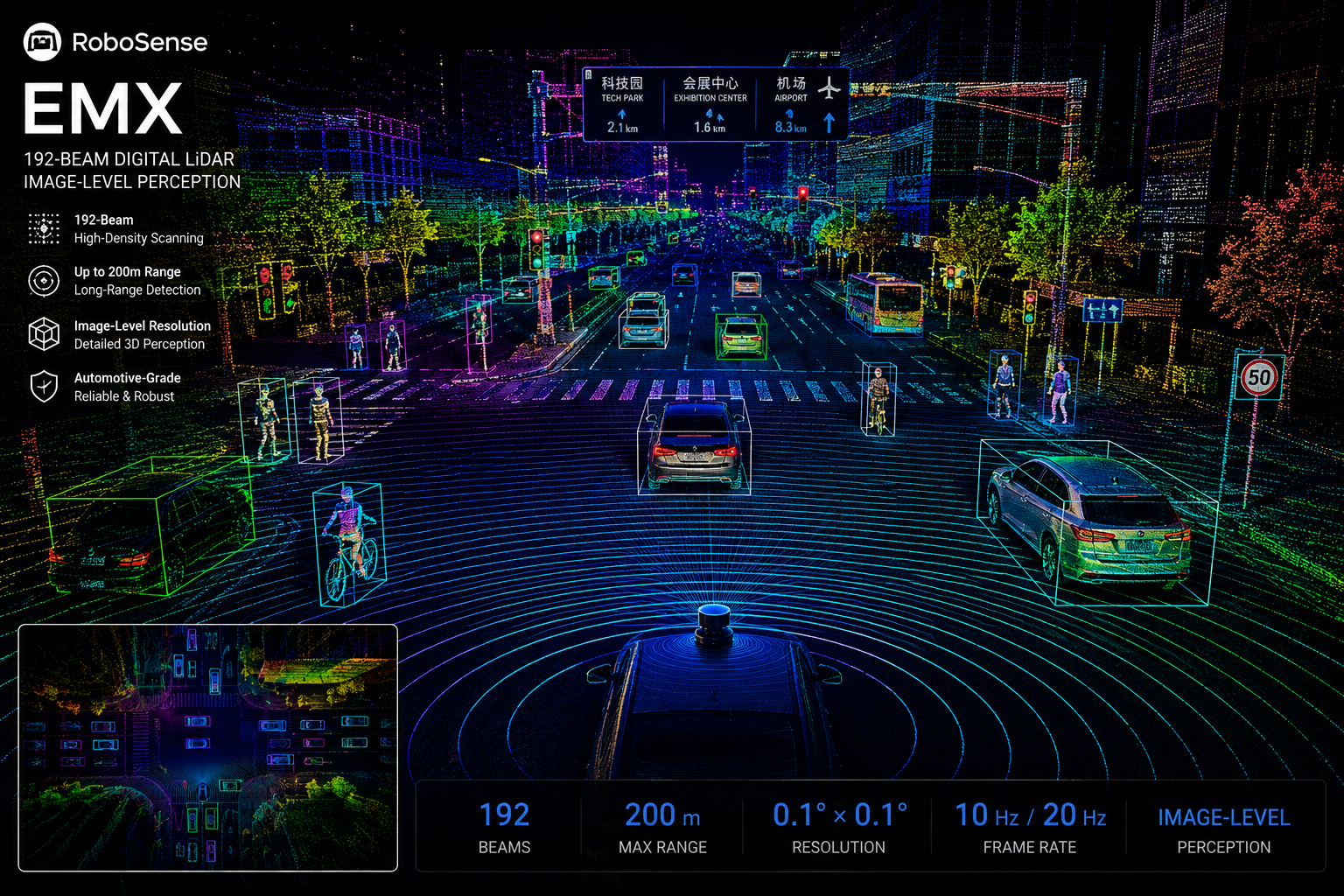
One of the most exciting developments in the LiDAR industry is the emergence of image-level perception. Traditional LiDAR systems excel at measuring distance but often generate relatively sparse point clouds. Image-level LiDAR dramatically increases point density, creating three-dimensional representations that approach the richness of camera imagery while retaining precise spatial measurement capabilities.
This advancement is particularly important for artificial intelligence systems. Modern perception algorithms require detailed environmental information to classify objects accurately and predict their future behavior. The more information available, the more reliable the decision-making process becomes.
The RoboSense EMX is engineered to support image-level perception through its high-density scanning capabilities. This allows autonomous systems to detect subtle environmental features such as lane boundaries, road edges, construction barriers, and small debris that might otherwise be overlooked.
As AI models continue to evolve, image-level LiDAR is expected to become one of the most valuable sensor technologies supporting next-generation autonomous mobility.
Why Long-Range LiDAR Is Critical for Highway Autonomy
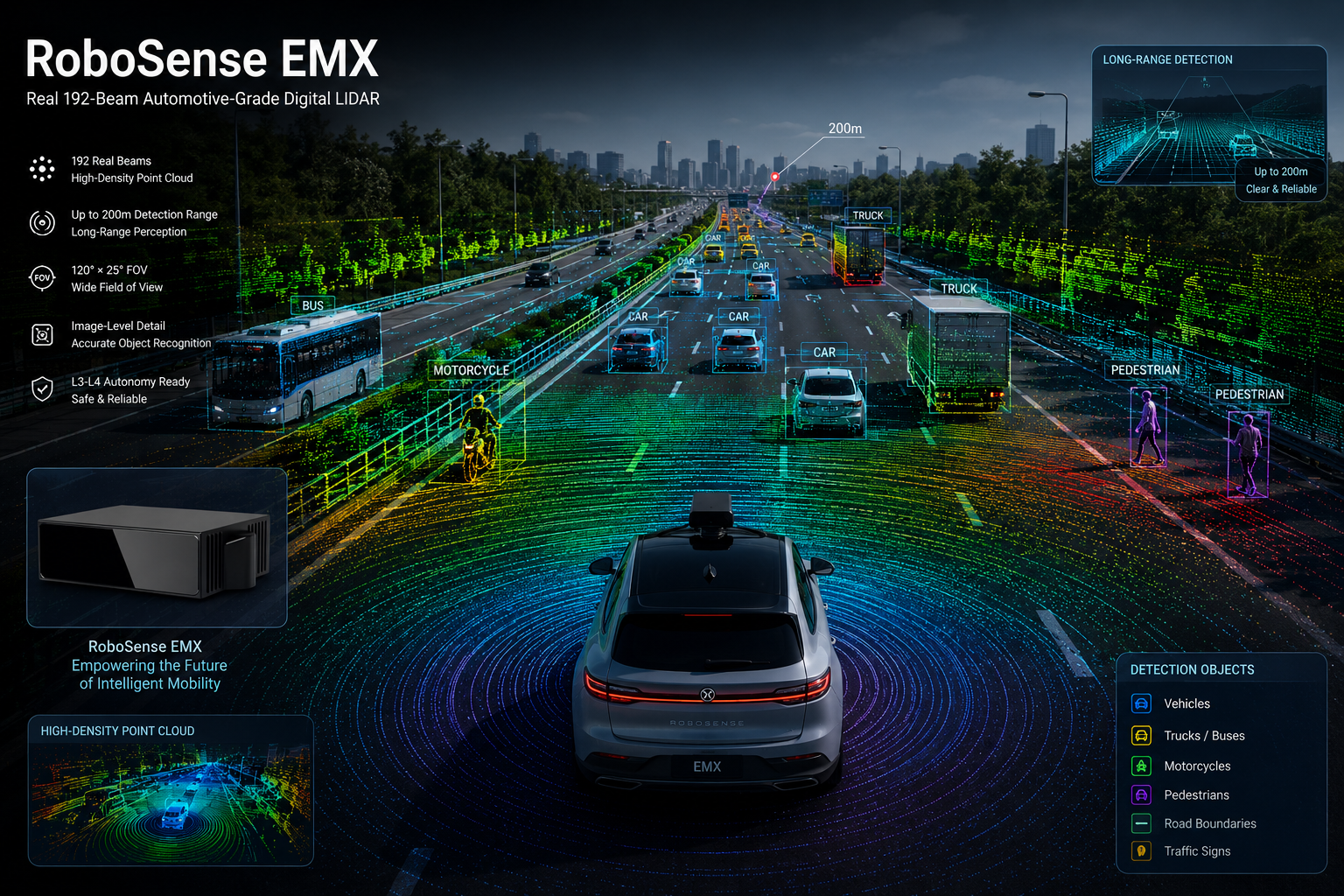
Highway driving presents unique challenges for autonomous systems. Vehicles travel at high speeds, leaving limited time to react to changing conditions. Detecting hazards even a few seconds earlier can dramatically improve safety outcomes.
Long-range LiDAR extends the perception horizon, allowing autonomous systems to identify obstacles further ahead and begin planning responses sooner. This additional reaction time improves path planning, collision avoidance, and overall driving stability.
The RoboSense EMX combines long-range detection capabilities with high-density point cloud generation, creating a balanced solution for advanced highway autonomy. Rather than forcing developers to choose between resolution and range, the EMX delivers both, supporting safer and more reliable autonomous driving performance.
Supporting the Evolution from ADAS to Full Autonomy
The automotive industry is currently transitioning from Advanced Driver Assistance Systems (ADAS) toward fully autonomous driving. This evolution requires a substantial increase in perception capability. While ADAS systems may assist with lane keeping, adaptive cruise control, and emergency braking, Level 4 autonomous systems must operate independently in complex environments.
Achieving this objective requires multiple layers of environmental awareness. Cameras provide visual information. Radar contributes velocity measurements and long-range detection. LiDAR supplies precise three-dimensional spatial understanding.
The RoboSense EMX enhances this perception stack by delivering detailed point cloud data that complements other sensor inputs. Through sensor fusion, autonomous systems can achieve greater redundancy, improved accuracy, and increased reliability. These characteristics are essential for achieving the safety standards required for large-scale deployment of autonomous vehicles.
Robotics Is Becoming One of the Largest LiDAR Markets
Although automotive applications dominate industry discussions, robotics is rapidly emerging as one of the largest growth opportunities for LiDAR technology. Autonomous mobile robots, warehouse automation systems, delivery robots, agricultural machinery, and industrial vehicles all require reliable environmental perception.
Robots frequently operate in environments shared with humans. This makes accurate obstacle detection and navigation essential. The RoboSense EMX provides dense environmental data that enables robots to navigate efficiently while maintaining high safety standards.
As global labor shortages continue and automation adoption accelerates, demand for advanced Robot LiDAR solutions is expected to increase dramatically.
Mapping and Surveying: Creating Digital Twins of the Physical World
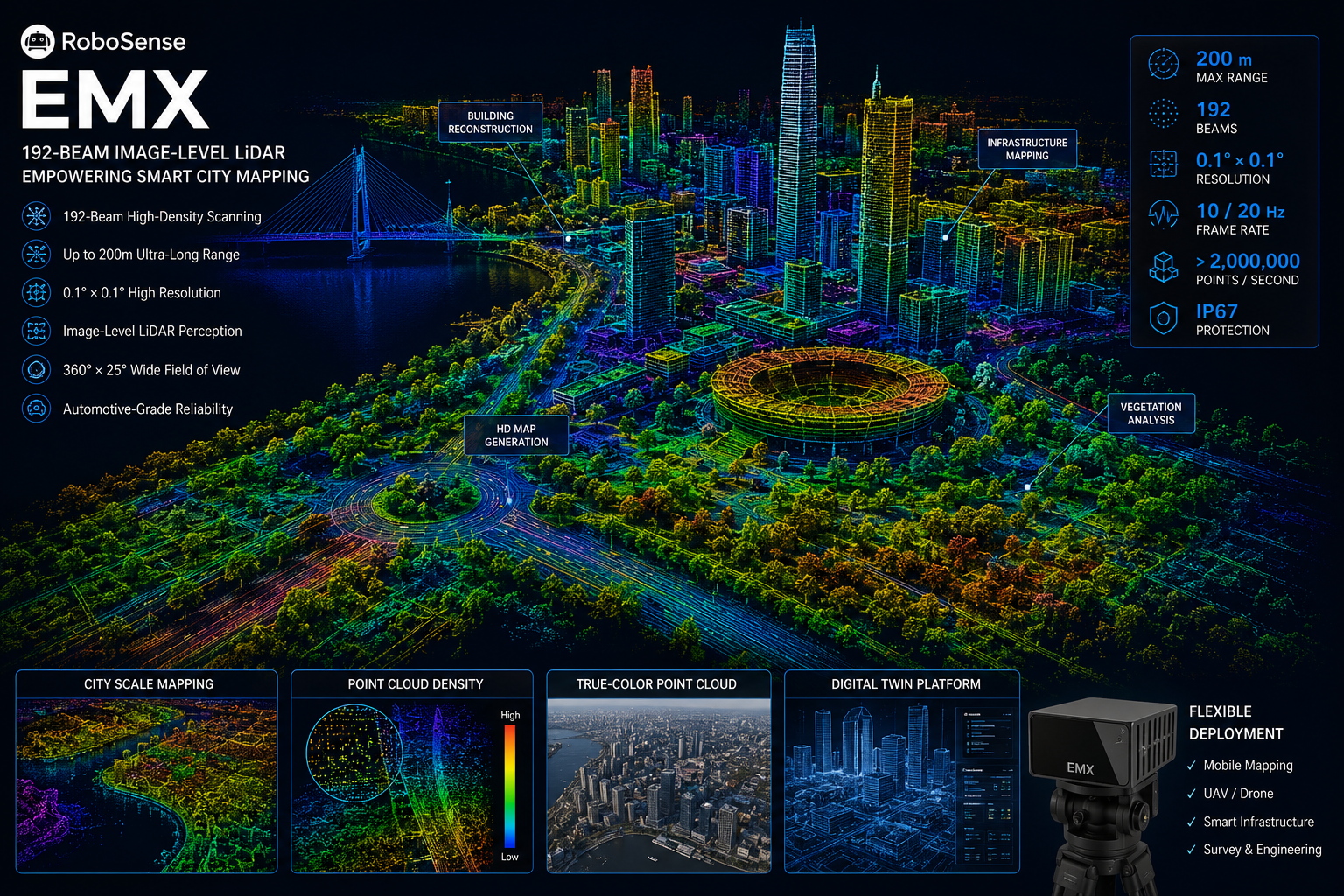
Modern mapping projects increasingly depend on LiDAR technology to create detailed digital representations of real-world environments. These digital twins support urban planning, infrastructure management, construction projects, environmental monitoring, and transportation planning.
The RoboSense EMX generates dense point cloud data capable of supporting advanced surveying workflows. Engineers can use this data to create highly accurate terrain models, building reconstructions, and infrastructure analyses.
As cities invest in digital transformation initiatives, high-resolution LiDAR sensors will become increasingly important tools for understanding and managing complex urban environments.
Smart Cities Need Intelligent Perception Infrastructure
Future cities will rely heavily on real-time environmental intelligence. Smart intersections, intelligent transportation systems, public safety monitoring, and traffic analytics all depend on accurate perception technologies.
LiDAR sensors can provide valuable environmental data that enables cities to optimize traffic flow, improve safety, and enhance infrastructure efficiency. The RoboSense EMX offers the density and reliability required for these demanding applications.
By continuously monitoring urban environments, LiDAR-based systems can generate actionable insights that support more sustainable and efficient city operations.
Watch RoboSense LiDAR Technology in Action
Official RoboSense YouTube Channel
Recommended Blog Embed Section
Embed one of the latest RoboSense EMX demonstration videos from the official channel directly in this section to increase user engagement and session duration.
Explore More LiDAR Solutions
For businesses looking to buy LiDAR sensors for autonomous driving, robotics, mapping, and industrial automation:
Featured Products
Frequently Asked Questions (FAQ)
1. What is RoboSense EMX?
RoboSense EMX is a 192-beam automotive-grade digital LiDAR sensor designed for advanced perception applications.
2. Is RoboSense EMX suitable for autonomous driving?
Yes, it is designed to support L3 and L4 autonomous driving systems.
3. What makes 192-beam LiDAR important?
It generates denser point clouds for better object detection and environmental understanding.
4. What is image-level LiDAR?
Image-level LiDAR creates highly detailed point clouds that improve AI perception performance.
5. Can RoboSense EMX be used in robotics?
Yes, it supports warehouse robots, AMRs, AGVs, and autonomous delivery systems.
6. Does EMX support mapping applications?
Yes, it is suitable for surveying, digital twins, and urban mapping.
7. Is RoboSense EMX an automotive-grade sensor?
Yes, it is designed specifically for automotive deployment.
8. What is point cloud visualization?
A graphical representation of three-dimensional spatial data captured by LiDAR sensors.
9. Why is long-range detection important?
Long-range perception provides additional reaction time for autonomous systems.
10. Can EMX operate in smart city applications?
Yes, it can support traffic monitoring and intelligent infrastructure projects.
11. Does RoboSense EMX support sensor fusion?
Yes, it integrates effectively with cameras, radar, GNSS, and IMU systems.
12. Is LiDAR better than cameras?
LiDAR and cameras are complementary technologies that work best together.
13. What industries use LiDAR?
Automotive, robotics, mapping, construction, logistics, smart cities, and industrial automation.
14. Where can I buy LiDAR sensors?
Visit https://lidarseek.com/shop
15. Why choose RoboSense EMX?
Because it combines 192-beam density, image-level perception, long-range performance, and automotive-grade reliability.









