
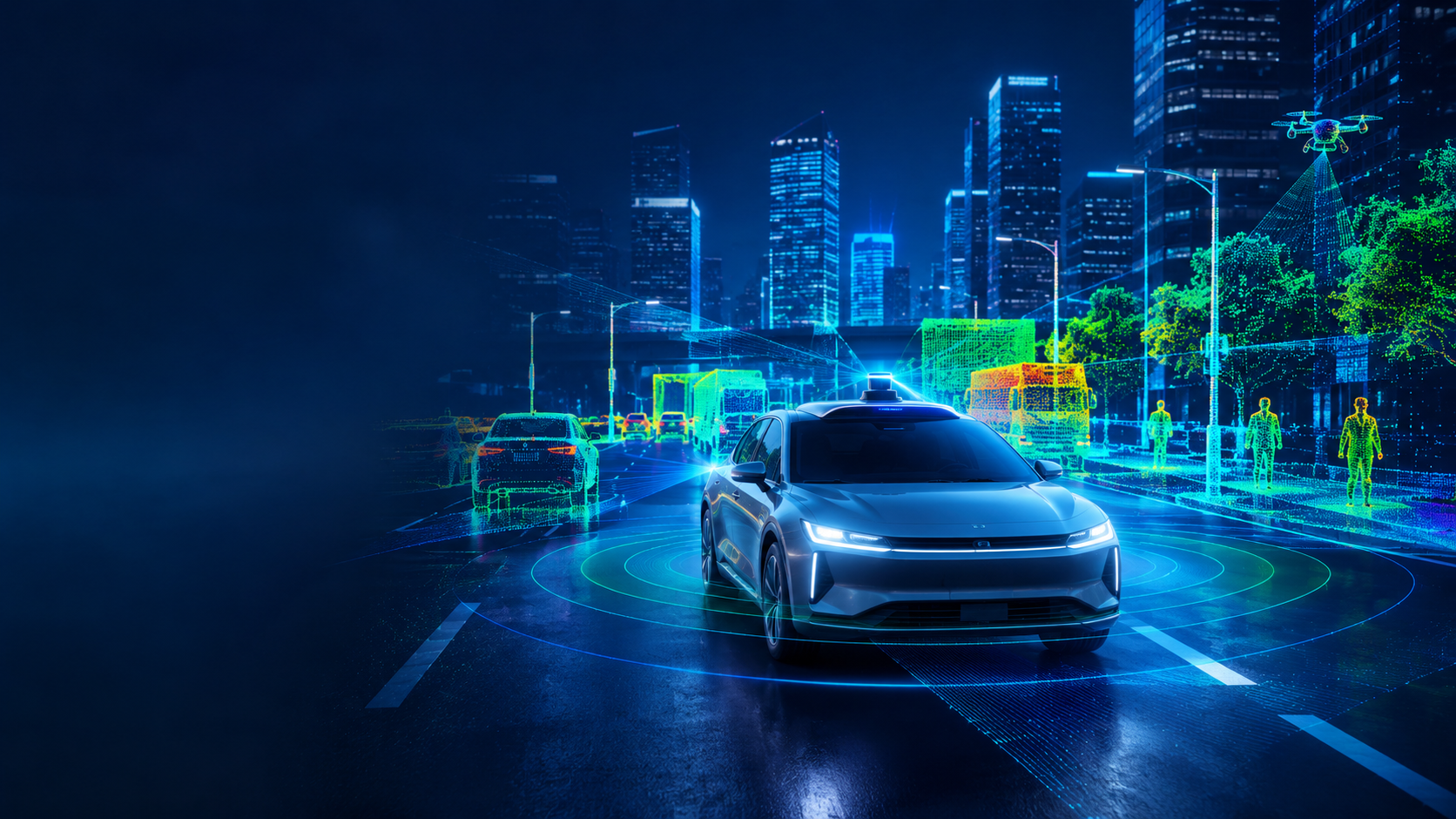
Introduction: Buying a LiDAR Sensor Is No Longer Just About Comparing Specifications
LiDAR technology is now used across a rapidly expanding range of applications, including autonomous mobile robots, AGVs, autonomous forklifts, intelligent vehicles, robotaxis, delivery robots, industrial automation, mapping platforms and research projects.
As more LiDAR models become available, however, finding the right sensor has become more complicated.
A buyer may find dozens of products that appear similar on paper. One sensor may offer a longer detection range, another may provide a wider field of view, while a third may deliver higher point cloud density or a more compact design. Price, stock availability, integration requirements and international shipping can also significantly affect the final purchasing decision.
For this reason, the best answer to the question “Where can I buy a LiDAR sensor?” depends on more than simply finding the lowest price.
The right supplier should help you answer several important questions:
- Which LiDAR technology is suitable for your application?
- What detection range do you actually need?
- Do you need a 2D or 3D LiDAR?
- Is a 360° field of view required?
- Does your system need automotive-grade reliability?
- Do you need ROS or SDK support?
- Is the product available for immediate shipment?
- Can the supplier arrange international shipping to your destination?
This guide explains how to buy LiDAR sensors for robotics, autonomous driving and industrial projects, how to compare different sensor types, and what information you should prepare before requesting a quotation.
1. First: What Type of LiDAR Sensor Do You Need?
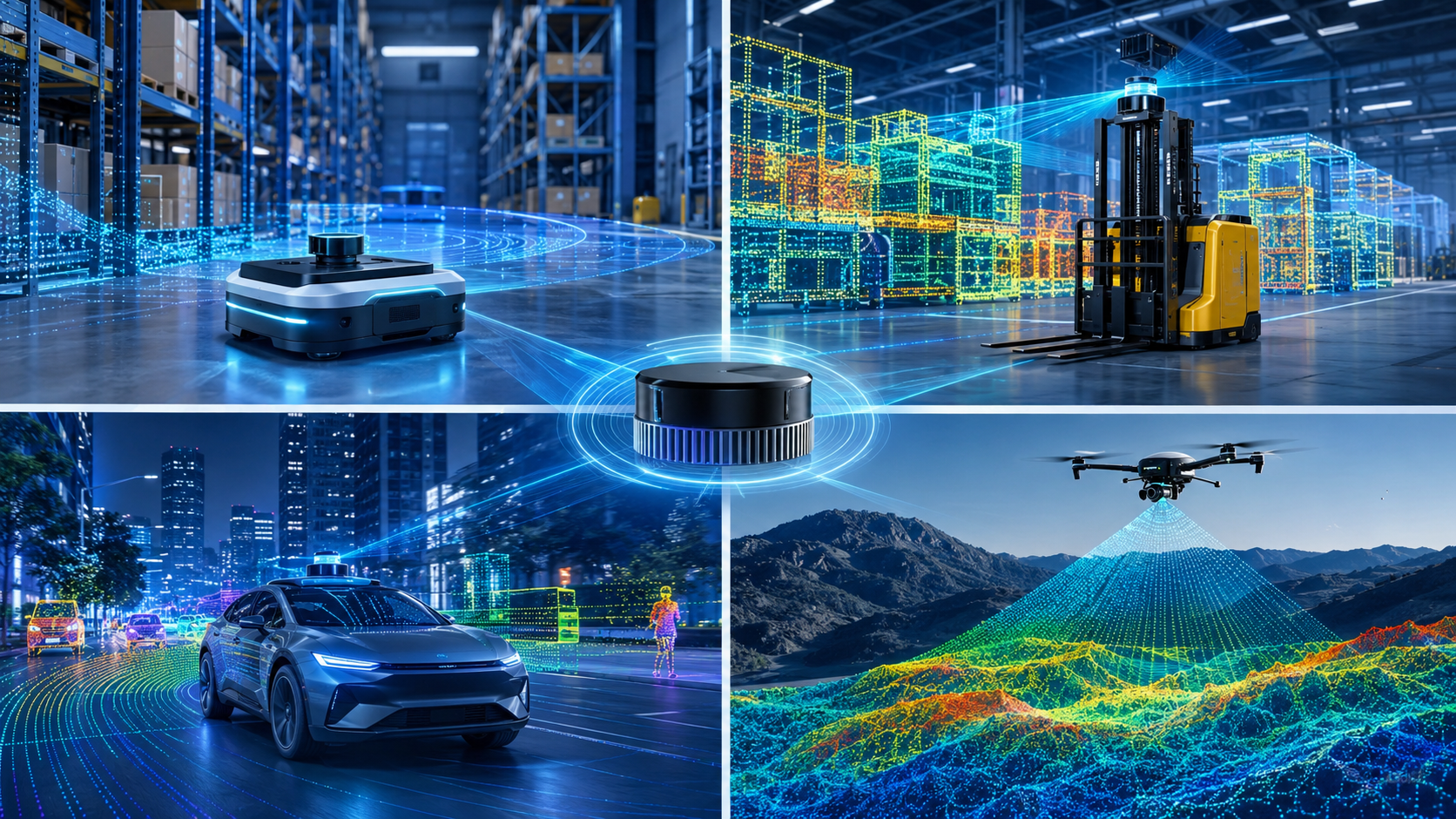
Before contacting a LiDAR supplier, you should define your application.
Different projects require very different sensor capabilities.
| Application | Recommended LiDAR Type | Key Requirements |
|---|---|---|
| AMR / AGV | Compact 2D or 3D LiDAR | Navigation, obstacle detection |
| Warehouse Robot | 360° 3D LiDAR | Wide field of view, reliability |
| Autonomous Forklift | 3D Industrial LiDAR | Long-range obstacle detection |
| Service Robot | Compact LiDAR | Small size, indoor navigation |
| Autonomous Vehicle | Automotive LiDAR | High resolution and long range |
| Robotaxi | High-performance LiDAR | Long range and dense point cloud |
| Autonomous Truck | Long-range LiDAR | Detection at highway speeds |
| Mapping | High-density LiDAR | Accuracy and point cloud quality |
| University Research | Development-friendly LiDAR | SDK, documentation and integration |
Choosing the wrong sensor can increase development costs and create unnecessary integration problems.
For example, a LiDAR designed for indoor robotic navigation may not provide sufficient range for an autonomous vehicle. At the same time, using a high-end automotive sensor for a simple indoor robot may significantly increase the project budget without providing meaningful benefits.
Need help selecting a model?
If you are not sure which LiDAR sensor is suitable for your project, send the following information when requesting a quotation:
- Application
- Required detection distance
- Indoor or outdoor environment
- Required quantity
- Destination country
A suitable model can then be recommended based on your actual requirements.
2. Where Can You Buy LiDAR Sensors?
There are generally several ways to purchase LiDAR sensors.
Option 1: Buy Directly From the Manufacturer
Buying directly from the manufacturer can be suitable for:
- Large OEM programs
- Automotive production projects
- Long-term supply agreements
- High-volume procurement
However, direct purchasing may not always be the easiest option for smaller companies, startups, universities or engineering teams.
Some manufacturers focus primarily on large-volume customers. Sample orders, small quantities or prototype projects may require additional qualification processes.
Lead times can also vary depending on production schedules and model availability.
Option 2: Buy From a LiDAR Supplier or Distributor
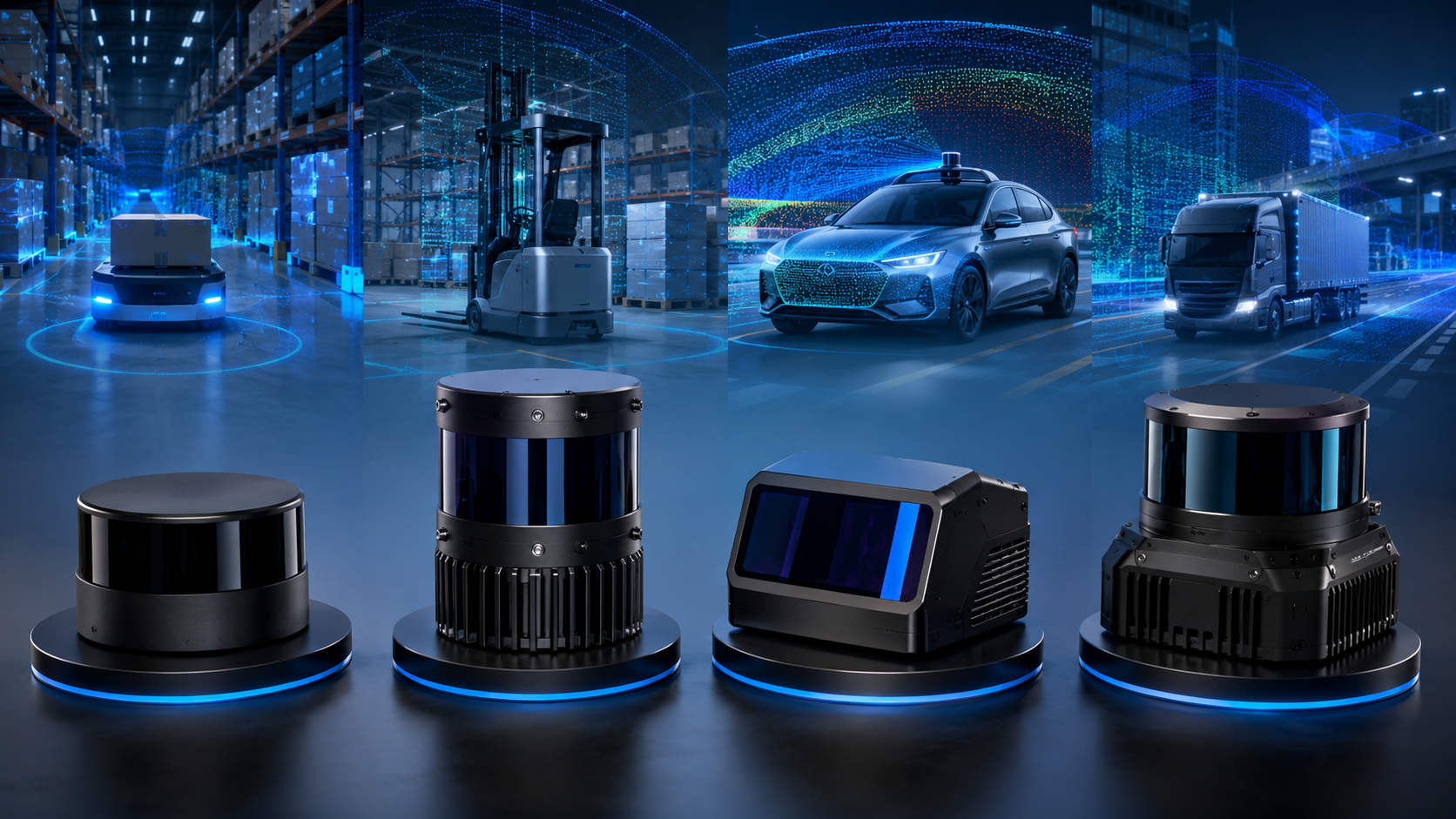
For engineering projects, prototype development and small-to-medium quantity purchases, working with a specialized LiDAR supplier can often provide more flexibility.
A supplier can help customers compare multiple models based on their application.
This is particularly useful when a project team is deciding between different LiDAR architectures or manufacturers.
For example, a robotics company may need to compare a compact 360° LiDAR with a higher-resolution automotive-grade sensor before finalizing its design.
A multi-brand supplier can provide options based on:
- Detection range
- Resolution
- Field of view
- Point cloud performance
- Sensor size
- Integration requirements
- Budget
- Stock availability
LidarSeek supplies LiDAR sensors for robotics, autonomous driving, industrial automation and research projects, with products including multiple Hesai and RoboSense models.
3. Best LiDAR Sensors for Robotics and AMR Projects
Autonomous Mobile Robots require reliable environmental perception.
Typical AMR applications include:
- Warehouse transportation
- Factory automation
- Inventory robots
- Delivery robots
- Service robots
- Autonomous inspection systems
The most important factors often include:
- 360° field of view
- Blind zone
- Detection range
- Point cloud density
- Sensor size
- Integration compatibility
Compact 3D LiDAR sensors can be particularly useful when robots need to navigate dynamic environments with people, pallets, shelving and other mobile equipment.
RoboSense Airy
For robotics projects requiring a compact 360° perception solution, RoboSense Airy provides a 96-channel architecture, 360° horizontal field of view and 90° vertical field of view.
It can be considered for applications involving:
- Mobile robotics
- Obstacle avoidance
- Autonomous navigation
- Indoor and semi-structured environments
Interested in using LiDAR for an AMR or AGV project? Request a model recommendation based on your robot size, operating environment and required detection distance.
4. Best LiDAR Sensors for Industrial Automation
Industrial environments can create demanding perception challenges.
LiDAR sensors may need to detect:
- Pallets
- Workers
- Forklifts
- Machinery
- Storage racks
- Moving vehicles
For these applications, engineers should evaluate not only detection range but also reliability, field of view and integration requirements.
Hesai XT16
The Hesai XT16 offers a 360° horizontal field of view and a published measurement range of up to 120 m, making it suitable for projects requiring mid-range three-dimensional perception.
Potential applications include:
- Industrial robots
- Autonomous mobile platforms
- Inspection systems
- Outdoor robotics
- Research platforms
Hesai XT32 and Other Higher-Resolution Options
Projects requiring greater vertical resolution or denser environmental perception may require higher-channel LiDAR systems.
The correct choice depends on:
- Required object detection distance
- Object size
- Vehicle speed
- Installation position
- Required point cloud density
Before purchasing, it is recommended to compare the actual application requirements rather than selecting a model based only on the number of channels.
5. Best LiDAR Sensors for Autonomous Driving
Autonomous driving applications generally require more demanding sensor performance.
Important considerations include:
- Long-range detection
- Angular resolution
- Point cloud density
- Field of view
- Automotive-grade design
- Reliability
- Integration architecture
Depending on the vehicle platform, developers may require different types of LiDAR sensors for:
- Forward perception
- Side perception
- Blind-spot coverage
- 360° environmental perception
Hesai QT128
The Hesai QT128 is designed as a 128-channel automotive-grade LiDAR with a 360° × 105° field of view and published specifications emphasizing short-range, high-density perception.
It may be considered for autonomous driving platforms requiring wide environmental coverage.
RoboSense M2
The RoboSense M2 is a long-range mid-range LiDAR platform with a published maximum range of 250 m and 200 m performance at 10% reflectivity.
Applications may include:
- Intelligent vehicles
- Autonomous driving development
- Advanced perception systems
- Long-range forward sensing
The best solution depends on the complete sensor architecture of the vehicle.
6. High-Performance LiDAR for Advanced Perception
Some projects require significantly higher point cloud density and longer detection capability.
These applications may include:
- Robotaxis
- Autonomous trucks
- Advanced ADAS
- High-resolution mapping
- Intelligent infrastructure
- Research and perception development
Hesai OT128
The Hesai OT128 is positioned as a high-performance 128-channel LiDAR with published specifications including 200 m ranging capability at 10% reflectivity, a 360° × 40° field of view and a high point rate.
RoboSense EM4
The RoboSense EM4 is aimed at high-resolution perception applications and is one of the higher-performance LiDAR options listed on LidarSeek for projects requiring advanced environmental sensing.
When comparing high-performance LiDAR systems, buyers should evaluate:
- Effective detection range
- Reflectivity performance
- Angular resolution
- Point cloud density
- Field of view
- Integration requirements
7. How Much Does a LiDAR Sensor Cost?
LiDAR sensor prices vary significantly.
The final cost may depend on:
- LiDAR architecture
- Detection range
- Number of channels
- Angular resolution
- Automotive qualification
- Production volume
- Current availability
- Order quantity
Entry-level robotics LiDAR sensors generally have very different cost structures compared with high-performance automotive LiDAR systems.
For this reason, a product’s listed price should not always be the only factor used for purchasing decisions.
A customer should also consider:
- Whether the product is in stock
- Estimated lead time
- Technical suitability
- Shipping costs
- Import duties and taxes
- Required quantity
Get the Latest LiDAR Price and Availability
For a faster quotation, provide:
Model + Quantity + Destination Country
You can also include your application so that alternative models can be recommended if the requested sensor is unavailable.
8. What Should You Check Before Buying a LiDAR Sensor?
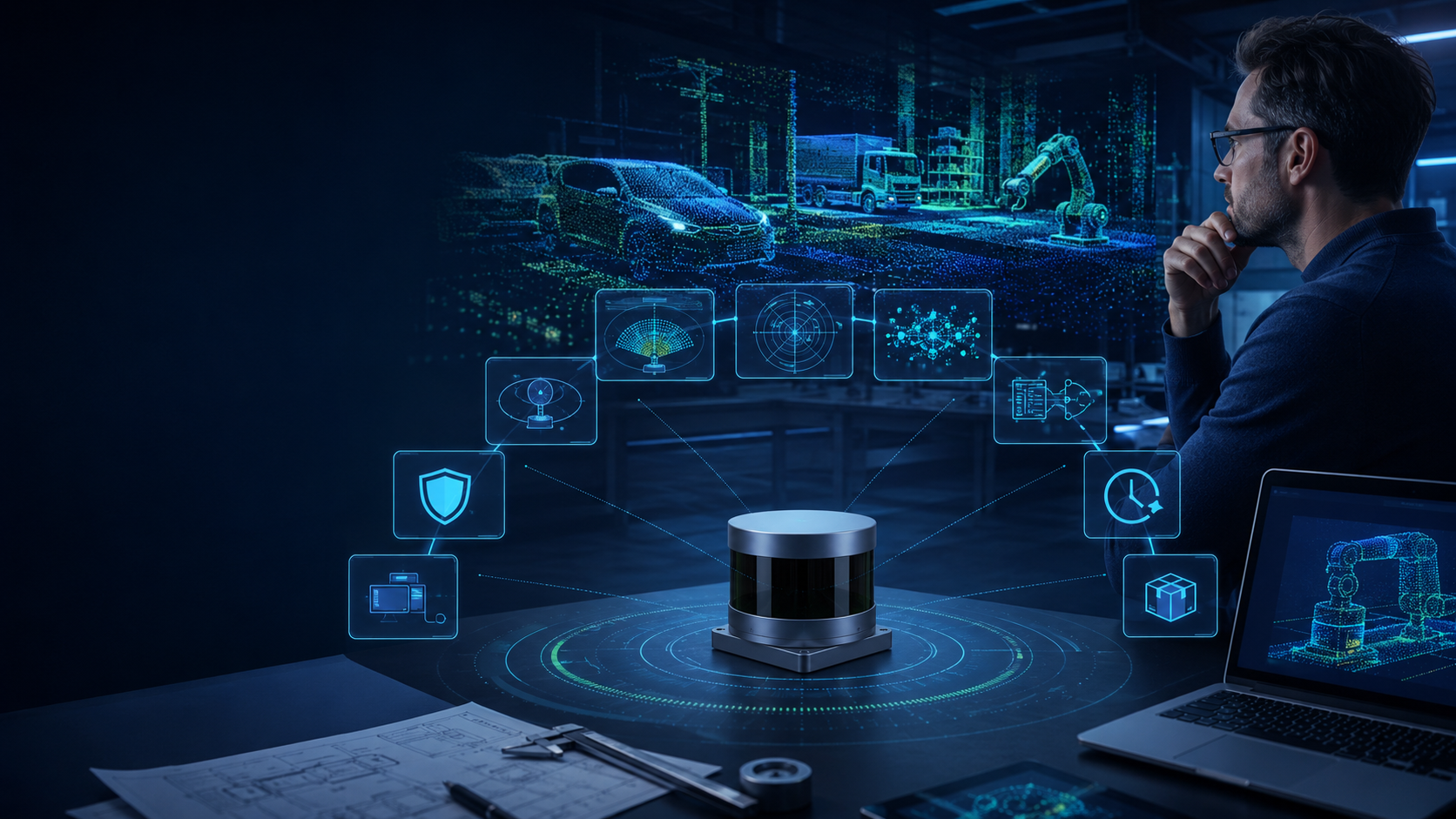
Before placing an order, review the following specifications.
Detection Range
Ask:
- What is the maximum range?
- What is the range at 10% reflectivity?
- What is the minimum detection distance?
Low-reflectivity performance can be especially important for dark vehicles, tires and other difficult targets.
Field of View
A sensor with a narrow field of view may be suitable for forward perception, while a mobile robot may require 360° environmental coverage.
Consider both:
- Horizontal FOV
- Vertical FOV
Angular Resolution
Higher angular resolution can improve the ability to distinguish objects at greater distances.
However, higher resolution may also increase cost and data processing requirements.
Point Cloud Density
Dense point clouds can improve:
- Object recognition
- Classification
- Mapping
- Environmental modeling
The required density depends on your application.
Integration Requirements
Before purchasing, check:
- Ethernet compatibility
- CAN interface
- ROS compatibility
- SDK availability
- Data format
- Power requirements
- Mounting dimensions
Integration problems can delay a project even when the LiDAR sensor itself meets the required specifications.
9. Stock Availability and Lead Time
For many engineering projects, lead time is as important as sensor performance.
A project may require:
- A single evaluation unit
- Multiple prototype units
- Pilot production quantities
- Larger project volumes
Availability can change depending on production schedules and market demand.
Before confirming a purchase, request:
- Current stock status
- Estimated lead time
- Available quantity
- Expected shipment date
This is especially important when your project has a fixed testing or deployment schedule.
10. International Shipping Options for LiDAR Sensors
International LiDAR orders may require different shipping arrangements depending on the destination and customer requirements.
Common quotation options may include:
- EXW
- FCA
- DAP
The most suitable option depends on the buyer’s logistics capabilities and import requirements.
Before requesting a shipping quotation, provide:
- Delivery address or destination city
- Postal code
- Country
- Required quantity
For commercial projects, additional documents such as a Commercial Invoice and Packing List may also be required.
11. How to Request a LiDAR Quotation
Providing complete information can significantly speed up the quotation process.
For the fastest response, include:
1. LiDAR Model
For example:
- Hesai QT128
- Hesai OT128
- Hesai XT16
- RoboSense Airy
- RoboSense M2
- RoboSense EM4
2. Quantity
Specify whether you need:
- 1 sample
- Prototype quantity
- Pilot quantity
- Production quantity
3. Application
For example:
- AMR
- AGV
- Autonomous driving
- Warehouse automation
- Mapping
- University research
4. Destination Country
This allows shipping options to be evaluated.
5. Required Delivery Date
If your project has a deadline, include it in the RFQ.
12. Frequently Asked Questions
Where can I buy a LiDAR sensor?
LiDAR sensors can be purchased directly from manufacturers or from specialized LiDAR suppliers that provide product selection support, stock information and international shipping options.
How much does a LiDAR sensor cost?
Prices vary depending on range, resolution, architecture, automotive qualification and availability. Request a quotation for the latest pricing.
Which LiDAR is best for AMR?
The best LiDAR depends on the operating environment, required range, field of view and navigation requirements. Compact 360° LiDAR sensors are commonly considered for AMR applications.
Which LiDAR is suitable for autonomous driving?
Autonomous driving projects may require long-range, high-resolution and automotive-grade LiDAR systems. The appropriate model depends on whether the sensor is used for forward perception, blind-spot coverage or 360° sensing.
Can I buy one LiDAR sensor for testing?
Availability for single-unit evaluation orders depends on the specific model. When requesting a quotation, specify that the sensor is required for evaluation or prototype testing.
How long is the lead time?
Lead time depends on the model and current stock availability. Always confirm availability before placing an order.
Do you provide international shipping?
International shipping options can be evaluated based on the destination, quantity and customer requirements.
Can you recommend a LiDAR sensor for my project?
Yes. Provide your application, required range, operating environment, quantity and destination country for a product recommendation.
What information do I need to provide for a quotation?
The most useful information includes the LiDAR model, quantity, application and destination country.
Can I compare multiple LiDAR models before buying?
Yes. Comparing detection range, field of view, resolution, point cloud density and integration requirements can help identify the most suitable sensor.
Get a LiDAR Recommendation and Quotation
Choosing the right LiDAR sensor can significantly reduce development time and avoid unnecessary hardware costs.
Whether you are developing an AMR, AGV, autonomous vehicle, industrial robot, mapping platform or research project, selecting a sensor should be based on your actual application requirements.
To receive a LiDAR recommendation and quotation, please provide:
- Your application
- Required detection range
- Required quantity
- Destination country
- Preferred LiDAR model, if available
Request a LiDAR Quote
Send your requirements to LidarSeek and receive product availability, lead time and quotation information for your project.









