
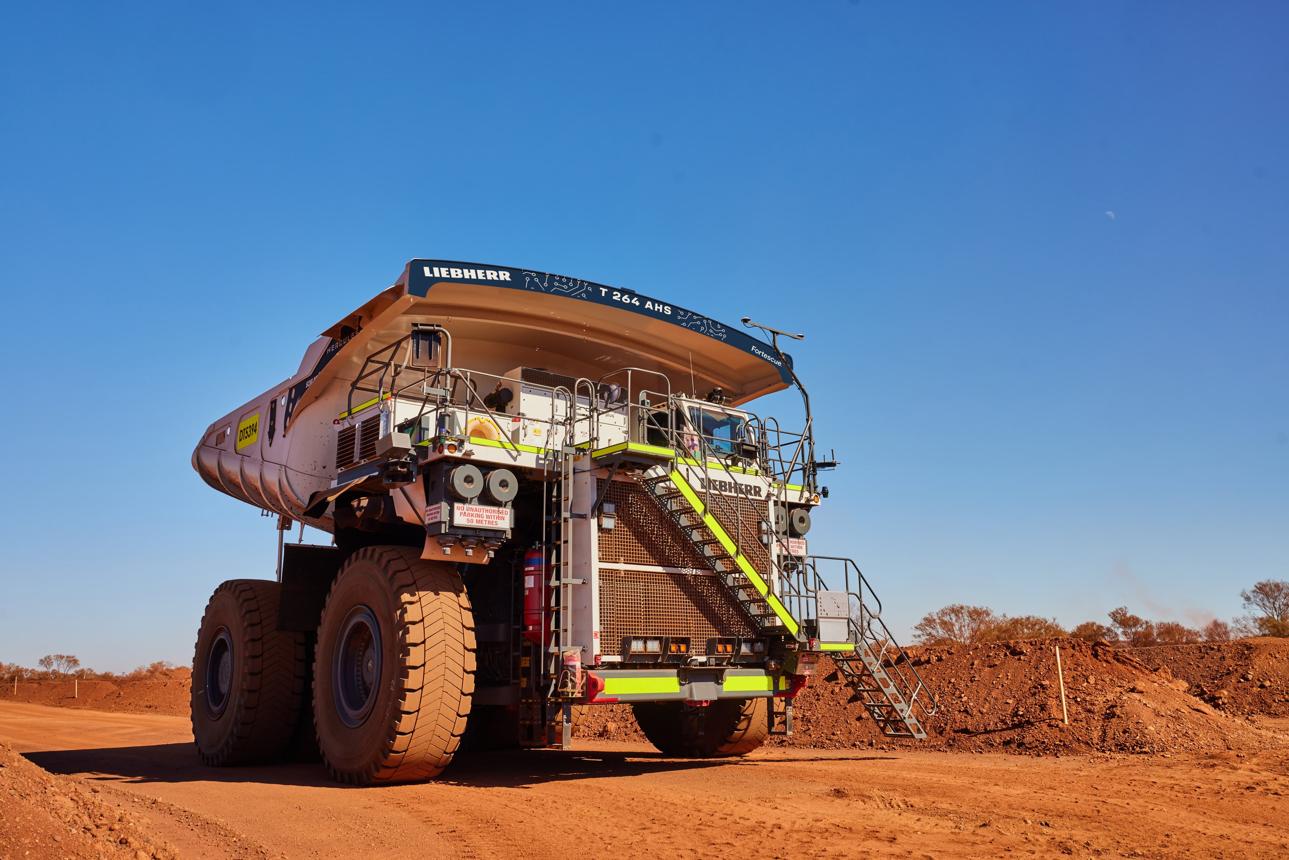
Introduction: The Growing Demand for LiDAR in Autonomous Mining
Mining operations are increasingly adopting autonomous technologies to improve operational efficiency, reduce human exposure to hazardous environments, and optimize equipment utilization.
Autonomous haul trucks, mining vehicles, drilling machines, and intelligent inspection robots are becoming important components of modern mining operations.
However, autonomous operation in mining environments presents significant technical challenges.
Vehicles must operate across large open areas, uneven terrain, dusty roads, changing weather conditions, and environments containing heavy machinery and moving equipment.
Reliable environmental perception is therefore essential.
LiDAR sensors provide three-dimensional distance measurements that can help autonomous mining systems understand surrounding objects, detect obstacles, build environmental maps, and support vehicle navigation.
For mining equipment manufacturers, autonomous driving developers, and industrial system integrators, selecting the right LiDAR sensor requires careful consideration of detection range, point cloud quality, environmental protection, vibration resistance, communication interfaces, and system integration.
This guide explains how to evaluate LiDAR sensors for autonomous mining vehicles and industrial mining automation projects.
1. Why Is LiDAR Important for Autonomous Mining Vehicles?
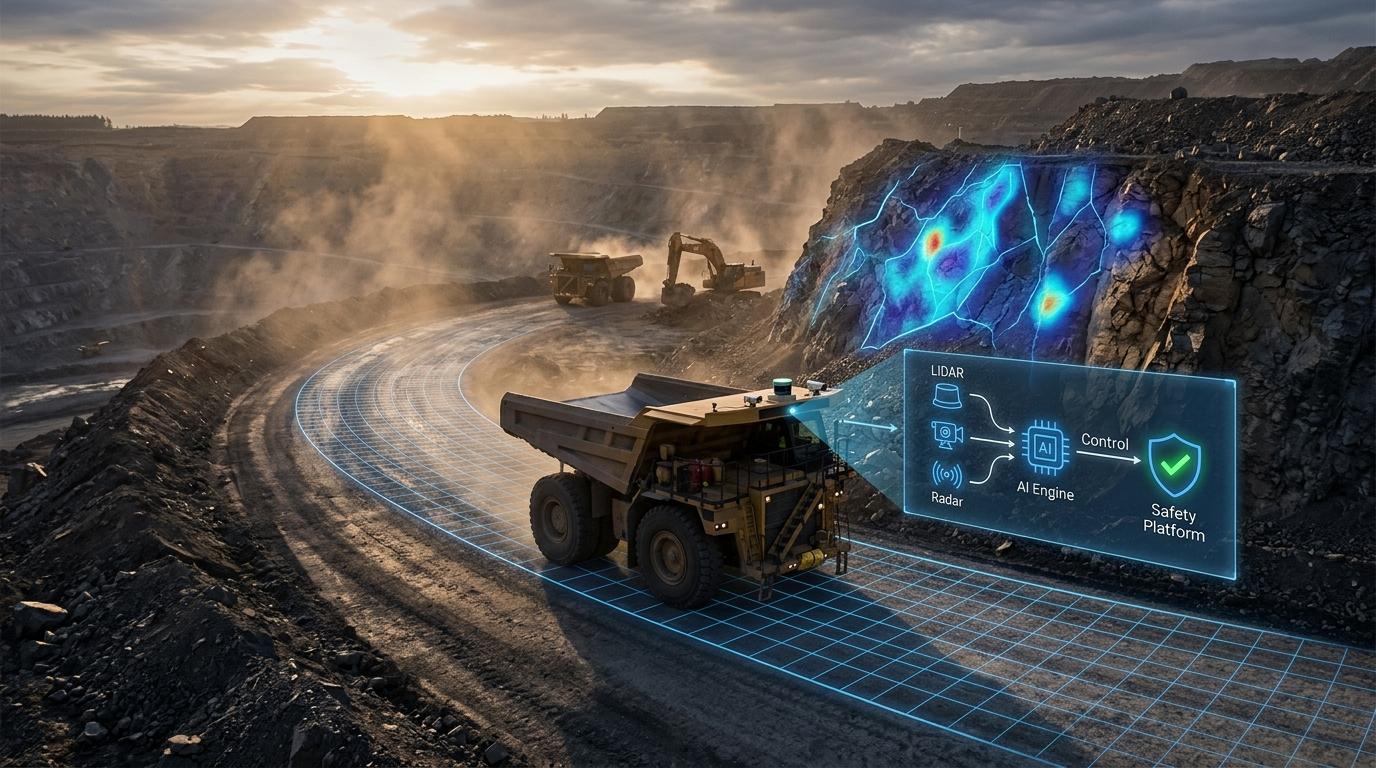
Autonomous mining vehicles must continuously understand their surrounding environment.
Unlike conventional passenger vehicles, mining equipment often operates in environments with large physical obstacles, changing road surfaces, steep slopes, and limited infrastructure.
LiDAR can provide important spatial information for several applications.
Obstacle Detection
Mining vehicles may encounter:
- Other haul trucks
- Excavators and loaders
- Workers and maintenance personnel
- Rocks and debris
- Temporary construction equipment
- Roadside structures
LiDAR provides distance measurements and point cloud data that can support obstacle detection and environmental perception algorithms.
Autonomous Navigation
LiDAR data can support localization, mapping, and navigation in mining environments.
Depending on the system architecture, it can work alongside GNSS, IMU, cameras, and other sensors.
3D Environmental Mapping
Three-dimensional point clouds can represent the geometry of roads, slopes, excavation areas, and surrounding structures.
This information may support environmental mapping and autonomous route planning.
Collision Avoidance
LiDAR-based perception can contribute to collision avoidance systems by providing information about the position and distance of surrounding objects.
However, general-purpose LiDAR should not automatically be considered a certified safety device. Personnel protection and machine safety functions require appropriately designed and validated safety systems.
2. Main LiDAR Applications in the Mining Industry
Different mining operations have different perception requirements.
Understanding the application is the first step in selecting the appropriate sensor.
A. Autonomous Haul Trucks
Autonomous haul trucks are among the most demanding applications for industrial LiDAR.
<Insert image: Large autonomous mining haul truck operating in an open-pit mine>
These vehicles must perceive surrounding equipment, road boundaries, obstacles, and other vehicles.
Potential LiDAR applications include:
- Surrounding environment perception
- Obstacle detection
- Vehicle localization
- Route monitoring
- 3D environmental mapping
For these applications, long-range detection, field of view, point cloud quality, and environmental reliability are important evaluation factors.
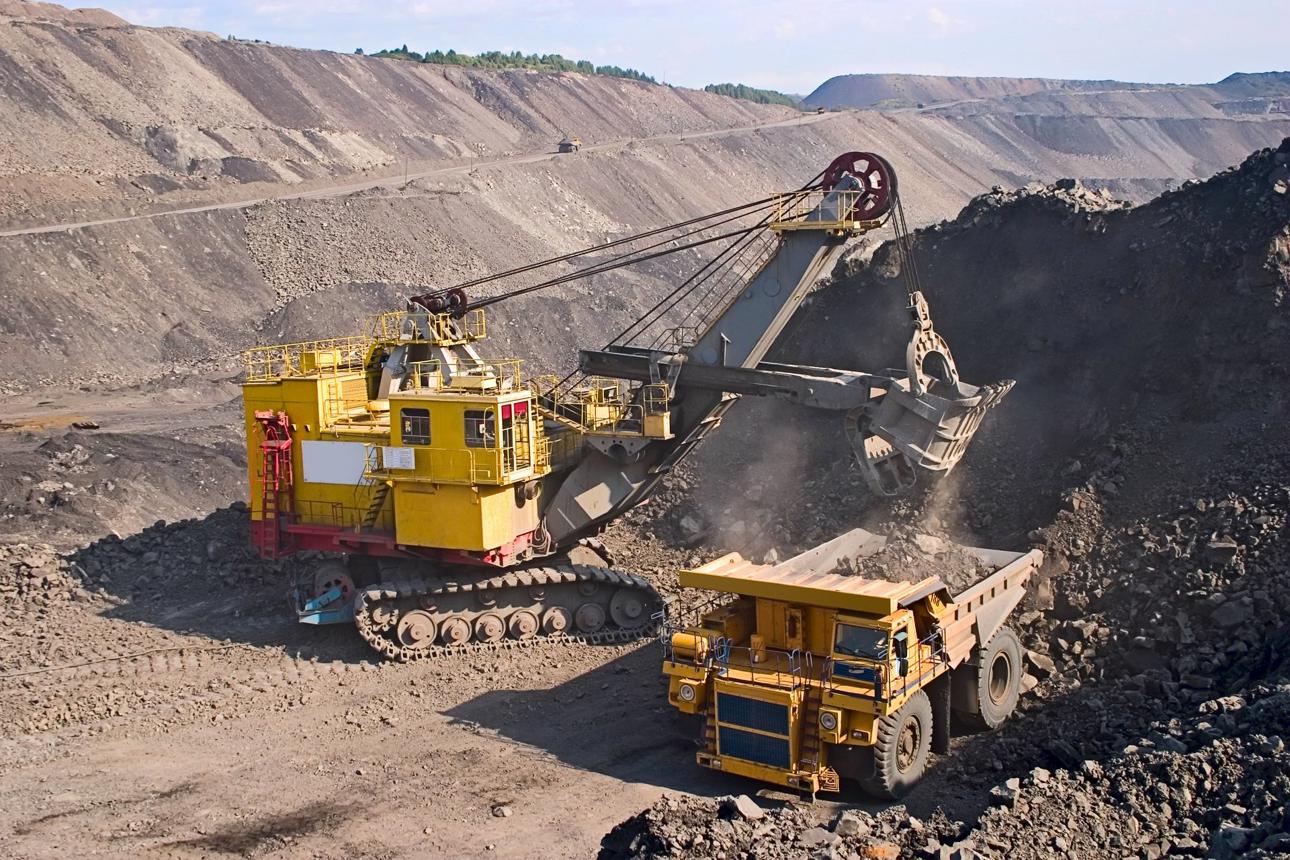
B. Mining Excavators and Loaders
Excavators and loaders operate in dynamic environments where vehicles, rocks, and other machinery may move within close proximity.
LiDAR can support:
- Equipment proximity monitoring
- Environmental mapping
- Obstacle perception
- Machine automation
- Surrounding area monitoring
Sensor placement is particularly important because the mechanical structure and moving components can create blind areas.
C. Autonomous Drilling Equipment
Automated drilling platforms may use LiDAR as part of a broader perception system.
Potential applications include:
- Work area mapping
- Obstacle detection
- Equipment positioning support
- Site environment monitoring
The final sensor configuration depends on the drilling platform and its control architecture.
D. Mining Inspection Robots
Mobile robots can be used for inspection in mining facilities, tunnels, underground infrastructure, and industrial processing areas.
LiDAR can provide spatial measurements for navigation and environmental mapping.
For underground applications, engineers should evaluate the positioning architecture carefully because GNSS may be unavailable.
3. How to Select the Right LiDAR Sensor for Mining Vehicles
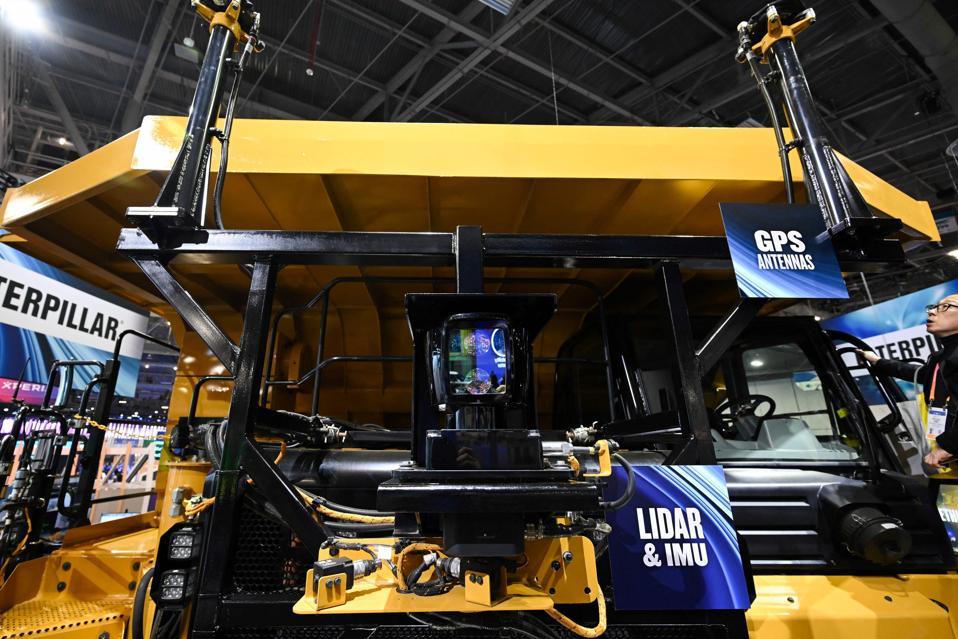
Mining applications require careful evaluation of sensor performance under demanding conditions.
The following technical parameters should be considered before purchasing.
Detection Range
Detection range is particularly important for large autonomous vehicles that need to identify obstacles at a suitable distance.
However, maximum detection range should not be evaluated independently.
Actual performance depends on:
- Target reflectivity
- Object dimensions
- Measurement conditions
- Ambient light
- Atmospheric conditions
- Sensor configuration
For mining vehicles, engineers should evaluate detection performance against representative objects rather than relying only on maximum advertised range.
Field of View
Field of view determines how much of the surrounding environment the sensor can observe.
A wider horizontal FOV may help reduce blind areas, while vertical FOV is important for understanding objects and terrain at different heights.
The required coverage depends on:
- Vehicle dimensions
- Sensor mounting location
- Vehicle movement
- Operating speed
- Surrounding equipment
- Perception architecture
Some systems may require multiple LiDAR sensors to achieve the desired coverage.
Point Cloud Density
Point cloud density affects the spatial detail available to perception algorithms.
Higher density can provide more detailed information about surrounding objects, but it also increases data transmission and processing requirements.
Engineers should balance point density against:
- Detection distance
- Vehicle speed
- Scanning frequency
- Computing performance
- Required perception accuracy
Scanning Frequency
A suitable scanning frequency is important for mobile platforms.
The system must collect environmental information frequently enough for its navigation and perception requirements.
The required update rate depends on vehicle speed, object movement, processing latency, and the overall control architecture.
Measurement Accuracy
Measurement accuracy influences distance estimation and environmental reconstruction.
For mining applications, engineers should review accuracy specifications across the intended operating range.
They should also consider measurement stability under vibration and changing environmental conditions.
4. Environmental Challenges: Dust, Vibration and Extreme Conditions
One of the biggest differences between mining LiDAR applications and ordinary indoor robotics is the operating environment.
Mining equipment often operates under demanding conditions that can affect sensor performance and service life.
Dust and Airborne Particles
<Insert image: Heavy mining equipment operating on a dusty open-pit mining road>
Dust is a major consideration in open-pit mining.
Airborne particles and contamination on the sensor’s optical window may affect measurement quality.
Before purchasing, evaluate:
- Manufacturer-specified environmental limitations
- Optical window protection
- Dust protection rating
- Cleaning and maintenance requirements
- Performance under representative site conditions
An IP rating indicates a defined level of enclosure protection. It does not automatically guarantee reliable measurement through heavy dust.
Vibration and Mechanical Shock
Mining vehicles experience vibration from engines, rough terrain, heavy equipment movement, and mechanical operation.
These conditions can influence sensor mounting stability and long-term reliability.
Engineers should check:
- Vibration resistance specifications
- Shock resistance
- Mounting requirements
- Mechanical installation recommendations
- Connector and cable stability
A suitable mounting structure is essential for maintaining sensor alignment.
Temperature Variations
Mining operations may take place in regions with significant temperature variations.
The sensor’s operating temperature range should match the actual environmental requirements.
Also consider heat generated by nearby equipment and the availability of suitable protection or thermal management.
Rain and Weather Exposure
Outdoor mining equipment may encounter rain, moisture, and changing weather conditions.
Check the manufacturer’s specified IP protection rating and environmental operating limitations.
The complete sensor installation should also consider connector protection, cable routing, and mechanical enclosure design.
5. 2D vs. 3D LiDAR for Mining Applications
Choosing between 2D and 3D LiDAR depends on the required perception functions.
2D LiDAR
2D LiDAR measures distances within a scanning plane.
It may be suitable for certain industrial mobile robots and equipment navigation systems.
Typical applications include:
- Planar obstacle detection
- Industrial vehicle navigation
- Local mapping
- Fixed-height environmental monitoring
However, a single scanning plane cannot provide complete three-dimensional information.
3D LiDAR
3D LiDAR generates spatial point clouds across multiple horizontal and vertical angles.
It can provide more comprehensive environmental information for applications involving:
- Large obstacles
- Uneven terrain
- Vehicle surroundings
- Complex industrial environments
- Three-dimensional mapping
For large autonomous mining vehicles, 3D perception may be an important part of the sensing architecture.
The final choice should be based on the vehicle’s actual perception and navigation requirements.
6. LiDAR Integration with GNSS, IMU and Camera Systems
Professional autonomous mining systems generally use multiple sensing technologies.
LiDAR alone does not provide every type of information required for autonomous operation.
LiDAR and GNSS
GNSS can provide positioning information for vehicles operating in open areas.
Depending on system architecture and positioning requirements, RTK or other GNSS positioning technologies may be considered.
However, GNSS performance may be limited in tunnels, underground facilities, and areas with obstructed satellite visibility.
LiDAR and IMU
An IMU measures angular velocity and acceleration.
Combining IMU and LiDAR information can support motion estimation, localization, and mapping.
This is particularly relevant for heavy vehicles operating across uneven terrain.
LiDAR and Camera Fusion
Cameras provide visual information, while LiDAR provides spatial distance measurements.
Combining the two can support:
- Object recognition
- Vehicle perception
- Road boundary detection
- Equipment identification
- Environmental understanding
Sensor Synchronization
When multiple sensors are used together, timing and coordinate alignment are important.
Engineering teams should verify:
- Timestamp availability
- Synchronization interfaces
- Coordinate frame definitions
- Calibration procedures
- Data processing architecture
These requirements should be considered before finalizing the hardware configuration.
7. ROS 2 and Embedded Computing Integration
Modern autonomous mining platforms may use industrial computers or embedded computing platforms to process perception data.
Some development systems use NVIDIA Jetson hardware, while larger vehicle architectures may require higher-performance industrial computing platforms.
Before selecting LiDAR, verify:
Communication Interface
Check Ethernet, serial, or other supported interfaces.
SDK Availability
Confirm that the manufacturer provides suitable development tools and documentation.
ROS Compatibility
Check the availability and supported versions of ROS or ROS 2 drivers where relevant.
Data Processing
Evaluate point cloud processing requirements, CPU/GPU resources, and memory consumption.
Operating Environment
Confirm that the sensor and software stack support the intended operating system and computing platform.
A complete integration test should verify continuous data acquisition, stable communication, and processing performance.
8. Safety and Reliability in Autonomous Mining Systems
Safety is a fundamental requirement for autonomous mining operations.
Large mining vehicles operate around workers, heavy machinery, and other vehicles.
Therefore, sensor selection must be part of a broader vehicle safety architecture.
Engineering teams should distinguish between:
- General-purpose LiDAR used for environmental perception and navigation.
- Safety-rated sensing devices designed for specific protective functions.
- The complete vehicle safety system, including controllers, braking systems, protective devices, and emergency functions.
A conventional LiDAR sensor should not be treated as a replacement for certified safety equipment.
Depending on the project and jurisdiction, manufacturers should evaluate applicable machinery, mining, functional safety, and autonomous vehicle requirements.
System-level risk assessment and validation are essential before deployment.
9. How Mining Equipment OEMs Should Evaluate LiDAR Suppliers
For mining equipment manufacturers and autonomous system developers, supplier evaluation should include both technical and commercial factors.
Product Availability
Check whether the selected model is currently available and whether the manufacturer has announced any product lifecycle changes.
Technical Documentation
Request relevant documentation, including:
- Datasheets
- Product manuals
- Communication protocols
- SDK documentation
- Mechanical drawings
- Environmental specifications
- Relevant compliance information
Sample Testing
Prototype evaluation helps engineering teams identify potential integration problems before larger purchasing commitments.
Long-Term Supply
For OEM production programs, consider product continuity, batch availability, estimated lead times, and alternative models.
Technical Support
A supplier should be able to help customers review product specifications, communication compatibility, and integration documentation.
International Procurement
For overseas projects, also consider commercial quotations, shipping arrangements, export documentation, and delivery coordination.
These factors can influence project schedules just as much as the technical performance of the selected sensor.
10. LIDARSEEK: LiDAR Sourcing for Mining Automation and Industrial Robotics
LIDARSEEK provides LiDAR sensors and intelligent perception hardware for industrial customers, robotics developers, equipment manufacturers, and system integrators.
Our product portfolio includes multiple sensing technologies and established manufacturers, covering:
- 2D industrial LiDAR
- 3D mechanical LiDAR
- Solid-state LiDAR
- Automotive LiDAR
- AI vision cameras
- NVIDIA Jetson development platforms
- Related robotics and perception products
We support customers working in:
- Autonomous mining
- Heavy industrial equipment
- Autonomous vehicles
- Industrial automation
- Mobile robotics
- Infrastructure inspection
Our services include:
Technical Product Selection
Compare suitable LiDAR models according to detection range, FOV, point cloud characteristics, interfaces, and application requirements.
Multi-Brand Sourcing
Evaluate products from different manufacturers to identify suitable options for specific engineering projects.
Prototype Procurement
Support sample purchasing for engineering validation and early-stage development.
Technical Consultation
Help review datasheets, product documentation, communication interfaces, SDK availability, and integration requirements.
Commercial Procurement Support
Provide quotations, product availability information, lead-time coordination, and international shipping assistance.
We understand that mining and heavy industrial projects have demanding technical and commercial requirements.
Our objective is to help customers identify suitable sensing products and coordinate procurement efficiently.
11. Request a LiDAR Solution for Your Mining Project
Developing an autonomous mining vehicle or upgrading an existing industrial equipment platform?
LIDARSEEK can help you evaluate suitable LiDAR products based on your application and technical requirements.
To receive a more accurate recommendation, please provide:
- Application: Autonomous haul truck, excavator, loader, mining robot, or industrial inspection.
- Operating environment: Open-pit mine, underground mine, tunnel, quarry, or industrial facility.
- Detection requirements: Expected range, FOV, and required point cloud characteristics.
- Environmental conditions: Dust, vibration, temperature, moisture, and other requirements.
- Integration platform: GNSS, IMU, ROS 2, NVIDIA Jetson, or industrial computer.
- Preferred manufacturer or model: If already specified.
- Quantity: Prototype samples or planned production volume.
- Delivery schedule: Expected procurement timeline.
Already have a preferred LiDAR model?
Send us the manufacturer, part number, and required quantity for a quotation.
Contact LIDARSEEK
Website: https://lidarseek.com/
Email: lidarseektech@gmail.com
Looking for reliable LiDAR sourcing for autonomous mining or heavy industrial applications?
Contact LIDARSEEK to discuss your technical requirements, compare available models, and request a commercial quotation.
We welcome inquiries from mining equipment manufacturers, autonomous vehicle developers, engineering companies, and industrial system integrators worldwide.
Frequently Asked Questions
Q1: Which LiDAR is suitable for autonomous mining vehicles?
The appropriate LiDAR depends on vehicle size, detection range, environmental conditions, required field of view, and perception architecture. 3D LiDAR is worth evaluating for applications requiring comprehensive spatial information.
Q2: Can LiDAR operate in dusty mining environments?
LiDAR performance can be affected by airborne particles and contamination on optical surfaces. Engineers should evaluate the manufacturer’s environmental specifications and conduct testing under representative site conditions.
Q3: Is 3D LiDAR better than 2D LiDAR for mining applications?
Not necessarily for every application. 3D LiDAR provides additional vertical information, while 2D LiDAR may be sufficient for certain planar navigation and monitoring functions.
Q4: Can LiDAR work with GNSS and IMU systems?
Yes. LiDAR, GNSS, and IMU can be integrated into a combined perception and navigation architecture. Compatibility, timestamp synchronization, and calibration must be verified.
Q5: Can LIDARSEEK supply LiDAR sensors for mining equipment OEMs?
LIDARSEEK supports product sourcing for engineering development and commercial procurement. Customers can share their preferred models, technical specifications, and estimated quantities to request quotations and availability information.









