
Introduction
Choosing a LiDAR sensor is an important decision for robotics manufacturers, autonomous system developers, and industrial automation companies. The selected sensor can influence perception performance, software development, mechanical design, system integration, and long-term procurement costs.
Among the manufacturers frequently evaluated by engineering and procurement teams are Hesai, RoboSense, and Livox. Each offers multiple LiDAR product families, with different technologies, configurations, and intended applications.
However, comparing these manufacturers is not as simple as identifying which brand has the longest detection range or the highest point-cloud output.
A long-range automotive LiDAR, a compact 3D sensor for mobile robotics, and a short-range blind-spot sensor are designed for different tasks. Even products from the same manufacturer may have significantly different interfaces, field-of-view characteristics, software requirements, and installation considerations.
For OEMs and system integrators, the more important question is:
Which LiDAR model provides the best technical and commercial fit for your specific application?
This guide compares Hesai, RoboSense, and Livox from an engineering and procurement perspective. It covers product positioning, sensor architecture, technical specifications, software integration, sample evaluation, and supplier selection.
The objective is to help engineering teams shortlist suitable products and help purchasing departments make more informed sourcing decisions.
1. Understanding the Three LiDAR Manufacturers
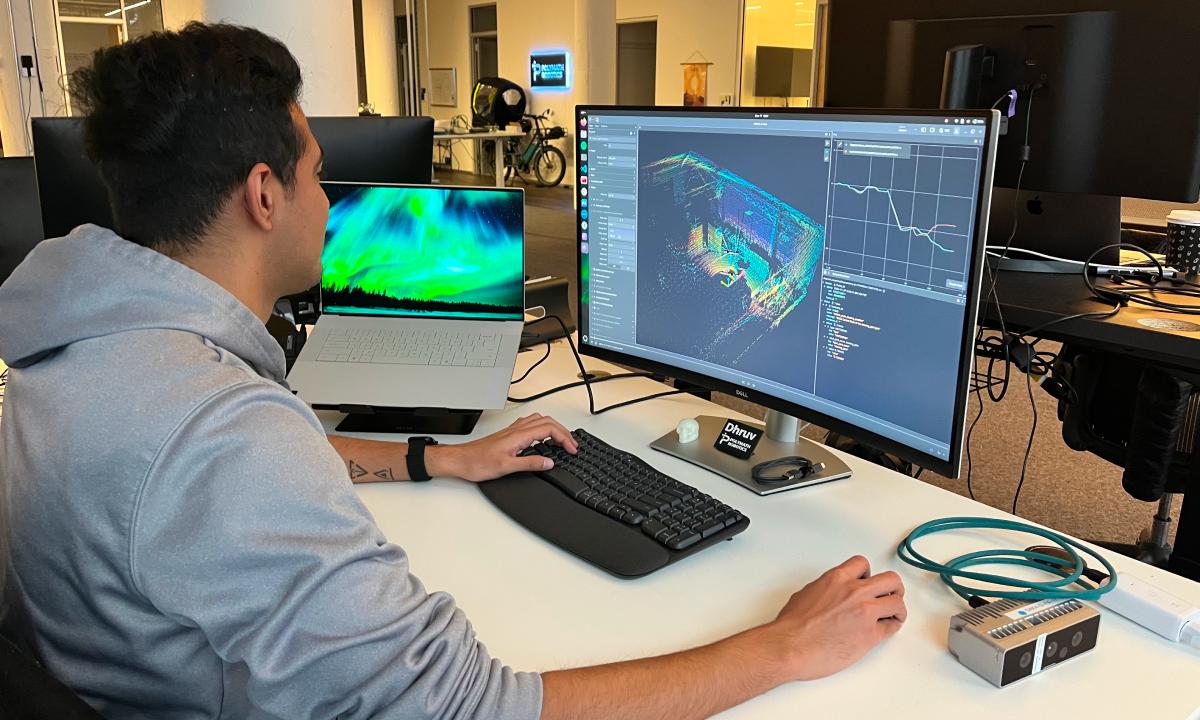
Before comparing individual models, it is important to understand the different product categories offered by each manufacturer.
1.1 Hesai: Automotive and Robotics LiDAR Solutions
Hesai offers LiDAR products covering automotive perception, robotics, industrial applications, and spatial sensing.
Its product portfolio includes several families, such as:
- AT Series: long-range LiDAR products
- JT Series: compact 3D LiDAR products
- XT Series: mid-range 360-degree LiDAR products
- QT Series: short-range, wide-field-of-view LiDAR products
- OT and Pandar Series: 360-degree LiDAR products for different performance requirements
- MT Series: high-spatial-resolution LiDAR products
For robotics and industrial applications, the JT and XT families may be relevant starting points, depending on the required range, coverage, and installation configuration.
For automotive and advanced perception development, products such as AT128 may be considered when their specifications match the project requirements.
Hesai’s product portfolio should therefore be evaluated by application and model rather than treated as one uniform sensor category.
Official product reference: Hesai LiDAR Products
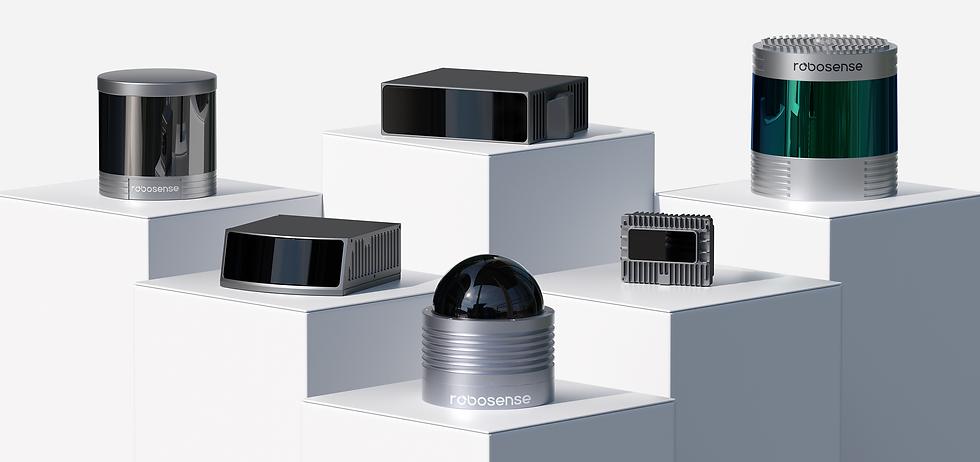
1.2 RoboSense: Automotive, Digital and Robotics LiDAR
RoboSense offers several LiDAR product platforms and sensing solutions.
Its product families include:
- M Platform
- E Platform
- R Platform
- EM Platform
- Helios Series
- Bpearl Series
- Perception-related solutions
Different families serve different sensing and integration requirements.
For example, the E1R is a fully solid-state digital LiDAR designed for wide-field-of-view perception. RoboSense identifies robotics applications such as obstacle avoidance, mapping, and navigation among its intended uses.
Other RoboSense products serve different applications, including automotive perception, industrial sensing, and fixed-installation scenarios.
For buyers evaluating RoboSense, the first step should be identifying the appropriate product family and then checking the exact model’s interface, operating conditions, and software support.
Official product reference: RoboSense Product Portfolio
1.3 Livox: LiDAR for Robotics, Mapping and Autonomous Systems
Livox offers LiDAR products for robotics, autonomous driving, mapping, and other sensing applications.
Its product portfolio includes:
- Mid-360S
- Mid-360L
- Avia 2
- Avia
- Mid-70
- Tele-15
- HAP
Different products are designed for different measurement ranges, scanning configurations, and application requirements.
For example, the Mid-360 family is relevant to compact 3D perception and robotics development, while the Avia product family is associated with mapping and aerial applications.
Livox also provides developer resources, SDK information, product manuals, and software tools that engineering teams can review before integration.
Official product reference: Livox LiDAR Products and Developer Resources
2. Hesai vs RoboSense vs Livox: Product Selection Overview
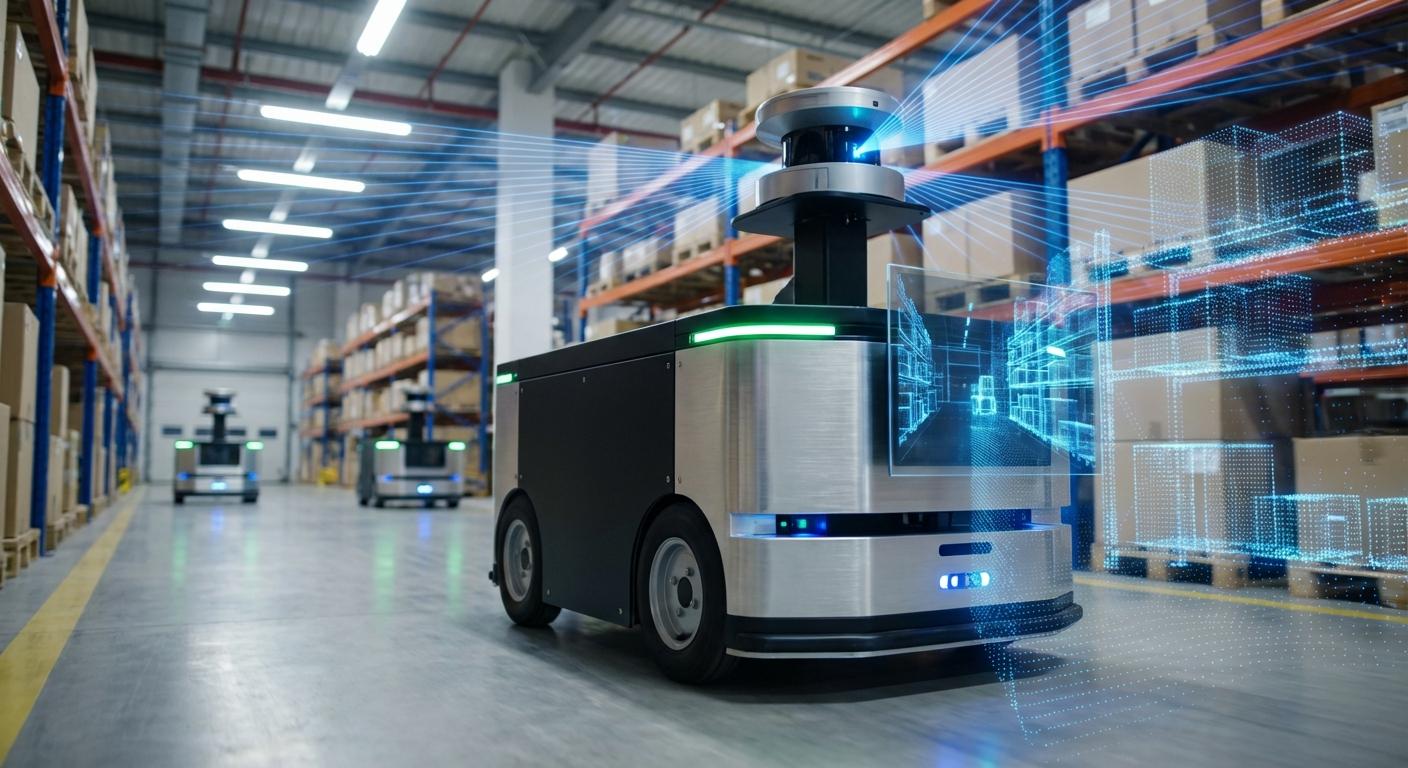
The following comparison is intended as a product-selection framework, not a ranking of the manufacturers.
| Evaluation area | Hesai | RoboSense | Livox |
|---|---|---|---|
| Automotive LiDAR | Multiple automotive product families | Multiple automotive product platforms | Automotive-oriented product options |
| Robotics LiDAR | Dedicated robotics and industrial product families | Products for robotics perception and navigation | Robotics-oriented 3D LiDAR options |
| 360-degree LiDAR | Available in selected product families | Depends on selected model | Depends on selected model |
| Short-range sensing | Available in selected product families | Available in selected product families | Available in selected product families |
| Mapping applications | Model-dependent | Model-dependent | Relevant product options available |
| Developer resources | Manufacturer documentation and resources | Manufacturer documentation and software resources | SDK, manuals, and developer resources |
| Selection priority | Match model to required perception architecture | Match platform and model to application | Match scanning characteristics and software needs |
A direct brand-level comparison can be misleading because the products within each portfolio do not necessarily compete in the same application category.
For example, comparing a long-range automotive sensor with a compact robotics LiDAR based only on maximum range would not produce a meaningful engineering conclusion.
The correct comparison should begin with products that satisfy the same application requirements.
3. Comparing Representative Models: What Should Engineers Examine?
Instead of assuming that one brand is universally better, engineering teams should compare representative models according to the intended application.
The following examples illustrate how to structure that evaluation.
3.1 Hesai AT128: Long-Range Automotive Perception
Hesai AT128 is a long-range automotive LiDAR with a 120-degree horizontal field of view.
Its published specifications include:
- 210 m ranging capability at 10% reflectivity
- 120° × 25.4° field of view
- 1,536,000 points per second in single-return mode
- 0.1° horizontal angular resolution
- 0.2° vertical angular resolution
These are manufacturer-published specifications under specified test conditions. Actual system performance must be evaluated against the target application and installation environment.
Potential evaluation scenarios include:
- ADAS development
- Autonomous vehicle perception
- Automotive engineering projects
- Long-range object perception
- Vehicle integration programs
Engineers should also review mechanical dimensions, power requirements, network interfaces, firmware, and software integration requirements.
Official reference: Hesai AT128 Product Information
3.2 RoboSense E1R: Wide-Field-of-View Solid-State Perception
RoboSense E1R is a fully solid-state digital LiDAR designed for wide-field-of-view sensing.
Its manufacturer-published product information includes:
- 120° × 90° field of view
- 75 m maximum stated range
- 30 m range at 10% reflectivity
- 260,000 points per second
The product is positioned for applications including robotics obstacle avoidance, mapping, and navigation.
Potential evaluation scenarios include:
- Mobile robot perception
- Wide-area obstacle detection
- Compact sensing installations
- Robotics development platforms
When evaluating this model, engineers should examine its actual measurement characteristics, mounting orientation, data interface, and compatibility with the target perception software.
Official reference: RoboSense E1R
3.3 Livox Mid-360S: Compact 3D Robotics Sensing
Livox Mid-360S is part of the manufacturer’s compact 3D LiDAR product family.
It may be considered for applications where engineers need compact 3D environmental sensing, including robotics and autonomous system development.
Potential evaluation scenarios include:
- AMR and AGV perception
- Indoor and outdoor robotics development
- 3D mapping
- Mobile robot environmental sensing
- Research and development platforms
Before selecting Mid-360S, engineers should review the latest product documentation for:
- Field of view
- Measurement range under specified reflectivity conditions
- Point-cloud characteristics
- Data output and network requirements
- Power and mechanical requirements
- SDK and driver compatibility
Do not assume that an older model and its successor have identical mechanical, electrical, or software requirements.
Official reference: Livox Product Information
3.4 Why These Three Models Are Not Direct Replacements
The three examples above represent different product configurations and application priorities.
| Model | Primary evaluation direction | Important engineering question |
|---|---|---|
| Hesai AT128 | Long-range automotive perception | Does the sensor meet the vehicle’s perception and integration requirements? |
| RoboSense E1R | Wide-field-of-view solid-state perception | Is its coverage and point-cloud performance suitable for the target robot? |
| Livox Mid-360S | Compact 3D robotics sensing | Does its scanning configuration and software ecosystem fit the application? |
These products should not be treated as equivalent replacements.
A valid comparison requires matching the required range, field of view, accuracy, point-cloud characteristics, environmental specifications, interfaces, and system architecture.
4. How to Choose LiDAR for Different OEM Applications
The application should determine the product shortlist.
4.1 AMR and AGV Manufacturers
AMR and AGV manufacturers often need stable navigation, localization, and obstacle detection.
Important selection factors include:
- Horizontal and vertical field of view
- Measurement range
- Angular resolution
- Scan frequency
- Point-cloud quality
- Mounting position
- ROS or ROS 2 support
- Compatibility with industrial computers
For a relatively simple indoor navigation system, a 2D LiDAR may be sufficient.
For robots operating around complex loads, different object heights, or changing industrial environments, a 3D LiDAR may provide more useful spatial information.
The final configuration should be based on coverage analysis and representative testing.
4.2 Autonomous Forklift Manufacturers
Autonomous forklifts have additional perception challenges because the forks, mast, and carried loads can block the sensor’s field of view.
The evaluation should consider:
- Pallet detection
- Fork positioning
- Load-height variation
- Rack alignment
- Low obstacles
- Vehicle blind spots
- Dynamic obstacle detection
A combination of LiDAR and cameras may be more appropriate than relying on one sensor type for every perception task.
4.3 Autonomous Driving and ADAS Development
Automotive development projects may require longer measurement ranges, specific field-of-view characteristics, high point-cloud rates, and vehicle-level integration.
Evaluation factors include:
- Range under defined reflectivity conditions
- Horizontal and vertical resolution
- Point rate
- Measurement accuracy
- Environmental validation
- Mechanical integration
- Vehicle network architecture
- Functional-safety and cybersecurity documentation, where applicable
Automotive-grade claims should be checked against the exact model’s published documentation and relevant certification information.
4.4 UAV Mapping and Aerial Surveying
UAV LiDAR projects have different requirements from vehicle navigation.
Important factors include:
- Sensor weight
- Measurement range
- Scanning pattern
- Point-cloud quality
- GNSS/INS integration
- Time synchronization
- Mounting configuration
- Post-processing workflow
Livox and RoboSense both have product options that may be relevant to certain mapping or UAV projects. However, the suitability of any model depends on the complete payload and positioning architecture.
4.5 Industrial Inspection and Stationary Perception
Fixed industrial installations may require LiDAR for:
- Object profiling
- Area monitoring
- Volume measurement
- Machine positioning
- Material handling
- Spatial measurement
In these applications, engineers should evaluate the required scanning geometry, installation distance, repeatability, target surfaces, and calibration procedure.
5. Technical Parameters That Matter More Than Brand Names
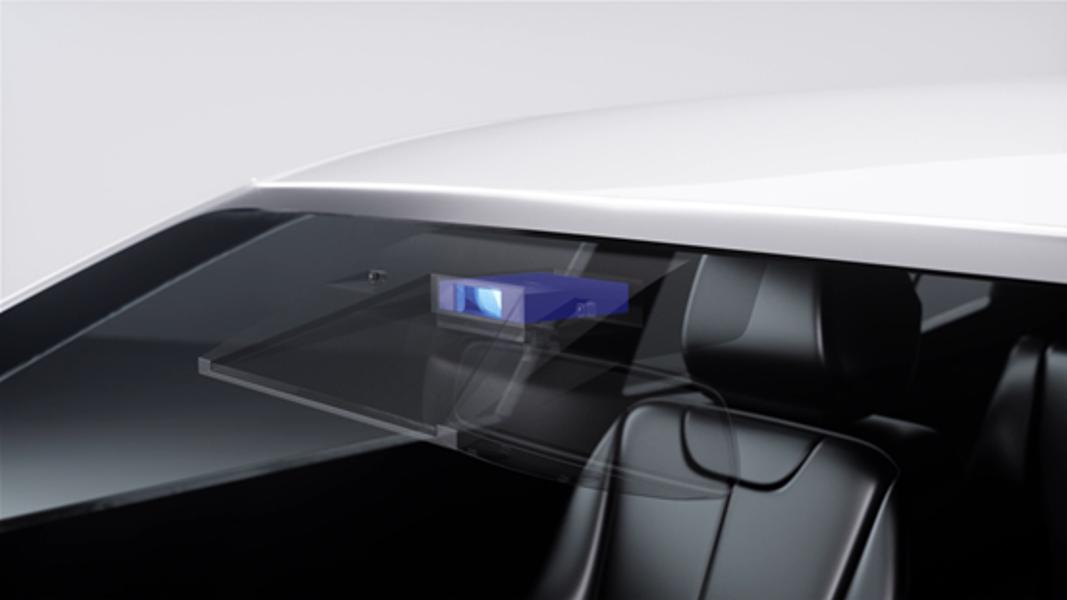
A professional LiDAR comparison should evaluate at least the following technical dimensions.
5.1 Detection Range Under Defined Conditions
Always compare range specifications at the same target reflectivity.
For example, a maximum range measured against a high-reflectivity target should not be directly compared with a range measured at 10% reflectivity.
Ask manufacturers or suppliers for:
- Range at relevant reflectivity levels
- Measurement accuracy
- Minimum detection distance
- Performance on representative materials
- Environmental test conditions
5.2 Field of View
Field of view determines the spatial coverage available to the perception system.
Check:
- Horizontal field of view
- Vertical field of view
- Blind zones
- Mounting orientation
- Overlap between multiple sensors
A wide field of view may improve coverage, but it does not automatically guarantee high point density or reliable detection of every object.
5.3 Point Rate and Angular Resolution
Point rate and angular resolution influence the amount and distribution of measurement data.
However, higher point rate alone does not guarantee better perception.
Engineers should also consider:
- Point distribution
- Return modes
- Angular sampling
- Target distance
- Beam characteristics
- Frame rate
- Processing requirements
5.4 Interface and Data Compatibility
Check whether the sensor supports the system’s required:
- Ethernet interface
- Communication protocol
- Point-cloud format
- SDK
- ROS or ROS 2 driver
- Operating system
- Computing architecture
- Timestamp and synchronization method
Compatibility should be verified using the exact product model and software version.
5.5 Environmental and Mechanical Requirements
For industrial and automotive projects, evaluate:
- Operating temperature
- IP rating
- Vibration resistance
- Shock resistance
- Power consumption
- Dimensions
- Weight
- Connector and cable requirements
- EMC specifications
These factors can affect installation, reliability, and total system cost.
6. Software Ecosystem and Integration: A Critical Selection Factor
A LiDAR sensor is only one component of a perception system.
The software ecosystem can have a major effect on engineering development time.
6.1 SDK and Developer Documentation
Before ordering samples, request access to relevant documentation.
Check whether the manufacturer provides:
- SDK downloads
- API documentation
- User manuals
- Data format specifications
- Configuration tools
- Example applications
- Driver release information
The availability of documentation should be assessed for the exact product model.
6.2 ROS and ROS 2 Compatibility
For robotics applications, verify:
- Official driver availability
- Supported ROS distributions
- Supported Ubuntu versions
- ARM and x86 compatibility
- Message types
- Launch and configuration files
- Driver maintenance status
A driver available for one model does not automatically guarantee support for every product in the manufacturer’s portfolio.
6.3 NVIDIA Jetson and Embedded Platforms
Many robotics developers use NVIDIA Jetson platforms for perception and AI processing.
Before selecting a LiDAR, check:
- CPU architecture compatibility
- JetPack version
- Operating system requirements
- SDK dependencies
- Network configuration
- Data-processing performance
The sensor, SDK, driver, and computing platform should be tested together before production approval.
6.4 Multi-Sensor Calibration and Synchronization
Projects combining LiDAR, cameras, IMUs, and GNSS require accurate calibration and timing.
Engineering teams should review:
- Coordinate frame definitions
- Extrinsic calibration procedures
- Timestamp accuracy
- Hardware synchronization
- Data latency
- Calibration repeatability
A sensor with excellent standalone specifications may still create integration challenges if its data cannot be synchronized or transformed correctly within the system.
7. How to Compare Hesai, RoboSense and Livox Before Procurement
For OEMs and engineering companies, a structured evaluation process is more useful than selecting a brand based on reputation alone.
We recommend the following approach.
Step 1: Define the Project Requirements
Document the application, detection range, field of view, accuracy, interface, operating environment, and target computing platform.
Step 2: Select Comparable Models
Shortlist products that meet the same functional requirements.
Do not compare an automotive long-range sensor with a compact indoor robotics sensor as if they were direct alternatives.
Step 3: Request Technical Documentation
Obtain the latest datasheets, user manuals, interface documents, SDK information, and mechanical drawings.
Step 4: Check Product Availability
Confirm whether the exact model is available, whether the requested quantity can be supplied, and whether the product has any announced lifecycle changes.
Step 5: Purchase Sample Units
Where possible, test sample units in the actual application environment.
Use consistent test conditions when comparing different manufacturers.
Step 6: Evaluate Integration Performance
Measure the complete system’s localization stability, perception performance, data latency, and software compatibility.
Step 7: Confirm Production Procurement Conditions
Before approving a volume order, confirm the exact part number, hardware configuration, accessories, warranty, lead time, and delivery terms.
8. Enterprise Procurement: What Should Buyers Ask Before Ordering?
For large OEMs and Tier 1 suppliers, a LiDAR purchase is often part of a broader development or production program.
Procurement teams should request clear answers to the following questions.
| Procurement question | Why it matters |
|---|---|
| What is the exact manufacturer part number? | Prevents model confusion |
| Is the model currently available? | Reduces delivery uncertainty |
| Is the model discontinued or being replaced? | Supports lifecycle planning |
| Are the required accessories included? | Avoids incomplete orders |
| Are datasheets and manuals available? | Supports engineering approval |
| Is the required SDK or driver supported? | Reduces integration risk |
| Can sample units be supplied? | Enables prototype testing |
| Can the production quantity be confirmed? | Supports production planning |
| What is the warranty coverage? | Clarifies after-sales responsibilities |
| Can repeat orders be coordinated? | Supports long-term supply planning |
8.1 Price Is Only One Part of the Decision
A professional purchasing comparison should include:
- Unit price
- Accessories
- Shipping cost
- Import duties and taxes
- Sample costs
- Delivery time
- Warranty
- Technical coordination
- Product lifecycle risk
For example, a lower-priced sensor may require additional accessories or software development, increasing the actual project cost.
The best purchasing decision should consider total cost and technical suitability together.
9. How LIDARSEEK Supports Multi-Brand LiDAR Sourcing
LIDARSEEK supports international B2B customers sourcing LiDAR and related sensing products for robotics, autonomous systems, automotive development, and industrial automation.
We understand that customers often evaluate multiple brands before finalizing their engineering design or purchasing decision.
Our sourcing support includes:
Multi-Brand Product Sourcing
- Hesai LiDAR
- RoboSense LiDAR
- Livox LiDAR
- Seyond LiDAR
- Other available sensing products based on project requirements
Product Selection and Technical Information
- Exact model and part number confirmation
- Datasheet and user manual coordination
- Product specification comparison
- Interface and SDK documentation review
- Technical question coordination
Procurement and Delivery Support
- Sample and production quantity quotations
- Product availability checks
- Estimated lead-time coordination
- Accessory and configuration confirmation
- International shipping arrangements
We support customers at different stages, including initial product research, prototype evaluation, pilot procurement, and larger project sourcing.
Our objective is to help engineering and purchasing teams identify suitable product options and coordinate the information required for a more efficient purchasing process.
10. Request a Multi-Brand LiDAR Comparison and Quotation
Are you currently comparing Hesai, RoboSense, Livox, or other LiDAR products for an OEM or robotics project?
You do not need to finalize the model before contacting us.
If you already have a technical specification, part number, or Bill of Materials (BOM), send it to our team for quotation review.
If you are still evaluating different models, provide your application requirements and preferred brands.
Information to Include in Your Inquiry
| Information | Example |
|---|---|
| Application | AMR, AGV, ADAS, UAV, robotics |
| Preferred brand | Hesai, RoboSense, Livox, Seyond |
| Product model | AT128, E1R, Mid-360S, or another model |
| Quantity | 1 sample, 10 units, 100 units, etc. |
| Technical requirements | Range, FOV, accuracy, interface |
| Software platform | ROS 2, Ubuntu, NVIDIA Jetson, etc. |
| Destination | Country and city |
| Delivery schedule | Required date or project milestone |
Already have a BOM or RFQ?
Send your product list, quantities, and required delivery schedule. We can help review the requested models and coordinate available quotation options.
Need help choosing between brands?
Tell us your application and technical requirements. We can help identify the product specifications that need to be compared before you make a purchasing decision.
Contact LIDARSEEK
Website: https://lidarseek.com/
Email: lidarseektech@gmail.com
WhatsApp: +86 159 5882 2714
For enterprise inquiries, please include your company name, application, requested models, quantity, and delivery destination.
We welcome inquiries from robotics OEMs, automotive engineering teams, Tier 1 suppliers, industrial automation companies, system integrators, and international procurement departments.
Frequently Asked Questions
1. Is Hesai better than RoboSense or Livox?
There is no universally best brand for every application. Each manufacturer offers different product families. The right choice depends on the required range, field of view, point-cloud characteristics, software compatibility, installation conditions, and project budget.
2. Which LiDAR is suitable for AMR and AGV applications?
The selection depends on navigation architecture and environmental requirements. A 2D LiDAR may be suitable for some horizontal navigation tasks, while 3D LiDAR may provide additional spatial information for complex environments and advanced perception.
3. Can I replace a Hesai LiDAR with a RoboSense or Livox model?
Not automatically. Different models may have different dimensions, connectors, interfaces, scanning characteristics, data formats, and drivers.
Any replacement should undergo mechanical, electrical, software, and performance validation.
4. Which brand is suitable for automotive development?
Hesai and RoboSense both offer automotive-oriented product families. The appropriate model should be selected according to vehicle integration requirements, range, resolution, environmental performance, documentation, and applicable certification requirements.
The exact model must be reviewed rather than making a decision based only on the brand.
5. Does Livox provide SDK and developer resources?
Livox provides developer resources, including SDK-related information, product manuals, and software tools through its official website. Check the current documentation for the exact model and software environment.
6. Can I request quotations for different LiDAR brands in one inquiry?
Yes. You can submit a list containing different brands and product models, together with quantities and delivery requirements. This can help simplify multi-brand sourcing and quotation coordination.
7. Can LIDARSEEK supply both samples and production quantities?
LIDARSEEK welcomes inquiries for sample evaluation, pilot batches, and larger project quantities. Availability, supply conditions, and lead times should be confirmed for each model and order.
8. What if I do not know which model is suitable?
Provide your application, required detection range, field of view, interface, operating environment, and target computing platform. These details can help identify the product specifications that need to be evaluated.
Important Technical Note: Specifications and product availability may change by model, hardware revision, firmware, and manufacturer release. Always verify the latest official datasheet and documentation before design approval or procurement. Product comparisons should use equivalent test conditions and should not be interpreted as independent performance certification.









