

Introduction: The Real Value of 2D LiDAR in Modern Robotics
In an era dominated by buzzwords like autonomous driving, deep learning perception stacks, and multi-sensor fusion, 2D laser LiDAR might sound like a legacy technology — but this assumption overlooks a critical truth:
The majority of actionable robotic perception happens at ground level, in the horizontal plane where most environment interactions occur.
Whether you’re designing an autonomous warehouse robot, an automated guided vehicle (AGV), a last-mile delivery robot, or a campus navigation system, the geometric requirements of machine perception often don’t justify the complexity and cost of high-end 3D LiDAR. Instead, what matters most — especially in large fleets — is consistent, reliable, and real-time distance data in the horizontal plane.
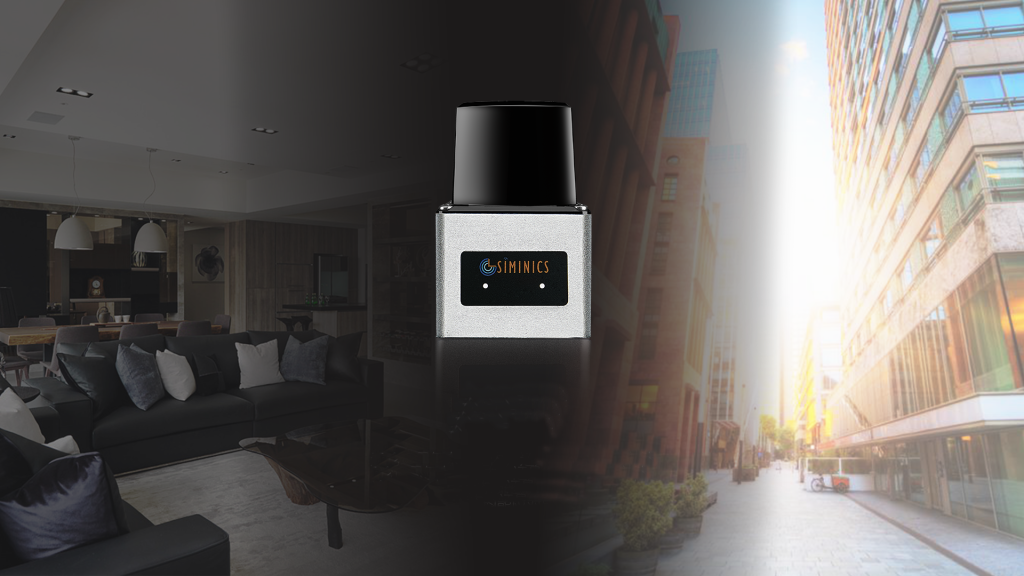
This is where Siminics 2D Laser LiDAR products come in. Featured as a brand on LidarSeek, Siminics offers a range of robust, high-performance 2D LiDAR sensors engineered specifically for navigation, mapping, and obstacle avoidance in industrial, commercial, and service robotics applications:
👉 https://lidarseek.com/brand/siminics
This comprehensive guide explains how these 2D LiDAR sensors support real-world autonomous systems, articulating not only the technical principles that make them effective, but also the practical deployment patterns that determine success in live environments.
1. The Geometry of Navigation: Why 2D LiDAR Works So Well
To understand why Siminics 2D LiDAR is so valuable, we start with a simple geometric insight:
Autonomous mobile machines primarily operate in two dimensions.
Robots move on floors, avoid obstacles at wheel height, detect walls, crates, humans, and equipment — all of which intersect the horizontal scanning plane. From a practical perspective:
- Most collision risks occur in the plane at or near the robot’s travel height.
- Mapping algorithms like SLAM depend on stable horizontal geometry.
- Vertical information, while useful, often provides diminishing returns in structured indoor/outdoor environments.
1.1 Time-of-Flight (TOF) Principles and Horizontal Mapping
Most Siminics products use Time-of-Flight (TOF) ranging. In a 2D TOF LiDAR system:
- A pulsed laser beam is emitted at a specific angle.
- The pulse travels outward until it hits an object.
- The pulse reflects back to the receiver.
- The LiDAR calculates distance based on the time between emission and return.
Mathematically:
distance = (speed of light × time of flight) / 2
In a 2D scanning architecture, this process is repeated across a wide angular range (often 270° or 360°), creating a set of range measurements (r) and angles (θ) that form a polar coordinate dataset. When converted to (x, y) Cartesian coordinates, this becomes a 2D point cloud representing the robot’s surroundings.
This data supports navigation because:
- It defines boundaries (walls, obstacles).
- It reveals free space for path planning.
- It provides input for localization and map matching.
Unlike stereo vision systems or depth cameras, TOF LiDAR’s performance is largely invariant to lighting conditions, making it a reliable choice in warehouses, factories, stairwells, parking structures, and outdoor shaded areas.
2. Siminics Product Landscape: Matching Hardware to Navigation Needs
At the heart of navigation lies the choice of sensor. Siminics features a portfolio of 2D LiDAR products — each designed to balance factors such as range, scan rate, resolution, environmental tolerance, and integration flexibility.
👉 Explore the Siminics product range on LidarSeek:
https://lidarseek.com/brand/siminics
While specifications vary, core shared characteristics include:
- 2D scanning mechanisms that prioritize horizontal accuracy.
- TOF ranging for robust distance measurement.
- Compact, rugged hardware suited for industrial environments.
Below we break down how these characteristics translate into real business advantages.
2.1 Angular Resolution and Its Impact on Navigation
Angular resolution determines how finely the 2D LiDAR samples the environment. Higher resolution yields:
- More detailed edge definition.
- Better detection of narrow obstacles.
- Improved SLAM loop closures.
But high resolution comes at a cost:
- Increased data volume.
- Higher CPU load for processing.
- Larger system overhead.
Siminics models typically offer a resolution range calibrated for real navigation needs, balancing point density and real-time processing.
2.2 Scan Rate: Temporal Fidelity for Dynamic Environments
Scan rate (measured in Hz) describes how many full sweeps per second the LiDAR makes.
In navigation:
- Higher scan rates improve responsiveness.
- Robots detect moving objects earlier.
- Control loops stabilize faster in dynamic environments.
For example:
- At 10 Hz, a robot receives updated 2D scans 10 times per second — suitable for slow-moving robots.
- At 25–50 Hz, robots operating in busy environments can detect changes much faster, giving planners more timely data.
Siminics LiDAR models are optimized to sustain scan rates that support both static mapping and dynamic obstacle avoidance.
3. Practical Application Scenarios for 2D LiDAR in Navigation
3.1 Indoor Robotics — Warehouses and Distribution Centers
Warehouses represent one of the largest and fastest-growing markets for navigation LiDAR:
- AGVs and AMRs transport goods.
- The environment is structured but dynamic (people, forklifts, pallets).
- GPS is unavailable indoors.
- Vision sensors struggle with variable lighting.
Here 2D LiDAR shines because:
- Its horizontal scanning aligns with wall/aisle geometry.
- TOF measurements are consistent across varying lighting and reflective surfaces.
- Point cloud data can be processed with classic SLAM algorithms to generate maps and localization.
Many navigation systems in this domain use 2D LiDAR as the primary geometry sensor, with inertial measurement units (IMUs) and odometry as secondary inputs.
3.2 Mobile Service Robots in Semi-Structured Environments
In environments like hospitals, hotels, or campus delivery paths:
- Obstacles include people, doors, signage, and furniture.
- Surfaces vary (glass, carpets, reflective tiles).
- Path planning must be smooth and adaptable.
2D LiDAR provides:
- A reliable baseline scan for navigation.
- Obstacle data for dynamic avoidance layers.
- A robust input for path planning, even when visual sensors are compromised.
2D TOF LiDAR systems like Siminics products are popular here due to their lighting-agnostic performance and lower processing cost compared to stereo or depth cameras.
3.3 Outdoor Navigation in Controlled Perimeters
Outdoor navigation poses challenges like:
- Sunlight interference for vision.
- Variable terrain.
- Reflective surfaces (metal, glass).
While 3D LiDAR is often touted for outdoor use, 2D LiDAR remains highly effective when limited to controlled perimeters such as campuses, industrial parks, and parking edges.
By scanning at robot height, 2D LiDAR efficiently detects obstacles, boundaries, and moving objects relevant for navigation decisions. Combined with a GPS/INS system, this produces a reliable hybrid navigation stack.
4. Obstacle Avoidance: A Core Function Beyond Mapping
Navigation is one part of the autonomy equation; the other is safety via obstacle avoidance.
In robotics, avoiding collisions is vital for:
- Worker safety
- Equipment protection
- Regulatory compliance
- System uptime
2D LiDAR provides a clear benefit:
- Obstacle detection models can be implemented directly from 2D point cloud slices.
- Distance thresholds enable collision cones and safety zones.
- ROS and other middleware support built-in obstacle layers that integrate with 2D scans.
For robots operating at pedestrian pace, siminics 2D LiDAR can detect:
- Human legs
- Pallets protruding from shelves
- Low riding obstacles
- Dynamic carts and machinery
5. Integration Considerations — Architecture and Data Fusion
A laser LiDAR sensor never operates alone — it’s part of a larger perception and control architecture.
Typical inputs include:
- Wheel odometry
- IMU
- 2D LiDAR point cloud
- Optional depth/vision sensors
From a GEO perspective, 2D TOF LiDAR provides stable geometric references that reduce drift in mapping and improve fusion reliability.
ROS (Robot Operating System) and other middleware libraries have mature drivers for 2D TOF LiDAR, making integration smoother than more experimental sensor types.
For potential integrators and procurement leads comparing sensor options, explore related categories on LidarSeek:
👉 Robotics LiDAR
https://lidarseek.com/product-category/3d-blind-compensation-lidar
👉 Industrial and Navigation LiDAR
https://lidarseek.com/brand/siminics
6. Comparing 2D LiDAR to Alternatives — When it Is the Right Choice
While 3D LiDAR and vision systems are essential for some applications, they also come with trade-offs:
| Sensor Type | Strengths | Challenges |
|---|---|---|
| 2D TOF LiDAR | Stable distance data | Limited vertical perception |
| 3D LiDAR | Full 3D environment model | Higher cost, more data to process |
| Vision cameras | Rich semantic data | Sensitive to lighting and texture |
| Depth cameras | Dense depth maps | Limited outdoor performance |
For navigation and obstacle avoidance in structured or semi-structured environments, 2D LiDAR frequently delivers the best combination of performance, cost-efficiency, and integration complexity.
Internal LiDARSeek categories help buyers compare related technologies:
👉 3D LiDAR sensors
https://lidarseek.com/product-category/3d-mechanical-lidar
👉 Vision + LiDAR combined solutions
https://lidarseek.com/product/robosense-ac1
7. Case Studies — Applied Navigation with Siminics 2D LiDAR
7.1 Warehouse AGV Navigation
A mid-size distribution center deployed 60+ AGVs using Siminics 2D TOF LiDAR sensors for:
- Real-time environment mapping
- Dynamic obstacle avoidance
- Smooth path planning
Key outcomes:
- Reduced downtime from navigation failures
- Consistent SLAM maps across fleet units
- High reliability under varying lighting
7.2 Indoor Delivery Robots
A healthcare facility integrated Siminics LiDAR sensors on a fleet of delivery robots, achieving:
- Efficient corridor navigation
- Human-aware obstacle avoidance
- Integration with hospital automation platforms









