
Choosing the right LiDAR sensor can shape the success of an entire robotics, mapping, or automation project. Engineers care about precision and integration. Procurement teams focus on reliability and long-term value. Project managers need something that performs consistently in real environments — not just on paper.
The RoboSense RS-Helios-32 has quickly become a frequent topic of discussion among teams working with 3D LiDAR sensors, and for good reason. It combines proven mechanical LiDAR architecture with modern performance improvements, making it suitable for a wide range of professional applications including robotics navigation, autonomous systems, mapping, and industrial automation.
This guide takes a practical, buyer-oriented look at the RoboSense RS-Helios-32, breaking down its core features, real-world advantages, and the key considerations you should evaluate before requesting pricing or placing an order.
The RoboSense RS-Helios-32 belongs to the category of 32-beam mechanical 3D LiDAR sensors. This type of LiDAR is widely used when projects require:
- Full 360-degree environmental perception
- Reliable mid-to-long-range obstacle detection
- Dense 3D point cloud output
- Stable operation in changing light and weather conditions
Unlike small solid-state sensors that focus only on short distances, the RS-Helios-32 is built to handle more demanding perception tasks. It is often selected for systems that must navigate complex environments, map surroundings in detail, or monitor large areas in real time.
Core Performance Specifications That Make a Difference
When evaluating any 3D LiDAR sensor, the most important factors are range, resolution, field of view, and point cloud output. The RoboSense RS-Helios-32 is engineered to deliver balanced performance across all of these areas.
1. 32 Laser Channels for True 3D Coverage
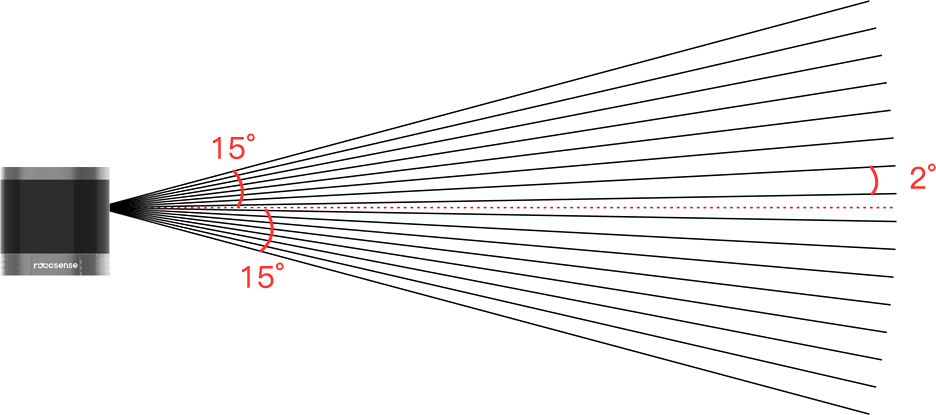
With 32 vertical laser channels, the RS-Helios-32 captures multiple layers of environmental data in every rotation. This creates a dense vertical profile of objects, enabling the sensor to distinguish between:
- Low obstacles on the ground
- Mid-height structures like vehicles or equipment
- Overhanging objects such as shelves or tree branches
For autonomous robots and mobile platforms, this layered perception is essential. It allows navigation systems to understand the world in three dimensions rather than relying on flat, 2D scans.
2. Reliable Detection Range for Mid-to-Long Distance Sensing
The RoboSense RS-Helios-32 offers detection capabilities that extend well beyond short-range sensors. This is particularly valuable for:
- Autonomous vehicles operating in open spaces
- Outdoor robots navigating campuses or industrial sites
- Mapping systems that need to capture large structures
Longer detection range gives software more time to react, improving safety and path planning. For buyers, this often means fewer emergency stops, smoother motion control, and better operational efficiency.
3. High Point Cloud Density for Accurate Mapping
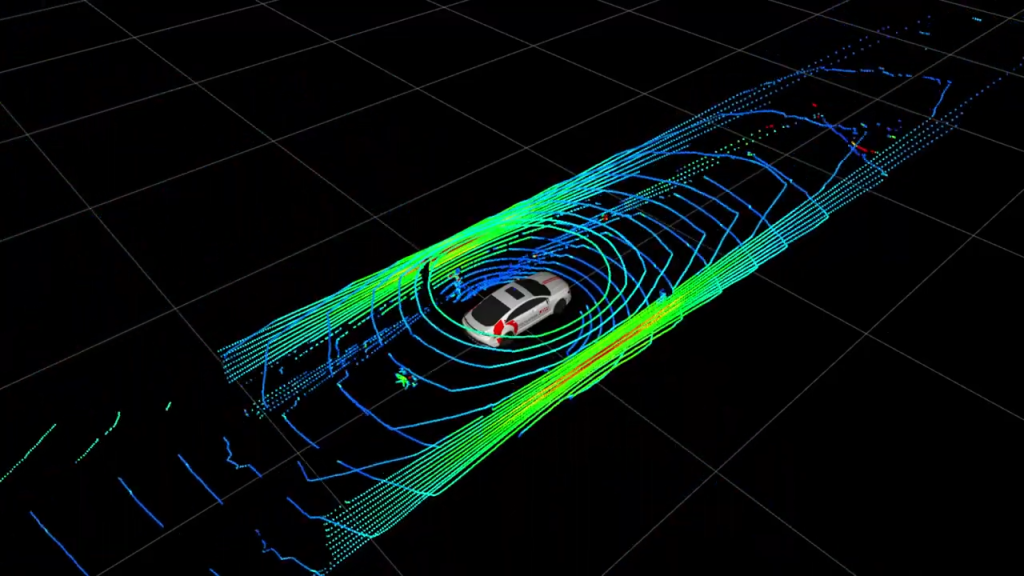
Point cloud density determines how much detail a LiDAR sensor can capture. The RS-Helios-32 produces a high-density 3D point cloud, which improves:
- Surface reconstruction
- Object recognition
- Environmental modeling
In mapping applications, this leads to more accurate digital twins. In robotics, it helps perception algorithms better classify obstacles and free space.
4. 360° Horizontal Field of View
The RS-Helios-32 provides a full 360-degree horizontal field of view, ensuring there are no blind spots around the sensor. This is critical for:
- Mobile robots moving in crowded spaces
- Vehicles that need full situational awareness
- Security and monitoring systems
A full panoramic scan reduces the need for multiple sensors, which simplifies system design and lowers integration costs.
5. Flexible Vertical Field of View Options
Different applications require different vertical coverage. The RoboSense RS-Helios-32 supports multiple vertical field-of-view configurations, allowing integrators to choose between:
- Wider vertical coverage for close-range and tall structures
- Narrower but denser vertical focus for long-range precision
This flexibility makes the sensor adaptable to robotics, drones, industrial vehicles, and fixed monitoring systems.
Built for Real-World Environments, Not Just Labs
A LiDAR sensor is only as good as its performance in the field. The RS-Helios-32 is engineered for use in environments where dust, vibration, temperature changes, and variable lighting are part of daily operation.
Because it relies on active laser measurement, it is not affected by:
- Darkness or low light
- Strong shadows
- Bright sunlight glare
This makes the RoboSense RS-Helios-32 LiDAR more reliable than vision-only systems in industrial and outdoor settings.
Application Scenario 1: Robotics and Autonomous Mobile Platforms
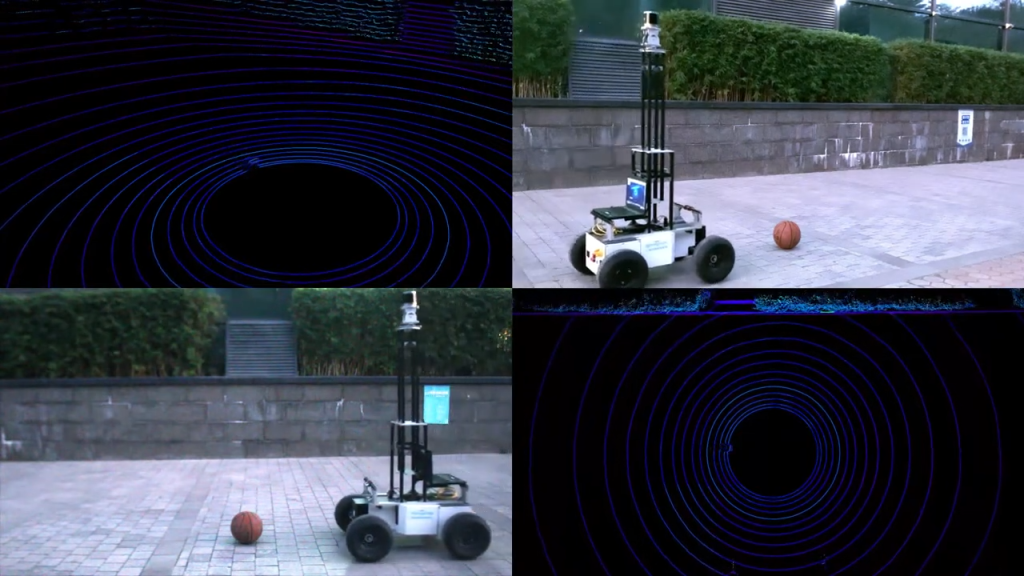
Mobile robots need continuous 3D awareness to move safely and efficiently. The RS-Helios-32 supports:
- Obstacle detection and avoidance
- Real-time mapping
- SLAM-based navigation
Compared to 2D laser scanners, a 32-beam 3D LiDAR detects height differences, overhangs, and complex obstacles, reducing navigation errors.
Application Scenario 2: Autonomous Vehicles and Research Platforms
Research institutions and autonomous vehicle developers often use mechanical 3D LiDAR sensors for testing perception systems. The RS-Helios-32 provides:
- Stable long-range detection
- Dense point clouds for algorithm training
- Reliable performance in outdoor environments
This makes it a practical sensor for R&D in autonomous driving and intelligent vehicles.
Application Scenario 3: Mapping and Surveying
For mobile mapping systems and survey vehicles, the RS-Helios-32 can capture detailed environmental data at scale. High point cloud density improves:
- Terrain modeling
- Infrastructure mapping
- Construction site monitoring
Because of its 360° coverage, fewer passes may be needed to capture a complete scene, increasing efficiency.
Application Scenario 4: Industrial Automation and Safety Monitoring
Factories and logistics centers increasingly use LiDAR for:
- Collision avoidance on automated vehicles
- Area monitoring
- Safety zone enforcement
The RS-Helios-32’s stable detection and wide coverage make it suitable for large indoor spaces where lighting conditions vary.
Integration and Development Friendliness
The RoboSense RS-Helios-32 is designed to work with common robotics and automation ecosystems. It typically supports:
- Ethernet data output
- Compatibility with ROS and other middleware
- Standard data formats for point cloud processing
This reduces integration time for engineering teams and lowers development risk.
Comparing RS-Helios-32 to Lower-Beam LiDAR Sensors
| Feature | RS-Helios-32 | 16-Beam LiDAR |
|---|---|---|
| Vertical Resolution | Higher | Lower |
| Point Cloud Density | Denser | Moderate |
| Mapping Detail | High | Medium |
| Obstacle Recognition | Better for small objects | Limited |
For projects that require precise 3D perception, upgrading from a 16-beam to a 32-beam LiDAR like RS-Helios-32 often results in noticeable performance improvements.
Why Buyers Frequently Ask About Pricing
When teams inquire about the RoboSense RS-Helios-32 price, they are usually comparing:
- Sensor performance vs. cost
- Total number of sensors needed
- Integration and maintenance expenses
Because the RS-Helios-32 combines wide coverage, strong range, and dense point clouds, it can sometimes replace multiple lower-cost sensors, improving overall system value.
What to Prepare Before Requesting a Quote
To receive accurate pricing and recommendations, buyers should be ready to share:
- Intended application (robotics, mapping, vehicles, etc.)
- Required detection range
- Operating environment (indoor/outdoor)
- Estimated quantity
- Integration platform (ROS, custom system, etc.)
This helps suppliers suggest the most suitable configuration of the RoboSense RS-Helios-32 LiDAR.









