
Executive Summary
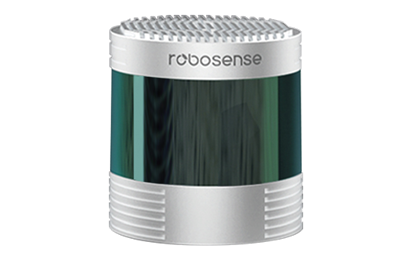
In the era of global automotive electrification and intelligent transformation, Multi-line LiDAR has emerged as the core sensing component of autonomous driving systems, bearing the critical responsibility of environmental perception, obstacle detection, and path planning for intelligent vehicles and robotic systems. RoboSense, a global leader in AI-driven robotics technology platforms, has launched the RubyPlus—a next-generation flagship Multi-line LiDAR tailor-made for L4 commercial autonomous driving operations. Boasting 80/128 configurable channels, an industry-leading detection range of 240 meters at 10% reflectivity, and ultra-high angular resolution of 0.1°, the RubyPlus has broken through the performance bottlenecks of traditional Multi-line LiDAR while achieving a 52% volume reduction, 50% weight reduction, and 33% power consumption reduction compared to its predecessor.
This product is not only certified with international automotive-grade standards such as ISO 26262, CE, RoHS, and SGS but also compatible with mainstream development platforms including ROS, providing comprehensive technical support for secondary development. The RubyPlus has been widely adopted by leading automotive manufacturers and mobility technology companies worldwide, including SAIC Volkswagen, GAC AION, FAW Toyota, Pony.ai, and White Rhino, with its applications spanning L4+ autonomous passenger vehicles, Robotaxi, autonomous long-haul trucking, unmanned logistics distribution, smart transportation, and industrial robotics. As a benchmark product in the high-performance Multi-line LiDAR market, the RubyPlus is driving the commercialization of L4 autonomous driving and reshaping the application landscape of laser sensing technology across multiple industries. Against the backdrop of RoboSense’s first-ever quarterly profit in 2025 and its leading position in robotics LiDAR sales, the RubyPlus is poised to become a core driver of the company’s dual-engine growth strategy in the automotive and robotics sectors.
1. The Evolution of Multi-line LiDAR: The Core Sensing Backbone of Autonomous Driving
1.1 The Strategic Significance of Multi-line LiDAR in Autonomous Driving
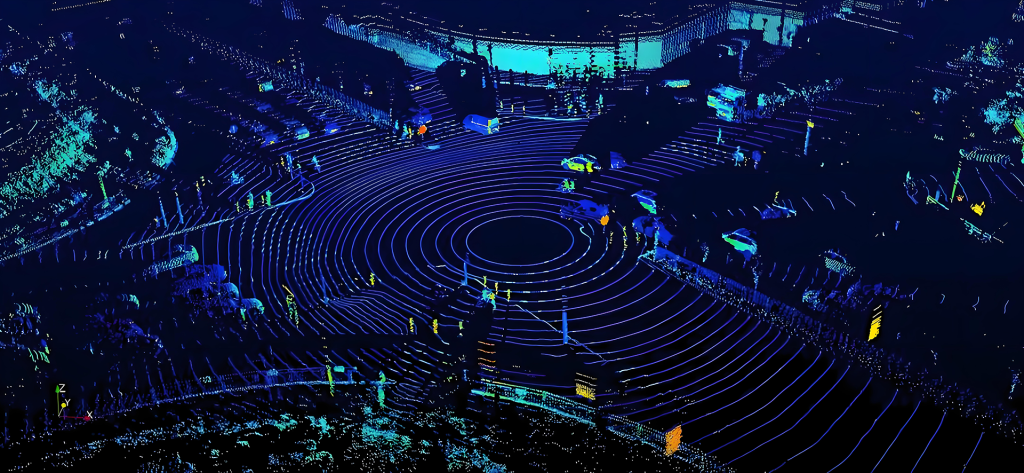
Autonomous driving technology has evolved from L2 advanced driver assistance systems (ADAS) to L4 fully autonomous driving, with environmental perception technology serving as the foundation of its development. Unlike single-line LiDAR, which can only capture two-dimensional environmental information, Multi-line LiDAR emits multiple laser beams simultaneously to scan the surrounding space, generating high-density three-dimensional point cloud data. This data enables intelligent systems to accurately identify the shape, position, distance, and movement state of objects such as vehicles, pedestrians, road signs, and lane lines—even in complex and harsh environments such as low light, rain, fog, and dust.
The number of channels (lines) of a Multi-line LiDAR directly determines its point cloud density and perception accuracy: low-line LiDAR (4-16 lines) is suitable for basic ADAS scenarios, while medium-to-high-line LiDAR (32-128 lines) is the core choice for L3-L4 autonomous driving. With the acceleration of L4 commercial operation globally, the market demand for high-performance Multi-line LiDAR with long detection range, ultra-high resolution, automotive-grade reliability, and compact design has surged. According to industry research, the global Multi-line LiDAR market size for autonomous driving is expected to exceed $15 billion by 2030, with a compound annual growth rate (CAGR) of over 40%, driven by the large-scale deployment of Robotaxi, autonomous commercial vehicles, and smart transportation infrastructure.
1.2 Industry Pain Points and the Demand for Technological Innovation
Despite the rapid development of the Multi-line LiDAR industry, traditional products have long faced pain points such as large volume, high power consumption, low detection range at low reflectivity, and poor anti-interference ability—all of which restrict their large-scale application in L4 autonomous driving. For high-speed autonomous driving scenarios such as highway freight and urban Robotaxi, the Multi-line LiDAR must achieve long-distance detection of low-reflectivity objects (e.g., black vehicles, road signs with worn paint) to ensure sufficient response time; for urban road and road-side sensing scenarios, a 360° horizontal field of view and wide vertical field of view are required to cover blind spots; for vehicle-mounted and robotic applications, compact size and low power consumption are essential to adapt to limited installation space and power supply conditions.
In addition, automotive-grade reliability is a non-negotiable requirement for Multi-line LiDAR applied in autonomous driving. Products must pass a series of rigorous tests including mechanical shock, random vibration, high and low temperature operation, water and dust resistance, and electromagnetic compatibility (EMC) to ensure stable operation in extreme environments. RoboSense, as a pioneer in the global automotive-grade LiDAR mass production and delivery, has been committed to solving these industry pain points, and the RubyPlus is the culmination of its years of technological research and development in the field of Multi-line LiDAR.
2. RoboSense RubyPlus: A Flagship Multi-line LiDAR Tailored for L4+ Autonomous Driving
2.1 Product Positioning and Core Design Concept
The RoboSense RubyPlus is a new-generation flagship Multi-line LiDAR designed exclusively for L4 commercial autonomous driving operations, available in two configurations: RP80 (80 channels) and RP128 (128 channels). Building on the technical foundation of RoboSense’s previous-generation Ruby series, the RubyPlus adopts a modular and innovative structural design, with the core design concept centered on “high performance, high reliability, high integration, and multi-scenario adaptability”.
Unlike traditional Multi-line LiDAR that prioritizes a single performance indicator, the RubyPlus achieves a balanced optimization of all core parameters: it breaks through the detection range to 240 meters at 10% reflectivity (a 20% improvement over similar products), provides ultra-high angular resolution of 0.1°×0.1° in high-performance mode, and generates dense point cloud data in both vertical and horizontal directions. This enables the accurate detection of distant pedestrians, small vehicles, and lane lines, significantly improving the response time of high-speed autonomous driving systems. At the same time, the RubyPlus has been fully optimized for volume, weight, and power consumption, with a compact size of 125mm in diameter and 128mm in height, a weight of only 1920g ± 50g, and a typical power consumption of 27W—making it suitable for installation in various vehicle types and robotic systems without occupying excessive space or consuming excessive power.
2.2 Core Structural Components and Design Highlights
The RubyPlus’s excellent performance is supported by its sophisticated structural design and high-quality components, each of which is carefully crafted to adapt to the harsh operating conditions of autonomous driving and industrial applications:
- Arc-shaped Protective Cover: Both the emitted and returned laser beams of the RubyPlus pass through a specially designed arc-shaped protective cover, which not only protects the internal optical components from physical damage and dust accumulation but also ensures the laser’s transmission efficiency and scanning accuracy. It is strictly prohibited to place any obstacles within the protective cover’s field of view (FOV) to avoid affecting the laser’s normal operation.
- Aviation Connectors: The LiDAR main body is connected to the interface box via two aviation connectors on the base—a 4-core communication aviation connector and a 16-core power and I/O signal connection aviation connector. Aviation connectors feature high anti-interference, waterproof, and shockproof performance, ensuring stable power supply and high-speed data transmission in complex environments such as vehicle vibration and outdoor rain.
- Precision Mounting Holes: The RubyPlus is equipped with standard mounting holes and M3 screw mounting holes, which are used to fix the LiDAR to the mounting bracket with M4 screws. This design not only enhances the installation efficiency and accuracy but also ensures the stability of the LiDAR’s installation position, avoiding measurement errors caused by position deviation during operation.
- Integrated Heat Dissipation Structure: The RubyPlus adopts an integrated heat dissipation design, which effectively dissipates the heat generated during operation through the metal shell, ensuring that the product maintains stable performance within the operating temperature range of -40℃ to +60℃ and avoiding performance degradation or failure caused by overheating.
2.3 Generational Upgrades: Leaping Beyond the Predecessor
Compared with RoboSense’s previous-generation Ruby series Multi-line LiDAR, the RubyPlus has achieved comprehensive leaps in performance, size, and energy efficiency, with the following core upgrade highlights:
- Volume Reduction by 52% & Weight Reduction by 50%: The modular design and high integration of optical and electronic components have significantly reduced the product’s volume and weight, making it more suitable for vehicle-mounted, road-side, and robotic installation scenarios with limited space.
- Power Consumption Reduction by 33%: The optimized circuit design and low-power chip application have reduced the typical power consumption to 27W, reducing the burden on the vehicle’s power supply system and extending the working time of battery-powered robotic systems.
- 20% Improvement in Low-Reflectivity Detection Range: The upgraded laser emission module and signal receiving system enable the RubyPlus to detect objects at 240 meters with 10% reflectivity, a 20% improvement over the previous generation, solving the industry’s long-standing problem of short detection range for low-reflectivity objects.
- Ultra-High Angular Resolution: The vertical angular resolution of 0.1° in the key range of -6.5° to +3.81° (covering 104 channels) and the horizontal angular resolution of 0.1° in high-performance mode provide denser point cloud data, enabling more accurate identification of small and complex objects.
- Enhanced Anti-Interference Ability: The RubyPlus is equipped with a proprietary anti-interference algorithm that can effectively shield interference from multiple LiDARs and ambient light, ensuring stable operation in scenarios with dense LiDAR deployment such as urban road-side sensing and multi-robot collaboration.
3. Core Technical Specifications and Performance Benchmarks of RubyPlus Multi-line LiDAR
As a high-performance Multi-line LiDAR for L4+ autonomous driving, the RubyPlus has a complete and leading technical specification system, covering laser parameters, detection performance, mechanical performance, environmental adaptability, and data output. Its core parameters not only meet the highest requirements of the autonomous driving industry but also set a new benchmark for the Multi-line LiDAR market. The detailed technical specifications and performance interpretation are as follows:
3.1 Basic Laser and Safety Parameters
- Number of Channels: 80/128 configurable (RP80/RP128), the 128-channel version is the flagship configuration for L4 high-end autonomous driving, providing the densest point cloud data; the 80-channel version balances performance and cost, suitable for road-side sensing and mid-range autonomous driving scenarios.
- Laser Wavelength: 905nm, a mainstream wavelength in the Multi-line LiDAR industry, with the advantages of high laser efficiency, low cost, and mature industrial chain, and compatible with most optical receiving components.
- Laser Safety Class: Class 1 (Eye-safe), in line with international laser safety standards, no harm to human eyes even in direct contact, ensuring the safety of pedestrians and operators in application scenarios such as urban driving and road-side installation.
3.2 Core Detection Performance Parameters
Detection performance is the core competitiveness of Multi-line LiDAR, and the RubyPlus has achieved leading indicators in the industry in terms of detection range, blind zone, angular resolution, and point cloud rate:
- Measurement Range: 0.2m to 250m (240m @ 10% NIST), with a minimum detection distance of only 0.2m and a maximum detection distance of 250m, covering both short-distance blind zone compensation and long-distance early warning needs; the 240m detection range at 10% reflectivity is a key breakthrough, enabling the detection of low-reflectivity objects such as black vehicles and dark road signs at ultra-long distances.
- Blind Zone: Only 0.4m, significantly smaller than the industry average of 1m, effectively reducing the perception blind zone of the autonomous driving system and improving safety in low-speed driving and close-range obstacle avoidance scenarios.
- Angular Resolution: Horizontal angular resolution of 0.2°/0.4° (Balanced Mode) and 0.1°/0.2° (High-Performance Mode); vertical angular resolution of 0.1° in the key range of -6.5° to +3.81° (104 channels). The 0.1° ultra-high angular resolution means that the RubyPlus can capture more detailed environmental information, even distinguishing small objects such as traffic cones and road nails at a long distance.
- Point Cloud Output: 2,304,000 pts/s (Single Return Mode) and 4,608,000 pts/s (Dual Return Mode). The high point cloud rate generates dense 3D spatial data in real time, enabling the autonomous driving system to accurately reconstruct the surrounding environment and realize dynamic tracking of moving objects.
- Accuracy: 1cm (1σ) / 3cm (3σ), the high measurement accuracy ensures that the point cloud data can accurately restore the three-dimensional world, providing a reliable basis for path planning and decision-making of the intelligent system.
3.3 Mechanical and Scanning Parameters
- Horizontal FOV: 360°, a full horizontal field of view that enables 360° no-dead-angle environmental perception, eliminating the blind zone of the autonomous driving system in the horizontal direction and being especially suitable for urban complex road and road-side sensing scenarios.
- Vertical FOV: 40° (-25° ~ +15°), the wide vertical field of view covers the road surface, vehicle body, and upper space, enabling the detection of overhead obstacles such as overpasses and gantries, as well as road surface obstacles such as potholes and speed bumps, and adapting to the height requirements of different vehicle types and robotic systems.
- Frame Rate: 10 Hz / 20 Hz, configurable according to application scenarios; the 20 Hz high frame rate provides real-time environmental perception data, reducing the system’s response latency and being suitable for high-speed autonomous driving scenarios such as highway freight.
- Rotation Speed: 600 / 1200 rpm (matching 10 / 20 Hz frame rate), the high rotation speed ensures the real-time and continuity of scanning, avoiding the loss of environmental information caused by slow scanning.
- Laser Emission Angle: Horizontal 1.0 mrad, Vertical 1.7 mrad, the narrow laser emission angle ensures the laser’s directionality and energy concentration, improving the detection range and accuracy.
3.4 Environmental Adaptability and Reliability Parameters

As an automotive-grade Multi-line LiDAR, the RubyPlus has excellent environmental adaptability and reliability, able to operate stably in various extreme environments:
- Operating Temperature: -40℃ ~ +60℃, covering the extreme low temperature of northern China and high temperature of southern China, as well as the harsh temperature conditions of desert and plateau areas, ensuring stable performance in global application scenarios.
- Storage Temperature: -40℃ ~ +85℃, the wide storage temperature range is convenient for transportation and storage, reducing the requirements for storage environment and lowering the logistics cost.
- Protection Level: IP67 / IP6K9K, IP67 means complete protection against dust intrusion and immersion in water of 1m depth for 30 minutes; IP6K9K means resistance to high-temperature and high-pressure water jet cleaning, suitable for outdoor road-side installation and vehicle-mounted scenarios with frequent cleaning needs.
- Time Synchronization: GPS, PTP & gPTP, supporting multiple time synchronization protocols, ensuring the time consistency of multi-sensor fusion (e.g., LiDAR, camera, radar) in the autonomous driving system, and improving the accuracy of data fusion.
3.5 Data Output and Compatibility Parameters
- Ethernet Output: 100 Base – T1, a mainstream automotive-grade Ethernet interface, supporting high-speed and stable data transmission, and compatible with the vehicle’s in-vehicle network system.
- Output Data Protocol: UDP packets over Ethernet, a universal data transmission protocol, easy to integrate with various autonomous driving computing platforms and development systems.
- Lidar Data Packet Contents: 3D spatial coordinates, reflection intensity, timestamps, etc., providing rich environmental information for the intelligent system to realize multi-dimensional object identification and tracking.
- Operating Voltage: 9 V ~ 32 V, compatible with the 12V/24V power supply system of most vehicles and robotic systems, with strong adaptability.
- Software Compatibility: Compatible with ROS systems and mainstream development integration platforms, providing a complete secondary development kit, reducing the development difficulty of customers and accelerating the product landing process.
3.6 International Certifications and Quality Assurance
The RubyPlus has passed a number of international authoritative certifications and automotive-grade reliability tests, providing a solid quality guarantee for its global application:
- Product Certifications: CE, RoHS, SGS triple international certifications, meeting the environmental protection, electromagnetic compatibility, and product quality requirements of the European and global markets.
- Automotive-Grade Certifications: ISO 21434 (cyber security), ISO 26262 (functional safety), ISO 21448 (expected functional safety), the core automotive-grade functional safety and cyber security certifications, ensuring that the product meets the highest safety standards of the automotive industry.
- Reliability Tests: Passed dozens of reliability tests including mechanical shock, random vibration, low-temperature operation, water and dust resistance, EMC, etc., with reference to the strictest automotive-grade test standards, ensuring stable operation for a long time in harsh working conditions.
4. Multi-Scenario Applications of RoboSense RubyPlus Multi-line LiDAR
The RoboSense RubyPlus is not only a core sensing component for L4+ autonomous driving but also a high-performance Multi-line LiDAR with multi-scenario adaptability, thanks to its configurable channels, compact design, excellent environmental adaptability, and rich product versions (including the downward-looking RPV80/RPV48 for road-side sensing). Its applications cover the automotive, mobility, logistics, smart transportation, and robotics industries, and it is gradually becoming a universal laser sensing solution for intelligent systems. The detailed application scenarios are as follows:
4.1 L4+ Autonomous Passenger Vehicles: The Core Sensing Component for Mass Production
L4 fully autonomous driving passenger vehicles are the core application scenario of the RubyPlus 128-channel version. With the global automotive industry’s shift towards electrification and intelligence, leading car manufacturers are accelerating the research and development of L4 autonomous driving models, which have extremely high requirements for the performance, reliability, and integration of Multi-line LiDAR. The RubyPlus’s 240m low-reflectivity detection range, 0.1° ultra-high angular resolution, 360° horizontal FOV, and compact size perfectly meet the sensing needs of L4 autonomous passenger vehicles in urban and highway scenarios.
In high-speed highway driving scenarios, the RubyPlus can detect low-reflectivity objects such as black vehicles and road signs at 240 meters, providing the autonomous driving system with more than 5 seconds of response time (at a speed of 120km/h), ensuring sufficient time for braking and lane change; in complex urban road scenarios, the 360° no-dead-angle perception and 0.4m ultra-small blind zone can accurately detect pedestrians, non-motor vehicles, and small obstacles in the surrounding environment, avoiding traffic accidents caused by blind zones. At the same time, the RubyPlus’s automotive-grade reliability and international certifications lay a solid foundation for its mass production and installation in autonomous passenger vehicles.
4.2 Robotaxi: Empowering the Commercialization of Urban Autonomous Mobility
Robotaxi is the closest L4 autonomous driving scenario to commercialization, and it is also the key application field of the RubyPlus. Robotaxi needs to operate stably in complex urban road environments for a long time, with high requirements for the Multi-line LiDAR’s anti-interference ability, point cloud density, and continuous working performance. The RubyPlus’s proprietary anti-interference algorithm can effectively shield interference from multiple LiDARs and urban ambient light, ensuring stable operation in dense traffic and complex light conditions; the high point cloud rate of 4.608 million pts/s (Dual Return Mode) generates dense 3D point cloud data in real time, enabling the accurate identification of dynamic objects such as pedestrians jaywalking and non-motor vehicles changing lanes randomly.
RoboSense has established cooperation with more than 90% of the world’s top L4 Robotaxi enterprises, and the RubyPlus has been widely deployed in their Robotaxi fleets, realizing road testing and commercial operation in multiple cities around the world. The combination of the RubyPlus and high-precision maps and multi-sensor fusion technology has enabled Robotaxi to achieve map-free full-scenario autonomous driving in some cities, laying the foundation for the large-scale commercial operation of Robotaxi.
4.3 Autonomous Long-Haul Trucking: Improving the Safety and Efficiency of Freight Transportation
Autonomous long-haul trucking is an important application scenario of L4 autonomous driving with huge market potential, and the RubyPlus has become the core sensing choice for autonomous trucking enterprises due to its long detection range, high frame rate, and excellent environmental adaptability. Long-haul trucks usually drive on highways for a long time at high speeds, and the demand for long-distance early warning of the Multi-line LiDAR is far higher than that of urban passenger vehicles. The RubyPlus’s 240m detection range at 10% reflectivity can detect the front vehicles and obstacles at an ultra-long distance, providing the autonomous driving system with sufficient response time for high-speed braking.
In addition, long-haul trucking often passes through harsh environments such as plateaus, deserts, and mountainous areas, with large temperature differences and complex road conditions. The RubyPlus’s operating temperature range of -40℃ to +60℃, IP67/IP6K9K protection level, and anti-vibration performance can ensure stable operation in these harsh environments, reducing the failure rate of the sensing system. Pony.ai, a leading autonomous driving enterprise, has adopted the RubyPlus in its autonomous long-haul trucking fleet, building the world’s largest automated trucking network and realizing the commercial operation of autonomous freight on multiple national highways.
4.4 Smart Transportation (V2X & Road-Side Sensing): Building the Foundation of Intelligent Urban Traffic
The RubyPlus has launched a dedicated downward-looking version (RPV80/RPV48) for smart transportation and V2X (Vehicle-to-Everything) scenarios, which is specially designed for road-side sensing, smart parking, traffic monitoring, and other road/infrastructure-based scenarios. The downward-looking version’s laser channels are oriented downward to overlook the road surface, with each channel fully detecting the traffic conditions, and it has achieved a 50% reduction in volume and weight compared to the previous-generation road-side LiDAR, as well as a 12.5% improvement in the detection range at 10% reflectivity.
- Road-Side Sensing: The RPV80/RPV48 is installed on road-side gantries, traffic lights, and street lamps to realize real-time detection of road traffic flow, vehicle speed, and lane occupancy, and transmit the data to the cloud platform and on-board systems through the V2X network, enabling traffic signal timing optimization and vehicle-road collaboration early warning, improving the efficiency of urban traffic operation and reducing traffic accidents.
- Smart Parking: The downward-looking RubyPlus can accurately detect the parking space occupancy, vehicle model, and parking position in the parking lot, realizing automatic parking space management and unmanned parking guidance, improving the utilization rate of parking spaces and the efficiency of parking operations.
- Traffic Monitoring: The high-resolution point cloud data of the RubyPlus can accurately identify traffic violations such as red light running, lane changing at will, and jaywalking, providing reliable evidence for traffic law enforcement and helping to standardize road traffic order.
The RPV80 version has a pedestrian detection range of 90m, a vehicle detection range of 130m, and a point cloud output of 1.44 million pts/s (Single Return Mode); the RPV48 version balances cost and performance, with a pedestrian detection range of 70m and a vehicle detection range of 90m, suitable for small and medium-sized city road-side sensing and community smart parking scenarios.
4.5 Unmanned Logistics Distribution: Driving the Transformation of the Logistics Industry
Unmanned logistics distribution (including urban terminal distribution, campus distribution, industrial park distribution, etc.) is a low-speed autonomous driving scenario with rapid commercialization, and the RubyPlus 80-channel version and downward-looking version are widely used in unmanned distribution vehicles due to their high cost performance and compact design. Unmanned distribution vehicles need to operate in complex environments such as urban roads, communities, and industrial parks, with high requirements for the Multi-line LiDAR’s close-range obstacle avoidance ability and anti-interference ability.
The RubyPlus’s 0.4m ultra-small blind zone and high-resolution point cloud data can accurately detect small obstacles such as electric bikes, pedestrians, and road stones in close range, ensuring the safety of low-speed driving; the anti-interference algorithm can shield the interference of community street lamps, store sign lights, and other ambient light, ensuring stable operation in complex light conditions. White Rhino, a leading unmanned logistics enterprise supported by SF Express’s strategic investment, has adopted the RubyPlus in its core unmanned distribution vehicle models, realizing large-scale operation in 170 cities during the Spring Festival, and planning to sprint the goal of 5,000 daily active vehicles in 2026, promoting the transformation of unmanned logistics from “supplementary capacity” to “core capacity”.
4.6 Industrial Robotics and Autonomous Operation in Special Scenarios
With the rapid development of the robotics industry, the demand for high-performance Multi-line LiDAR in industrial robotics, humanoid robots, and autonomous operation in special scenarios (mining, ports, parks) is surging, and the RubyPlus has become the core sensing component of these robotic systems due to its compact design, low power consumption, and high reliability.
- Industrial Robotics: In industrial warehousing and logistics robots, the RubyPlus can realize high-precision positioning, navigation, and obstacle avoidance, improving the efficiency and safety of robotic operation; in industrial handling robots, the 360° FOV and small blind zone can adapt to the complex environment of the factory workshop, avoiding collision with equipment and personnel.
- Humanoid Robots: RoboSense is the world’s top seller of LiDAR for humanoid robots, and the RubyPlus’s compact size and low power consumption make it suitable for installation in humanoid robots, providing high-precision environmental perception for their movement and interaction with the environment. The company has established cooperation with more than 20 top humanoid robot enterprises such as Unitree, DeepSeek, and Zhongqing.
- Special Scenarios (Mining, Ports, Parks): In the harsh environments of mining and ports, the RubyPlus’s excellent environmental adaptability and anti-vibration performance can ensure stable operation; in park autonomous driving scenarios such as scenic spots and industrial parks, the 80-channel version of the RubyPlus balances performance and cost, providing reliable sensing support for autonomous shuttle buses and patrol robots.
5. Automotive Manufacturers and Industry Partners Adopting RoboSense RubyPlus
As a flagship Multi-line LiDAR with leading performance and multi-scenario adaptability, the RubyPlus has been widely recognized by global automotive manufacturers, autonomous driving enterprises, and robotics companies. RoboSense, as the first company in the world to achieve mass production and delivery of automotive-grade LiDAR, has built a broad industry partnership ecosystem, and the RubyPlus has become the core cooperation product in its automotive and mobility sectors. The main cooperative manufacturers and partners are as follows:
5.1 SAIC Volkswagen: Strategic Cooperation to Usher in the Era of Joint Venture 2.0
In April 2025, RoboSense signed a “Technology & Ecosystem” strategic cooperation agreement with SAIC Volkswagen at Auto Shanghai 2025, marking the official establishment of a strategic partnership between the two parties and ushering in the era of “joint venture 2.0” characterized by “technology co-creation”. SAIC Volkswagen, as a pioneer in China’s automotive joint ventures, achieved cumulative annual sales of 1.2 million vehicles in 2024, with new energy models accounting for more than 143,000 units, a year-on-year increase of 12%, and is accelerating its transformation towards electrification and intelligence.
The RubyPlus is the core Multi-line LiDAR for SAIC Volkswagen’s L4 autonomous driving research and development. SAIC Volkswagen’s first range-extended full-size SUV concept car ID.Era, unveiled at Auto Shanghai 2025, is equipped with an industry-leading intelligent assisted driving system supporting map-free full-scenario coverage (high-speed, urban, point-to-point navigation), and the RubyPlus serves as the core sensing component of this system. The ID.Era concept car integrates intelligent sensing components such as LiDAR into the car body with a futuristic design, and its production version is expected to be launched in 2026, with the RubyPlus realizing mass production and installation. This cooperation combines Volkswagen’s global development standards with China’s market speed, and the RubyPlus will provide strong sensing support for SAIC Volkswagen’s intelligent transformation.
5.2 GAC AION: Long-Term Cooperation to Empower the Mass Production of Intelligent New Energy Vehicles
RoboSense has established a long-term strategic partnership with GAC AION, a leading new energy vehicle enterprise in China, since 2021, and the RubyPlus has been adopted in multiple GAC AION models and obtained multiple design wins. GAC AION has been at the forefront of China’s new energy vehicle industry in the field of intelligent driving, and its models are equipped with advanced ADAS and autonomous driving systems, with high requirements for the performance and mass production capacity of Multi-line LiDAR.
As the core automotive-grade Multi-line LiDAR supplier of GAC AION, RoboSense has provided the RubyPlus for the research and development and mass production of GAC AION’s high-end intelligent models, helping GAC AION’s autonomous driving system achieve high-precision environmental perception and map-free full-scenario driving. The long-term cooperation between the two parties has not only accelerated the mass production of the RubyPlus but also promoted the technological innovation of GAC AION’s intelligent driving system, realizing a win-win situation in technology and market.
5.3 FAW Toyota: The First Chinese LiDAR Enterprise to Enter Toyota’s Supply Chain
In November 2025, RoboSense announced that it had won the three-year exclusive fixed-point cooperation for a new pure electric model of FAW Toyota, becoming the first Chinese LiDAR enterprise to enter Toyota’s global laser radar supply chain—a milestone in the internationalization of China’s LiDAR industry. Toyota, as a global automotive giant, has extremely strict requirements for the quality, reliability, and mass production capacity of supply chain products, and the RubyPlus’s leading performance, automotive-grade certifications, and mature mass production capacity have won Toyota’s recognition.
Prior to this, RoboSense had already provided sensing support for the launch of FAW Toyota’s bZ5 and bZ3 Zhixiangjia models, and the RubyPlus will be mass-produced and installed in FAW Toyota’s new pure electric model, helping Toyota accelerate its intelligent transformation in the Chinese market. This cooperation not only expands the application of the RubyPlus in joint venture pure electric models but also lays a solid foundation for RoboSense to enter Toyota’s global supply chain and expand the international market.
5.4 Leading Autonomous Driving Enterprises: Pony.ai, White Rhino, and More Than 90% of Global L4 Head Enterprises
RoboSense has established cooperation with more than 90% of the world’s top L4 autonomous driving enterprises, and the RubyPlus has been widely deployed in their Robotaxi, autonomous trucking, and unmanned distribution fleets:
- Pony.ai: A leading global autonomous driving enterprise, Pony.ai has adopted the RubyPlus in its Robotaxi and autonomous long-haul trucking fleets, building the world’s largest automated trucking network and realizing commercial operation in multiple cities in China and the United States. The RubyPlus’s long detection range and high resolution provide reliable sensing support for Pony.ai’s autonomous driving system in high-speed and complex urban scenarios.
- White Rhino: A leading unmanned logistics enterprise supported by SF Express’s strategic investment, White Rhino’s core unmanned distribution vehicle models are equipped with the RubyPlus, realizing large-scale operation in 170 cities across China and planning to sprint the goal of 5,000 daily active vehicles in 2026. The RubyPlus’s small blind zone and anti-interference ability ensure the safety and efficiency of White Rhino’s unmanned distribution in complex urban and community scenarios.
In addition, the RubyPlus has been adopted by many other top L4 autonomous driving enterprises such as Baidu Apollo, WeRide, and AutoX, becoming the mainstream Multi-line LiDAR choice in the global autonomous driving industry.
5.5 Robotics Enterprises: Unitree, DeepSeek, and the World’s Top Humanoid Robot Enterprises
In the robotics industry, RoboSense is the world’s top seller of LiDAR for humanoid robots, with sales of robotics LiDAR exceeding 303,000 units in 2025, a year-on-year increase of more than 1,142%. The RubyPlus’s compact design, low power consumption, and high precision have made it a core sensing component for humanoid robots and industrial robots, and RoboSense has established cooperation with more than 20 top robotics enterprises worldwide:
- Unitree: A leading humanoid robot enterprise, Unitree’s latest humanoid robot models are equipped with the RubyPlus, providing high-precision environmental perception for their movement, obstacle avoidance, and human-computer interaction.
- DeepSeek & Zhongqing: These top humanoid robot enterprises have also adopted the RubyPlus in their research and development and mass production models, accelerating the commercialization of humanoid robots.
In the industrial robotics field, the RubyPlus has been adopted by leading logistics robot enterprises such as Geek+ and Hai Robotics, realizing high-precision positioning and navigation of warehousing and handling robots.
6. Real-World Landing Cases of RubyPlus Multi-line LiDAR
The RoboSense RubyPlus has been successfully applied in multiple real-world scenarios worldwide, with its performance and reliability verified by a large number of road tests and commercial operations. These cases not only reflect the multi-scenario adaptability of the RubyPlus but also lay a solid foundation for the large-scale commercialization of L4 autonomous driving and the intelligent transformation of multiple industries. The typical real-world landing cases are as follows:
6.1 SAIC Volkswagen ID.Era Concept Car: A Benchmark for Joint Venture Intelligent Transformation
Unveiled at Auto Shanghai 2025, the SAIC Volkswagen ID.Era concept car is the first flagship model of SAIC Volkswagen’s “joint venture 2.0” era, equipped with a map-free full-scenario intelligent assisted driving system with the RubyPlus as the core sensing component. The car has a comprehensive CLTC range of more than 1,000 kilometers and supports high-speed, urban, and point-to-point navigation assisted driving, with its intelligent driving system integrating the RubyPlus’s 3D point cloud data with camera, radar, and high-precision positioning data to achieve high-precision environmental perception and decision-making.
The ID.Era concept car’s design integrates the RubyPlus into the car body in a concealed manner, combining “German simplicity” with “Eastern aesthetics” and creating a highly futuristic look. The production version of the car is expected to be launched in 2026, with the RubyPlus realizing mass production and installation, which will become a benchmark for the application of high-performance Multi-line LiDAR in joint venture pure electric models and accelerate the intelligent transformation of the joint venture automotive industry.
6.2 Pony.ai’s Autonomous Long-Haul Trucking Network: The World’s Largest Automated Freight System
Pony.ai has built the world’s largest automated trucking network with the RubyPlus as the core sensing component, covering multiple national highways in China such as the Beijing-Tianjin-Hebei, Yangtze River Delta, and Pearl River Delta regions. The RubyPlus’s 240m low-reflectivity detection range and 0.1° ultra-high angular resolution enable Pony.ai’s autonomous trucks to detect distant obstacles and low-reflectivity objects in advance during high-speed driving, providing sufficient response time for the system.
As of 2026, Pony.ai’s autonomous trucking fleet has completed more than 10 million kilometers of commercial freight mileage, with a safety record of zero major accidents, fully verifying the reliability and stability of the RubyPlus in long-term high-intensity operation. The cooperation between Pony.ai and RoboSense has become a typical case of the application of Multi-line LiDAR in autonomous long-haul trucking, promoting the commercialization of autonomous freight.
6.3 White Rhino’s Unmanned Distribution: Large-Scale Operation in 170 Cities
White Rhino, a leading unmanned logistics enterprise, has adopted the RubyPlus in its core unmanned distribution vehicle models, realizing large-scale commercial operation in 170 cities across China during the 2026 Spring Festival—a milestone in the large-scale application of unmanned distribution. The RubyPlus’s 0.4m ultra-small blind zone and anti-interference ability ensure that White Rhino’s unmanned distribution vehicles can safely and efficiently complete terminal distribution tasks in complex environments such as urban roads, communities, and campuses.
White Rhino’s unmanned distribution vehicles equipped with the RubyPlus can automatically avoid obstacles, plan optimal routes, and complete contactless delivery, improving the efficiency of terminal distribution and reducing labor costs. The company plans to sprint the goal of 5,000 daily active vehicles in 2026, and the RubyPlus will continue to provide core sensing support for its large-scale expansion, promoting the transformation of the logistics industry from “manual distribution” to “unmanned distribution”.
6.4 Smart Transportation Road-Side Sensing Project in a First-Tier Chinese City
A first-tier city in China has launched a smart transportation road-side sensing project covering 50 key intersections, adopting the RubyPlus downward-looking version (RPV80) as the core sensing component. The RPV80 is installed on road-side gantries to realize real-time detection of traffic flow, vehicle speed, lane occupancy, and pedestrian movement at each intersection, and transmit the data to the city’s traffic cloud platform through the V2X network.
The project has achieved remarkable results: the average traffic delay at the covered intersections has been reduced by 30%, the traffic capacity has been increased by 25%, and the number of traffic accidents has been reduced by 40%. The RubyPlus’s high-resolution point cloud data and stable performance have provided a reliable basis for the city’s traffic signal timing optimization and vehicle-road collaboration, becoming a typical case of the application of Multi-line LiDAR in smart transportation and laying a foundation for the construction of intelligent cities.
6.5 Humanoid Robot Mass Production by Unitree: The RubyPlus Empowers Robotic Movement and Interaction
Unitree, a leading humanoid robot enterprise, has launched its latest mass-produced humanoid robot model equipped with the RubyPlus, which has been put on the market in large quantities and applied in scenarios such as commercial services, industrial inspection, and household companionship. The RubyPlus’s compact size and high-precision point cloud data enable the humanoid robot to accurately perceive the surrounding environment, realize high-precision movement, obstacle avoidance, and human-computer interaction, and solve the core pain point of environmental perception for humanoid robots.
As of 2026, Unitree’s humanoid robots equipped with the RubyPlus have been deployed in more than 100 shopping malls, office buildings, and industrial parks in China, completing tasks such as reception, guidance, and inspection, and fully verifying the adaptability of the RubyPlus in the robotics field. This case marks the official entry of the RubyPlus into the mass production stage of humanoid robots, promoting the commercialization of the humanoid robot industry.
7. Competitive Advantages of RoboSense RubyPlus in the Global Multi-line LiDAR Market
The global Multi-line LiDAR market is in a stage of rapid development and fierce competition, with international enterprises such as Velodyne, Luminar, and Innoviz, as well as Chinese enterprises such as Hesai Technology and Suteng Juchuang, competing in the market. As a flagship product of RoboSense, the RubyPlus has formed a unique and comprehensive competitive advantage in the market by virtue of its leading performance, automotive-grade reliability, multi-scenario adaptability, and perfect after-sales service, and it is gradually becoming a benchmark product in the high-performance Multi-line LiDAR market. Its core competitive advantages are as follows:
7.1 Industry-Leading Low-Reflectivity Detection Range and Ultra-High Resolution
The most core competitive advantage of the RubyPlus is its industry-leading detection range of 240 meters at 10% reflectivity and ultra-high angular resolution of 0.1°×0.1° in high-performance mode—two key indicators that directly determine the performance of the Multi-line LiDAR in autonomous driving scenarios. Compared with similar products of international competitors (e.g., Velodyne’s 128-line LiDAR with a detection range of 200 meters at 10% reflectivity and an angular resolution of 0.2°), the RubyPlus has a 20% longer detection range and double the resolution, enabling more accurate and early environmental perception.
The ultra-high resolution and long detection range of the RubyPlus not only improve the safety of autonomous driving systems but also extend the application scenarios of Multi-line LiDAR to high-speed autonomous trucking and long-distance road-side sensing, which is an important technical barrier that other products cannot match in the short term.
7.2 Unprecedented Optimization of Volume, Weight, and Power Consumption
Traditional high-channel Multi-line LiDAR has long faced the problem of “large volume, heavy weight, and high power consumption”, which restricts its large-scale installation in vehicles and robots. The RubyPlus has achieved a 52% volume reduction, 50% weight reduction, and 33% power consumption reduction compared to its predecessor through modular design and high integration of optical and electronic components, setting a new record for the integration of high-performance Multi-line LiDAR.
With a diameter of 125mm, a height of 128mm, and a weight of only 1920g, the RubyPlus is one of the most compact 128-line Multi-line LiDAR in the market, suitable for installation in various vehicle types and robotic systems without occupying excessive space; the typical power consumption of 27W is far lower than the industry average of 40W, reducing the burden on the vehicle’s power supply system and extending the working time of battery-powered robotic systems.
7.3 Complete Automotive-Grade Certifications and High Reliability
Automotive-grade reliability is a key threshold for Multi-line LiDAR to enter the mass production market of autonomous driving, and the RubyPlus has passed a series of the strictest automotive-grade certifications and reliability tests in the industry, including ISO 26262 (functional safety), ISO 21434 (cyber security), ISO 21448 (expected functional safety), as well as CE, RoHS, and SGS international certifications. These certifications not only ensure that the RubyPlus meets the highest safety standards of the global automotive industry but also lay a solid foundation for its global market expansion.
In addition, the RubyPlus has passed dozens of reliability tests such as mechanical shock, random vibration, low-temperature operation, water and dust resistance, and EMC with reference to automotive-grade standards, ensuring stable operation for a long time in harsh working conditions such as vehicle vibration, extreme temperature, and outdoor rain—an advantage that many non-automotive-grade Multi-line LiDAR products cannot match.
7.4 Multi-Channel Configurable and Multi-Version Product Line for Multi-Scenario Adaptability
Unlike most Multi-line LiDAR enterprises that only launch a single-channel product, RoboSense has launched a multi-version product line of the RubyPlus for different application scenarios, including the RP80 (80 channels) and RP128 (128 channels) for vehicle-mounted use, as well as the RPV80/RPV48 downward-looking version for road-side sensing. The multi-channel configurable design enables customers to choose the appropriate product according to their performance and cost requirements, balancing performance and cost.
The downward-looking version RPV80/RPV48 specially designed for smart transportation scenarios fills the gap of the RubyPlus in road-side sensing, making the product line cover both vehicle-mounted and road-side sensing scenarios of autonomous driving and smart transportation, forming a complete laser sensing solution—an advantage that most competitors only focusing on vehicle-mounted Multi-line LiDAR do not have.
7.5 Strong Anti-Interference Ability and Rich Data Output
The RubyPlus is equipped with RoboSense’s proprietary anti-interference algorithm, which can effectively shield interference from multiple LiDARs and ambient light, ensuring stable operation in scenarios with dense LiDAR deployment such as urban road-side sensing and multi-robot collaboration. This anti-interference ability is especially important in complex urban environments, where a large number of LiDARs are deployed on road sides and vehicles, and the mutual interference between LiDARs is a major pain point restricting the performance of the sensing system.
In addition, the RubyPlus provides rich data output content including 3D spatial coordinates, reflection intensity, and timestamps, and supports UDP packets over Ethernet and 100 Base – T1 automotive-grade Ethernet interface, compatible with mainstream autonomous driving computing platforms and ROS development systems. The rich data output and strong compatibility reduce the secondary development difficulty of customers and accelerate the product landing process.
7.6 Perfect After-Sales Service and Technical Support System
RoboSense provides a perfect after-sales service and technical support system for the RubyPlus, including 24/7 one-on-one consultation services, comprehensive technical support throughout the entire process, and free replacement of damaged products within 24 hours. This high-quality after-sales service solves the worries of customers in the process of product use and maintenance, especially for commercial operation customers such as Robotaxi and unmanned logistics enterprises that require high equipment uptime.
In addition, RoboSense provides a complete secondary development kit and technical documentation for the RubyPlus, and has a professional technical support team to provide on-site debugging and training services for customers, helping customers quickly complete the integration and debugging of the product and improve the development efficiency.
7.7 Mature Mass Production Capacity and Broad Industry Partnership Ecosystem
As the first company in the world to achieve mass production and delivery of automotive-grade LiDAR, RoboSense has a mature mass production capacity and a complete industrial chain supply system, which can ensure the stable and large-scale supply of the RubyPlus. By 2025, RoboSense’s cumulative delivery of automotive LiDAR has exceeded 1 million units, and the mass production capacity has been fully verified by the market.
In addition, RoboSense has built a broad industry partnership ecosystem, cooperating with more than 90% of the world’s top L4 autonomous driving enterprises, leading automotive manufacturers such as SAIC Volkswagen, GAC AION, and FAW Toyota, and top robotics enterprises such as Unitree and DeepSeek. This broad partnership ecosystem not only expands the application market of the RubyPlus but also promotes the continuous iteration and optimization of the product through joint research and development with partners, forming a positive cycle of technology and market.
8. Market Trend of Multi-line LiDAR and RoboSense’s Strategic Position
8.1 Global Multi-line LiDAR Market Trend: High Growth Driven by Multiple Factors
The global Multi-line LiDAR market is in a stage of rapid high growth, driven by the acceleration of L4 autonomous driving commercialization, the construction of smart transportation infrastructure, the rapid development of the robotics industry, and the continuous iteration of ADAS technology. According to industry research reports, the global Multi-line LiDAR market size was about $2.8 billion in 2025, and it is expected to exceed $15 billion by 2030, with a CAGR of over 40%. The main driving factors of the market growth are as follows:
- Acceleration of L4 Autonomous Driving Commercialization: Robotaxi, autonomous long-haul trucking, and unmanned distribution are gradually moving towards large-scale commercial operation, and the demand for high-performance Multi-line LiDAR is surging.
- Construction of Smart Transportation Infrastructure: Countries around the world are accelerating the construction of smart cities and smart transportation, and road-side sensing as the core of V2X has become a key investment direction, driving the demand for road-side Multi-line LiDAR.
- Rapid Development of the Robotics Industry: Humanoid robots, industrial logistics robots, and service robots are moving towards mass production, and the demand for high-precision Multi-line LiDAR for environmental perception is growing rapidly.
- Upgrade of ADAS Technology: L2+ ADAS is gradually becoming the standard configuration of new energy vehicles, and medium-line Multi-line LiDAR is gradually replacing single-line LiDAR and millimeter-wave radar, becoming the core sensing component of ADAS.
In the future, the Multi-line LiDAR market will show the development trends of higher resolution, smaller volume, lower power consumption, lower cost, and multi-scenario adaptability, and enterprises with core technological advantages, mature mass production capacity, and complete product lines will occupy the dominant position in the market.
8.2 RoboSense’s Strategic Position: A Global Leader in LiDAR with Dual-Engine Growth
RoboSense has become a global leader in the LiDAR industry through years of technological research and development and market layout, and its strategic position in the global Multi-line LiDAR market is increasingly prominent:
- Pioneer in Automotive-Grade LiDAR Mass Production: RoboSense is the first company in the world to achieve mass production and delivery of automotive-grade LiDAR, with cumulative delivery of automotive LiDAR exceeding 1 million units by 2025, setting a benchmark for the mass production









