

Executive Summary
The robotics industry is undergoing a profound transformation. As autonomous machines migrate from controlled laboratory settings to the unstructured complexity of the real world, their perceptual requirements have intensified dramatically. Humanoid robots must navigate cluttered living spaces, delivery vehicles must thread through crowded urban canyons, and industrial machines must operate with surgical precision in dynamic environments. In this new reality, centimeter-level perception is no longer sufficient—millimeter-level accuracy has become the new baseline for truly intelligent autonomy.
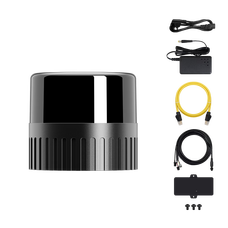
RoboSense, a global pioneer in smart LiDAR and robotics perception technology, has answered this call with Fairy, the world’s first high-precision mid-range digital LiDAR . Unveiled at the 2025 China International High-Tech Fair and achieving “release-to-deployment” status alongside strategic partner Neolix’s L4 autonomous delivery vehicles, Fairy represents a quantum leap in robotic sensing capability .
This comprehensive report provides an in-depth analysis of the RoboSense Fairy. We will examine its groundbreaking chip-based digital architecture, dissect its industry-leading 0.5cm precision specifications, explore its transformative applications across robotics and autonomous systems, and evaluate its unique value proposition for sophisticated clients in Russia, Europe, and North America. For system integrators, robotics manufacturers, and automation specialists seeking to push the boundaries of what autonomous machines can achieve, Fairy establishes an entirely new performance class.
1. Introduction: The Millimeter Mandate in Modern Robotics
For much of the past decade, the LiDAR industry has focused on extending range and increasing point density—chasing specifications that would enable high-speed autonomous driving. While these advancements have been significant, they have often overlooked a more fundamental requirement for the broader robotics ecosystem: precision at scale.
Consider the operational demands of contemporary autonomous systems:
- An autonomous forklift must engage pallets with millimeter-level accuracy to prevent product damage.
- A delivery robot navigating a crowded sidewalk must distinguish between a pedestrian’s foot and a shadow on the pavement.
- A precision agricultural robot must identify individual fruits or stems for selective harvesting.
- A mapping drone must reconstruct complex structures with sufficient fidelity for digital twin applications.
In each of these scenarios, centimeter-level perception introduces unacceptable uncertainty. The margin between success and failure—between safe operation and collision, between efficient workflow and costly downtime—is measured in millimeters.
RoboSense recognized this gap and engineered Fairy specifically to address it. By leveraging advanced chip-based digital architecture, Fairy achieves 0.5cm ultra-high precision —a level of accuracy previously associated only with industrial-grade surveying equipment, now packaged in a form factor weighing less than 350 grams and priced for commercial robotics deployment.
2. Fairy: Technical Architecture and Revolutionary Specifications
Fairy represents the culmination of RoboSense’s digital LiDAR technology, purpose-optimized for the unique demands of mid-range robotic perception.
2.1 Core Technological Innovations
Chip-Based Digital Architecture
At the heart of Fairy lies RoboSense’s next-generation digital transceiver architecture . Unlike traditional LiDAR systems that rely on discrete components and analog signal processing, Fairy integrates:
- VCSEL Emitting Chip: Advanced Vertical-Cavity Surface-Emitting Laser technology enables precise, efficient illumination with exceptional reliability.
- SPAD-SoC Chip: Single Photon Avalanche Diode array combined with System-on-Chip integration delivers high photon detection efficiency and on-chip signal processing.
This digital architecture fundamentally transforms the LiDAR’s operation. By simplifying the signal processing and transmission chain, Fairy captures more complete and accurate point cloud data while simultaneously reducing power consumption . The result is cleaner, more reliable data that requires less computational cleanup—a critical advantage for resource-constrained robotic platforms.
Active Illumination for All-Weather Operation
Fairy’s active illumination technology ensures consistent performance regardless of ambient lighting conditions . Unlike passive cameras that fail in darkness or become blinded by direct sunlight, Fairy operates reliably:
- Nighttime: Full functionality in complete darkness
- Strong Light: Immune to direct sun glare and high-contrast lighting
- Adverse Weather: Maintains performance in rain and fog conditions
This environmental resilience is particularly valuable for clients in regions with challenging weather patterns, such as Northern Europe’s long winter nights or Russia’s variable precipitation.
2.2 Detailed Technical Specifications
The following specifications are compiled from RoboSense official documentation and verified by international distributors :
*Measurement Conditions: 30℃ outdoor temperature, 0.5m to 70m range, 50% target reflectivity, average across channels 25 to 72
2.3 The Precision Advantage
The 0.5cm accuracy specification warrants particular attention. To contextualize this capability:
- Standard mid-range LiDAR: Typical accuracy of ±2-3cm
- Fairy: 0.5cm accuracy—a 4-6x improvement
This millimeter-scale precision transforms what robots can achieve. A delivery vehicle equipped with Fairy can distinguish between a curb and the sidewalk with absolute certainty. A warehouse robot can identify pallet pockets with sufficient accuracy for autonomous engagement. A mapping system can reconstruct fine architectural details invisible to conventional sensors .
3. Transformative Application Scenarios
Fairy’s unique combination of millimeter precision, compact form factor, and 360° coverage makes it applicable across an extraordinary range of robotic applications.
3.1 Autonomous Delivery and Logistics Vehicles
Fairy’s most prominent deployment to date is in partnership with Neolix, a leading autonomous delivery vehicle manufacturer. The Neolix X3 and X6 L4无人配送车 (L4 autonomous delivery vehicles) feature a 96-beam Fairy mounted at the front, integrated with multiple cameras and an NVIDIA Orin computing platform to create a multi-modal front-fusion perception system .
Application Requirements:
- Urban Canyon Navigation: Delivery vehicles must operate in dense urban environments with complex geometry, moving pedestrians, and unpredictable obstacles.
- Zero Blind Spot Operation: The X3 achieves complete forward-area coverage with zero blind spots, enabled by Fairy’s 0.2m near-field capability .
- All-Weather Reliability: Delivery services operate 24/7 in all weather conditions—Fairy’s active illumination ensures consistent performance regardless of time or precipitation.
Market Impact:
The partnership has positioned RoboSense as the market leader in autonomous delivery vehicle LiDAR, with over 90% of top-tier companies choosing RoboSense solutions . The Chinese autonomous delivery vehicle market is projected to reach ¥263.4 billion (approximately €34 billion) by 2030, with annual growth exceeding 40% . Fairy-equipped vehicles are already deployed in operational fleets, not merely prototypes .
3.2 Precision Industrial Automation
In manufacturing and logistics, the margin for error is measured in millimeters. Fairy brings survey-grade precision to industrial robotics.
Unmanned Forklifts and AGVs:
- Pallet Engagement: 0.5cm accuracy enables autonomous forklifts to engage pallets reliably, even when pallets are slightly misaligned or damaged.
- High-Bay Warehouse Navigation: 150m range provides long-distance awareness in large facilities, while 360° coverage eliminates blind spots during turns and maneuvers .
- Safety Zone Monitoring: Real-time obstacle detection ensures safe operation in human-robot collaborative environments.
Smart Ports and Mining:
- Container Handling: Millimeter-precision enables automated cranes and vehicles to engage containers accurately .
- Autonomous Mining Trucks: 150m range and all-weather operation suit the harsh conditions of mining environments, where dust and variable lighting challenge conventional sensors .
3.3 Service and Commercial Robotics
The service robotics sector demands sensors that are not only precise but also aesthetically unobtrusive and easy to integrate.
Cleaning Robots:
- Precision Navigation: Commercial cleaning robots must navigate around furniture, detect cables and small obstacles, and maintain consistent cleaning paths .
- Edge Detection: The 0.2m blind spot ensures the robot can operate right up to walls and drop-offs without collision.
Courtyard and Lawn Robots:
- Terrain Mapping: 0.5cm precision enables accurate reconstruction of terrain features, identifying slopes, obstacles, and boundaries .
- Weather Resilience: IP67 protection and all-weather operation suit outdoor environments exposed to rain and dust .
Delivery Robots (Last-Mile):
- Pedestrian Detection: High point density (137万点/秒) enables reliable detection and classification of pedestrians, cyclists, and pets in crowded environments .
- Curb Negotiation: Millimeter precision ensures smooth transitions between street and sidewalk surfaces.
3.4 Aerial and Mobile Mapping
Unmanned Aerial Vehicles (UAVs) and handheld mapping devices impose stringent weight and size constraints—exactly the conditions Fairy was designed to address.
UAV-Based Surveying:
- Weight Advantage: At <350g, Fairy is light enough for medium-sized commercial drones, enabling high-precision aerial mapping without excessive payload penalty .
- Structural Detail: 0.5cm accuracy captures fine architectural details, power line geometry, and terrain features with exceptional fidelity.
- High Point Density: 1.37 million points per second provides dense coverage for comprehensive 3D reconstruction.
Indoor 3D Modeling:
- Complex Geometry Reconstruction: Fairy excels at capturing intricate indoor environments, including staircases, pipework, and equipment .
- Algorithm-Friendly Point Clouds: Structured, regular point clouds simplify downstream processing and modeling .
3.5 Precision Agriculture and Environmental Monitoring
Agricultural robotics demands sensors that can operate in challenging outdoor environments while providing the precision needed for selective intervention.
Agricultural Robots:
- Crop Identification: Millimeter precision enables distinction between crops and weeds, fruit and foliage .
- Terrain Following: 32° vertical FOV provides awareness of ground contours for implements that must maintain precise height above crops.
Environmental Monitoring:
- Change Detection: High-precision repeat scans can detect millimeter-scale changes in terrain, structures, or vegetation over time.
- Stockpile Measurement: Mining and agricultural operations can accurately measure material volumes with survey-grade precision .
4. Market Validation and Commercial Traction
Fairy’s capabilities are not theoretical—they have been validated through real-world deployments with industry-leading partners.
4.1 Strategic Partnership with Neolix
The most significant validation of Fairy’s capabilities is its immediate adoption by Neolix, a global leader in autonomous delivery vehicles. The Neolix X3, specifically designed for urban last-mile delivery, integrates Fairy as its primary forward-facing perception sensor .
Integration Details:
- Sensor Configuration: A single 96-beam Fairy mounted at the vehicle’s front
- Computing Platform: NVIDIA Orin
- Perception System: Multi-modal front fusion combining LiDAR and camera data
- Coverage: 360° awareness with 120m range, zero blind spots forward
Operational Applications:
- Express delivery terminal connection
- Instant logistics
- Community group purchase replenishment
The Neolix X3 and X6 represent the first wave of mass-produced L4 autonomous delivery vehicles incorporating Fairy, demonstrating the sensor’s readiness for volume deployment .
4.2 Broad Industry Adoption
Beyond Neolix, Fairy has been adopted by multiple leading robotics companies. According to industry analysis, RoboSense’s digital LiDAR portfolio—including Fairy, EMX, and E1R—has been integrated into products from:
- JD.com (e-commerce logistics)
- Meituan (food delivery)
- Cainiao (Alibaba logistics)
- BaiXiniu (autonomous delivery)
- Coco Robotics
- DoorDash
This diverse customer base spans geographies (China, United States) and applications, validating Fairy’s versatility and global appeal.
4.3 Market Leadership Position
A February 2026 report from Zuosi Automotive Research confirmed that RoboSense has achieved the number one market share position in autonomous delivery vehicle LiDAR, with over 90% of top-tier companies choosing RoboSense solutions . The combination of Fairy (for precision perception) and E1R (for solid-state blind spot coverage) has proven particularly effective for low-speed delivery scenarios, enabling forward zero blind spot perception .
With the autonomous delivery vehicle market projected to reach 600,000 to 1 million units annually by 2030 , Fairy is positioned at the heart of a rapidly expanding industry.
5. Value Proposition and Cost-Effectiveness for International Clients
For sophisticated clients in Russia, Europe, and North America, the decision to adopt Fairy rests on a clear demonstration of return on investment. The sensor offers compelling advantages across multiple dimensions.
5.1 Unmatched Precision-to-Weight Ratio
Fairy’s combination of 0.5cm precision and <350g weight is unprecedented in the industry . This unique value proposition enables applications previously impossible:
- Drone-Based Precision Mapping: No other sensor offers this accuracy at this weight, enabling UAVs to capture survey-grade data.
- Lightweight Robot Integration: Mobile robots can achieve millimeter perception without sacrificing battery life or payload capacity.
- Aesthetically Sensitive Designs: The compact form factor (φ75×H70 mm) enables integration into products where size and appearance matter.
5.2 Algorithm-Friendly Data Reduces Development Cost
Fairy’s structured, regular point clouds are explicitly designed to be “algorithm-friendly” . This has profound implications for development:
- Simplified Perception Pipelines: Cleaner data requires less preprocessing and filtering, reducing computational load and algorithm complexity.
- Faster Time-to-Market: Roboticists can focus on application logic rather than wrestling with noisy, irregular data.
- Improved Reliability: Consistent data quality translates to more reliable performance in the field, reducing maintenance and support costs.
5.3 Comprehensive Environmental Ruggedization
International clients, particularly those operating in challenging climates, require equipment that performs reliably in extreme conditions:
- Temperature Range: -40°C to +60°C operation covers everything from Siberian winters to desert summers .
- Ingress Protection: IP67 and IP6K9K ratings ensure protection against dust, water immersion, and high-pressure washdown—essential for outdoor and industrial applications .
- All-Weather Operation: Active illumination technology eliminates dependence on ambient light, ensuring consistent performance day and night, in sun or fog .
5.4 Simplified Integration and Ecosystem Support
Fairy is designed for straightforward integration into robotic systems:
- Standard Interfaces: 100Base-TX/100Base-T1 Ethernet, UDP packet output, and multiple time synchronization options (PTP, gPTP, 1PPS) ensure compatibility with diverse computing platforms .
- Integrated IMU: Hardware-synchronized inertial data simplifies sensor fusion and SLAM implementation .
- Global Availability: Authorized distributors serving European and North American markets, such as OpenELAB in Germany, provide local inventory and support .
5.5 Cost-Effective Precision
While pricing varies by volume and configuration, Fairy’s value proposition is clear: it delivers survey-grade precision at a price point suitable for commercial robotics deployment. For applications where millimeter accuracy translates to operational efficiency—pallet engagement, precision agriculture, structural inspection—the return on investment is compelling. The 48-beam version offers a balanced option for applications where maximum point density is less critical than cost optimization .
6. Competitive Positioning: Fairy vs. Alternatives
In the landscape of mid-range robotic LiDAR, Fairy occupies a unique position:
7. Conclusion: The New Benchmark for Robotic Precision
The RoboSense Fairy represents a fundamental advancement in the capabilities available to roboticists and system integrators. By achieving 0.5cm precision in a sub-350g package with 360° coverage and all-weather operation, Fairy establishes an entirely new performance class for mid-range robotic perception.
For clients in Russia, Europe, and North America—markets characterized by demanding applications, challenging environments, and high expectations for reliability—Fairy offers a proven, production-ready solution. Its immediate adoption by Neolix and integration into fleets of L4 autonomous delivery vehicles demonstrate that its capabilities translate from specification sheet to real-world operation.
As the robotics industry continues its rapid expansion—from autonomous delivery to precision agriculture, from industrial automation to aerial mapping—the demand for millimeter-scale perception will only intensify. Fairy answers that demand today, providing the precision, reliability, and integration simplicity that next-generation autonomous systems require.
For system integrators, robotics manufacturers, and automation specialists seeking to push the boundaries of what their machines can achieve, Fairy is not merely an incremental improvement—it is a transformative capability, unlocking applications and performance levels previously unattainable in commercial robotics.









