
Executive Summary
The global automotive industry is in the midst of its most significant transformation since the invention of the assembly line. Advanced Driver-Assistance Systems (ADAS) are rapidly transitioning from premium options to standard safety equipment, and the race toward higher levels of vehicle autonomy is accelerating across markets in Europe, North America, and Asia. At the heart of this revolution lies a critical enabling technology: high-performance, reliable, and cost-effective 3D perception.
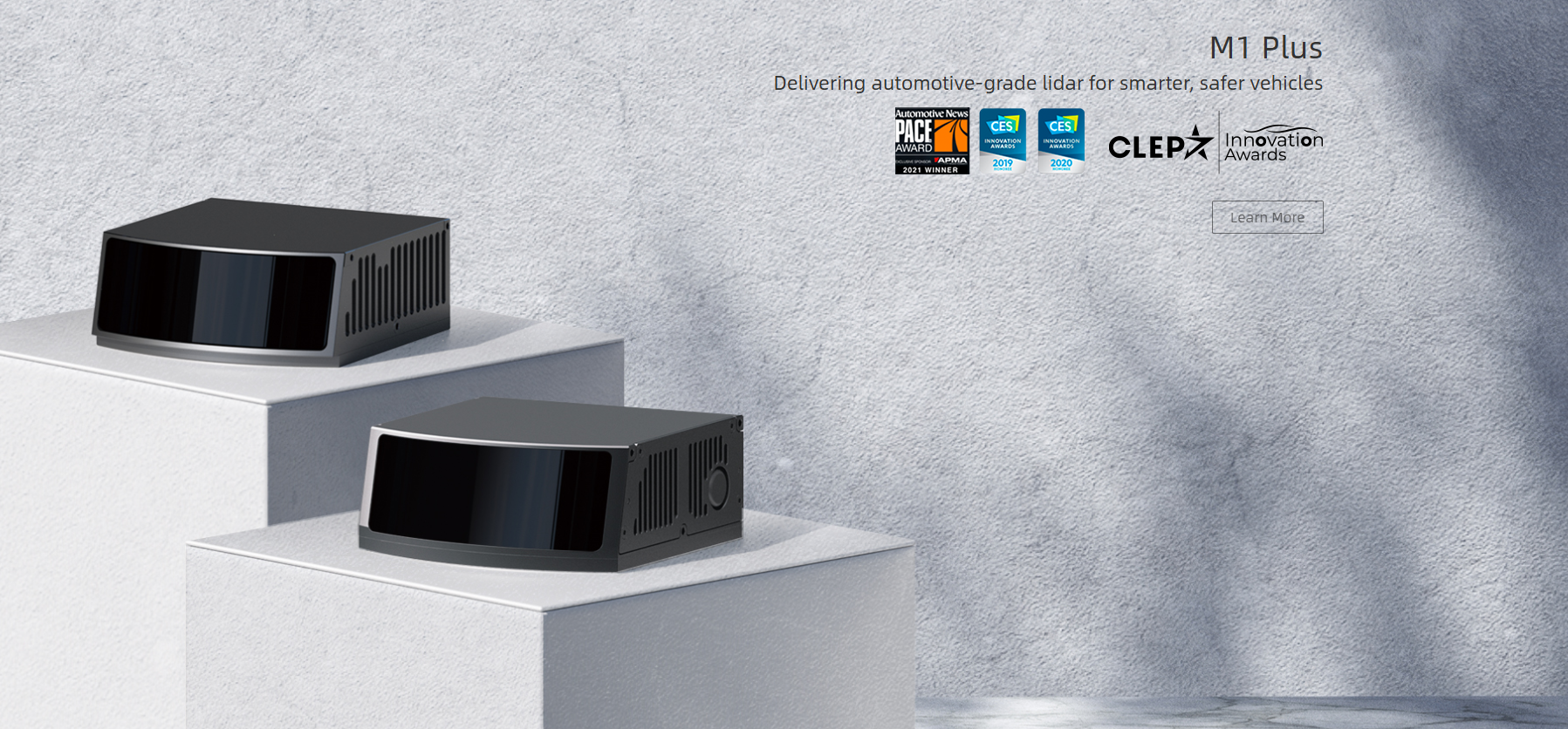
RoboSense’s M1 Plus stands as a landmark achievement in this domain. As the successor to the M1—the world’s first mass-produced automotive-grade solid-state LiDAR—the M1 Plus represents the culmination of years of engineering excellence, real-world deployment experience, and continuous refinement . Built on RoboSense’s proprietary 2D MEMS scanning architecture, the M1 Plus delivers an exceptional balance of long-range performance, high-resolution perception, and automotive-grade reliability that has made it the sensor of choice for over 20 OEMs and more than 60 vehicle models globally .
This comprehensive report provides an in-depth analysis of the RoboSense M1 Plus. We will examine its groundbreaking MEMS-based technology, dissect its intelligent “GAZE” dynamic resolution control, explore its rigorous automotive certifications, and evaluate its value proposition for automotive manufacturers and autonomous driving developers in sophisticated international markets. For any organization serious about deploying production-grade ADAS or autonomous driving systems, the M1 Plus represents not just a component, but a proven, scalable foundation for next-generation vehicle intelligence.
1. Introduction: The Solid-State LiDAR Milestone
When RoboSense introduced the M1 in 2021 as the world’s first automotive-grade solid-state LiDAR to achieve mass production, it fundamentally altered the trajectory of the autonomous driving industry . Prior to this breakthrough, high-performance LiDAR systems were predominantly mechanical spinning sensors—large, expensive, and ill-suited for the rigorous demands of mass-produced passenger vehicles. They contained macroscopic moving parts, required complex assembly, and carried price tags that limited them to robotaxi prototypes and research platforms.
The M1 changed everything. By replacing bulky mechanical rotation with a microscale MEMS (Micro-Electro-Mechanical System) mirror, RoboSense achieved a dramatic reduction in size, complexity, and cost while simultaneously improving reliability. The sensor could be integrated seamlessly into vehicle bodywork, withstand the vibrations and temperature extremes of automotive life, and be manufactured at the scale required for mass-market adoption.
The M1 Plus builds upon this historic foundation with significant enhancements. Most notably, it extends the detection range at low reflectivity from 150 meters to 180 meters—a 20% improvement that directly translates to safer highway-speed autonomous functions . It also refines the intelligent “GAZE” feature, further improving the sensor’s ability to focus perception resources where they matter most .
Today, the M1 Plus is not a laboratory curiosity or a prototype awaiting validation. It is a mature, production-proven sensor deployed in tens of thousands of vehicles worldwide, with a pipeline of design wins extending to more than 60 models from over 20 automotive manufacturers . For automotive engineers, system integrators, and technology planners in Russia, Europe, and North America, understanding the M1 Plus is essential to navigating the ADAS landscape.
2. The M1 Plus: Technical Architecture and Core Specifications
2.1 The MEMS Innovation: 2D Scanning Without Moving Parts
At the heart of the M1 Plus lies a technological marvel: a 2D MEMS scanning mirror . Unlike traditional 1D mechanical scanning systems that rotate an entire sensor assembly or use a spinning polygon mirror, MEMS technology employs a tiny, chip-scale mirror that oscillates on microscopic flexures to steer the laser beam in both horizontal and vertical axes.
This approach offers profound advantages:
- No Macroscopic Moving Parts: The MEMS mirror itself is the only moving element, and its motion occurs at microscopic scale. This eliminates the wear, friction, and reliability concerns associated with bearings, motors, and rotary seals.
- Compact Form Factor: The M1 Plus measures just 111mm × 110mm × 45mm and weighs only 690 grams—a fraction of the size and weight of mechanical LiDARs with comparable performance . This allows for flexible vehicle integration, whether behind the windshield, in the grille, or integrated into headlamps.
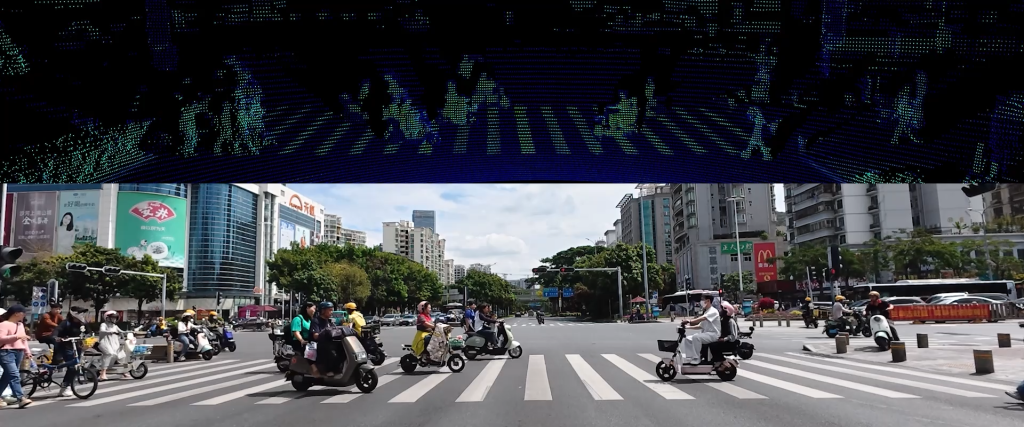
- Precise, Structured Scanning: The MEMS mirror enables a clean, regular scanning pattern that produces algorithm-friendly point clouds. Unlike the rings of mechanical spinners, the M1 Plus generates a uniformly distributed 126-line point cloud across its 120° × 25° field of view .
RoboSense’s MEMS mirror module has achieved AEC-Q100 certification, the automotive industry’s stringent reliability standard for integrated circuits, as verified by SGS, a leading testing and certification organization . This certification ensures the component can withstand the thermal, mechanical, and operational stresses of automotive life.
2.2 Detailed Technical Specifications
The following specifications are compiled from official RoboSense documentation and verified by international distributors serving European and North American markets :
| Parameter | Specification | Notes |
|---|---|---|
| Laser Wavelength | 905 nm | Class 1 eye-safe (IEC60825-1 certified) |
| Number of Lines | 126 | Uniform vertical distribution |
| Maximum Detection Range | 200 m | Absolute maximum range |
| Range @ 10% Reflectivity | 180 m | Industry-leading performance on low-reflectivity targets (NIST standard) |
| Range Accuracy | ±5 cm | Typical |
| Blind Spot | ≤ 0.5 m | Excellent near-field detection |
| Horizontal Field of View | 120° | Wide forward coverage (-60° to +60°) |
| Vertical Field of View | 25° | From -12.5° to +12.5° |
| Horizontal Angular Resolution | 0.2° (average) | Uniform across FOV |
| Vertical Angular Resolution | 0.2° (average) | 0.1° average in ROI with GAZE |
| Frame Rate | 10 Hz / 20 Hz | Configurable |
| Points per Second (Single Return) | 787,500 pts/s | |
| Points per Second (Dual Return) | 1,575,000 pts/s | Doubles effective point density |
| Output Data | UDP packets over Ethernet | Spatial coordinates (x,y,z), intensity, timestamp |
| Ethernet Interface | 1000Base-T1 | Automotive-grade high-speed interface |
| Power Consumption | 15 W | Efficient for continuous operation |
| Operating Voltage | 9 – 16 V DC | Compatible with automotive electrical systems |
| Operating Temperature | -40°C to +85°C | Full automotive temperature range |
| Storage Temperature | -40°C to +105°C | |
| Ingress Protection | IP67, IP6K9K | Dust-tight, waterproof, high-pressure washdown resistant |
| Time Synchronization | gPTP, PTP | Precision timing for multi-sensor fusion |
| Dimensions | 111 × 110 × 45 mm | Compact prismatic form |
| Weight | 690 g ± 20g | Lightweight for easy integration |
2.3 Intelligent “GAZE” Function: Dynamic Resolution Control
One of the most distinctive and valuable features of the M1 Plus is its intelligent “GAZE” function . This capability allows the sensor to dynamically increase its vertical angular resolution within a user-defined Region of Interest (ROI) from an average of 0.2° to an average of 0.1°—effectively doubling the resolution where it matters most.
How GAZE Works:
The MEMS scanning mirror’s motion is not fixed; it can be actively controlled in real-time. When the vehicle’s perception system identifies a region of interest—perhaps a distant vehicle, a pedestrian about to enter the roadway, or a complex intersection ahead—it can command the M1 Plus to concentrate scanning lines within that specific area. The sensor “lingers” on the ROI, collecting more detailed data without sacrificing overall coverage.
The Safety Benefit:
The practical impact is profound. By seeing distant obstacles with double the resolution, the vehicle’s perception system can:
- Detect objects earlier: A pedestrian at 150 meters becomes a cluster of 10-12 points instead of 5-6, crossing the detection threshold sooner.
- Classify objects more reliably: Higher resolution enables better distinction between a car, a cyclist, and a large animal.
- Track motion more accurately: Finer angular resolution translates to more precise velocity estimation and trajectory prediction.
As RoboSense states, the GAZE function enables the vehicle to “spot distant obstacles earlier and give the vehicle time to respond in advance, improving the autonomous driving experience” . In the context of high-speed highway driving, where every millisecond counts, this capability can be the difference between a comfortable braking event and a collision.
3. Automotive-Grade Certification and Reliability
For automotive manufacturers in Europe, North America, and other sophisticated markets, component reliability is non-negotiable. A sensor failure in a consumer vehicle is not merely an inconvenience—it is a safety hazard and a reputational risk. The M1 Plus has been engineered from the ground up to meet the most stringent automotive requirements.
3.1 Comprehensive Testing Regime
The M1 Plus has undergone exhaustive validation testing based on international automotive standards :
| Standard | Test Description |
|---|---|
| ISO 16750 | Road vehicles – Environmental conditions and testing for electrical and electronic equipment |
| GB/T18655-2010 / CISPR 25 | Vehicles, boats and internal combustion engines – Radio disturbance characteristics |
| ISO 11452 | Road vehicles – Component test methods for electrical disturbances from narrowband radiated electromagnetic energy |
| ISO 7637 | Road vehicles – Electrical disturbances from conduction and coupling |
| ISO 10605 | Road vehicles – Test methods for electrical disturbances from electrostatic discharge |
| IEC 60068 | Environmental testing |
This comprehensive test coverage ensures that the M1 Plus can withstand the thermal cycles, mechanical shocks, vibration, electromagnetic interference, and electrostatic discharges encountered throughout a vehicle’s lifetime.
3.2 Functional Safety: ASIL-B Compliance
Functional safety is paramount in systems that can influence vehicle control. The M1 Plus has been developed in accordance with ISO 26262, the international standard for functional safety in automotive systems, achieving ASIL-B (Automotive Safety Integrity Level B) compliance .
Key functional safety features include:
- Probabilistic Metric: The random hardware failure rate is maintained below 10⁻⁷ per hour, fully meeting ASIL-B quantitative requirements .
- Built-In Self-Test (BIST): The sensor continuously monitors its own health, with over 30 fault detection types ensuring that any degradation in performance is immediately identified .
- Real-Time Monitoring: Critical parameters such as laser output power and MEMS mirror motion are continuously supervised to ensure operation remains within safe bounds.
This functional safety architecture means that the M1 Plus can be integrated into safety-critical systems such as Automatic Emergency Braking (AEB) and Lane Keeping Assist (LKA) with confidence.
3.3 Chip-Level Qualification: AEC-Q100
Beyond the complete sensor, RoboSense has ensured that the fundamental components meet automotive standards. The MEMS mirror module has received AEC-Q100 certification, the stress-based qualification standard for integrated circuits used in automotive applications . This certification, issued by SGS, demonstrates that the MEMS chip can withstand the harsh conditions of the automotive environment, including extreme temperatures, thermal cycling, and mechanical stress.
3.4 Eye Safety Certification
Laser safety is a critical concern for any LiDAR operating in public spaces. The M1 Plus fully meets the requirements of IEC60825-1 Class 1, the strictest international standard for laser product safety . This certification, issued by both SGS and goebel—two independent international testing authorities—provides dual assurance that the sensor poses no risk to human eyes under any foreseeable operating conditions.
3.5 Environmental Protection: IP67 and IP6K9K
The M1 Plus is sealed against environmental ingress to the highest automotive standards :
- IP67: Complete protection against dust ingress, and protection against temporary immersion in water (up to 1 meter for 30 minutes).
- IP6K9K: Protection against high-pressure, high-temperature washdowns—essential for vehicles that will be cleaned in automatic car washes.
These ratings ensure reliable operation in rain, snow, dust storms, and after exposure to road salt and cleaning chemicals.
4. Application Scenarios: From ADAS to Autonomous Mobility
The M1 Plus is a versatile sensor designed to serve as the primary forward-facing perception unit across a wide spectrum of automotive applications.
4.1 L2+ and L3 Highway Assistance Systems
The core market for the M1 Plus is the rapidly expanding segment of vehicles with L2+ and L3 highway driving capabilities. In these applications, the vehicle can handle longitudinal and lateral control on highways, with the driver required to supervise or potentially disengage entirely under specific conditions.
Key Requirements Met by M1 Plus:
- Long-Range Detection: The 180m range @10% reflectivity ensures that the system can detect stationary vehicles, debris, or construction equipment well before the vehicle reaches them at highway speeds .
- Wide Field of View: 120° horizontal coverage enables detection of vehicles cutting into the lane from adjacent lanes, as well as pedestrians or animals entering the roadway from the shoulder.
- High Resolution: 0.2° angular resolution (0.1° in ROI) provides sufficient detail to classify vehicles, distinguish between cars and motorcycles, and identify lane markings.
- Reliability: ASIL-B functional safety and AEC-Q100 certified components ensure that the system can be trusted to make or influence safety-critical decisions.
4.2 Urban Autonomous Driving (L4 Robotaxis)
For higher-level autonomous systems operating in complex urban environments, multiple sensors are typically required. The M1 Plus serves as an excellent forward-facing sensor in such configurations, often complemented by additional M1 Plus units or other sensors for side and rear coverage.
Integration Example: A typical robotaxi configuration may employ six M1 Plus sensors positioned around the vehicle to achieve comprehensive 360° coverage . The forward-facing units provide long-range detection of vehicles, pedestrians, and traffic lights, while side and rear units manage blind spot monitoring and lane change assistance.
The GAZE function is particularly valuable in urban contexts, where the system can dynamically focus resolution on crosswalks, intersections, or areas with high pedestrian activity.
4.3 Highway Pilot and Traffic Jam Assist
Even before full autonomy, advanced ADAS features benefit enormously from high-quality LiDAR perception:
- Highway Pilot: The M1 Plus enables the vehicle to maintain safe following distances, execute autonomous lane changes, and navigate construction zones with temporary lane markings.
- Traffic Jam Assist: In congested stop-and-go traffic, the sensor’s accurate near-field perception (≤0.5m blind spot) ensures safe operation at low speeds, detecting cut-in vehicles and nearby obstacles with precision .
4.4 Smart Infrastructure and V2X
Beyond on-vehicle applications, the M1 Plus is increasingly deployed in roadside infrastructure for V2X (Vehicle-to-Everything) applications . Mounted at intersections or along highways, the sensor provides real-time traffic monitoring, incident detection, and data for connected vehicle systems. Its automotive-grade reliability and wide operating temperature range make it suitable for permanent outdoor installation.
4.5 Research and Development Platforms
For universities, research institutions, and automotive suppliers developing next-generation perception algorithms, the M1 Plus offers a stable, well-supported platform. Its mature SDK, ROS compatibility, and extensive documentation reduce development friction, allowing researchers to focus on algorithm innovation rather than sensor integration .
5. Market Position and Commercial Success
The M1 Plus is not a speculative product—it is a proven commercial success with a track record that validates its design and market fit.
5.1 Industry-Leading Adoption
As of December 2023, RoboSense had secured design wins for mass production of LiDAR products for more than 60 vehicle models with over 20 automotive OEMs and Tier 1 suppliers—ranking No. 1 globally according to CIC . These are not merely pilot programs or technology demonstrations; they are firm production commitments from major automotive manufacturers.
5.2 Production Scale and Cost Efficiency
RoboSense has demonstrated its ability to scale production to meet automotive demand. In 2023, the company shipped over 250,000 LiDAR units, with ADAS LiDAR revenues growing nearly 400% year-over-year . This production scale drives cost efficiency; the average selling price of RoboSense’s ADAS LiDAR products declined from approximately ¥4,300 in 2022 to ¥3,200 in 2023 .
For automotive manufacturers, this scale provides confidence in supply chain stability and a clear path to cost reduction over production lifecycles.
5.3 Global Recognition
The M1 Plus has been featured and distributed by leading technology suppliers across Europe and North America, including:
- OpenELAB (Germany): European distributor offering local inventory from Munich warehouse, with DDP (Delivered Duty Paid) shipping for EU customers
- Génération Robots (France): French distributor serving the European robotics and automotive research community
- Robu.in (India): Serving the South Asian market with local support
This global distribution network ensures that customers in Russia, Europe, and North America can obtain sensors, replacements, and technical support within reasonable timeframes.
6. Value Proposition and Cost-Effectiveness for International Clients
For sophisticated clients in European, North American, and Russian markets, the decision to adopt the M1 Plus rests on a clear demonstration of value across multiple dimensions.
6.1 Production-Proven Reliability
The single most compelling advantage of the M1 Plus is its proven track record in mass production. Unlike sensors that exist only as prototypes or low-volume samples, the M1 Plus has been manufactured at scale, integrated into production vehicles, and validated across millions of kilometers of real-world driving. For automotive OEMs, this maturity dramatically reduces integration risk.
6.2 Outstanding Performance-to-Price Ratio
With a European market price of approximately €5,000–5,500 (approximately $5,500 USD) for single-unit purchases, the M1 Plus delivers 180m @10% range, 1.575 million points per second, and full automotive certification at a price point that enables mass-market adoption . Volume pricing for production programs is significantly lower, reflecting the economies of scale RoboSense has achieved .
When compared to the cost of developing, qualifying, and manufacturing a custom sensor solution, or to the price of lower-performance alternatives that require multiple units to achieve equivalent coverage, the M1 Plus presents a compelling economic case.
6.3 Simplified Integration and Ecosystem Support
The M1 Plus is designed for straightforward integration into automotive and robotics systems:
- Standardized Interface: 1000Base-T1 automotive Ethernet with UDP packet output ensures compatibility with a wide range of computing platforms .
- Time Synchronization: gPTP and PTP support enables precise alignment with cameras, radars, and IMUs for multi-sensor fusion .
- Mechanical Flexibility: Compact dimensions and lightweight construction (690g) simplify packaging and mounting .
- Software Support: Mature drivers, ROS integration, and comprehensive documentation accelerate development .
6.4 Future-Proof Platform
The M1 Plus is part of RoboSense’s broader M Platform, which provides a clear technology roadmap. The platform’s modular architecture and chip-based design enable continuous improvement without requiring complete redesign . Customers adopting the M1 Plus today can expect a path to future performance enhancements while maintaining mechanical and electrical compatibility.
6.5 Global Support and Availability
For international clients, access to reliable support and supply chains is critical. RoboSense has established:
- European Distribution: Partners such as OpenELAB (Germany) maintain local inventory and provide DDP shipping, eliminating customs complexity for EU customers
- Technical Documentation: Comprehensive datasheets, user guides, and application notes are available in multiple languages
- Direct OEM Support: For volume production programs, RoboSense provides dedicated engineering support through local offices and Tier 1 partners
7. Competitive Positioning: M1 Plus vs. Alternatives
In the landscape of automotive-grade forward LiDAR sensors, the M1 Plus occupies a distinctive position:
8. Conclusion: The Proven Foundation for Automotive Autonomy
The RoboSense M1 Plus represents more than an incremental improvement in LiDAR technology—it embodies the maturation of an industry. As the successor to the world’s first mass-produced automotive-grade solid-state LiDAR, the M1 Plus has benefited from years of production experience, real-world deployment feedback, and continuous engineering refinement.
For automotive manufacturers, system integrators, and technology developers in Russia, Europe, and North America, the M1 Plus offers a compelling combination of attributes that are difficult to find elsewhere:
- Performance that meets the demands of L2+ to L4 applications, with 180m range at low reflectivity and the intelligent GAZE function for enhanced obstacle detection
- Reliability validated through comprehensive automotive testing, including ASIL-B functional safety, AEC-Q100 chip certification, and IP67/IP6K9K environmental protection
- Production maturity demonstrated through deployment in over 60 vehicle models from more than 20 global OEMs
- Cost-effectiveness enabled by high-volume manufacturing and a clear roadmap to continued price reduction
- Global availability supported by established distribution channels in Europe and North America
In an industry where the gap between prototype capability and production viability can be vast, the M1 Plus has successfully bridged the divide. It is not a sensor awaiting validation; it is a sensor that has been validated, millions of times over, in the most demanding proving ground of all: real-world automotive deployment.
For any organization serious about bringing advanced driver assistance or autonomous driving capabilities to market, the RoboSense M1 Plus is not merely an option to consider—it is the proven foundation upon which to build.









