
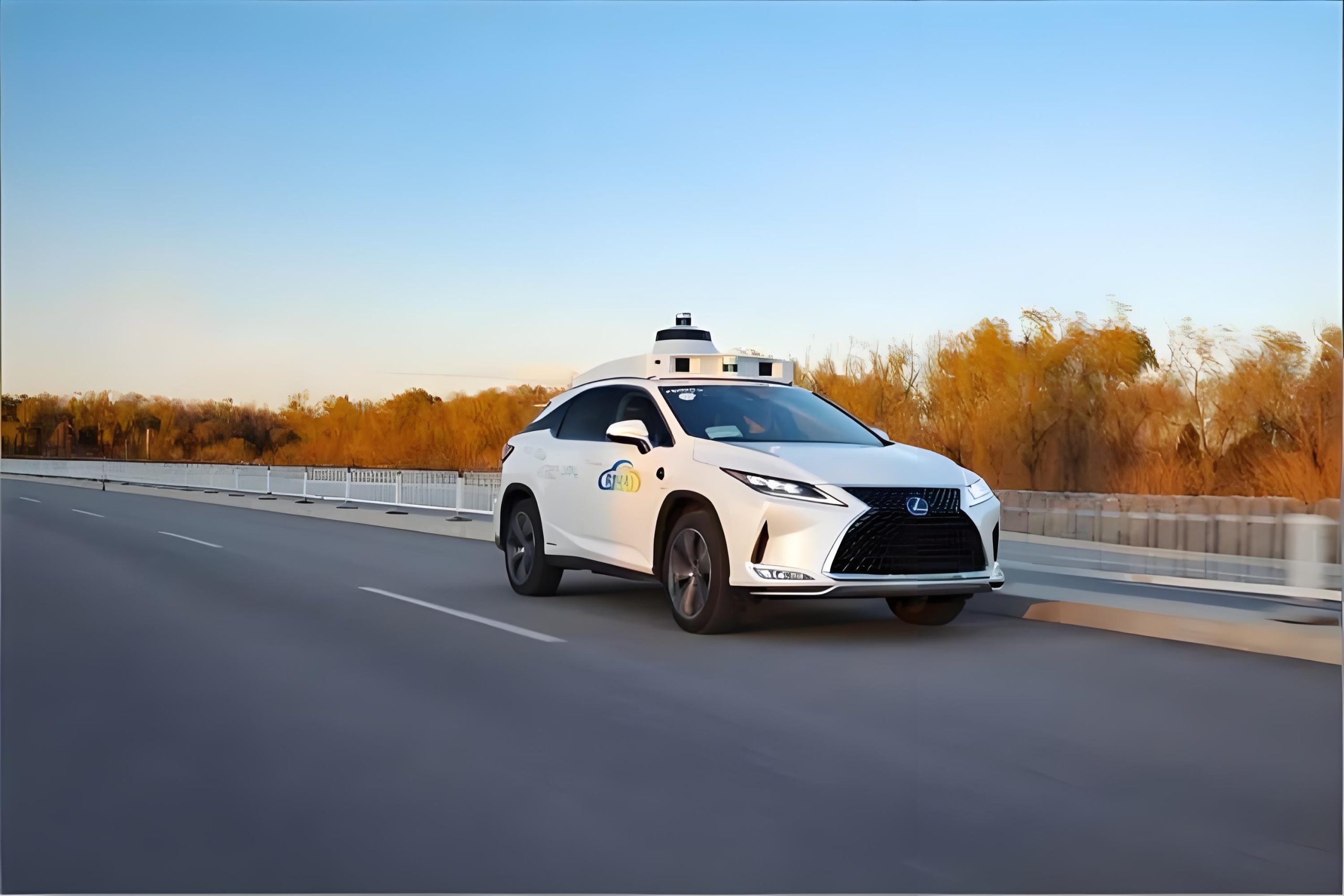
Key Takeaways
Understanding the technical requirements and performance trade-offs is essential for selecting the optimal 3D LiDAR sensor that ensures reliable obstacle avoidance in small autonomous vehicles.
• Range and environmental protection are critical: Small vehicles need 10-20 meter detection range with IP67 rating and 100,000+ lux ambient light resistance for reliable outdoor operation.
• Multi-echo technology filters environmental noise: Unlike single-echo sensors that detect rain as obstacles, multi-echo systems distinguish between weather interference and actual solid objects.
• MEMS-based LiDAR offers balanced performance: These semi-solid-state sensors provide superior durability over mechanical systems while maintaining cost-effectiveness compared to fully solid-state solutions.
• Real-world testing trumps specifications: Laboratory performance varies significantly between models, making field testing under actual operating conditions essential for accurate sensor selection.
• Budget 16-32 channel sensors ($4,000-$12,000) suit most small vehicle applications, while sensor fusion with cameras and radar compensates for individual LiDAR limitations across varying environmental conditions.

Introduction
Autonomous driving and advanced driver assistance systems (ADAS) have seen remarkable progress in recent decades. As you develop or integrate autonomous systems for small vehicles, choosing the right 3D LiDAR for obstacle avoidance becomes critical to ensure reliable performance across diverse conditions. Traditional stereo systems struggle with changing illumination and weather conditions, including snow-covered environments and night driving scenarios. LiDAR sensors, by comparison, offer superior resilience to weather variations and function effectively under poor illumination. This article examines the core technical requirements you need to consider when selecting a 3D LiDAR Sensor, explores different Autonomous Driving LiDAR Sensor technologies (including FMCW LiDAR), evaluates performance factors, and guides you through integration considerations and 3D lidar sensor price ranges for small vehicle applications.
Core Technical Requirements for 3D LiDAR in Small Vehicles
Selecting an appropriate 3D LiDAR for small vehicle obstacle avoidance requires evaluating several interconnected specifications. Detection range stands as your primary consideration. For small Automated Guided Vehicles (AGVs) operating at walking speed, a range of 10 to 20 meters proves sufficient. Field of view directly impacts sensor coverage. Most systems offer scanning angles between 190° and 270°, with wider FOV allowing a single sensor to cover three sides of a vehicle.
Environmental protection becomes non-negotiable for outdoor deployment. An IP67 rating ensures complete dust-tight protection and withstands immersion in water up to one meter deep for 30 minutes. This level of sealing proves essential for equipment exposed to pressure washing or heavy rain.
Ambient light resistance determines outdoor performance reliability. Standard indoor sensors typically handle only 10,000 to 15,000 lux, whereas direct sunlight exceeds 100,000 lux. You need sensors rated for 100,000 lux or higher to prevent performance degradation when sunlight reaches certain angles.
Multi-echo technology separates actual obstacles from environmental noise. Standard single-echo sensors process only the first reflection, potentially reporting raindrops as obstacles just inches away. Multi-echo sensors capture multiple reflections from a single pulse, filtering weaker returns from rain or fog while prioritizing stronger returns from solid objects.
3D LiDAR Sensor Types and Technologies
Modern 3D LiDAR systems for obstacle avoidance fall into three primary categories based on scanning architecture: mechanical rotating systems, MEMS-based semi-solid-state designs, and fully solid-state solutions. Each approach delivers distinct trade-offs between performance, cost, and reliability.
MEMS technology represents a middle ground between traditional mechanical systems and emerging solid-state solutions. Blickfeld’s proprietary silicon MEMS mirrors exceed one centimeter in diameter, enabling uncommonly large apertures that compensate for the limited power of eye-safe 905 nm laser sources. Recent innovations from Omnitron achieved MEMS aspect ratios up to 100:1 through deep trench fabrication, delivering 10 times more actuator force per unit area than previous industry standards. These systems typically operate at scan rates between 10 and 20 kHz, generating hundreds of thousands of points per second.
FMCW LiDAR offers an alternative measurement principle. Instead of pulsed time-of-flight, frequency-modulated continuous wave systems achieve sub-100 μm range resolution by measuring beat frequencies between transmitted and reflected chirped laser signals. This coherent detection method directly measures object velocity through Doppler shift, eliminating the need for multiple measurements required by time-of-flight systems.
Mechanical LiDAR maintains advantages in certain applications through 360-degree scanning capability, though solid-state designs offer superior durability by eliminating rotating components susceptible to wear.
Performance Evaluation and Integration Factors
Evaluating LiDAR performance requires examining accuracy under controlled conditions alongside real-world deployment outcomes. Testing conducted at the Japan Automobile Research Institute weather chamber measured 10 different 3D LiDAR models at distances from 5 to 180 meters using standardized reflective targets. Accuracy and precision varied significantly between models, with some exhibiting secondary reflections on high-intensity targets that could trigger false detections. In addition, traffic line detection performance ranged from very good to very poor across tested units, directly impacting lane-keeping applications.
Real-world integration presents challenges beyond laboratory specifications. Delivery robots operating at SAE Level 4 autonomy outfit their fleets with digital LiDAR sensors, which proved integral to commercializing autonomous navigation at scale. These systems fuse LiDAR data into the autonomy stack to enable precise localization and real-time 3D environmental mapping for safe sidewalk navigation alongside pedestrians. Consequently, thermal management becomes critical when integrating sensors into vehicle bodies, with heat transfer directly influenced by installation location and airflow exposure.
Cost considerations span initial purchase through operational expenses. Budget-conscious applications find value in 16-32 channel sensors priced between USD 4000 and USD 12000, while professional deployments requiring 200-400 meter range typically invest USD 8000 to USD 16000. Sensor fusion combining LiDAR with cameras and radar improves detection fidelity across varying conditions, offsetting individual sensor limitations.
Conclusion
Selecting the right 3D LiDAR for your small vehicle requires balancing technical specifications with real-world performance and budget constraints. Range requirements, field of view, environmental protection ratings, and multi-echo capability form the foundation of your decision matrix. MEMS-based sensors offer compelling middle-ground solutions, while FMCW technology provides velocity measurement advantages for specific applications. Your integration success depends on thorough performance testing under actual operating conditions rather than relying solely on manufacturer specifications. As a result, sensor fusion strategies combining LiDAR with complementary technologies deliver the most robust obstacle avoidance systems for autonomous small vehicles.
FAQs
Q1. What detection range is needed for 3D LiDAR on small autonomous vehicles?
For small automated guided vehicles (AGVs) operating at walking speed, a detection range of 10 to 20 meters is typically sufficient for effective obstacle avoidance. The required range depends on the vehicle’s operating speed and environment, with faster vehicles needing longer detection distances to allow adequate reaction time.
Q2. Why is IP67 rating important for outdoor LiDAR sensors?
An IP67 rating provides complete dust-tight protection and ensures the sensor can withstand immersion in water up to one meter deep for 30 minutes. This level of environmental sealing is essential for outdoor equipment that may be exposed to heavy rain, pressure washing, or harsh weather conditions.
Q3. How does multi-echo technology improve LiDAR performance in bad weather?
Multi-echo technology captures multiple reflections from a single laser pulse, allowing the sensor to filter out weaker returns from rain, fog, or snow while prioritizing stronger returns from solid obstacles. This prevents false detections where single-echo sensors might incorrectly identify raindrops or snowflakes as obstacles.
Q4. What are the main differences between MEMS-based and mechanical LiDAR systems?
MEMS-based LiDAR uses microscopic mirrors for scanning, offering a balance between performance and reliability with fewer moving parts than mechanical systems. Mechanical LiDAR provides 360-degree scanning capability but has rotating components susceptible to wear, while MEMS systems deliver superior durability with scan rates between 10 and 20 kHz.
Q5. What is the typical price range for 3D LiDAR sensors for small vehicles?
Budget-conscious applications can find 16-32 channel sensors priced between USD 4,000 and USD 12,000. Professional deployments requiring longer detection ranges of 200-400 meters typically require an investment of USD 8,000 to USD 16,000, with costs varying based on specifications and performance capabilities.









