
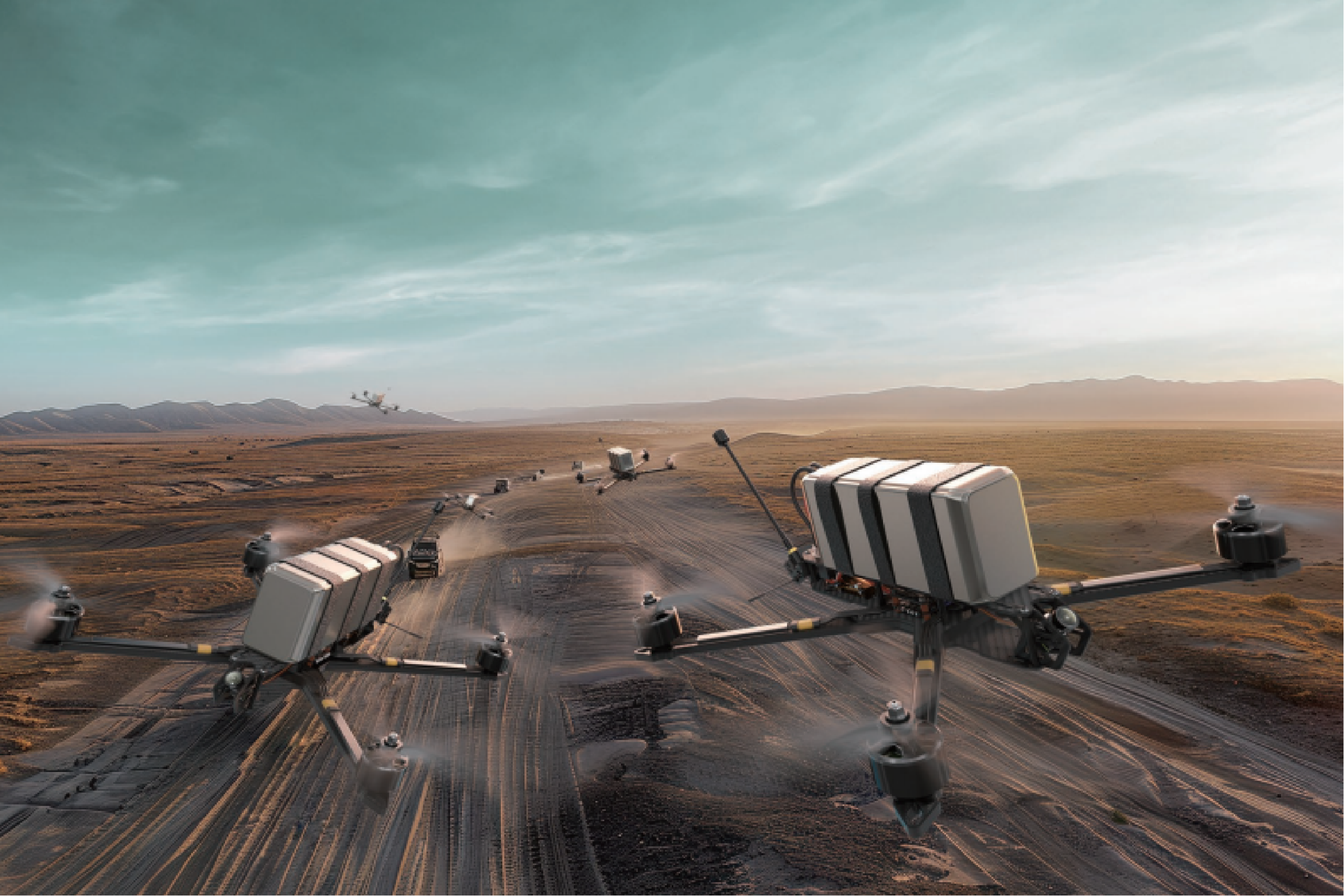
The rapid evolution of unmanned aerial vehicles (UAVs) has transformed multiple industries, ranging from cinematography and logistics to agriculture and security. Among these, First-Person View (FPV) drones represent one of the most dynamic and disruptive categories. The ST-P136 FPV drone (and similar heavy-lift FPV platforms such as the HS-P136M) stands at the intersection of high-speed racing drones and industrial-grade UAV systems.
Unlike consumer drones designed primarily for photography, the ST-P136 platform emphasizes speed, payload capacity, modularity, and long-range control, making it highly adaptable for both civilian and military scenarios. This article explores the technical configuration, system architecture, and performance characteristics of this drone class, offering a detailed understanding of its engineering design and operational potential.

2. Structural Design and Materials
One of the defining characteristics of the ST-P136 platform is its carbon fiber frame construction. Carbon fiber offers a superior strength-to-weight ratio compared to aluminum or plastic, enabling the drone to handle high stress during aggressive maneuvers and heavy payload operations.
According to similar platform data:
- Frame material: T300 carbon fiber
- Multi-rotor design: 6-axis hexacopter
- Wheelbase: ~700 mm
- Maximum takeoff weight: up to 15 kg
This structural configuration provides several advantages:
2.1 Stability
A hexacopter design ensures redundancy. Even if one motor fails, the drone can still maintain partial stability—critical in high-risk environments.
2.2 Payload Distribution
Six rotors distribute thrust more evenly, allowing for heavy payload lifting (up to ~9.5 kg) without compromising control .
2.3 Durability
Carbon fiber resists vibration and deformation, ensuring stable imaging and sensor operation.
3. Propulsion System
The propulsion system is the heart of any FPV drone, and the ST-P136 platform uses a high-performance multi-motor configuration.
3.1 Motors
- 6 brushless motors (e.g., 4214–440KV class)
- High torque output for lifting heavy loads
- Efficient thermal performance for sustained flight
3.2 Electronic Speed Controllers (ESCs)
- 80A ESC per motor
- Real-time telemetry support
- Smooth throttle response
3.3 Propellers
- 13-inch high-efficiency propellers
- Optimized for thrust rather than endurance
This setup allows the drone to reach speeds up to 140 km/h, making it significantly faster than most commercial UAVs .
4. Power System
4.1 Battery Configuration
- Recommended: 8S LiPo batteries
- Capacity: 7500mAh to 20000mAh
- Dual-battery support for redundancy
4.2 Flight Time
- No-load: 30+ minutes
- Full payload: 10–12 minutes
This trade-off between payload and endurance is typical for FPV drones, prioritizing power and agility over long endurance.
5. Flight Control System
The ST-P136 platform typically integrates:
- STM32 F405 flight controller
- ICM42688-P gyro sensor
- Betaflight firmware support
5.1 Key Features
- High-speed stabilization loops
- Manual and assisted flight modes
- GPS-assisted return (optional)
5.2 AI Expansion
Some configurations support:
- AI target tracking
- Vision-based navigation
- Autonomous flight modules
6. FPV System and Communication
6.1 Video Transmission
- 5.8GHz analog/digital FPV system
- Up to 3W transmission power
- 1500TVL low-light camera
6.2 Control Link
- ELRS (ExpressLRS) 915MHz protocol
- Range: 10 km+
6.3 Latency
Ultra-low latency (~20–40 ms), enabling:
- Real-time piloting
- Precision maneuvering
7. Payload and Modular Capabilities
7.1 Payload Capacity
- Rated: 8.5 kg
- Maximum: 9.5 kg
7.2 Payload Types
- Cameras (HD/thermal)
- Sensors (LiDAR, gas detection)
- Delivery modules
- Custom payload systems
7.3 Modular Design
The platform includes:
- Multiple mounting points
- Expandable power outputs
- Plug-and-play sensor integration
8. Performance Characteristics
| Parameter | Value |
|---|---|
| Max Speed | 140 km/h |
| Range | 10 km+ |
| Payload | 9.5 kg |
| Flight Time | 10–30 min |
| Wind Resistance | Level 6 |
These specs place the ST-P136 in the high-performance FPV category, suitable for demanding
9. Civilian Applications
9.1 Industrial Inspection
- Power lines
- Oil pipelines
- Wind turbines
9.2 Logistics
- Last-mile delivery
- Emergency supply transport
9.3 Filmmaking
- High-speed cinematic shots
- Dynamic tracking
10. Conclusion
The ST-P136 FPV drone represents a new class of UAV systems that blend speed, payload capacity, and modular adaptability. Its engineering design reflects a shift toward multi-role aerial platforms capable of operating in complex environments.
With its combination of:
- High-speed maneuverability
- Long-range communication
- Heavy payload support
the platform is not just a drone—it is a versatile aerial system with broad implications across industries.









