
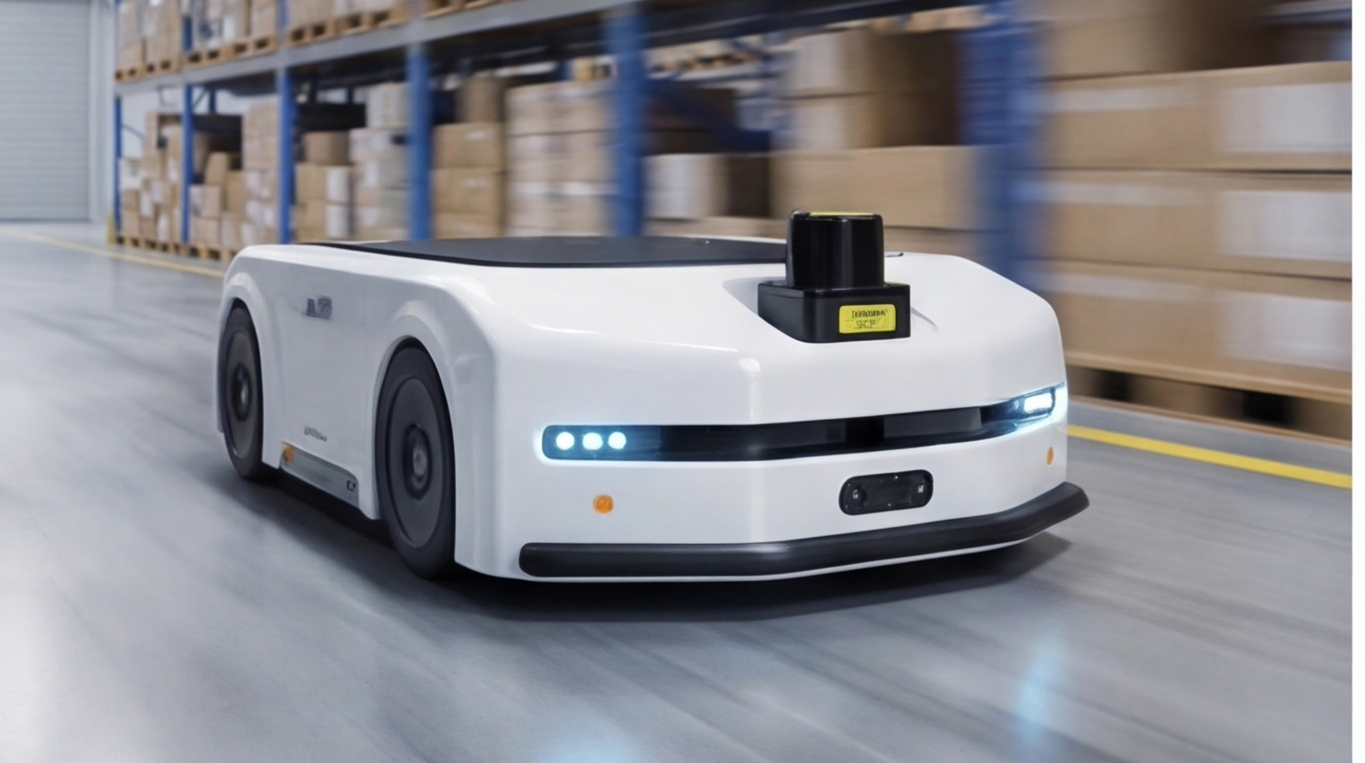
The rapid growth of automation has transformed industries ranging from warehousing and logistics to robotics, smart transportation, and intelligent manufacturing. As autonomous machines increasingly operate in dynamic environments, the need for accurate, reliable, and real-time obstacle detection becomes more critical than ever. Traditional sensors such as ultrasonic modules and monocular cameras often struggle with environmental limitations, insufficient precision, or unstable performance under changing lighting conditions. This is where modern obstacle avoidance LiDAR technology becomes essential.
One of the emerging solutions in this field is the KoraBeam obstacle avoidance LiDAR system from Lidarseek Technology. Designed for intelligent sensing applications, the KoraBeam LiDAR series provides high-precision environmental perception, enabling autonomous platforms to navigate safely and efficiently in both indoor and outdoor environments.
For robotics developers, AGV manufacturers, drone engineers, and industrial automation integrators, obstacle avoidance LiDAR has become one of the most important technologies for achieving reliable autonomous operation. Platforms such as LidarSeek help connect users with advanced LiDAR technologies and real-world deployment solutions for modern industries.
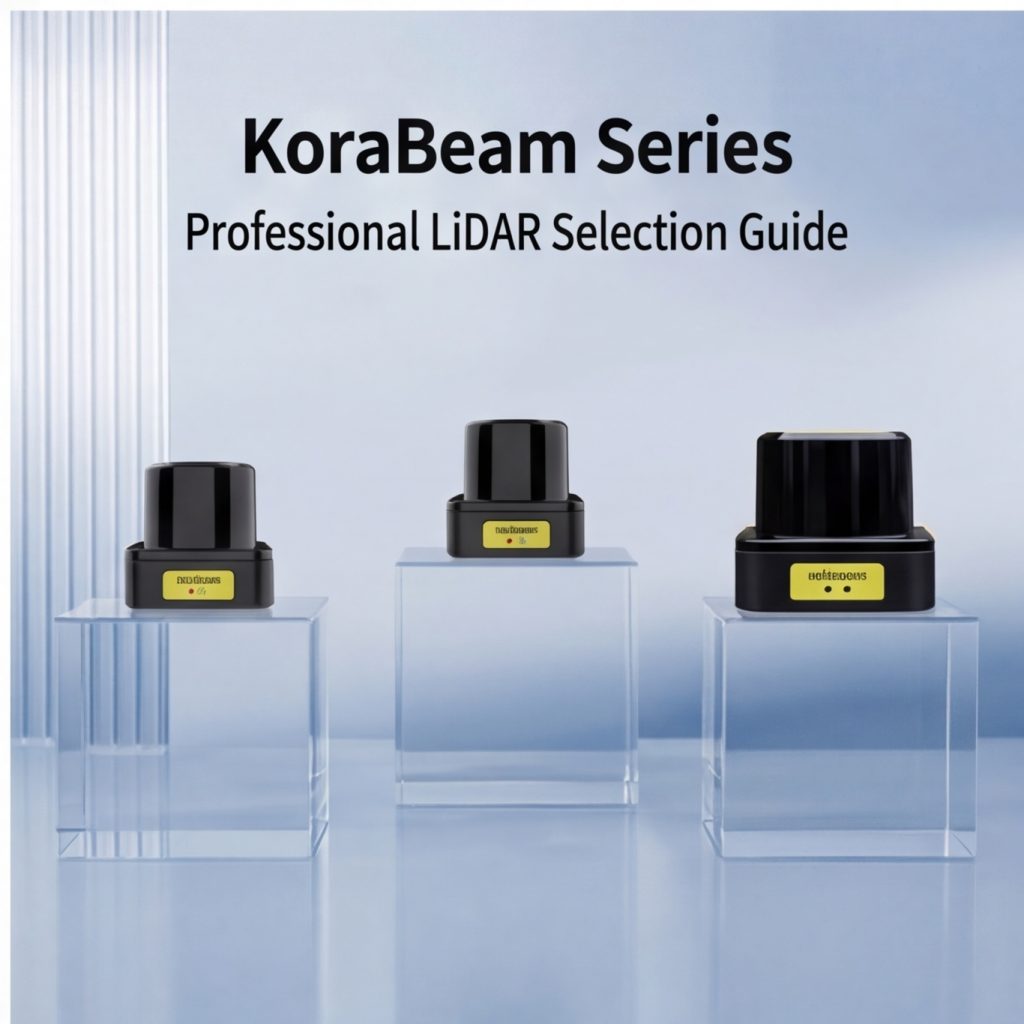
What Is Obstacle Avoidance LiDAR?
Obstacle avoidance LiDAR is a laser-based sensing technology that detects surrounding objects by emitting laser pulses and measuring the time it takes for the reflected signals to return. This method creates highly accurate distance measurements and generates real-time environmental mapping data.
Unlike traditional sensors, LiDAR systems can provide:
- High-precision distance measurement
- Real-time 2D or 3D environmental scanning
- Long-range object detection
- Stable operation under low-light conditions
- Fast response for autonomous navigation
- Multi-object tracking capability
The KoraBeam LiDAR system is specifically engineered to enhance autonomous navigation and collision prevention in complex environments where safety and precision are essential.
Why Obstacle Avoidance Matters in Modern Automation
As autonomous systems move from controlled environments into dynamic real-world spaces, the possibility of collisions increases significantly. Whether in warehouses, hospitals, airports, factories, or smart city deployments, machines must continuously detect obstacles and react immediately.
Obstacle avoidance systems are responsible for:
- Preventing collisions
- Protecting equipment and goods
- Improving worker safety
- Enhancing navigation accuracy
- Increasing automation reliability
- Reducing downtime and maintenance costs
Without advanced sensing systems, autonomous robots would struggle to operate safely around humans and unexpected obstacles.
Key Features of KoraBeam Obstacle Avoidance LiDAR
The KoraBeam series offers several advanced features that make it suitable for industrial and commercial autonomous systems.
1. High-Precision Distance Detection
The laser scanning technology provides highly accurate ranging performance, allowing autonomous systems to identify nearby objects quickly and precisely.
This is especially important in:
- Narrow warehouse aisles
- Dynamic factory environments
- High-speed AGV operations
- Indoor robotics applications
Accurate distance data helps autonomous platforms make better navigation decisions in real time.
2. Real-Time Environmental Scanning
Modern obstacle avoidance requires continuous environmental awareness. KoraBeam LiDAR performs rapid scanning to monitor surroundings in real time.
Benefits include:
- Faster reaction times
- Reduced collision risk
- Improved path planning
- Stable autonomous navigation
Real-time perception is essential for environments where people, forklifts, carts, and robots move simultaneously.
3. Reliable Low-Light Performance
Camera-based systems often fail under poor lighting conditions. LiDAR technology operates independently of ambient light, making it highly effective in:
- Dark warehouses
- Underground facilities
- Night operations
- Tunnels
- Outdoor evening environments
This reliability significantly improves operational stability.
4. Wide Detection Coverage
Obstacle avoidance systems must monitor multiple directions simultaneously. KoraBeam LiDAR offers broad scanning coverage to ensure surrounding objects are detected early.
Wide-angle detection helps autonomous systems:
- Navigate around corners
- Detect moving obstacles
- Prevent blind spots
- Improve operational safety
5. Compact and Lightweight Design
Many robotics applications require lightweight components to preserve mobility and efficiency. The KoraBeam system is designed to integrate easily into:
- Mobile robots
- Service robots
- AGVs
- Drones
- Smart vehicles
Compact LiDAR modules simplify installation and system integration.
Applications of KoraBeam Obstacle Avoidance LiDAR
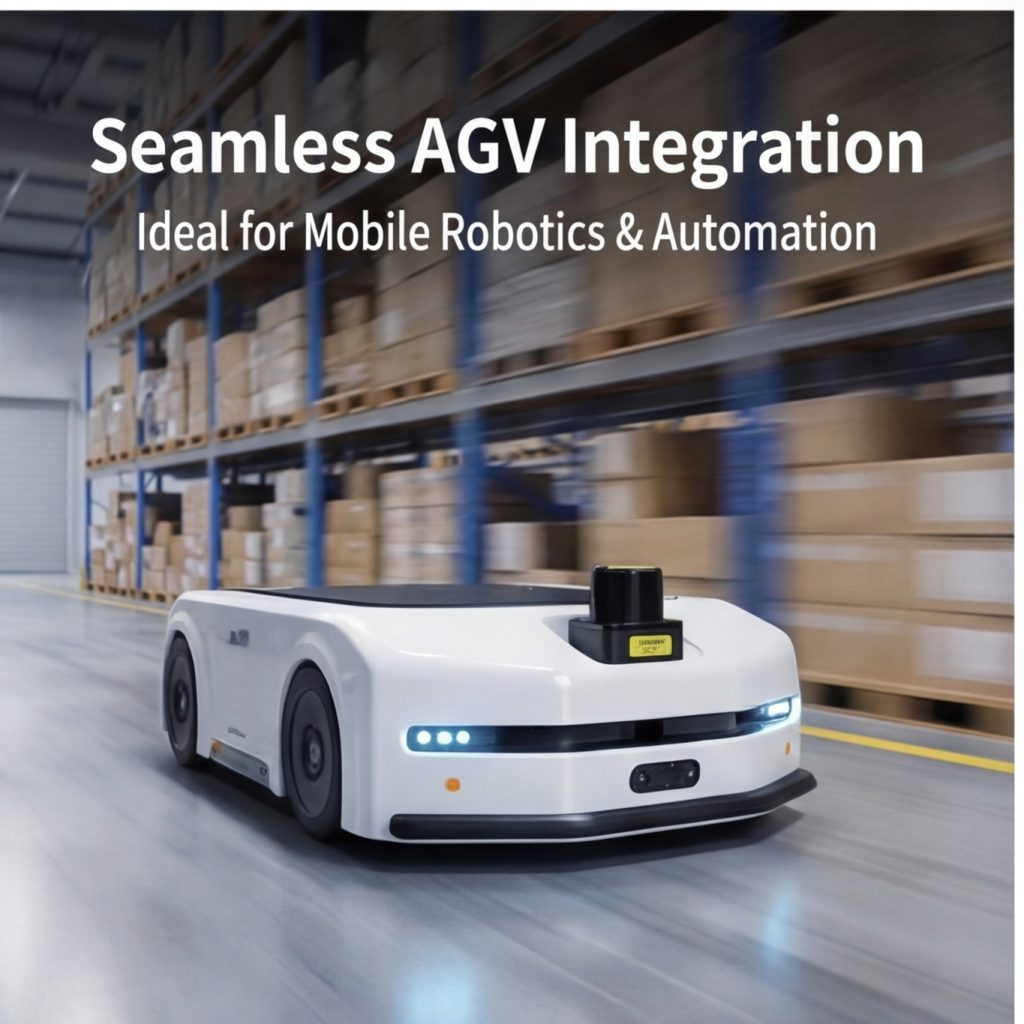
Autonomous Guided Vehicles (AGVs)
Warehouses and logistics centers increasingly rely on AGVs for automated material transportation. These vehicles must safely navigate among workers and equipment.
KoraBeam LiDAR enables AGVs to:
- Detect obstacles in real time
- Avoid collisions
- Follow optimized routes
- Improve operational efficiency
- Reduce human intervention
In modern smart warehouses, obstacle avoidance directly impacts productivity and safety.
Mobile Service Robots
Service robots are now widely used in hotels, hospitals, shopping malls, and office buildings. These robots interact directly with people, requiring precise navigation capabilities.
LiDAR-based obstacle avoidance helps service robots:
- Navigate crowded environments
- Avoid pedestrians
- Maintain smooth movement
- Improve customer experience
Reliable sensing is critical for public-facing robotics applications.
Industrial Automation
Factories contain constantly changing environments filled with machines, workers, and transport equipment.
KoraBeam LiDAR improves industrial automation by enabling:
- Automated forklift navigation
- Collision prevention
- Safety zone monitoring
- Smart equipment movement
Manufacturers can improve efficiency while reducing workplace accidents.
Autonomous Drones
Obstacle avoidance is essential for drone safety, especially in complex environments such as forests, industrial sites, and urban areas.
LiDAR technology helps drones:
- Detect obstacles during flight
- Avoid trees and buildings
- Maintain stable navigation
- Improve autonomous mission capability
Drone obstacle avoidance systems are increasingly important in inspection, surveying, and delivery applications.
Smart Transportation Systems
Intelligent transportation infrastructure requires accurate environmental sensing.
LiDAR can support:
- Smart traffic systems
- Autonomous delivery vehicles
- Roadside monitoring
- Vehicle collision prevention
As cities adopt automation technologies, obstacle avoidance sensing becomes increasingly valuable.
Advantages of LiDAR Over Traditional Sensors
Compared with Ultrasonic Sensors
Ultrasonic systems often suffer from limited range and poor accuracy.
LiDAR provides:
- Longer detection distance
- Higher precision
- Faster response speed
- Better environmental adaptability
Compared with Cameras
Vision systems depend heavily on lighting and image quality.
LiDAR offers:
- Stable low-light operation
- Accurate distance measurement
- Reliable depth perception
- Reduced environmental interference
Compared with Infrared Sensors
Infrared systems may struggle in outdoor sunlight conditions.
LiDAR provides:
- Stronger environmental resistance
- Greater accuracy
- Wider application flexibility
Real-World Example: Warehouse AGV Deployment
A logistics warehouse deploying autonomous AGVs faced several challenges:
- Frequent collisions with pallets
- Navigation errors
- Reduced operational efficiency
- Downtime caused by sensor failures
After integrating KoraBeam obstacle avoidance LiDAR, the warehouse experienced major improvements:
- Faster AGV navigation
- Reduced collision incidents
- Improved worker safety
- More accurate route planning
- Lower maintenance costs
The LiDAR system allowed AGVs to operate safely even during peak warehouse activity.
The Growing Demand for Obstacle Avoidance LiDAR
Global automation trends continue to drive demand for advanced sensing technologies.
Industries investing heavily in obstacle avoidance include:
- Logistics
- Manufacturing
- Agriculture
- Smart cities
- Healthcare robotics
- Autonomous delivery systems
- Mining automation
As Industry 4.0 adoption accelerates, LiDAR technology will become increasingly important.
Why Businesses Are Choosing KoraBeam LiDAR
Organizations selecting LiDAR systems prioritize:
- Reliability
- Accuracy
- Easy integration
- Real-time performance
- Cost efficiency
- Long-term stability
The KoraBeam series addresses these requirements while supporting a wide range of automation applications.
Platforms like LidarSeek help businesses discover advanced LiDAR technologies suitable for industrial automation and autonomous navigation projects.
Future Trends in Obstacle Avoidance Technology
The future of autonomous systems will rely heavily on AI-powered perception and intelligent sensing.
Key future developments include:
AI + LiDAR Integration
Artificial intelligence combined with LiDAR enables:
- Intelligent object recognition
- Predictive navigation
- Adaptive movement planning
Multi-Sensor Fusion
Future autonomous systems will combine:
- LiDAR
- Cameras
- Radar
- GPS
- IMU sensors
This improves overall environmental awareness.
Smarter Autonomous Robotics
Advanced LiDAR systems will support:
- Fully autonomous warehouses
- Intelligent factory robots
- Autonomous public service systems
Obstacle avoidance LiDAR has become a critical technology for modern autonomous systems. From AGVs and drones to industrial robots and smart transportation systems, reliable environmental perception is essential for safe and efficient operation.
The KoraBeam LiDAR series from Lidarseek Technology delivers high-precision obstacle detection, real-time environmental scanning, and stable performance across diverse applications.
As automation continues expanding globally, businesses seeking advanced sensing solutions can explore cutting-edge LiDAR technologies through LidarSeek to improve safety, navigation, and operational efficiency.
FAQ
1. What is obstacle avoidance LiDAR used for?
Obstacle avoidance LiDAR is used for detecting surrounding objects and preventing collisions in autonomous systems such as robots, AGVs, drones, and smart vehicles.
2. Why is LiDAR better than traditional sensors?
LiDAR offers higher precision, longer detection range, faster response time, and more reliable performance under varying environmental conditions.
3. Can KoraBeam LiDAR work in low-light environments?
Yes. LiDAR technology does not rely on ambient light, making it highly effective in dark or nighttime environments.
4. Is KoraBeam suitable for warehouse AGVs?
Yes. KoraBeam LiDAR is highly suitable for AGVs operating in warehouses and logistics environments due to its real-time obstacle detection capability.
5. Can LiDAR improve robot safety?
Absolutely. LiDAR enables robots to detect obstacles quickly and avoid collisions, improving operational safety around humans and equipment.
6. What industries use obstacle avoidance LiDAR?
Industries include logistics, manufacturing, robotics, transportation, agriculture, mining, and smart city infrastructure.
7. Does LiDAR support autonomous drones?
Yes. LiDAR is widely used in drones for obstacle detection, terrain mapping, and autonomous navigation.
8. Where can I learn more about LiDAR solutions?
You can explore more LiDAR technologies and applications at LidarSeek.









