
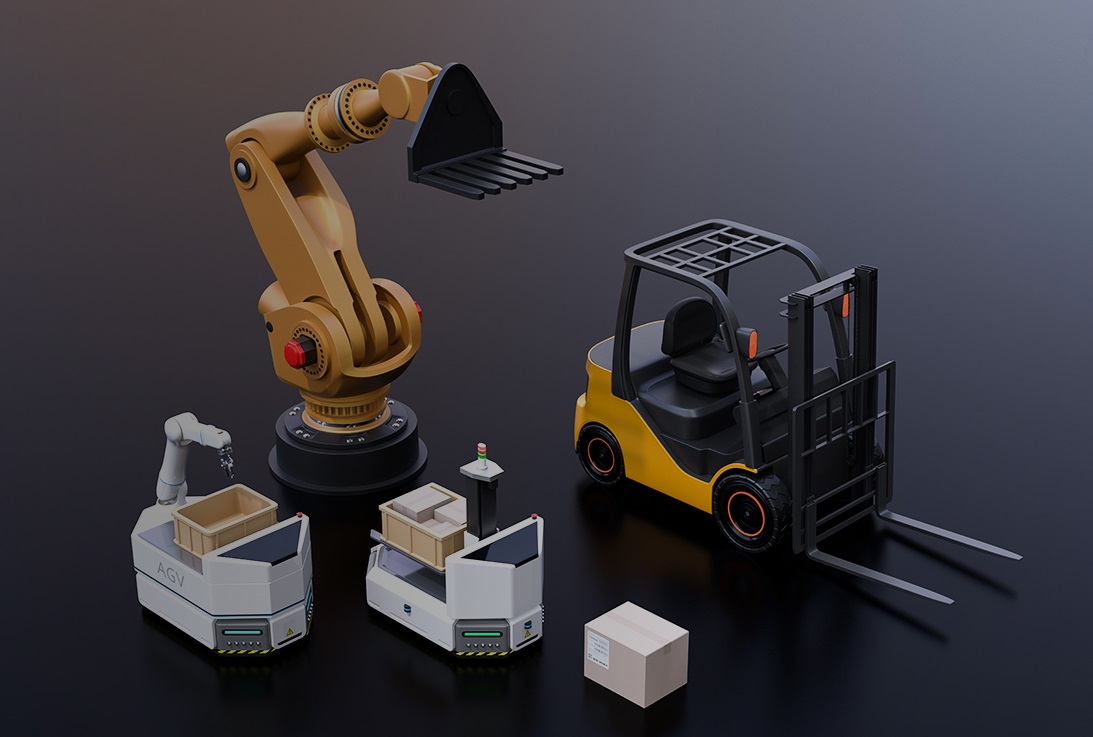
The rapid growth of e-commerce, intelligent manufacturing, and Industry 4.0 has accelerated the adoption of warehouse automation technologies. Modern warehouses are no longer relying only on manual operations. Instead, companies are deploying Autonomous Mobile Robots (AMRs), Automated Guided Vehicles (AGVs), robotic picking systems, and intelligent logistics platforms to improve efficiency and reduce operational costs.
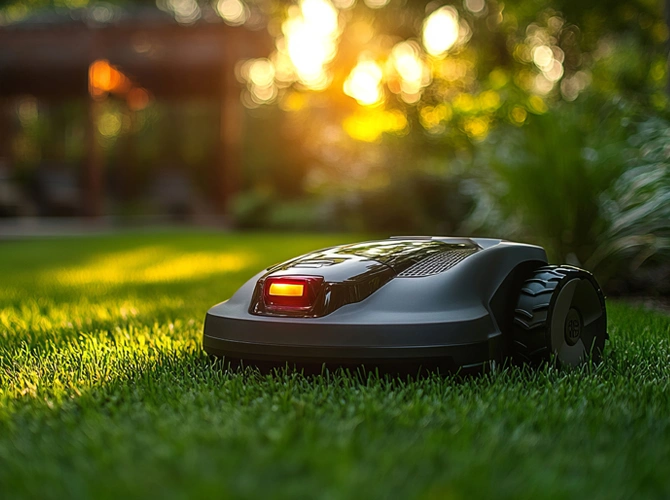
At the core of these autonomous systems is a reliable perception technology.
Among all available sensing technologies, LiDAR sensors for warehouse automation have become one of the most widely adopted solutions because they provide accurate distance measurement, reliable obstacle detection, and real-time environmental awareness.
However, selecting the right warehouse LiDAR, AGV LiDAR, or AMR LiDAR is not always easy. Different warehouse environments require different sensor performance, scanning methods, communication protocols, and integration capabilities.
This complete buyer guide explains how to choose the best LiDAR sensor for warehouse robots and industrial automation applications.
Why Warehouses Need LiDAR Sensors
Traditional warehouse equipment often follows fixed routes or manual operation.
Modern smart warehouses require robots that can:
- Navigate independently
- Avoid workers and obstacles
- Create maps automatically
- Optimize routes
- Operate continuously
- Adapt to changing environments
LiDAR provides robots with accurate environmental perception.
A warehouse robot equipped with LiDAR can understand:
- Rack locations
- Pallet positions
- Human movement
- Equipment boundaries
- Temporary obstacles
This allows AGVs and AMRs to operate safely and efficiently.
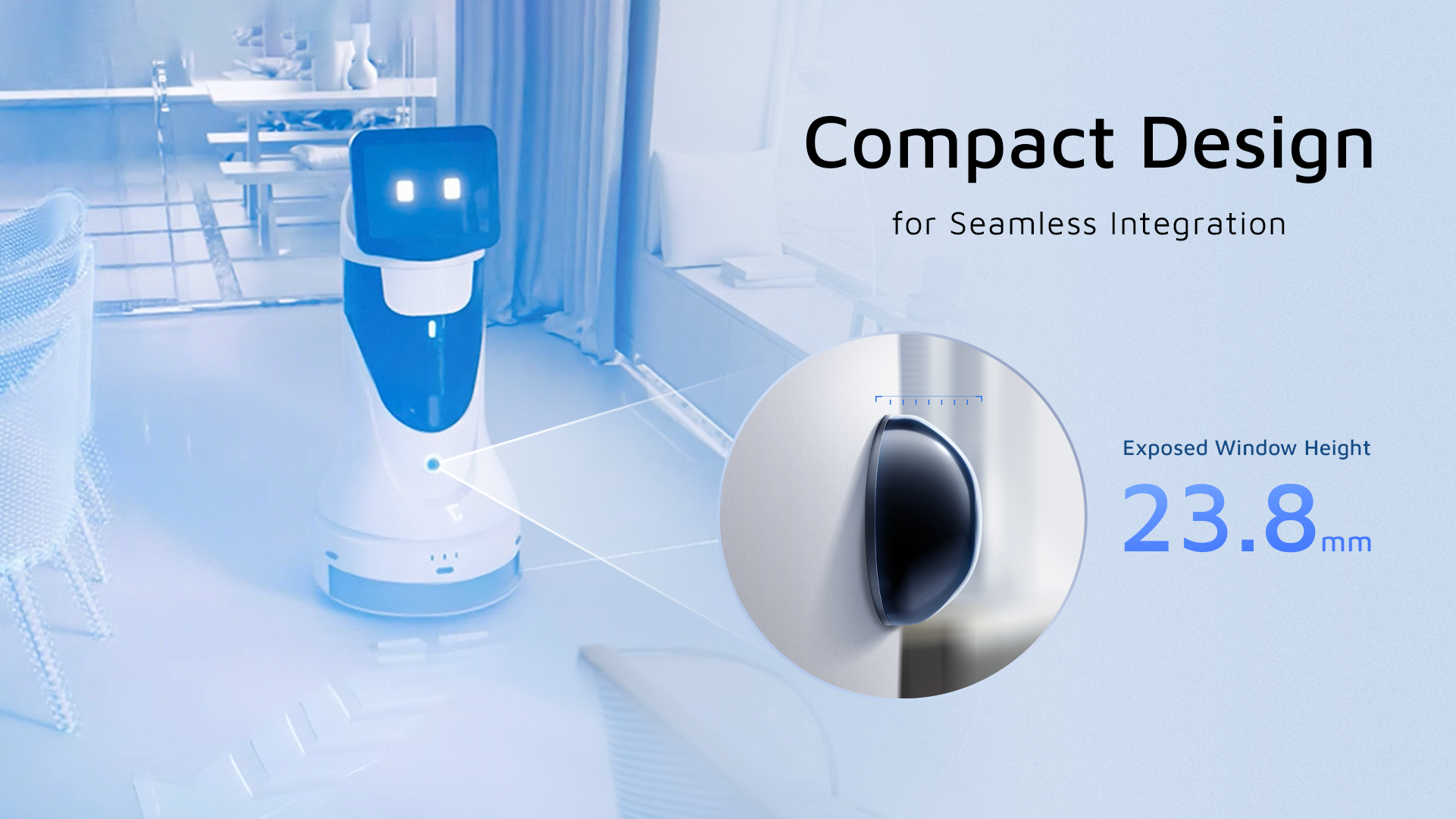
The Role of LiDAR in AGV and AMR Systems
Although AGV and AMR are often discussed together, they have different navigation requirements.
AGV (Automated Guided Vehicle)
Traditional AGVs usually follow predefined paths.
Common navigation methods:
- Magnetic strips
- Reflective markers
- QR codes
- Laser navigation
LiDAR improves AGV flexibility by enabling:
- Dynamic obstacle avoidance
- Natural navigation
- Reduced infrastructure requirements
AMR (Autonomous Mobile Robot)
AMRs are more intelligent.
They can:
- Create maps
- Plan routes automatically
- Avoid moving objects
- Optimize transportation tasks
For AMRs, LiDAR is often the primary perception sensor.
Types of LiDAR Sensors for Warehouse Automation
Choosing the right warehouse LiDAR depends on the robot type and operating environment.
2D LiDAR for Warehouse Robots
2D LiDAR is one of the most common solutions for indoor automation.
It scans a horizontal plane and provides accurate distance information.
Advantages
- Affordable
- Easy integration
- Low power consumption
- Mature technology
- Strong reliability
Applications
- Warehouse AMRs
- AGVs
- Cleaning robots
- Transport robots
- Indoor logistics systems
For many warehouse applications, a high-quality 2D LiDAR sensor provides excellent performance.
3D LiDAR for Smart Warehouses
3D LiDAR provides complete three-dimensional perception.
Compared with 2D LiDAR, it can detect:
- Different object heights
- Hanging obstacles
- Stacked goods
- Complex environments
Advantages
- High-resolution point clouds
- Advanced perception
- Better obstacle recognition
- Supports AI algorithms
Applications
- Autonomous forklifts
- Robotic arms
- Intelligent inspection robots
- Outdoor logistics robots
How LiDAR Enables Warehouse SLAM Navigation
SLAM (Simultaneous Localization and Mapping) is one of the most important technologies in autonomous warehouse robots.
Using LiDAR data, robots can:
- Scan the environment
- Generate maps
- Estimate their position
- Plan navigation paths
- Update maps in real time
A reliable warehouse LiDAR sensor improves:
- Mapping accuracy
- Navigation stability
- Robot efficiency
When selecting a LiDAR sensor, buyers should verify:
- SLAM compatibility
- ROS support
- SDK availability
- Point cloud quality
Important Specifications When Buying Warehouse LiDAR
Detection Range
The required range depends on warehouse size and robot speed.
Typical requirements:
| Application | Recommended Range |
|---|---|
| Small indoor robot | 10–20 meters |
| Warehouse AMR | 20–50 meters |
| Large logistics robot | 50–100 meters |
| Outdoor logistics | 100+ meters |
Longer range allows robots to detect obstacles earlier.
Scanning Frequency
Warehouse robots often operate continuously.
A higher scanning frequency provides:
- Faster response
- Better moving object tracking
- Improved safety
Common refresh rates:
- 10 Hz
- 20 Hz
- 30 Hz
Accuracy and Resolution
Warehouse automation requires precise navigation.
Important factors:
- Distance accuracy
- Angular resolution
- Point density
Higher accuracy improves:
- Docking
- Shelf positioning
- Navigation reliability
Field of View
A warehouse robot must monitor its surroundings.
Common requirements:
Horizontal FOV:
- 270°
- 360°
Vertical FOV:
Important for:
- Pallets
- Shelves
- Raised objects
Communication Interface
Before purchasing an industrial LiDAR sensor, check compatibility with your robot controller.
Common interfaces:
- Ethernet
- TCP/IP
- UDP
- CAN
- USB
Ethernet-based LiDAR sensors are widely used in industrial environments because of their stability and speed.
IP Rating and Industrial Reliability
Warehouse environments may include:
- Dust
- Temperature changes
- Mechanical vibration
Important specifications:
- IP65
- IP67
- Industrial temperature range
A reliable industrial LiDAR sensor should support long-term continuous operation.
LiDAR + Camera Sensor Fusion for Smart Warehouses
Modern warehouse robots increasingly combine LiDAR with camera sensors.
Each technology provides different advantages.
LiDAR Provides:
- Accurate distance
- 3D environment information
- Obstacle detection
Camera Provides:
- Object recognition
- Barcode reading
- Visual inspection
- AI classification
Together they create a more intelligent perception system.
LiDAR + AI Computing Platform
Advanced warehouse robots require powerful computing.
Many systems integrate:
- LiDAR Sensor
- Camera Sensor
- NVIDIA Jetson Development Kit
This enables:
- AI object detection
- Deep learning algorithms
- Autonomous decision-making
- Real-time data processing
For robotics developers, selecting the right development kit is as important as selecting the sensor.
How to Choose the Best LiDAR for Warehouse Automation
Small Warehouse Robots
Recommended:
- 2D LiDAR
Requirements:
- Low cost
- Reliable navigation
- Simple integration
Large Distribution Centers
Recommended:
- Industrial 2D LiDAR
- 3D LiDAR
Requirements:
- Long range
- High reliability
- Multiple robot coordination
Autonomous Forklifts
Recommended:
- 3D LiDAR
Requirements:
- Height perception
- Safety detection
- Outdoor capability
Smart Factory Robots
Recommended:
- LiDAR + Camera Fusion
Requirements:
- High precision
- AI capability
- Flexible deployment
Common Mistakes When Purchasing Warehouse LiDAR
Selecting Only Based on Price
Low-cost sensors may create problems:
- Limited documentation
- Poor SDK support
- Difficult integration
Ignoring Software Compatibility
Hardware performance is only part of the solution.
Always check:
- ROS driver
- SDK
- API documentation
- Sample code
Choosing the Wrong Detection Range
A warehouse robot moving at high speed requires more detection distance.
Forgetting Future Expansion
Choose sensors that can support:
- More robots
- New algorithms
- AI upgrades
Why Choose Lidarseek for Warehouse LiDAR Solutions?
Selecting the right LiDAR supplier can significantly reduce development time.
Lidarseek provides:
- Professional LiDAR selection support
- Multiple LiDAR technologies
- 2D LiDAR sensors
- 3D LiDAR sensors
- Camera sensors
- Development kits
- Robotics solutions
Instead of choosing a single fixed product, customers can compare different technologies and select the most suitable solution for their warehouse automation project.
Warehouse LiDAR Buying Checklist
Before purchasing, confirm:
✓ Robot application type
✓ Indoor or outdoor environment
✓ Required detection range
✓ Navigation method
✓ SLAM compatibility
✓ ROS / ROS2 support
✓ Communication protocol
✓ Point cloud format
✓ Accuracy requirement
✓ IP protection level
✓ SDK availability
✓ Technical support
✓ Future scalability
Frequently Asked Questions
What is the best LiDAR sensor for warehouse robots?
The best warehouse LiDAR depends on robot type, environment, range requirement, and navigation method.
Is 2D LiDAR enough for AGV navigation?
For many indoor AGVs, 2D LiDAR provides reliable navigation and obstacle avoidance.
Do AMRs need 3D LiDAR?
Not always. Simple indoor AMRs may use 2D LiDAR, while complex environments benefit from 3D LiDAR.
Can LiDAR work in dark warehouses?
Yes. LiDAR does not rely on visible light and works well in low-light environments.
Why use LiDAR instead of ultrasonic sensors?
LiDAR provides higher accuracy, longer range, and better environmental perception.
Does LiDAR support ROS?
Many robotics LiDAR sensors provide ROS and ROS2 support for easier integration.
What is the difference between industrial LiDAR and consumer LiDAR?
Industrial LiDAR usually provides higher reliability, better accuracy, stronger protection, and longer operating life.
Can LiDAR detect people in warehouses?
Yes. LiDAR can detect human movement and support safety systems.
How many LiDAR sensors does an AMR need?
The number depends on robot design, coverage requirements, and safety standards.
How do I choose an AGV LiDAR supplier?
Look for suppliers offering technical support, SDK resources, reliable products, and application experience.
Conclusion
LiDAR technology has become a fundamental component of warehouse automation. From AGVs and AMRs to intelligent logistics robots, the right LiDAR sensor improves navigation accuracy, operational safety, and automation efficiency.
When selecting a warehouse LiDAR solution, companies should evaluate not only hardware specifications but also software support, integration capability, reliability, and future scalability.
By combining LiDAR sensors, camera sensors, and AI development platforms, modern warehouses can achieve higher levels of intelligence and automation.
Lidarseek provides professional industrial LiDAR, robot LiDAR, 3D LiDAR sensors, camera sensors, and development kits to help companies build next-generation warehouse automation systems.
Contact our engineering team to select the right LiDAR solution for your AGV, AMR, or smart factory project.









