
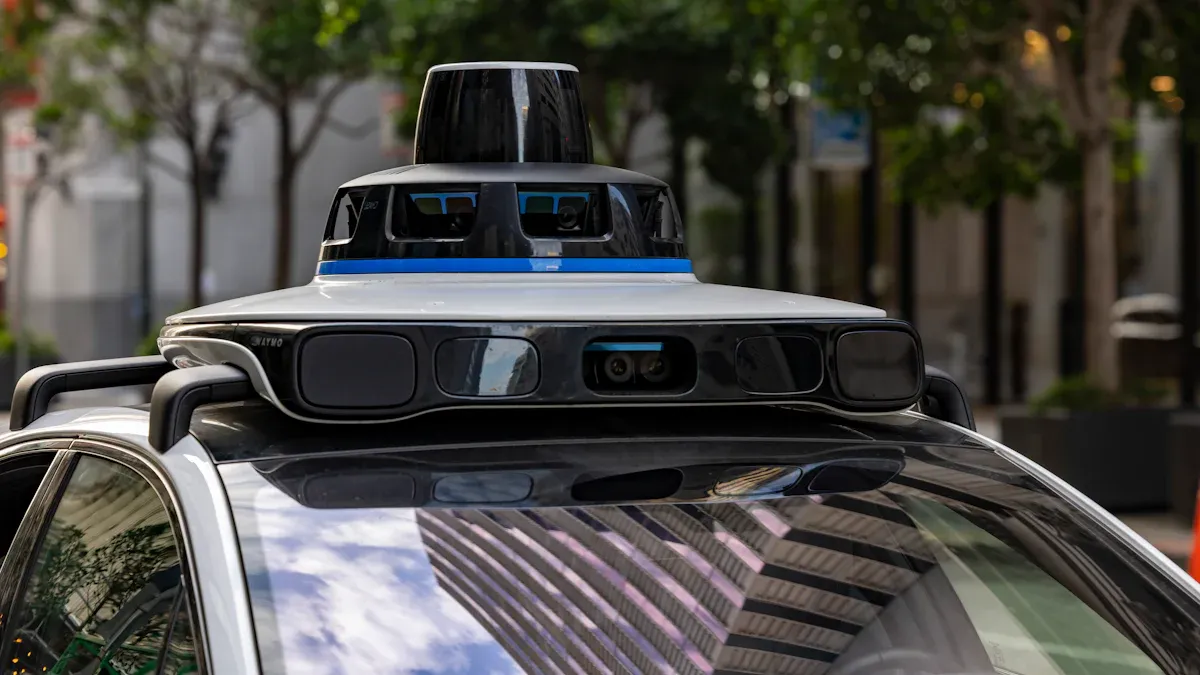
The automotive industry is undergoing a major transformation as autonomous driving and advanced driver assistance systems (ADAS) continue to evolve. Modern vehicles are becoming increasingly intelligent, requiring advanced perception technologies to understand complex road environments in real time.
Among all sensing technologies, automotive LiDAR sensors have become one of the most important components for autonomous vehicles because they provide accurate distance measurement, high-resolution 3D perception, and reliable environmental awareness.
From passenger vehicles and robotaxis to autonomous trucks and intelligent transportation systems, LiDAR technology is helping vehicles detect obstacles, recognize objects, and make safer driving decisions.
However, selecting the right automotive LiDAR sensor is a complex process. Different vehicles require different sensing ranges, field of view, resolution, scanning technologies, and integration methods.
This automotive LiDAR buying guide explains everything you need to know before purchasing a LiDAR solution for autonomous driving projects.
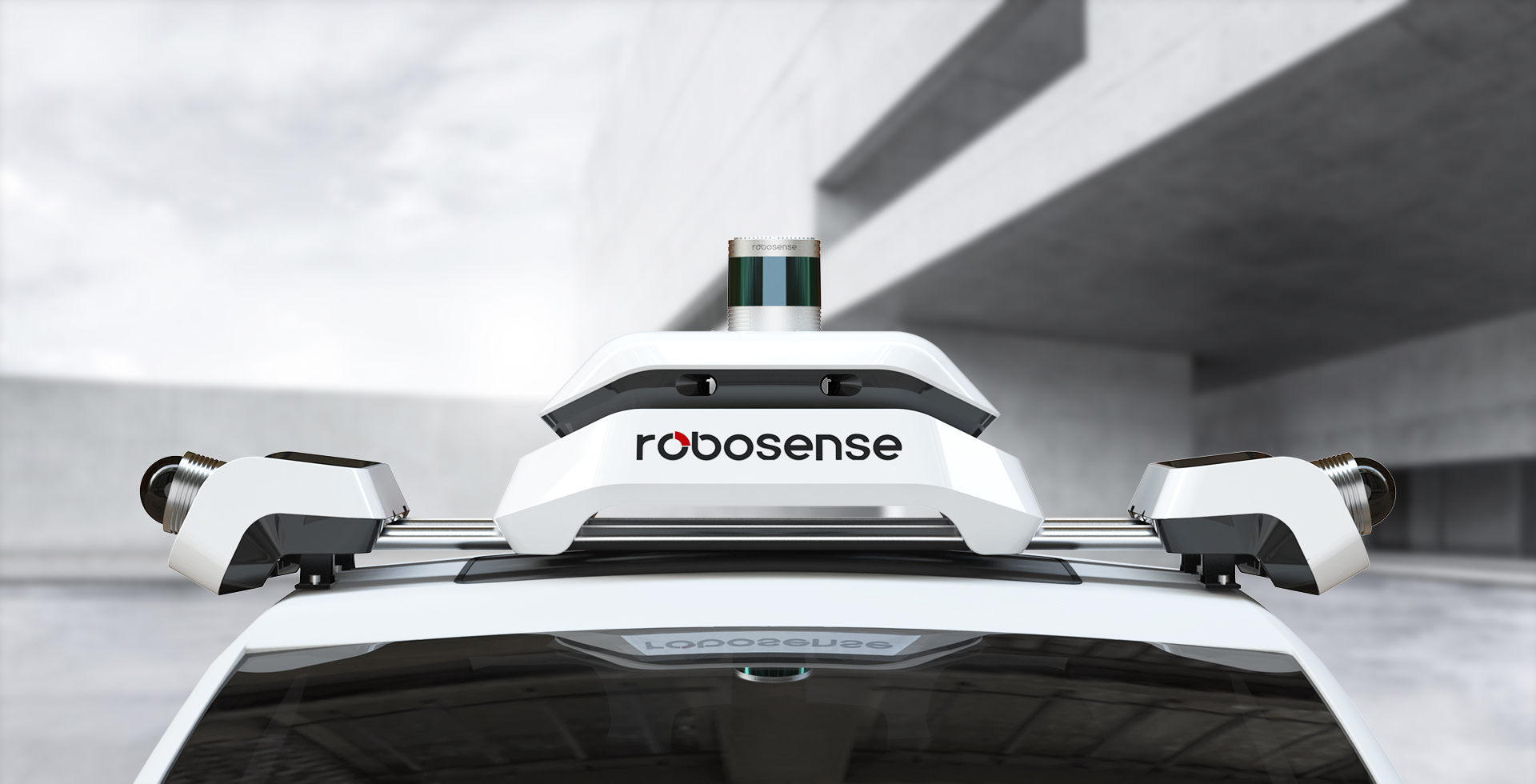
What Is Automotive LiDAR?
Automotive LiDAR is an advanced sensing technology that uses laser pulses to measure the distance between the vehicle and surrounding objects.
The sensor emits laser signals and measures the reflected light to generate a highly accurate three-dimensional point cloud.
This point cloud allows autonomous systems to identify:
- Vehicles
- Pedestrians
- Road barriers
- Traffic signs
- Lane structures
- Buildings
- Other obstacles
Unlike traditional cameras, LiDAR directly measures depth information.
This makes it extremely valuable for autonomous driving applications where accurate distance measurement is critical.
Why Autonomous Vehicles Need LiDAR Sensors
Self-driving vehicles require multiple sensors to achieve safe operation.
A typical autonomous vehicle perception system includes:
- LiDAR sensors
- Camera sensors
- Radar sensors
- Ultrasonic sensors
- GNSS
- IMU
Each technology has different advantages.
Camera Sensors
Advantages:
- Excellent image recognition
- Traffic sign recognition
- Color information
Limitations:
- Sensitive to lighting conditions
- Limited direct depth measurement
Radar Sensors
Advantages:
- Works well in bad weather
- Long detection range
Limitations:
- Lower resolution
- Limited object classification ability
Automotive LiDAR Sensors
Advantages:
- Accurate 3D measurement
- High-resolution point clouds
- Real-time environmental modeling
- Precise object detection
For advanced autonomous driving systems, LiDAR has become a key perception technology.
Different Types of Automotive LiDAR Technologies
Before purchasing an automotive LiDAR sensor, buyers should understand different technology options.
Mechanical LiDAR
Mechanical LiDAR uses rotating components to achieve a wide scanning angle.
Advantages:
- Mature technology
- Long detection range
- High accuracy
Disadvantages:
- Larger size
- Moving parts
- Higher mechanical complexity
Applications:
- Autonomous vehicle testing
- Research platforms
- Early-stage self-driving systems
Solid-State LiDAR
Solid-state LiDAR removes mechanical moving components.
Advantages:
- Smaller size
- Better reliability
- Lower maintenance
- Easier vehicle integration
Applications:
- Passenger vehicles
- ADAS systems
- Mass production vehicles
MEMS LiDAR
MEMS LiDAR uses micro-electromechanical mirrors for laser scanning.
Advantages:
- Compact design
- High scanning speed
- Automotive-friendly integration
Applications:
- Smart vehicles
- Autonomous driving platforms
Flash LiDAR
Flash LiDAR captures the entire scene without mechanical scanning.
Advantages:
- Fast response
- Compact structure
Applications:
- Short-range perception
- Advanced automotive systems
Key Specifications When Buying Automotive LiDAR
Selecting an automotive LiDAR sensor requires evaluating several important specifications.
1. Detection Range
Range is one of the most important automotive LiDAR parameters.
Different applications require different detection distances.
Typical requirements:
| Application | Recommended Range |
|---|---|
| Parking assistance | 10–30 meters |
| Urban autonomous driving | 100–200 meters |
| Highway autonomous driving | 200+ meters |
| Autonomous trucks | Long-range detection |
A longer range allows vehicles to react earlier to potential hazards.
2. Point Cloud Resolution
Point cloud resolution determines how accurately the sensor represents objects.
Higher resolution improves:
- Pedestrian detection
- Vehicle recognition
- Small obstacle detection
- Road environment understanding
For autonomous driving, dense point clouds are essential.
3. Field of View (FOV)
A vehicle needs broad environmental awareness.
Important parameters include:
Horizontal FOV
Determines coverage around the vehicle.
Typical:
- 120°
- 180°
- 360°
Vertical FOV
Important for detecting:
- Overhead objects
- Road slopes
- Different vehicle heights
4. Frame Rate
Autonomous vehicles operate in dynamic environments.
A higher frame rate enables:
- Faster object tracking
- Better motion prediction
- Safer decision-making
Common values:
- 10 Hz
- 20 Hz
- 30 Hz
5. Accuracy and Precision
Automotive applications require highly accurate measurement.
Important factors:
- Distance accuracy
- Angular resolution
- Repeatability
Small measurement errors can affect autonomous decision-making.
6. Environmental Reliability
Automotive LiDAR sensors must operate in challenging conditions.
Consider:
- Rain
- Fog
- Dust
- Temperature changes
- Vibration
Important specifications:
- IP rating
- Operating temperature
- Shock resistance
How Automotive LiDAR Works with Other Sensors
Modern autonomous vehicles rarely rely on LiDAR alone.
The most effective architecture uses sensor fusion.
LiDAR + Camera Fusion
Combining LiDAR and cameras provides:
LiDAR:
- Accurate depth
- Distance measurement
Camera:
- Color recognition
- Object classification
Together they provide a complete perception system.
LiDAR + Radar Fusion
Radar provides:
- Long-range detection
- Weather robustness
LiDAR provides:
- High-resolution 3D information
This combination improves reliability.
LiDAR + AI Computing Platform
Modern autonomous systems require powerful computing.
Common platforms include:
- NVIDIA Jetson
- Automotive AI computers
- Edge computing systems
These platforms process:
- Point clouds
- Images
- Sensor fusion data
- AI algorithms
How to Choose an Automotive LiDAR Sensor
Before purchasing, consider the following questions.
What Level of Autonomy Are You Developing?
Different autonomy levels require different sensors.
Examples:
Level 2 ADAS:
- Short and medium-range perception
Level 3+ Autonomous Driving:
- Advanced LiDAR perception
Robotaxi:
- Multiple high-performance LiDAR sensors
What Environment Will the Vehicle Operate In?
Urban:
Need:
- Wide FOV
- High resolution
Highway:
Need:
- Long range
Off-road:
Need:
- High durability
What Software Support Is Available?
Before buying, check:
- SDK availability
- ROS support
- API documentation
- Point cloud format
- Calibration tools
Software support can significantly reduce development time.
Common Mistakes When Buying Automotive LiDAR
Choosing Only Based on Range
Longer range does not always mean better performance.
Resolution and reliability are equally important.
Ignoring Integration Costs
Hardware is only part of the total investment.
Consider:
- Software development
- Calibration
- Computing platform
- Testing
Selecting a Sensor Without Future Expansion
Automotive projects often evolve.
Choose a platform that supports:
- Software updates
- Sensor fusion
- Future vehicle upgrades
Automotive LiDAR Applications
Autonomous Passenger Vehicles
Used for:
- Highway assistance
- Autonomous navigation
- Collision avoidance
Robotaxis
Require:
- High reliability
- 360-degree perception
- Redundant sensing
Autonomous Trucks
Require:
- Long-range detection
- Robust outdoor performance
Intelligent Transportation Systems
Applications include:
- Traffic monitoring
- Smart intersections
- Vehicle infrastructure communication
Why Choose Professional LiDAR Suppliers?
Selecting the right supplier is as important as selecting the sensor.
A professional LiDAR supplier should provide:
- Multiple LiDAR options
- Technical support
- SDK resources
- Integration guidance
- Application recommendations
Working with an experienced supplier helps companies reduce development risks and accelerate product deployment.
Automotive LiDAR Buying Checklist
Before purchasing, confirm:
✓ Detection range requirement
✓ Point cloud density
✓ Horizontal and vertical FOV
✓ Frame rate
✓ Accuracy
✓ Communication interface
✓ SDK availability
✓ ROS compatibility
✓ Operating temperature
✓ IP protection rating
✓ Technical support
✓ Long-term supply capability
Frequently Asked Questions
What is the best automotive LiDAR sensor?
The best automotive LiDAR depends on vehicle requirements, driving scenarios, range, resolution, and integration needs.
Is LiDAR necessary for autonomous vehicles?
For advanced autonomous driving systems, LiDAR provides important 3D perception capabilities that complement cameras and radar.
How far can automotive LiDAR detect objects?
Modern automotive LiDAR sensors can detect objects from tens to hundreds of meters depending on technology and configuration.
What is the difference between automotive LiDAR and normal LiDAR?
Automotive LiDAR requires higher reliability, durability, environmental resistance, and automotive-grade performance.
Can LiDAR work at night?
Yes. LiDAR operates independently of visible light and can work in darkness.
Is LiDAR better than cameras for self-driving cars?
LiDAR and cameras have different strengths. The most advanced systems use sensor fusion.
What wavelength is used in automotive LiDAR?
Many automotive LiDAR systems use 905nm or 1550nm laser wavelengths.
How much does automotive LiDAR cost?
Cost depends on range, resolution, technology, production volume, and application requirements.
Does LiDAR support autonomous driving software?
Many LiDAR systems provide SDKs, APIs, and point cloud interfaces for autonomous driving development.
How do I select the right automotive LiDAR supplier?
Choose suppliers with reliable hardware, technical documentation, integration support, and long-term availability.
Conclusion
Automotive LiDAR has become a critical sensing technology for the future of autonomous transportation. Selecting the right automotive LiDAR sensor requires careful evaluation of range, resolution, field of view, reliability, software support, and integration requirements.
Whether you are developing ADAS systems, autonomous vehicles, robotaxis, or intelligent transportation solutions, the right LiDAR platform can significantly improve perception performance and accelerate commercialization.
Lidarseek provides professional LiDAR solutions including 3D LiDAR sensors, automotive LiDAR sensors, camera sensors, and development kits to help companies build the next generation of intelligent vehicles.
Contact our technical team to find the right LiDAR solution for your autonomous driving project.









