
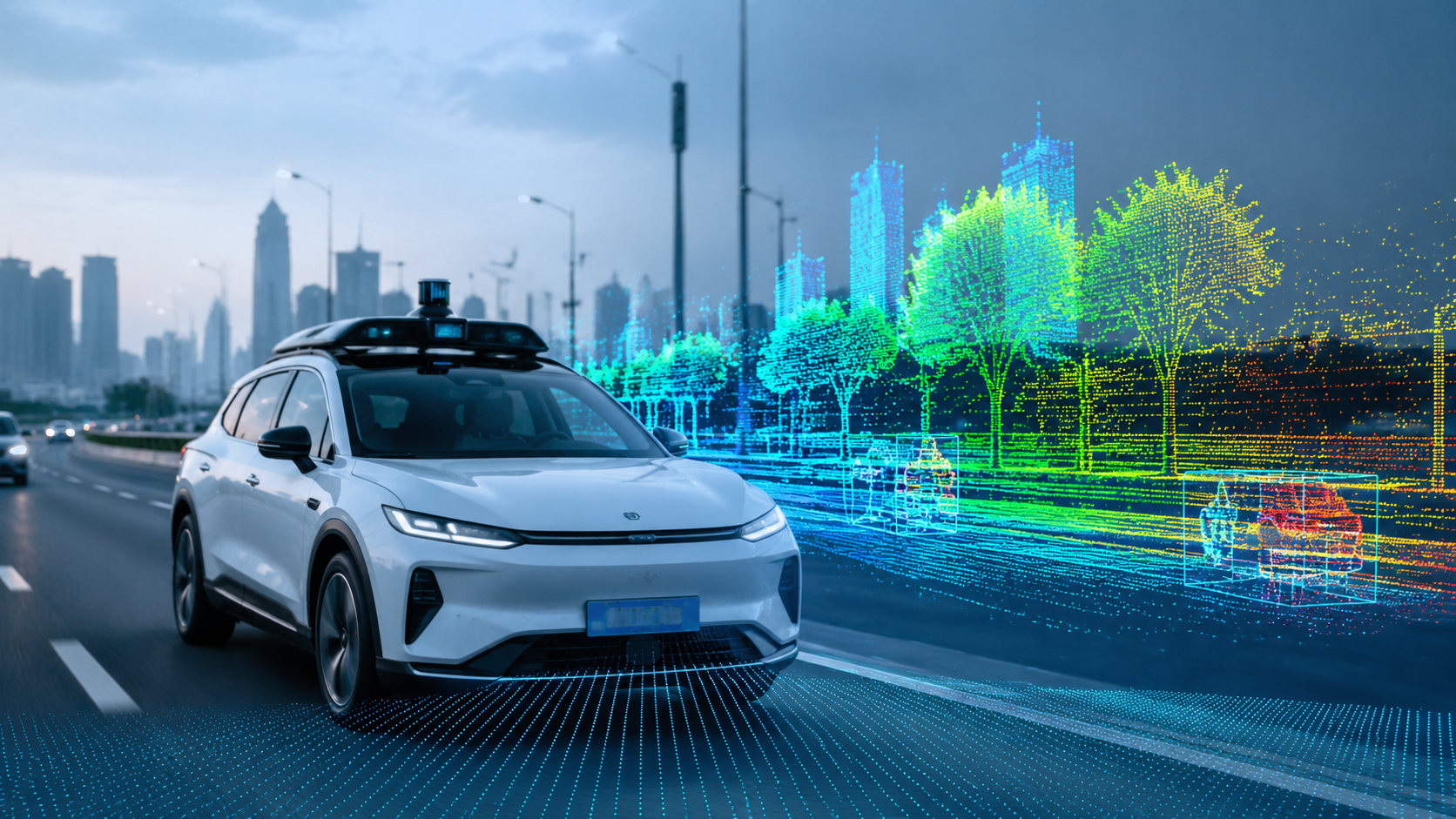
Choosing the Right LiDAR Sensor Matters
LiDAR technology has become one of the most important perception technologies for autonomous systems. From autonomous vehicles and delivery robots to industrial automation and mobile mapping, LiDAR sensors provide accurate 3D environmental information that enables machines to understand and navigate the real world.
However, choosing the right LiDAR sensor can be challenging.
With many different technologies, specifications and manufacturers available, buyers need to consider multiple factors including detection range, field of view, resolution, scanning technology, application requirements and integration compatibility.
Whether you are developing an autonomous vehicle, an AMR robot, an industrial automation system or a research project, selecting the right LiDAR sensor is essential for achieving reliable performance.
Need help choosing the right LiDAR solution?
LidarSeek provides professional LiDAR recommendations for robotics, autonomous driving and industrial applications.
Get a Free LiDAR Recommendation →
1. What Should You Consider Before Buying a LiDAR Sensor?
Before you buy a LiDAR sensor, it is important to understand the key specifications that determine performance.
Detection Range
The detection range determines how far the LiDAR sensor can accurately detect objects.
Typical applications:
- Short range: Robot obstacle avoidance and indoor navigation
- Medium range: AMR, AGV and industrial robots
- Long range: Autonomous vehicles and outdoor mapping
For example, autonomous driving applications usually require longer detection distances, while warehouse robots may focus more on accuracy and reliability.
Field of View (FOV)
Field of View determines how much area the LiDAR sensor can observe.
Common options:
- 90°–120° FOV: Front-facing perception
- 180° FOV: Wide-area detection
- 360° FOV: Full environmental scanning
A wider FOV is especially useful for mobile robots and autonomous systems operating in complex environments.
Resolution and Channel Number
Resolution directly affects point cloud density and object recognition capability.
Higher-channel LiDAR sensors provide:
- More detailed point clouds
- Better small-object detection
- Improved perception accuracy
Examples:
- 16-channel LiDAR: Cost-effective robotics applications
- 32-channel LiDAR: Industrial and mapping applications
- 128-channel LiDAR: Autonomous vehicles and high-performance perception systems
Interface and Integration
Before purchasing a LiDAR sensor, check:
- Communication interface
- Software SDK availability
- ROS compatibility
- Point cloud format
- Mechanical installation requirements
Easy integration can significantly reduce development time.
2. Different Types of LiDAR Sensors Explained
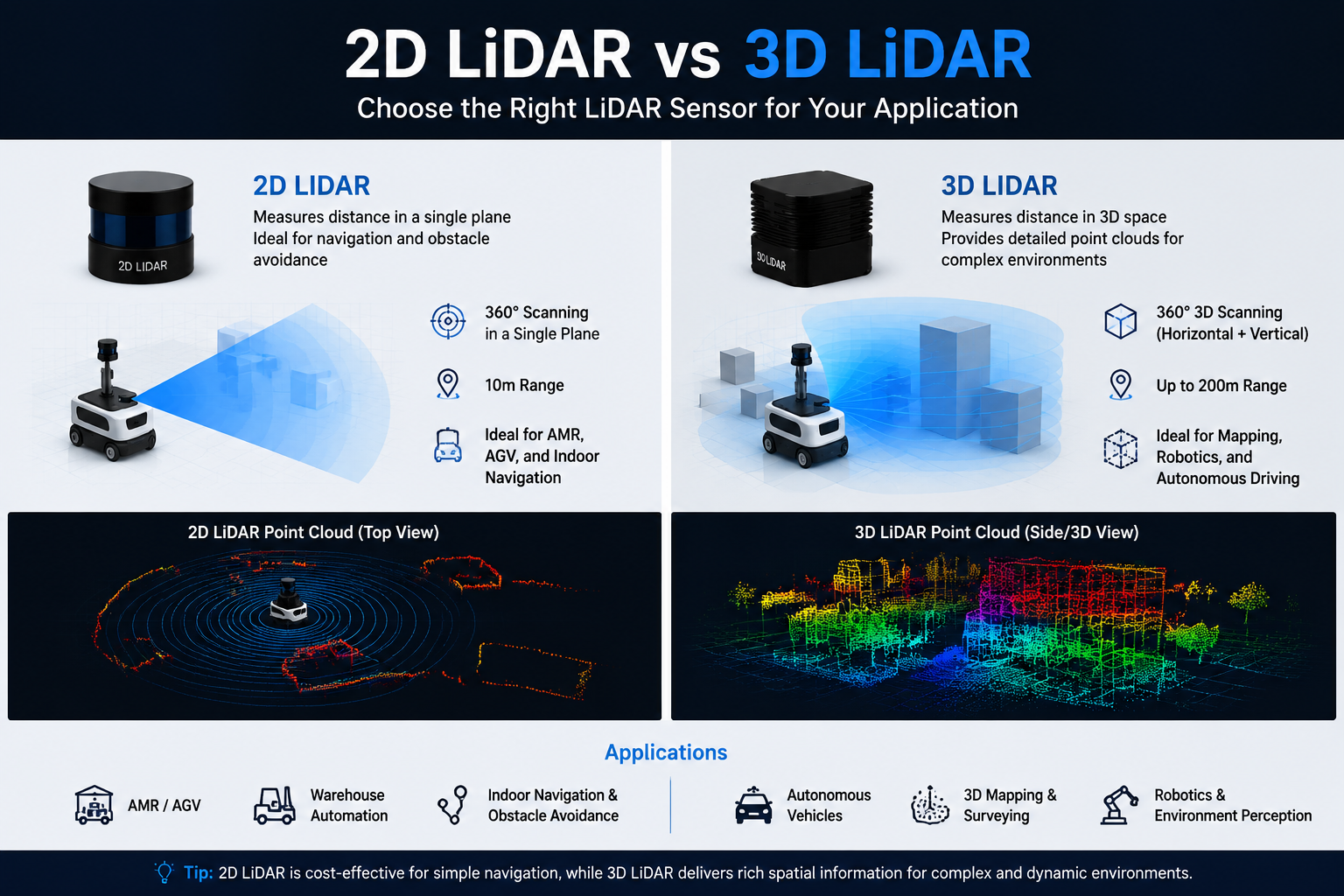
2D LiDAR Sensors
2D LiDAR sensors measure distances in a single scanning plane.
They are commonly used for:
- Autonomous Mobile Robots (AMR)
- Automated Guided Vehicles (AGV)
- Warehouse robots
- Navigation and obstacle avoidance
Advantages:
- Lower cost
- Easy integration
- Reliable indoor performance
3D LiDAR Sensors
3D LiDAR sensors generate three-dimensional point clouds by measuring distance in multiple directions.
Applications include:
- Autonomous vehicles
- Robotics perception
- 3D mapping
- Smart infrastructure
Popular 3D LiDAR solutions include:
- Hesai XT series
- RoboSense RS series
- Livox LiDAR sensors
Automotive LiDAR Sensors
Automotive LiDAR sensors are designed for advanced driver assistance systems (ADAS) and autonomous vehicles.
Key requirements include:
- Long detection range
- High reliability
- High-resolution point clouds
- Automotive-grade performance
Typical applications:
- L3/L4 autonomous driving
- Robotaxi
- Smart transportation
3. How to Choose the Best LiDAR Sensor for Your Application?
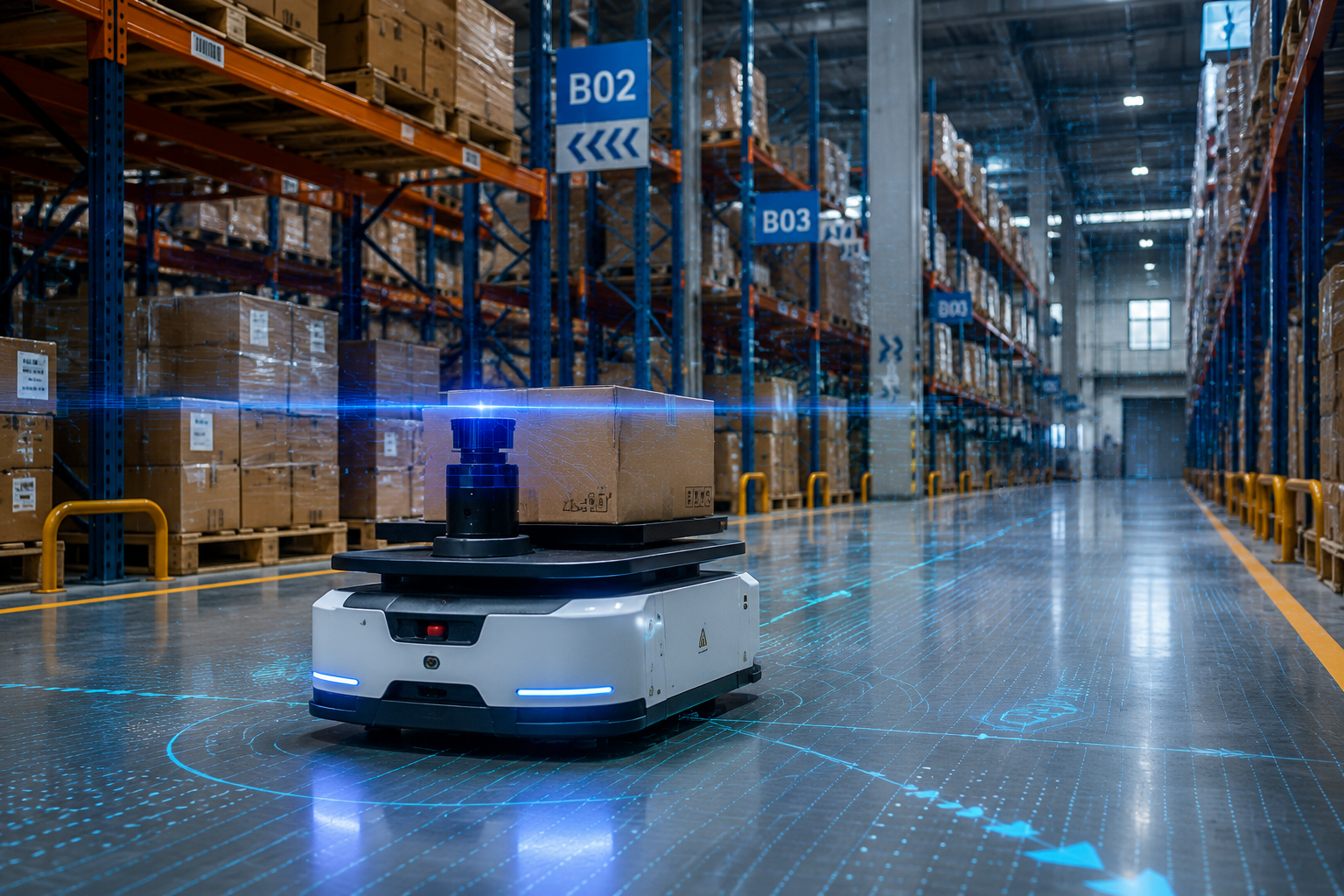
Different applications require different LiDAR solutions.
LiDAR for Autonomous Robots and AMR
For warehouse and industrial robots, important factors include:
- Fast scanning speed
- Reliable obstacle detection
- Compact design
- Easy software integration
Recommended solutions:
- Compact 3D LiDAR sensors
- Industrial navigation LiDAR
- Wide-FOV perception sensors
LiDAR for Autonomous Vehicles
Autonomous vehicles require advanced perception systems.
Important specifications:
- Long range detection
- High-resolution point cloud
- Wide field of view
- Real-time processing capability
Common choices:
- 128-channel LiDAR
- Automotive LiDAR platforms
- High-performance 3D sensors
LiDAR for Mapping and Surveying
Mapping applications require:
- High accuracy
- Dense point clouds
- Stable outdoor performance
Suitable applications:
- Drone mapping
- Mobile mapping systems
- Digital twins
- Construction surveying
4. How Much Does a LiDAR Sensor Cost?
The price of a LiDAR sensor depends on many factors:
- Scanning technology
- Channel number
- Detection range
- Accuracy requirements
- Production quantity
- Application environment
A research project may require a different solution compared with an automotive manufacturer.
For engineering evaluation, OEM projects and volume purchasing, professional suppliers can provide customized recommendations based on technical requirements.
5. How to Choose a Reliable LiDAR Sensor Supplier?
Selecting the right LiDAR supplier is as important as selecting the right sensor.
A professional LiDAR supplier should provide:
Product Authenticity
Ensure sensors come from reliable supply channels with proper technical documentation.
Technical Support
Engineering support helps customers:
- Select the correct model
- Complete integration
- Solve technical issues
Global Shipping Capability
International customers need suppliers who can provide:
- Fast delivery
- Export support
- Complete documentation
Application Experience
A supplier with experience in robotics, autonomous driving and industrial applications can provide better recommendations.
6. Why Choose LidarSeek for Your LiDAR Solution?
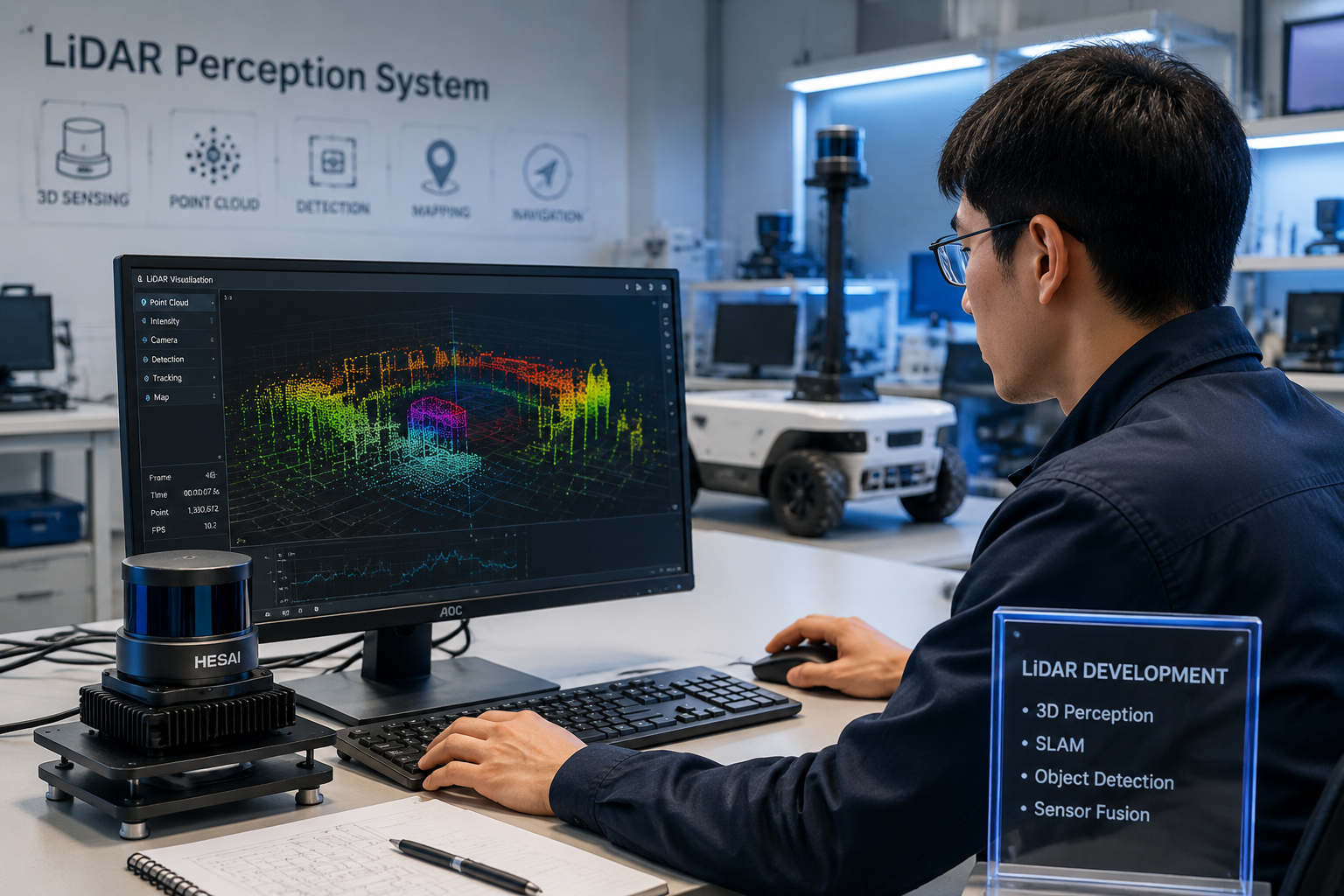
LidarSeek specializes in providing LiDAR sensors and perception solutions for global customers.
We support applications including:
- Autonomous vehicles
- Robotics
- AMR and AGV systems
- Industrial automation
- Mapping
- AI perception
Our advantages:
✓ Professional LiDAR selection support
✓ Global shipping service
✓ Engineering assistance
✓ Solutions for research and commercial projects
✓ Support for OEM and bulk requirements
Whether you need a single evaluation unit or a large-scale deployment, LidarSeek can help you find the right LiDAR sensor.
Frequently Asked Questions About Buying LiDAR Sensors
1. What is the best LiDAR sensor for robotics?
The best LiDAR sensor depends on your robot type, environment and detection requirements. Indoor AMR robots usually require compact and reliable sensors, while outdoor robots may need longer-range 3D LiDAR.
2. How do I choose a 3D LiDAR sensor?
Consider range, FOV, resolution, scanning frequency, interface compatibility and software support.
3. Can LiDAR sensors work outdoors?
Yes. Many industrial and automotive LiDAR sensors are designed for outdoor environments.
4. What is the difference between 16-channel and 128-channel LiDAR?
Higher-channel LiDAR generally provides denser point clouds and better perception capability, but usually requires higher processing capability.
5. Is LiDAR better than cameras?
LiDAR and cameras have different advantages. LiDAR provides accurate depth measurement, while cameras provide rich visual information. Many autonomous systems combine both technologies.
6. Can I buy LiDAR sensors for research projects?
Yes. Many LiDAR sensors are suitable for universities, research labs and engineering development projects.
7. Do LiDAR sensors support ROS?
Many robotics-focused LiDAR sensors provide ROS support or SDK integration options.
8. What applications use 3D LiDAR sensors?
Applications include autonomous vehicles, robots, mapping systems, drones and industrial automation.
9. How long does LiDAR sensor delivery take?
Delivery time depends on product availability, destination and shipping method.
10. How can I request a LiDAR quotation?
Contact LidarSeek with your application requirements, and our engineers will recommend a suitable LiDAR solution.
Conclusion: Find the Right LiDAR Sensor for Your Project
Choosing a LiDAR sensor requires balancing performance, application requirements and integration needs.
Whether you are developing robots, autonomous vehicles or industrial systems, selecting the right LiDAR technology can significantly improve system reliability and performance.
LidarSeek provides professional LiDAR solutions from leading manufacturers and helps customers worldwide find suitable sensors for their projects.
Need help selecting a LiDAR sensor?
Tell us your application requirements and our engineers will recommend the right solution.









