
Introduction: Why LiDAR Is Essential for Modern Robot Navigation
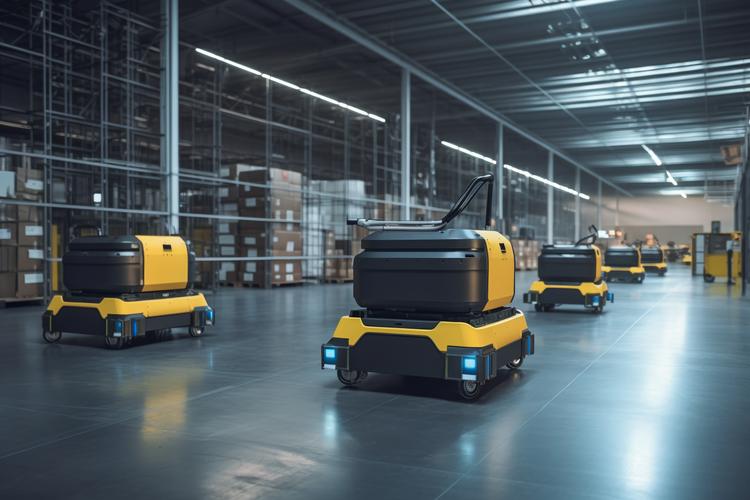
Robotics is evolving rapidly. Autonomous mobile robots, warehouse robots, service robots, delivery robots, inspection robots, and intelligent industrial machines are increasingly expected to operate without continuous human intervention.
To perform these tasks reliably, a robot needs to understand its surrounding environment. It must detect obstacles, measure distances, identify free space, estimate its position, and make navigation decisions in real time.
This is where a 2D LiDAR sensor becomes an important perception component.
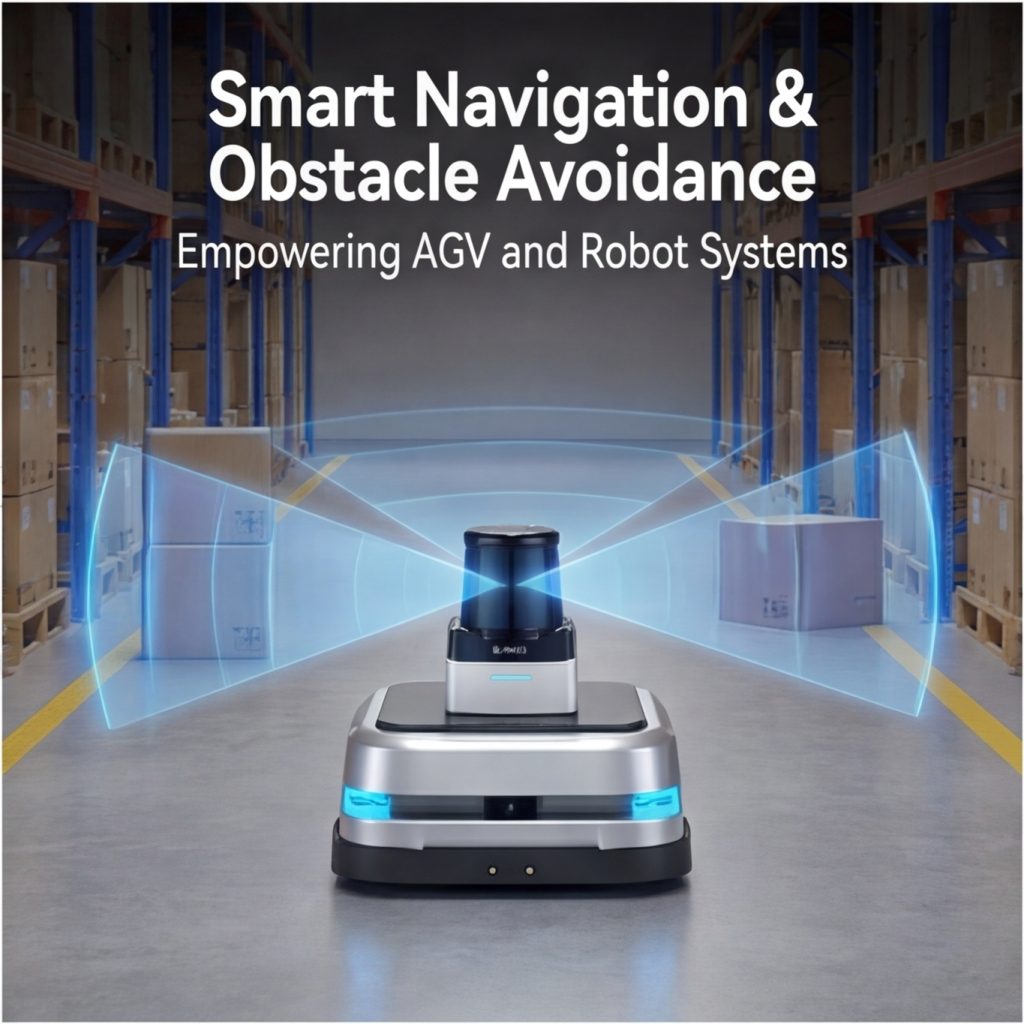
Unlike cameras, which depend on image processing and lighting conditions, LiDAR measures distance by transmitting laser pulses and analyzing their reflections. The resulting distance measurements can be converted into environmental point cloud data, allowing a robot to detect walls, objects, obstacles, and surrounding structures.
For developers looking for an affordable 2D LiDAR for robot navigation, the PAVO2-LS-50H offers an interesting combination of measurement range, scanning resolution, Ethernet communication, and compact mechanical design.
The PAVO2-LS-50H is a single-line Time-of-Flight (TOF) LiDAR sensor designed for applications such as robot positioning, navigation, environmental modeling, and security monitoring.
Its 50-meter maximum detection range under the specified high-reflectivity condition, 280-degree scanning range, 45 kHz sampling rate, and minimum angular resolution of 0.08 degrees make it suitable for evaluating in various mobile robotics projects.
Product details:
https://lidarseek.com/product/pavo2-ls-50h
1. What Is a 2D LiDAR Sensor for Robot Navigation?
A 2D LiDAR sensor measures distances in a single scanning plane. As the sensor scans across its field of view, it collects multiple distance measurements and converts them into a two-dimensional representation of the surrounding environment.
Each measurement contains information about the distance and angle of a detected object.
When combined, these measurements form a 2D point cloud or laser scan.
For a mobile robot, this information can support several essential navigation functions:
- Obstacle detection and avoidance.
- Wall and boundary detection.
- Robot localization.
- Map generation.
- Navigation path planning.
- Detection of objects within the scanning plane.
- Monitoring of surrounding free space.
For example, a warehouse AMR equipped with a 2D LiDAR can scan its surroundings while moving through aisles. Its navigation software can use the laser scan to identify shelving, walls, pallets, and other objects intersecting the scanning plane.
The robot can then update its navigation map and adjust its movement according to the detected environment.
A 2D LiDAR does not independently perform all navigation calculations. Instead, it provides distance data to the robot’s perception and navigation software.
2. PAVO2-LS-50H: A Practical 50m 2D LiDAR for Robotics
Choosing a LiDAR sensor requires balancing detection range, angular resolution, sampling speed, mechanical dimensions, power consumption, and integration requirements.
The PAVO2-LS-50H provides the following specifications:
| Parameter | Specification |
|---|---|
| LiDAR Type | Single-line TOF LiDAR |
| Detection Range | 0.1–50m @ 90% reflectivity |
| Detection Range | 0.1–20m @ 10% reflectivity |
| Scanning Range | 280° |
| Minimum Angular Resolution | 0.08° |
| Sampling Rate | 45 kHz |
| Scanning Frame Rate | 25/50 Hz |
| Repeatability Accuracy | ±20 mm |
| Laser Wavelength | 905 nm |
| Laser Safety | Class 1 |
| Communication | Ethernet 100BASE-TX |
| Operating Voltage | DC 12–24V |
| Power Consumption | 2W |
| Protection Rating | IP67 |
| Dimensions | 60 × 60 × 80 mm |
| Weight | 250g excluding cables |
These specifications provide several advantages for mobile robot developers.
2.1 Long Detection Range for Environmental Awareness
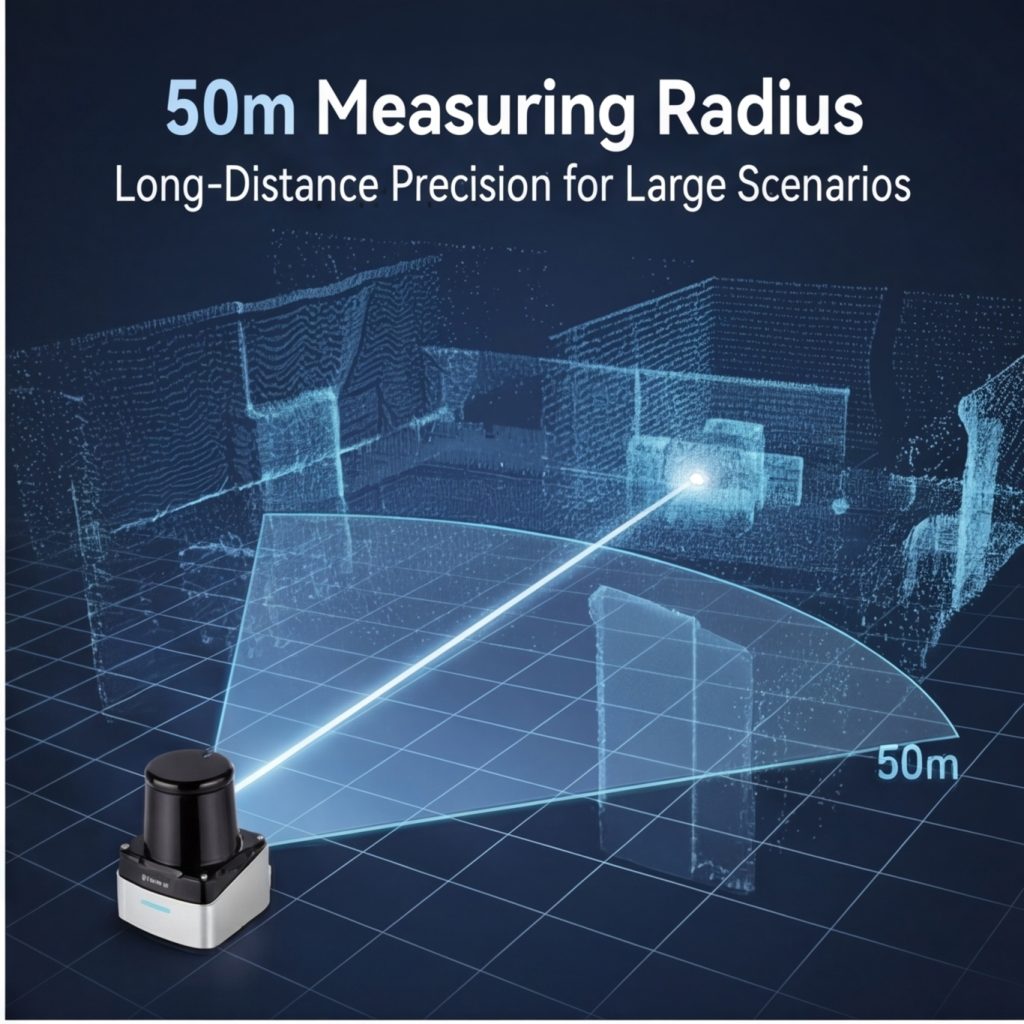
The PAVO2-LS-50H supports a detection range of up to 50 meters when measuring objects with 90% reflectivity.
For objects with 10% reflectivity, the specified detection range is up to 20 meters.
This distinction is important because LiDAR performance depends on the reflectivity of the target surface, as well as environmental conditions and installation geometry.
A longer detection range can help a mobile robot identify obstacles earlier, giving its navigation system additional time to evaluate possible movement paths.
Applications include warehouse navigation, indoor logistics, industrial inspection, and outdoor mobile robot development.
2.2 280-Degree Scanning Range
The sensor provides a 280-degree scanning range.
This wide scanning angle allows a robot to monitor a substantial portion of the surrounding horizontal environment without requiring a full 360-degree scanning field.
When designing a robot, developers should consider the sensor’s mounting position and orientation to determine whether the remaining blind area needs additional sensors.
For mobile platforms, a 280-degree scanning range can be useful for front-facing obstacle detection, navigation, and environmental monitoring.
2.3 0.08-Degree Angular Resolution
Angular resolution determines the angular interval between adjacent measurements.
The PAVO2-LS-50H supports a minimum angular resolution of 0.08 degrees.
A smaller angular interval means more closely spaced angular measurement positions, which can help a robot identify smaller obstacles and better represent nearby structures.
Actual detection performance still depends on target dimensions, distance, reflectivity, and installation conditions.
2.4 45 kHz Sampling Rate
The 45 kHz sampling rate allows the sensor to generate a continuous stream of distance measurements.
For autonomous mobile robots, frequent measurements are valuable because the surrounding environment can change while the robot is moving.
The sensor also supports scanning frame rates of 25 Hz and 50 Hz.
Developers should select the appropriate scanning configuration based on robot speed, navigation requirements, and processing capability.
3. Applications in Different Types of Robots
3.1 Autonomous Mobile Robots (AMRs)
AMRs are widely used in warehouses, distribution centers, manufacturing facilities, and logistics operations.
Unlike traditional AGVs that often follow predefined paths, AMRs can use environmental information to make more flexible navigation decisions.
A 2D LiDAR can provide the distance measurements required for:
- Detecting obstacles in front of the robot.
- Identifying walls and warehouse structures.
- Supporting localization and mapping.
- Monitoring changing aisle conditions.
- Assisting dynamic path planning.
The PAVO2-LS-50H can be evaluated as a primary horizontal scanning sensor in AMR development projects.
3.2 Automated Guided Vehicles (AGVs)
AGVs are commonly deployed for material handling and repetitive transportation.
A LiDAR sensor can help an AGV identify obstacles and monitor the surrounding environment.
When integrated with an appropriate control system, the sensor’s measurement data can support navigation and safety-related detection functions.
For industrial safety applications, however, developers must verify whether the sensor has the required functional safety certification. An ordinary navigation LiDAR should not automatically be considered a certified safety scanner.
3.3 Humanoid Robots and Quadruped Robots
Humanoid robots and quadruped robots require environmental awareness to move through complex spaces.
A 2D LiDAR mounted at an appropriate height can detect nearby obstacles, walls, and surrounding structures within its scanning plane.
For a quadruped robot, this can support indoor navigation, inspection, and basic obstacle awareness.
For humanoid robots, it may provide supplementary horizontal environmental information.
However, a single-line LiDAR cannot identify the complete three-dimensional shape of objects above or below its scanning plane. Combining it with cameras, depth sensors, or 3D LiDAR can provide more comprehensive perception.
3.4 Service and Delivery Robots
Indoor delivery robots operate in offices, hospitals, hotels, shopping centers, and commercial buildings.
They need to navigate hallways, recognize obstacles, and move between designated destinations.
A compact LiDAR sensor can provide useful environmental measurements without requiring a large mechanical installation.
The PAVO2-LS-50H weighs approximately 250g excluding cables and has dimensions of 60 × 60 × 80 mm, making it a candidate for compact mobile platforms.
4. ROS Compatibility and System Integration
Hardware selection is only one part of a robotics project. Software integration is equally important.
The PAVO2-LS-50H product page identifies compatibility with ROS systems and mainstream development platforms for secondary development.
The sensor also supports Ethernet 100BASE-TX communication.
This interface allows developers to connect the sensor to compatible embedded computers, industrial PCs, or robotics control platforms.
A typical integration architecture includes:
- PAVO2-LS-50H LiDAR sensor.
- Ethernet communication connection.
- Embedded computer or industrial PC.
- LiDAR SDK or compatible data-processing software.
- ROS driver or custom communication interface.
- SLAM and localization software.
- Navigation and motion-control modules.
Developers can use the manufacturer’s SDK and software resources to begin system integration.
Before purchasing, it is recommended to confirm the exact SDK version, ROS distribution compatibility, supported message formats, network configuration, and available development documentation.
5. How to Choose the Right 2D LiDAR for Your Robot
Not every robot requires the same LiDAR configuration.
Consider the following factors before selecting a sensor.
Detection range: Evaluate the maximum distance needed for obstacle detection and navigation. Consider the reflectivity of typical target surfaces.
Scanning angle: Determine whether the robot needs front-facing coverage or wider horizontal monitoring.
Angular resolution: Consider the minimum obstacle size and distance that the system needs to detect.
Frame rate: Faster-moving platforms may require more frequent environmental updates.
Communication interface: Confirm that the LiDAR supports the network interface and data format required by your controller.
Mechanical dimensions: Check the sensor’s mounting position, weight, and available installation space.
Environmental protection: For outdoor or industrial use, consider dust, moisture, vibration, temperature, and other operating conditions.
The IP67 protection rating of the PAVO2-LS-50H is an important consideration for applications where dust and water exposure are possible. Actual suitability still depends on installation and operating conditions.
6. Why Consider PAVO2-LS-50H from LidarSeek?
LidarSeek provides LiDAR sensors and intelligent perception products for robotics, autonomous systems, industrial automation, and mapping applications.
The PAVO2-LS-50H is worth considering for engineering teams that need a compact 2D LiDAR with a 50-meter specified maximum detection range and Ethernet connectivity.
When purchasing through LidarSeek, customers can request:
- Product pricing and quantity-based quotations.
- Sample order information.
- Product availability and estimated lead time.
- Technical information for project evaluation.
- International shipping arrangements.
- Assistance with selecting suitable LiDAR models.
Whether you are developing an AMR, AGV, service robot, or autonomous mobile platform, selecting the right perception sensor is an important step toward reliable navigation.
Request a competitive quotation:
Frequently Asked Questions (FAQ)
Q1: What is the maximum detection range of the PAVO2-LS-50H?
The specified detection range is 0.1–50 meters at 90% reflectivity and 0.1–20 meters at 10% reflectivity. Actual performance depends on target characteristics and environmental conditions.
Q2: Is the PAVO2-LS-50H suitable for autonomous mobile robots?
It can be evaluated for AMR applications, including obstacle detection, environmental scanning, mapping, and navigation. Final suitability depends on the robot’s design and software architecture.
Q3: Does this 2D LiDAR support ROS?
The product page states that the sensor is compatible with ROS systems and mainstream development platforms. Confirm the available driver, ROS version, and SDK documentation before integration.
Q4: What is the scanning angle?
The PAVO2-LS-50H has a 280-degree scanning range.
Q5: What is the sampling rate?
The sensor has a specified sampling rate of 45 kHz and supports scanning frame rates of 25 Hz and 50 Hz.
Q6: Can it be used for outdoor robots?
Its IP67 protection rating and specified operating temperature of -10°C to 55°C make it worth evaluating for suitable outdoor applications. Direct sunlight, target reflectivity, mounting, and environmental conditions should be tested.
Q7: Can one 2D LiDAR provide complete 3D environmental perception?
No. A single-line 2D LiDAR measures within one scanning plane. Applications requiring full 3D perception may need additional 3D LiDAR or depth cameras.
Q8: Is the PAVO2-LS-50H suitable for safety protection?
It is a Class 1 laser product, but this does not mean it is a certified personnel-protection safety scanner. Confirm the applicable safety requirements for your application.
Q9: How can I purchase the PAVO2-LS-50H?
Visit the LidarSeek product page and submit a quotation request with your required quantity and application details.
Product link: https://lidarseek.com/product/pavo2-ls-50h
Q10: Can I request a sample before bulk purchasing?
Contact LidarSeek to confirm sample availability, pricing, and shipping arrangements for your project.









