
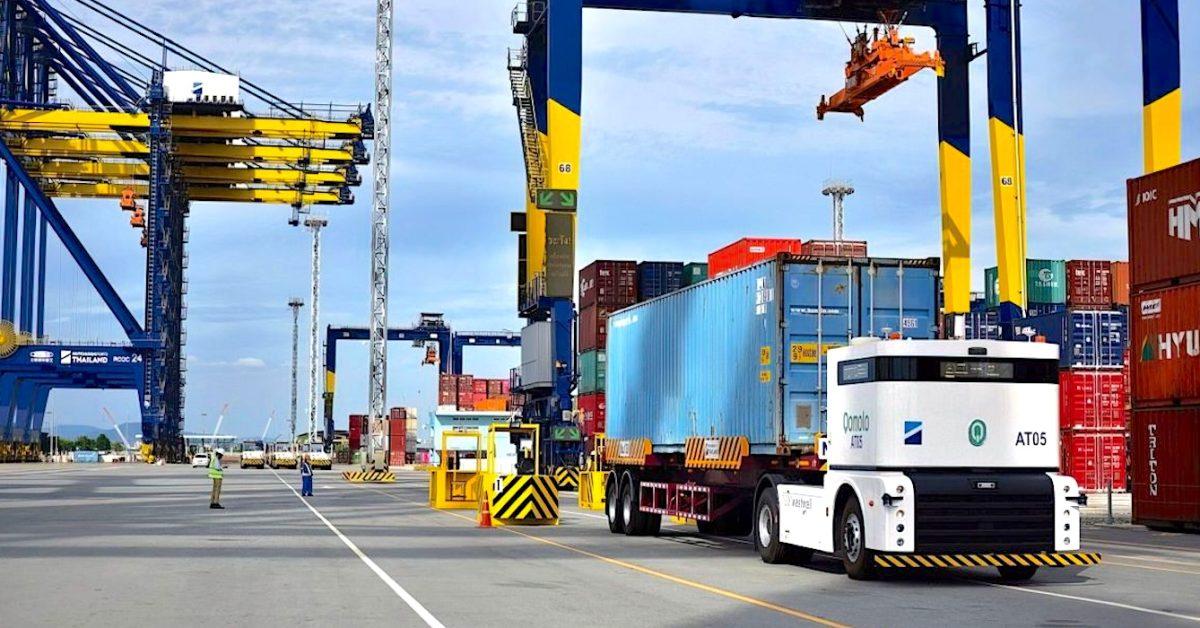
Outdoor robotics is becoming increasingly important across logistics, agriculture, construction, mining, infrastructure inspection, and autonomous transportation.
Unlike indoor mobile robots, outdoor autonomous systems must operate in much more complex environments. They may encounter direct sunlight, changing weather conditions, uneven terrain, long-distance obstacles, moving vehicles, pedestrians, and rapidly changing surroundings.
For these applications, selecting the right LiDAR sensor is not simply a matter of choosing the longest detection range or highest point cloud density.
The sensor must provide reliable environmental perception under the actual operating conditions of the robot.
For robotics OEMs, autonomous vehicle developers, and system integrators, an unsuitable LiDAR configuration can lead to missed obstacles, unstable localization, unnecessary integration work, and increased development costs.
This guide examines eight critical factors engineers should evaluate when selecting LiDAR for outdoor robotics projects.
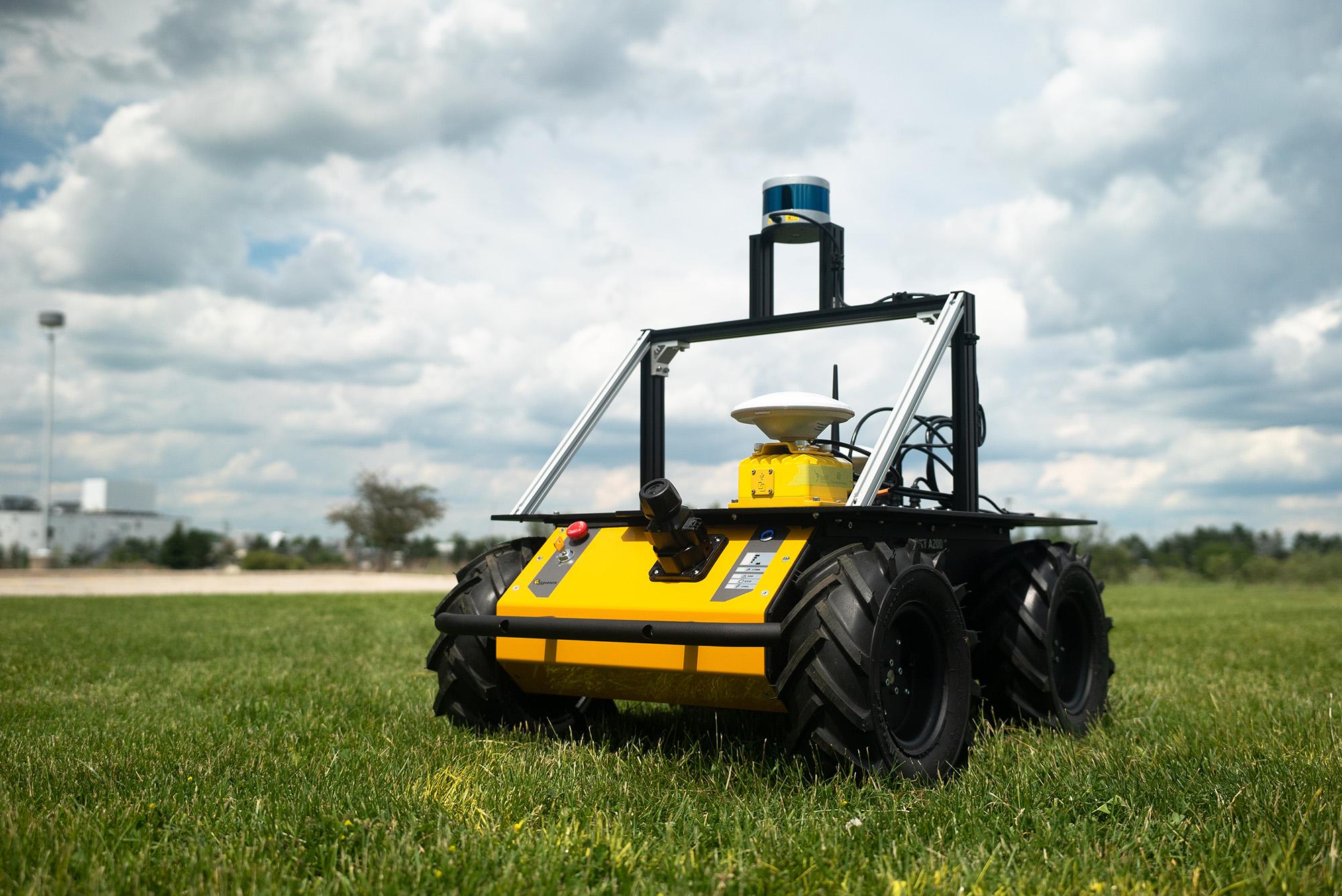
1. Detection Range: How Far Can the Robot See?
Detection range is often the first specification engineers compare when evaluating LiDAR sensors.
However, the maximum detection range stated in a datasheet does not necessarily represent the distance at which the sensor can reliably detect every type of object.
Manufacturers may specify detection range under particular target reflectivity, environmental, and measurement conditions.
For outdoor robotics, engineers should consider three different distance requirements:
Long-range detection
Useful for detecting obstacles, vehicles, structures, and other objects before the robot reaches them.
Medium-range perception
Important for path planning, navigation, and identifying objects in the robot’s immediate operating environment.
Near-field detection
Essential for low-speed maneuvering, obstacle avoidance, and operation around people or equipment.
A sensor with an impressive maximum range may still be unsuitable if its near-field performance or vertical coverage does not match the application.
When evaluating range, check:
- Detection range at different target reflectivities.
- Minimum measurable distance.
- Detection performance across the field of view.
- Measurement accuracy at relevant distances.
- Performance under the expected environmental conditions.
Engineering recommendation: Evaluate detection range based on the actual objects your robot needs to recognize, rather than relying exclusively on the maximum range advertised in the product datasheet.
2. Sunlight Resistance and Outdoor Environmental Performance
Outdoor LiDAR sensors must operate under changing ambient lighting conditions.
Direct sunlight, reflections from bright surfaces, and varying environmental conditions can affect optical sensing performance.
Engineers should therefore examine the manufacturer’s specifications and testing information related to ambient light resistance.
Important considerations include:
- Maximum specified ambient light conditions.
- Optical interference resistance.
- Detection stability under strong sunlight.
- Performance with different target reflectivities.
- Environmental operating temperature.
It is also important to understand that sunlight resistance and weather resistance are two different characteristics.
A sensor may perform well under strong ambient light but still require additional protection against rain, dust, condensation, or water exposure.
For robots operating outdoors throughout the year, these factors should be evaluated separately.
3. IP Rating: Can the Sensor Withstand Dust and Water?
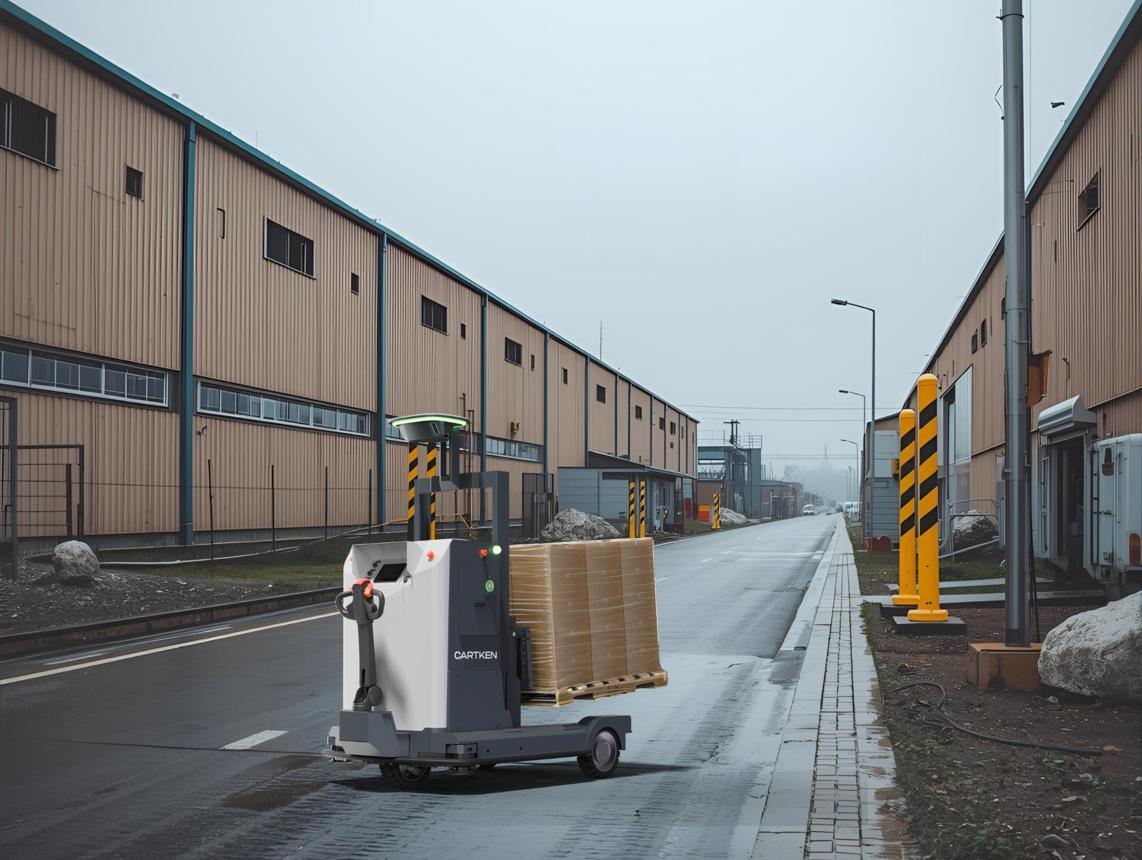
Environmental protection is particularly important for outdoor autonomous systems.
Robots operating in agricultural fields, construction sites, mining environments, and outdoor logistics facilities may encounter dust, mud, rain, and water splashes.
The Ingress Protection (IP) rating provides information about the protection of an enclosure against the ingress of solid objects and water under specified test conditions.
Common ratings include:
- IP65: Dust-tight protection and protection against water jets under specified testing conditions.
- IP67: Dust-tight protection and protection against temporary immersion under specified testing conditions.
- IP68: Dust-tight protection and protection against immersion under conditions specified by the manufacturer.
However, a higher IP number does not automatically mean a sensor is suitable for every outdoor environment.
Engineers should also investigate:
- Connector protection.
- Cable entry sealing.
- Mounting orientation.
- Operating temperature range.
- Condensation and thermal management.
- Vibration and mechanical shock resistance.
For outdoor robotics, the protection rating should be considered together with the complete installation design.
A sensor with an appropriate IP rating can still experience environmental problems if its connectors, mounting interfaces, or cable arrangements are not properly protected.
4. Field of View and Sensor Placement
Field of view (FOV) determines how much of the surrounding environment a LiDAR sensor can observe.
For outdoor robots, horizontal and vertical coverage are both important.
Horizontal Field of View
A wide horizontal field of view can help a robot monitor obstacles around its driving path.
However, a single sensor may not provide sufficient coverage for every direction, especially when the robot needs to detect objects around its entire perimeter.
Vertical Field of View
Vertical coverage is important when detecting objects with different heights, uneven terrain, overhanging obstacles, or changes in ground elevation.
Engineers should consider:
- Horizontal field of view.
- Vertical field of view.
- Vertical angular resolution.
- Sensor mounting height.
- Blind spots created by the robot structure.
- Overlapping coverage between multiple sensors.
For some applications, combining multiple LiDAR sensors may provide better coverage than relying on a single sensor.
Nevertheless, additional sensors introduce integration considerations such as coordinate transformation, synchronization, data processing, and mounting complexity.
The final configuration should be based on the robot’s dimensions, operating environment, and perception requirements.
5. Point Cloud Density and Angular Resolution
Point cloud quality directly affects how an autonomous system perceives its surroundings.
A higher point cloud density can provide more detailed spatial information, but it also increases data processing requirements.
Two important specifications are horizontal and vertical angular resolution.
These determine the angular spacing between measurements and influence how objects appear in the generated point cloud.
For outdoor robotics, insufficient point density may make it difficult to detect smaller or narrow objects at longer distances.
Engineers should evaluate:
- Horizontal angular resolution.
- Vertical angular resolution.
- Points per second.
- Frame rate or scan frequency.
- Field of view.
- Point cloud consistency.
- Data output format.
It is also important to understand the difference between point rate and effective object detection performance.
A sensor generating a large number of points does not automatically guarantee reliable detection of every obstacle.
Object size, distance, reflectivity, scanning pattern, sensor movement, and processing algorithms all influence the final result.
For high-speed autonomous platforms, the relationship between sensor update rate, vehicle speed, and perception processing latency deserves particular attention.
6. Mechanical Integration and Communication Interfaces
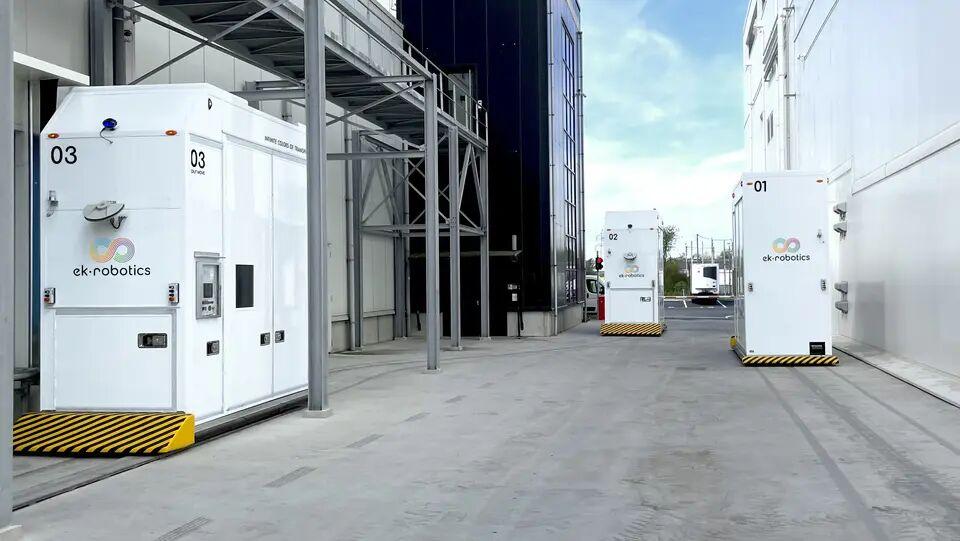
Even a technically suitable LiDAR can become difficult to use if it cannot be properly integrated into the robot.
Before selecting a model, engineering teams should review its mechanical and electrical requirements.
Mechanical considerations
- Overall dimensions.
- Weight.
- Mounting hole positions.
- Installation orientation.
- Vibration resistance.
- Thermal management requirements.
Electrical considerations
- Input voltage.
- Power consumption.
- Connector type.
- Cable requirements.
- Electrical protection.
Communication considerations
- Ethernet interface.
- Data transmission protocol.
- Supported output formats.
- SDK availability.
- ROS or ROS 2 integration resources, where supported.
- Time synchronization capabilities.
For robots using NVIDIA Jetson, industrial PCs, or embedded computing platforms, compatibility should be verified using the exact hardware and software configuration.
Do not assume that two sensors with similar product descriptions or interfaces will work with the same software architecture.
A practical integration test should verify data reception, timestamp behavior, coordinate systems, point cloud visualization, and system stability.
7. Multi-Sensor Integration and Localization Requirements
Many outdoor autonomous robots use more than one sensing technology.
A typical perception system may combine:
- LiDAR.
- Cameras.
- GNSS or RTK positioning.
- IMU.
- Wheel odometry.
- Radar, where required.
LiDAR provides spatial measurements that can support obstacle detection, mapping, and localization.
GNSS and RTK can provide positioning information in suitable outdoor environments, while IMU and odometry contribute motion-related data.
For autonomous robots operating near buildings, under trees, or in environments with limited satellite visibility, LiDAR-based localization may play a particularly important role.
When selecting a LiDAR, engineers should consider whether the sensor supports the timing, data output, and integration requirements of the complete perception architecture.
Important questions include:
- Can the sensor provide accurate timestamps?
- Is external synchronization supported or required?
- Are the coordinate systems and transformation requirements documented?
- Can the point cloud be integrated into the intended SLAM or localization framework?
- Is the available data rate suitable for the onboard computing platform?
Sensor selection should be part of the overall perception system design, not an isolated hardware purchasing decision.
8. Total Cost, Product Availability, and Long-Term Supply

Technical performance is only one part of the purchasing decision.
For OEMs and robotics manufacturers, product availability, supply continuity, and total procurement cost can be equally important.
A LiDAR model may be suitable for an engineering prototype but become difficult to source when the project enters pilot production.
Before placing an order, procurement teams should evaluate:
Product availability
Confirm whether the required quantity is physically available or needs to be sourced from the manufacturer or distribution channel.
Lead time
Request realistic delivery estimates for both initial quantities and future batches.
Warranty
Understand the applicable warranty coverage and after-sales procedures.
Product lifecycle
Check for model revisions, discontinuation notices, and potential replacement products.
International logistics
Compare shipping methods, delivery schedules, and applicable Incoterms.
Technical support
Confirm the availability of product documentation and technical assistance during integration.
For projects requiring multiple LiDAR units, it is also worth discussing whether partial shipments can help align hardware delivery with the development and production schedule.
The most suitable solution is not always the lowest-priced sensor. It is the product and sourcing arrangement that meet the project’s technical and commercial requirements over its expected lifecycle.
Which Type of LiDAR Is Suitable for Your Outdoor Robotics Project?
Different applications have different sensing requirements.
The following table provides a starting point for engineering evaluation.
| Application | Important LiDAR Considerations |
|---|---|
| Outdoor AMR | Obstacle detection, field of view, sunlight resistance |
| Autonomous Delivery Robots | Compact design, near-field coverage, environmental protection |
| Agricultural Robots | Dust and water protection, uneven terrain perception |
| Mining Vehicles | Long-range perception, rugged installation, environmental performance |
| Autonomous Construction Equipment | Long-range sensing, vibration resistance, multi-sensor integration |
| Industrial Autonomous Vehicles | Detection range, reliability, integration and supply planning |
| Outdoor Inspection Robots | Point cloud quality, localization, environmental adaptability |
These are general selection considerations, not fixed product recommendations. The actual sensor configuration should be validated against the project’s operational requirements.
How to Compare LiDAR Products from Different Manufacturers
When evaluating multiple manufacturers, avoid comparing products using only maximum range or price.
A structured comparison helps engineering and procurement teams identify the differences that matter.
Consider evaluating products from manufacturers such as Hesai, RoboSense, Livox, and Seyond.
| Comparison Category | What to Evaluate |
|---|---|
| Detection Performance | Range, target reflectivity, minimum distance |
| Optical Performance | Sunlight resistance, interference handling |
| Coverage | Horizontal and vertical field of view |
| Point Cloud | Resolution, point rate, scan pattern |
| Environmental Protection | IP rating, temperature range |
| Integration | Interface, SDK, synchronization, ROS resources |
| Mechanical Design | Size, weight, mounting requirements |
| Procurement | Price, availability, lead time, warranty |
Each manufacturer’s product portfolio contains different technologies and configurations. Products should be compared at the individual model level rather than assuming that all products from one brand have the same capabilities.
Why Work with LIDARSEEK for Outdoor Robotics LiDAR Sourcing?
Finding the right LiDAR is not always straightforward.
An outdoor robotics project may require a combination of long-range detection, environmental protection, high-quality point clouds, and compatibility with an existing software platform.
LIDARSEEK provides multi-brand LiDAR sourcing and product selection assistance for robotics manufacturers, autonomous systems developers, and industrial technology companies.
Our product portfolio includes LiDAR solutions from manufacturers such as Hesai, RoboSense, Livox, Seyond, and other sensing technology providers.
We can assist with:
1. Multi-Brand Product Selection
Compare available LiDAR models based on your project’s technical requirements.
2. Application-Based Recommendations
Discuss detection range, field of view, environmental conditions, and integration requirements.
3. Product Documentation
Access available datasheets, user manuals, and manufacturer technical resources.
4. Prototype and Bulk Purchasing
Discuss product availability and quotations for both small-quantity evaluation and larger project requirements.
5. International Supply Coordination
Receive assistance with product sourcing, shipping arrangements, and delivery planning.
Whether you are developing an outdoor AMR, an autonomous industrial vehicle, or a specialized robotic platform, our team welcomes the opportunity to discuss your requirements.
Frequently Asked Questions
1. Is 3D LiDAR better than 2D LiDAR for outdoor robots?
Not necessarily. 2D LiDAR can be suitable for applications requiring planar obstacle detection or navigation. 3D LiDAR provides spatial information across multiple vertical angles and may be more appropriate for applications involving complex environments, uneven terrain, or three-dimensional obstacle perception.
The choice depends on the robot’s perception requirements and system architecture.
2. Does outdoor LiDAR work in direct sunlight?
Many LiDAR sensors are designed for outdoor applications, but performance depends on the specific sensor design and operating conditions. Always check the manufacturer’s ambient light specifications and validate performance under the expected sunlight conditions.
3. What IP rating should an outdoor robotics LiDAR have?
The required IP rating depends on exposure to dust, rain, water jets, and other environmental conditions. IP65, IP67, and IP68 are commonly considered in outdoor equipment selection, but the complete installation and connector protection must also be evaluated.
4. How many LiDAR sensors does an outdoor AMR need?
There is no universal number. It depends on the robot’s dimensions, blind spots, field of view, obstacle detection requirements, and safety architecture. Some applications can use one sensor, while others require multiple sensors for adequate coverage.
5. Which LiDAR brands are suitable for outdoor robotics?
Hesai, RoboSense, Livox, and Seyond offer different LiDAR technologies and product configurations. The appropriate manufacturer and model depend on the application’s range, point cloud requirements, environmental conditions, integration platform, and budget.
6. Can I request a LiDAR recommendation without knowing the exact model?
Yes. You can provide your application, operating environment, approximate detection range, field of view requirements, and estimated quantity. A product selection discussion can help narrow down suitable options.
Need Help Selecting LiDAR for Your Outdoor Robotics Project?
Choosing the right LiDAR requires balancing sensing performance, environmental requirements, integration complexity, and procurement considerations.
If you are developing an outdoor AMR, autonomous vehicle, agricultural robot, mining system, or industrial autonomous platform, LIDARSEEK can help you explore suitable LiDAR products from multiple manufacturers.
Send us your project requirements, and let our team help you identify potential sensor options.
To receive a product recommendation or quotation, please include:
- Application and robot type
- Required detection range
- Indoor or outdoor operating conditions
- Preferred manufacturer or product model, if available
- Estimated quantity
- Destination country
Contact LIDARSEEK
Website: https://lidarseek.com/
Email: lidarseektech@gmail.com
LIDARSEEK – Multi-Brand LiDAR Sourcing and Intelligent Perception Solutions for Global Engineering Teams.









