
Selecting a LiDAR sensor is an important engineering decision. However, for robotics manufacturers, autonomous vehicle developers, and industrial automation companies, choosing the right sensor is only one part of a successful project.
The supplier behind that sensor can have an equally important impact on development efficiency, procurement costs, product availability, and long-term project continuity.
A LiDAR model may meet every technical requirement on paper, but what happens when your engineering team encounters an integration issue? Can the supplier provide the correct documentation? Can the required quantity be delivered according to your production schedule? What happens if your project moves from prototype testing to a larger deployment?
These are questions that engineering and procurement teams should consider before placing an order.
In this guide, we explain seven important factors for evaluating a LiDAR supplier, helping OEMs, robotics developers, and system integrators make more informed sourcing decisions.
1. Look Beyond Product Specifications
The first step in supplier evaluation is understanding the difference between a product that meets your specifications and a product that is genuinely suitable for your project.
Most LiDAR manufacturers publish detailed technical specifications, including:
- Maximum detection range
- Horizontal and vertical field of view
- Angular resolution
- Point cloud output rate
- Measurement accuracy
- Power consumption
- Operating temperature
- Protection rating
These specifications are essential, but they do not tell the whole story.
For example, an AMR manufacturer may need a LiDAR sensor for indoor navigation and obstacle detection. A sensor with a longer maximum detection range is not necessarily the best choice if it has unsuitable near-field performance, an incompatible interface, or difficult integration requirements.
Similarly, an autonomous vehicle developer may prioritize point cloud density, long-range detection, and environmental adaptability.
A reliable supplier should be able to understand your application requirements rather than simply recommend the most expensive or highest-specification model.
What to ask a supplier:
- Can you recommend a sensor based on our application?
- Can you compare products from different manufacturers?
- Can you explain the technical differences between similar models?
- Can you identify potential compatibility limitations?
The objective is to select the right technology for the application, not simply the product with the largest numbers on its datasheet.
2. Evaluate Technical Support and Engineering Resources
Technical support is one of the most overlooked factors in LiDAR procurement.
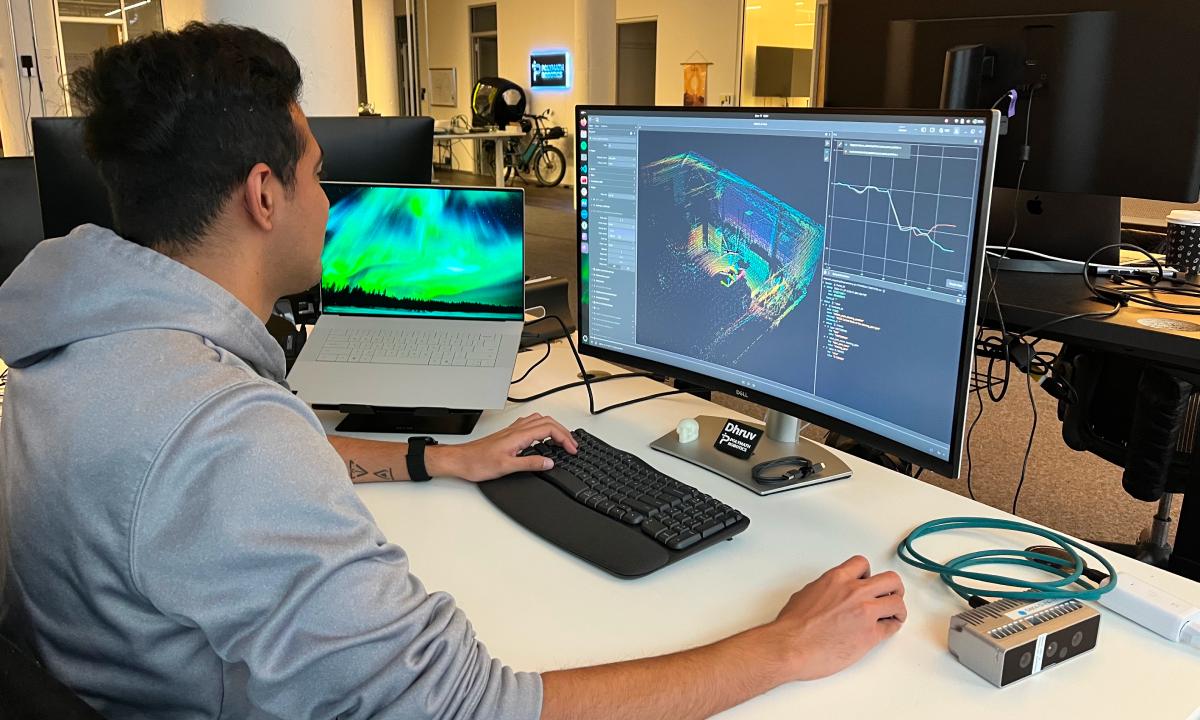
During development, engineering teams may encounter issues involving communication protocols, point cloud interpretation, coordinate systems, time synchronization, SDK configuration, and software integration.
Even when the hardware performs correctly, insufficient documentation or delayed technical assistance can slow down development.
Before choosing a supplier, check whether technical resources are available for your selected product.
Important resources include:
- Product datasheets and user manuals
- SDKs and software development documentation
- ROS and ROS 2 integration resources, where supported
- Ethernet and communication protocol documentation
- Sample code and configuration instructions
- Technical troubleshooting assistance
- Product-specific integration guidance
For projects using NVIDIA Jetson, industrial PCs, or embedded computing platforms, it is also important to confirm compatibility with the actual hardware and software environment.
A supplier should be able to clarify which resources are available and help identify the appropriate technical contact when more detailed engineering assistance is required.
Procurement insight: Do not evaluate technical support only by the supplier’s initial response speed. Consider whether support remains available during product evaluation, integration, testing, and subsequent deployment.
3. Check Product Authenticity and Supply Chain Transparency
When purchasing branded LiDAR sensors, product authenticity and sourcing transparency are essential.
The international market includes manufacturers, authorized distributors, regional distributors, trading companies, and independent sourcing partners.
These business models are not identical.
A supplier should clearly explain its role in the supply chain and provide accurate information about the product’s origin and sourcing arrangements.
Depending on the manufacturer and purchasing channel, relevant information may include:
- Manufacturer product documentation
- Exact product model and configuration
- Original packaging and product identification
- Available serial number or traceability information
- Warranty conditions
- Applicable conformity and certification documents
- Manufacturer or channel-specific support arrangements
Buyers should also distinguish between a supplier’s ability to source genuine products and its status as an officially authorized distributor.
These are different matters and should not be confused.
For OEM procurement, transparency is more valuable than unsupported claims about distribution status.
A professional supplier should communicate clearly about what documentation is available, what warranty applies, and how product-related issues will be handled.
4. Assess Stock Availability and Long-Term Supply Capability

Product availability can directly affect project schedules.
This becomes particularly important when a company moves from prototype development to pilot production or commercial deployment.
A supplier may be able to provide a few evaluation units quickly but may need additional time to arrange a larger quantity.
For this reason, procurement teams should evaluate supply capability at different project stages.
| Project Stage | Key Purchasing Considerations |
|---|---|
| Prototype Development | Small quantities, evaluation units, technical documentation |
| Engineering Validation | Consistent product configuration, testing support |
| Pilot Production | Batch availability, delivery scheduling |
| Mass Production | Volume sourcing, supply continuity, lead-time planning |
| After-Sales Stage | Replacement availability, warranty and technical communication |
For larger orders, ask suppliers to clarify:
- Current physically available stock.
- Quantity that can be allocated to your project.
- Estimated lead time for additional units.
- Whether partial shipments are possible.
- Expected dispatch schedule.
- Whether the same product configuration can be maintained across batches.
It is also important to discuss product lifecycle information.
If a sensor is discontinued or replaced by a newer model, buyers need to understand the impact on their existing hardware, software, mechanical design, and future purchasing plans.
For long-term OEM projects, supply planning should be part of the initial supplier evaluation rather than an issue addressed only after an order is placed.
5. Compare Total Procurement Cost, Not Just Unit Price
Price is important, but the lowest quoted unit price does not always represent the lowest overall project cost.
A complete procurement comparison should consider several factors:
Product cost
Compare the exact model, hardware version, configuration, and included accessories.
Shipping cost
International freight, shipping methods, insurance arrangements, and destination requirements can affect the final purchasing cost.
Import responsibilities
Confirm the applicable Incoterms and understand who is responsible for export clearance, transportation, import clearance, duties, and taxes.
For example, under DAP (Delivered at Place), the seller arranges transportation to the agreed destination, while the buyer generally handles import clearance and applicable import duties and taxes.
Engineering costs
Consider whether missing documentation, incompatible interfaces, or insufficient support could create additional development work.
Delivery costs
Unexpected delays can affect prototype schedules, customer commitments, and production plans.
A useful supplier comparison should therefore include:
| Evaluation Factor | Supplier A | Supplier B |
|---|---|---|
| Exact Product Configuration | Confirm | Confirm |
| Unit Price | Compare | Compare |
| Accessories Included | Check | Check |
| Current Availability | Check | Check |
| Estimated Lead Time | Check | Check |
| Shipping Terms | Check | Check |
| Warranty | Check | Check |
| Technical Support | Check | Check |
| Future Supply Planning | Check | Check |
The best supplier is not necessarily the one offering the lowest initial quotation. It is the one that provides the most suitable overall solution for your technical and commercial requirements.
6. Choose a Supplier with Multi-Brand Sourcing Capability
LiDAR technology is developing rapidly, and different manufacturers offer different strengths.
For example, an engineering team may evaluate:
- Hesai for automotive and 3D LiDAR applications.
- RoboSense for automotive, robotics, and solid-state sensing applications.
- Livox for applications involving its non-repetitive scanning and other LiDAR technologies.
- Seyond for long-range and automotive perception applications.
The appropriate choice depends on the exact model, application, performance requirements, and project constraints.
Working with a specialized multi-brand supplier can simplify the evaluation process.
Instead of communicating independently with several sourcing channels, buyers can discuss different products and purchasing requirements through one contact.
This can be especially useful when:
- The original sensor model is unavailable.
- The engineering team wants to compare different manufacturers.
- The project requires multiple LiDAR models.
- Procurement needs quotations from different product categories.
- The project has both prototype and production requirements.
However, alternative products should never be treated as automatically interchangeable.
Before changing a selected model, engineering teams should verify field of view, mounting dimensions, interfaces, point cloud characteristics, SDK availability, and software compatibility.
A qualified sourcing partner should help identify possible alternatives while clearly communicating the differences.
7. Evaluate Whether the Supplier Can Support Your Project as It Grows
A supplier relationship should not end when the first shipment arrives.
For robotics OEMs, autonomous vehicle developers, and industrial integrators, project requirements often change over time.
A typical development process may involve:
- Initial sensor evaluation
- Hardware and software integration
- Engineering validation
- Pilot deployment
- Production procurement
- Replacement and ongoing support
A supplier who understands the project’s technical requirements and purchasing schedule can make communication more efficient across these stages.
When evaluating a potential long-term supplier, consider whether they can support:
- Product selection and technical consultation
- Sample and prototype purchasing
- Multi-brand product sourcing
- Project-based quotations
- Bulk purchasing arrangements
- International shipping coordination
- Warranty and after-sales communication
It is also worth discussing how the supplier handles changes in product availability, model revisions, and delivery schedules.
The objective is to establish a sourcing relationship that can adapt as the project develops.
A Practical LiDAR Supplier Evaluation Checklist
Before confirming your next LiDAR purchase, use the following checklist:
| Evaluation Area | Questions to Ask |
|---|---|
| Product Selection | Can the supplier recommend a suitable model for your application? |
| Technical Documentation | Are datasheets, manuals, SDKs, and available integration resources provided? |
| Product Authenticity | Can the sourcing channel and product origin be explained? |
| Quality and Traceability | Can applicable product identification and quality documents be provided? |
| Warranty | Are warranty coverage and procedures clearly defined? |
| Stock Availability | Is the required quantity physically available or subject to additional sourcing? |
| Lead Time | Can the supplier provide a realistic delivery schedule? |
| Pricing | Are product configuration, accessories, and shipping costs clearly identified? |
| Technical Support | Is assistance available during evaluation and integration? |
| Long-Term Supply | Can future purchasing and batch delivery requirements be discussed? |
A supplier who can answer these questions clearly gives your engineering and procurement teams a stronger basis for making purchasing decisions.
Why Work with LIDARSEEK for Your LiDAR Sourcing Requirements?
At LIDARSEEK, we focus on supplying LiDAR sensors and intelligent perception products for robotics, autonomous systems, automotive development, and industrial applications.
Our multi-brand product portfolio includes solutions from manufacturers such as Hesai, RoboSense, Livox, Seyond, and other sensing technology providers.
We understand that different projects have different technical and purchasing requirements.
Our team assists customers with:
Multi-Brand Product Sourcing
Compare suitable LiDAR products across different manufacturers and product categories.
Application-Based Product Selection
Discuss your project requirements and identify potential sensor options based on technical specifications and application needs.
Technical Consultation
Access available product documentation and technical assistance for product evaluation and integration.
Project-Based Quotations
Request quotations based on your selected models, quantities, destination, and expected delivery schedule.
Prototype to Production Support
Discuss sourcing arrangements for initial testing, engineering validation, and subsequent production requirements.
Whether you are developing an autonomous mobile robot, integrating LiDAR into an industrial vehicle, or sourcing automotive LiDAR for an OEM project, we welcome the opportunity to understand your requirements.
Frequently Asked Questions
1. Can I contact LIDARSEEK if I have not selected a specific LiDAR model?
Yes. You can describe your application, detection range, field of view, operating environment, and other technical requirements. Our team can help identify potential product options.
2. Does LIDARSEEK supply multiple LiDAR brands?
Yes. We support multi-brand sourcing across various LiDAR technologies and product categories, including Hesai, RoboSense, Livox, and Seyond.
3. Can I request a quotation for bulk LiDAR orders?
Yes. Please provide your preferred model, estimated quantity, destination, and required delivery schedule. Availability and lead times will be confirmed based on the specific product and sourcing arrangements.
4. Can I purchase LiDAR sensors for prototype development?
Yes. You can contact us for small-quantity requirements, subject to product availability and manufacturer purchasing conditions.
5. Can LIDARSEEK provide technical support?
We provide product selection assistance, available technical documentation, and technical consultation. The specific integration resources and support available depend on the selected product and manufacturer.
Looking for a Reliable LiDAR Supplier for Your Project?
The right LiDAR supplier should understand more than the product specifications. They should understand your application, procurement requirements, delivery schedule, and future project needs.
If you are planning a new robotics project, evaluating automotive LiDAR, or sourcing sensors for industrial automation, our team would be pleased to discuss your requirements.
Send us your project details to receive product recommendations, availability information, and a quotation.
Contact LIDARSEEK
Website: https://lidarseek.com/
Email: lidarseektech@gmail.com
WhatsApp: +86 159 5882 2714
LIDARSEEK – Multi-Brand LiDAR Sourcing and Intelligent Perception Solutions for Global Engineering Teams.









