
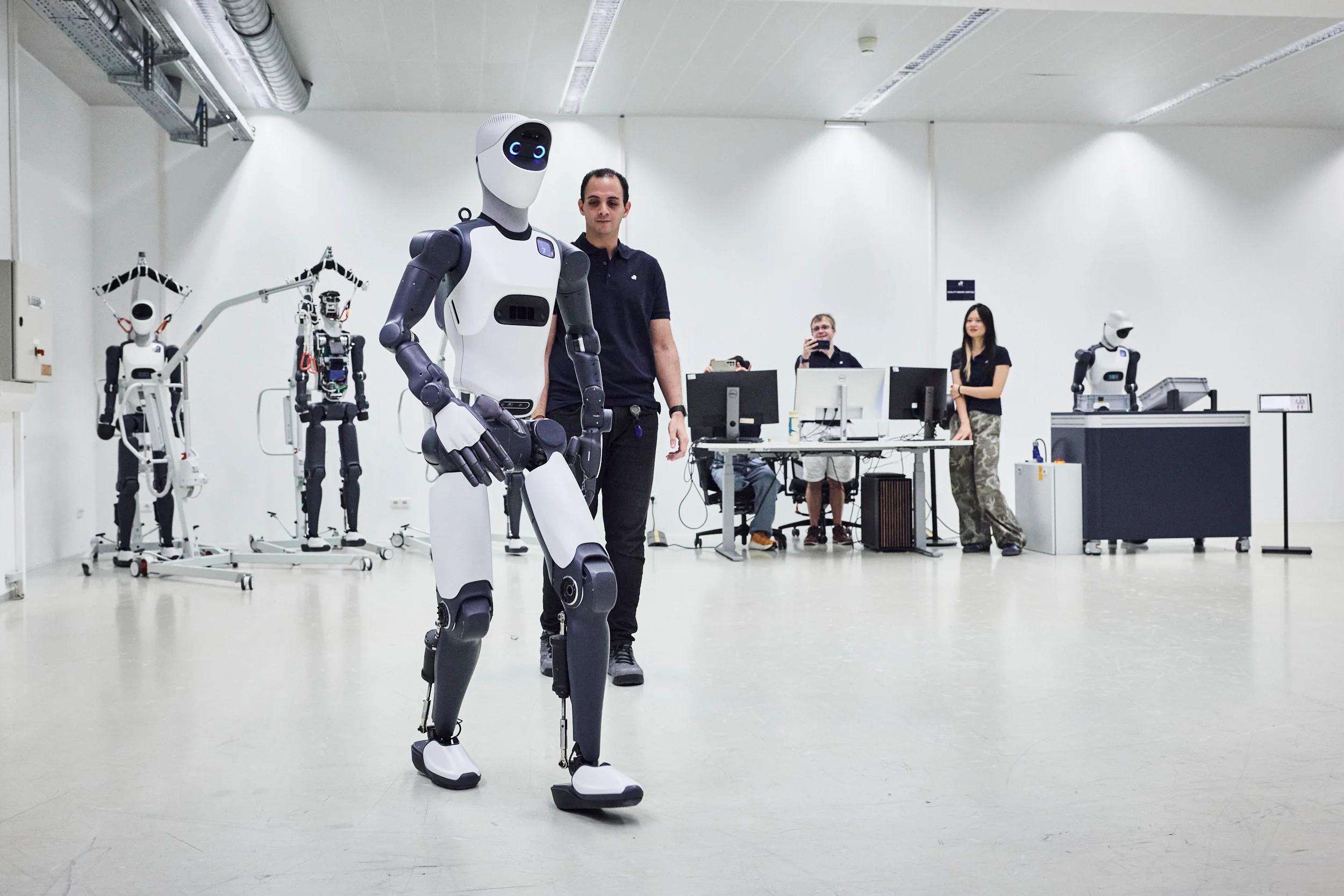
The development of humanoid robots and quadruped robots is creating new opportunities for intelligent perception technologies.
Unlike traditional industrial robots operating in fixed workspaces, embodied robots must interact with dynamic environments. They need to recognize surrounding objects, understand spatial relationships, navigate uneven terrain, avoid obstacles, and respond to changing conditions.
For these applications, reliable environmental perception is essential.
LiDAR sensors provide three-dimensional distance measurements that help robots understand their surroundings. When combined with cameras, IMUs, depth sensors, and AI computing platforms, LiDAR can become an important component of a robot’s perception architecture.
However, selecting a LiDAR sensor for a humanoid or quadruped robot involves different considerations from choosing one for a conventional AGV or autonomous vehicle.
Engineers must consider sensor size, weight, power consumption, field of view, point cloud quality, mounting position, communication interfaces, and real-time processing requirements.
This guide explores how robotics manufacturers and engineering teams can evaluate LiDAR sensors for next-generation embodied AI platforms.
1. Why Do Humanoid and Quadruped Robots Need LiDAR?
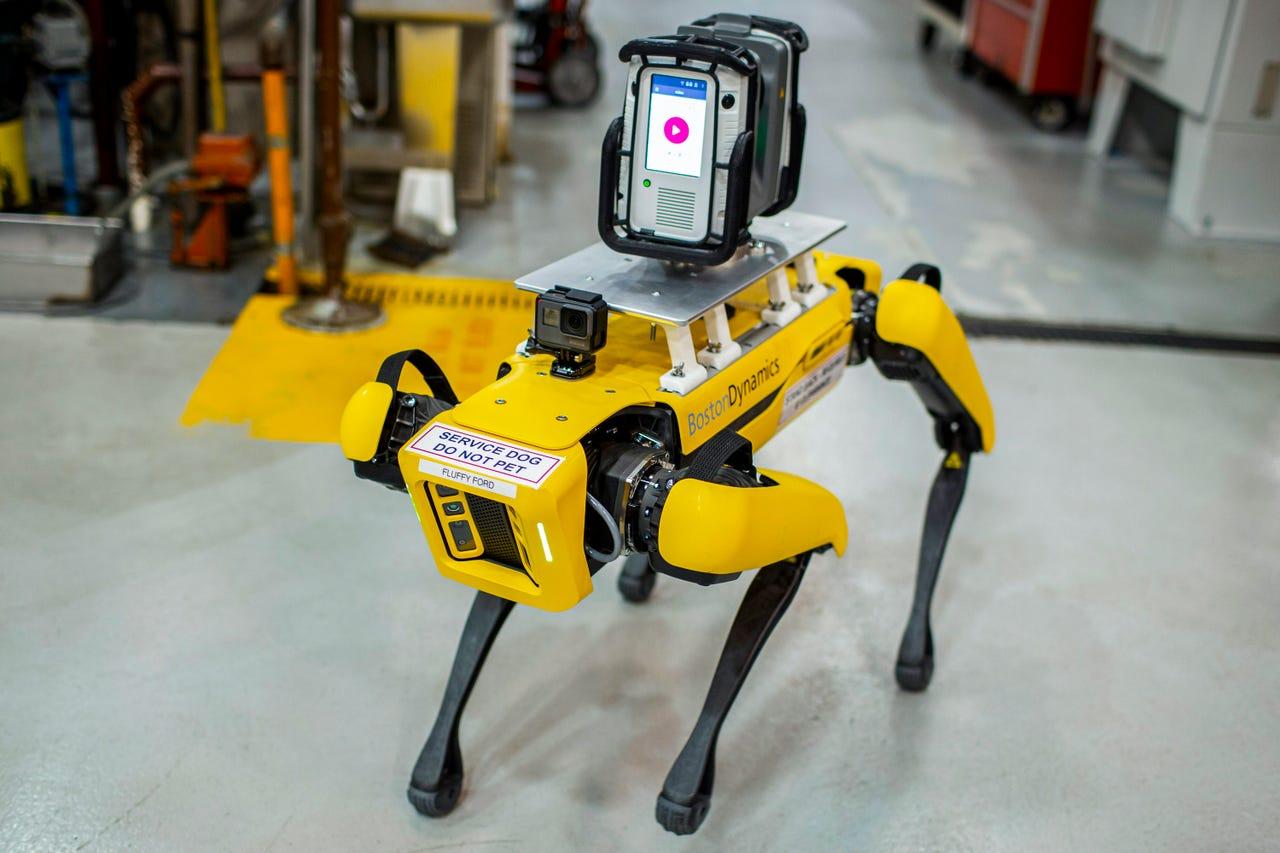
Embodied robots operate in environments that are often unpredictable.
A quadruped robot may walk across stairs, industrial floors, outdoor pathways, and uneven terrain. A humanoid robot may need to navigate around furniture, people, equipment, and objects while performing manipulation tasks.
These applications require more than basic obstacle detection.
LiDAR can provide spatial information for several important robotic functions.
3D Environmental Perception
LiDAR generates point cloud data that represents the geometry of surrounding objects and surfaces.
This information can help robots identify:
- Walls and surrounding structures
- Furniture and equipment
- Obstacles on the ground
- Stairs and elevation changes
- Walkable and non-walkable areas
- Nearby objects and environmental boundaries
Autonomous Navigation
LiDAR measurements can support localization, mapping, and path planning.
For quadruped robots, spatial perception is particularly important when operating in environments with changing terrain.
For humanoid robots, LiDAR may contribute to environmental mapping and navigation in indoor spaces.
Obstacle Detection
Robots must identify obstacles before selecting a movement path.
A 3D perception system can provide additional information about object height, shape, and distance compared with a single horizontal scanning plane.
Mapping and Localization
LiDAR data can be used by SLAM algorithms to construct maps and estimate robot position.
This is particularly useful when robots operate in environments where GNSS signals are unavailable or unreliable.
2. Choosing Between 2D and 3D LiDAR
One of the first decisions in robot perception design is whether to use 2D or 3D LiDAR.
The appropriate choice depends on the robot’s intended functions and perception architecture.
2D LiDAR
2D LiDAR measures distances along a scanning plane.
It can be suitable for:
- Basic indoor navigation
- Horizontal obstacle detection
- Fixed-height environmental mapping
- Certain compact mobile robot applications
Advantages include relatively straightforward data processing and integration.
However, a single scanning plane cannot provide complete information about objects located above or below that plane.
For robots operating across complex terrain, this limitation should be carefully evaluated.
3D LiDAR
3D LiDAR provides spatial measurements across horizontal and vertical directions.
Potential applications include:
- Three-dimensional mapping
- Terrain perception
- Obstacle detection at different heights
- Environmental reconstruction
- Advanced autonomous navigation
For quadruped robots, 3D LiDAR can provide useful information about ground geometry and surrounding obstacles.
For humanoid robots, it can contribute to spatial awareness in complex indoor environments.
Solid-State LiDAR
Solid-state LiDAR uses different optical scanning architectures and can offer advantages for certain compact robotic designs.
Depending on the model, it may provide a suitable combination of size, field of view, and integration characteristics.
Engineers should evaluate the actual specifications, including:
- Detection range
- Horizontal and vertical FOV
- Point cloud density
- Measurement accuracy
- Frame or scanning frequency
- Power consumption
- Interface compatibility
There is no universally best LiDAR architecture for every embodied robot.
3. LiDAR Installation and Placement in Humanoid and Quadruped Robots
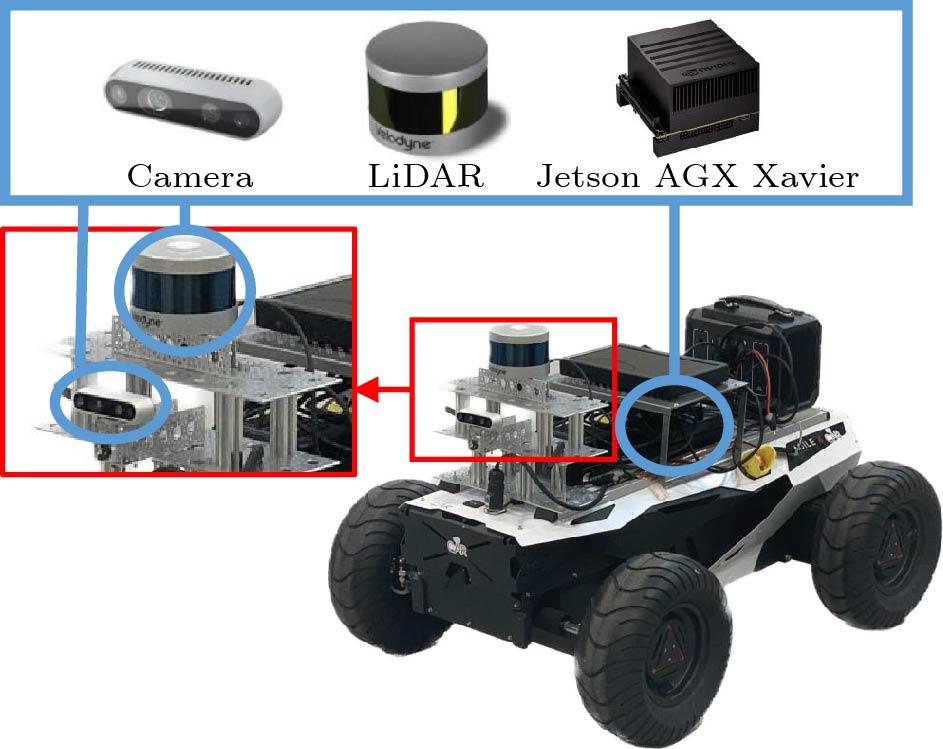
Sensor placement has a significant influence on perception performance.
Even a technically advanced LiDAR can provide incomplete environmental information if its field of view is blocked by the robot’s mechanical structure.
Head-Mounted LiDAR for Humanoid Robots
<Insert image: Humanoid robot with a compact LiDAR mounted on its head>
Head-mounted LiDAR can provide an elevated observation position.
Potential benefits include:
- Wider visibility of the surrounding environment
- Reduced obstruction from certain lower body components
- Improved spatial awareness
- Integration with head-mounted cameras
However, engineers must consider head movement, vibration, mechanical stability, and the relationship between the sensor coordinate frame and the robot’s body coordinate frame.
Body-Mounted LiDAR
<Insert image: Humanoid robot with a 3D LiDAR mounted on its upper body>
A body-mounted sensor can provide a stable installation location depending on the robot’s mechanical architecture.
It may be useful for general environmental mapping and obstacle detection.
However, the robot’s arms, shoulders, and other components may create blind areas during movement.
Top-Mounted LiDAR for Quadruped Robots
<Insert image: Quadruped robot with a compact 3D LiDAR mounted on its back>
Top-mounted LiDAR is a common configuration to consider for quadruped perception systems.
It can provide a relatively elevated observation position and support environmental mapping.
Important engineering considerations include:
- Sensor mounting height
- Field-of-view obstruction
- Robot body movement
- Vibration during walking
- Cable routing
- Weight distribution
- Mechanical protection
The final mounting position should be validated under actual walking and movement conditions.
Multi-Sensor Configuration
Some advanced robots combine multiple sensing devices.
For example:
- Front-facing LiDAR
- Side-facing depth cameras
- Stereo vision cameras
- IMU sensors
- GNSS modules for outdoor operation
A multi-sensor architecture can provide more comprehensive perception, but it also increases calibration, synchronization, and processing requirements.
4. Key LiDAR Specifications for Embodied AI Robots
For humanoid and quadruped robot developers, traditional LiDAR specifications are important, but additional integration parameters must also be considered.
| Specification | Engineering consideration |
|---|---|
| Weight | Influences robot structure and balance |
| Dimensions | Determines available installation space |
| Power consumption | Affects battery capacity and operating time |
| Horizontal FOV | Determines surrounding coverage |
| Vertical FOV | Important for 3D environmental perception |
| Point cloud density | Influences spatial representation |
| Detection range | Determines observable distance |
| Frame rate | Influences perception update frequency |
| Measurement accuracy | Affects spatial estimation |
| IP rating | Relevant to outdoor and industrial environments |
| Interface | Determines hardware compatibility |
Weight and Mechanical Design
Humanoid and quadruped robots have strict mechanical constraints.
Adding sensors can affect the center of gravity, structural design, and power requirements.
A sensor suitable for a large autonomous vehicle may not be ideal for a compact quadruped robot.
Therefore, sensor selection should consider the complete mechanical design.
Power Consumption
Battery-powered robots must balance computing performance, actuator requirements, and sensor power consumption.
When comparing LiDAR models, check their operating voltage, power consumption, and power supply requirements.
The total energy budget should include the complete perception system rather than evaluating the LiDAR independently.
Field of View
A wide field of view can provide greater environmental coverage.
However, the required FOV depends on sensor placement and the robot’s movement strategy.
Engineers should consider the coverage needed during walking, turning, climbing, and other movements.
5. Integrating LiDAR with Cameras, IMUs and AI Computing
Modern embodied robots rarely rely on a single sensor.
They typically combine multiple sensing technologies to build a more complete understanding of their environment.
LiDAR and Camera Fusion
LiDAR provides spatial distance measurements, while cameras provide visual information.
Combining these technologies can support:
- Object recognition
- Environmental understanding
- Spatial localization
- Obstacle classification
- Visual navigation
- AI-based scene interpretation
The integration process requires accurate extrinsic calibration and appropriate timestamp synchronization.
LiDAR and IMU Integration
An IMU provides information about angular velocity and acceleration.
Combining IMU measurements with LiDAR data can support motion estimation and improve the processing of point cloud information on moving platforms.
This is especially relevant for quadruped robots because their body orientation changes continuously during locomotion.
NVIDIA Jetson and Edge AI Computing
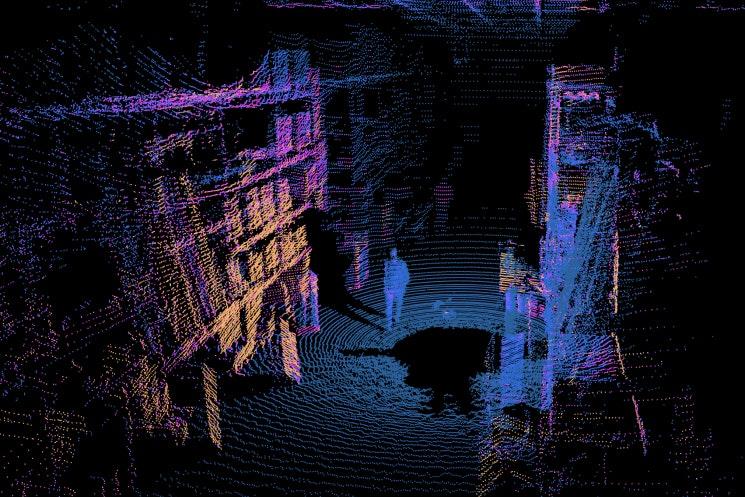
Embodied AI platforms may use NVIDIA Jetson hardware to process data from LiDAR, cameras, and other sensors.
When selecting a computing platform, engineering teams should consider:
- Supported communication interfaces
- Available SDKs and drivers
- CPU and GPU resources
- Memory requirements
- Point cloud processing workload
- Power consumption
- Software framework compatibility
The complete perception architecture should be evaluated to ensure that sensor data can be processed within the application’s latency requirements.
6. ROS 2 and Robotics Software Integration
ROS 2 has become an important software framework in robotics development.
For developers building humanoid and quadruped platforms, LiDAR compatibility with the software stack can influence development efficiency.
Before purchasing a sensor, verify:
Driver Support
Does the selected model have an official or supported ROS 2 driver?
Point Cloud Output
Can the sensor publish the required data format, such as PointCloud2?
Timestamp Information
Does the sensor provide timestamps suitable for the intended synchronization architecture?
Coordinate Frames
Can the data be integrated into the robot’s TF2 coordinate frame system?
Operating System Compatibility
Is the driver supported on the target Linux distribution and computing platform?
SLAM Integration
Can the sensor provide data suitable for the selected mapping and localization framework?
Compatibility must be checked against the exact sensor model and software version.
A driver available for one product should not automatically be assumed to support another model from the same manufacturer.
7. Testing LiDAR Before Integrating It into a Robot
A sensor that performs well on a laboratory test bench may behave differently when mounted on a moving robot.
For this reason, prototype evaluation is essential.
We recommend testing the following areas.
| Test item | Evaluation objective |
|---|---|
| Point cloud quality | Check noise, missing points and consistency |
| Detection performance | Test representative objects and distances |
| Field of view | Identify mechanical blind spots |
| Motion stability | Evaluate data while the robot moves |
| Vibration | Check performance under mechanical movement |
| Timestamp synchronization | Verify multi-sensor data alignment |
| Software compatibility | Test SDK and ROS 2 integration |
| Power consumption | Measure the complete sensing configuration |
| Continuous operation | Evaluate stability during extended operation |
| Environmental suitability | Test representative indoor or outdoor conditions |
For quadruped robots, walking, turning, and changing terrain should be included in the evaluation.
For humanoid robots, engineers should also consider head movement, arm occlusion, and changes in body posture.
The objective is to verify that the complete perception system performs according to the project’s requirements.
8. How to Select a LiDAR Supplier for Robotics OEM Projects
For robotics manufacturers, selecting a LiDAR supplier involves more than comparing technical specifications.
A suitable supplier should be able to support the project throughout its development and procurement stages.
Important considerations include:
Multi-Brand Product Availability
Different robot architectures may require different sensor technologies.
Working with a supplier that supports multiple brands can help engineering teams compare alternative models.
Technical Documentation
Before purchasing, verify the availability of:
- Product datasheets
- User manuals
- SDK documentation
- Communication protocols
- Mechanical drawings
- Configuration software
Prototype and Production Supply
Robotics projects often begin with a small number of engineering samples before moving toward larger production requirements.
Suppliers should be able to communicate product availability, estimated lead times, and possible batch delivery arrangements.
Product Lifecycle Information
Product changes and discontinuation can affect long-term platform development.
OEM teams should monitor manufacturer announcements and evaluate alternative models where necessary.
Technical Support
Engineering teams may need help checking interfaces, software compatibility, and product documentation.
Technical consultation during the selection stage can reduce unnecessary integration work.
9. LIDARSEEK: LiDAR and Intelligent Perception Sourcing for Robotics Developers
LIDARSEEK provides LiDAR sensors, AI vision products, and intelligent perception hardware for robotics developers, autonomous system manufacturers, and industrial technology companies.
Our portfolio covers multiple sensing technologies and manufacturers, including:
- Hesai LiDAR
- RoboSense LiDAR
- Seyond LiDAR
- Livox LiDAR
- Industrial 2D and 3D LiDAR
- AI vision cameras
- NVIDIA Jetson development kits
- Related robotics and perception products
We support customers working on:
- Humanoid robotics
- Quadruped robots and robot dogs
- Autonomous mobile robots
- Industrial automation
- Autonomous driving
- Mapping and spatial perception
Our services include:
Multi-Brand Product Selection
Compare available LiDAR products according to application requirements, technical specifications, and budget.
Prototype Sourcing
Support product sourcing for engineering evaluation and early-stage development.
Technical Consultation
Assist customers in reviewing product specifications, communication interfaces, available SDKs, and integration documentation.
Commercial Procurement
Provide quotations, product availability information, lead-time coordination, and international shipping support.
We understand that every robotics platform has different mechanical and software requirements.
Our objective is to help customers identify suitable sensing products and coordinate procurement from prototype development to commercial deployment.
10. Request LiDAR Products for Your Embodied AI Project
Developing a humanoid robot, quadruped robot, or intelligent mobile platform?
Our team can help you evaluate suitable LiDAR and perception products.
To receive a more relevant recommendation, please share:
- Robot type: Humanoid, quadruped, robot dog, AMR, or another platform.
- Application: Indoor navigation, outdoor inspection, mapping, obstacle detection, or AI perception.
- Sensor requirements: 2D or 3D LiDAR, detection range, FOV, and resolution.
- Mechanical requirements: Maximum sensor dimensions and weight, if available.
- Computing platform: NVIDIA Jetson, x86 computer, or another embedded platform.
- Software environment: ROS 2, Linux, or a custom software framework.
- Quantity: Prototype samples or planned production volume.
Already have a preferred model?
Send us the manufacturer, model number, and required quantity.
Our team can assist with product information, availability checks, and commercial quotations.
Contact LIDARSEEK
Website: https://lidarseek.com/
Email: lidarseektech@gmail.com
WhatsApp: +86 159 5882 2714
Building the next generation of intelligent robots?
Contact LIDARSEEK to discuss your LiDAR and perception hardware requirements.
We welcome inquiries from robotics OEMs, engineering teams, research institutions, and system integrators worldwide.
Frequently Asked Questions
1. Is LiDAR necessary for humanoid robots?
Not every humanoid robot requires LiDAR. Some systems rely primarily on cameras, depth cameras, or other sensing technologies. LiDAR can provide additional distance and spatial information when required by the robot’s perception architecture.
2. Which LiDAR is suitable for quadruped robots?
The choice depends on robot size, weight limitations, operating environment, required FOV, and navigation architecture. Compact 3D LiDAR is worth evaluating for many applications requiring three-dimensional environmental perception.
3. Can LiDAR be integrated with NVIDIA Jetson?
Many LiDAR products support integration with embedded computing platforms, including compatible NVIDIA Jetson systems. Check the specific sensor’s interface, SDK, driver, and operating system requirements.
4. Can LiDAR work with ROS 2?
Many products offer ROS 2 integration through official or supported drivers. Confirm the exact model and supported software versions before purchasing.
5. Can LIDARSEEK supply LiDAR for robot dog manufacturers?
LIDARSEEK supports LiDAR and related perception hardware sourcing for robotics projects. Customers can provide their technical requirements, preferred models, and purchasing quantities to request product recommendations and quotations.









