
Introduction: Why LiDAR Procurement Has Become a Business Decision, Not Just a Technical One
In recent years, LiDAR technology has quietly moved from research laboratories into real commercial environments. Warehouses deploy autonomous forklifts, cities experiment with smart traffic systems, and robotics startups race to deliver cost-effective navigation solutions.

What many decision-makers quickly realize is that choosing a LiDAR sensor is no longer a purely technical exercise. It is a business decision that directly affects project timelines, system stability, long-term maintenance cost, and return on investment.
This is where LidarSeek positions itself differently.
Rather than acting as a single-brand manufacturer, LidarSeek operates as a LiDAR sensor aggregation and consultation platform, offering access to multiple categories of 2D and 3D LiDAR sensors suitable for robotics, autonomous vehicles, industrial automation, and mapping applications. For buyers, system integrators, and product managers, this model significantly reduces procurement risk.
This article explores how businesses can use LidarSeek’s product ecosystem to make smarter LiDAR purchasing decisions, with real-world application logic instead of abstract specifications.
Understanding LidarSeek’s Product Ecosystem
Before selecting any sensor, buyers must understand the structure of LidarSeek’s product offerings. The platform organizes LiDAR sensors based on application scenarios rather than marketing labels, which aligns closely with how real projects are designed.
Main LiDAR Categories Available on LidarSeek
LidarSeek focuses on several core product types:
- 2D LiDAR Sensors
Primarily used for obstacle detection, basic navigation, and safety systems. - 3D Solid-State LiDAR
Compact form factor, no mechanical rotation, suitable for mobile robots and embedded systems. - 3D Mechanical LiDAR
High-density point cloud output, commonly used in autonomous driving, mapping, and advanced perception systems. - Industrial Obstacle Avoidance LiDAR
Designed for harsh environments, factories, ports, and logistics centers.
Each category serves a different commercial purpose. The mistake many buyers make is choosing a sensor based on headline range numbers rather than operational needs.
Commercial Use Case 1: Mobile Robots and Indoor Navigation
Business Challenge
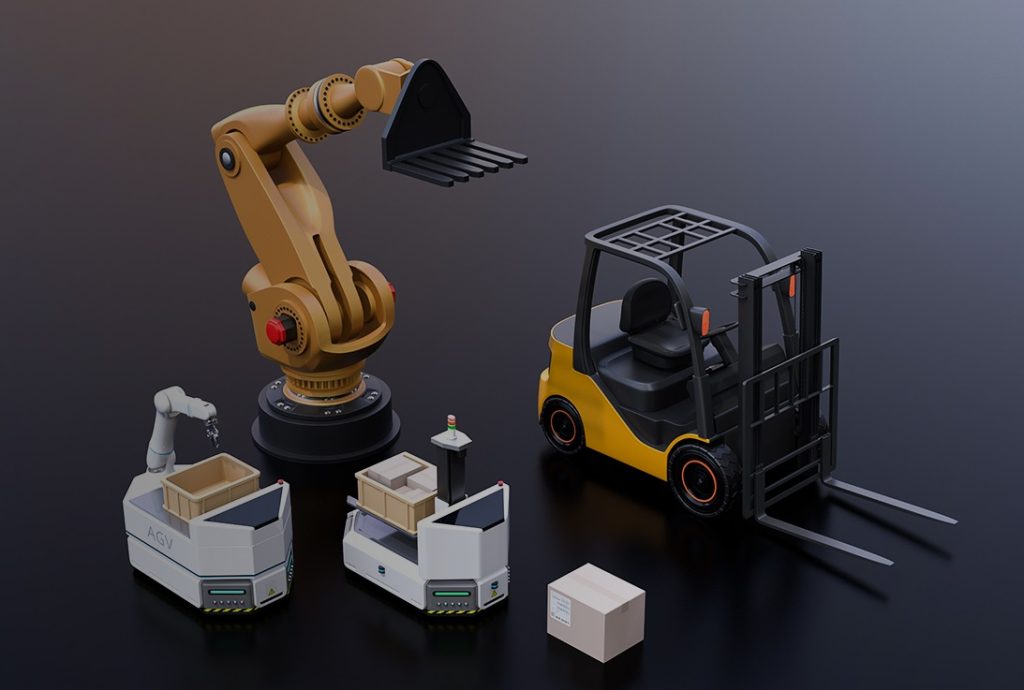
A logistics company planning to deploy autonomous mobile robots (AMRs) in warehouses typically faces three constraints:
- Budget sensitivity (hundreds of units may be required)
- Stable indoor performance without GPS
- Easy integration with ROS or existing navigation stacks
How LidarSeek Products Fit the Scenario
For indoor robotics, LidarSeek offers compact 3D LiDAR sensors that balance performance and cost. These sensors provide:
- Reliable short-to-mid range detection
- Consistent point cloud density for SLAM
- Lower power consumption
From a commercial perspective, the value lies in predictable deployment cost. Companies can standardize sensor selection across multiple robot models, reducing spare parts inventory and maintenance complexity.
ROI Perspective
Compared to over-spec automotive LiDAR sensors, choosing an application-appropriate 3D LiDAR through LidarSeek can reduce per-unit sensor cost significantly, while still meeting navigation accuracy requirements.
Commercial Use Case 2: Autonomous Driving & Advanced Driver Assistance Systems (ADAS)

Business Challenge
Automotive projects face a completely different set of requirements:
- Long detection range
- High point cloud density
- Automotive-grade reliability
- Future-proof scalability
In this space, wrong sensor selection can cost millions in redesign and compliance delays.
LidarSeek’s Advantage for Automotive Buyers
LidarSeek provides access to automotive-grade mechanical LiDAR sensors with different channel counts and detection ranges. This allows OEMs and Tier-1 suppliers to:
- Compare multiple performance tiers
- Match sensor capability to autonomy level (L2+, L3, L4)
- Avoid vendor lock-in early in development
Instead of committing to a single supplier, engineering and procurement teams can evaluate sensors side-by-side under the same platform.
Commercial Insight
For ADAS projects, the most expensive mistake is over-engineering too early. LidarSeek’s diversified catalog helps teams start with cost-effective configurations and scale sensor complexity as autonomy requirements evolve.
Commercial Use Case 3: Industrial Automation and Obstacle Avoidance
Business Challenge
Factories, ports, and logistics hubs require:
- High reliability
- Resistance to dust, vibration, and temperature variation
- Safety-oriented obstacle detection
Downtime in these environments translates directly into revenue loss.
How LidarSeek Supports Industrial Buyers
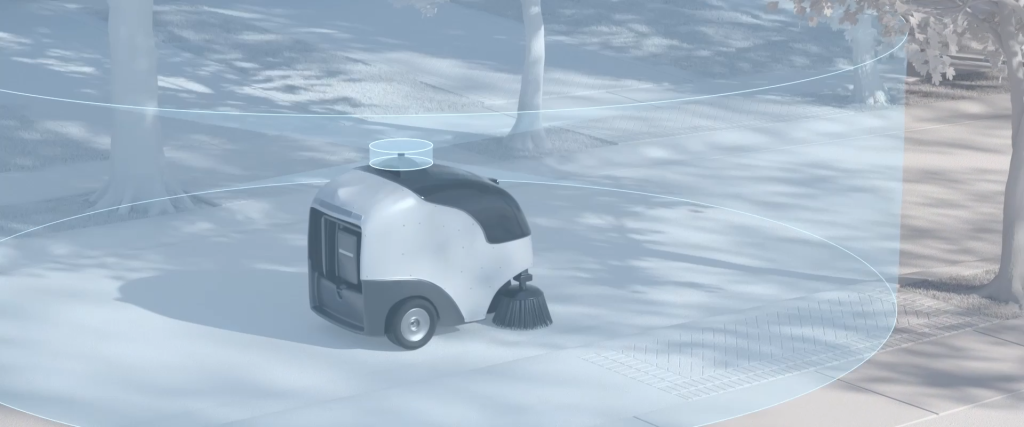
LidarSeek’s industrial obstacle avoidance LiDAR sensors are optimized for:
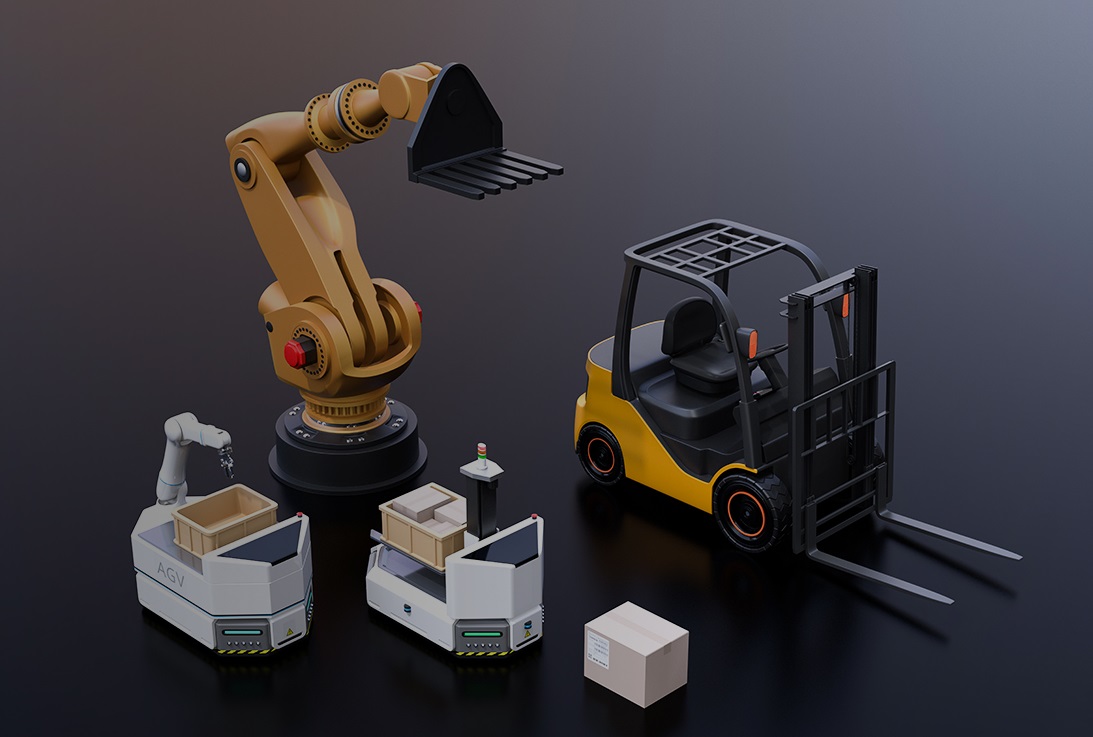
- Forklifts and AGVs
- Automated cranes
- Smart factory safety zones
These sensors prioritize stability and repeatability over extreme resolution, which aligns with real industrial needs.
Cost Control Angle
Industrial buyers often value long product lifecycle over cutting-edge specs. Selecting mature, proven LiDAR models through LidarSeek helps reduce long-term replacement and certification costs.
How LidarSeek Simplifies LiDAR Procurement Decisions
From a commercial standpoint, LidarSeek’s real strength is decision efficiency.
Instead of spending months contacting multiple vendors, buyers can:
- Compare LiDAR sensors across categories
- Evaluate suitability by application, not just specs
- Shortlist products faster
This shortens procurement cycles and allows businesses to move from concept to deployment more quickly.
Frequently Asked Questions (FAQ)
Q1: How do I choose between 2D and 3D LiDAR sensors?
2D LiDAR works well for simple obstacle detection, while 3D LiDAR provides richer spatial awareness. The choice depends on navigation complexity and budget.
Q2: Is automotive-grade LiDAR necessary for all vehicle projects?
No. Many mobility and logistics vehicles do not require full automotive certification, and using automotive-grade sensors may unnecessarily increase costs.
Q3: Can LidarSeek support bulk procurement?
Yes. LidarSeek’s platform model is particularly suited for volume purchasing and long-term supply planning.
Q4: Are LidarSeek LiDAR sensors compatible with ROS?
Many sensors offered through LidarSeek support ROS integration, making them suitable for robotics development.
Q5: How does LiDAR choice impact total project cost?
Sensor cost affects not only hardware spending, but also software complexity, maintenance, and system reliability.









