
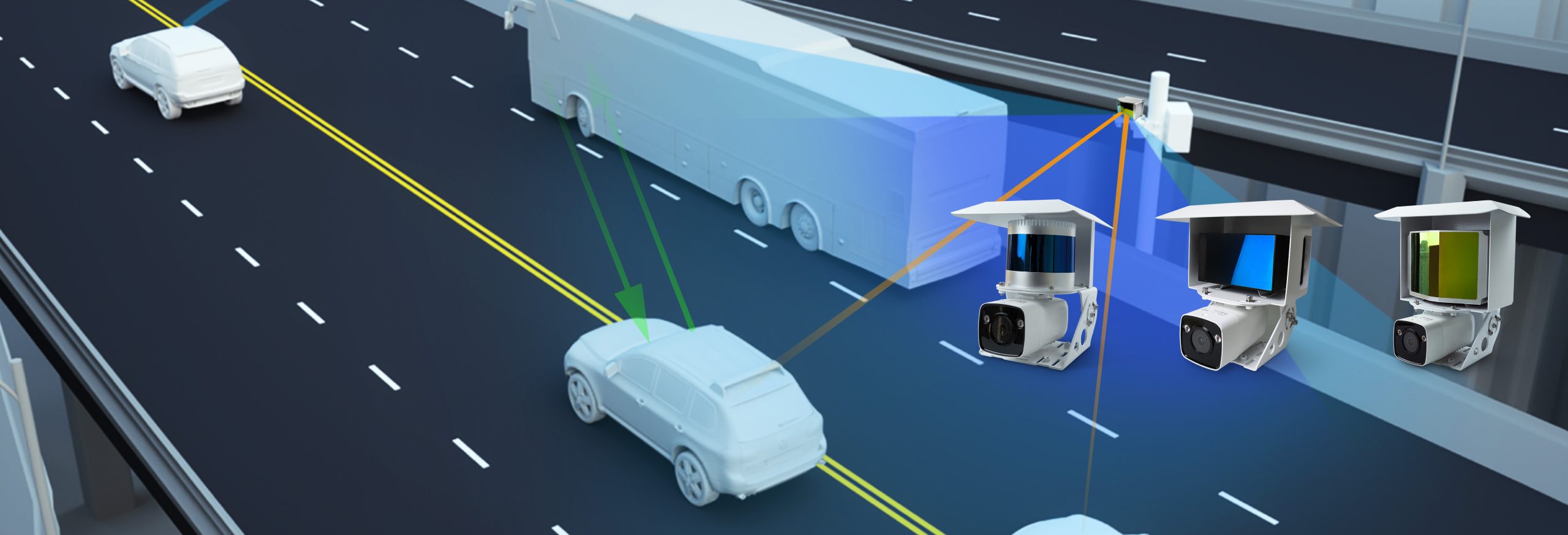
For years, the narrative of autonomous driving has been overwhelmingly vehicle-centric. The story is about the car itself: its powerful on-board computers, its suite of cameras, its spinning or solid-state LiDAR, and its ability to see and think for itself. We have been on a quest to build the perfect digital driver—one with 360-degree vision and lightning-fast reflexes. This is the promise of on-board intelligence.
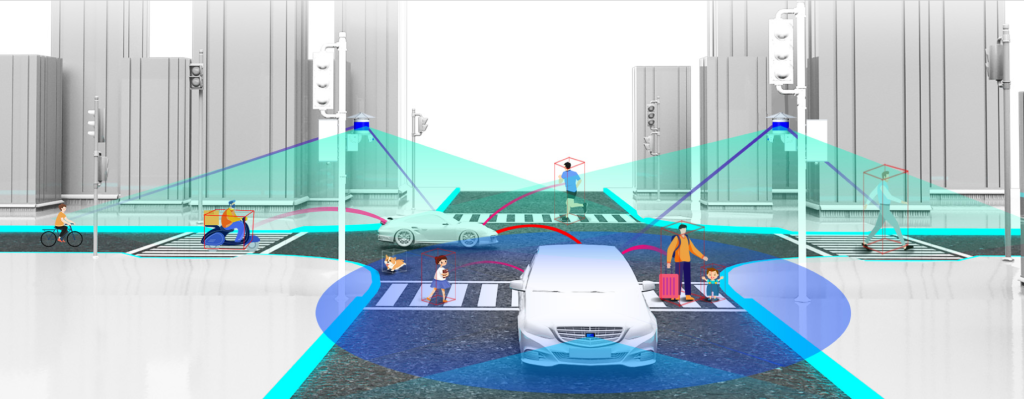
But even the most sophisticated single vehicle has an inherent, physical limitation: its perspective is from within the traffic flow. Its sensors can be blocked by the truck in front of it, confused by a blinding sun, or simply unable to see around the bend. No matter how advanced the on-board system becomes, it cannot see through a building or predict a hazard developing two blocks away.
This is where the industry is awakening to a profound truth: to achieve full autonomy safely and efficiently, the car cannot be an island. It needs to be part of a connected, intelligent ecosystem. This is the domain of Vehicle-to-Everything (V2X) communication, and at its heart lies a critical component: the Roadside Perception System.
As highlighted by innovators like Leishen LiDAR, the concept of a “Vehicle-Infrastructure Cooperative Perception System” is about creating exactly that—a “God’s perspective” for autonomous driving. It is about embedding intelligence into our roads, bridges, and intersections, turning our transportation infrastructure from a passive network of asphalt and concrete into an active, sensing partner for every vehicle on the road. This article explores this transformative technology, its architecture, its immense benefits, and its indispensable role in the future of mobility.
Part 1: The Limitations of the Soloist: Why On-Board Intelligence Isn’t Enough
To understand the necessity of roadside perception, we must first acknowledge the fundamental blind spots of the autonomous vehicle as a soloist. Even a Level 4 vehicle, packed with the most expensive sensors, operates with significant perceptual constraints.
1. The Occlusion Problem: This is the single biggest challenge for on-board sensors. A vehicle’s perception is line-of-sight. If a pedestrian is about to step into the crosswalk from behind a large delivery truck, the autonomous vehicle’s LiDAR and cameras have no way of knowing until that person is physically visible. The vehicle is forced to react after the hazard emerges. Roadside sensors, mounted high above the street, have a clear, unobstructed view over and around such obstacles. They can detect the pedestrian’s presence and intent long before the vehicle’s own sensors can.
2. The Range and Horizon Limit: An on-board sensor suite is designed to see effectively for a few hundred meters. This is sufficient for immediate driving decisions, but it offers no foresight into traffic conditions further ahead. Is there a sudden traffic jam around the next curve? Is there debris on the highway a kilometer away? The vehicle is blind to these future events until it gets closer. Infrastructure sensors can be strategically placed to monitor highway stretches, intersections, and blind corners, providing vehicles with a much longer “digital horizon.”
3. The Environmental Vulnerability: While modern sensors are robust, they are not invincible. Heavy rain, fog, and snow can degrade the performance of both cameras and LiDAR. A sensor mounted low to the ground on a vehicle is more susceptible to spray and dirt. Roadside sensors can be positioned and housed to mitigate these effects, and their elevated position often keeps them above some of the ground-level weather chaos, providing a more stable perception source during adverse conditions.
4. The Cost and Complexity of Redundancy: To achieve the necessary safety redundancy, an autonomous vehicle must carry multiple, often expensive, sensors. While costs are falling, equipping every vehicle with the absolute highest-end, long-range perception suite is a massive economic challenge. Roadside perception offers a form of “infrastructure-as-a-sensor,” shifting some of the perceptual burden and cost from the vehicle to the road itself.
Part 2: Deconstructing the “God’s Perspective”: The Architecture of a Roadside Perception System
A Vehicle-Infrastructure Cooperative Perception System is a complex interplay of hardware, software, and communication. It transforms a dumb intersection or a stretch of highway into an intelligent node in a vast network.
The core components of such a system, like the one Leishen LiDAR provides, typically include:
1. The Sensor Stack: The Digital Senses at the Roadside
This is the foundation. Just like an autonomous vehicle, the infrastructure needs high-fidelity senses. A typical roadside perception node is equipped with:
- High-Performance LiDAR: This is the geometric anchor of the system. Mounted on poles or gantries, LiDAR sensors generate a real-time, high-density 3D point cloud of the entire scene. They track every vehicle, cyclist, and pedestrian with centimeter-level accuracy, providing precise position, size, and trajectory data, regardless of lighting conditions.
- High-Resolution Cameras: Cameras provide the semantic richness. They read license plates, classify vehicle types (bus, car, truck), detect traffic signal states, and can visually verify incidents. Their data is crucial for understanding the what and why of the scene.
- Traffic Radar or Thermal Imaging (Optional): Depending on the specific needs, radar might be added for robust all-weather velocity measurement, or thermal cameras for enhanced pedestrian and animal detection in complete darkness or through light fog.
2. The Edge Computing Unit: The Brain at the Intersection
All the raw data from these sensors is useless without real-time processing. This is where the roadside edge computing unit comes in. Located locally (e.g., in a cabinet at the intersection), this powerful computer runs sophisticated perception and fusion algorithms. It performs the critical task of sensor fusion, combining the 3D data from the LiDAR with the image data from the cameras to create a single, coherent, and highly reliable digital model of the traffic environment. This model, often called the “bird’s-eye-view” or “environmental perception map,” contains every dynamic object in the area, complete with its classification, speed, and predicted path.
3. The V2X Communication Unit: The Voice that Shares the View
The digital model created by the edge computer is of no use to vehicles if it cannot be shared. This is the role of the V2X communication unit, typically using either Cellular V2X (C-V2X) or Dedicated Short-Range Communications (DSRC) standards. It broadcasts rich, standardized messages (like Collective Perception Messages or SPAT/MAP messages for traffic signals) to all equipped vehicles in the vicinity. This broadcast is the essence of the “God’s perspective”—it transmits the infrastructure’s superior, unobstructed view directly into the on-board systems of approaching cars and trucks.
4. The Cloud Platform: The Long-Term Memory and Traffic Brain
Finally, data from many roadside nodes is aggregated in a central cloud platform. This platform doesn’t need to operate in real-time for safety, but it provides immense strategic value. It monitors traffic flow across the city, identifies accident hotspots, optimizes traffic signal timing plans, and can be used to create and update high-definition (HD) maps. It is the brain that learns from the collective perception of the entire road network.
Part 3: The Transformative Benefits of Cooperative Perception
When this system is deployed, the benefits for safety, efficiency, and the very feasibility of autonomous driving are profound.
1. Safety: Seeing the Unseen and Preventing the Unthinkable
This is the primary driver. Cooperative perception eliminates the occlusion problem.
- Scenario: A vehicle is approaching a green light. A speeding ambulance, with its siren possibly inaudible inside a sound-proofed car, is approaching the cross street with a red light. The roadside system, with its elevated view, sees both. It instantly broadcasts a warning to the first vehicle: “Emergency vehicle approaching intersection from the left, path conflict predicted.” The car can slow down or stop, even before the driver sees or hears the ambulance. This turns a potential T-bone collision into a safe, cooperative interaction.
2. Efficiency: Smoothing Traffic Flow and Reducing Congestion
With a complete view of traffic, roadside intelligence can do far more than a human eye.
- Dynamic Traffic Signal Control: Instead of operating on fixed timers, traffic lights can be controlled in real-time based on actual demand. If the system detects no cars on a side street, it can keep the main street light green. If it sees a platoon of heavy trucks approaching, it can extend a green window to let them through, reducing fuel consumption and wear from stop-and-go traffic.
- Glide Path Optimization: Vehicles can receive speed recommendations from the infrastructure to hit a string of green lights, creating a smooth “green wave” and dramatically improving traffic flow and fuel efficiency.
3. Redundancy: The Ultimate Safety Net for Autonomous Vehicles
For a fully autonomous vehicle, the roadside perception system acts as a vital, independent safety supervisor. If the vehicle’s on-board perception fails to detect a pedestrian due to a sensor malfunction or a challenging visual condition, the infrastructure’s independent detection can serve as a backup. It can send a direct warning to the vehicle, which can then initiate an emergency stop. This infrastructure-provided redundancy is a powerful argument for the safety case of Level 4 and Level 5 autonomy.
4. Data Richness for Simulation and Validation
Developing safe autonomous driving systems requires billions of miles of testing, much of which is done in simulation. The rich, labeled data from roadside perception systems—showing countless real-world interactions between vehicles, pedestrians, and cyclists from a perfect vantage point—is invaluable for creating realistic simulation scenarios and validating the performance of on-board perception algorithms.
Part 4: Challenges on the Path to an Intelligent Infrastructure
The vision of a fully connected, intelligent roadway is compelling, but the path is paved with significant challenges.
- Infrastructure Investment and Deployment: Retrofitting millions of miles of roads with intelligent sensors and edge computing requires massive, coordinated public and private investment. Prioritizing high-risk intersections and highway segments is the logical first step.
- Standardization and Interoperability: For the system to work, all components—sensors, edge computers, V2X radios from different manufacturers, and the vehicles themselves—must speak the same language. Global standards for V2X communication and data formats are essential.
- Data Latency and Reliability: Safety applications demand data with extremely low latency (often under 100 milliseconds). The entire chain, from sensor detection to edge processing to broadcast to vehicle reception, must be incredibly fast and reliable, even in poor network conditions.
- Cybersecurity and Privacy: A system that broadcasts detailed traffic information is a potential target for malicious attacks. Ensuring the integrity, authenticity, and confidentiality of the data is paramount. Furthermore, protecting the privacy of individuals (e.g., tracking a specific pedestrian) is a critical ethical and legal requirement.
- Maintenance and Ownership: Who is responsible for maintaining thousands of roadside sensor nodes? How do we ensure they are clean, calibrated, and functioning correctly in all weather? These questions of long-term operation and governance need clear answers.
Part 5: The Future Road: From Connected Cars to Connected Corridors
Looking ahead, the evolution of roadside perception systems is intrinsically linked to the rollout of smart cities and advanced mobility.
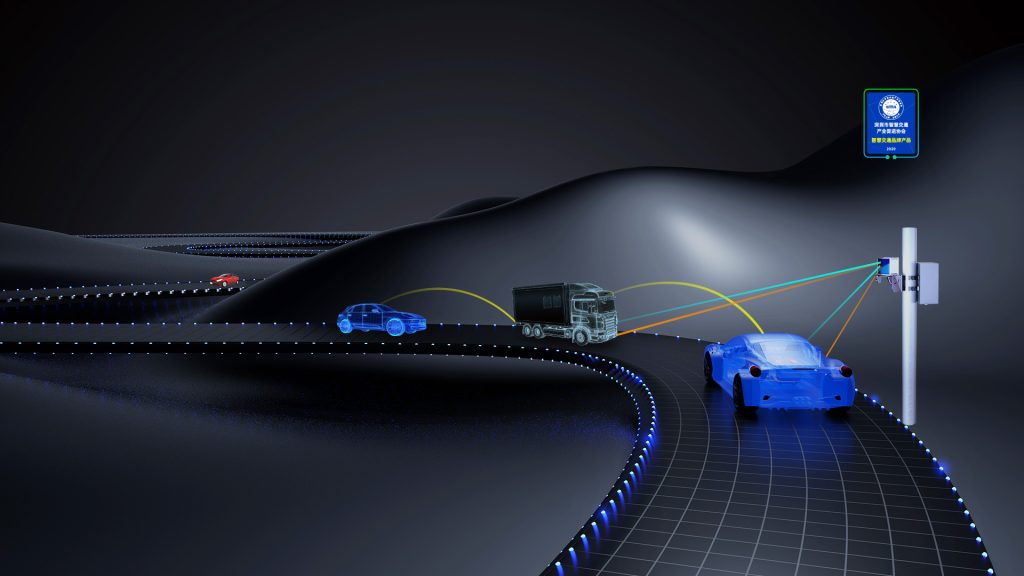
We will move from isolated smart intersections to fully connected “smart corridors”—stretches of highway where infrastructure continuously monitors and manages traffic flow, and communicates directly with vehicles to enable platooning, automated lane changes, and merge assistance.
The ultimate goal is a seamless digital twin of the entire transportation network. In this future, the “God’s perspective” is not just a helpful add-on for autonomous vehicles; it is the foundational layer of a new transportation paradigm—one that is demonstrably safer, profoundly more efficient, and accessible to all. Companies like Leishen LiDAR are not just selling sensors; they are providing the critical hardware that builds this perspective, pixel by laser pixel, turning our roads into active partners in our journey. The autonomous car is smart, but the autonomous car on a smart road is truly revolutionary.









