
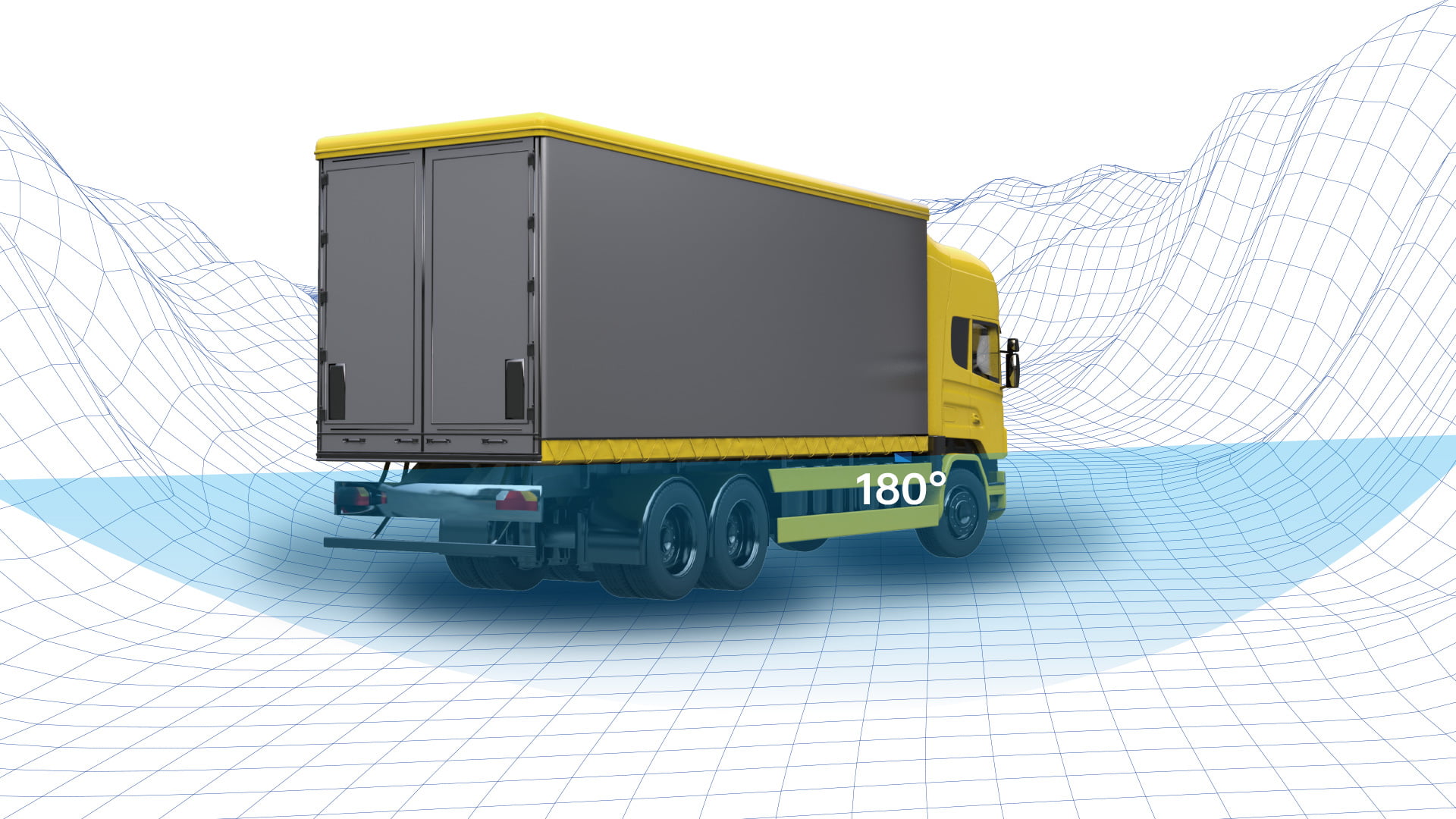
Every day, on highways and city streets around the world, a silent and persistent danger accompanies the massive vehicles that form the backbone of our economy. For drivers of trucks, tractor-trailers, dump trucks, and other heavy commercial vehicles, the cabin is a fortress of limited visibility. Despite advancements in mirror technology and camera systems, significant areas around these vehicles remain invisible—the dreaded blind spots.
A car can vanish beside a semi-truck’s cabin. A pedestrian or cyclist can be completely obscured by the A-pillar or the sheer size of a trailer while the vehicle is turning. These aren’t just minor inconveniences; they are zones of potential catastrophe. According to traffic safety authorities, a substantial percentage of accidents involving large trucks and vulnerable road users (like pedestrians and cyclists) are directly attributable to blind spot issues, especially during lane changes and turns at intersections.
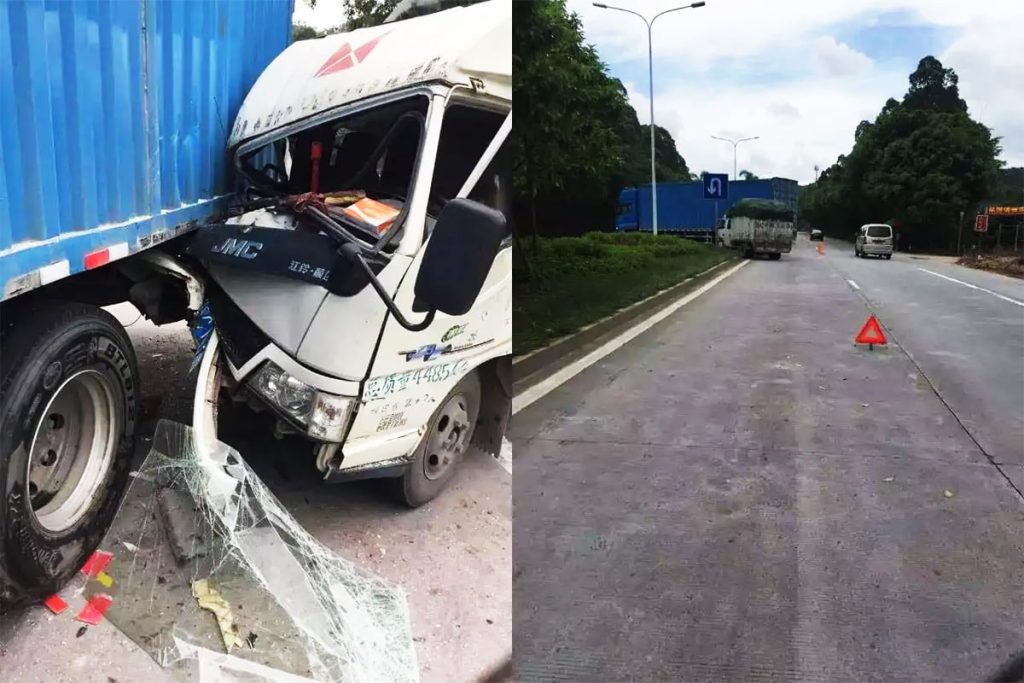
For years, the primary defense against these unseen hazards has been the driver’s vigilance and, more recently, basic electronic aids like ultrasonic sensors. But human attention can waver, especially during long-haul fatigue, and traditional sensors have significant limitations in range, accuracy, and environmental resilience.
Enter the next generation of safety technology: LiDAR-based Blind Spot Detection Systems. As highlighted by innovators like Leishen Intelligent System, these systems are not just an incremental improvement; they are a fundamental reimagining of vehicle proximity safety. By bringing the precision and reliability of laser perception to the vehicle’s perimeter, LiDAR is poised to eliminate blind spots and prevent countless accidents. This article explores the critical problem of commercial vehicle blind spots and delves into how LiDAR technology provides a robust, 24/7 solution.
Part 1: The Anatomy of a Commercial Vehicle’s Blind Spot
To appreciate the solution, one must first understand the scale of the problem. The blind spots on a heavy truck or a large construction vehicle are vastly different from those on a passenger car. They are larger, more numerous, and more deceptive.
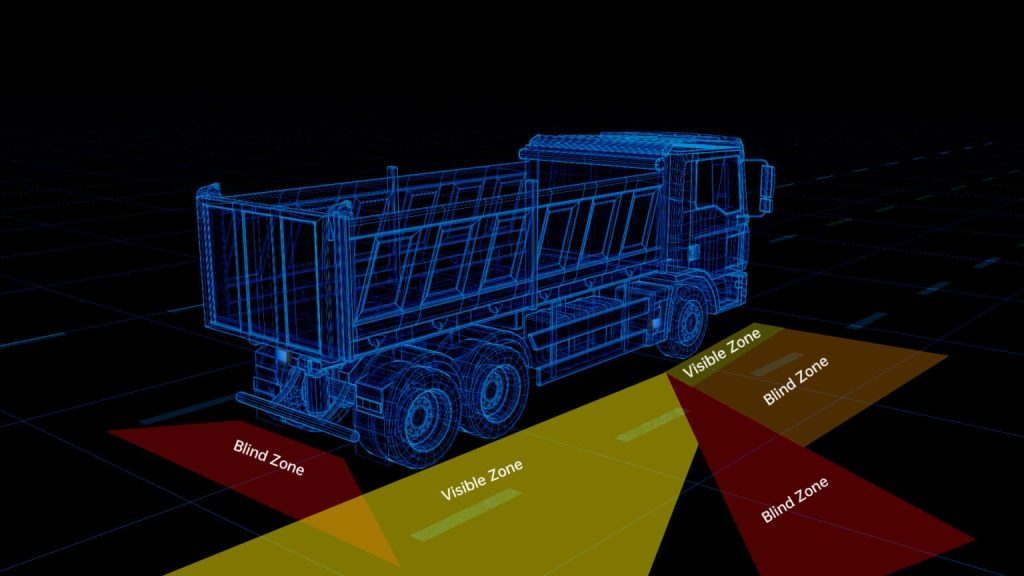
- The Direct Front Blind Zone: The hood of a conventional truck slopes away from the driver, creating a large area immediately in front of the vehicle that is completely invisible. A child, a small car, or a low-lying obstacle can be directly in the truck’s path, and the driver would have no visual indication.
- The Side Blind Spots (The Classic Danger): This is the most well-known hazard. On the driver’s side, the area running parallel to the cab and along the length of the trailer can hide a passenger vehicle for a frighteningly long distance. On the passenger side, this blind spot is often even larger, extending across multiple lanes and posing a severe risk during right-hand turns (in countries that drive on the right) where cyclists and pedestrians are most vulnerable.
- The Rear Blind Zone: Directly behind a truck or trailer, especially one with a high deck or carrying cargo, visibility is zero. This makes reversing a dangerous maneuver, with the potential to strike a person, vehicle, or loading dock obstacle without warning.
- The “No-Zone” at Junctions: When a truck makes a turn, the area along the side of the trailer, particularly the space between the tractor and the trailer wheels, becomes a dynamic killing zone. A cyclist who stops too close can be crushed as the trailer swings out.
Traditional mirrors, even with supplemental wide-angle or fisheye lenses, leave significant gaps. Camera systems provide a view, but they can be blinded by direct sunlight, mud, or darkness, and they lack depth perception. Ultrasonic sensors, common in passenger cars for parking, have a very short range and are ineffective at higher speeds or in detecting non-metallic objects like pedestrians reliably at a distance. This is the gap that a purpose-built LiDAR solution is designed to fill.
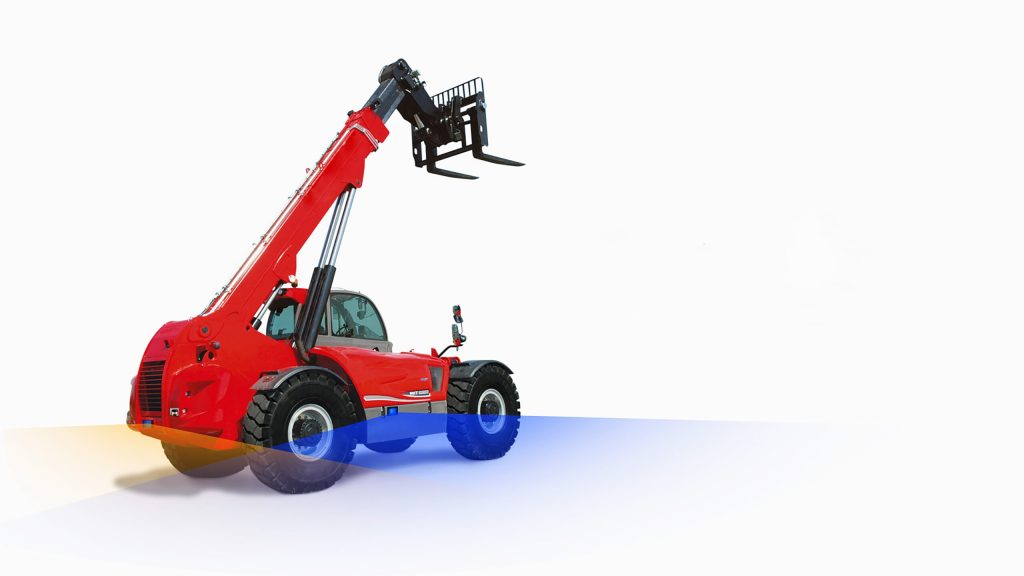
Part 2: The LiDAR Advantage: A New Standard for Proximity Perception
A Blind Spot Detection System based on LiDAR, such as the solution proposed by Leishen Intelligent System, operates on a fundamentally different principle. Instead of passively capturing an image (camera) or listening for a reflected sound wave (ultrasonic), it actively paints the environment with millions of invisible laser pulses per second. This active detection method provides a suite of advantages that are perfectly suited for the harsh and demanding environment of commercial vehicles.
1. Active Detection: The Unblinking Digital Observer
Unlike cameras, which rely on ambient light, LiDAR is an active sensor. It generates its own light source. This means it is completely unfazed by the transition from a bright sunny day into a pitch-black tunnel. Whether it’s midnight on an unlit highway or noon in direct glare, the LiDAR sensor sees the world with the same level of clarity. This “All Day Working” capability, as highlighted in the solution overview, ensures the safety system is always on duty, never tiring, and never affected by lighting conditions that can momentarily blind a human driver or a camera. It actively scans the defined blind zones, constantly searching for intruders.
2. Accurate and Fast Detection: Seeing is Believing, Measuring is Knowing
The proposal correctly points out that LiDAR has “accurate and fast detection capacity” compared to other sensors like infrared or ultrasonic. But what does this accuracy mean in practice?
- Precise Ranging: Ultrasonic sensors can tell you something is “near,” but they are notoriously imprecise about exactly how near. LiDAR provides centimeter-level accuracy. The system doesn’t just know a pedestrian is in the blind spot; it knows they are precisely 1.24 meters from the side of the trailer. This level of precision is critical for filtering out false alarms (e.g., ignoring a signpost that is 2 meters away while alerting for a cyclist at 1.5 meters) and for providing useful proximity information to the driver.
- Object Classification Potential: While a basic blind spot system may only need to detect an object’s presence, the rich point cloud data from LiDAR paves the way for higher-level functions. The system can begin to distinguish between a solid object like a concrete barrier and a vulnerable object like a human. This contextual awareness is the foundation for smarter, more graduated warnings.
3. The Critical 150ms: A Lifetime of Reaction Time
In the world of active safety, timing is everything. A vehicle traveling at just 30 mph (approximately 48 km/h) covers over 13 meters (about 43 feet) in one second. A pedestrian stepping into the blind spot or a car merging unsafely leaves only a fraction of a second for the system to detect, process, and alert.
The specification of a “< 150ms” response time from first detection to alarm activation is not just a technical benchmark; it is a life-saving metric. This near-instantaneous reaction time gives the driver those precious extra moments to react—to hit the brakes, to abort a lane change, or to swerve. This speed is a significant leap over systems that rely on slower processing or less responsive sensor technology. It moves the system from being a simple “proximity reporter” to a genuine active safety co-pilot.
4. Flexible and Configurable Safety Zones
One of the most powerful features of a software-defined LiDAR solution is its flexibility. The physical world is not a simple on/off switch, and neither should a safety system be. The Leishen solution mentions “three-level protection zones,” a concept that allows for nuanced warnings.
- Zone 1 (Distant Warning Zone): The outermost zone might trigger a visual or very soft auditory alert, simply informing the driver that something has entered the general proximity zone—a “be aware” signal.
- Zone 2 (Caution Zone): As an object enters a closer, intermediate zone, the alert escalates. Perhaps the visual indicator flashes, and a more insistent tone sounds.
- Zone 3 (Imminent Danger Zone): This is the “no-go” area closest to the vehicle. Intrusion into this zone triggers an immediate, high-priority alarm designed to stop any driver action (like continuing a lane change) instantly.
This multi-zone approach, made possible by LiDAR’s precision, prevents alarm fatigue. The driver isn’t constantly bombarded with alerts for distant, irrelevant objects, but is immediately made aware when a situation becomes truly critical. It tailors the human-machine interface to match the level of risk.
Part 3: From Detection to Integration: Building a Complete Safety Picture
While a dedicated Blind Spot Detection System is a powerful tool on its own, its true potential is unlocked when integrated into a vehicle’s broader safety architecture. A LiDAR system focused on the vehicle’s immediate perimeter is a critical component of a multi-layered safety strategy.
For instance, the data from side-mounted blind spot LiDAR sensors can be fused with information from forward-facing cameras and long-range radar used for adaptive cruise control. If the blind spot system detects a fast-approaching vehicle in the adjacent lane, it can not only alert the driver but also temporarily override the cruise control or provide counter-steering force to prevent an unsafe lane change maneuver.
This integration is particularly vital for autonomous and semi-autonomous commercial vehicles. For a self-driving truck to navigate complex highway interchanges or city streets, it must have 360-degree awareness. The blind spot zones, which are challenging for human drivers, are equally challenging for autonomous systems. A dedicated, high-resolution LiDAR system that blankets the sides and rear of the vehicle provides the “digital skin” necessary for the AI to make safe decisions. It knows with certainty that the space beside the trailer is clear before initiating a merge, and it can track a cyclist’s trajectory with precision during a turn.
Part 4: Overcoming Challenges and Looking to the Future
The adoption of LiDAR for blind spot detection in commercial vehicles is not without its challenges. The primary historical barrier has been cost. However, the emergence of solid-state LiDAR and sophisticated system-on-chip designs is driving prices down dramatically, making the technology economically viable for mass-market commercial fleets. Durability is another key factor; sensors mounted on the side of a truck must withstand severe vibration, temperature extremes, road salt, and physical impact. Companies like Leishen are designing their solutions with this ruggedness in mind.
Looking ahead, the evolution of this technology is clear. We will see:
- Higher Resolution: Future sensors will provide even denser point clouds, allowing for more robust object classification directly from the LiDAR data.
- Tighter Integration: Blind spot data will be increasingly woven into the vehicle’s central domain controller, enabling more sophisticated safety interventions, including automatic braking to avoid a collision with an object in the blind spot during a turn.
- Connectivity: Information from a vehicle’s blind spot detection system could be uploaded to the cloud to create real-time heat maps of high-risk areas, warning other approaching vehicles of potential hazards.
Conclusion: A Clearer View, A Safer Road
The blind spots on a heavy vehicle are not just empty spaces; they are potential tragedies waiting to happen. For too long, we have relied on drivers to manage these invisible dangers with little more than mirrors and their own vigilance. While driver skill remains paramount, technology has reached a point where it can offer a fail-safe—an always-on, hyper-accurate digital guardian that watches the spots the driver cannot see.
LiDAR-based Blind Spot Detection Systems represent a monumental step forward. By offering active, accurate, all-weather detection with lightning-fast response times, they transform the vehicle’s relationship with its immediate environment. As showcased by dedicated solutions from industry leaders, we are moving toward a future where the concept of a “blind spot” itself becomes obsolete. For the drivers of these massive vehicles, and for all of us who share the road with them, that future cannot come soon enough. It is a future where technology removes the unseen danger, making our highways and city streets fundamentally safer for everyone.









