
Executive Summary
The global adoption of autonomous systems is accelerating across industries, from warehouse logistics and precision agriculture to smart city infrastructure. While high-end automotive LiDARs garner significant attention, the vast majority of commercial and industrial applications require a different value proposition: robust 360° perception at a compelling price point, with proven reliability for continuous operation in demanding environments.
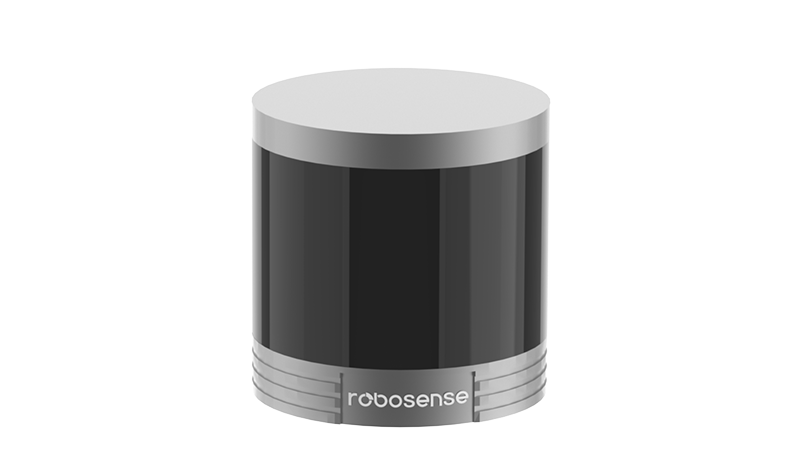
RoboSense’s Helios 16 directly addresses this market need. As the 16-beam member of the Helios series, this sensor represents a masterful balance of performance, durability, and cost-efficiency. Building upon RoboSense’s extensive experience in mass-producing automotive-grade LiDARs, the Helios 16 is not merely an incremental upgrade—it is a purpose-built workhorse designed to accelerate the deployment of intelligent machines across the globe.
This comprehensive report provides an in-depth analysis of the RoboSense Helios 16. We will examine its technical architecture, explore its diverse applications in robotics, industrial automation, and V2X infrastructure, and evaluate its unique value proposition for clients in the sophisticated markets of Russia, Europe, and North America. For system integrators, robotics manufacturers, and infrastructure developers seeking a reliable, high-performance 3D perception solution without prohibitive costs, the Helios 16 emerges as the definitive choice.
1. Introduction: Bridging the Gap Between Performance and Affordability
The LiDAR industry has long been characterized by a dichotomy. At one end, there are ultra-high-definition sensors with 128 or more beams, delivering point clouds of breathtaking density but carrying price tags that limit them to high-end automotive development and specialized mapping. At the other end, simpler 2D LiDARs or low-cost 16-beam sensors often compromise on range, reliability, or data quality, leaving a performance gap for serious commercial deployments.
RoboSense recognized this gap and engineered the Helios series to bridge it . The platform represents a strategic shift towards modular architecture and application-specific customization. By decoupling the core scanning engine from the application layer, RoboSense achieved two critical breakthroughs:
- Dramatic Cost Reduction: Compared to the previous-generation RS-LiDAR-32, the Helios series achieves a 60% cost reduction while simultaneously reducing physical volume by 29% . This makes high-quality 3D perception accessible for a vastly wider range of applications.
- Application-Optimized Configurations: The Helios series offers both 32-beam and 16-beam variants, with the 16-beam model specifically tuned for applications where 360° coverage, reliable detection, and cost sensitivity are paramount .
The Helios 16 is the embodiment of this philosophy. It inherits the core technology and rigorous testing standards of its more powerful siblings but packages them into an optimized configuration that delivers exceptional value for the industrial and commercial robotics sectors.
2. Helios 16: Technical Architecture and Core Specifications
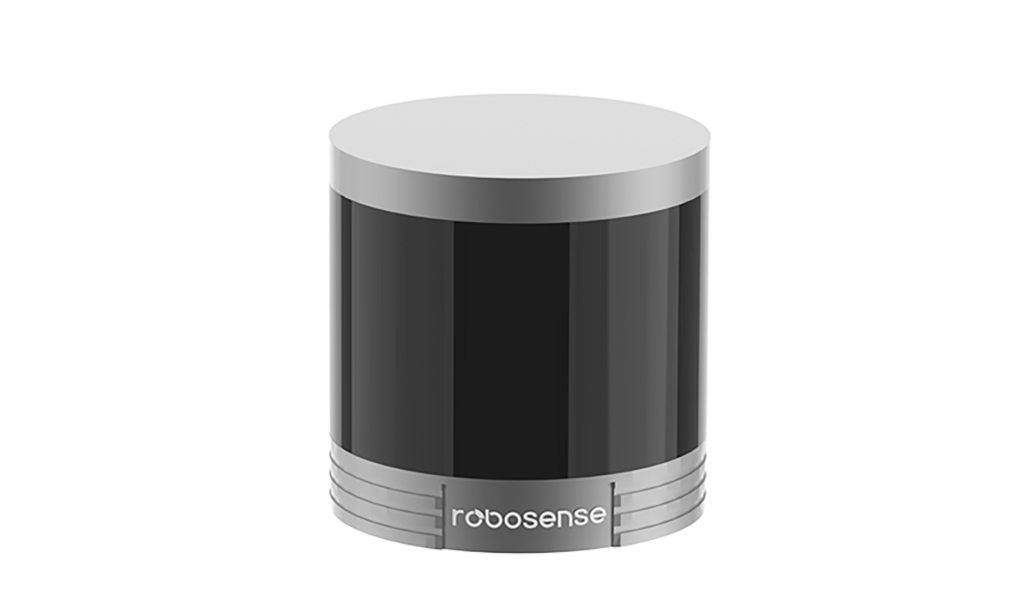
The RoboSense Helios 16 (often referred to as RS-Helios-16P) is a 16-beam mechanical LiDAR designed for continuous 360-degree environmental perception. Its technical specifications reflect a careful optimization for real-world industrial applications.
2.1 Detailed Technical Specifications
The following specifications are compiled from official RoboSense documentation and verified by international distributors serving the European and North American markets :
2.2 Key Technological Features
Beyond the raw specifications, several advanced features distinguish the Helios 16 in its class:
Automotive Ethernet (100Base-T1)
The Helios 16 is equipped with automotive-grade Ethernet, a significant upgrade from traditional interfaces . This technology offers:
- High Bandwidth: Supports full-duplex data transmission at 100 Mbit/s, ensuring smooth delivery of high-rate point cloud data.
- Noise Immunity: Designed for the electrically noisy environments of vehicles and industrial machinery, ensuring data integrity.
- Simplified Integration: Compatible with modern automotive and industrial networking architectures.
Advanced Denoising Capabilities
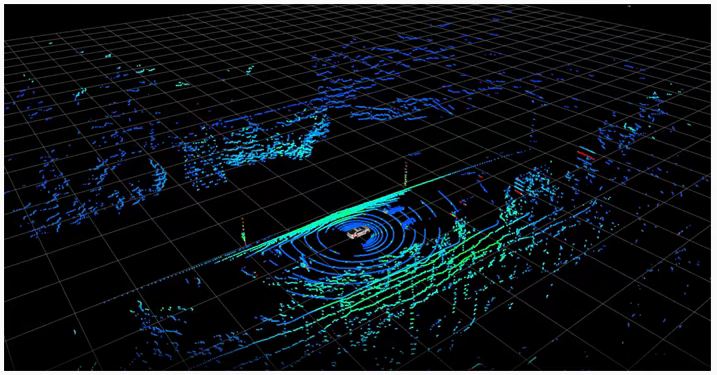
The sensor includes intelligent filtering algorithms to mitigate the effects of adverse weather—a critical requirement for outdoor applications in regions like Russia and Northern Europe. The rain, fog, snow, and dust denoising function helps to reduce environmental clutter, providing cleaner point clouds for downstream perception algorithms.
Web-Based Configuration and Monitoring
The Helios 16 supports configuration and real-time monitoring via a standard web browser . This simplifies installation, troubleshooting, and field maintenance—operators can quickly adjust settings or verify sensor status without specialized software.
Multiple Operating Modes
Users can select between high-performance mode for maximum data density and low-power mode for energy-constrained applications . This flexibility allows the same hardware platform to serve diverse deployment scenarios.
Precise Time Synchronization
The sensor supports multiple synchronization methods—including $GPRMC with 1PPS, PTP, and gPTP —ensuring accurate alignment of LiDAR data with other sensors (cameras, IMUs, GPS) in multi-sensor fusion systems.
3. Application Scenarios: Where Helios 16 Excels
The true strength of the Helios 16 lies in its versatility. Its balanced specifications make it suitable for a remarkably broad spectrum of applications across the robotics and intelligent infrastructure landscapes.
3.1 Autonomous Mobile Robots (AMRs) and Automated Guided Vehicles (AGVs)
The warehouse and logistics industry is undergoing a rapid transformation, with AMRs and AGVs becoming essential for material handling. The Helios 16 is ideally suited for these applications .
- Navigation and Localization: The 360° horizontal FOV allows the robot to continuously map its environment and precisely localize itself using SLAM (Simultaneous Localization and Mapping) algorithms. The 30° vertical FOV ensures the robot can see obstacles at various heights—from low pallets on the floor to overhanging structures or racks.
- Obstacle Detection and Avoidance: In dynamic warehouse environments shared with human workers and other vehicles, reliable obstacle detection is paramount. The Helios 16’s 150m range provides ample warning time, while its 11W power consumption enables continuous operation on battery-powered platforms.
- Pallet Detection and Docking: The sensor’s accuracy (±2 cm) and near-field capability (≤0.2 m blind spot) enable precise maneuvers such as pallet engagement and docking with charging stations.
3.2 Unmanned Forklifts and Industrial Vehicles
In manufacturing and heavy industrial settings, unmanned forklifts and tuggers must operate reliably amid steel structures, heavy machinery, and variable lighting conditions.
- Material Transport: The Helios 16 provides the 3D perception needed for autonomous navigation through narrow aisles and busy production floors. Its IP67 rating ensures protection against dust and water ingress common in industrial environments.
- Safety Zones: The sensor can be used to define virtual safety perimeters around the vehicle. If a person or object enters the protected zone, the system can automatically slow or stop the vehicle.
- Load Handling: The vertical FOV of 30° allows the forklift to perceive the position and orientation of racks and loads, facilitating automated pickup and drop-off.
3.3 V2X and Smart Infrastructure (Traffic Monitoring)
Intelligent transportation systems rely on accurate, real-time data about traffic flow. The Helios 16 serves as an excellent sensor for roadside infrastructure .
- Traffic Monitoring: Mounted at intersections or along highways, the Helios 16 can track vehicles, cyclists, and pedestrians with high precision, providing data for traffic management systems.
- Incident Detection: The sensor’s all-weather capability and denoising features allow it to function reliably in rain or snow, detecting stopped vehicles or debris on the road.
- Data Fusion: With precise time synchronization, multiple Helios 16 units can be networked together to cover large intersections, feeding fused data into central traffic control systems.
3.4 Autonomous Shuttles and Low-Speed Vehicles
For autonomous shuttles operating in campuses, airports, or urban pedestrian zones, the Helios 16 offers a cost-effective perception solution .
- 360° Situational Awareness: A single Helios 16 provides full surrounding coverage, detecting pedestrians, other vehicles, and obstacles in all directions.
- Complementary Sensing: The sensor can be combined with cameras and shorter-range LiDARs (such as RoboSense’s Bpearl for blind-spot coverage) to create a comprehensive perception suite at a fraction of the cost of high-end systems.
3.5 Mapping and Surveying
While not a dedicated surveying-grade instrument, the Helios 16’s 150m range and 360° coverage make it suitable for certain mapping applications .
- As-Built Documentation: The sensor can be used to create 3D models of facilities, construction sites, or outdoor areas.
- Environmental Monitoring: For applications requiring periodic 3D scans of changing environments (e.g., stockpile volume measurement), the Helios 16 provides a cost-effective data acquisition solution.
4. Value Proposition and Cost-Effectiveness for International Markets
For clients in Russia, Europe, and North America, the decision to adopt the Helios 16 hinges on a clear demonstration of its return on investment. The sensor offers compelling advantages across multiple dimensions.
4.1 Exceptional Price-to-Performance Ratio
The most immediate value proposition of the Helios 16 is its market-leading price-to-performance ratio. With a commercial price point in the range of approximately €3,200 – €3,300 (or $3,285 in the US market) , it delivers 150m detection range, 576,000 points per second (in dual return), and IP67 environmental sealing at a fraction of the cost of comparable sensors from previous generations.
For system integrators building fleets of robots or deploying multiple roadside units, this cost efficiency directly translates to improved business model viability. A warehouse automation project, for example, can equip every AMR with high-quality 3D perception without the sensor cost becoming prohibitive.
4.2 Proven Reliability and Ruggedization
International clients, particularly those in Russia and Northern Europe, require equipment that can withstand harsh environmental conditions. The Helios 16 is engineered for this reality:
- Wide Temperature Range: Operation from -30°C to +60°C covers the vast majority of outdoor deployment scenarios across continental climates .
- IP67 Protection: Complete protection against dust and temporary water immersion ensures reliable operation in rain, snow, and dusty industrial environments.
- Automotive-Grade Testing: The sensor is validated against dozens of reliability tests including mechanical shock, random vibration, low-temperature startup, and electromagnetic compatibility (EMC) . This testing regime ensures long-term durability in demanding applications.
4.3 Simplified Integration and Deployment
The Helios 16 is designed to minimize integration effort:
- Standard Interfaces: Automotive Ethernet and UDP packet output ensure compatibility with a wide range of computing platforms and middleware (including ROS).
- Comprehensive Documentation: RoboSense provides datasheets, user guides, 3D models, and software tools (such as RSView for Ubuntu) to accelerate development .
- Web-Based Management: Remote configuration and monitoring capabilities reduce the cost of field maintenance and troubleshooting.
4.4 Future-Proof Platform Strategy
By adopting the Helios 16, clients gain access to RoboSense’s broader technology roadmap. The Helios series shares a common modular architecture, meaning that improvements in core technology—whether in signal processing, denoising algorithms, or manufacturing efficiency—benefit the entire family. Furthermore, the ability to upgrade to the Helios 32 within the same mechanical and electrical framework provides a clear migration path for applications that may require higher resolution in the future.
4.5 Global Support and Availability
For international clients, access to reliable support and supply chains is critical. RoboSense has established a global distribution network, with partners such as RobotShop serving the North American and European markets and Génération Robots serving the French and broader European market . This ensures that clients can obtain sensors, replacements, and technical support within reasonable timeframes.
5. Competitive Positioning: How Helios 16 Stands Out
In the crowded field of 16-beam mechanical LiDARs, the Helios 16 differentiates itself through several key attributes:
| Attribute | Helios 16 Advantage |
|---|---|
| Detection Range | 150m maximum range (90m @10% reflectivity) places it at the top tier of its class, enabling earlier detection and safer operation at higher speeds. |
| Data Rate | 576,000 points/second (dual return) provides a denser point cloud than many competitors, improving perception algorithm performance. |
| Environmental Protection | Full IP67 rating and -30°C to +60°C operation exceed the specifications of many alternatives, ensuring reliable outdoor deployment. |
| Connectivity | Automotive Ethernet (100Base-T1) is a future-proof interface that surpasses older Ethernet standards in noise immunity and bandwidth. |
| Manufacturing Heritage | Built by a company with proven mass-production capability for automotive OEMs, ensuring consistent quality and supply stability. |
| Platform Ecosystem | Part of a modular family (including Helios 32) with shared tools and support, simplifying scaling and upgrades. |
6. Conclusion: The Workhorse of Industrial Perception
The RoboSense Helios 16 represents a mature, thoughtfully engineered solution to the real-world needs of the industrial automation and intelligent infrastructure markets. It does not chase the highest possible specifications at any cost; instead, it delivers a carefully calibrated balance of performance, durability, and affordability that aligns precisely with the requirements of commercial deployments.
For clients in Russia, Europe, and North America—where applications range from cold-chain logistics warehouses to all-weather traffic monitoring systems and autonomous industrial vehicles—the Helios 16 offers a proven, reliable foundation for 3D perception. Its 150m range provides ample warning time, its 360° coverage ensures no quadrant is left unobserved, and its IP67 ruggedization guarantees operation in the face of rain, snow, and dust.
In an industry where the gap between laboratory-grade sensors and commercially viable products can be vast, the Helios 16 successfully bridges the divide. It is more than a component; it is an enabler—bringing high-quality 3D perception within reach of the applications that will define the next decade of industrial and infrastructural automation. For system integrators and manufacturers seeking a trusted partner in this journey, the RoboSense Helios 16 stands ready as the definitive workhorse of industrial LiDAR.









