
Executive Summary
The field of robotics is at an inflection point. As machines transition from performing repetitive tasks in structured environments to navigating the complexities of the human world, their perceptual requirements have skyrocketed. Humanoid robots, autonomous mobile robots (AMRs), and service robots now demand a level of environmental understanding that rivals biological systems. Traditional approaches, which rely on stitching together data from disparate, standalone sensors, are proving to be a bottleneck—introducing latency, calibration complexities, and fragility.
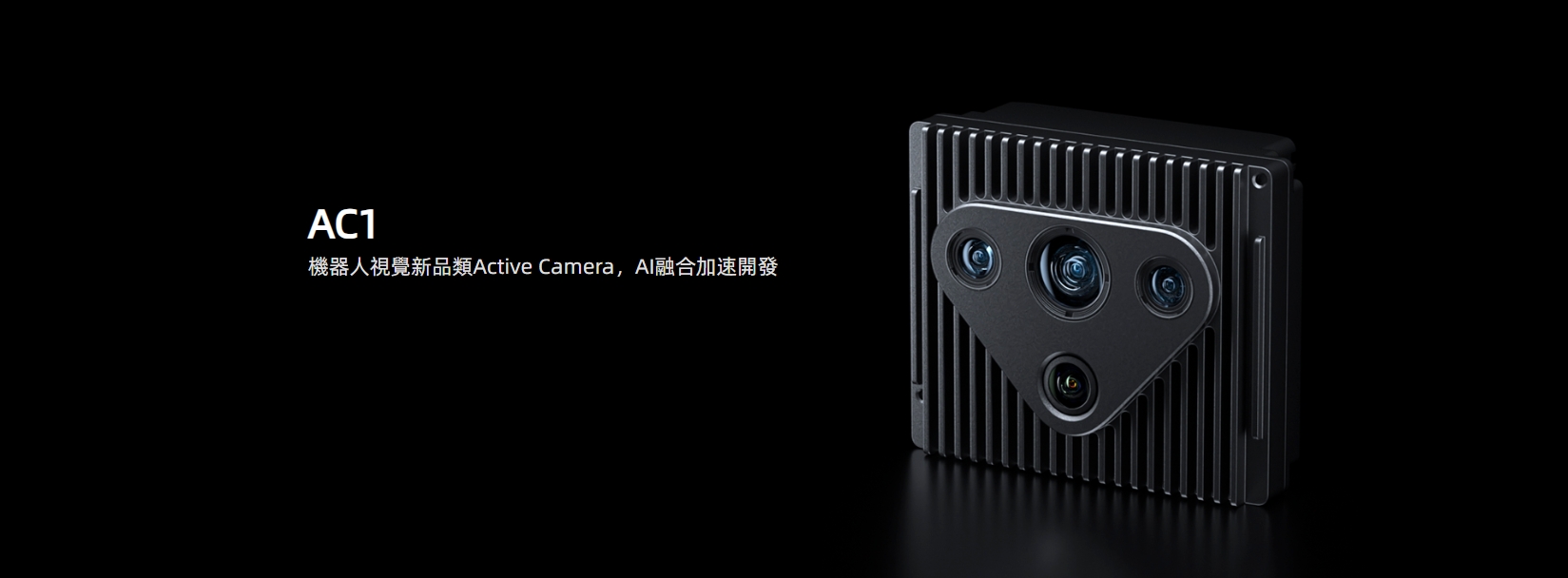
RoboSense, a global leader in smart LiDAR systems, has directly addressed this challenge with the AC1, marketed as the “Eye of Robot.” The AC1 is not merely a sensor; it is an integrated, pre-fused perception system designed from the ground up to be the central nervous system for robotic vision. By achieving hardware-level synchronization and fusion of a high-performance LiDAR, an RGB camera, and an Inertial Measurement Unit (IMU), the AC1 delivers a level of spatial intelligence, reliability, and ease-of-integration previously unattainable in a single, compact module.
This in-depth report provides a comprehensive analysis of the RoboSense AC1. We will dissect its core technology, explore its transformative potential across various robotic applications—from humanoid robots to industrial automation—and evaluate its commercial value proposition for clients in the sophisticated markets of Russia, Europe, and North America.
1. Introduction: The Perceptual Bottleneck in Advanced Robotics
The rapid evolution of robotics has created a fundamental disconnect. While algorithms for artificial intelligence, particularly in perception and planning, have advanced at a breathtaking pace, the hardware responsible for feeding these algorithms data has often lagged behind. For a robot to operate safely and efficiently in a dynamic, human-centric environment, it needs to answer three questions simultaneously:
- What is around me? (Object classification: person, vehicle, obstacle)
- Where is it, exactly, and how is it moving? (3D geometry, distance, velocity)
- How am I moving through this space? (Ego-motion, orientation)
Conventionally, roboticists have answered these questions by integrating a separate LiDAR (for 3D geometry), a camera (for visual texture and classification), and an IMU (for motion tracking). This approach, while functional, introduces significant challenges:
- Spatial and Temporal Misalignment: Each sensor operates on its own clock and has its own coordinate system. Fusing their data requires complex and computationally expensive “sensor fusion” algorithms to synchronize timestamps and spatially calibrate the sensors relative to each other. This process is prone to error and can be easily disrupted by vibration, temperature changes, or physical shocks over time.
- Increased System Complexity and Cost: Integrating multiple discrete sensors increases the Bill of Materials (BOM), requires more physical space on the robot, adds to wiring harness complexity, and demands significant engineering effort for integration and maintenance.
- Performance Bottlenecks: Even with sophisticated fusion, the inherent latency and potential for misalignment can degrade the quality of the perception output, leading to slower reaction times and, in the worst case, safety risks.
The robotics industry has been crying out for a solution that transcends these limitations—a unified perception system that delivers high-fidelity, spatiotemporally aligned data directly to the robot’s brain. The RoboSense AC1 is the answer.
2. The AC1: Anatomy of an Integrated Perception System
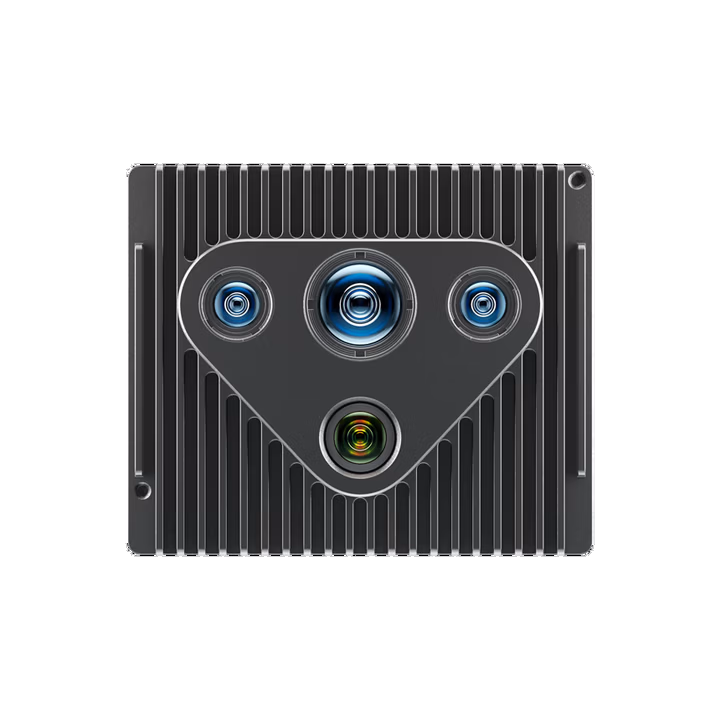
The fundamental innovation of the AC1 lies in its holistic design philosophy. RoboSense has moved beyond the concept of a “sensor suite” to create what can be best described as a “Perception-in-a-Box” solution. It is the first product in their “Eye of Robot” series, signaling a dedicated strategic focus on the burgeoning robotics market.
2.1 Hardware-Level Sensor Fusion
At the heart of the AC1 is the principle of hardware-level fusion. Unlike systems that attempt to align data from separate sensors in software post-capture, the AC1 integrates a 3D LiDAR, a high-resolution RGB camera, and a high-precision IMU onto a single rigid body with a shared timing architecture.
- Spatial Alignment: The optical axes of the LiDAR and camera are precisely calibrated at the factory during manufacturing. This rigid, permanent alignment ensures that every LiDAR point is inherently registered to a corresponding camera pixel. The robot’s perception system receives a single, unified data stream where the 3D geometry and visual texture are perfectly overlaid, eliminating the need for end-user extrinsic calibration. This is critical for applications where precision and reliability are paramount, and where recalibration is impractical or impossible.
- Temporal Alignment: All three sensors are synchronized by a master clock at the hardware level. This ensures that the LiDAR point cloud, the camera image, and the IMU motion data are all captured at precisely the same moment. This microsecond-level synchronization is essential for accurately tracking fast-moving objects and for robust ego-motion estimation, especially in dynamic environments.
2.2 Key Technical Specifications
While RoboSense provides detailed specifications for specific implementations, the core capabilities of the AC1 platform can be summarized as follows:
| Component / Feature | Specification / Capability |
|---|---|
| LiDAR Core | High-performance, long-range to mid-range LiDAR engine (likely based on RoboSense’s mature M-series or next-gen digital platform). Provides dense, accurate 3D point clouds. |
| Camera Core | High-dynamic-range (HDR) RGB camera for rich visual detail and object classification under varying lighting conditions. |
| IMU Core | High-precision, low-drift Inertial Measurement Unit for accurate motion tracking and odometry. |
| Fusion Output | Hardware-synchronized, spatially aligned data stream, delivering colored point clouds or fused perceptual features directly to the host processor. |
| Form Factor | Compact, integrated module designed for easy mechanical and electrical integration into robotic platforms. |
| Environmental Robustness | Designed to withstand the vibrations, shocks, and temperature variations typical of mobile robotics applications. |
2.3 The “Millisecond-Level Environmental Modeling” Capability
This is the most potent consequence of the AC1’s design. By delivering pre-fused, spatiotemporally aligned data with virtually zero latency, the AC1 enables a robot’s AI brain to perform environmental modeling and path planning at unprecedented speeds. As demonstrated in the integration with the Zhongqing T800 humanoid robot, this allows for real-time reactions to dynamic obstacles, ensuring smooth and safe navigation through complex, crowded spaces . The robot isn’t just seeing the world; it’s understanding it in a way that is tightly coupled with its own motion, enabling fluid and human-like interaction with its surroundings.
3. Application Scenarios: Unleashing Robotic Potential
The versatility of the AC1 makes it a foundational component for a wide spectrum of robotic applications. Its ability to provide robust, reliable perception in diverse conditions is a game-changer.
3.1 Humanoid and Bipedal Robots
Humanoid robots represent the ultimate challenge for perception systems. They must navigate environments built for humans—with stairs, narrow doorways, cluttered rooms, and moving people. Their perception system must be compact, lightweight, and incredibly powerful.
- Precise Navigation and Path Planning: The AC1’s high-quality, fused data allows a humanoid robot to build an accurate 3D map of its environment in real-time, identifying obstacles, surfaces, and pathways with high fidelity. This is essential for tasks like climbing stairs, stepping over obstacles, and walking through cluttered spaces without collision.
- Dynamic Object Interaction: For a robot to interact with humans or manipulate objects, it needs to understand their precise position, orientation, and motion. The AC1’s hardware-fused data provides this with the speed and accuracy required for tasks like handshakes, handing over objects, or avoiding a suddenly moving person.
- Self-Localization and Balance: The integrated IMU, perfectly synchronized with visual and depth data, provides a robust foundation for Simultaneous Localization and Mapping (SLAM) and balance control. The robot can understand its own motion relative to the environment, enabling stable gait and posture even on uneven terrain.
3.2 Autonomous Mobile Robots (AMRs) in Logistics and Warehousing
In the fast-paced world of logistics, efficiency and safety are paramount. AMRs are increasingly used to transport goods in warehouses and factories, often sharing space with human workers and other vehicles.
- Robust Obstacle Detection and Avoidance: The AC1’s ability to accurately detect and classify objects—distinguishing between a stationary pallet, a moving forklift, or a human worker—allows for intelligent and safe navigation. The hardware-level fusion ensures this perception remains reliable even in challenging conditions like low light or dust, which are common in industrial settings.
- Accurate Docking and Manipulation: For tasks like pallet picking or docking with charging stations, centimeter-level accuracy is required. The AC1’s high-resolution 3D data, fused with visual texture, provides the precision needed for these critical maneuvers.
- Fleet Management and Traffic Coordination: By providing a clear understanding of the environment, the AC1 enables AMRs to better coordinate their movements with other robots and traffic systems, optimizing workflow and preventing deadlocks.
3.3 Service Robots in Hospitality, Healthcare, and Retail
Robots are increasingly entering the service industry, performing tasks like delivery in hotels, guiding in hospitals, or cleaning in retail stores. These environments are highly unstructured and require a high degree of social intelligence.
- Human-Robot Interaction: The AC1’s ability to identify and track people, understand their pose and motion, is crucial for polite and safe interaction. A hotel delivery robot needs to navigate around guests in a hallway, perhaps even pausing to allow someone to pass. The AC1 provides the situational awareness to do this gracefully.
- Navigation in Cluttered, Dynamic Spaces: From a crowded hospital corridor to a busy retail aisle, service robots must navigate unpredictable environments. The AC1’s low-latency, high-fidelity perception ensures it can react instantly to a child running in front of it or a shopping cart being moved into its path.
- Autonomous Operation in Varied Lighting: Service robots operate 24/7 under all kinds of lighting—bright daylight through windows, dimly lit corridors, or fluorescent lights. The AC1’s combination of active LiDAR (which doesn’t depend on ambient light) and a high-quality camera ensures robust perception across all these conditions.
3.4 Industrial Automation (AGV/Unmanned Forklifts)
In manufacturing and heavy industry, Autonomous Guided Vehicles (AGVs) and unmanned forklifts are used for material handling. These environments often involve heavy machinery, large metal structures, and challenging lighting.
- Precise Pallet Detection and Engagement: The AC1’s high-resolution 3D data allows an unmanned forklift to accurately detect the position and orientation of a pallet, even if it’s slightly misplaced. The fused camera data can help read pallet labels or identify specific load types.
- Safe Operation in Human-Robot Collaborative Spaces: As industrial robots work more closely with people, safety is the top priority. The AC1’s robust perception ensures that the robot can detect a human entering its work envelope and immediately slow down or stop, preventing accidents.
- Navigation in GPS-Denied Environments: Inside factories, GPS is unreliable. The AC1’s powerful SLAM capabilities, leveraging LiDAR, visual, and inertial data, provide accurate and reliable navigation without external references.
4. Value Proposition and Cost-Effectiveness for International Clients
For clients in sophisticated markets like Russia, Europe, and North America, the decision to adopt a new technology hinges on a clear demonstration of value. The AC1 offers a compelling proposition that goes beyond a simple sum of its parts.
4.1 Accelerated Time-to-Market and Reduced R&D Costs
The single most significant value of the AC1 is its ability to dramatically simplify the development process for robot manufacturers. By providing a turnkey perception solution, RoboSense effectively eliminates years of R&D work in sensor fusion, calibration, and synchronization. Engineering teams can focus their efforts on higher-level tasks like navigation algorithms, manipulation, and application-specific logic, rather than wrestling with low-level sensor integration. This directly translates to faster time-to-market and lower overall development costs, a critical advantage in a competitive landscape.
4.2 Enhanced Reliability and Robustness
The hardware-level fusion of the AC1 is inherently more robust than software-based approaches. The factory-set calibration is permanent and resistant to shocks, vibrations, and thermal cycling—all common in mobile robotics. This ensures that the perception system’s performance remains consistent and reliable over the entire lifespan of the robot. For applications where safety is critical, such as industrial automation or public-facing service robots, this reliability is non-negotiable. It reduces maintenance needs and minimizes the risk of perception-related failures.
4.3 Superior Performance and Lower Latency
By eliminating the need for computational “glue” to synchronize and align data, the AC1 minimizes system latency. The robot’s AI receives a unified, high-fidelity picture of the world with minimal delay. This is crucial for high-speed navigation and for reacting to sudden, unpredictable events. In a dynamic environment, every millisecond counts, and the AC1’s design ensures that robotic systems have the fastest possible perceptual reaction time.
4.4 Simplified Integration and a Cleaner BOM
The compact, integrated form factor of the AC1 simplifies the mechanical design of the robot, reducing its footprint and freeing up space for batteries, compute, or other components. It also simplifies the electrical system, with a single power and data interface replacing the multiple connections required for discrete sensors. This leads to a cleaner, more reliable, and more cost-effective Bill of Materials (BOM) .
4.5 A Future-Proof Platform
As a product from a global technology leader like RoboSense, the AC1 is built on a platform that will continue to evolve. Clients investing in the AC1 today are gaining access to a roadmap of future improvements in performance, cost, and capability. RoboSense’s commitment to mass production and continuous innovation ensures that their customers will remain at the forefront of robotic perception technology.
5. Conclusion: The New Standard for Robotic Vision
The RoboSense AC1 represents a fundamental leap forward in how robots perceive the world. It moves beyond the era of cobbled-together sensor suites and establishes a new paradigm of integrated, intelligent perception. For the sophisticated robotics markets of Russia, Europe, and North America—where innovation, safety, and reliability are paramount—the AC1 offers a clear and compelling path forward.
It is more than just a sensor; it is the “Eye of Robot,” providing the foundational spatial intelligence upon which the next generation of autonomous machines will be built. From humanoid robots learning to walk among us to industrial fleets operating with superhuman efficiency, the AC1 provides the vision to make it happen safely, reliably, and cost-effectively. For any company serious about building advanced robots, the AC1 is not just an option; it is rapidly becoming the new standard.









