
Why LiDAR Is Becoming the Core of Robotics?
Over the past decade, robotics has shifted from controlled industrial environments into dynamic, real-world applications. Autonomous mobile robots (AMRs), delivery robots, warehouse automation systems, and service robots are now expected to operate in environments that are unpredictable, unstructured, and constantly changing.
In this context, LiDAR sensors for robotics have emerged as one of the most reliable technologies for perception and navigation. Unlike cameras, which depend heavily on lighting conditions, or ultrasonic sensors, which have limited range and accuracy, 3D LiDAR sensors provide high-precision spatial awareness in real time.
This capability makes LiDAR for SLAM mapping and robot navigation systems indispensable.
Understanding LiDAR Technology in Robotics
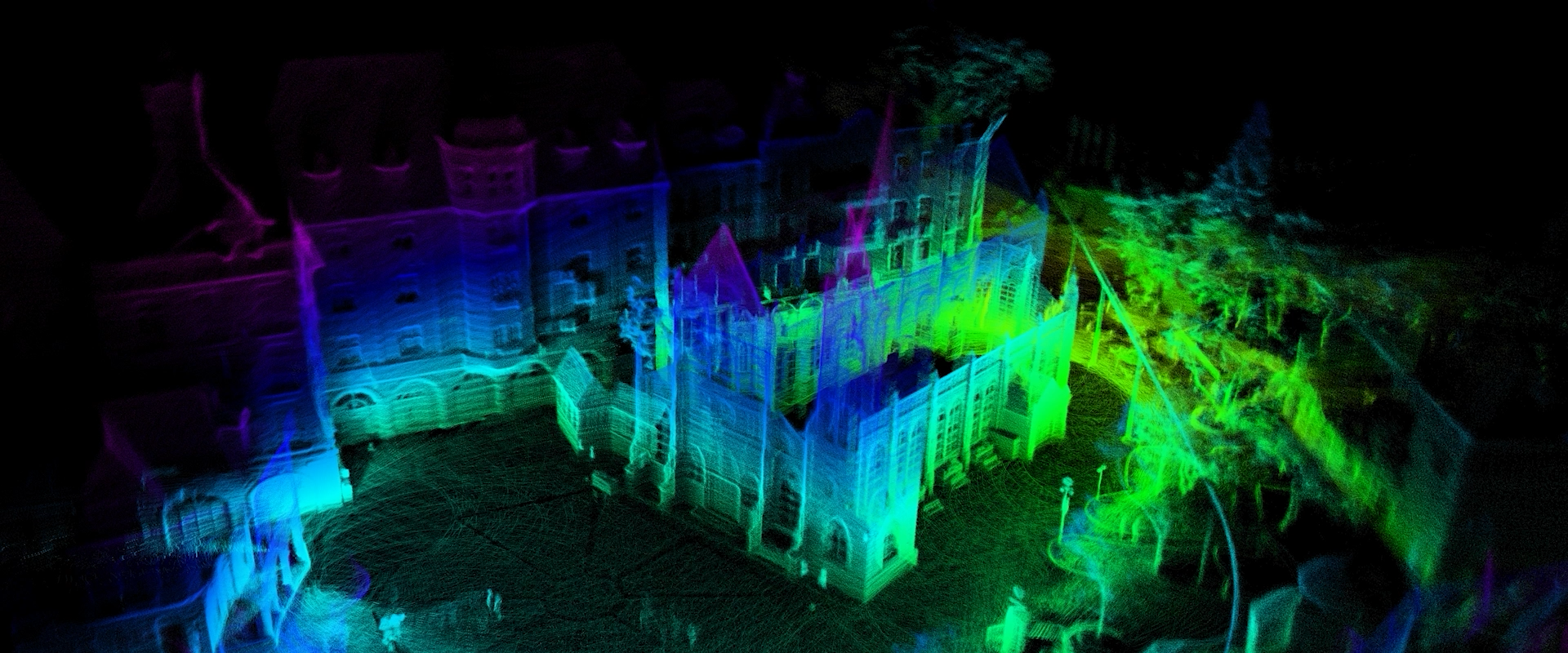
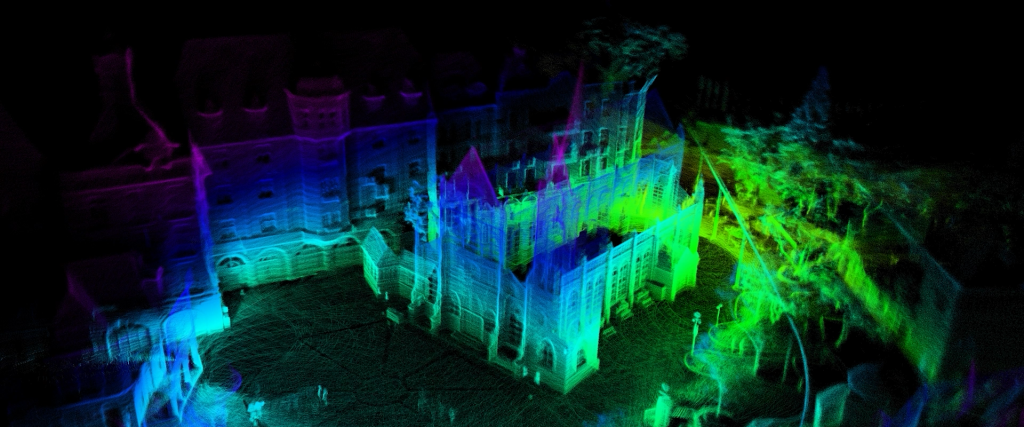
LiDAR (Light Detection and Ranging) works by emitting laser pulses and measuring the time it takes for those pulses to return after hitting an object. The result is a dense 3D point cloud, which represents the surrounding environment with remarkable accuracy.
Key Components of a LiDAR System
A typical LiDAR sensor for robot navigation consists of:
- Laser emitter
- Photodetector
- Rotating or solid-state scanning mechanism
- Data processing unit
These components work together to generate real-time environmental data used for navigation and obstacle avoidance.
Why Robotics Needs LiDAR Instead of Cameras Alone
While computer vision has made significant progress, relying solely on cameras presents challenges:
Limitations of Vision-Based Systems
- Sensitive to lighting conditions
- Difficulty measuring accurate depth
- Struggles in texture-less environments
Advantages of LiDAR Sensors
- Accurate distance measurement
- Works in darkness and bright light
- High reliability in indoor and outdoor environments
Because of these benefits, many robotics developers now combine LiDAR and vision systems, but LiDAR remains the backbone of navigation.
The Role of LiDAR in SLAM Mapping
SLAM (Simultaneous Localization and Mapping) allows a robot to:
- Build a map of an unknown environment
- Track its position within that map
How LiDAR Enables SLAM
Using LiDAR sensors for SLAM mapping, robots can:
- Continuously scan surroundings
- Detect features and landmarks
- Update maps in real time
This is especially important in:
- Warehouses
- Hospitals
- Smart factories
- Urban delivery environments
Real-World Case Study: Warehouse Automation
In modern logistics centers, efficiency is everything. Companies are increasingly deploying robots powered by 3D LiDAR mapping systems.
Scenario
A warehouse deploys 50 autonomous robots equipped with LiDAR sensors for robot navigation.
Results
- 35% increase in operational efficiency
- 50% reduction in navigation errors
- Improved safety due to real-time obstacle detection
Why LiDAR Was Critical
The environment included:
- Dynamic obstacles (workers, forklifts)
- Changing layouts
- Low-light areas
Only LiDAR-based SLAM systems could maintain consistent performance.
2D vs 3D LiDAR in Robotics
Choosing between 2D LiDAR and 3D LiDAR sensors depends on application complexity.
2D LiDAR
- Lower cost
- Suitable for simple navigation
- Limited environmental awareness
3D LiDAR
- Full spatial perception
- Better obstacle detection
- Ideal for autonomous systems
For advanced robotics, 3D LiDAR sensors for robotics applications are becoming the standard.
Key Selection Criteria for LiDAR Sensors
When choosing a LiDAR sensor for robotics, consider:
1. Range
Short-range vs long-range detection
2. Accuracy
Critical for mapping and navigation
3. Field of View (FOV)
Determines environmental coverage
4. Environmental Resistance
Dust, rain, temperature tolerance
5. Integration Capability
Compatibility with SLAM software
Emerging Trends in LiDAR for Robotics
1. Solid-State LiDAR
- No moving parts
- More compact
- Lower cost
2. AI Integration
- Smarter object recognition
- Improved navigation decisions
3. Edge Computing
- Faster processing
- Reduced latency
Challenges in LiDAR Adoption
Despite its advantages, LiDAR still faces challenges:
- High initial cost
- Data processing complexity
- Integration with legacy systems
However, as technology advances, cost-effective LiDAR sensors for robotics are becoming more accessible.
Future Outlook
The future of LiDAR in robotics is extremely promising. As costs decrease and performance improves, LiDAR will likely become a standard component in:
- Consumer robots
- Smart city infrastructure
- Autonomous delivery systems
LiDAR has fundamentally changed how robots perceive and interact with the world. From SLAM mapping to real-time navigation, LiDAR sensors for robotics provide the accuracy, reliability, and performance needed for modern automation.
Businesses looking to invest in robotics should strongly consider high-precision LiDAR sensors as a core component of their systems.
FAQ
1. What is the best LiDAR sensor for robotics?
The best option depends on your use case. For advanced applications, 3D LiDAR sensors for robotics navigation are recommended.
2. Can LiDAR work without GPS?
Yes, LiDAR-based SLAM mapping allows robots to navigate without GPS.
3. Is LiDAR suitable for indoor robots?
Absolutely. LiDAR sensors for indoor mapping and navigation are widely used in warehouses and hospitals.
4. How accurate is LiDAR mapping?
Modern LiDAR mapping systems can achieve centimeter-level accuracy.
5. Is LiDAR expensive?
Costs are decreasing rapidly, making affordable LiDAR sensors for robotics more accessible.









