

The Backbone of Autonomous Driving Perception
Autonomous driving has evolved from a futuristic concept into a rapidly growing industry. From Level 2 driver assistance systems to fully autonomous vehicles, the need for reliable perception systems has never been greater. Among the various sensing technologies available, LiDAR sensors for autonomous driving stand out as one of the most critical components.
While cameras and radar play important roles, 3D LiDAR sensors for self-driving cars provide unmatched spatial accuracy and environmental awareness. This capability is essential for enabling safe navigation in complex real-world scenarios.
Understanding the Role of LiDAR in Autonomous Vehicles
At its core, an autonomous vehicle must continuously answer three key questions:
- Where am I?
- What is around me?
- What will happen next?
LiDAR-based perception systems address the second question with exceptional precision.
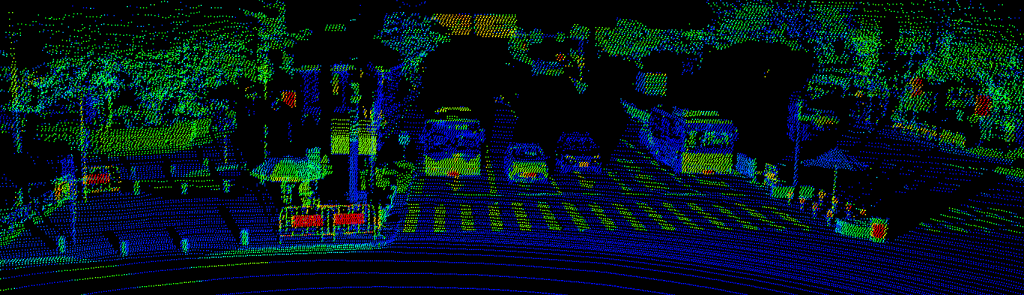
By generating high-resolution 3D point cloud data, LiDAR allows vehicles to:
- Detect objects in real time
- Measure exact distances
- Understand spatial relationships
Why LiDAR Is Essential Compared to Other Sensors
Cameras vs LiDAR
Cameras provide rich visual information but struggle with:
- Low light conditions
- Depth estimation
- Weather interference
Radar vs LiDAR
Radar is excellent for:
- Long-range detection
- Speed measurement
However, it lacks the resolution needed for detailed object recognition.
LiDAR Advantages
- High-resolution 3D mapping
- Accurate object detection
- Reliable performance in varied lighting
This makes LiDAR sensors for autonomous vehicles a cornerstone of modern perception stacks.
Real-World Scenario: Urban Autonomous Driving
Imagine a self-driving car navigating a busy city intersection.
Challenges:
- Pedestrians crossing unpredictably
- Cyclists approaching from blind spots
- Complex traffic signals
With 3D LiDAR sensors for autonomous driving, the vehicle can:
- Detect all surrounding objects in real time
- Build a precise 3D model of the environment
- Make safe driving decisions
Outcome:
- Reduced accident risk
- Improved navigation efficiency
- Enhanced passenger safety
Key Applications of LiDAR in Autonomous Driving
1. Object Detection and Classification
LiDAR identifies:
- Vehicles
- Pedestrians
- Obstacles
2. Lane Detection and Road Mapping
Using LiDAR mapping systems, vehicles can:
- Recognize lane boundaries
- Adapt to road changes
3. Collision Avoidance
Real-time data allows:
- Immediate braking
- Route adjustment
Types of LiDAR Used in Automotive Systems
Mechanical LiDAR
- Rotating sensors
- High accuracy
- Used in testing and research
Solid-State LiDAR
- No moving parts
- More compact
- Lower cost
Hybrid LiDAR
- Combines benefits of both
Long-Tail Keywords Integrated
- LiDAR sensors for autonomous driving systems
- 3D LiDAR for self-driving cars
- automotive LiDAR perception systems
- high precision LiDAR for vehicles
- LiDAR object detection technology
Challenges Facing Automotive LiDAR
Cost
High-end 3D LiDAR sensors can be expensive, though prices are decreasing.
Data Processing
Large volumes of point cloud data require:
- High-performance computing
- Efficient algorithms
Weather Conditions
Rain, fog, and snow can affect performance, though modern systems are improving rapidly.
Industry Trends and Innovations
AI Integration
Combining LiDAR with AI enables:
- Better object classification
- Predictive behavior analysis
Sensor Fusion
Combining:
- LiDAR
- Cameras
- Radar
This improves overall system reliability.
Future Outlook
The future of LiDAR in autonomous driving includes:
- Mass adoption in consumer vehicles
- Integration with smart city infrastructure
- Reduced hardware costs
As autonomous driving technology advances, LiDAR sensors for self-driving cars will remain a critical component. Their ability to provide accurate, real-time environmental data ensures safer and more reliable vehicle operation.
For companies developing autonomous systems, investing in high-performance LiDAR sensors is not just an option—it is a necessity.
FAQ
1. Do all self-driving cars use LiDAR?
Not all, but most advanced systems rely on LiDAR for accurate perception.
2. How far can LiDAR detect objects?
Modern automotive LiDAR sensors can detect objects up to 200–300 meters away.
3. Is LiDAR safe for humans?
Yes, automotive LiDAR uses eye-safe laser wavelengths.
4. Can LiDAR replace cameras?
No, but LiDAR complements cameras for better perception.
5. Why is LiDAR important for safety?
Because it provides precise distance measurements and reliable detection in real time.









