
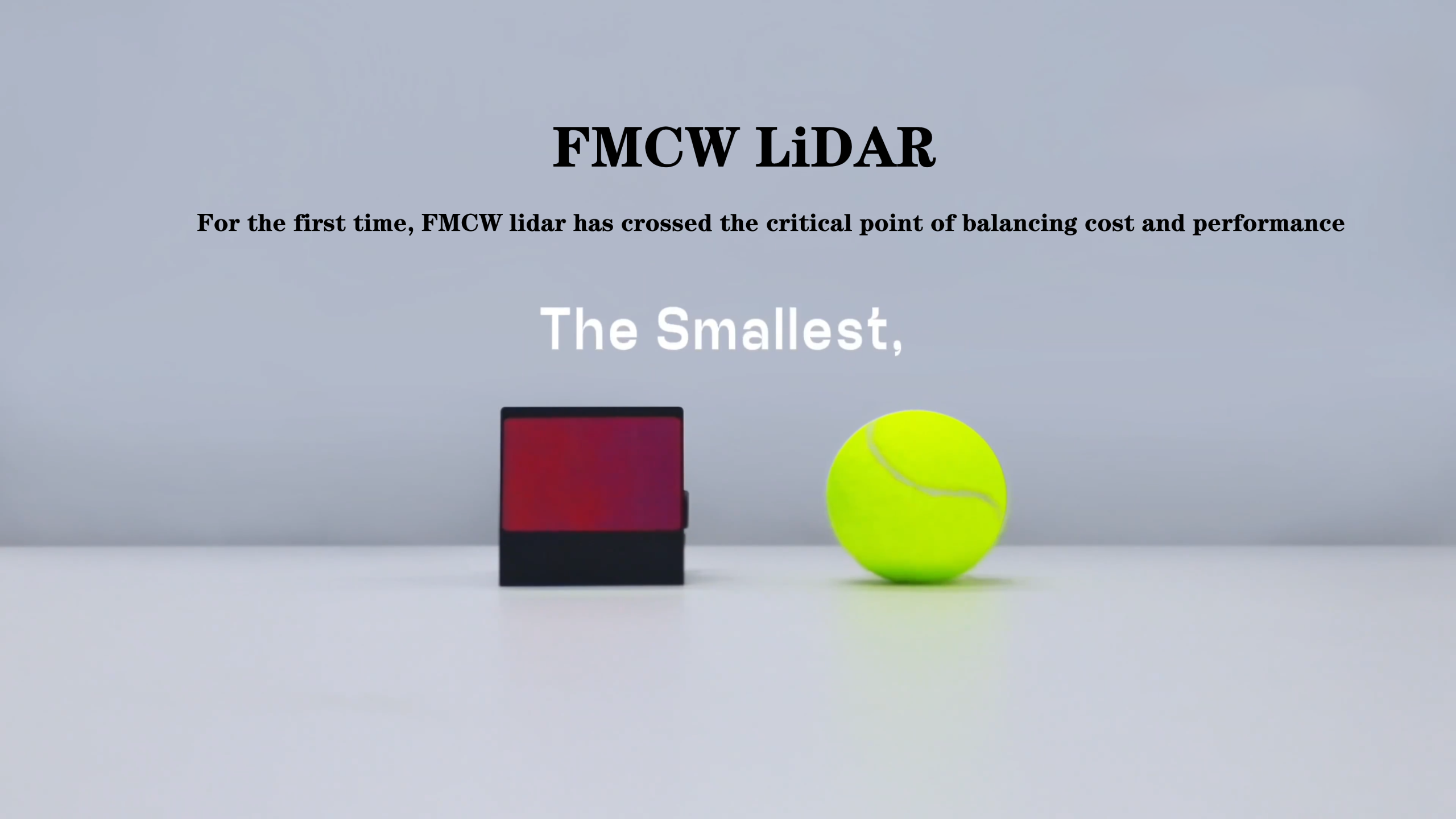
The Evolution of LiDAR Technology
LiDAR (Light Detection and Ranging) has become the cornerstone of perception for autonomous systems. For years, Time-of-Flight (ToF) LiDAR dominated the market, measuring distance by timing laser pulses. However, as the demands of autonomous driving, robotics, and smart infrastructure grow, a new contender—Frequency Modulated Continuous Wave (FMCW) LiDAR—is emerging as the superior technology. Unlike ToF, FMCW LiDAR leverages coherent detection, measuring both distance and velocity simultaneously with unparalleled precision. This article delves deep into the technical nuances, advantages, and diverse applications of FMCW LiDAR, establishing why it is poised to become the standard for high-reliability sensing.
Section 1: Understanding the Core Technology
1.1 What is FMCW LiDAR?
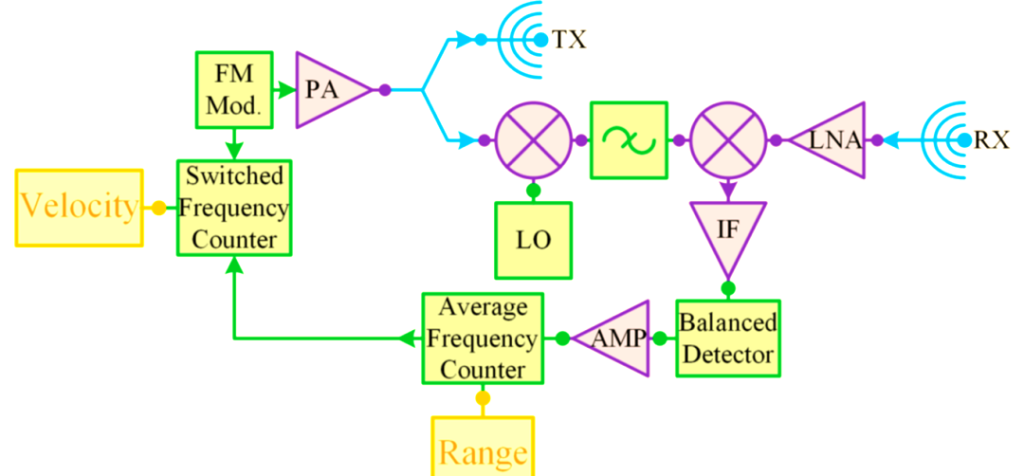
FMCW LiDAR is a sensing technology that emits a continuous laser beam with a modulated frequency. When this beam reflects off an object, it returns with a frequency shift. By comparing the emitted and received signals, the system calculates the distance (based on frequency difference) and the velocity (based on the Doppler shift). This simultaneous measurement of range and velocity is a fundamental differentiator from ToF LiDAR, which only captures distance.
1.2 How Does FMCW Compare to Traditional ToF LiDAR?
| Feature | FMCW LiDAR | ToF LiDAR |
|---|---|---|
| Measurement | Simultaneous distance and velocity | Primarily distance (velocity via frame differencing) |
| Interference Immunity | Extremely high; immune to sunlight and other LiDAR signals | Susceptible to interference from sunlight and other sensors |
| Range & Accuracy | High range with consistent accuracy | Accuracy can degrade at longer ranges or in adverse conditions |
| Data Output | 4D data (3D position + velocity) | 3D point cloud |
| Cost & Complexity | Currently higher, but decreasing with silicon photonics | Mature and cost-effective for many applications |
The coherent detection used in FMCW LiDAR provides a significant signal-to-noise ratio advantage, allowing for reliable detection of low-reflectivity objects at long distances—a critical requirement for automotive lidar used in autonomous driving at highway speeds.
Section 2: Key Advantages of FMCW LiDAR for Advanced Applications
2.1 Instantaneous Velocity Data (4D Perception)
For applications like lidar for robotics, understanding not just where an object is, but how fast it is moving, is crucial. FMCW LiDAR outputs a 4D point cloud, where each point has x, y, z, and velocity data. This enables:
- Enhanced Object Tracking: Predict movement trajectories with precision.
- Better Segmentation: Distinguish between stationary (e.g., parked car) and moving (e.g., pedestrian stepping off curb) objects instantly.
- Reduced False Positives: Eliminate ghosting caused by moving foliage or reflective surfaces.
2.2 Superior Interference Immunity
In complex environments—think busy intersections with hundreds of vehicles or industrial facilities with multiple robots—LiDAR interference is a real problem. FMCW LiDAR’s coherent detection ensures that each sensor operates on a unique frequency signature, making it virtually immune to interference from other lidar scanner units or ambient sunlight. This reliability is essential for industrial lidar applications where system downtime is unacceptable.
2.3 Long-Range Performance and Low-Reflectivity Detection
Autonomous vehicles require detection of dark objects (like a black tire on asphalt) at distances over 200 meters. FMCW LiDAR’s high sensitivity ensures consistent performance regardless of object reflectivity, providing safer navigation and more reliable lidar mapping system data.
Section 3: Applications Across Industries
3.1 Automotive LiDAR: The Key to True Autonomy
The automotive sector is the primary driver for FMCW technology. Automotive lidar systems based on FMCW offer the long range, velocity data, and interference immunity needed for Level 4 and Level 5 autonomy. Major automakers are increasingly adopting FMCW for their next-generation platforms, valuing its ability to function flawlessly in dense sensor environments.
3.2 Industrial Lidar and Robotics
In logistics and manufacturing, robot lidar systems must operate reliably amid high reflectivity, dust, and multiple machines. Industrial lidar based on FMCW ensures that lidar for robotics applications—such as automated forklifts and warehouse drones—can detect pallets, people, and obstacles with high precision, even when dozens of other sensors are operating nearby.
3.3 Mapping and Geospatial Intelligence
For lidar for mapping applications, the ability to capture not just 3D geometry but also motion data is transformative. FMCW-based lidar mapping system solutions can differentiate between moving vehicles and static infrastructure in a single pass, creating cleaner, more informative 3D models. This is invaluable for smart city planning, infrastructure monitoring, and security applications.
FAQ:
Q1: Is FMCW LiDAR more expensive than ToF LiDAR?
A: Currently, FMCW systems are generally more expensive due to their complexity and reliance on advanced components like narrow-linewidth lasers. However, advances in silicon photonics and integrated circuit technology are rapidly driving down costs. As a leading lidar supplier, we expect the price gap to narrow significantly over the next few years, making FMCW accessible for a wider range of applications.
Q2: Can FMCW LiDAR operate outdoors in bright sunlight?
A: Yes. One of the primary advantages of FMCW LiDAR is its exceptional immunity to sunlight interference. The coherent detection method effectively filters out background light, ensuring reliable performance even in direct sunlight, a critical factor for automotive lidar systems.
Q3: What is the typical range of an FMCW LiDAR sensor?
A: Depending on the specific 3d lidar sensor model, FMCW LiDAR can achieve ranges exceeding 300 meters for 10% reflectivity objects. This long-range capability is a key reason it is preferred for high-speed autonomous driving applications.
Q4: How does the velocity data from FMCW LiDAR help robotics applications?
A: For lidar for robotics, knowing an object’s velocity allows for predictive path planning. A robot can differentiate a slow-moving person from a fast-moving cart and adjust its trajectory accordingly, leading to safer and more efficient operations in dynamic environments.
Q5: Is FMCW LiDAR safe for the human eye?
A: Yes. FMCW LiDAR operates at wavelengths (typically 1550nm) that are inherently eye-safe at higher power levels than traditional 905nm ToF LiDAR. This allows for higher transmission power, contributing to its superior range and performance without compromising safety.
Q6: As a lidar supplier, what FMCW products do you offer?
A: At lidarseek.com, we partner with leading innovators to provide a curated selection of FMCW LiDAR sensors. Our offerings are suitable for a range of applications from automotive development to advanced industrial automation. Please visit our FMCW LiDAR Sensors category page to explore the specific models we currently have available.
Q7: How do I choose between FMCW and ToF for my project?
A: The choice depends on your application requirements. If you need long-range detection, high interference immunity, and/or instantaneous velocity data, FMCW is the superior choice. If your application is cost-sensitive and operates in a controlled environment, ToF may be sufficient. As a comprehensive lidar supplier, we can help you evaluate the best lidar sensor for your specific needs.
As autonomous systems become more complex and the environments they operate in more crowded, the limitations of traditional ToF LiDAR become increasingly apparent. FMCW LiDAR offers a clear path forward, providing the 4D perception, interference immunity, and long-range reliability that next-generation applications demand. Whether you are developing the next autonomous vehicle, deploying a fleet of intelligent robots, or creating high-precision mapping systems, FMCW technology represents a significant leap forward.
At lidarseek.com, we are committed to being your trusted lidar supplier for this transformative technology. Explore our FMCW LiDAR category to find the right 3d lidar sensor for your project, and contact our team for expert guidance on integrating these advanced sensors into your systems.









