
Outdoor autonomous mobile robots (AMRs) operate in environments that are often more challenging than indoor warehouses and factories. They may need to navigate outdoor logistics yards, industrial campuses, loading areas, construction facilities, agricultural sites, or mixed indoor-outdoor routes.
In these environments, selecting a LiDAR sensor involves more than comparing maximum detection range or point cloud specifications. Lighting conditions, rain, dust, temperature, mounting position, computing requirements, and software integration can all affect the performance of the complete robot.
For robotics manufacturers and system integrators, choosing the right sensor early can reduce integration risks and help avoid costly changes during development.
This guide explains what to evaluate when selecting LiDAR for outdoor AMRs and how to prepare your requirements before requesting a quotation.
1. Start with Your Outdoor Robot’s Operating Environment
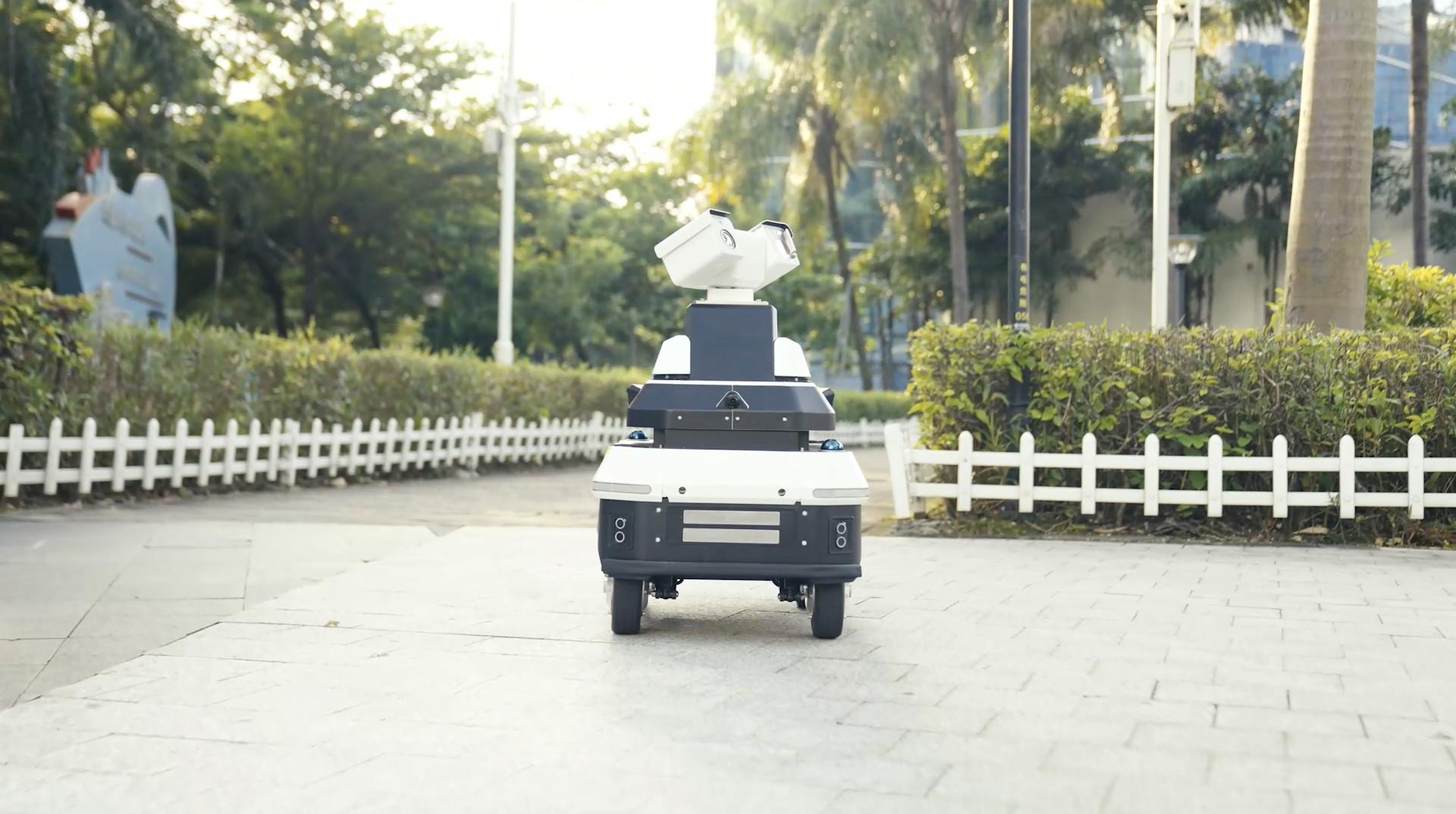
Before comparing LiDAR models, define where and how the robot will operate.
An AMR moving between warehouse buildings may have very different requirements from a vehicle operating in an exposed industrial yard or an outdoor inspection robot.
Consider the following factors:
- Operating area: Open yards, industrial campuses, loading areas, roads, or mixed environments
- Operating speed: The robot’s maximum speed and the time available to detect and respond to obstacles
- Detection requirements: Pedestrians, vehicles, pallets, barriers, curbs, or uneven ground
- Lighting conditions: Direct sunlight, changing shadows, low light, and transitions between indoor and outdoor areas
- Weather exposure: Rain, dust, moisture, and expected temperature variations
- Installation constraints: Sensor height, available mounting space, vibration, and potential obstructions
- Software environment: ROS 2, an existing navigation stack, a proprietary platform, or another perception system
These requirements help narrow the selection before your team spends time comparing detailed specifications.
Practical tip: Prepare a short operating-environment description and share it with the supplier. A clear description of the application is often more useful than asking for the sensor with the longest range.
2. Choose the Right Detection Range
Detection range is an important specification for outdoor mobile robots, but the maximum range shown in a datasheet should not be the only selection criterion.
A sensor’s specified range may depend on target reflectivity, environmental conditions, measurement settings, and the manufacturer’s test methodology.
For an outdoor AMR, consider three questions.
How Far Ahead Must the Robot Detect Obstacles?
The required detection distance depends on the robot’s speed, braking capability, processing delay, and operating conditions.
A robot travelling faster generally needs more time and distance to detect an obstacle and respond safely.
The appropriate detection range should therefore be determined from the complete vehicle’s requirements rather than selected from the LiDAR datasheet alone.
What Objects Must the Robot Detect?
Different objects can produce different returns.
Reflectivity, surface angle, object size, and distance may influence detection performance. Low obstacles, dark surfaces, and objects near the edge of the field of view deserve particular attention during testing.
If the robot must detect small obstacles or uneven ground, evaluate the sensor using representative objects rather than relying exclusively on headline range specifications.
What Is the Required Safety or Control Function?
Navigation, obstacle perception, localization, and personnel protection are not necessarily the same function.
If the project requires a safety-rated protective function, verify that the complete sensing system is suitable for the applicable safety requirements. Do not assume that a general-purpose 3D LiDAR automatically qualifies as a safety-rated device.
3. Evaluate Performance in Direct Sunlight and Changing Light
Outdoor lighting is one of the main differences between indoor and outdoor robotic applications.
Strong sunlight and changing illumination can affect some optical sensing systems. Actual performance depends on the sensor design, receiver characteristics, operating conditions, and target properties.
Before selecting a LiDAR for an outdoor AMR, check the manufacturer’s documentation for:
- Specified operating conditions
- Relevant ambient-light test conditions, if provided
- Detection performance under representative outdoor conditions
- Limitations associated with the intended installation
- Recommended validation procedures
Do not assume that every LiDAR is equally suitable for direct sunlight simply because it is designed for outdoor use.
If your robot operates between bright outdoor areas and shaded loading zones, test both environments. Also evaluate reflective surfaces, dark targets, and the transitions that occur during normal operation.
For a production project, request documented performance information for the exact model being considered.
4. Check Weather Protection and Environmental Ratings
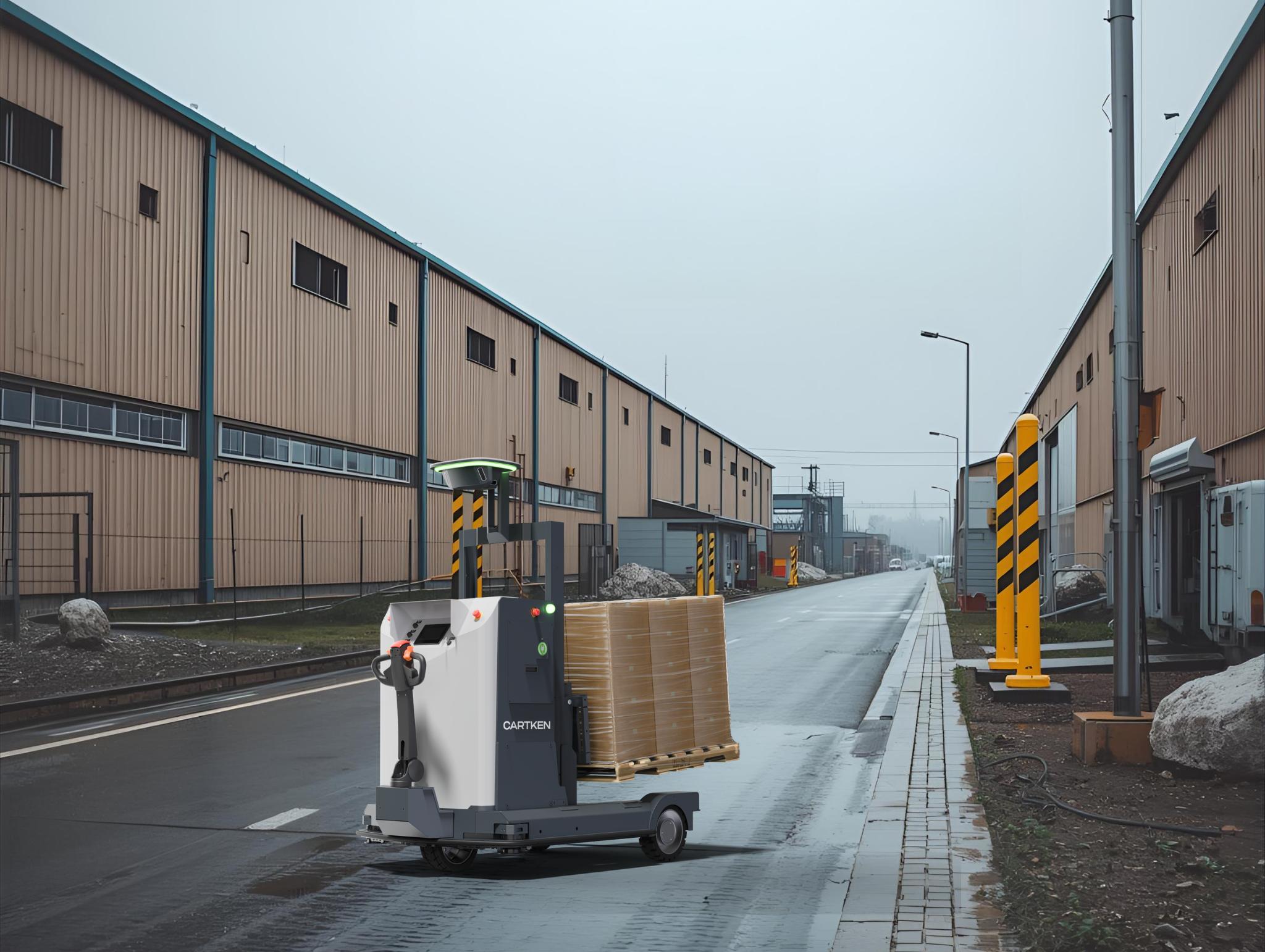
Outdoor robots may be exposed to rain, dust, water spray, humidity, and temperature fluctuations.
The sensor’s environmental specifications should match the conditions expected at the installation site.
Understand the IP Rating
An Ingress Protection (IP) rating indicates the degree of protection provided by an enclosure against specified ingress conditions.
The two digits represent different protection characteristics. The appropriate rating depends on the actual exposure expected in the application.
When evaluating a LiDAR sensor, confirm:
- The manufacturer’s specified IP rating
- Whether the rating applies to the complete sensor or only a particular enclosure configuration
- Whether connectors and cable interfaces maintain the required protection when installed
- The operating temperature range
- Any installation restrictions or environmental limitations
A particular IP rating does not automatically mean a device is suitable for every outdoor environment.
For example, protection against dust and water ingress does not by itself establish performance in every type of rain, condensation, pressure washing, or extreme temperature.
Consider Temperature and Condensation
Temperature changes can affect the operating conditions of both the sensor and the robot’s supporting electronics.
If the robot works outdoors throughout the year, check the specified operating temperature range and the manufacturer’s recommendations for installation, ventilation, and condensation management.
For exposed installations, include the enclosure, mounting structure, cables, and connectors in the environmental assessment.
5. Select the Appropriate Field of View and Scanning Pattern
A wide field of view can help an outdoor AMR observe more of its surroundings, but field of view should be evaluated together with mounting position, occlusion, point distribution, and application requirements.
A sensor mounted at the front of a robot may be appropriate for forward-facing perception. A robot that needs broad environmental awareness may require a different arrangement or multiple sensors.
Evaluate:
- Horizontal field of view
- Vertical field of view, where applicable
- Angular resolution and point distribution
- Blind spots created by the robot’s structure
- Coverage near the ground
- Coverage at the distances relevant to navigation
- Potential interference or occlusion caused by other equipment
A wide vertical field of view may be useful when the robot needs to perceive objects at different heights or changes in terrain. However, the benefit depends on the sensor’s actual point distribution and the robot’s mounting geometry.
Review the sensor’s field-of-view documentation and test the installed configuration, not just the standalone sensor.
6. Decide Between 2D and 3D LiDAR
The choice between 2D and 3D LiDAR depends on the robot’s perception requirements.
| Consideration | 2D LiDAR | 3D LiDAR |
|---|---|---|
| Measurement output | A planar scan | Spatial point cloud or other 3D output |
| Typical use | Planar navigation and obstacle detection | Three-dimensional perception and environmental mapping |
| Installation | Often straightforward for suitable planar applications | Requires consideration of 3D coverage and mounting orientation |
| Processing requirements | Often lower for basic scanning workloads | May require more network and computing resources |
| Main limitation | A single scan plane does not provide complete 3D coverage | Greater integration complexity may be required |
A 2D sensor may be appropriate for a robot whose navigation requirements can be met with planar scanning.
A 3D sensor may be more suitable when the robot needs to perceive obstacles at different heights, understand uneven terrain, or support a three-dimensional perception pipeline.
Neither category is automatically better for every outdoor robot.
The decision should be based on the actual obstacle types, navigation method, required coverage, processing platform, and total system cost.
7. Confirm Software and Computing Compatibility
A sensor that meets the hardware requirements can still create integration challenges if it does not fit the robot’s software architecture.
Before purchasing, verify the exact model’s support for your computing platform and development environment.
For ROS or ROS 2 projects, check:
- Driver availability for the specific sensor model
- Supported ROS or ROS 2 distributions
- Operating-system compatibility
- CPU architecture and computing requirements
- Available message types and data formats
- Coordinate-frame configuration
- Timestamp behavior
- SDK documentation and sample code
If your robot uses an NVIDIA Jetson platform or an x86 industrial computer, confirm the required dependencies and test the driver in the intended environment.
For systems that combine LiDAR with cameras, IMUs, GNSS, or other sensors, also evaluate synchronization and coordinate-frame requirements.
Ask the supplier for the relevant documentation before placing a production order. This allows your engineering team to identify potential integration issues early.
8. Plan Sensor Mounting and Integration
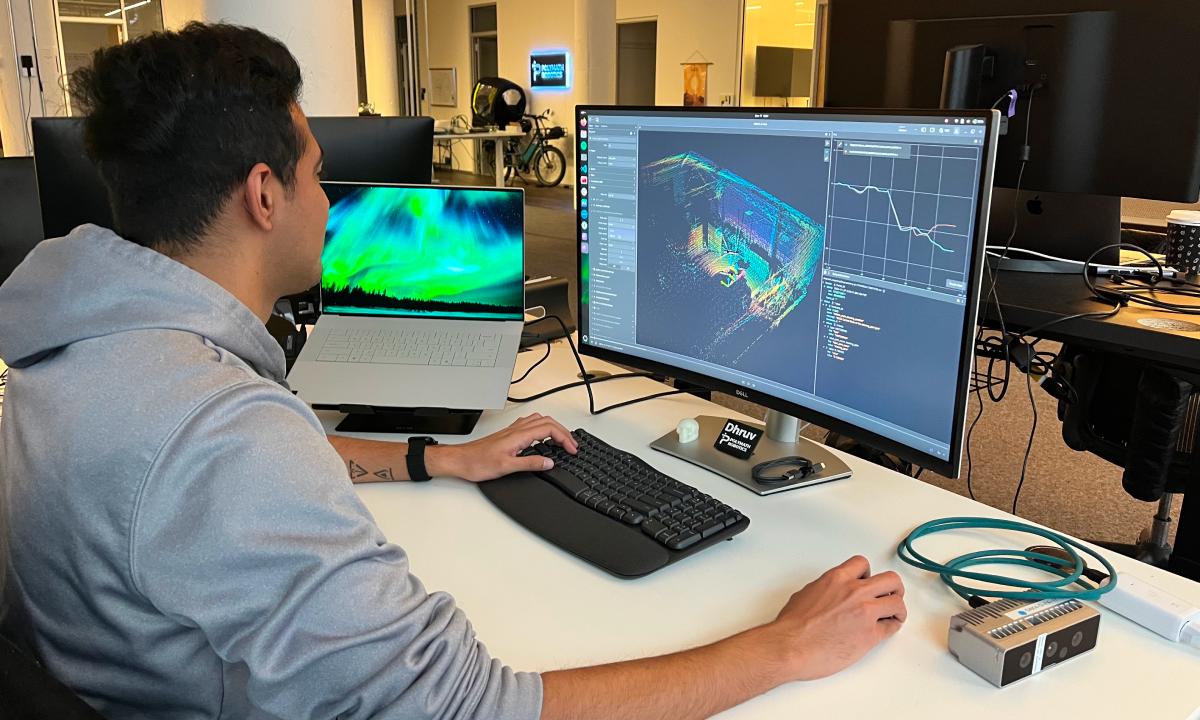
The performance of an outdoor LiDAR system depends on the installed configuration as well as the sensor itself.
A sensor may be partially obstructed by the robot’s chassis, a protective cover, a lifting mechanism, or other components.
Before finalizing the mechanical design, consider:
- Mounting height and orientation
- Field-of-view obstruction
- Available space and connector clearance
- Cable routing and strain relief
- Vibration and mechanical stability
- Protection from physical impact
- Access for maintenance or replacement
For a robot operating on uneven outdoor surfaces, the mounting position may affect how the sensor observes the ground and nearby obstacles.
If the robot has a moving mechanism or variable payload, check whether its configuration can obstruct the sensor during operation.
Whenever possible, validate the proposed mounting arrangement with CAD data, a prototype installation, or representative testing.
9. Compare the Total Cost of the Sensing System
The lowest sensor unit price does not necessarily result in the lowest project cost.
A complete cost comparison should consider the additional components and engineering effort needed to deploy the sensor.
These may include:
- Sensor hardware
- Power and communication cables
- Mounting brackets and protective enclosures
- Computing hardware or network components
- Software integration and testing
- Calibration or synchronization requirements
- Shipping and applicable import charges
- Maintenance and replacement considerations
For example, a sensor with a lower purchase price may require additional accessories or more integration work. Another option may cost more upfront but fit an existing software and hardware architecture more closely.
The appropriate comparison is the total cost of meeting the project’s requirements, not simply the displayed product price.
For international procurement, also confirm whether the quotation includes freight, which Incoterms apply, and which import-related charges remain the buyer’s responsibility.
10. Validate the Sensor Before Scaling to Production
For an outdoor AMR project, testing a representative configuration before purchasing large quantities can reduce deployment risk.
A practical evaluation plan should include:
- Verify the sensor’s model, configuration, and documentation.
- Install the sensor in the intended mounting position.
- Confirm power, communication, and driver configuration.
- Check the output data and coordinate frames.
- Test representative obstacles at relevant distances.
- Evaluate operation in expected lighting and weather conditions, where safe and practical.
- Verify integration with navigation and perception software.
- Document the results and any required configuration changes.
Testing should reflect the intended operating environment and the robot’s actual performance requirements.
For applications involving people, vehicles, or other significant hazards, use an appropriate safety assessment and validation process. A general-purpose LiDAR should not be treated as a substitute for a properly designed safety system.
Before moving to production, also confirm product availability, warranty terms, expected lead time, and the supplier’s ability to support the planned order quantity.
Outdoor AMR LiDAR Selection Checklist
Use this checklist when comparing candidate sensors.
| Evaluation area | Questions to confirm |
|---|---|
| Operating environment | Indoor, outdoor, or mixed operation? |
| Detection range | Does the specified performance meet application requirements? |
| Target detection | Have representative obstacles and target surfaces been considered? |
| Ambient light | Is performance suitable for expected sunlight and lighting conditions? |
| Weather protection | Are IP rating and environmental specifications appropriate? |
| Field of view | Does the installed sensor cover the required area? |
| 2D or 3D | Which measurement format matches the perception task? |
| Software | Are the required drivers, SDKs, and operating systems supported? |
| Computing | Is the sensor compatible with the intended processing platform? |
| Mechanical design | Are mounting, cabling, and clearance requirements satisfied? |
| Total cost | Have accessories, integration, freight, and applicable import charges been considered? |
| Procurement | Are availability, delivery schedule, warranty, and support confirmed? |
Frequently Asked Questions
Is 3D LiDAR always better for outdoor AMRs?
No. A 3D sensor can provide spatial information that is useful for complex environments, but it may also require additional processing and integration work. The right choice depends on the robot’s perception requirements and operating environment.
Can LiDAR work in rain or fog?
Performance depends on the sensor design and environmental conditions. Rain, fog, and airborne particles can affect optical measurements. Check the manufacturer’s documented limitations and validate the selected model under conditions representative of the application.
What IP rating should I choose for an outdoor robot?
There is no universal rating for every outdoor robot. The required protection depends on exposure to dust, rain, water spray, cleaning procedures, and other environmental factors. Evaluate the complete installed assembly, including connectors and protective enclosures.
Does outdoor AMR LiDAR need ROS 2 support?
Not every project requires ROS 2. If your software stack uses ROS 2, confirm that the exact sensor model has a compatible driver and that its data output fits your navigation and perception architecture.
What information should I provide when requesting a quotation?
Provide your application, operating environment, required detection range, preferred sensor or specifications, computing platform, estimated quantity, delivery destination, and target delivery date. If you have not selected a model, a project description can help the supplier identify suitable options.
Find the Right LiDAR for Your Outdoor AMR Project
Selecting LiDAR for an outdoor mobile robot requires balancing detection performance, environmental suitability, integration requirements, and project cost.
LIDARSEEK provides access to LiDAR products from multiple manufacturers and helps customers evaluate sensing options for robotics, autonomous systems, and industrial applications.
If you are developing an outdoor AMR, AGV, autonomous inspection robot, or industrial mobile platform, share your requirements with our team.
To help us assess suitable options, please include:
- Application: What type of robot are you developing?
- Environment: Where will it operate, and what weather conditions are expected?
- Technical requirements: Detection range, field of view, and other essential specifications
- Computing platform: ROS 2, NVIDIA Jetson, x86 computer, or another system
- Quantity: Prototype, pilot, or production requirement
- Destination and delivery schedule: Country and target date
If you are still evaluating different models, our team can help you identify options worth considering based on your requirements.
Contact LIDARSEEK to discuss your outdoor AMR project and request a LiDAR quotation.
LIDARSEEK — LiDAR, AI Sensors, and Perception Solutions for Robotics and Industry.









