

SEO Title: How to Evaluate a LiDAR Supplier for Automotive OEM & Tier 1 Procurement
Meta Description: Learn how automotive OEMs and Tier 1 suppliers evaluate LiDAR suppliers. Explore technical specifications, product reliability, supply chain capabilities, documentation, and procurement requirements.
Suggested URL Slug: evaluate-lidar-supplier-automotive-oem-tier-1
Primary Keyword: LiDAR supplier for automotive OEM
Secondary Keywords: Automotive LiDAR procurement, LiDAR supplier evaluation, LiDAR sourcing, Tier 1 automotive suppliers, LiDAR bulk purchasing, automotive LiDAR specifications
Introduction: Choosing a LiDAR Supplier Is More Than Comparing Specifications
For automotive OEMs, Tier 1 suppliers, and autonomous driving technology developers, selecting a LiDAR supplier is a strategic sourcing decision that can influence product development, system integration, production planning, and long-term supply continuity.
A sensor with impressive specifications does not automatically make it the right choice for an automotive program.
Procurement and engineering teams must evaluate several factors together:
- Technical performance under defined operating conditions
- Product consistency and reliability
- Hardware and software integration compatibility
- Product lifecycle and availability
- Supplier documentation and traceability
- Production and delivery capabilities
- Commercial terms and technical support
A supplier that meets the initial sample requirements may still present challenges when a project moves toward validation, pilot production, or larger-volume procurement.
This guide provides a practical framework for evaluating LiDAR suppliers from both engineering and commercial perspectives.
1. Evaluate Technical Performance Beyond the Datasheet
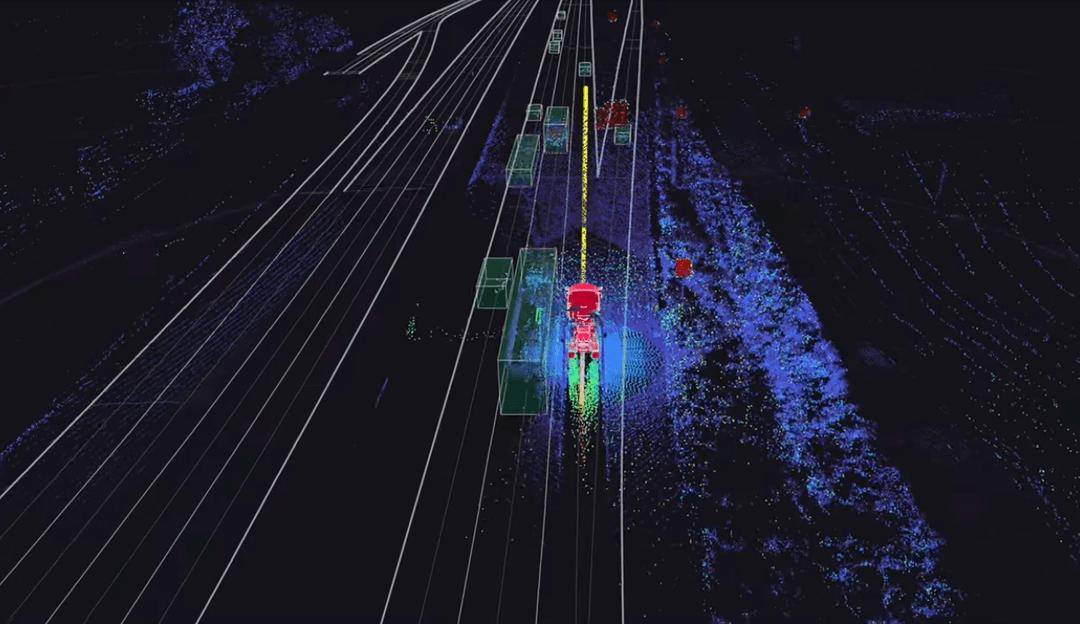
The first step is to determine whether a LiDAR sensor meets the actual requirements of the application.
Maximum detection range is one of the most visible specifications, but it should never be the only selection criterion.
Automotive engineering teams should evaluate the following parameters.
1.1 Detection Range and Target Reflectivity
LiDAR detection range is closely related to target reflectivity, environmental conditions, and the sensor’s detection methodology.
A quoted detection range at 80% reflectivity cannot be directly compared with a range measured at 10% reflectivity.
For meaningful comparisons, request:
- Detection range at 10% reflectivity
- Detection range at 50% reflectivity
- Detection range at 80% reflectivity, where available
- Target size and testing conditions
- Detection probability and measurement criteria, where documented
For automotive applications, understanding performance at lower reflectivity is particularly important because road users, dark-colored vehicles, and certain roadside objects may return weaker signals.
1.2 Field of View and Angular Resolution
Field of view determines how much of the surrounding environment a sensor can observe.
However, a wider field of view does not necessarily mean better perception performance.
Evaluate:
- Horizontal field of view
- Vertical field of view
- Horizontal angular resolution
- Vertical angular resolution
- Point cloud distribution
- Blind spots and mounting limitations
The appropriate configuration depends on the sensor’s position, vehicle architecture, and perception requirements.
1.3 Point Rate and Frame Rate
Point rate and frame rate influence how much spatial information a LiDAR system can provide over time.
Engineering teams should examine:
- Points per second
- Frame rate
- Scanning pattern
- Point cloud density at different distances
- Performance during vehicle movement
A higher point rate alone does not guarantee better object detection. The distribution of points across the field of view and the application-specific perception requirements must also be considered.
1.4 Measurement Accuracy and Environmental Performance
For automotive programs, measurement accuracy and operational stability are important evaluation criteria.
Request documented information about:
- Distance measurement accuracy
- Measurement repeatability
- Operating temperature range
- Ingress protection rating
- Vibration and shock specifications
- Electromagnetic compatibility documentation
- Environmental test conditions
The relevant requirements should be defined according to the intended installation location and vehicle-level validation process.
2. Assess Product Reliability and Automotive Application Suitability

A LiDAR sensor intended for a research platform may not automatically be suitable for a production-oriented automotive application.
OEMs and Tier 1 suppliers should distinguish between development hardware, industrial products, and automotive-oriented sensing platforms.
2.1 Verify the Intended Application
Ask the supplier and manufacturer to clarify:
- Intended application scenarios
- Product design and operating limitations
- Supported operating environments
- Available qualification and validation documentation
- Applicable automotive standards or compliance information
Do not assume that a product is automotive-qualified simply because it is marketed for automotive applications.
Request the actual documentation supporting any qualification or certification claim.
2.2 Review Product Lifecycle Information
Product lifecycle is particularly important for programs that require long development cycles and extended production support.
Before selecting a sensor, ask:
- Is the model currently in production?
- Is there an announced end-of-life date?
- Are hardware revisions planned?
- Will the manufacturer provide advance notice of product changes?
- Are compatible replacement models available?
- Can the supplier support future procurement requirements?
For example, if an automotive program completes its initial validation using one LiDAR model, an unexpected product discontinuation could create additional engineering and procurement work.
Lifecycle information should therefore be considered during the initial supplier evaluation, not after a purchase order is issued.
3. Evaluate Software Integration and Engineering Support
Hardware specifications are only one part of a LiDAR system.
Integration compatibility can significantly affect engineering workload, development schedules, and system stability.
3.1 Interface and Data Compatibility
Review the following technical information:
- Ethernet or other communication interfaces
- Data output format
- Point cloud compatibility
- SDK availability
- ROS and ROS 2 support
- Driver availability
- Configuration tools
- Time synchronization capabilities
For systems using multiple sensors, synchronization and timestamp accuracy may be especially important.
Where applicable, request documentation covering PTP, PPS, or other supported synchronization methods.
3.2 Request Technical Documentation Before Procurement
A professional LiDAR supplier should be able to help customers identify and obtain relevant technical documentation.
Depending on the product, this may include:
- Product datasheets
- User manuals
- Interface specifications
- SDK documentation
- Mechanical drawings
- Integration guides
- Firmware information
- Product revision details
For OEM and Tier 1 engineering teams, access to accurate documentation can help reduce evaluation time and avoid misunderstandings during integration.
3.3 Assess Technical Support Capabilities
Ask how technical questions will be handled throughout the project.
Important considerations include:
- Pre-purchase product selection assistance
- Engineering documentation support
- Integration troubleshooting
- Product configuration guidance
- Communication with the manufacturer when necessary
Technical support should be evaluated as part of the supplier relationship rather than treated as an optional service after purchasing.
4. Evaluate Supply Chain Capability and Production Readiness
For procurement managers, supply availability and delivery planning can be just as important as technical performance.
A supplier may successfully provide a few evaluation units but face different challenges when handling larger orders.
4.1 Verify Actual Product Availability
Before placing an order, request confirmation of:
- Available inventory
- Quantity immediately available
- Expected replenishment time
- Manufacturer production lead time
- Batch delivery options
- Shipment readiness
If the required quantity exceeds current inventory, a realistic delivery plan should be established before purchase approval.
4.2 Plan for Multi-Batch Deliveries
Some automotive and robotics projects do not require all sensors to arrive simultaneously.
A phased delivery arrangement may help coordinate:
- Engineering evaluation
- Prototype development
- Pilot production
- System validation
- Larger-volume deployment
For example, a project requiring 200 LiDAR units may arrange an initial batch for engineering validation followed by additional deliveries according to the production schedule.
The actual delivery quantities and dates should be confirmed against inventory and manufacturer supply arrangements.
4.3 Understand Long-Term Supply Risks
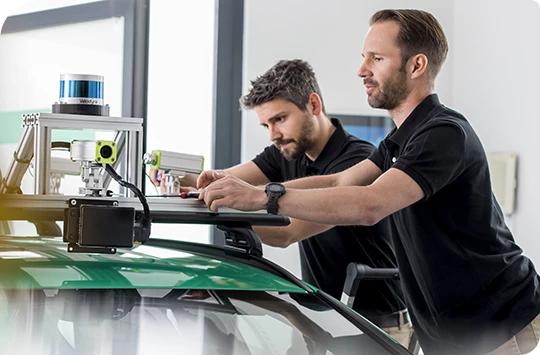
Procurement teams should evaluate potential supply risks, including:
- Product discontinuation
- Manufacturing capacity constraints
- Component shortages
- Model revisions
- Shipping delays
- Regional export and import requirements
A structured sourcing strategy can help reduce the risk of unexpected procurement interruptions.
5. Review Supplier Documentation, Traceability, and Product Authenticity
Supplier verification is an important part of corporate procurement, particularly for automotive and industrial customers.
Before approving a supplier, purchasing teams should establish whether the supplier can provide the documents required by their internal compliance process.
A typical documentation review may include:
| Documentation | Evaluation Purpose |
|---|---|
| Company registration information | Verify legal business identity |
| Commercial quotation | Confirm pricing and commercial terms |
| Product datasheet | Review technical specifications |
| Manufacturer documentation | Verify product information |
| Product model and revision details | Confirm the exact configuration |
| Warranty terms | Understand after-sales responsibilities |
| Shipping documentation | Support international logistics |
| Country of origin information | Support customs and compliance procedures |
| Product traceability information | Verify available batch and product records |
The exact documents depend on the product, transaction structure, destination market, and customer’s supplier approval requirements.
For products sourced through distribution or channel partners, it is particularly important to clarify the actual supply relationship and avoid making unsupported authorization claims.
6. Compare Total Procurement Cost Instead of Unit Price Alone
A lower quoted unit price does not always represent the lowest total procurement cost.
For international B2B transactions, purchasing teams should consider the complete commercial arrangement.
Important cost elements include:
- Product unit price
- International freight
- Insurance, where applicable
- Customs duties and import taxes
- Customs clearance charges
- Local delivery charges
- Payment terms
- Warranty and after-sales arrangements
Understanding DAP and DDP
For international shipments, the difference between DAP and DDP should be clearly understood.
Under DAP (Delivered at Place), the seller arranges transportation to the agreed destination, while the buyer generally handles import clearance and applicable import duties and taxes.
Under DDP (Delivered Duty Paid), the seller assumes responsibility for import clearance and applicable duties and taxes under the agreed Incoterms arrangement.
Procurement teams should confirm the named destination and the applicable Incoterms version in the quotation.
Clear commercial terms help prevent unexpected costs and delays.
7. Use a Structured LiDAR Supplier Evaluation Scorecard
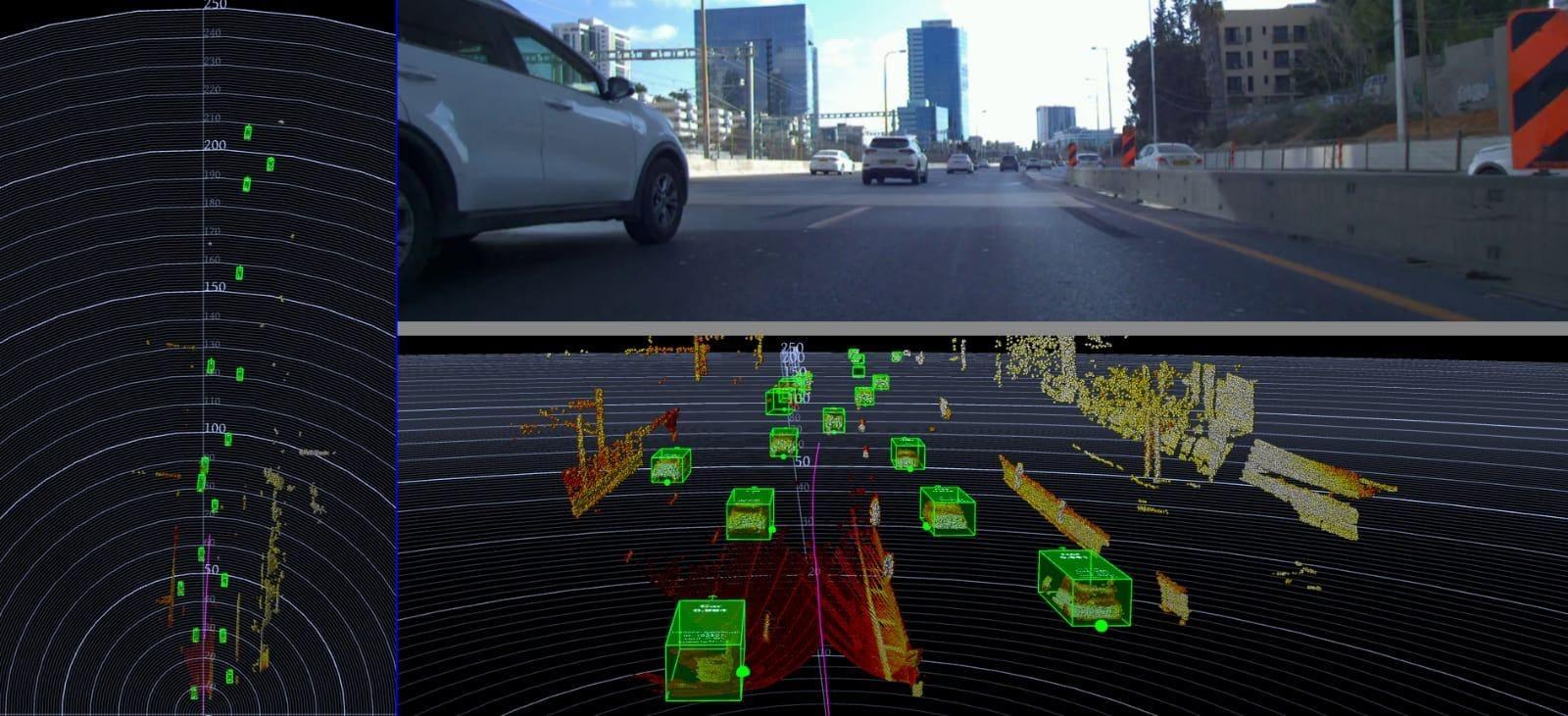
A standardized evaluation framework can help procurement and engineering teams compare suppliers objectively.
The following is an example of an internal evaluation model.
| Evaluation Category | Suggested Weight |
|---|---|
| Technical performance | 25% |
| Product reliability and lifecycle | 15% |
| Software and integration support | 15% |
| Supply chain and delivery capability | 20% |
| Documentation and traceability | 10% |
| Commercial competitiveness | 10% |
| Communication and after-sales support | 5% |
| Total | 100% |
The weighting should be adjusted according to the project.
For example, a long-term automotive production program may place greater emphasis on lifecycle and supply continuity, while an early-stage autonomous robotics project may prioritize integration flexibility.
A supplier should not be selected based solely on the final numerical score. Mandatory technical, quality, regulatory, and compliance requirements should be treated as pass/fail conditions where appropriate.
8. What Should Automotive OEMs Include in a LiDAR RFQ?
A clear Request for Quotation (RFQ) helps suppliers provide more accurate pricing, delivery estimates, and technical recommendations.
We recommend including the following information when requesting a quotation.
Project Information
- Company name
- Project or program name
- Application scenario
- Project development stage
- Destination country
Product Requirements
- Preferred manufacturer
- Required model
- Technical specifications
- Interface and integration requirements
- Required accessories
- Alternative model preferences
Procurement Requirements
- Initial order quantity
- Estimated annual demand
- Target delivery schedule
- Expected purchasing frequency
- Required warranty conditions
- Shipping destination
Technical Support Requirements
- Datasheet and manual requirements
- SDK or integration support
- Engineering consultation
- Product validation documentation
Providing this information allows suppliers to understand the project more accurately and reduces unnecessary quotation delays.
9. Why Multi-Brand LiDAR Sourcing Can Benefit OEM Procurement
Different automotive and robotics programs may require different LiDAR configurations.
Rather than relying on a single product family, procurement teams may benefit from evaluating multiple manufacturers according to their technical and commercial requirements.
Depending on the application, relevant manufacturers include:
- Hesai Technology
- RoboSense
- Seyond
- Livox
A multi-brand sourcing strategy can help purchasing teams compare product configurations, availability, pricing, and application suitability.
However, alternative products should never be considered automatically interchangeable.
Any replacement requires engineering evaluation covering mechanical compatibility, electrical interfaces, point cloud characteristics, software integration, and system-level validation.
For organizations managing multiple projects, a consolidated sourcing partner may also help coordinate product inquiries, technical documentation, and international procurement communication across several brands.
10. Working with LIDARSEEK for Professional LiDAR Sourcing
LIDARSEEK provides multi-brand LiDAR sourcing and technical support for international B2B customers working in automotive development, robotics, autonomous systems, and industrial automation.
Our product portfolio includes solutions from manufacturers such as Hesai, RoboSense, Seyond, and Livox.
We support customers with:
Multi-Brand Product Sourcing
Compare available LiDAR solutions across different manufacturers based on application requirements, specifications, and project budgets.
Technical Selection Assistance
Obtain product information and technical guidance to help identify suitable configurations for engineering evaluation.
Project-Based Quotations
Request pricing based on manufacturer, model, quantity, destination, and expected delivery schedule.
Availability and Delivery Coordination
Discuss available inventory, replenishment schedules, and potential phased delivery arrangements according to actual supply conditions.
International B2B Support
Coordinate product inquiries, documentation, commercial communication, and international shipping arrangements.
Our objective is to make LiDAR sourcing more efficient and transparent for engineering teams and procurement departments.
Whether you are evaluating a few sensors for an engineering program or planning larger-volume procurement, we welcome the opportunity to understand your requirements.
Conclusion: Select a LiDAR Supplier for the Entire Project Lifecycle
Choosing a LiDAR supplier for an automotive OEM or Tier 1 program requires more than comparing detection range and unit pricing.
A reliable sourcing decision should consider technical suitability, integration requirements, product lifecycle, documentation, supply availability, commercial transparency, and long-term support.
By evaluating these factors before issuing a purchase order, procurement and engineering teams can make better-informed decisions and reduce potential project risks.
Planning an automotive LiDAR procurement project?
Contact LIDARSEEK with your preferred manufacturer, model, estimated quantity, and delivery requirements.
Our team can help you review available product options and coordinate a project-based quotation.
Request a LiDAR Quotation: https://lidarseek.com/
Explore LiDAR Products: https://lidarseek.com/
Frequently Asked Questions
Q1: What should automotive OEMs look for when selecting a LiDAR supplier?
Automotive OEMs should evaluate technical performance, product reliability, lifecycle information, integration compatibility, documentation, supply chain capability, and commercial terms.
Q2: Should procurement teams evaluate LiDAR suppliers based on price alone?
No. Unit price is only one part of the purchasing decision. Product availability, delivery reliability, warranty conditions, documentation, and long-term sourcing risks should also be considered.
Q3: What documents should be requested from a LiDAR supplier?
Typical documents include product datasheets, user manuals, interface specifications, commercial quotations, warranty terms, and available product traceability or manufacturer documentation.
Q4: Can different LiDAR brands be used as alternatives in the same project?
Potentially, but alternatives require engineering validation. Differences in scanning patterns, interfaces, point cloud output, mechanical dimensions, and software compatibility must be reviewed.
Q5: Can LIDARSEEK support bulk LiDAR procurement?
LIDARSEEK supports multi-brand LiDAR sourcing and project-based quotations. Availability, quantities, lead times, and delivery arrangements are confirmed according to the specific product and order requirements.









