
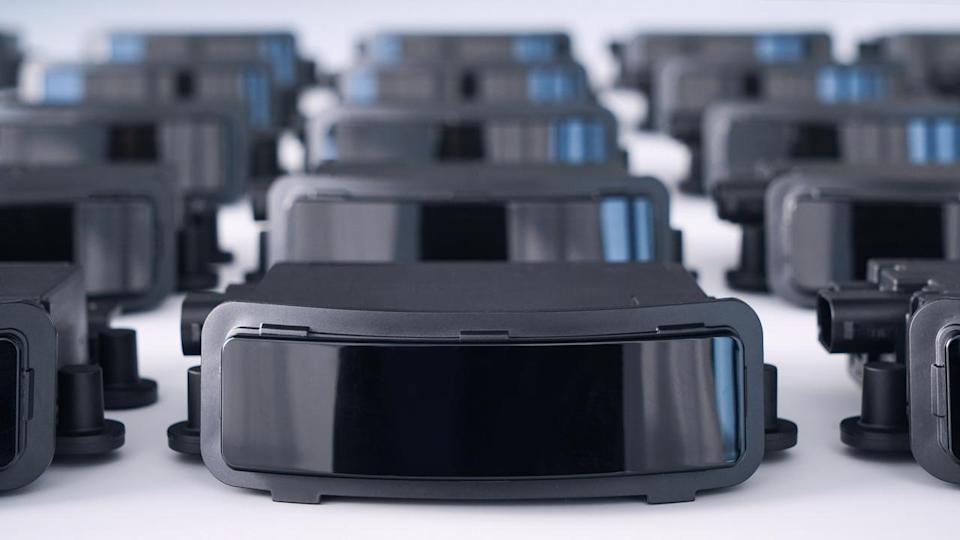
As LiDAR technology becomes increasingly important in automotive ADAS, autonomous driving, robotics, and industrial automation, the demand for reliable sensor procurement continues to grow.
For companies purchasing LiDAR sensors in larger quantities, sourcing decisions involve much more than obtaining a competitive unit price.
A bulk procurement project may involve multiple product models, different manufacturers, strict delivery schedules, technical documentation requirements, and coordination across international supply chains.
A delay in one critical sensor shipment can affect engineering validation, production planning, system integration, or an entire project milestone.
This is why enterprise buyers need a structured approach to LiDAR bulk purchasing.
In this guide, we examine the key factors procurement teams should consider when sourcing LiDAR sensors in volume, from supplier selection and price evaluation to inventory planning, delivery coordination, and long-term supply management.
1. Why LiDAR Bulk Procurement Requires a Different Strategy

Purchasing one or two sensors for engineering evaluation is relatively straightforward. Bulk procurement introduces additional challenges.
For example, an automotive supplier may require multiple automotive LiDAR units for testing and validation. A robotics manufacturer may need different sensor configurations across several AMR platforms. An industrial integrator may need to source multiple LiDAR models for a large deployment.
These projects often involve:
- Multiple part numbers and product configurations.
- Different manufacturers and supply channels.
- Large initial orders or recurring purchasing requirements.
- Delivery schedules linked to project milestones.
- Consistent product identification across batches.
- International transportation and customs procedures.
- Technical and after-sales coordination.
The procurement strategy should therefore be designed around the complete project requirement rather than focusing exclusively on the initial purchase price.
2. Understand Your Actual Procurement Requirements Before Requesting Quotes
One of the most common reasons for delays in B2B purchasing is incomplete procurement information.
Before contacting suppliers, buyers should prepare a clear product and quantity list.
Essential Information for a LiDAR Bulk RFQ
| Requirement | Information to Provide |
|---|---|
| Manufacturer | Hesai, RoboSense, Seyond, Livox, etc. |
| Part Number | Exact model and product code |
| Description | Product name and configuration |
| Quantity | Required number of units |
| Delivery Schedule | Required delivery date or batches |
| Destination | Country and delivery address |
| Application | Automotive, robotics, industrial, etc. |
| Documentation | Datasheets, manuals, quality documents |
| Commercial Terms | Currency, Incoterms, payment requirements |
For projects involving several models, an Excel RFQ is often the most efficient format.
It allows suppliers to review part numbers, quantities, and delivery requirements in a consistent structure.
Buyers should also distinguish between confirmed demand and estimated future demand. This helps suppliers provide more realistic sourcing and replenishment information.
3. Compare LiDAR Bulk Pricing Beyond the Unit Cost

Price is naturally an important factor in enterprise procurement.
However, the lowest quoted unit price does not always represent the most economical purchasing decision.
Bulk LiDAR quotations should be evaluated based on several commercial factors.
Factors That Affect LiDAR Bulk Pricing
Order Quantity
Pricing may vary depending on the number of units ordered, product availability, and manufacturer sourcing conditions.
Buyers should request quotations for realistic purchasing quantities rather than assuming that a large quantity automatically guarantees a particular discount.
Product Model and Configuration
Different LiDAR models have different technical specifications, manufacturing costs, and supply conditions.
Even products within the same manufacturer’s portfolio may have significantly different pricing structures.
Inventory and Procurement Conditions
A supplier holding available inventory may offer a different delivery schedule from one that needs to arrange replenishment.
The quotation should clarify whether the price is based on available stock, confirmed procurement, or an indicative sourcing estimate.
Shipping and Incoterms
International shipping costs can influence the total landed procurement cost.
Always confirm whether the quotation is EXW, FCA, FOB, CPT, CIP, DAP, or another agreed delivery term.
Compare Total Procurement Cost
A useful approach is to compare the following:
- Product unit price.
- Total product value.
- International freight.
- Export handling and packaging.
- Import duties and taxes.
- Customs clearance and local delivery costs.
- Warranty and after-sales conditions.
For DAP shipments, for example, the seller arranges delivery to the agreed destination, while the buyer generally handles import clearance and applicable import duties and taxes.
A transparent quotation should clearly explain which costs are included and which remain the buyer’s responsibility.
4. Verify Inventory Before Committing to a Large Order

Inventory confirmation is one of the most important steps in bulk procurement.
A supplier may provide an attractive quotation without having the full requested quantity immediately available.
This does not necessarily mean the supplier cannot fulfill the order, but buyers need to understand the actual supply arrangement.
Before issuing a purchase order, ask:
- How many units are physically available?
- Is the available quantity reserved for this order?
- Does the inventory match the required product version?
- What is the estimated replenishment time?
- Can the remaining quantity be delivered in subsequent batches?
- How long is the quoted inventory information valid?
For large procurement projects, it is useful to divide the supply plan into three categories:
| Supply Category | Description |
|---|---|
| Available Stock | Units confirmed as immediately available |
| Confirmed Replenishment | Units with an established procurement schedule |
| Future Supply | Estimated quantities requiring further confirmation |
This distinction helps procurement teams avoid treating estimated inventory as confirmed stock.
5. Plan Partial Shipments to Reduce Project Delays
Not every bulk order needs to arrive in one shipment.
For projects with strict deadlines, partial deliveries can provide a practical way to balance product availability and project requirements.
Consider an example:
An engineering company requires 100 LiDAR sensors for a development program.
Instead of waiting until all 100 units are ready, the procurement team may arrange:
- First shipment: 20 units for initial engineering integration.
- Second shipment: 30 units for system validation.
- Third shipment: 50 units for the remaining project requirement.
The actual quantities and schedule should be agreed upon with the supplier.
Benefits of Partial Delivery
- Earlier access to sensors for engineering teams.
- Better alignment with project milestones.
- Reduced need to wait for complete replenishment.
- More flexible inventory management.
- Better coordination between procurement and production.
However, buyers should confirm that different batches meet the same model, configuration, and applicable product requirements.
Freight costs and customs procedures should also be considered when dividing an order into multiple shipments.
6. Manage Product Lifecycle and Availability Risks
LiDAR product portfolios change over time.
Manufacturers may introduce upgraded models, revise hardware configurations, discontinue older products, or adjust production arrangements.
This creates potential risks for companies that rely on a specific sensor model throughout a long-term project.
Before committing to a large procurement program, buyers should confirm:
- Whether the requested model is currently in production.
- Whether the manufacturer has announced a product revision.
- Whether a newer model is available.
- Whether the original model has an announced end-of-life date.
- Whether alternative models can meet the project’s requirements.
- Whether software and mechanical compatibility are maintained.
For example, when a product is discontinued or upgraded, the replacement should not be assumed to be a direct drop-in alternative.
Engineering teams should verify differences in dimensions, interfaces, performance, SDK support, firmware, and system compatibility before approving a substitution.
A supplier that can provide timely product lifecycle information may help buyers reduce unexpected procurement disruptions.
7. Evaluate Supplier Reliability for Long-Term Supply
For enterprise procurement, the supplier relationship should be evaluated beyond the first transaction.
A supplier capable of delivering one small order may not necessarily have the processes required to coordinate recurring or larger purchases.
Consider the following factors:
Product Sourcing
Can the supplier explain its sourcing channels and confirm the availability of specific models?
Communication
Does the supplier provide clear answers about inventory, pricing, lead time, and delivery conditions?
Documentation
Can the supplier provide the applicable technical and commercial documents required for internal purchasing procedures?
Order Management
Can the supplier coordinate multiple part numbers, delivery batches, and shipment updates?
Technical Support
Can the supplier assist with product selection, documentation, and product-related technical inquiries?
After-Sales Coordination
Are warranty conditions and procedures for defective products clearly communicated?
These factors help procurement teams evaluate whether a supplier can support the wider project lifecycle.
8. Consider International Logistics and Import Requirements
International LiDAR procurement involves more than selecting a shipping carrier.
Depending on the destination and shipment structure, buyers may need to consider:
- Export documentation.
- Commercial invoices.
- Packing lists.
- Product descriptions and HS classification.
- Import regulations.
- Customs duties and taxes.
- Shipping insurance where applicable.
- Delivery address and consignee information.
For international quotations, provide the supplier with the complete delivery destination whenever possible.
This allows freight arrangements and estimated delivery costs to be evaluated more accurately.
Buyers should also clarify the shipping method and delivery term before confirming the purchase order.
For shipments to the United States, Europe, Southeast Asia, and other international destinations, import requirements and charges may differ.
Import classification and applicable duties should be verified for the specific product and destination rather than relying on a general estimate.
9. Build a Practical LiDAR Bulk Procurement Checklist
Before placing a large order, procurement teams can use the following checklist.
| Procurement Item | Verification |
|---|---|
| Exact manufacturer and part number | Confirmed |
| Required quantity | Confirmed |
| Product authenticity | Verification process agreed |
| Hardware configuration | Confirmed |
| Unit price and total value | Confirmed |
| Inventory status | Confirmed |
| Replenishment lead time | Confirmed |
| Partial delivery arrangement | Agreed if required |
| Product documentation | Availability confirmed |
| Warranty terms | Reviewed |
| Shipping method | Agreed |
| Incoterms | Confirmed |
| Delivery address | Confirmed |
| Payment terms | Agreed |
| After-sales contact | Established |
A documented checklist can reduce misunderstandings between purchasing, engineering, finance, and logistics teams.
10. Why Multi-Brand Sourcing Matters for Enterprise Buyers
Many organizations work with several LiDAR technologies and manufacturers across different projects.
For example:
- Automotive development teams may evaluate different long-range LiDAR solutions.
- AMR manufacturers may require 2D and 3D sensors for different navigation functions.
- Industrial integrators may need LiDAR products with different detection ranges and environmental specifications.
- Research teams may require multiple configurations for testing and development.
A multi-brand sourcing partner can help simplify quotation coordination and product selection across these requirements.
LIDARSEEK supports sourcing inquiries across multiple LiDAR brands and product categories, including:
- Hesai LiDAR
- RoboSense LiDAR
- Seyond LiDAR
- Livox LiDAR
- Other sensing and vision technologies
For procurement projects involving multiple products, buyers can submit a consolidated RFQ containing the required models, quantities, and destination information.
This provides a more efficient starting point for reviewing product availability, quotation options, and delivery arrangements.
Conclusion: Make LiDAR Bulk Procurement More Predictable
Successful LiDAR bulk purchasing requires a combination of technical understanding, commercial evaluation, inventory planning, and supply chain coordination.
For automotive manufacturers, robotics companies, and industrial integrators, a well-structured procurement process can help reduce delivery uncertainty, improve purchasing efficiency, and support long-term project planning.
Before selecting a supplier, make sure you understand the actual product sourcing conditions, available quantities, replenishment schedule, technical documentation, warranty terms, and international shipping arrangements.
The objective is not simply to obtain the lowest price.
It is to establish a reliable procurement process that supports your engineering and business requirements.
Need a LiDAR Bulk Quotation?
LIDARSEEK supports international customers sourcing LiDAR sensors for automotive, robotics, industrial automation, and other engineering applications.
Whether you need a small quantity for engineering evaluation or a larger multi-model procurement order, our team can assist with:
- Product and part number inquiries.
- Multi-brand LiDAR sourcing.
- Availability and lead-time checks.
- Bulk quotation coordination.
- Technical product information.
- International shipping arrangements.
Send us your RFQ with the required models, quantities, and delivery destination.
Contact LIDARSEEK to discuss your LiDAR procurement requirements.
Website: https://lidarseek.com/
Email: sales@lidarseek.com
Frequently Asked Questions
1. Can I purchase different LiDAR models in one bulk order?
This depends on product availability and sourcing arrangements. Multi-model RFQs can be submitted together so that each product and quantity can be reviewed separately.
2. Does ordering more LiDAR sensors always result in a lower price?
Not necessarily. Pricing depends on the manufacturer, model, quantity, availability, procurement conditions, and delivery requirements. Request a quotation based on your actual purchasing volume.
3. How can I confirm whether a supplier has sufficient inventory?
Ask for a current stock confirmation, the available quantity, product version, and whether the inventory can be reserved for your order.
4. Can a bulk LiDAR order be delivered in multiple batches?
Partial shipments may be possible depending on inventory and procurement arrangements. Delivery quantities, dates, and additional freight costs should be agreed upon in advance.
5. What happens if a LiDAR model is discontinued?
Ask about the manufacturer’s product lifecycle status and available replacement models. Any replacement should undergo engineering compatibility review before approval.
6. What information is required for an international LiDAR quotation?
Provide the model, quantity, destination country, complete delivery address where available, preferred shipping method, and required delivery date.
7. Can LIDARSEEK support recurring LiDAR procurement?
LIDARSEEK can review recurring procurement requirements based on product availability, sourcing conditions, quantities, and delivery schedules. Contact the team to discuss your specific purchasing plan.









