
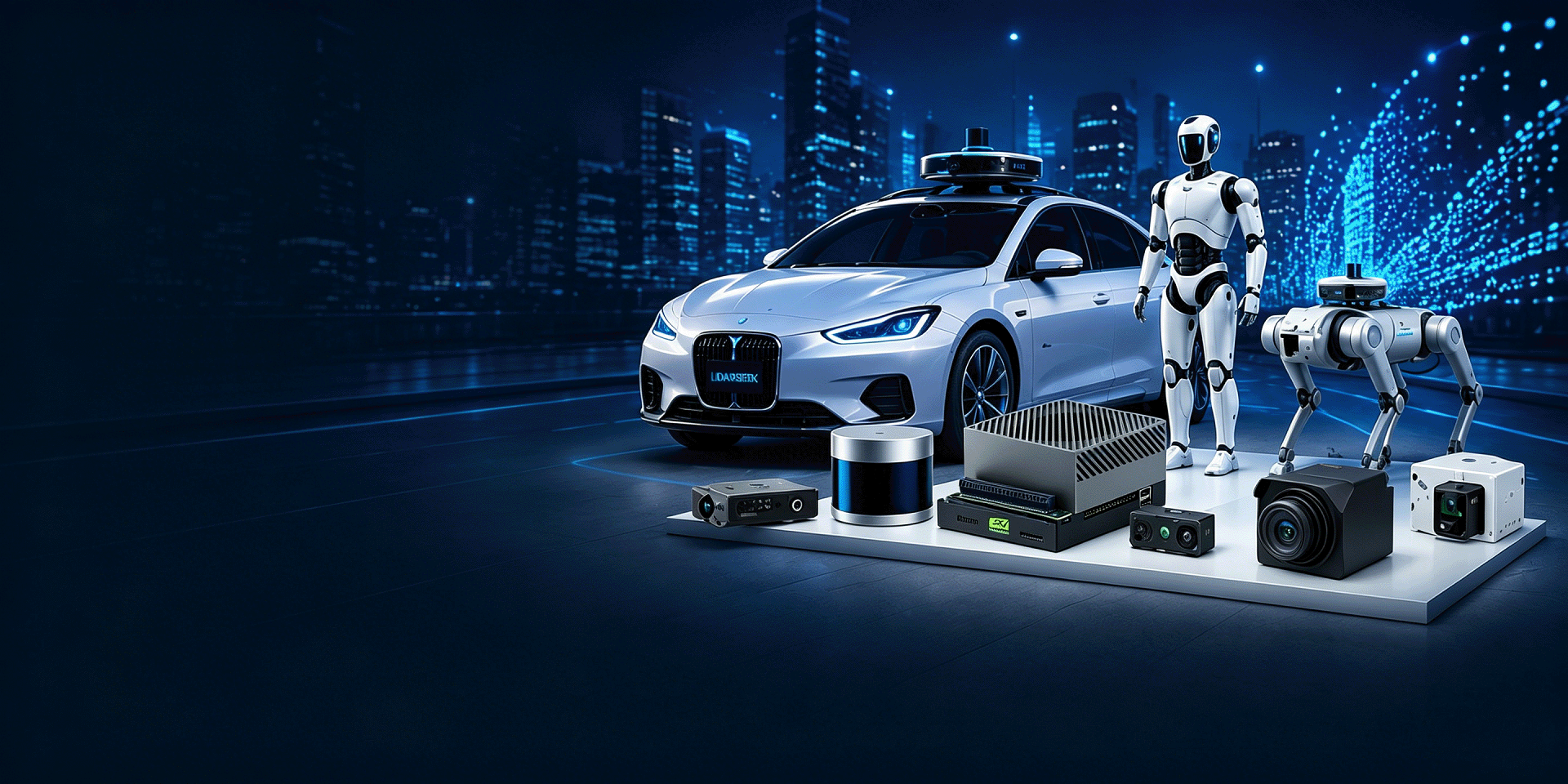
Building the Future of Intelligent Driving: How AI Computing Platforms, LiDAR Sensors, Cameras, and Development Kits Enable Autonomous Vehicles
The automotive industry is experiencing one of the most significant technological transformations in history. Vehicles are rapidly evolving from traditional transportation tools into intelligent mobile platforms capable of perceiving, understanding, and reacting to the world around them.
At the center of this transformation lies a powerful combination of technologies:
- AI Computing Platforms
- LiDAR Sensors
- Camera Sensors
- Development Kits
- Sensor Fusion Algorithms
- Artificial Intelligence
Together, these technologies form the foundation of modern intelligent driving systems.
As the industry moves toward L2+, L3, and L4 autonomous driving, perception accuracy and computing power have become the most critical factors determining system performance and safety.
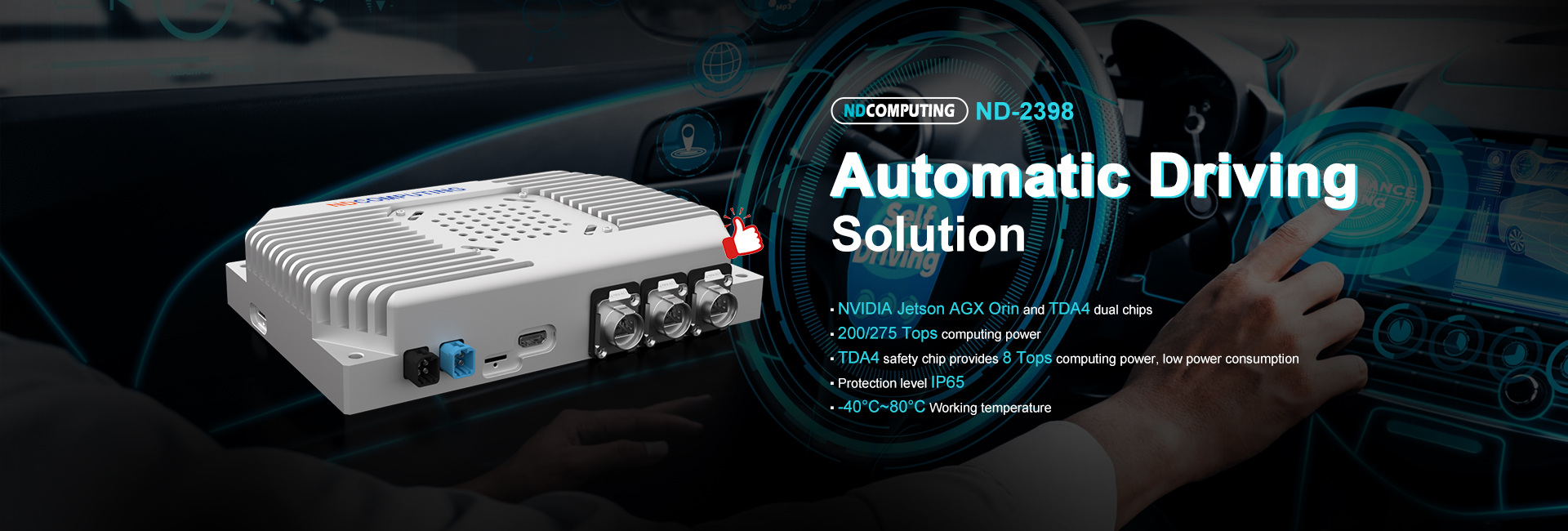
Among the latest innovations available to developers and automotive engineers is the ND-2398 Vehicle-Mounted AI Computing Platform, a high-performance edge computing solution designed to process massive amounts of sensor data in real time.
Combined with advanced LiDAR sensors and AI camera systems available through LidarSeek, the ND-2398 enables the development of next-generation intelligent vehicles capable of navigating increasingly complex environments.

Why AI Computing Is the Brain of Autonomous Driving
Many people view LiDAR and cameras as the most important components of autonomous driving.
While sensors provide the eyes of the vehicle, they cannot make decisions.
The true intelligence resides in the computing platform.
Every second, an intelligent vehicle generates enormous volumes of data:
LiDAR Data
Millions of point cloud points.
Camera Data
Multiple high-resolution image streams.
GPS Data
Position information.
IMU Data
Vehicle motion and orientation.
Radar Data
Velocity and object tracking.
All of this information must be processed simultaneously.
Without sufficient computing power, autonomous driving systems cannot operate effectively.
This is why AI computing platforms have become the foundation of modern intelligent vehicles.
Understanding the ND-2398 Vehicle-Mounted AI Computing Platform
The ND-2398 represents a new generation of automotive AI computing hardware designed specifically for intelligent mobility applications.

Product Page:
The platform serves as the central processing unit for autonomous driving systems.
Its primary responsibilities include:
Sensor Fusion
Combining data from LiDAR, cameras, radar, GPS, and IMU systems.
Environmental Perception
Creating a real-time understanding of surrounding conditions.
Object Recognition
Identifying vehicles, pedestrians, cyclists, and road infrastructure.
Localization
Determining the vehicle’s precise location.
Path Planning
Selecting safe and efficient routes.
Decision Making
Executing driving actions in real time.
The ability to perform these tasks simultaneously makes advanced computing platforms indispensable for intelligent transportation.
Why LiDAR Sensors Remain Essential
One of the biggest debates in autonomous driving concerns the role of LiDAR.
Some companies advocate vision-only systems.
However, most advanced autonomous vehicle developers continue to rely on LiDAR technology because it provides accurate three-dimensional spatial information.
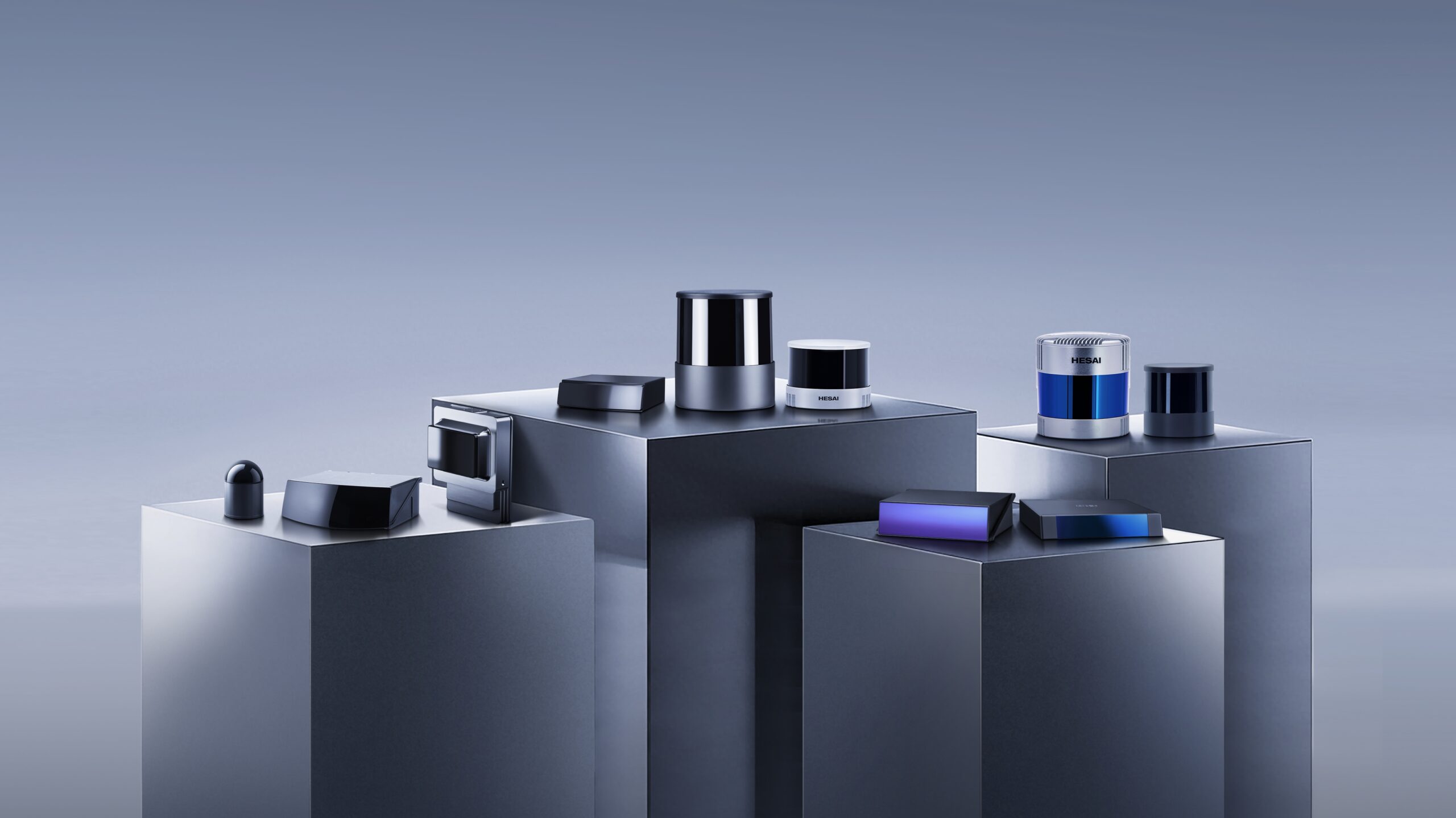
Explore LiDAR Products:
https://lidarseek.com/product-category/lidar-sensor
Unlike cameras, LiDAR actively measures distance.
This allows vehicles to:
- Detect obstacles
- Measure object positions
- Create 3D maps
- Understand environmental geometry
- Navigate complex environments
with exceptional accuracy.
How LiDAR Works
LiDAR stands for Light Detection and Ranging.
The technology operates by emitting laser pulses and measuring the time required for reflections to return.
This process generates highly detailed point clouds representing the environment.
Modern automotive LiDAR sensors can detect:
- Vehicles
- Pedestrians
- Cyclists
- Road signs
- Lane boundaries
- Infrastructure
in real time.
These capabilities make LiDAR one of the most important perception technologies available today.
Camera Sensors: Giving Vehicles Human-Like Vision
While LiDAR excels at distance measurement and spatial understanding, camera sensors provide visual context.

Explore Camera Sensors:
https://lidarseek.com/product-category/camera-sensor
Camera systems enable vehicles to recognize:
Traffic Signs
Speed limits and road instructions.
Traffic Lights
Signal state detection.
Lane Markings
Road boundary recognition.
Pedestrians
Human detection and classification.
Vehicles
Object recognition and tracking.
Road Conditions
Surface analysis and hazard identification.
Modern intelligent vehicles typically employ multiple camera sensors to achieve 360-degree environmental awareness.
Why Camera Sensors Alone Are Not Enough
Although cameras provide rich visual information, they face several limitations.
Performance can degrade due to:
- Darkness
- Fog
- Snow
- Rain
- Glare
- Shadows
LiDAR complements cameras by providing accurate spatial measurements independent of ambient lighting conditions.
This is why most advanced autonomous driving architectures rely on sensor fusion.
The Power of Sensor Fusion
Sensor fusion combines data from multiple sensors to create a comprehensive understanding of the environment.
A typical intelligent vehicle may integrate:
- LiDAR Sensors
- AI Cameras
- Radar Systems
- GPS
- IMU
- AI Computing Platform
Each sensor contributes unique strengths.
The ND-2398 processes and fuses this information in real time, enabling more accurate decision-making.
The result is significantly improved:
- Safety
- Reliability
- Perception accuracy
- Navigation performance
Development Kits Accelerate Innovation
Building autonomous driving systems requires more than sensors and computing platforms.
Developers also need powerful development environments.
Explore Development Kits:
https://lidarseek.com/product-category/development-kit
Development kits enable engineers to:
- Prototype autonomous systems
- Test AI algorithms
- Integrate sensors
- Train machine learning models
- Accelerate product development
These platforms significantly reduce development time while improving engineering efficiency.
NVIDIA Jetson and Edge AI Development
Many autonomous driving developers rely on NVIDIA-based development platforms.
Jetson development kits provide:
- GPU acceleration
- AI inference
- Deep learning support
- Computer vision processing
- Robotics development
These capabilities make them ideal companions for LiDAR sensors and camera systems.
The combination of:
- ND-2398
- LiDAR
- Cameras
- Jetson Development Kits
creates a complete intelligent driving ecosystem.
Why LidarSeek Offers a Complete Autonomous Driving Ecosystem
Unlike traditional sensor suppliers, LidarSeek provides a comprehensive ecosystem covering:
Perception
LiDAR Sensors
Vision
Camera Sensors
Computing
AI Computing Platforms
Development
Development Kits
Robotics
Embodied AI Solutions
Autonomous Driving
ADAS and Intelligent Mobility Technologies
This integrated approach allows developers to source all critical components from a single platform.
L2, L3, and L4 Autonomous Driving: Understanding the Evolution of Intelligent Vehicles
The journey toward fully autonomous driving is occurring in stages.
Each level introduces greater intelligence, higher automation, and increased dependence on advanced sensing technologies.
Level 2: Advanced Driver Assistance
L2 systems assist drivers with:
- Adaptive Cruise Control
- Lane Keeping Assist
- Automatic Emergency Braking
- Traffic Jam Assist
At this stage, the driver remains responsible for vehicle operation.
LiDAR sensors improve L2 performance by providing accurate environmental awareness, particularly in challenging traffic conditions.
Level 3: Conditional Automation
L3 autonomous driving allows vehicles to perform driving tasks under specific conditions.
The vehicle must continuously monitor:
- Road geometry
- Traffic participants
- Obstacles
- Weather conditions
This level requires powerful AI computing platforms such as the ND-2398 and advanced sensor fusion technologies.
Level 4: High Automation
L4 vehicles can operate independently within designated operational environments.
Applications include:
- Robotaxis
- Autonomous Logistics Vehicles
- Autonomous Shuttle Buses
- Smart Mining Trucks
- Industrial Transportation Vehicles
Achieving L4 autonomy requires the seamless integration of:
- LiDAR Sensors
- Camera Sensors
- Radar Systems
- AI Computing Platforms
- Development Kits
Building an Intellig
Building an Intelligent Driving Architecture
Modern autonomous vehicles are no longer built around a single sensor.
Instead, they operate using a layered architecture.
Perception Layer
Responsible for understanding the environment.
Components:
LiDAR Sensors
https://lidarseek.com/product-category/lidar-sensor
Examples include:
- Hesai AT128
- Seyond Falcon K
- RoboSense Helios
- Livox Mid-360
- LSLiDAR CH Series
Functions:
- Point cloud generation
- Obstacle detection
- 3D mapping
- Free-space recognition
Camera Sensors
https://lidarseek.com/product-category/camera-sensor
Functions:
- Traffic sign recognition
- Traffic light detection
- Lane recognition
- Object classification
Together, LiDAR and cameras provide complementary environmental information.
Computing Layer
Responsible for processing sensor data.
The ND-2398 Vehicle-Mounted AI Computing Platform serves as the brain of the autonomous vehicle.
Functions include:
- AI inference
- Sensor fusion
- Deep learning acceleration
- Object tracking
- Route planning
- Autonomous decision-making
Without sufficient computing power, autonomous systems cannot operate effectively.
Development Layer
Responsible for innovation and system integration.
Development Kits:
https://lidarseek.com/product-category/development-kit
These platforms help engineers:
- Build prototypes
- Develop AI models
- Test autonomous algorithms
- Simulate real-world environments
- Accelerate deployment
Popular applications include:
- Autonomous Driving Research
- Robotics Development
- AI Vision Systems
- SLAM Algorithms
- Edge AI Computing
Robotaxis: The Ultimate Autonomous Driving Challenge
Robotaxis represent one of the most demanding autonomous driving scenarios.
Unlike private vehicles, robotaxis operate continuously and encounter highly dynamic environments.
Challenges include:
- Dense urban traffic
- Pedestrian crossings
- Construction zones
- Temporary road changes
- Complex intersections
To navigate safely, robotaxis require:
Long-Range LiDAR
Detecting objects hundreds of meters away.
Multi-Camera Systems
Providing visual understanding.
High-Performance AI Computing
Processing enormous amounts of sensor data.
Reliable Development Platforms
Supporting continuous software improvements.
This combination creates a scalable autonomous transportation ecosystem.
Autonomous Logistics Vehicles
The logistics industry is undergoing rapid transformation.
Autonomous delivery vehicles are becoming increasingly common in:
- Distribution Centers
- Airports
- Ports
- Industrial Parks
- Smart Warehouses
These vehicles depend on:
LiDAR Sensors
For obstacle detection and navigation.
Camera Systems
For object classification.
AI Computing Platforms
For decision-making.
Development Kits
For system customization.
Benefits include:
- Increased efficiency
- Reduced labor costs
- Improved safety
- Continuous operation
Humanoid Robots and Embodied AI
The future of autonomous perception extends beyond vehicles.
Humanoid robots are rapidly emerging as a major application area for LiDAR and AI computing technologies.
Modern humanoid robots require:
Environmental Awareness
Understanding surroundings in real time.
Human Detection
Recognizing and interacting with people.
Navigation
Moving safely through complex environments.
Spatial Understanding
Building accurate 3D maps.
The same LiDAR sensors used in autonomous vehicles can provide critical perception capabilities for embodied AI systems.
Combined with AI computing platforms and development kits, these robots can perform increasingly sophisticated tasks.
Robot Dogs and Intelligent Inspection
Robot dogs are transforming industrial inspection.
Applications include:
- Oil and Gas Facilities
- Power Plants
- Manufacturing Sites
- Warehouses
- Security Patrol
These platforms rely heavily on:
LiDAR Sensors
Providing obstacle detection and mapping.
Cameras
Supporting visual inspection.
AI Computing
Enabling autonomous decision-making.
Development Kits
Accelerating application development.
The result is improved safety, efficiency, and operational reliability.
Smart Cities and Intelligent Transportation
Autonomous perception technologies are also driving the development of smart cities.
Applications include:
Intelligent Traffic Management
Monitoring traffic flow.
Smart Intersections
Improving road safety.
Infrastructure Inspection
Monitoring roads and bridges.
Digital Twins
Creating virtual city models.
LiDAR sensors provide highly accurate environmental data that supports these initiatives.
AI computing platforms process this information and transform it into actionable insights.
Recommended Product Stack from LidarSeek
For developers building intelligent driving systems, the following architecture is recommended:
AI Computing Platform
ND-2398 Vehicle-Mounted AI Computing Platform
LiDAR Sensors
https://lidarseek.com/product-category/lidar-sensor
Recommended:
- Hesai AT128
- Seyond Falcon K
- RoboSense Helios
- Livox Mid-360
Camera Sensors
https://lidarseek.com/product-category/camera-sensor
Applications:
- ADAS
- Vision Perception
- Object Recognition
- Driver Monitoring
Development Kits
https://lidarseek.com/product-category/development-kit
Applications:
- AI Model Training
- Sensor Integration
- Autonomous Vehicle Development
- Robotics Research
This combination creates a complete autonomous driving ecosystem.
Frequently Asked Questions (FAQ)
1. What is an AI computing platform in autonomous driving?
An AI computing platform processes data from LiDAR, cameras, radar, and other sensors to support autonomous driving decisions.
2. Why are LiDAR sensors important for intelligent vehicles?
LiDAR provides accurate 3D environmental perception, enabling safer navigation and obstacle detection.
3. Can autonomous vehicles rely only on cameras?
Most advanced autonomous systems use sensor fusion because cameras alone have limitations in certain environments.
4. What is sensor fusion?
Sensor fusion combines data from LiDAR, cameras, radar, GPS, and IMU systems to improve perception accuracy.
5. What is the role of development kits?
Development kits help engineers build, test, and deploy autonomous driving applications.
6. What industries use LiDAR technology?
Automotive, robotics, logistics, smart cities, industrial automation, agriculture, and infrastructure inspection.
7. What is the difference between L2 and L4 autonomous driving?
L2 requires driver supervision, while L4 vehicles can operate independently within defined environments.
8. Can LiDAR be used in robotics?
Yes. LiDAR is widely used in autonomous mobile robots, robot dogs, and humanoid robots.
9. Why do robotaxis need LiDAR?
LiDAR provides accurate perception of pedestrians, vehicles, and road conditions in real time.
10. What development kits are commonly used for autonomous driving?
AI development kits based on NVIDIA Jetson and other edge computing platforms are widely used.
11. What are the advantages of combining LiDAR and cameras?
LiDAR provides distance measurements, while cameras provide visual understanding.
12. How does AI computing improve autonomous driving?
It enables real-time perception, object recognition, path planning, and autonomous decision-making.
13. What products does LidarSeek provide?
LidarSeek offers LiDAR sensors, camera sensors, AI computing platforms, development kits, robotics products, and autonomous driving solutions.
14. Which LiDAR sensor is best for ADAS?
Popular choices include Hesai AT128, Seyond Falcon K, RoboSense Helios, and Livox Mid-360, depending on application requirements.
15. Where can I find autonomous driving hardware?
Visit the LidarSeek shop:
Conclusion
The future of intelligent transportation is being built on three foundational technologies: LiDAR sensors, AI camera systems, and high-performance computing platforms. While sensors act as the eyes of an autonomous vehicle, computing platforms such as the ND-2398 Vehicle-Mounted AI Computing Platform serve as the brain, transforming raw sensor data into intelligent driving decisions.
By combining advanced LiDAR sensors, camera sensors, and development kits, engineers can accelerate the development of safer ADAS systems, autonomous vehicles, robotaxis, intelligent robots, and smart transportation infrastructure.
As the industry moves toward L3 and L4 autonomy, organizations that invest in integrated perception ecosystems will be best positioned to lead the next generation of intelligent mobility. LidarSeek provides a complete platform for developers, researchers, and enterprises seeking cutting-edge solutions for autonomous driving, robotics, and AI-powered perception systems.









