
Introduction: Buying LiDAR Sensors Is More Than Comparing Specifications

For automotive OEMs, Tier 1 suppliers, robotics manufacturers, and industrial automation companies, selecting a LiDAR supplier is a decision that can affect product quality, project schedules, manufacturing efficiency, and long-term supply stability.
During the early development stage, purchasing a small number of LiDAR sensors for evaluation is relatively straightforward. However, the requirements become considerably more demanding when a project moves toward pilot production or large-scale deployment.
A supplier that can deliver five evaluation units may not necessarily be able to support hundreds of sensors across multiple purchasing batches with consistent configurations, reliable delivery schedules, and appropriate technical documentation.
For enterprise procurement teams, the real challenge is therefore not simply finding a competitive LiDAR price. It is identifying a supplier capable of supporting the project’s technical, commercial, and operational requirements.
Before approving a LiDAR supplier or issuing a bulk purchase order, buyers should evaluate several critical areas:
- Product specification and configuration consistency
- Manufacturing quality and inspection procedures
- Serial number and product traceability
- Hardware and firmware revision management
- Technical documentation and compliance requirements
- Inventory availability and production lead times
- Batch delivery and logistics arrangements
- Warranty and technical support responsibilities
This article provides a practical 12-point LiDAR supplier quality assurance checklist for enterprise procurement teams, engineering managers, and supply chain professionals.
1. Verify the Exact Product Model and Technical Configuration
The first step in LiDAR procurement is confirming that the proposed product matches the project’s actual technical requirements.
A product name alone is not sufficient to establish technical compatibility.
Even within the same product family, different configurations, interfaces, firmware versions, or hardware revisions may affect system integration.
Before approving a quotation, procurement and engineering teams should verify:
| Verification Item | What Buyers Should Confirm |
|---|---|
| Manufacturer | Original product manufacturer |
| Model Number | Exact product model and part number |
| Detection Range | Range under the manufacturer’s specified test conditions |
| Field of View | Horizontal and vertical coverage |
| Measurement Accuracy | Applicable accuracy specifications |
| Point Cloud Output | Data characteristics and output format |
| Frame Rate | Supported scanning or output frequency |
| Interface | Ethernet, CAN, or other supported interfaces |
| Power Requirements | Input voltage and power consumption |
| Environmental Rating | Operating temperature and protection rating |
For automotive and robotics applications, interface compatibility and point cloud characteristics are particularly important.
A sensor that meets the nominal detection range requirement may still be unsuitable if its field of view, communication protocol, mounting dimensions, or data output does not match the existing system architecture.
Procurement recommendation: Request the manufacturer’s latest datasheet and technical documentation for the exact model being quoted. Have the engineering team confirm compatibility before commercial approval.
2. Evaluate Product Quality Consistency Across Multiple Batches
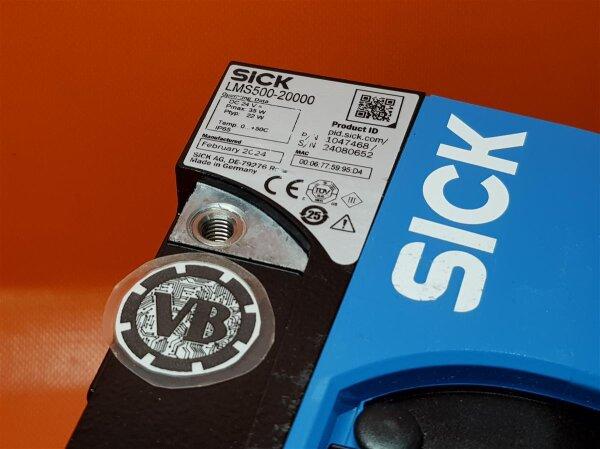
Batch consistency is one of the most important considerations when transitioning from prototype development to commercial production.
Consider a robotics manufacturer purchasing 10 LiDAR sensors for initial system validation, followed by 100 units for pilot production and additional quantities for commercial deployment.
The buyer needs to understand whether subsequent deliveries will maintain the approved product specifications and configuration.
Key verification areas include:
- Consistency of product model and part number
- Hardware revision identification
- Firmware version and configuration
- Electrical and mechanical specifications
- Communication interface compatibility
- Manufacturer product change notifications
It is important to distinguish between specification compliance and batch consistency.
A product may meet its published specifications while still requiring configuration verification to ensure compatibility with previously validated systems.
For projects with strict engineering requirements, buyers should establish an approved product configuration before placing repeat orders.
Where applicable, suppliers should confirm whether the requested configuration can be maintained across the planned delivery batches.
3. Check Serial Number Identification and Product Traceability
Product traceability becomes increasingly important when LiDAR sensors are deployed across multiple vehicles, robots, production lines, or industrial facilities.
If a technical issue occurs after installation, engineering and quality teams may need to identify the affected units and investigate whether the problem is related to a specific production batch, hardware revision, or firmware configuration.
Buyers should clarify what identification information is available.
| Traceability Information | Procurement Importance |
|---|---|
| Serial Number | Individual product identification |
| Product Model | Configuration confirmation |
| Hardware Revision | Identification of hardware changes |
| Firmware Version | Software compatibility investigation |
| Batch Information | Production or delivery grouping |
| Purchase Order Reference | Commercial order traceability |
| Warranty Records | After-sales claim management |
Not all manufacturers provide identical traceability records.
Therefore, procurement teams should define their documentation requirements according to the project’s quality management procedures.
For automotive and industrial projects, traceability expectations should be established before supplier approval rather than after products have been delivered.
4. Understand the Supplier’s Quality Inspection Procedures
A reliable procurement process requires clear inspection responsibilities.
Enterprise buyers should determine which quality checks are performed by the original manufacturer and which additional checks, if any, are performed by the distributor or sourcing partner before shipment.
This distinction is important because supplier-level shipment verification should not automatically be interpreted as full manufacturer production testing.
A practical inspection framework may include three stages.
Stage A: Incoming inspection
- Quantity verification
- Model and part number verification
- Serial number recording
- Packaging condition inspection
- Accessory and cable verification
Stage B: Functional verification
Where agreed and technically appropriate:
- Power-on checks
- Communication interface verification
- Data output verification
- Point cloud output checks
- Firmware and configuration confirmation
Stage C: Documentation verification
- Datasheet and model confirmation
- User manual availability
- Applicable technical documentation
- Warranty information
- Inspection records, where available
The inspection scope should be agreed upon before the purchase order is issued.
For projects requiring formal acceptance testing, buyers should establish measurable acceptance criteria and clarify whether additional manufacturer testing or third-party inspection is necessary.
5. Establish Hardware and Firmware Revision Control
Hardware and firmware changes can create unexpected integration problems during long-term projects.
For example, a robotics company may validate a particular LiDAR configuration during prototype development. Several months later, the next purchasing batch may involve a different hardware or firmware revision.
Even when the product model remains unchanged, relevant revisions may affect:
- Communication behavior
- Data output formats
- Software compatibility
- Configuration parameters
- Available functions
- Electrical or mechanical interfaces
Before placing repeat orders, procurement teams should confirm:
- Whether the product revision has changed.
- Whether the firmware version matches the approved configuration.
- Whether any changes affect system integration.
- Whether updated technical documentation is available.
- Whether the manufacturer provides product change notifications.
For applications with strict validation requirements, buyers should request written confirmation of relevant changes.
This is particularly important for automotive development programs, autonomous mobile robots, and industrial systems where changing a validated component may require additional engineering work.
6. Verify Technical Documentation and Compliance Requirements
Supplier qualification often requires more than a product quotation.
Depending on the project and destination market, procurement, engineering, and quality departments may request several supporting documents.
A typical documentation review includes:
| Document | Purpose |
|---|---|
| Product Datasheet | Technical specification verification |
| User Manual | Installation and operating instructions |
| Interface Documentation | Electrical and software integration |
| Mechanical Drawings | Mounting and mechanical compatibility |
| Warranty Terms | Commercial and after-sales responsibilities |
| Country of Origin Information | Import and customs procedures |
| Applicable Compliance Documents | Regulatory and customer review |
| Inspection Records | Quality verification, where available |
For automotive OEM and Tier 1 projects, additional supplier qualification documents or project-specific validation records may be required.
Buyers should also distinguish between manufacturer-issued certificates, product declarations, and general technical documents.
A supplier should only confirm certifications that are supported by valid documentation for the relevant product.
Procurement recommendation: Prepare a document checklist during the supplier evaluation stage. This helps prevent delays when the purchase order enters internal approval.
7. Assess Inventory Availability and Manufacturing Lead Time
A competitive quotation is not sufficient if the supplier cannot support the required delivery schedule.
For enterprise LiDAR procurement, buyers should distinguish between:
- Physically available inventory
- Inventory reserved for confirmed orders
- Manufacturer production lead time
- Estimated replenishment time
- Unconfirmed future availability
These categories should not be treated as interchangeable.
For example, a supplier may have sufficient inventory for an initial evaluation order but require additional production time for the next purchasing phase.
Before confirming an order, request:
- Current available quantity
- Expected dispatch date
- Estimated manufacturing lead time for additional units
- Replenishment schedule
- Partial shipment possibilities
- Any known product lifecycle or discontinuation information
For large-volume projects, inventory and lead-time confirmation should be based on the actual quantity required, not just the initial sample order.
A realistic supply commitment is more valuable than an attractive quotation supported by an unverified delivery promise.
8. Evaluate Batch Delivery and International Logistics Capabilities
Large enterprise projects often require products to arrive according to different development or production milestones.
Instead of purchasing and receiving the entire quantity at once, some buyers prefer phased deliveries.
For example:
| Project Stage | Illustrative Quantity | Delivery Consideration |
|---|---|---|
| Engineering Evaluation | 5 units | Initial sample delivery |
| Prototype Development | 20 units | Follow-up supply |
| Pilot Production | 100 units | Coordinated batch delivery |
| Commercial Deployment | 500 units | Planned supply schedule |
These figures are illustrative only.
For international shipments, buyers should confirm:
- Shipping method and estimated transit time
- Shipment origin and destination
- Packaging requirements
- Export documentation
- Import clearance responsibilities
- Applicable customs duties and taxes
- Delivery terms under the agreed Incoterms
For example, under DAP Incoterms, the seller arranges transportation to the agreed destination, while the buyer is generally responsible for import clearance and applicable import duties and taxes.
For projects with strict delivery milestones, procurement teams should also clarify how delays, partial shipments, and delivery schedule changes will be communicated.
9. Review Warranty Coverage and RMA Procedures
Warranty conditions should be reviewed before purchase rather than when a product problem occurs.
Enterprise buyers should clarify the following:
Warranty coverage
- Warranty period
- Warranty commencement date
- Covered product defects
- Exclusions and limitations
- Repair or replacement arrangements
RMA procedures
- How to submit a warranty claim
- What diagnostic information is required
- Return shipping responsibilities
- Product evaluation procedures
- Expected processing timelines
After-sales support
- Technical troubleshooting
- Firmware and software documentation
- Integration guidance
- Communication interface assistance
- Escalation procedures for unresolved problems
For international projects, the buyer should also understand whether warranty claims are handled directly by the manufacturer or through the supplier.
Clear warranty and RMA procedures help reduce uncertainty and improve coordination when products are deployed across different locations.
10. Evaluate Technical Support and Integration Capabilities
LiDAR procurement is not always a straightforward purchasing transaction.
In many projects, sensors must be integrated into complex systems involving vehicle platforms, robotic controllers, perception software, industrial networks, and other hardware components.
As a result, technical support can become an important part of the supplier evaluation process.
Before approving a supplier, consider whether it can assist with:
- Product selection based on application requirements
- Interface and communication documentation
- SDK and software resource availability
- Point cloud data interpretation
- Basic integration troubleshooting
- Product configuration questions
- Coordination with the original manufacturer when necessary
Procurement teams should also clarify the scope of technical support.
For example, providing product documentation and basic integration assistance is different from undertaking complete system development or guaranteeing application-level performance.
Clear expectations help both parties establish a more effective technical support relationship.
11. Compare Total Cost of Ownership Instead of Unit Price Alone
The lowest unit price does not necessarily represent the most economical procurement decision.
For enterprise projects, additional expenses may arise from logistics, customs clearance, inspection, engineering integration, warranty handling, and unexpected delivery delays.
A more complete commercial evaluation should consider:
| Cost Component | Potential Impact |
|---|---|
| Unit Purchase Price | Initial procurement expenditure |
| International Freight | Transportation expenses |
| Import Duties and Taxes | Destination-related costs |
| Inspection | Incoming quality verification |
| Integration | Engineering and development resources |
| Replacement | Defective product handling |
| Delivery Delays | Production and project schedule risks |
| Technical Support | Long-term engineering resources |
When comparing quotations, procurement teams should also ensure that all suppliers are quoting the same product model, configuration, quantity, delivery terms, and warranty conditions.
Otherwise, apparently lower prices may reflect different commercial or technical assumptions.
A standardized RFQ comparison provides a much more reliable basis for supplier selection.
12. Use a Structured LiDAR Supplier Qualification Checklist
Before approving a new supplier or issuing a bulk purchase order, procurement teams can use the following checklist.
| Evaluation Category | Questions to Ask |
|---|---|
| Product Specifications | Does the exact model meet engineering requirements? |
| Manufacturer Source | Can the product source be verified? |
| Batch Consistency | Can approved configurations be maintained? |
| Traceability | Are serial numbers and relevant revision details available? |
| Quality Inspection | What checks are performed before shipment? |
| Documentation | Which technical and commercial documents are available? |
| Revision Management | How are hardware and firmware changes communicated? |
| Inventory | Is the required quantity physically available? |
| Lead Time | Can the delivery schedule be supported? |
| Logistics | Are shipping and import responsibilities clear? |
| Warranty | Are warranty and RMA procedures documented? |
| Technical Support | Can the supplier assist with product evaluation and integration questions? |
Not every project requires the same level of supplier qualification.
A prototype project may require basic product verification and technical documentation, while an automotive OEM or large industrial deployment may require more extensive traceability, validation, quality records, and change management.
The objective is to match the supplier evaluation process to the actual technical and commercial risks of the project.
How LIDARSEEK Supports Enterprise LiDAR Sourcing
Selecting a suitable LiDAR sensor is only one part of a successful procurement decision.
Enterprise buyers also need access to reliable product information, realistic delivery arrangements, competitive commercial terms, and technical assistance throughout the purchasing process.
LIDARSEEK provides multi-brand LiDAR sourcing and intelligent sensing solutions for automotive, robotics, autonomous systems, and industrial automation applications.
Our portfolio covers products from established manufacturers, including Hesai, RoboSense, Seyond, Livox, and other sensing technology providers.
We work with business customers on several aspects of LiDAR procurement.
1. Multi-Brand Product Sourcing
Compare different LiDAR models and product families through one sourcing channel, helping procurement and engineering teams evaluate suitable alternatives.
2. Application-Based Product Selection
Discuss detection range, field of view, resolution, interfaces, environmental conditions, and other technical requirements to identify potentially suitable products.
3. RFQ and Commercial Support
Request quotations based on exact product models, purchasing quantities, target delivery dates, and destination requirements.
4. Bulk Order and Delivery Coordination
Discuss inventory availability, manufacturer lead times, phased shipments, and international logistics arrangements according to confirmed supply conditions.
5. Technical Documentation and Support
Obtain available product documentation and assistance with product evaluation, configuration, and integration-related questions.
Whether you are purchasing a small quantity for engineering validation or sourcing LiDAR sensors for a larger deployment, our team can help coordinate product sourcing and commercial requirements.
Request a LiDAR Procurement Quotation
Are you preparing an RFQ for an automotive, robotics, autonomous driving, or industrial automation project?
Send LIDARSEEK the following information to help us prepare a more accurate quotation:
- Required manufacturer and model number
- Estimated purchasing quantity
- Project application
- Destination country and delivery location
- Target delivery schedule
- Technical documentation or integration requirements
Our team will review your requirements and provide relevant product options, availability information, lead-time estimates, and commercial quotations.
Looking for a reliable LiDAR sourcing partner for your next project?
Contact LIDARSEEK to discuss your procurement requirements.
Website: https://lidarseek.com/
Email: sales@lidarseek.com
Request a Quote | Discuss Your LiDAR Project









