
Over the past decade, LiDAR technology has evolved from a specialized sensing solution used primarily in surveying and military applications into one of the most critical perception technologies powering autonomous vehicles, intelligent robots, smart infrastructure, and digital mapping systems.
Today, the conversation is no longer simply about whether LiDAR is necessary. Instead, industry leaders are discussing image-grade LiDAR, AI-native perception architectures, ultra-long-range detection, and next-generation high-resolution systems capable of supporting L3 and L4 autonomous driving.
As intelligent machines become increasingly dependent on accurate environmental perception, LiDAR sensors are becoming the foundation of machine intelligence. Whether deployed on autonomous vehicles, mobile robots, mapping drones, industrial automation systems, or smart city infrastructure, modern 3D LiDAR sensors provide unprecedented levels of environmental awareness.
For businesses seeking to buy LiDAR sensors, understanding where the technology is heading is becoming as important as understanding current specifications.
In this article, we explore the future of LiDAR technology, emerging industry trends, the evolution of automotive-grade perception systems, and how advanced products are reshaping autonomous driving, robotics, and digital mapping.
Recommended Products:
- https://lidarseek.com/shop
- https://lidarseek.com/product/robosense-rs-helios-32/
- https://lidarseek.com/product/robosense-fairy/
Why LiDAR Is Becoming the Core Sensor of Intelligent Machines
Artificial intelligence has achieved remarkable progress in recent years. However, AI systems are only as powerful as the quality of data they receive from the physical world.
Traditional cameras provide rich visual information but struggle in low-light conditions, adverse weather, and complex depth estimation scenarios. Radar offers excellent long-range detection but lacks sufficient spatial resolution for detailed object classification.
LiDAR bridges this gap by creating highly accurate three-dimensional representations of the environment.
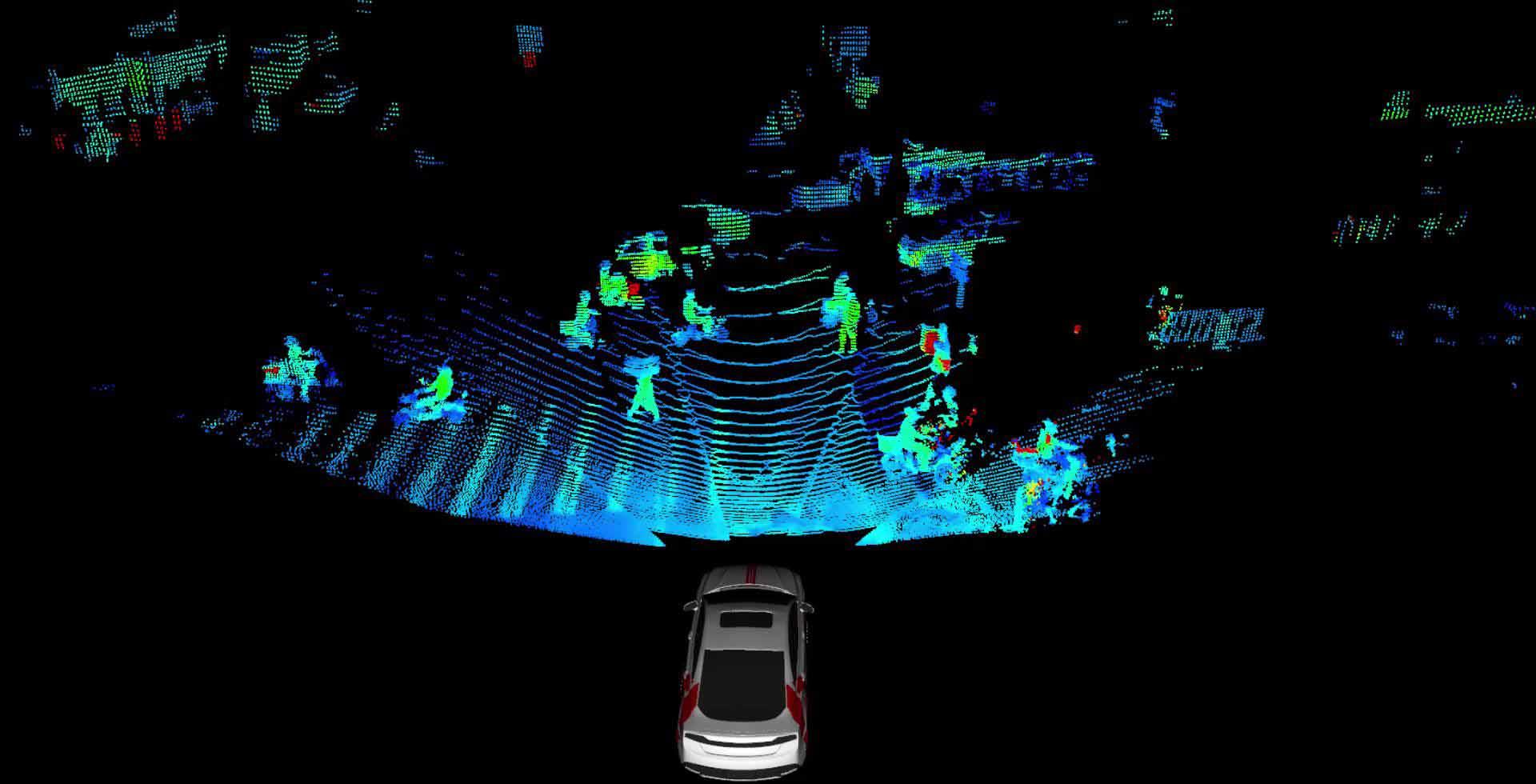
A modern 3D LiDAR sensor emits millions of laser pulses every second and calculates the return time of each pulse to generate dense point clouds. This enables machines to perceive depth, shape, position, and movement with exceptional precision.
Unlike passive vision systems, LiDAR actively measures distance, allowing consistent performance during day and night operations.
This capability is one of the primary reasons why automotive manufacturers, robotics companies, and mapping organizations continue investing heavily in LiDAR-based perception systems.
The Rise of Automotive LiDAR and the Path Toward L3 and L4 Autonomy
The autonomous driving industry has entered a critical transition phase.
For years, manufacturers attempted to rely exclusively on camera-based perception. While significant progress has been made, the limitations of vision-only approaches have become increasingly apparent.
To achieve safe and reliable Level 3 and Level 4 autonomous driving, vehicles must understand their surroundings with a degree of accuracy approaching human perception—and ideally exceeding it.
This is where automotive LiDAR sensors play a vital role.
Modern automotive LiDAR systems can detect objects hundreds of meters away while maintaining centimeter-level accuracy. This capability allows vehicles to identify obstacles, pedestrians, lane boundaries, road debris, and complex traffic scenarios far earlier than traditional systems.
From Mechanical LiDAR to Image-Grade LiDAR
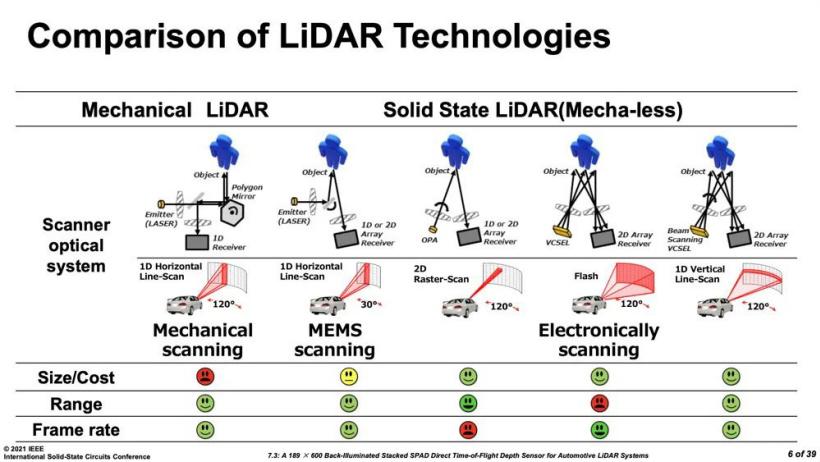
One of the most significant technological shifts occurring within the industry is the transition from traditional mechanical scanning systems to image-grade LiDAR architectures.
Image-grade LiDAR dramatically increases spatial resolution by generating denser and more structured point clouds.
This evolution enables vehicles and robots to distinguish fine details such as:
• Traffic cones
• Bicycle wheels
• Small roadside obstacles
• Construction equipment
• Complex urban objects
In many cases, image-grade LiDAR allows perception algorithms to treat point clouds similarly to camera images while retaining precise depth information.
As AI perception models continue evolving, image-grade LiDAR is expected to become a foundational technology for next-generation intelligent transportation systems.
The Future of 520-Beam and Ultra-High-Resolution LiDAR

High-channel-count LiDAR represents another major trend shaping the industry.
Historically, LiDAR sensors contained 16, 32, 64, or 128 channels.
Today, leading manufacturers are pushing beyond conventional architectures toward hundreds and even thousands of laser channels.
520-beam LiDAR systems and other ultra-high-resolution architectures dramatically improve environmental perception by generating richer and more detailed point cloud data.
The benefits include:
• Earlier obstacle detection
• Improved object classification
• Better lane recognition
• Enhanced urban navigation
• Superior AI training datasets
As costs decrease and manufacturing scales increase, these systems are expected to become standard components in advanced autonomous driving platforms.
FAQ Schema Target Questions
What is a LiDAR sensor and how does it work?
LiDAR sensors work by emitting laser pulses and measuring the time it takes for the reflected light to return. This creates precise 3D point cloud data used for mapping, robotics, and autonomous driving.
Why is 3D LiDAR important for autonomous driving?
3D LiDAR provides real-time depth perception and spatial awareness, allowing autonomous vehicles to detect obstacles, pedestrians, and road structures with high accuracy even in low-light or complex environments.
What is the difference between automotive LiDAR and industrial LiDAR?
Automotive LiDAR is designed for high-speed, safety-critical environments such as vehicles, while industrial LiDAR is typically used in controlled environments like warehouses, factories, and robotics systems.
Can LiDAR support Level 3 and Level 4 autonomous driving?
Yes, LiDAR is a core sensor technology for Level 3 and Level 4 autonomous driving because it provides reliable 3D environmental data for safe decision-making without relying solely on cameras.
What is image-grade LiDAR?
Image-grade LiDAR refers to high-resolution LiDAR systems that generate dense point clouds, approaching the detail level of cameras while maintaining accurate depth measurement.
What is long-range LiDAR used for?
Long-range LiDAR is used for high-speed applications such as highway autonomous driving, where early detection of distant obstacles is critical for safety.
What are 520-beam LiDAR sensors?
520-beam LiDAR refers to high-channel-count sensors that produce extremely dense point clouds, improving object detection accuracy and environmental detail.
How is LiDAR used in robotics?
LiDAR is widely used in robotics for navigation, obstacle avoidance, SLAM (mapping and localization), and autonomous movement in indoor and outdoor environments.
What industries benefit most from LiDAR technology?
Industries such as autonomous driving, robotics, surveying, smart cities, logistics, mining, and industrial automation benefit greatly from LiDAR technology.
Where can I buy professional LiDAR sensors?
Professional LiDAR sensors can be explored through specialized suppliers such as LidarSeek, which provides solutions for robotics, automotive, and mapping applications.









