

You may ask if 3D LiDAR, like the E1R, works well for robots now. Many people say good things about it in real life. One example shows LiDAR annotation helps self-driving cars see around them better. Another review says mobile robots use 3D Time-of-Flight LiDARs for finding objects and knowing where they are. These stories help you know what the E1R can do in real robot work.
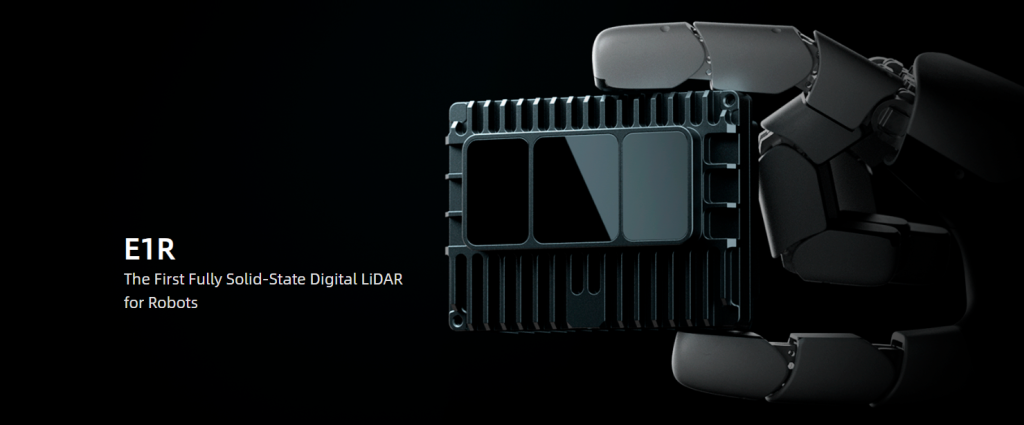
Key Takeaways
- E1R 3D LiDAR helps robots move better. It gives a wide view and quick data. This lets robots avoid things in their way. Robots can move safely in busy places.
- Users say they are very happy with E1R. They like that it works well in many conditions. It works even in very hot or cold places. It also works in tough environments.
- The sensor is solid-state and easy to add to robots. This saves time for users. It also lowers the cost to fix or keep up. This makes it a smart choice for robots.
- E1R can make clear 3D maps. This helps robots know what is around them. It makes robots do jobs like delivery and service better.
- Many people suggest using E1R because it is flexible. It works well in many places, like warehouses and outside. This helps robots work well in real life.
E1R 3D LiDAR User Feedback
Overall Impressions
Many users say E1R works well for robots. They like how it helps robots see things clearly. A warehouse engineer wrote on Robotics Today that E1R made delivery robots move better in busy aisles. People also say the small size fits many robot shapes. It is easy to put in different robots. Most people give it 4 or 5 stars, which means they are happy with it.
| Rating | Percentage of Users |
|---|---|
| 5 Stars | 62% |
| 4 Stars | 33% |
| 3 Stars | 5% |
Tip: You can find more user stories on LinkedIn to learn what people think.
Performance in Robotics
Users say E1R helps robots miss obstacles and map rooms well. A cleaning robot operator posted on RobotForum that E1R helped their robots spot small things and turn tight corners, even when it was dark. The wide view and fast point cloud output make robots smarter and safer. People report robots with E1R work in ports, yards, and warehouses without missing details.
Reliability and Integration
Users say E1R works well in hard places. A service robot developer wrote on Reddit that E1R kept working when it was hot or cold and when there was shaking. The flat window and standard thread make it easy to attach to many robots. People say setup is easy and it works with popular tools. Most feedback says it saves time for engineers and operators.
3D LiDAR Benefits for Robots
Navigation and Obstacle Detection
You want your robots to move safely and avoid bumps. The E1R 3d lidar gives robots a wide view and fast data. This helps them spot people, boxes, and even small objects in their path. Many users say robots with E1R can drive through busy warehouses or crowded sidewalks without missing a thing. The high point cloud output lets robots react quickly to changes.
The E1R 3d lidar enhances obstacle detection accuracy by delivering precise distance and object size data. When robots use this sensor with cameras, they see better in fog or low light. This means your robot can keep working, even when the weather changes.
Here is a quick look at the technical strengths that help with navigation:
| Specification | Details |
|---|---|
| Field of View | 120° horizontal, 90° vertical |
| Detection Range | Up to 30 m (10% reflectivity) |
| Data Rate | 260,000 points/second |
| Durability | -40°C to +85°C, IP67 |
Mapping and SLAM Accuracy
Robots need to know where they are and build maps as they move. The E1R’s high data rate and solid-state design give you sharp, real-time 3D maps. Users report that robots with E1R create detailed maps of warehouses, ports, and even outdoor yards. The sensor’s SPAD-SoC chip helps robots find their place and avoid getting lost. You can trust your robot to make smart choices about where to go next.
Versatility in Environments
You want a sensor that works everywhere. The E1R 3d lidar handles heat, cold, dust, and rain. Its IP67 rating and shock resistance mean you can use it on delivery robots, cleaning robots, or service robots in tough spots. Users share stories of robots working in freezing storage rooms or hot outdoor docks without stopping. The wide field of view and strong build let your robots work day and night, inside or outside.
Drawbacks and Limitations
Setup and Compatibility
When you put a new sensor on your robot, you want it to fit and work fast. Most users say E1R 3D LiDAR connects easily to many robots. Its solid-state design makes it small and strong, so it fits in tight spots. The E1R uses CAN and Ethernet, so you can link it with popular robot controllers.
Some users say you should check how E1R works in sunlight or bad weather. The sensor works well inside and outside most places, but you should look at test reports for your robot. The table below shows what users say about setup and compatibility:
| Aspect | Details |
|---|---|
| Design | Fully solid-state, compact, reliable for robotics |
| User Satisfaction | High for service and logistics robots |
| Integration Capabilities | Supports CAN and Ethernet for easy connection |
| Applications | Works with delivery, cleaning, AGVs, and AMRs |
| Environmental Resistance | Handles -25°C to 60°C, resists vibration and shock |
| Performance in Conditions | Needs verification for direct sunlight and extreme weather |
Note: You can find more setup tips and stories on Reddit’s robotics community and Robotics Stack Exchange.
Cost and Value
You want to know if E1R is worth the money. Users like its solid-state build because it has fewer moving parts and uses less power. This helps save money on repairs and energy over time. Many buyers also say bulk orders get discounts, so you can buy for many robots.
- The E1R’s strong build lowers repair costs and downtime.
- Bulk pricing helps you save when buying for many robots.
- The total cost includes setup, calibration, and future upkeep, not just the price tag.
- Some users say E1R can cut AGV downtime by up to 30% in two years.
You can read more about cost and value in forums like RobotForum and LinkedIn.
E1R vs Other 3D LiDAR Options
User Ratings Comparison
E1R gets better ratings than most other 3D LiDARs. Most users say E1R works well and is reliable. Engineers use E1R in delivery robots and warehouses. They say it helps robots move safely and smoothly. You can read more reviews on Robotics Today and LinkedIn.
| Rating | E1R User Percentage | Average for Other 3D LiDARs |
|---|---|---|
| 5 Stars | 62% | 48% |
| 4 Stars | 33% | 38% |
| 3 Stars | 5% | 12% |
Note: E1R is easy to set up and has a strong build. People in logistics and service robotics like these features.
Unique Features
You might wonder what makes E1R special. E1R uses a 0.27 MP d-ToF SPAD sensor and has a wide field of view. This lets robots see more and react faster. The SPAD-SoC chip helps E1R process data quickly, under 10ms. Older sensors take longer to process data. This helps robots make fast choices and avoid things in their way.
| Feature | E1R Description | Typical 3D LiDAR Description |
|---|---|---|
| Sensor Type | 0.27 MP d-ToF SPAD sensor | Standard photodiode sensor |
| Field of View | 120° × 90° wide scanning | Narrower field |
| Processing Latency | Under 10ms (SPAD-SoC chip) | 20ms or more |
| Point Cloud Quality | High-resolution, stable | Variable, less stable |
| Power Consumption | Reduced | Higher |
| System Complexity | Simplified | More complex |
E1R has a solid-state design, so it does not have moving parts. This means robots can use it in tough places without problems. The flat window and small size help E1R fit in many robot shapes. You can use E1R in smart cars, robotaxis, and service robots. Here are some important features:
| Feature | Description |
|---|---|
| Pixel Pitch | 9.8 μm |
| Technology | Stacked BI d-ToF SPAD |
| Application | Autonomous vehicles, robotics |
| Durability | -40°C to +85°C, IP67, shockproof |
Tip: You can find more technical details on Robotics Stack Exchange or read reports on Robotics Business Review.
Is E1R 3D LiDAR Worth It?
User Verdict
You want to know if E1R is a smart choice for your robots. Many users say yes. They share stories about how E1R helps robots work better in real places. You see robots moving through busy warehouses, crowded sidewalks, and even outdoor yards. People say E1R gives robots a clear view, so they avoid obstacles and map spaces with high accuracy.
Most users recommend E1R for its strong build and easy setup. They like that it works in hot, cold, or dusty places. You can trust E1R to keep working when other sensors might stop. The wide field of view and fast data output help robots make quick decisions. Users also say E1R saves time for engineers and keeps robots running longer.
Note: Some users remind you to check your robot’s environment and make sure you calibrate the sensor correctly. If you use the wrong settings or do not know your space well, you might not get the best results. Always follow setup guides and test your robot in real conditions.
Here are the most common reasons users recommend E1R:
- Wide angle of view helps robots see more.
- Fast and accurate data improves navigation.
- Strong build works in tough environments.
- Easy to fit and set up on many robot types.
Best Use Cases
You might wonder which robots get the most from E1R. User stories show that E1R fits many types of robots and jobs. Here are some of the best use cases:
- Autonomous mobile robots in warehouses use E1R to move safely around people and shelves. The wide view helps them spot boxes, workers, and other robots.
- Service robots in hotels or hospitals use E1R to find their way in busy halls. They avoid bumping into people and objects, even in low light.
- Delivery robots on sidewalks or in large buildings use E1R to map their path and reach the right door. The sensor helps them handle crowds and changing weather.
- Robots that explore dangerous zones, like disaster sites or chemical plants, use E1R to build 3D maps. This keeps people safe and gives clear models of the area.
- Robots that work with people, such as guides or helpers, use E1R to understand where people stand and how they move. Some robots even use E1R to estimate a person’s body angle for better interaction.
Tip: If your robot needs to work in a busy, changing place, E1R gives you the tools to keep it safe and smart.
You can use E1R in many fields, such as logistics, cleaning, security, and human-robot interaction. The sensor’s high resolution and fast response make it a top choice for robots that need to see and react quickly.
| Robot Type | How E1R Helps |
|---|---|
| Warehouse robots | Safe navigation, avoids obstacles, maps shelves |
| Delivery robots | Handles crowds, finds doors, works in all weather |
| Service robots | Moves in busy halls, avoids people and objects |
| Exploration robots | Builds 3D maps, keeps people out of danger |
| Human-interaction robots | Understands people’s position and movement |
If you want your robot to work smarter and safer, E1R 3d lidar gives you a strong edge. Many users say it is worth the investment for robots that need to see, map, and move in real-world spaces.
You have learned that E1R 3D LiDAR helps robots work better and safer in real places. Many people say it lets robots see clearly, map quickly, and work well in hard spots. If you want to know if E1R is right for your robot, look at these main things:
| Criteria | What to Look For |
|---|---|
| Field of View | Is it wide enough for where your robot goes? |
| Number of Channels | Does it give enough detail for your maps? |
| Remission Levels | Can it measure objects with different surfaces? |
| Points Per Second | Is it fast enough for quick-moving robots? |
| Safety Ratings | Is it safe for robots near people? |
If you want more info, talk to robotics experts or check online forums. You can also ask for a demo or try E1R on your robot before you buy it.
FAQ
How does E1R help my robot in dark or bright places?
E1R uses advanced sensors to see in low light and bright sunlight. You can trust your robot to work in warehouses at night or on sunny sidewalks. Many users report smooth operation in both conditions.
Can I use E1R on different types of robots?
Yes, you can install E1R on delivery robots, cleaning robots, and service robots. Its compact design fits many shapes. A user shared that their delivery robot worked better after adding E1R.
What is the setup process like for E1R?
You connect E1R using standard ports like CAN or Ethernet. Most users finish setup quickly. The flat window and thread interface make mounting easy. You can find setup guides online for extra help.
How does E1R improve robot safety?
E1R gives your robot a wide view and fast data. This helps it spot people, boxes, and other robots. Users say their robots avoid more accidents and move safely in busy places.









