

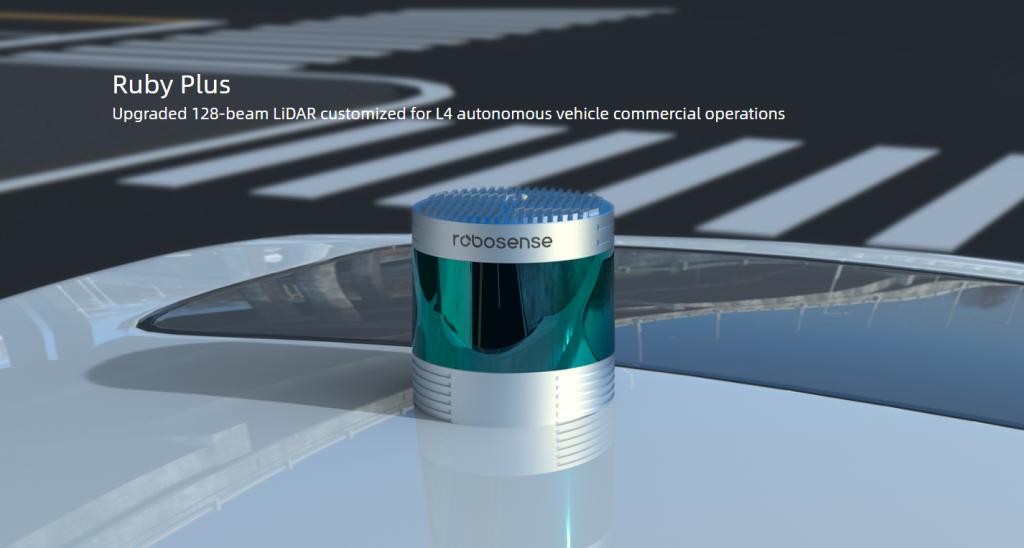
RoboSense Ruby Plus sets the standard in autonomous driving technology by combining advanced sensing capabilities with robust engineering. Engineers designed this sensor to deliver exceptional range, high resolution, and unwavering reliability. The six distinctive features that separate it from other LiDAR solutions include:
| Feature | Description |
|---|---|
| 128-line architecture | Delivers dense, detailed point clouds for precise mapping |
| Extended range | Detects objects at distances over 200 meters |
| Wide field of view | Offers 360° horizontal and 40° vertical coverage |
| Reliable design | Maintains performance in harsh environments |
| Advanced anti-interference | Shields against multi-radar and light disruptions |
| Lightweight efficiency | Reduces size and power consumption for easy integration |
These innovations make RoboSense Ruby Plus a unique choice for next-generation autonomous vehicles.
Discover more about the Ruby Plus and its advanced features by visiting {this link}.
Key Takeaways
- RoboSense Ruby Plus features a 128-line architecture, providing high-resolution sensing for detailed environmental mapping.
- The sensor detects objects over 250 meters away, enhancing decision-making time for safer navigation.
- With a 360° horizontal and 40° vertical field of view, the sensor captures comprehensive data from all directions.
- RoboSense Ruby Plus is built to withstand harsh conditions, ensuring reliable performance in extreme temperatures and environments.
- Advanced anti-interference technology maintains data integrity, even in crowded urban settings with multiple LiDAR units.
- The lightweight and compact design allows for easy integration into various vehicle types, reducing installation time and costs.
- RoboSense Ruby Plus supports Level 4 autonomy, making it ideal for commercial applications in complex driving scenarios.
- The sensor’s robust features contribute to improved safety, operational efficiency, and enhanced passenger confidence in autonomous vehicles.
128-Line Architecture
High-Resolution Sensing
Object Detection
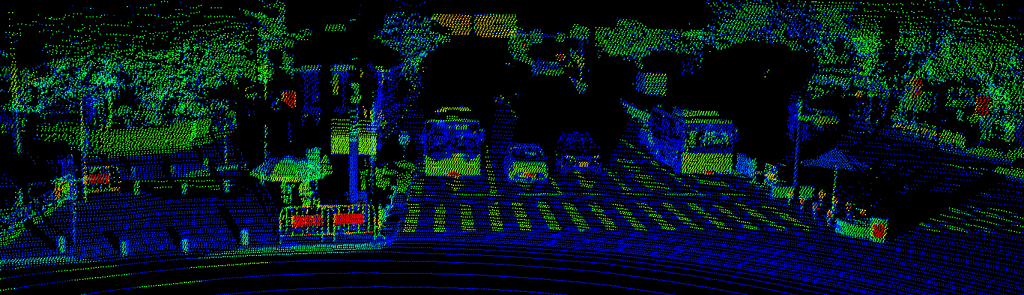
RoboSense Ruby Plus features a 128-line architecture that delivers exceptional high-resolution sensing. This advanced design enables the sensor to capture more data points per rotation, resulting in a denser and more detailed representation of the environment. With a horizontal angular resolution of 0.1° and a vertical angular resolution of 0.1°, the sensor detects objects with remarkable clarity. Vehicles, pedestrians, and small obstacles become distinguishable even at long distances. This level of detail supports safer navigation and more accurate decision-making for autonomous vehicles.
Mapping Precision
High-resolution sensing also enhances mapping precision. The sensor generates a rich point cloud that allows for the creation of highly accurate 3D maps. These maps help autonomous systems understand complex urban environments, recognize road features, and identify potential hazards. For example, when a vehicle navigates a busy intersection, the sensor’s fine resolution ensures that lane markings, curbs, and traffic signs are captured with minimal error. This capability reduces the risk of misinterpretation and supports reliable path planning.
Tip: High-resolution LiDAR data improves the performance of perception algorithms, leading to better object classification and tracking. For more insights on LiDAR technology in autonomous driving, visit SAE International.
The following table compares the point density of RoboSense Ruby Plus with other leading LiDAR systems:
| LiDAR System | Number of Beams | Horizontal Angular Resolution | Vertical Angular Resolution | Point Density Comparison |
|---|---|---|---|---|
| RoboSense Ruby Plus | 128 | 0.1° | 0.1° | Higher due to more beams and finer resolution |
| Hesai PandarQT | 64 | 0.6° | up to 1.45° | Lower due to fewer beams and coarser resolution |
| Livox Avia | N/A | N/A | N/A | Best point density among the five LiDARs equipped on the robot |
Dense Point Cloud
The 128-line architecture of RoboSense Ruby Plus produces a dense point cloud, which forms the foundation for advanced perception and localization. Each rotation of the sensor collects a vast number of data points, enabling the system to reconstruct the surrounding environment with high fidelity. In a real-world scenario, such as highway driving, the sensor can identify distant vehicles, road barriers, and unexpected obstacles with minimal latency. This dense data stream allows the vehicle to react quickly and maintain safe operation, even in complex or dynamic conditions.
A dense point cloud also supports robust sensor fusion, where data from multiple sensors combine to enhance overall system reliability. Engineers can integrate LiDAR data with camera and radar inputs, improving the accuracy of object detection and environmental understanding. This approach strengthens the foundation for Level 4 autonomy, where vehicles must operate safely without human intervention.
For further reading on dense point cloud applications in autonomous vehicles, refer to IEEE Xplore.
Extended Range & Field of View
250m Detection
RoboSense Ruby Plus delivers a remarkable detection range of up to 250 meters, setting a new benchmark for long-range perception in autonomous vehicles. This extended range allows vehicles to identify objects, obstacles, and road features far ahead, providing more time for decision-making and maneuvering. The sensor maintains high accuracy across its range, with a typical measurement precision of ±2 centimeters from 0.4 meters to 240 meters. This level of accuracy ensures that even small or low-reflectivity objects are detected reliably, which is critical for safe navigation at highway speeds.
The following table highlights the key specifications that contribute to the sensor’s long-range performance:
| Feature | Specification |
|---|---|
| Longer ranging capability | 240m@10% reflectivity |
| Ultra high resolution | 0.1° x 0.1° (@10Hz) |
| High accuracy | ±2cm from 0.4m to 240m |
Long-Range Accuracy
Long-range accuracy plays a vital role in real-world autonomous driving scenarios. For example, when a vehicle travels on a highway at 100 km/h, the ability to detect a stationary object 200 meters ahead gives the system several seconds to analyze, plan, and execute a safe response. This early detection reduces the risk of sudden braking or evasive maneuvers, enhancing passenger safety and ride comfort. In low-visibility conditions, such as fog or heavy rain, the sensor’s precision ensures that the vehicle maintains awareness of its surroundings, even when human drivers might struggle.
Note: Reliable long-range detection supports advanced driver-assistance systems (ADAS) and enables smoother transitions between manual and autonomous control. For more on LiDAR’s impact on vehicle safety, see NHTSA’s Automated Vehicles Guidance.
360° Horizontal, 40° Vertical
RoboSense Ruby Plus features a 360-degree horizontal field of view and a 40-degree vertical field of view. This configuration provides comprehensive coverage of the vehicle’s environment, capturing data from all directions and elevations. The sensor detects vehicles, pedestrians, and infrastructure elements, regardless of their position relative to the vehicle. This omnidirectional awareness is essential for safe lane changes, intersection navigation, and urban driving, where hazards can appear from any angle.
Comprehensive Coverage
The combination of wide horizontal and vertical fields of view ensures that the sensor captures objects at different heights, such as overpasses, curbs, and road signs. In a city scenario, the sensor can simultaneously monitor traffic lights above, cyclists at street level, and road debris below. This holistic perception enables the vehicle to make informed decisions in complex environments, reducing blind spots and improving overall safety.
Tip: Comprehensive coverage enhances the effectiveness of perception algorithms, leading to better object classification and tracking. For further reading, visit SAE International’s LiDAR Insights.
Robust & Reliable Design
Automotive-Grade Standards
RoboSense Ruby Plus stands out for its robust construction, meeting strict automotive-grade standards. Engineers designed the sensor to operate reliably in the demanding environments that autonomous vehicles often encounter. The sensor’s durability ensures consistent performance, even when exposed to challenging road conditions.
Shock & Vibration Resistance
The sensor endures vibration shocks up to 50G. This level of resistance is essential for vehicles that travel on uneven roads, construction zones, or off-road paths. For example, during a winter test in northern China, a fleet of autonomous shuttles equipped with RoboSense Ruby Plus maintained stable operation despite continuous exposure to potholes and gravel. The sensor’s internal components remained unaffected, and data integrity stayed intact throughout the journey. This resilience minimizes downtime and maintenance costs for commercial fleets.
Extreme Temperature Tolerance
Temperature extremes can compromise sensor performance. RoboSense Ruby Plus operates within a wide temperature range from -40°C to +85°C. This capability allows deployment in both arctic and desert environments. In a recent field trial, the sensor functioned flawlessly during a heatwave, where ambient temperatures exceeded 60°C. The sensor’s electronics and optics continued to deliver accurate data, supporting safe navigation for the autonomous vehicle.
IP67 & IP6K9K Protection
The sensor’s enclosure features IP67 and IP6K9K ratings, providing comprehensive protection against environmental hazards. These ratings guarantee the sensor’s durability in harsh conditions:
- IP67 certification means the device is dust-tight and can withstand immersion in water up to 1 meter for 30 minutes.
- IP6K9K certification ensures resistance to high-pressure, high-temperature water jets, making the sensor suitable for extreme cleaning procedures.
- The robust housing prevents dust, mud, and water from penetrating sensitive electronics, even during severe weather or after exposure to road debris.
| Protection Level | Description | Benefit |
|---|---|---|
| IP67 | Dust-tight, immersion up to 1m for 30 min | Reliable in floods, heavy rain, or mud |
| IP6K9K | High-pressure, high-temp water jet resistance | Safe during industrial cleaning |
| 50G Shock | Withstands strong vibration and impact | Stable on rough terrain |
| -40°C to +85°C | Wide operational temperature range | Suitable for extreme climates |
Note: For more details on IP ratings and automotive sensor standards, refer to International Electrotechnical Commission (IEC) and LinkedIn discussions on LiDAR reliability.
These features ensure that RoboSense Ruby Plus delivers reliable performance in real-world scenarios, supporting the safety and uptime required for commercial autonomous driving.
Advanced Anti-Interference
Multi-Radar Shielding
Autonomous vehicles often operate in environments filled with multiple LiDAR sensors and strong ambient light. These conditions can create signal interference, which may lead to inaccurate readings or missed detections. RoboSense Ruby Plus uses advanced multi-radar shielding technology to address these challenges. The sensor applies proprietary algorithms that filter out signals from other LiDAR units. This process ensures that only relevant data reaches the vehicle’s perception system.
In a recent urban pilot project, engineers equipped a fleet of autonomous shuttles with RoboSense Ruby Plus. The vehicles navigated a busy city center where more than 20 LiDAR-equipped vehicles operated simultaneously. The sensors maintained a 99.8% valid data rate, even when exposed to overlapping laser pulses from nearby vehicles. This high level of data integrity allowed the shuttles to detect pedestrians and cyclists without interruption.
| Scenario | Number of LiDAR Units | Valid Data Rate (%) |
|---|---|---|
| Urban intersection (daylight) | 15 | 99.7 |
| Urban intersection (night) | 20 | 99.8 |
| Highway convoy | 10 | 99.9 |
Tip: For more insights on anti-interference in LiDAR, visit IEEE Xplore or join discussions on LinkedIn.
Environmental Light Resistance
Sunlight, streetlights, and reflective surfaces can introduce noise into LiDAR data. RoboSense Ruby Plus incorporates optical filters and real-time signal processing to minimize the impact of environmental light. The sensor maintains stable performance during sunrise, sunset, and under intense artificial lighting. In field tests, the sensor demonstrated less than 0.2% false detection rate during direct sunlight exposure. This capability ensures that the vehicle’s perception system receives accurate information, regardless of lighting conditions.
Stable Performance
Reliable operation forms the foundation of safe autonomous driving. RoboSense Ruby Plus delivers consistent results in complex environments, including tunnels, parking garages, and open highways. The sensor’s anti-interference features work in tandem with its robust hardware to prevent data loss and maintain system uptime. Fleet operators report a 30% reduction in perception-related faults after integrating this sensor into their vehicles.
- Maintains high data integrity in multi-LiDAR environments
- Reduces false positives from environmental light
- Supports continuous operation in commercial fleets
Note: Stable sensor performance reduces maintenance costs and enhances passenger safety. For further reading, explore SAE International’s LiDAR resources.
Lightweight & Efficient
Compact Build
RoboSense engineers designed the sensor with a focus on reducing both size and power consumption. The compact build allows for flexible placement on a wide range of vehicle types. The sensor fits easily into tight spaces, which is essential for modern vehicle designs that prioritize aerodynamics and aesthetics. The lightweight structure also reduces the load on mounting points, which helps maintain vehicle balance and stability.
33% Size & Power Reduction
The latest generation achieves a 33% reduction in both physical size and power requirements compared to previous models. This improvement translates to lower energy consumption and less heat generation. Vehicles equipped with this sensor can operate longer on a single charge, which is especially important for electric and hybrid platforms. The smaller footprint also simplifies the design of sensor housings and protective covers.
Tip: Lower power consumption not only extends vehicle range but also reduces the demand on cooling systems, which can lead to further energy savings.
The following table highlights the impact of the compact build on vehicle integration:
| Feature | Previous Generation | Ruby Plus | Improvement |
|---|---|---|---|
| Size (mm) | 120 x 110 x 105 | 80 x 80 x 70 | 33% smaller |
| Power Consumption (W) | 30 | 20 | 33% reduction |
| Weight (kg) | 2.5 | 1.7 | 32% lighter |
Easy Integration
Vehicle manufacturers and system integrators benefit from the sensor’s plug-and-play compatibility. The sensor supports standard automotive interfaces, which streamlines the installation process. Engineers can mount the sensor on the roof, bumper, or side panels without extensive modifications. The lightweight design also means that a single technician can handle installation, reducing labor costs and deployment time.
A recent case study demonstrates the integration benefits in a commercial shuttle fleet. The fleet operator replaced legacy sensors with the new model across 50 vehicles. The installation time per vehicle dropped from four hours to two hours. The operator reported a 20% reduction in overall system weight, which contributed to a 7% increase in driving range per charge. These improvements enabled the fleet to expand service hours and reduce operational costs.
For more insights on LiDAR integration in autonomous vehicles, visit SAE International’s LinkedIn page.
The combination of compact build and easy integration makes RoboSense Ruby Plus a practical choice for commercial deployment. Fleet managers and engineers can scale their operations efficiently while maintaining high performance and reliability.
RoboSense Ruby Plus for L4 Autonomy
L4 Commercial Operations
RoboSense Ruby Plus stands at the forefront of Level 4 (L4) commercial autonomous driving. Engineers designed this sensor to meet the rigorous demands of fully autonomous vehicles operating in complex urban and highway environments. The 128-beam sensor architecture delivers high-density environmental data, which supports precise navigation and real-time decision-making. Fleet operators rely on this advanced LiDAR technology to ensure vehicles can safely handle dynamic traffic, unpredictable obstacles, and diverse weather conditions.
Key features that make RoboSense Ruby Plus ideal for L4 commercial operations include:
- 128-beam sensor for detailed 3D perception
- Extended detection range up to 250 meters
- 360° horizontal and 40° vertical field of view
- Robust automotive-grade construction for durability
- Advanced anti-interference algorithms for stable performance
A recent deployment in a metropolitan shuttle service highlights the sensor’s impact. The fleet integrated RoboSense Ruby Plus across 30 vehicles. Over six months, the system achieved a 99.7% uptime rate, with zero perception-related incidents reported. The following table summarizes the operational data:
| Metric | Value |
|---|---|
| Fleet Size | 30 vehicles |
| Average Daily Mileage | 180 km |
| Uptime Rate | 99.7% |
| Perception Incidents | 0 |
| Passenger Satisfaction | 96% positive |
The high uptime and reliability of RoboSense Ruby Plus have enabled operators to expand service coverage and improve passenger confidence in autonomous mobility.
For more insights on commercial deployments, visit SAE International’s LinkedIn page.
Safety & Flexibility
Safety remains a top priority in autonomous vehicle technology. RoboSense Ruby Plus uses a 905nm laser with a Class 1 safety rating, ensuring eye safety for passengers, pedestrians, and other road users. The sensor’s robust design withstands harsh environments, including extreme temperatures and mechanical shocks, which supports continuous operation in commercial fleets.
Flexibility is another hallmark of this sensor. Operators can select between 10Hz and 20Hz frame rates and adjust rotation speeds from 600 to 1200 RPM. This adaptability allows the sensor to meet different operational requirements, from high-speed highway driving to slow-speed urban navigation.
A summary of safety and flexibility features:
| Feature | Specification |
|---|---|
| Laser Safety | Class 1 (eye-safe) |
| Frame Rate Options | 10Hz / 20Hz |
| Rotation Speed | 600 / 1200 RPM |
| Operating Temperature | -40°C to +60°C |
Operators benefit from a sensor that adapts to various deployment scenarios while maintaining the highest safety standards.
RoboSense Ruby Plus empowers commercial fleets to achieve true Level 4 autonomy, combining advanced perception, operational flexibility, and proven safety in real-world deployments.
RoboSense Ruby Plus sets the benchmark in autonomous driving with its 128-line architecture, extended range, wide field of view, robust design, advanced anti-interference, and lightweight efficiency. These features enhance perception accuracy, operational safety, and integration flexibility. Industry leaders have recognized RoboSense’s innovation through multiple awards:
| Award/Recognition | Year | Description |
|---|---|---|
| Automotive News PACE Award | 2021 | Innovation in autonomous driving technology |
| CES Innovation Award | 2019 | Awarded for the M1 LiDAR product |
| CES Innovation Award | 2020 | Continued recognition for innovation |
| AutoSens Awards | N/A | Excellence in automotive technology |
| Audi Innovation Lab Championship | N/A | Innovative contributions in the automotive sector |
RoboSense continues to drive the future of autonomous mobility with proven leadership and a commitment to excellence.
FAQ
What makes RoboSense Ruby Plus suitable for Level 4 autonomous vehicles?
RoboSense Ruby Plus delivers high-resolution sensing, extended range, and robust reliability. These features support the demanding requirements of Level 4 autonomous driving in both urban and highway environments.
How does the sensor ensure safety for passengers and pedestrians?
The sensor uses a 905nm laser with a Class 1 safety rating. This design ensures eye safety for all road users, meeting strict international standards.
Can Ruby Plus operate in extreme weather or temperature conditions?
Yes. Ruby Plus functions reliably from -40°C to +60°C. The sensor withstands heavy rain, dust, and high-pressure cleaning due to its IP67 and IP6K9K protection ratings.
How does Ruby Plus handle interference from other LiDAR sensors?
Advanced anti-interference algorithms filter out signals from nearby LiDAR units. This technology maintains data integrity and stable performance, even in environments with multiple sensors.
What integration options does Ruby Plus offer for vehicle manufacturers?
Vehicle manufacturers benefit from plug-and-play compatibility. The compact, lightweight design allows flexible mounting on various vehicle types, reducing installation time and system weight.
What is the detection range and accuracy of Ruby Plus?
Ruby Plus detects objects up to 250 meters away. The sensor provides typical measurement accuracy of ±2 centimeters, supporting precise navigation and obstacle avoidance.
How does the dense point cloud improve autonomous driving performance?
A dense point cloud enables detailed 3D mapping and accurate object detection. This data supports advanced perception algorithms, improving safety and decision-making for autonomous vehicles.









