
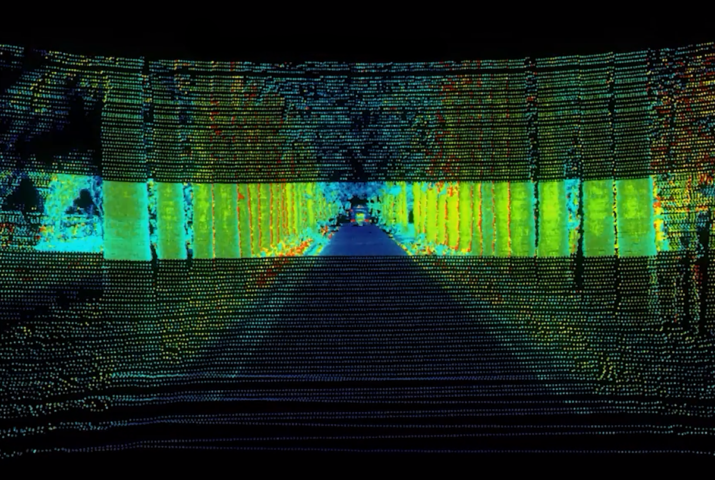
Why Seyond Falcon K Is Setting a New Standard for Long-Range Automotive LiDAR
Introduction: The New Era of Intelligent Perception
The autonomous driving industry is entering a critical phase. While early Advanced Driver Assistance Systems (ADAS) focused primarily on camera-based solutions, modern intelligent vehicles require a far more comprehensive understanding of their surroundings. As vehicles progress from Level 2 driver assistance toward Level 3 and Level 4 autonomy, the demand for precise environmental perception has never been greater.
This shift has placed LiDAR technology at the center of the autonomous driving revolution. Unlike traditional sensors, LiDAR creates a detailed three-dimensional representation of the world, allowing vehicles to accurately detect obstacles, measure distances, and understand complex traffic scenarios in real time.
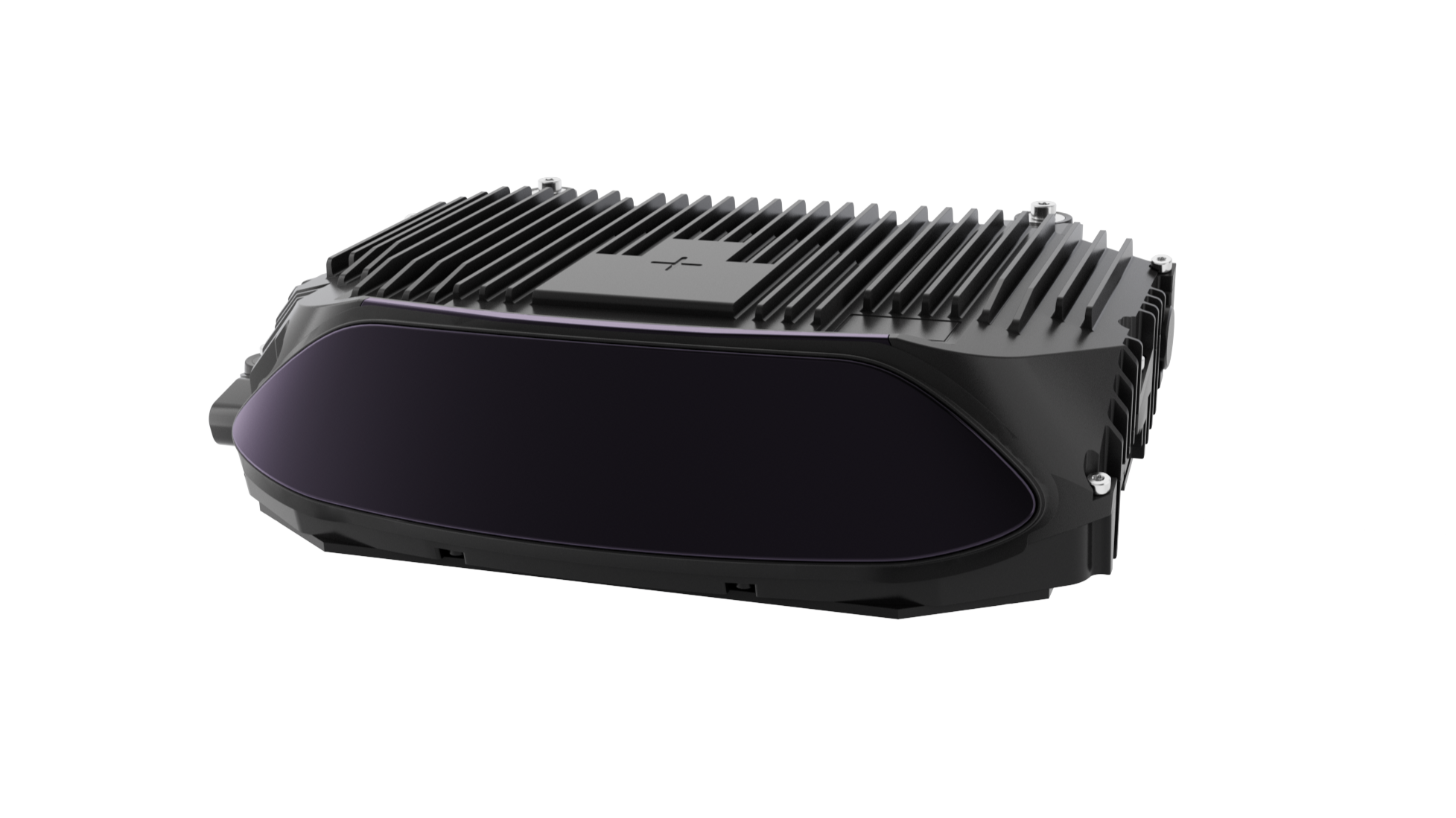
Among the latest innovations in this field, the Seyond Falcon K has emerged as one of the most advanced long-range automotive LiDAR sensors available today.
Designed specifically for intelligent transportation, autonomous driving, and advanced robotics applications, the Falcon K combines exceptional range, high-resolution perception, and automotive-grade reliability into a compact solution capable of supporting next-generation mobility systems.
For organizations looking to buy LiDAR sensors for autonomous vehicles, intelligent robots, and smart transportation infrastructure, the Falcon K represents a compelling solution.
Explore the product:
👉 https://lidarseek.com/product/seyond-falcon-k
Why Long-Range LiDAR Matters More Than Ever
One of the biggest challenges facing autonomous vehicles is perception distance.
At highway speeds, vehicles have only a limited amount of time to:
- Detect obstacles
- Analyze road conditions
- Predict traffic behavior
- Execute safe maneuvers
The faster a vehicle travels, the farther ahead it must see.
Traditional perception systems often struggle to provide reliable environmental awareness beyond a certain distance.
This is where long-range automotive LiDAR becomes essential.
The Seyond Falcon K is specifically engineered to extend perception capabilities far beyond conventional sensing systems, enabling intelligent vehicles to react earlier and make safer decisions.
Long-range perception significantly improves:
Highway Safety
Vehicles can identify hazards earlier and respond more effectively.
Emergency Braking Performance
Additional perception distance provides critical reaction time.
Lane Change Planning
The system gains a broader understanding of surrounding traffic.
Autonomous Navigation
Long-range environmental awareness improves route planning and decision-making.
For L3 and L4 autonomous driving systems, these advantages are essential rather than optional.
Understanding the Technology Behind Falcon K
Unlike many conventional LiDAR solutions, the Falcon K is designed with next-generation automotive requirements in mind.
The sensor generates highly detailed three-dimensional point clouds that allow AI systems to understand the environment with remarkable accuracy.
These point clouds help autonomous systems identify:
- Vehicles
- Pedestrians
- Cyclists
- Road boundaries
- Traffic infrastructure
- Construction zones
- Unexpected obstacles
The resulting data becomes the foundation for autonomous perception algorithms.
As AI software continues to improve, the importance of high-quality sensor data becomes even greater.
The principle is simple:
Better data leads to better decisions.
Better decisions lead to safer autonomous systems.
L2–L4 Autonomous Driving: Why LiDAR Is Becoming Essential
The automotive industry has spent years debating whether autonomous vehicles can rely entirely on cameras.
While camera technology remains important, the industry increasingly recognizes the limitations of vision-only approaches.
Lighting conditions can vary dramatically.
Challenges include:
- Night driving
- Heavy rain
- Fog
- Snow
- Low-contrast environments
- Sun glare
LiDAR addresses many of these challenges by providing accurate three-dimensional measurements independent of visual appearance.
L2 Driving Assistance
At Level 2, drivers remain responsible for vehicle operation.
LiDAR enhances:
- Adaptive cruise control
- Lane centering
- Collision warning systems
- Traffic jam assistance
L3 Autonomous Driving
At Level 3, vehicles can take over driving functions under specific conditions.
The perception system must reliably understand:
- Traffic flow
- Road geometry
- Dynamic obstacles
- Unexpected hazards
LiDAR becomes increasingly important at this level.
L4 Autonomous Driving
At Level 4, vehicles operate autonomously within defined operational domains.
Examples include:
- Robotaxis
- Autonomous shuttles
- Logistics vehicles
- Smart transportation systems
These applications require robust perception systems capable of delivering reliable performance in complex environments.
The Falcon K is specifically designed to support these advanced autonomy requirements.
How Falcon K Supports ADAS Systems
Modern ADAS platforms rely on sensor fusion.
Rather than depending on a single sensor type, intelligent vehicles combine:
- Cameras
- LiDAR
- Radar
- IMU
- GNSS
to achieve a comprehensive understanding of the environment.
Within this architecture, the Falcon K serves as the high-precision spatial sensing component.
Its role includes:
Obstacle Detection
Identifying vehicles, pedestrians, and road hazards.
Free Space Detection
Determining drivable areas.
Road Edge Recognition
Improving navigation accuracy.
Traffic Scenario Analysis
Supporting AI-based decision-making.
The result is a safer and more reliable driving experience.
Falcon K Beyond Autonomous Cars
One of the most interesting developments in recent years is the convergence of automotive and robotics technologies.
The same LiDAR systems used in intelligent vehicles are increasingly being adopted across the robotics industry.
Applications include:
- Autonomous Mobile Robots (AMRs)
- Automated Guided Vehicles (AGVs)
- Robot Dogs
- Humanoid Robots
- Security Robots
- Industrial Inspection Platforms
The Falcon K offers capabilities that make it attractive for advanced robotics projects requiring long-range perception and precise environmental understanding.
Falcon K for Robot LiDAR Applications
Robot navigation has become one of the fastest-growing applications for 3D LiDAR sensors.
Modern robots must operate safely in dynamic environments filled with:
- People
- Vehicles
- Equipment
- Infrastructure
LiDAR provides robots with the spatial awareness necessary to navigate effectively.
The Falcon K enables:
Real-Time Mapping
Robots can build detailed environmental maps.
Localization
The system accurately determines its position.
Obstacle Avoidance
Robots can identify and avoid hazards.
Dynamic Navigation
Autonomous systems adapt to changing conditions.
These capabilities are critical for next-generation robotic platforms.
Related Products from LidarSeek
For developers evaluating autonomous perception solutions, LidarSeek offers a comprehensive portfolio of sensors and development platforms.
Explore:
Shop All Products
Recommended related products:
- Hesai AT128
- Hesai XT32
- RoboSense Helios
- RoboSense Airy
- Livox MID360
- LSLiDAR CH128
- PAVO Series LiDAR
These products support applications ranging from autonomous vehicles to robotics, mapping, and industrial automation.
Conclusion
The future of intelligent mobility depends on reliable perception.
As vehicles and robots become increasingly autonomous, the quality of environmental awareness will determine the safety, efficiency, and scalability of these systems.
The Seyond Falcon K represents a new generation of automotive LiDAR designed to meet these challenges. By combining long-range perception, high-resolution sensing, and automotive-grade reliability, it enables developers to build safer autonomous vehicles, smarter robots, and more capable intelligent transportation systems.
For organizations seeking a high-performance automotive LiDAR sensor, 3D LiDAR sensor, or robot LiDAR solution, the Falcon K stands out as one of the most promising technologies available today.
Falcon K vs Camera-Only Autonomous Driving Systems
One of the most debated topics in the autonomous driving industry is whether vehicles can achieve full autonomy using cameras alone.
Camera-based systems offer several advantages:
- Rich color information
- Traffic sign recognition
- Lane marking detection
- Low hardware cost
- Mature image-processing ecosystems
However, autonomous driving requires more than visual recognition.
Vehicles must accurately understand:
- Object distance
- Relative position
- Spatial geometry
- Road structure
- Dynamic obstacles
A camera can identify a pedestrian, but determining precise distance under all environmental conditions remains challenging.
The Seyond Falcon K addresses this limitation by generating dense three-dimensional point clouds.
Unlike passive cameras, LiDAR actively measures the environment.
This capability becomes particularly important in:
Night Driving
Camera performance often decreases in low-light environments.
Falcon K maintains highly accurate perception regardless of lighting conditions.
Tunnel Entrances
Rapid lighting transitions can temporarily affect vision systems.
LiDAR remains unaffected.
Fog and Low Visibility
Sensor fusion between LiDAR and cameras significantly improves safety.
Highway Speeds
Precise long-range measurements provide critical reaction time.
As a result, most advanced autonomous driving architectures increasingly adopt LiDAR-camera fusion rather than relying on a single sensor type.
Falcon K vs Radar: Why Sensor Fusion Wins
Radar has become a standard component of modern ADAS systems.
Its strengths include:
- Velocity measurement
- Long-range detection
- Weather resistance
- Cost efficiency
However, radar generally provides lower spatial resolution.
It may detect an object but struggle to identify:
- Exact shape
- Orientation
- Pedestrian posture
- Roadside details
Falcon K fills this perception gap.
Its high-resolution point clouds enable:
- Accurate object classification
- Environmental reconstruction
- Free-space detection
- Precise obstacle localization
The most effective autonomous driving systems combine:
- Falcon K LiDAR
- Cameras
- Radar
- GNSS
- IMU
creating a comprehensive perception ecosystem.
Falcon K and the Rise of Robotaxi Fleets
Robotaxis represent one of the most demanding autonomous driving applications.
Unlike privately owned vehicles, robotaxis operate continuously and encounter highly diverse environments.
A robotaxi must safely navigate:
- Urban intersections
- Pedestrian crossings
- Construction zones
- Parking areas
- Highway networks
Every decision depends on accurate perception.
Falcon K provides the long-range sensing required to:
Detect Pedestrians Early
Improving reaction time in crowded urban environments.
Predict Vehicle Behavior
Tracking surrounding traffic patterns.
Enhance Route Planning
Providing AI systems with richer environmental information.
Improve Passenger Safety
Supporting more reliable autonomous decision-making.
As robotaxi deployment expands globally, long-range automotive LiDAR solutions such as Falcon K are becoming increasingly important.
Falcon K for Autonomous Logistics Vehicles
The logistics industry is rapidly embracing automation.
Autonomous logistics vehicles are being deployed in:
- Warehouses
- Ports
- Airports
- Distribution centers
- Industrial campuses
These environments often contain:
- Mixed traffic
- Human workers
- Moving equipment
- Complex layouts
The Falcon K enables logistics platforms to achieve:
Autonomous Navigation
Vehicles can safely navigate predefined routes.
Obstacle Avoidance
The system continuously monitors surroundings.
Dynamic Route Adjustment
Vehicles adapt to changing operational conditions.
Enhanced Operational Efficiency
Improved perception reduces downtime and increases productivity.
Falcon K for Humanoid Robots
The rise of embodied AI is creating new opportunities for advanced perception systems.
Humanoid robots require a detailed understanding of their environment to:
- Walk safely
- Avoid obstacles
- Interact with people
- Manipulate objects
- Navigate complex spaces
Unlike traditional industrial robots operating in fixed environments, humanoid robots must function in dynamic real-world scenarios.
Falcon K supports:
Spatial Awareness
Understanding environmental geometry.
Human Detection
Recognizing nearby individuals.
Navigation
Enabling autonomous movement.
Scene Reconstruction
Creating accurate 3D models of surroundings.
As embodied intelligence continues to evolve, automotive-grade LiDAR is expected to play a critical role in robotic perception systems.
Falcon K for Robot Dogs
Robot dogs have emerged as valuable tools for:
- Security patrol
- Industrial inspection
- Energy infrastructure monitoring
- Emergency response
- Smart facility management
These robots often operate in environments where traditional navigation methods are insufficient.
The Falcon K enables:
Terrain Analysis
Understanding environmental conditions.
Autonomous Patrol
Following inspection routes independently.
Hazard Detection
Identifying obstacles and dangerous conditions.
Real-Time Mapping
Building and updating environmental models.
The combination of AI and LiDAR significantly enhances robotic mobility and situational awareness.
Falcon K for Smart Cities and Intelligent Infrastructure
Beyond vehicles and robots, Falcon K is helping shape the future of smart cities.
Municipalities increasingly rely on advanced sensing technologies for:
- Traffic monitoring
- Infrastructure inspection
- Road safety
- Intelligent transportation systems
LiDAR-generated environmental data can support:
Smart Traffic Management
Improving traffic flow and reducing congestion.
Road Condition Analysis
Detecting changes in infrastructure.
Autonomous Public Transportation
Supporting intelligent mobility solutions.
Urban Digital Twins
Creating detailed virtual models of cities.
These applications demonstrate how automotive LiDAR is expanding beyond traditional vehicle deployment.
Why Engineers Choose Seyond Falcon K
When evaluating a 3D LiDAR sensor, engineering teams typically prioritize:
Long Detection Range
Supporting highway-speed autonomous driving.
Point Cloud Quality
Improving AI perception accuracy.
Reliability
Ensuring stable operation in demanding environments.
Automotive-Grade Design
Meeting industry standards for deployment.
Future Scalability
Supporting evolving autonomy requirements.
The Falcon K performs exceptionally well across these criteria, making it a preferred solution for developers building next-generation autonomous systems.
Falcon K vs Hesai AT128 vs RoboSense M1
| Feature | Seyond Falcon K | Hesai AT128 | RoboSense M1 |
|---|---|---|---|
| Manufacturer | Seyond | Hesai Technology | RoboSense |
| LiDAR Type | Automotive-grade Long Range LiDAR | Automotive-grade Hybrid Solid-State LiDAR | Automotive-grade MEMS Solid-State LiDAR |
| Primary Application | L2–L4 Autonomous Driving, Robotaxi, Smart Transportation | ADAS, Autonomous Driving, Intelligent Vehicles | ADAS, Passenger Vehicles |
| Maximum Detection Range | 500 m | 210 m (10% reflectivity: 210 m) | ~200 m (typical public specification) |
| 10% Reflectivity Range | 250 m | 210 m | ~150–200 m (depending on configuration) |
| Horizontal Field of View | 120° | 120° | 120° |
| Vertical Field of View | 25° | 25.4° | 25° |
| Laser Wavelength | 1550 nm | 905 nm | 905 nm |
| ROI (Region of Interest) | ✔ Adjustable ROI | Not a primary feature | Limited / configuration dependent |
| Angular Resolution | Up to 0.06° × 0.06° (ROI) | 0.1° × 0.2° | Approximately 0.2° class |
| Point Cloud Density | Extremely High | Very High | High |
| Frame Rate | 10 FPS (configurable on some versions) | 10 FPS | 10–20 FPS (depending on configuration) |
| Returns | Up to Dual Return | Single Return (typical published spec) | Multiple configuration options |
| Automotive Grade | ✔ Yes | ✔ Yes | ✔ Yes |
| Protection Rating | IP67 / IP69K | Automotive-grade | Automotive-grade |
| Best Use Cases | Highway NOA, Robotaxi, Smart City, Commercial Vehicles | Passenger Cars, L2+/L3 ADAS, Intelligent Driving | Passenger Cars, Urban ADAS |
| Strength | Ultra-long range, ROI technology, 1550 nm laser | High point rate, mature mass production | Compact MEMS architecture, automotive integration |
*Specifications are based on publicly available manufacturer information and may vary by model revision or customer configuration.
Which LiDAR Is Best for Different Applications?
| Application | Recommended Product | Reason |
|---|---|---|
| L2+ Passenger Vehicles | Hesai AT128 | Mature automotive deployment with high point density. |
| L3 Autonomous Driving | Seyond Falcon K | Long-range detection and configurable ROI improve highway perception. |
| L4 Robotaxi | Seyond Falcon K | 500 m maximum range and image-grade resolution support complex scenarios. |
| Highway NOA | Seyond Falcon K | Earlier obstacle detection at high speeds. |
| Urban ADAS | RoboSense M1 | Compact MEMS design suitable for passenger vehicles. |
| Robot LiDAR | Falcon K / AT128 | High-quality 3D point clouds for mapping, localization, and obstacle avoidance. |
| Smart Transportation | Seyond Falcon K | Designed for intelligent transportation infrastructure and long-distance monitoring. |
Frequently Asked Questions (FAQ)
1. What is Seyond Falcon K used for?
Falcon K is designed for autonomous driving, ADAS, robotics, intelligent transportation, and industrial automation applications.
2. Is Falcon K an automotive LiDAR sensor?
Yes. It is specifically developed for automotive-grade autonomous driving applications.
3. Can Falcon K support L4 autonomous driving?
Yes. Its long-range perception capabilities are designed to support advanced autonomy levels.
4. Why is LiDAR important for autonomous vehicles?
LiDAR provides precise 3D environmental perception that enhances safety and decision-making.
5. How does Falcon K compare to cameras?
Falcon K delivers accurate distance measurements and spatial awareness beyond what cameras alone can provide.
6. Can Falcon K be used for robot navigation?
Yes. It supports localization, mapping, obstacle avoidance, and autonomous navigation.
7. What industries use Falcon K?
Automotive, robotics, logistics, smart cities, industrial automation, and intelligent transportation.
8. Is Falcon K suitable for robotaxi applications?
Yes. It provides the long-range perception required for safe autonomous operation.
9. Can Falcon K work at night?
Yes. LiDAR actively measures the environment and performs effectively in low-light conditions.
10. Does Falcon K support sensor fusion?
Yes. It integrates with cameras, radar, GNSS, and IMU systems.
11. Is Falcon K useful for humanoid robots?
Yes. It provides high-precision environmental awareness for embodied AI applications.
12. Where can I learn more about Falcon K?
Product Page:
Conclusion
The future of autonomous driving, intelligent robotics, and smart mobility depends on accurate environmental perception. The Seyond Falcon K represents a major advancement in long-range automotive LiDAR technology, delivering the precision, reliability, and scalability required for L2–L4 autonomous driving, robotaxis, humanoid robots, robot dogs, and intelligent transportation systems.
For engineers, developers, and technology innovators seeking a high-performance 3D LiDAR sensor, automotive LiDAR sensor, or robot LiDAR solution, the Falcon K stands out as one of the industry’s most promising perception platforms.









