
Introduction
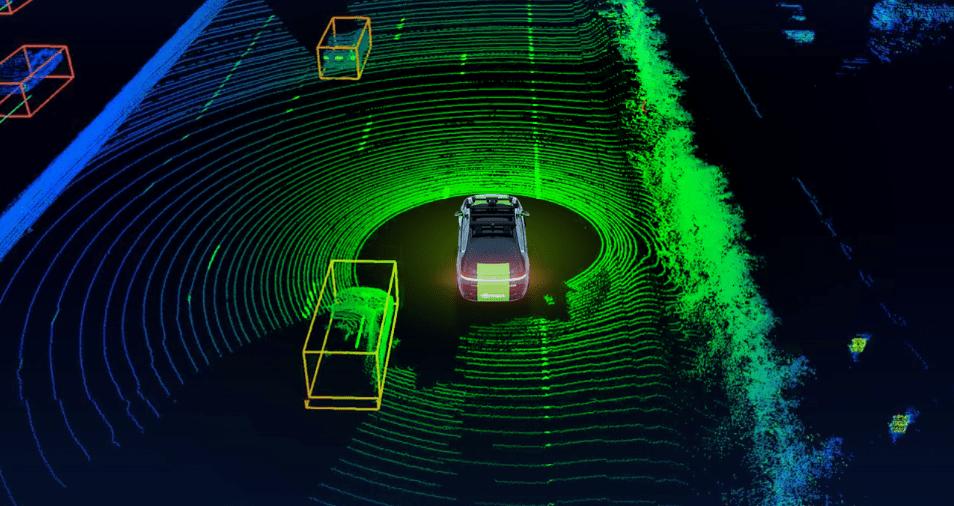
The race toward fully autonomous vehicles is accelerating faster than ever. Automakers, robotics companies, and intelligent transportation developers are investing heavily in advanced perception technologies capable of delivering precise environmental awareness under complex real-world conditions. Among all perception sensors, LiDAR has emerged as one of the most critical technologies enabling autonomous mobility.
While cameras provide visual information and millimeter-wave radar excels in adverse weather conditions, neither technology alone can provide the highly accurate three-dimensional spatial understanding required for advanced autonomous driving. This is where automotive-grade LiDAR sensors such as the Hesai AT128 have become increasingly important.
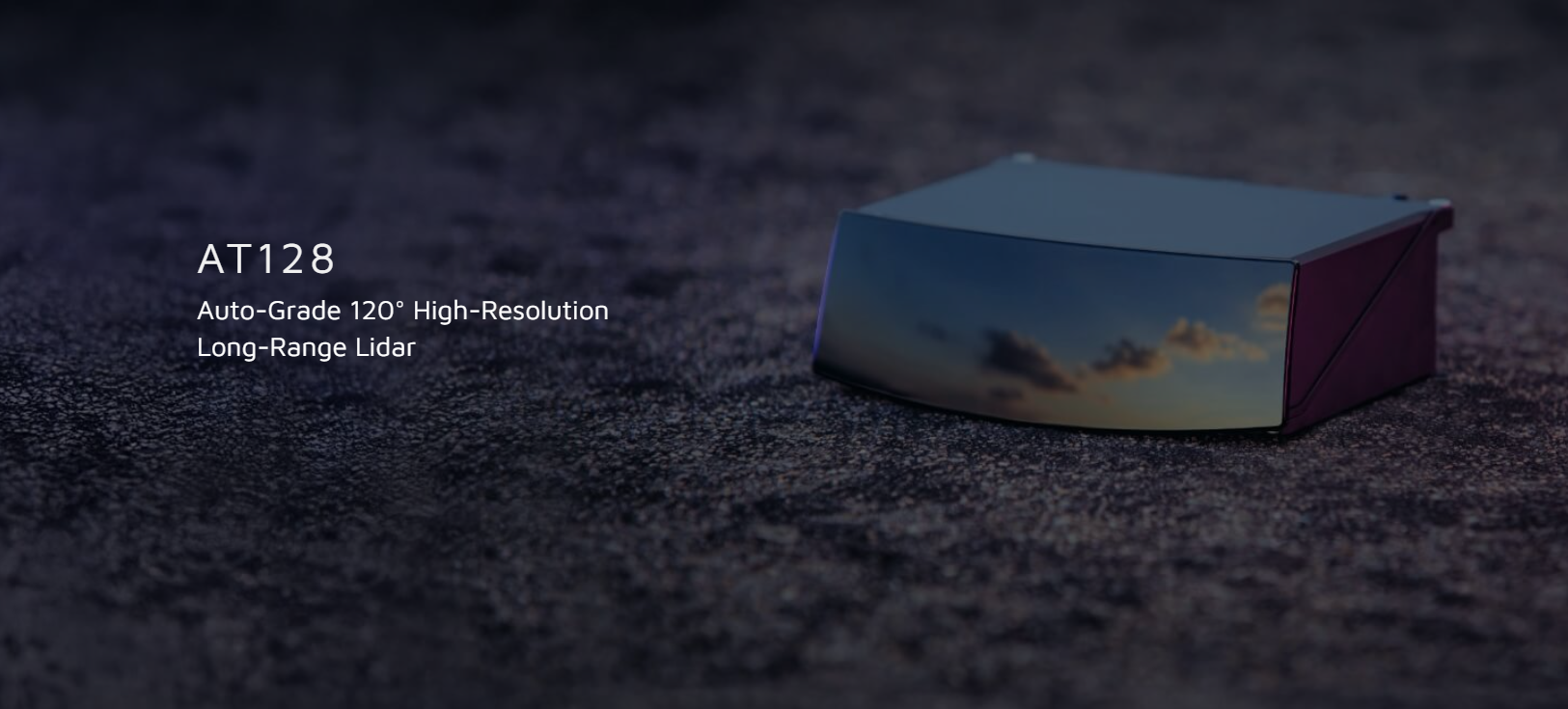
The Hesai AT128 is not simply another 3D LiDAR sensor. It represents a new generation of high-performance automotive LiDAR designed specifically for intelligent vehicles, advanced driver assistance systems (ADAS), autonomous shuttles, robotaxis, logistics vehicles, and robotics applications.
For organizations looking to buy LiDAR sensors capable of supporting L2, L3, and L4 autonomous driving systems, the AT128 has become one of the industry’s most recognized solutions.
Explore the product:
👉 Hesai AT128 Automotive LiDAR
The Evolution of Automotive LiDAR
Autonomous driving systems have evolved significantly over the last decade.
Early ADAS systems primarily relied on:
- Cameras
- Ultrasonic sensors
- Millimeter-wave radar
These technologies provided basic functions such as:
- Adaptive Cruise Control
- Automatic Emergency Braking
- Lane Keeping Assist
- Blind Spot Monitoring
However, as vehicles progressed toward L2+, L3, and L4 autonomy, perception requirements increased dramatically.
Vehicles now need to:
- Detect small obstacles hundreds of meters away
- Distinguish pedestrians from roadside objects
- Track moving vehicles in real time
- Build accurate 3D maps
- Operate safely at highway speeds
Traditional sensors alone struggle to achieve this level of precision.
Automotive LiDAR solves this challenge by generating high-density three-dimensional point clouds that allow vehicles to perceive their surroundings with centimeter-level accuracy.
The Hesai AT128 was developed specifically to meet these demanding requirements.
What Makes Hesai AT128 Different?
Unlike many traditional spinning LiDAR systems, the AT128 adopts an automotive-focused architecture optimized for mass production and intelligent driving applications.
Key capabilities include:
Ultra-High Resolution
The sensor generates dense point clouds capable of identifying small objects at long distances.
This enables:
- Pedestrian detection
- Cyclist recognition
- Road edge identification
- Vehicle classification
even in highly dynamic environments.
Long Detection Range
High-speed autonomous driving requires long-range perception.
The AT128 provides sufficient detection distance for:
- Highway navigation
- Autonomous overtaking
- Collision avoidance
- High-speed decision making
This is critical for L3 and L4 autonomous driving systems.
Automotive Grade Reliability
Unlike industrial sensors adapted for vehicles, the Hesai AT128 was engineered specifically for automotive deployment.
It is designed to withstand:
- Temperature variations
- Rain
- Dust
- Vibration
- Long operational lifecycles
These characteristics make it suitable for commercial deployment in intelligent vehicles.
Why L2–L4 Autonomous Driving Depends on Advanced LiDAR
Many consumers believe autonomous driving is simply a software problem.
In reality, autonomous driving begins with perception.
Without accurate environmental understanding, no AI system can make safe decisions.
The Society of Automotive Engineers (SAE) defines automation levels ranging from L0 to L5.
L2 Autonomous Driving
Drivers remain responsible but receive assistance through:
- Adaptive cruise control
- Lane centering
- Traffic jam assistance
LiDAR enhances these functions by improving object recognition and distance measurement.
L3 Autonomous Driving
The vehicle performs driving tasks under certain conditions.
The system must:
- Understand traffic situations
- Detect hazards
- Predict object movement
LiDAR becomes increasingly important at this level.
L4 Autonomous Driving
Vehicles operate autonomously within defined environments.
Examples include:
- Robotaxis
- Autonomous shuttles
- Delivery vehicles
These applications require high-resolution LiDAR systems like the Hesai AT128 to maintain safe operation.
Hesai AT128 in Robotaxi Applications
Robotaxis represent one of the most demanding use cases for automotive LiDAR.
A robotaxi must:
- Identify pedestrians
- Track bicycles
- Detect vehicles
- Interpret intersections
- Operate day and night
The AT128 provides the dense 3D environmental data needed for these tasks.
Its high point cloud density allows AI algorithms to build accurate environmental models and make safe navigation decisions.
As a result, many autonomous mobility developers view high-performance LiDAR as a core component of robotaxi architecture.
Hesai AT128 for Autonomous Delivery Vehicles
The rapid growth of e-commerce has increased demand for autonomous delivery solutions.
These vehicles must navigate:
- Warehouses
- Industrial parks
- Campuses
- Urban roads
Unlike traditional vehicles, delivery robots often operate in unpredictable environments filled with pedestrians and obstacles.
By integrating the AT128 with advanced perception software, autonomous delivery vehicles can:
- Detect obstacles
- Build maps
- Perform localization
- Execute path planning
with exceptional accuracy.
Hesai AT128 Beyond Autonomous Cars
One of the most overlooked applications of automotive LiDAR is robotics.
Many engineers assume automotive LiDAR can only be used on passenger vehicles.
This is no longer true.
The same technologies powering intelligent vehicles are increasingly being adopted by:
- Humanoid robots
- Robot dogs
- Autonomous mobile robots (AMRs)
- Automated guided vehicles (AGVs)
- Security robots
- Industrial inspection robots
The AT128 enables robots to achieve:
- Real-time perception
- Obstacle avoidance
- SLAM mapping
- Localization
- Navigation
which are fundamental requirements for intelligent autonomy.
Related Products
LidarSeek offers a wide range of intelligent perception solutions:
Shop Automotive LiDAR
Recommended products:
- Hesai XT32
- RoboSense Helios
- RoboSense Airy
- Livox MID360
- LSLiDAR CH128
- PAVO Series
These products can be integrated into autonomous vehicles, robotics systems, and industrial automation projects.
Recommended Video
Hesai AT128 Point Cloud Demonstration
For a visual demonstration of AT128 point cloud performance, embed the official Hesai AT128 showcase video on the article page.
Recommended placement:
Hesai AT128 vs Cameras: Why Vision Alone Is Not Enough
Cameras have long been the foundation of modern ADAS systems. They are relatively affordable, lightweight, and capable of capturing rich visual information such as traffic signs, lane markings, pedestrians, and vehicle classifications.
However, camera-based systems face significant limitations.
Cameras rely heavily on ambient lighting conditions. Performance can degrade during:
- Night driving
- Heavy rain
- Fog
- Snow
- Strong backlighting
- Tunnel transitions
In contrast, the Hesai AT128 actively emits laser pulses and measures the reflected signals to generate precise three-dimensional point clouds.
This means the sensor can accurately determine:
- Object position
- Distance
- Relative speed
- Shape
- Spatial relationships
without depending solely on visual features.
For L3 and L4 autonomous driving, sensor fusion has become the industry standard.
Modern autonomous vehicles increasingly combine:
- Cameras
- LiDAR
- Radar
- IMU
- GNSS
to create a comprehensive environmental perception system.
The AT128 serves as the high-precision spatial sensing component within this architecture.
Hesai AT128 vs Millimeter-Wave Radar
Radar remains an essential component in autonomous driving.
It excels at:
- Long-range detection
- Velocity estimation
- Adverse weather performance
However, radar typically produces sparse environmental information.
Radar can detect an object but often struggles to determine:
- Exact object contours
- Pedestrian posture
- Bicycle geometry
- Roadside structures
LiDAR bridges this gap.
The Hesai AT128 generates dense point cloud data that allows autonomous systems to reconstruct the surrounding environment with significantly higher detail.
Rather than replacing radar, the AT128 complements it.
Together they form one of the most reliable perception combinations available for autonomous driving platforms.
How Hesai AT128 Supports Autonomous Mobile Robots (AMRs)
Warehouse automation has become one of the fastest-growing sectors in robotics.
Modern fulfillment centers depend on Autonomous Mobile Robots (AMRs) to:
- Move inventory
- Transport materials
- Optimize logistics workflows
- Improve operational efficiency
AMRs require highly accurate perception systems capable of operating safely around people and equipment.
The Hesai AT128 enables:
Real-Time Obstacle Detection
The sensor continuously scans the environment and identifies obstacles with high accuracy.
High-Precision Localization
Dense point clouds improve localization performance in dynamic warehouse environments.
Dynamic Path Planning
Robots can react quickly to changing conditions and avoid collisions.
Reliable Operation
Industrial environments often contain varying lighting conditions and complex layouts.
LiDAR provides stable performance regardless of illumination changes.
Hesai AT128 for Robot Dogs and Security Robotics
Robot dogs are rapidly becoming valuable tools for:
- Security patrol
- Infrastructure inspection
- Energy facilities
- Smart factories
- Emergency response
These robots frequently operate in environments where GPS signals are weak or unavailable.
To navigate safely, robot dogs depend on advanced perception technologies.
The Hesai AT128 helps robotic platforms achieve:
- Autonomous navigation
- Terrain analysis
- Obstacle avoidance
- Environmental mapping
- Real-time decision making
As robotic inspection continues to expand worldwide, automotive-grade LiDAR sensors are becoming increasingly attractive for advanced robotic applications.
The Role of AT128 in Humanoid Robotics
The rise of embodied AI has transformed the robotics industry.
Humanoid robots are no longer limited to research laboratories.
Today, they are being deployed in:
- Warehouses
- Manufacturing facilities
- Hospitals
- Airports
- Retail environments
For humanoid robots to function effectively, they must understand complex surroundings in real time.
The Hesai AT128 provides a rich three-dimensional representation of the environment that supports:
Scene Understanding
Robots can recognize environmental structures and navigate efficiently.
Human Detection
The system identifies nearby workers and visitors.
Motion Prediction
AI algorithms can anticipate movement patterns.
Safe Human-Robot Collaboration
Accurate perception improves workplace safety and operational efficiency.
The same LiDAR technology powering autonomous vehicles is now becoming a key enabler of next-generation humanoid robots.
Why Engineers Choose Hesai AT128
When engineers evaluate a 3D LiDAR sensor, they typically consider several factors.
Reliability
Automotive-grade design ensures stable long-term performance.
Detection Performance
Long-range perception supports high-speed driving applications.
Point Cloud Quality
Dense point clouds improve AI perception accuracy.
Integration Flexibility
The sensor can be integrated into various autonomous systems.
Future Scalability
AT128 supports the evolving requirements of intelligent vehicles and robotics platforms.
These advantages make it one of the most popular automotive LiDAR solutions currently available.
The Future of Automotive LiDAR
The automotive industry is entering a new era of intelligent mobility.
Future vehicles will increasingly depend on advanced perception systems capable of understanding their surroundings with near-human accuracy.
Industry trends indicate continued growth in:
- L2+ assisted driving
- L3 autonomous driving
- L4 autonomous transportation
- Robotaxis
- Smart logistics vehicles
- Intelligent robots
As AI algorithms become more powerful, the quality of perception data becomes even more important.
Sensors such as the Hesai AT128 will play a critical role in enabling safe, reliable, and scalable autonomous systems.
Organizations looking to buy LiDAR sensors for future-proof autonomous applications should carefully evaluate solutions that offer automotive-grade reliability, high-resolution perception, and proven deployment capabilities.
The AT128 stands out as one of the strongest candidates in this rapidly evolving market.
Frequently Asked Questions (FAQ)
1. What is the Hesai AT128 LiDAR sensor used for?
The Hesai AT128 is primarily used in autonomous vehicles, ADAS systems, robotaxis, autonomous logistics vehicles, AMRs, and advanced robotics applications.
2. Is Hesai AT128 suitable for L4 autonomous driving?
Yes. The sensor is designed to support high-performance perception requirements for L2 through L4 autonomous driving systems.
3. Why is LiDAR important for autonomous vehicles?
LiDAR provides accurate three-dimensional environmental perception, enabling safer navigation and decision-making.
4. How does AT128 compare to camera-only systems?
AT128 provides precise distance measurements and dense point clouds, improving perception accuracy beyond what cameras alone can achieve.
5. Can Hesai AT128 be used in robotics?
Yes. The sensor is suitable for AMRs, AGVs, robot dogs, humanoid robots, and industrial robotics platforms.
6. What industries use automotive LiDAR sensors?
Automotive, robotics, logistics, industrial automation, smart cities, agriculture, mining, and infrastructure inspection.
7. What makes AT128 different from traditional LiDAR sensors?
Its automotive-grade architecture, high-resolution perception, and long-range detection capabilities make it ideal for intelligent mobility.
8. Is Hesai AT128 suitable for robot navigation?
Yes. It supports mapping, localization, obstacle avoidance, and autonomous navigation.
9. What is the advantage of 3D LiDAR sensors?
3D LiDAR sensors generate detailed point cloud data that enables accurate environmental understanding.
10. Can LiDAR work at night?
Yes. LiDAR actively emits laser pulses and performs effectively in low-light conditions.
11. Does AT128 support sensor fusion?
Yes. It can be integrated with cameras, radar, GNSS, and IMU systems.
12. Where can I buy Hesai AT128?
You can learn more about the product here:
Hesai AT128 Product Page









