
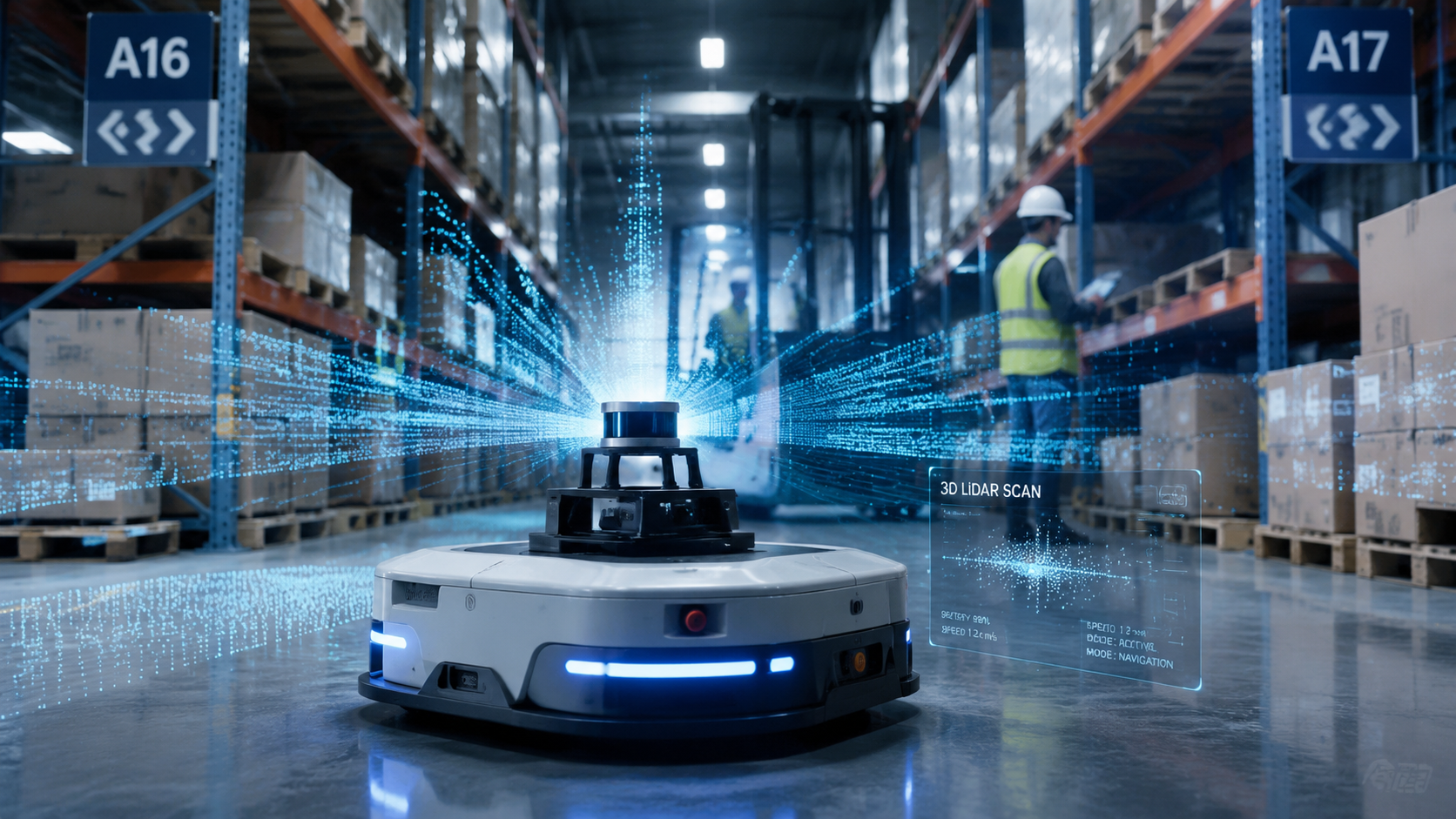
How to Choose the Best Industrial LiDAR Sensor in 2026
Industrial automation is advancing faster than ever. Autonomous Mobile Robots (AMRs), Automated Guided Vehicles (AGVs), warehouse robots, autonomous forklifts, smart logistics systems, delivery robots, and self-driving vehicles all rely on one critical technology—LiDAR (Light Detection and Ranging).
However, choosing the right industrial LiDAR sensor is no longer as simple as comparing detection range or price. Modern LiDAR systems vary widely in resolution, field of view, scanning frequency, environmental protection, software compatibility, and application suitability.
Selecting the wrong sensor can lead to reduced navigation accuracy, unstable object detection, higher maintenance costs, and delays in product development.
This guide explains the key factors you should evaluate before purchasing an industrial LiDAR sensor and provides practical recommendations for different robotics and automation projects.
Whether you’re building a warehouse robot, developing an autonomous vehicle, or integrating perception into an industrial machine, this guide will help you make an informed decision.
What Is an Industrial LiDAR Sensor?
An industrial LiDAR sensor measures the distance between itself and surrounding objects by emitting laser pulses and calculating the time it takes for each pulse to return.
Unlike traditional cameras, LiDAR directly measures distance instead of relying solely on visual information. This allows it to generate highly accurate three-dimensional point clouds that represent the surrounding environment.
Because of its ability to provide precise spatial information, LiDAR has become one of the core perception technologies used in intelligent automation.
Today, industrial LiDAR sensors are widely deployed in:
- Autonomous Mobile Robots (AMRs)
- Automated Guided Vehicles (AGVs)
- Warehouse automation
- Autonomous forklifts
- Smart manufacturing
- Logistics robots
- Mining equipment
- Construction machinery
- Delivery robots
- Agricultural robots
- Autonomous vehicles
- Intelligent transportation systems
As industries move toward higher levels of automation, LiDAR continues to play a critical role in improving safety, navigation accuracy, and operational efficiency.
Why Industrial LiDAR Is Becoming Essential
Several technology trends are driving the rapid adoption of LiDAR across industries.
Warehouse Automation
Modern warehouses increasingly rely on autonomous robots to transport goods efficiently. LiDAR enables robots to navigate dynamic environments, detect obstacles in real time, and optimize travel paths without requiring physical guide rails.
Smart Manufacturing
Factories are becoming more flexible and interconnected. Mobile robots equipped with LiDAR can safely move materials between production lines while avoiding workers and equipment.
Autonomous Vehicles
LiDAR provides highly accurate environmental perception, making it an important sensing technology for advanced driver assistance systems (ADAS) and autonomous driving research.
Agriculture
Autonomous tractors, harvesting machines, and agricultural robots use LiDAR to map terrain, detect crops, and improve operational efficiency.
Mining and Construction
Heavy machinery operates in complex environments where visibility may be limited by dust or changing terrain. LiDAR enhances situational awareness and supports safer operations.
How LiDAR Works
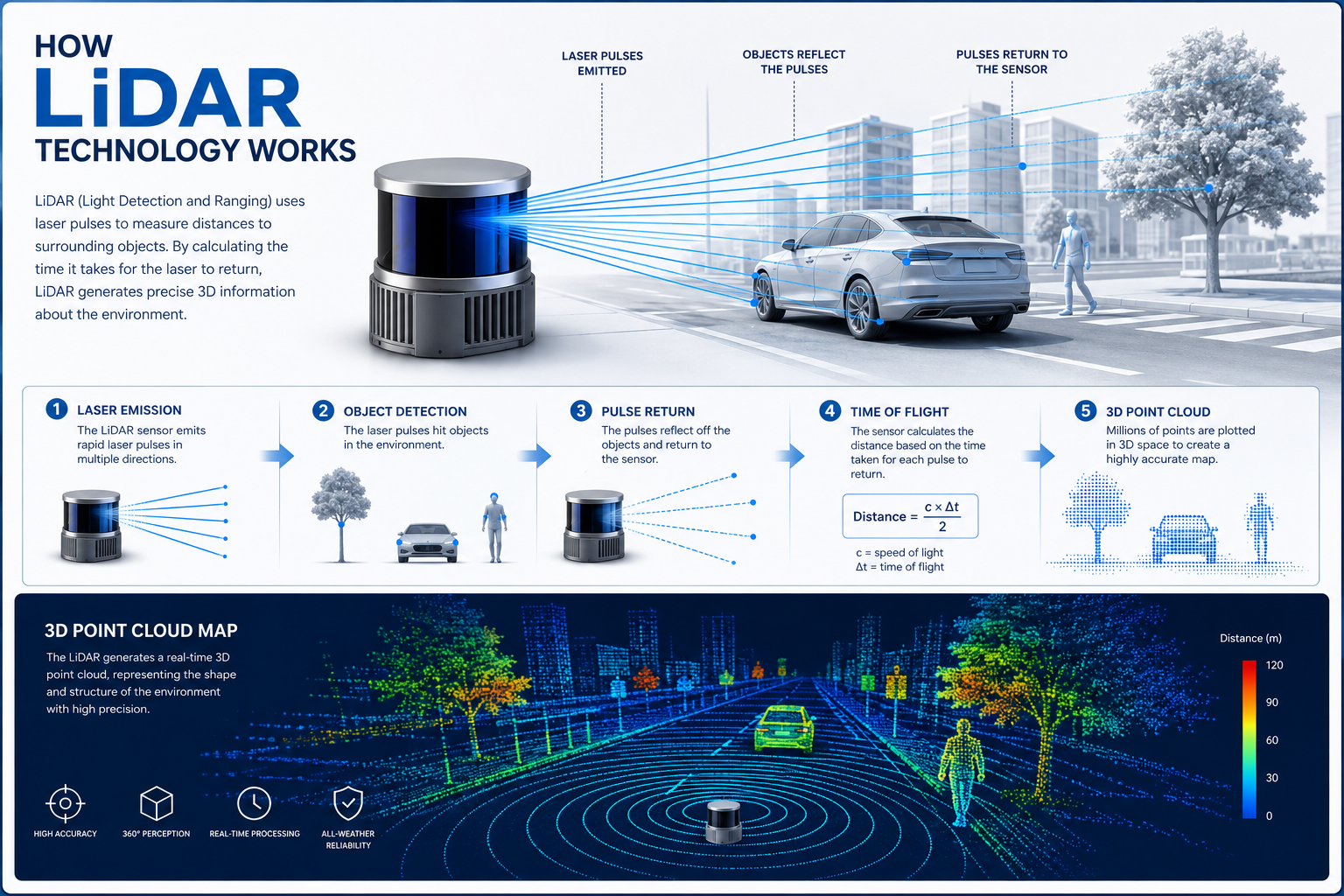
Although modern LiDAR systems incorporate sophisticated hardware and software, the basic principle is straightforward.
- The sensor emits thousands—or even millions—of laser pulses every second.
- Each pulse travels until it reaches an object.
- The reflected signal returns to the sensor.
- The system measures the time of flight for each pulse.
- Distance is calculated with high precision.
- Millions of measurements are combined into a detailed 3D point cloud.
This point cloud allows robots and autonomous systems to recognize obstacles, estimate distances, build maps, and navigate safely.
Seven Key Factors to Consider Before Buying a LiDAR Sensor
1. Detection Range
Detection range is often the first specification buyers consider.
Short-range sensors (10–30 meters) are typically suitable for indoor robots and service robots.
Medium-range sensors (30–100 meters) are commonly used for warehouse automation, AGVs, and industrial vehicles.
Long-range sensors (over 150 meters) are better suited for autonomous driving, mining equipment, and outdoor robotics.
Selecting a range significantly beyond your application’s requirements may increase costs without delivering meaningful benefits.
2. Field of View (FOV)
Field of view determines how much of the surrounding environment the sensor can observe.
Applications requiring full environmental awareness often benefit from a 360° horizontal field of view, while front-facing applications such as autonomous vehicles may prioritize forward coverage with a narrower but longer-range view.
Vertical field of view is equally important when detecting objects at different heights, such as shelves, ramps, or pedestrians.
3. Resolution and Point Cloud Density
Higher resolution generates denser point clouds.
A denser point cloud enables more accurate detection of small or distant objects, improving object classification and environmental modeling.
However, higher resolution also increases data volume and processing requirements, so it is important to balance performance with computing resources.
4. Refresh Rate
The refresh rate determines how frequently the sensor updates environmental information.
Applications involving fast-moving vehicles or robots require higher refresh rates to ensure timely obstacle detection and responsive navigation.
Indoor mapping applications may not require the highest scanning frequency, allowing for more cost-effective sensor choices.
5. Environmental Protection
Industrial environments can be harsh.
Choose sensors designed to withstand:
- Dust
- Rain
- Snow
- High humidity
- Vibration
- Temperature fluctuations
An appropriate IP rating helps ensure reliable long-term operation in demanding conditions.
6. Software Compatibility
Hardware is only part of the solution.
Before purchasing a LiDAR sensor, verify that it supports:
- ROS
- ROS 2
- Ethernet communication
- SDKs
- APIs
- Point cloud visualization tools
- Linux and Windows development environments
Strong software support can significantly reduce development time and simplify system integration.
7. Technical Support and Supply Stability
Many projects fail not because of hardware limitations but because of inadequate technical support or long delivery times.
When selecting a supplier, consider:
- Product availability
- Delivery lead time
- Engineering support
- Documentation quality
- Firmware updates
- Global shipping capability
- Warranty and after-sales service
Working with an experienced supplier helps reduce project risk and accelerates deployment.
LiDAR vs Camera vs Radar
No sensing technology is perfect for every application.
| Feature | LiDAR | Camera | Radar |
|---|---|---|---|
| Distance Measurement | Excellent | Limited | Good |
| 3D Mapping | Excellent | Moderate | Poor |
| Object Recognition | Good | Excellent | Moderate |
| Low-Light Performance | Excellent | Poor | Excellent |
| Weather Resistance | Good | Moderate | Excellent |
| Navigation Accuracy | Excellent | Moderate | Good |
| Obstacle Detection | Excellent | Moderate | Good |
For many advanced robotics and autonomous systems, combining LiDAR with cameras and radar provides the most robust perception solution.
Best LiDAR Solutions for Different Applications
Different industries have unique perception requirements. Selecting the right LiDAR sensor depends on your operating environment, detection range, accuracy requirements, and budget.
Autonomous Mobile Robots (AMRs)
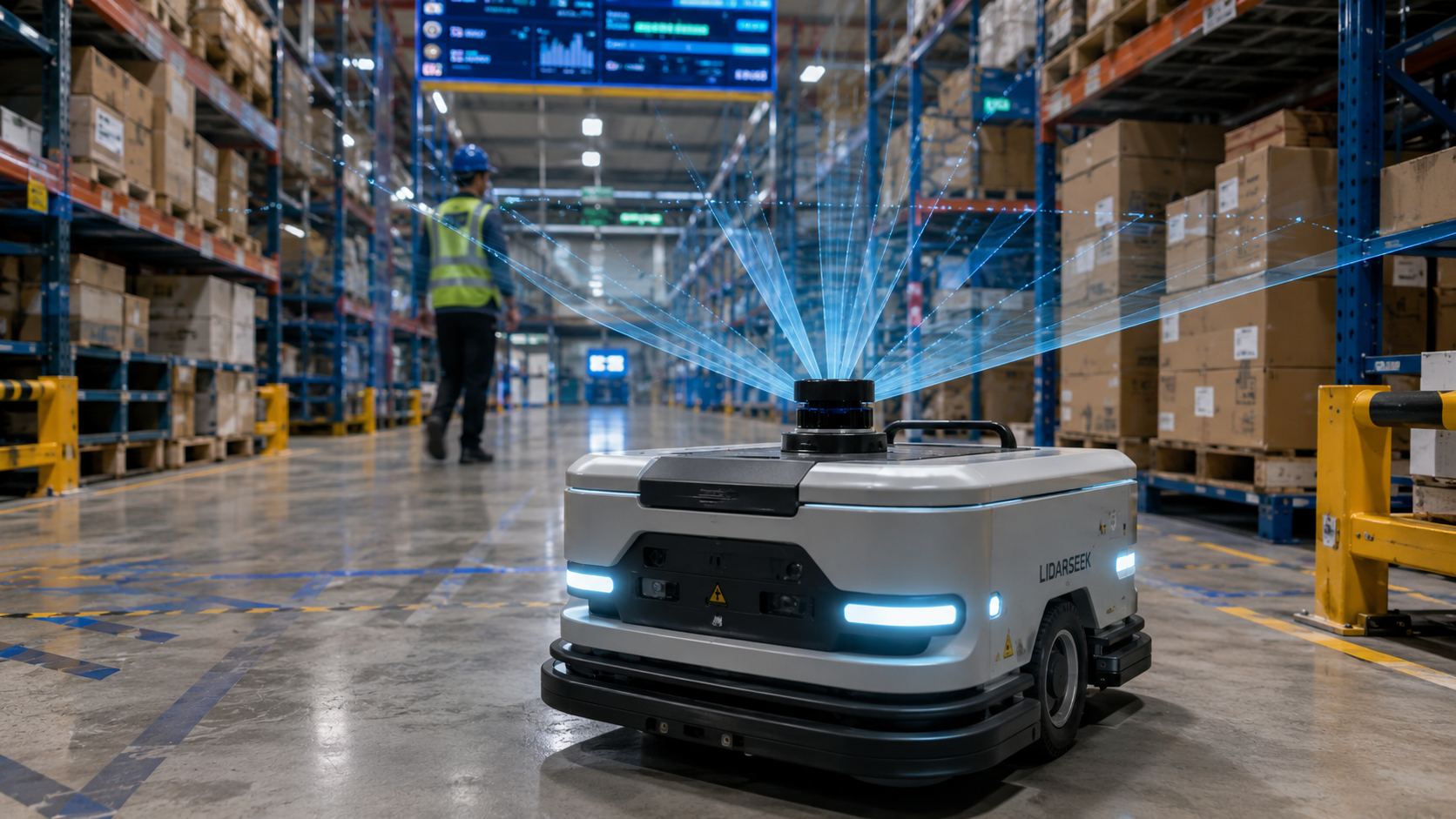
AMRs operate in dynamic environments where they must safely navigate around people, equipment, and unexpected obstacles. A compact 3D LiDAR with a wide field of view and reliable real-time performance is ideal for these applications.
When selecting a sensor for AMRs, prioritize:
- Accurate obstacle detection
- Fast refresh rates
- Stable indoor navigation
- ROS/ROS 2 compatibility
- Easy integration with SLAM software
Automated Guided Vehicles (AGVs)
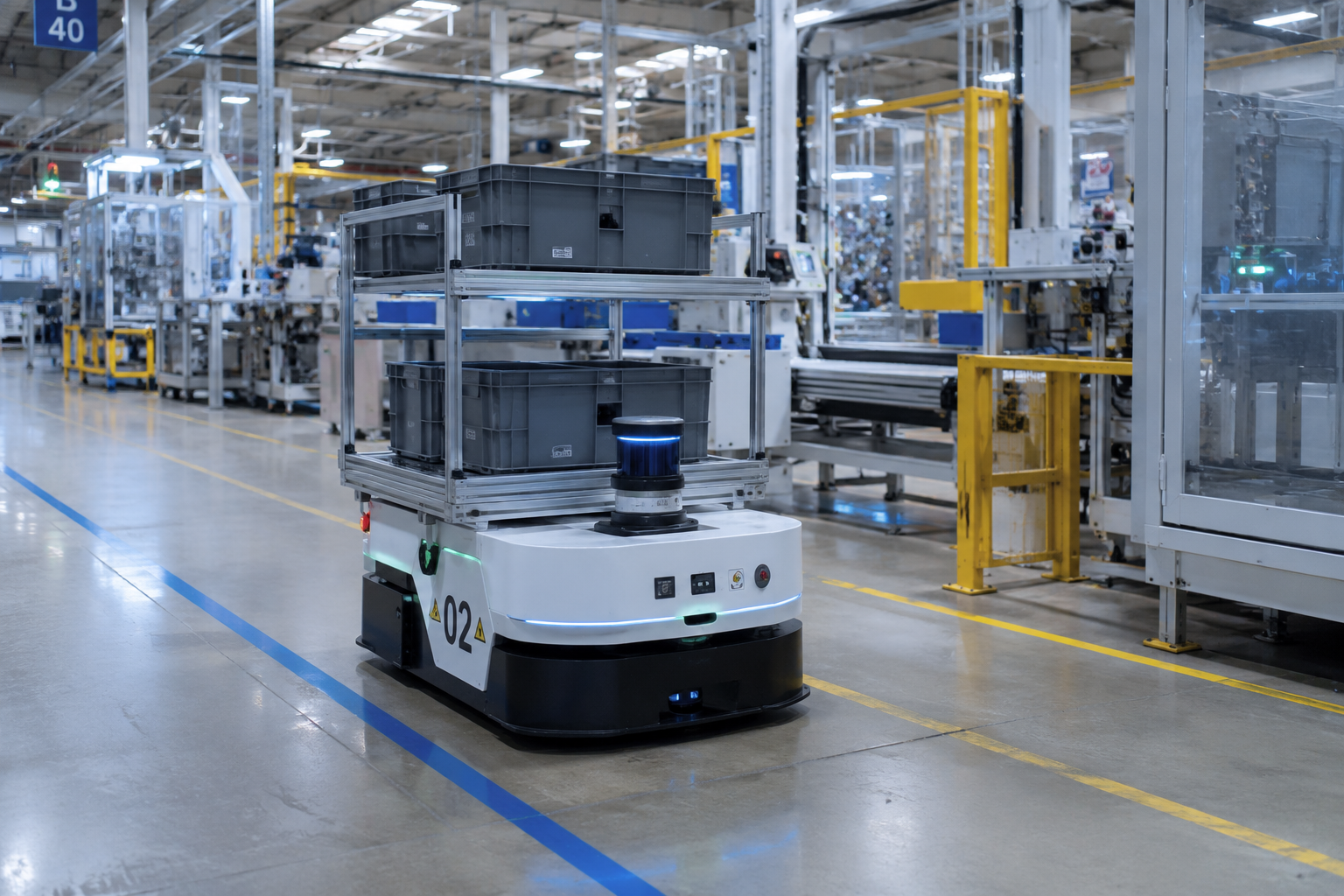
AGVs are widely used in factories and warehouses to transport materials efficiently. Since they often follow predefined routes while avoiding unexpected obstacles, consistent detection performance is essential.
Recommended features include:
- Medium-range detection
- High reliability
- Wide horizontal field of view
- Industrial-grade IP protection
- Long operating life
Warehouse Automation
Modern warehouses increasingly rely on autonomous systems for inventory management and logistics. LiDAR enables robots to navigate narrow aisles, identify pallets, and operate safely around workers.
Important considerations include:
- Compact size
- High point cloud density
- Excellent low-light performance
- Reliable indoor positioning
Autonomous Forklifts
Autonomous forklifts require precise obstacle detection and accurate pallet positioning.
Key requirements include:
- Long detection range
- High measurement accuracy
- Reliable operation in dusty environments
- Multi-layer scanning capability
Outdoor Delivery Robots
Delivery robots encounter pedestrians, bicycles, vehicles, uneven roads, and changing weather conditions.
A suitable LiDAR should provide:
- Long-range detection
- Stable outdoor performance
- High environmental resistance
- Low power consumption
Autonomous Vehicles
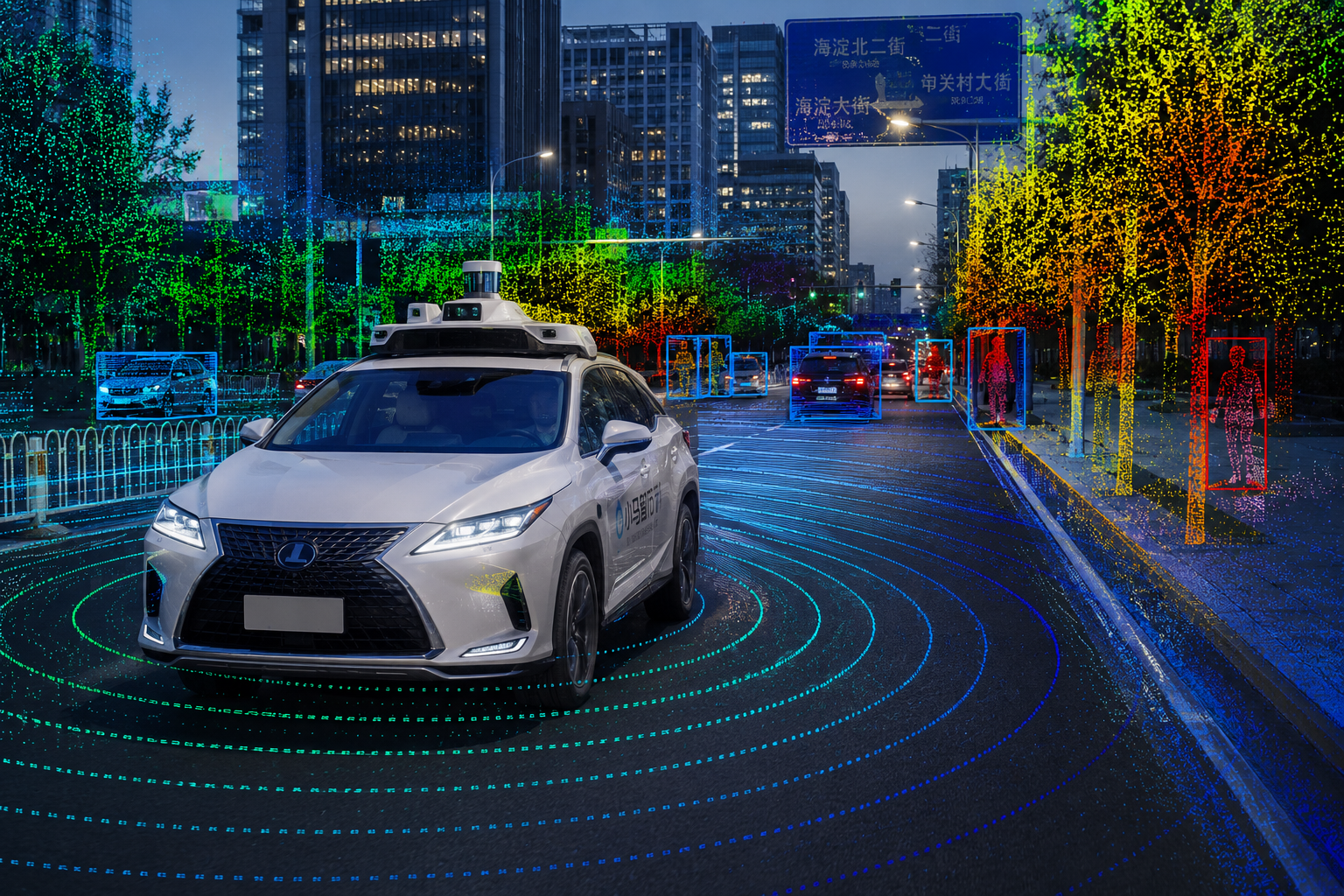
Autonomous driving remains one of the most demanding applications for LiDAR technology.
Automotive-grade sensors should offer:
- Long detection distances
- High-resolution point clouds
- Wide vertical field of view
- Low latency
- Reliable performance under varying weather conditions
These capabilities help improve object detection, lane perception, and overall driving safety.
Leading LiDAR Brands in the Market
The industrial LiDAR market includes several well-established manufacturers, each with different strengths.
Hesai
Hesai is known for its high-performance automotive and industrial LiDAR sensors. Its products are widely used in autonomous driving, robotics, intelligent transportation, and research applications.
Advantages include:
- Excellent point cloud quality
- Long detection range
- Mature SDK ecosystem
- Proven reliability
RoboSense
RoboSense focuses on intelligent perception solutions for autonomous vehicles and robotics.
Its products are recognized for:
- High resolution
- Strong environmental adaptability
- Advanced perception capabilities
- Broad application coverage
Livox
Livox offers innovative scanning technologies that provide high point cloud density while maintaining competitive pricing.
These sensors are commonly used in:
- Robotics
- Mapping
- Drones
- Research projects
- Industrial automation
Ouster
Ouster has become popular in industrial automation, smart infrastructure, and autonomous systems due to its digital LiDAR architecture.
Its strengths include:
- High reliability
- Industrial-grade performance
- Flexible integration
- Strong software support
How to Choose a Reliable LiDAR Supplier
Choosing the right supplier is just as important as choosing the right sensor.
Before placing an order, ask the following questions:
Is the product in stock?
Shorter lead times help keep development projects on schedule.
Does the supplier provide technical support?
A knowledgeable engineering team can significantly reduce integration challenges.
Are SDKs and documentation available?
Comprehensive documentation accelerates software development and troubleshooting.
Can the supplier ship internationally?
Reliable global logistics ensure timely delivery and simplify cross-border purchasing.
Is after-sales support available?
Firmware updates, troubleshooting assistance, and warranty services are essential for long-term project success.
Why Choose LIDARSEEK?
At LIDARSEEK, we understand that every robotics and automation project has unique requirements. Rather than offering a one-size-fits-all solution, we work closely with customers to recommend the most suitable LiDAR products for their applications.
Our advantages include:
✔ Wide selection of industrial and automotive LiDAR sensors
✔ Products from leading global brands
✔ Fast international shipping
✔ Professional technical support
✔ Competitive pricing
✔ Assistance with model selection
✔ OEM and project consultation
✔ Support for robotics, autonomous vehicles, drones, mapping, and industrial automation
Whether you are purchasing a single evaluation unit or sourcing sensors for volume production, our team is committed to helping you identify the right solution quickly and efficiently.
Frequently Asked Questions
1. What is the difference between industrial LiDAR and automotive LiDAR?
Industrial LiDAR is commonly used in robotics, automation, mapping, and smart manufacturing, while automotive LiDAR is specifically designed for vehicles and must meet stricter safety, durability, and environmental standards.
2. What detection range do I need?
The required range depends on your application. Indoor robots often require 10–30 meters, warehouse AGVs typically use 30–100 meters, while autonomous vehicles may require detection ranges exceeding 150 meters.
3. Can LiDAR operate at night?
Yes. Since LiDAR uses laser pulses rather than ambient light, it performs effectively in low-light and nighttime conditions.
4. Is LiDAR suitable for outdoor environments?
Yes. Many industrial LiDAR sensors are designed for outdoor use and can operate reliably in rain, dust, and varying temperatures, provided they have the appropriate environmental protection rating.
5. Does LiDAR work in fog or heavy rain?
Performance may decrease in dense fog, heavy rain, or snow due to laser scattering. For critical outdoor applications, combining LiDAR with radar and cameras can improve overall perception reliability.
6. Which interface is most commonly used?
Most industrial LiDAR sensors support Ethernet communication. Many also provide SDKs and APIs for Linux, Windows, ROS, and ROS 2.
7. Can one LiDAR sensor cover an entire robot?
It depends on the robot’s design. Some applications require multiple sensors to eliminate blind spots and improve environmental awareness.
8. How long do industrial LiDAR sensors last?
With proper installation and maintenance, industrial-grade LiDAR sensors are designed for long-term operation and can provide years of reliable service.
9. How do I choose the right LiDAR sensor?
Consider your application’s detection range, field of view, resolution, environmental conditions, software compatibility, and integration requirements. Consulting with an experienced supplier can help you make the right decision.
10. Where can I purchase industrial LiDAR sensors?
You can source industrial LiDAR sensors through trusted suppliers such as LIDARSEEK, which offers products from leading manufacturers along with technical support and global shipping.
Conclusion
Industrial LiDAR technology has become a cornerstone of modern automation, enabling robots, vehicles, and intelligent machines to perceive their surroundings with exceptional accuracy.
Choosing the right sensor requires evaluating more than just specifications. Detection range, resolution, software compatibility, environmental protection, supplier reliability, and long-term technical support all play important roles in ensuring project success.
As LiDAR technology continues to evolve, selecting a trusted supplier can save valuable development time while reducing integration risks.
If you’re planning a robotics, automation, mapping, or autonomous vehicle project, investing in the right LiDAR solution today will help build a smarter and more reliable system for the future.
Ready to Find the Right LiDAR Sensor?
Whether you’re developing an AMR, AGV, autonomous vehicle, robotic platform, or industrial automation system, choosing the right LiDAR sensor is essential for achieving reliable performance and long-term success.
At LIDARSEEK, we provide access to a broad portfolio of high-quality LiDAR solutions backed by responsive technical support and global delivery.
Contact our team today to:
- Request a quotation
- Compare different LiDAR models
- Receive expert application recommendations
- Obtain technical documentation and SDK information
- Find the best solution for your project
👉 Contact LIDARSEEK today and receive a professional recommendation within 24 hours.









