
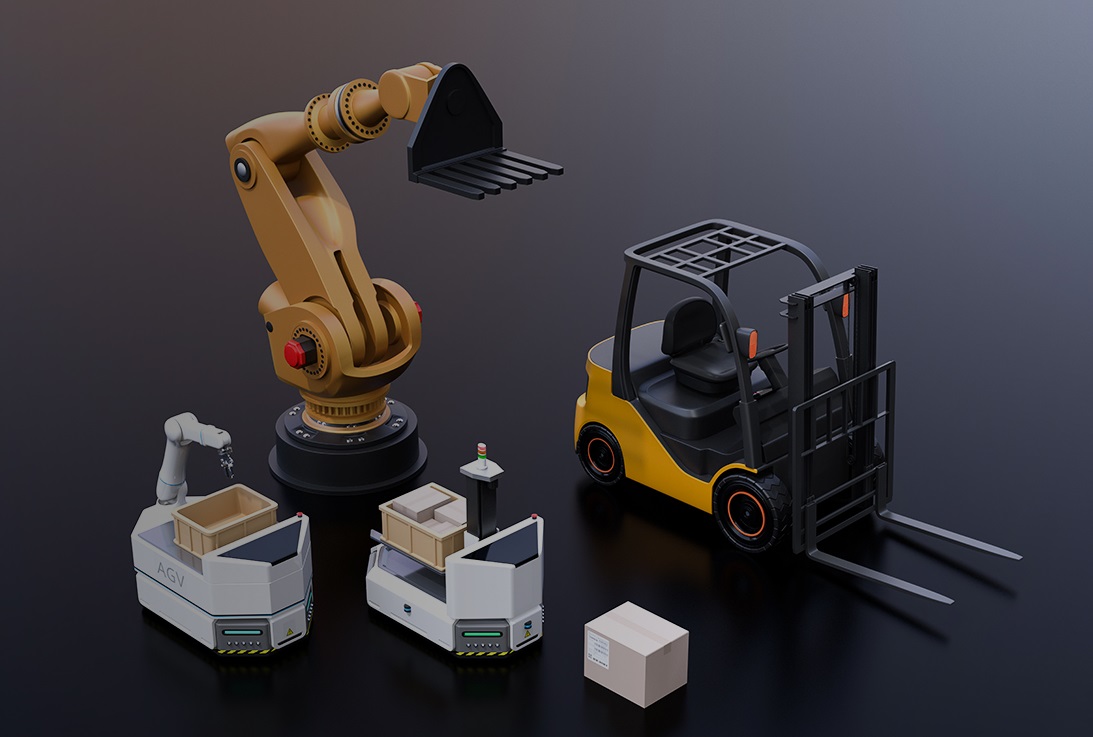
The global robotics industry is entering a new era of intelligent automation. From warehouse AMRs and AGVs to delivery robots, robot dogs, and autonomous inspection systems, mobile robots are becoming an essential part of modern business operations.
At the heart of every successful autonomous robot is a reliable perception system. Among all sensing technologies, LiDAR has become the preferred solution for navigation, mapping, localization, and obstacle avoidance.
However, selecting the right robot LiDAR sensor can be challenging. Hundreds of models are available on the market, each with different specifications, scanning technologies, detection ranges, communication interfaces, and software ecosystems.
This comprehensive buyer guide explains how to choose the best LiDAR sensor for mobile robots in 2026 while helping engineers, system integrators, and procurement managers avoid costly purchasing mistakes.
Point Cloud Density
Point cloud density affects perception quality.
Higher density provides:
- Better object recognition
- Improved mapping accuracy
- Enhanced obstacle detection
However, it also increases computational requirements.
Refresh Rate
Refresh rate determines how frequently environmental data is updated.
Typical values:
- 10 Hz
- 20 Hz
- 30 Hz
Fast-moving robots benefit from higher refresh rates.
Accuracy
Higher accuracy improves:
- Localization
- Mapping
- Docking performance
- Path planning
For industrial robots, millimeter-level precision is often preferred.
LiDAR and SLAM: Why It Matters
One of the most important functions of robot LiDAR is supporting SLAM (Simultaneous Localization and Mapping).
SLAM allows robots to:
- Create maps
- Determine position
- Navigate unknown environments
Without reliable LiDAR data, SLAM performance can degrade significantly.
When evaluating a sensor, buyers should verify:
- ROS compatibility
- ROS2 compatibility
- SLAM support
- SDK availability
- Sample code resources
Should You Use LiDAR Only?
The answer is increasingly no.
Modern robotic systems often combine:
LiDAR + Camera
Benefits:
- Object recognition
- Visual classification
- Semantic understanding
LiDAR + Camera + IMU
Benefits:
- Better localization
- Improved mapping
- Enhanced stability
LiDAR + AI Computing Platform
Many robotics developers combine LiDAR with NVIDIA Jetson platforms to enable:
- AI perception
- Deep learning
- Autonomous decision-making
This combination has become the standard architecture for advanced robots.
Common Buyer Mistakes When Purchasing Robot LiDAR
Choosing the Cheapest Sensor
Low-cost sensors may lack:
- Documentation
- SDK support
- Technical assistance
These hidden costs often exceed initial savings.
Ignoring Software Ecosystems
A strong SDK can reduce development time by months.
Always verify:
- Driver availability
- API documentation
- ROS support
Buying More Channels Than Necessary
Not every robot requires a 128-channel LiDAR.
For many indoor robots, a 2D or compact 3D sensor is sufficient.
Ignoring Environmental Conditions
Consider:
- Dust
- Rain
- Temperature
- Vibration
Select an appropriate IP rating for your deployment environment.
How to Select the Right Robot LiDAR for Your Application
For Indoor AMRs
Recommended:
- 2D LiDAR
- Compact 3D LiDAR
Priorities:
- Low cost
- Stable SLAM
- Easy integration
For Warehouse AGVs
Recommended:
- Industrial-grade 2D LiDAR
- Mid-range 3D LiDAR
Priorities:
- Reliability
- Obstacle avoidance
- Continuous operation
For Robot Dogs
Recommended:
- High-resolution 3D LiDAR
Priorities:
- Terrain awareness
- Outdoor performance
- Dynamic obstacle detection
For Delivery Robots
Recommended:
- Long-range 3D LiDAR
- Camera sensor integration
Priorities:
- Pedestrian detection
- Urban navigation
- Safety
Why Multi-Brand LiDAR Selection Provides Better Results
Many projects fail because buyers become locked into a single manufacturer’s product line.
Working with a supplier that offers multiple LiDAR brands provides:
- Greater flexibility
- Better cost control
- Faster product comparison
- More application-specific recommendations
This approach helps engineers select the best solution based on project requirements rather than brand limitations.
Recommended Sensor Ecosystem for Mobile Robots
For the best performance, buyers should consider combining:
Robot LiDAR Sensors
For navigation and obstacle avoidance.
Camera Sensors
For visual perception and AI recognition.
Development Kits
For rapid robotics development.
NVIDIA Jetson Platforms
For AI computing and autonomous decision-making.
Robotics Solutions
For complete deployment support.
Frequently Asked Questions
What is the best LiDAR sensor for mobile robots?
The best sensor depends on range requirements, environment complexity, navigation needs, and budget.
Is 2D LiDAR enough for AMRs?
For many warehouse AMRs, 2D LiDAR is sufficient. More complex environments may require 3D LiDAR.
Why do robot dogs use 3D LiDAR?
They need height information and terrain perception that 2D sensors cannot provide.
Does LiDAR work in darkness?
Yes. LiDAR is independent of ambient lighting conditions.
Is ROS support important?
Absolutely. ROS compatibility significantly reduces integration time.
How long does LiDAR integration take?
With proper SDK support, basic integration can often be completed within days.
Should I combine LiDAR with cameras?
Yes. Sensor fusion provides superior perception performance.
What IP rating should I choose?
Outdoor robots typically require IP67 or higher.
Can LiDAR be used in warehouses?
LiDAR is currently one of the most widely deployed navigation technologies in warehouse automation.
How do I request a quotation?
Prepare your application requirements, desired range, operating environment, and integration platform before contacting a supplier.
Conclusion
Choosing the best robot LiDAR sensor requires a balance between performance, cost, software compatibility, and long-term scalability. Whether you are building an AMR, AGV, robot dog, delivery robot, or industrial inspection platform, selecting the right LiDAR solution will directly impact navigation accuracy, operational efficiency, and project success.
By carefully evaluating range, field of view, point cloud density, software support, and deployment conditions, buyers can make informed purchasing decisions while reducing development risks and accelerating time to market.
Ready to build your next autonomous robot? Explore professional Robot LiDAR Sensors, Camera Sensors, Development Kits, and AI Computing Platforms to create a reliable perception system for your robotics project.









