
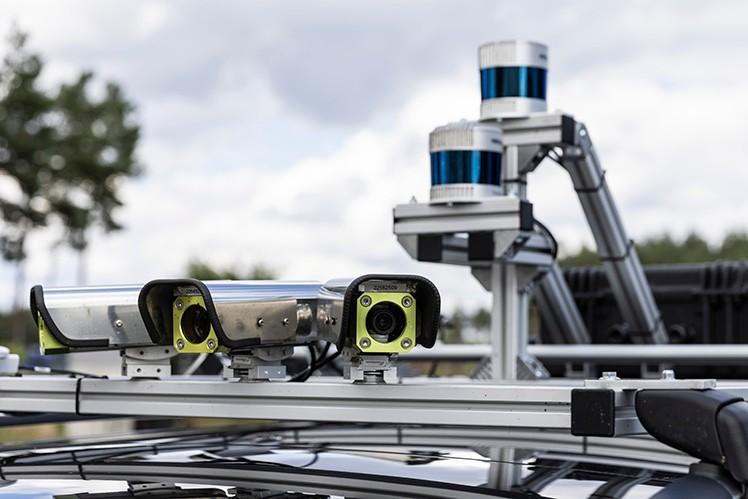
Selecting a LiDAR sensor is only one part of a successful engineering or procurement project. For automotive manufacturers, robotics companies, industrial automation providers, and system integrators, choosing the right LiDAR supplier can have an equally significant impact on product development, project schedules, supply chain stability, and long-term operating costs.
A sensor may meet the technical specifications on paper but still create problems if the supplier cannot provide consistent product availability, reliable documentation, technical support, or a realistic delivery schedule.
For enterprise buyers, the evaluation process should therefore go beyond comparing product prices and datasheets.
This guide explains how to evaluate a LiDAR supplier from both procurement and engineering perspectives, helping organizations make informed sourcing decisions and reduce potential supply chain risks.
1. Evaluate the Supplier’s Product Portfolio and Sourcing Capabilities
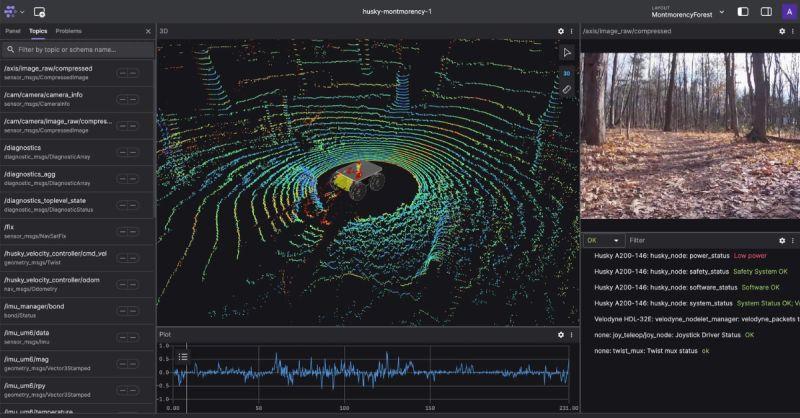
The first step is understanding whether a supplier can support your actual product requirements.
LiDAR technology covers a broad range of applications, including automotive ADAS, autonomous driving, AMR and AGV systems, industrial automation, robotics, surveying, and intelligent infrastructure.
Different projects may require different sensing technologies and product configurations.
When evaluating a supplier, consider:
- Availability of 2D and 3D LiDAR sensors.
- Automotive-grade LiDAR solutions.
- Solid-state, mechanical, and other sensing architectures.
- Multiple manufacturers and product series.
- Availability of alternative models for different project requirements.
- Ability to source specific part numbers and discontinued or upgraded models where applicable.
A supplier with access to multiple product categories and manufacturers may help procurement teams consolidate sourcing activities and compare suitable alternatives.
For example, companies evaluating products from Hesai, RoboSense, Seyond, or Livox may benefit from working with a supplier that understands the differences between product families and can assist with model selection.
However, buyers should always verify the supplier’s actual sourcing channels and the availability of each requested model.
2. Verify Product Authenticity and Supply Chain Traceability
Product authenticity is one of the most important considerations in enterprise LiDAR procurement.
This is particularly important for automotive, industrial, and robotics projects where sensor reliability and product consistency directly affect system performance.
Before placing an order, procurement teams should establish how the supplier verifies product authenticity and manages product traceability.
Important questions include:
- Can the supplier confirm the manufacturer and exact part number?
- Are product labels and serial numbers available for verification?
- Can the supplier provide applicable purchase or supply documentation?
- Are datasheets and official technical documents available?
- Can the supplier clarify product revision and hardware configuration?
- Are warranty terms clearly defined?
- Can the supplier explain the process for handling defective or damaged products?
For larger orders, buyers should also consider whether product identification and documentation can be maintained consistently across different delivery batches.
A professional supplier should be able to explain its product sourcing and verification process clearly rather than relying on unsupported claims.
3. Assess Technical Compatibility Before Purchasing
A LiDAR sensor should never be selected based solely on its advertised detection range.
The actual suitability of a sensor depends on the complete application environment, system architecture, and integration requirements.
Engineering and procurement teams should evaluate the following parameters.
Key LiDAR Technical Evaluation Criteria
| Parameter | Why It Matters |
|---|---|
| Detection Range | Determines the operating distance under specified target reflectivity and test conditions |
| Field of View (FOV) | Defines the horizontal and vertical coverage area |
| Angular Resolution | Influences the spatial detail of point cloud data |
| Point Cloud Rate | Determines the amount of spatial data generated per second |
| Frame Rate | Affects the frequency of sensor updates |
| Minimum Detection Distance | Important for close-range sensing and obstacle detection |
| Measurement Accuracy | Influences positioning and perception performance |
| Interface | Determines compatibility with the host system |
| Environmental Rating | Helps establish suitability for operating conditions |
| Operating Temperature | Determines whether the sensor meets environmental requirements |
These specifications should be evaluated in relation to the actual application rather than treated as independent performance rankings.
For example, an outdoor autonomous vehicle may prioritize long-range detection, environmental robustness, and point cloud performance.
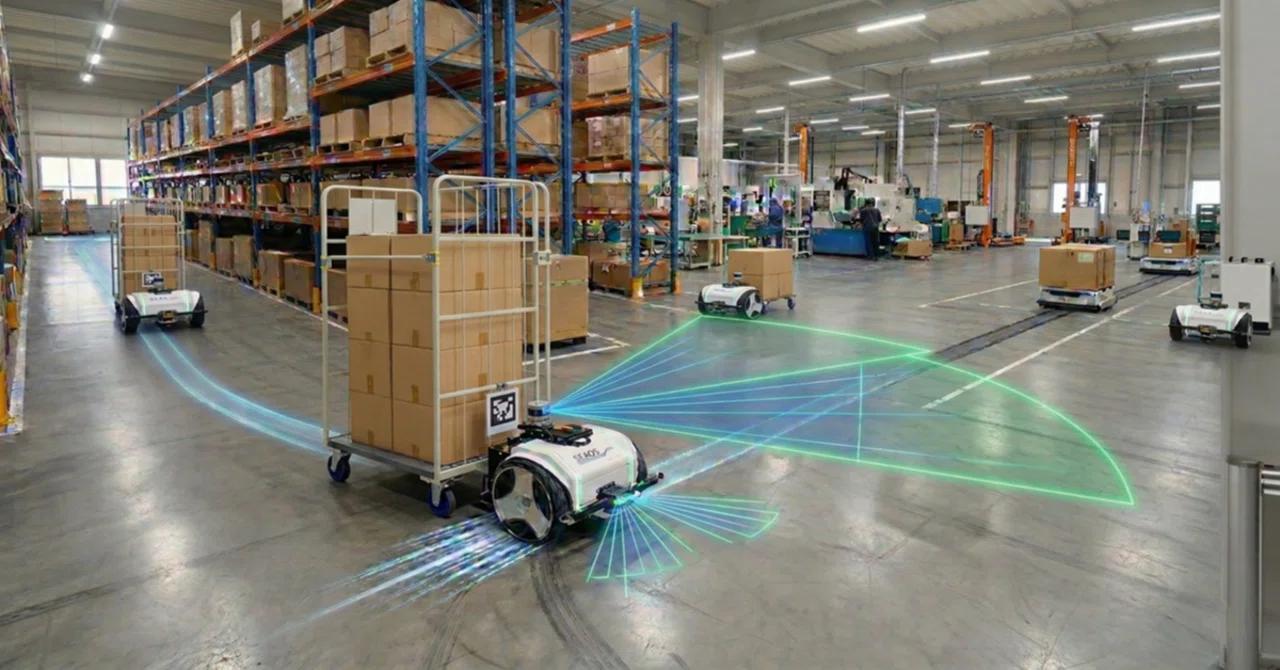
An indoor AMR application may place greater emphasis on close-range obstacle detection, field of view, integration simplicity, and reliable operation in changing warehouse environments.
Check Software and Integration Compatibility
Hardware compatibility is only part of the evaluation.
Engineering teams should also confirm:
- ROS and ROS 2 driver availability, where required.
- SDK availability and supported operating systems.
- Ethernet, CAN, or other supported communication interfaces.
- Point cloud output formats.
- Time synchronization requirements.
- Integration documentation.
- Firmware compatibility and update procedures.
Not every LiDAR model supports the same interfaces or software environments. Buyers should verify the exact model documentation before making a purchasing decision.
4. Evaluate Inventory, Lead Time, and Bulk Supply Capability
For enterprise procurement, delivery reliability can be as important as product pricing.
A supplier may offer an attractive quotation but fail to meet the required project schedule because of limited inventory or uncertain replenishment arrangements.
This is especially relevant when purchasing automotive LiDAR sensors, industrial sensing equipment, or multiple units for engineering validation and production deployment.
Before confirming an order, request clear information about:
Stock Availability
- Is the product physically available?
- Is the quoted quantity immediately available?
- Does the available stock match the requested hardware version?
- Can stock availability be reconfirmed before payment?
Lead Time
- What is the estimated processing time?
- How long will replenishment take if stock is insufficient?
- Is the delivery estimate based on confirmed supply or an indicative schedule?
- Can partial shipments be arranged?
Bulk Procurement
- Can multiple models be supplied under one RFQ?
- Can deliveries be divided into different batches?
- Can the supplier coordinate deliveries according to project milestones?
- Can the supplier support repeat purchasing?
For projects with strict deadlines, buyers should request a written delivery schedule and clarify the conditions that may affect it.
A realistic delivery commitment is more valuable than an unnecessarily optimistic lead-time estimate.
5. Compare Total Procurement Cost Instead of Unit Price Alone
The lowest unit price does not necessarily represent the lowest total procurement cost.
Enterprise buyers should compare the complete cost of acquiring and receiving the equipment.
The total procurement cost may include:
- LiDAR sensor unit price.
- International shipping.
- Export packaging and handling.
- Customs duties and import taxes.
- Customs clearance charges.
- Local delivery charges.
- Required documentation.
- Potential costs associated with delayed delivery or replacement.
For international purchases, it is also important to clarify the Incoterms used in the quotation.
For example, under DAP (Delivered at Place), the seller arranges delivery to the agreed destination, while the buyer is generally responsible for import clearance and applicable import duties and taxes.
The quotation should clearly identify what is included and excluded.
When comparing suppliers, make sure that all quotations are based on comparable delivery terms, quantities, product configurations, and warranty conditions.
6. Review Quality Documentation and Warranty Conditions
Professional procurement teams often need documentation for internal supplier approval, quality management, project records, and incoming inspection.
The exact documentation requirements vary depending on the industry and project.
Potentially relevant documents include:
- Product datasheets.
- User manuals.
- Technical specifications.
- Manufacturer declarations, where applicable.
- Applicable conformity documents.
- Warranty terms.
- Product identification and serial number records.
- Inspection or test records, where available.
Do not assume that every document is available for every product.
Instead, ask the supplier to confirm which documents can be provided for the exact model being purchased.
Warranty conditions should also be clarified before placing an order.
Important points include warranty duration, coverage, exclusions, return procedures, technical troubleshooting, and responsibility for shipping defective products.
For automotive and industrial applications, these details should be agreed upon before procurement rather than addressed after a problem occurs.
7. Assess Technical Support and Long-Term Cooperation

LiDAR procurement does not always end when the equipment arrives.
During development and integration, engineering teams may encounter issues involving sensor configuration, communication, point cloud output, software drivers, or system compatibility.
A supplier that can assist with product selection and technical information may reduce the time required to resolve these issues.
When evaluating technical support, consider whether the supplier can provide:
- Pre-sales product selection assistance.
- Technical datasheets and manuals.
- Available SDK and integration resources.
- Basic configuration guidance.
- Assistance with product-related technical questions.
- Coordination with relevant manufacturer technical resources where available.
- After-sales communication and warranty support.
For OEMs and system integrators, long-term cooperation is particularly important.
A reliable sourcing partner should understand that different procurement stages may require different support, from initial samples and engineering evaluation to repeat purchasing and larger project orders.
8. Use a Structured LiDAR Supplier Evaluation Checklist
To make supplier comparisons more objective, procurement teams can use a structured evaluation framework.
The following table provides a practical starting point.
| Evaluation Category | Key Questions |
|---|---|
| Product Range | Can the supplier provide the required brands and models? |
| Product Authenticity | Can product origin and identification be verified? |
| Technical Knowledge | Can the supplier explain specifications and compatibility? |
| Documentation | Are relevant product and quality documents available? |
| Inventory | Is the requested quantity available? |
| Lead Time | Is the delivery schedule realistic and confirmed? |
| Bulk Supply | Can the supplier support larger or phased orders? |
| Pricing | Are quotation terms transparent and comparable? |
| Logistics | Can international shipping be arranged? |
| Warranty | Are warranty conditions clearly defined? |
| Technical Support | Is assistance available during evaluation and integration? |
| Communication | Are responses accurate, timely, and professional? |
Companies can assign different weights to these categories according to their internal purchasing policies.
For example, an automotive Tier 1 supplier may prioritize product traceability, technical documentation, and supply consistency.
A robotics startup may place greater emphasis on product compatibility, SDK availability, and sample procurement.
There is no universal supplier ranking that applies to every project. The best supplier is the one that meets the project’s technical, commercial, and operational requirements.
9. Prepare a Detailed RFQ to Obtain More Accurate Quotations
One of the most effective ways to improve procurement efficiency is to provide suppliers with a complete Request for Quotation (RFQ).
Incomplete RFQs often lead to repeated clarification emails, inaccurate pricing, and delays in quotation preparation.
A professional LiDAR RFQ should include:
Product Information
- Manufacturer and brand.
- Exact model or part number.
- Required technical configuration.
Quantity
- Sample quantity.
- Initial order quantity.
- Estimated future demand, if known.
Project Information
- Application and industry.
- Development or production stage.
- Relevant technical requirements.
Delivery Requirements
- Destination country.
- Full delivery address when available.
- Required delivery date.
- Preferred shipping method.
- Required Incoterms.
Commercial Requirements
- Target budget, if applicable.
- Payment terms.
- Warranty expectations.
- Required supplier documentation.
For multiple products, an Excel RFQ containing part numbers, descriptions, and quantities can make the quotation process considerably more efficient.
A complete RFQ allows suppliers to provide more useful information about product availability, pricing, lead time, and delivery options.
10. Why Work with a Multi-Brand LiDAR Supply Partner?
Many enterprise projects require more than one sensing product.
An automotive development program may involve different LiDAR configurations for testing and evaluation. A robotics manufacturer may need 2D LiDAR for navigation and 3D LiDAR for perception. An industrial integrator may source sensors from multiple manufacturers depending on the application.
Working with a multi-brand sourcing partner can simplify this process.
Potential benefits include:
- Access to multiple LiDAR product categories.
- Assistance with product comparison and selection.
- Consolidated quotation coordination.
- Support for multi-model procurement.
- International shipping coordination.
- Technical information and documentation support.
However, buyers should still verify product availability, sourcing arrangements, and technical suitability for each individual model.
The goal is not simply to find a supplier offering the largest product catalog. It is to find a sourcing partner capable of understanding project requirements and supporting the procurement process reliably.
Conclusion: Choose a LiDAR Supplier Based on Long-Term Value
Selecting a LiDAR supplier is a strategic procurement decision, especially for organizations developing automotive, robotics, autonomous systems, and industrial automation products.
A professional evaluation should consider more than unit price.
Product authenticity, technical compatibility, documentation, inventory, lead time, logistics, warranty conditions, and technical support all contribute to the overall value of a supplier relationship.
By using a structured evaluation process and preparing a detailed RFQ, procurement teams can reduce sourcing uncertainty, improve purchasing efficiency, and make better-informed decisions.
At LIDARSEEK, we support customers sourcing LiDAR sensors and related sensing technologies for automotive, robotics, industrial automation, and other engineering applications.
Our product portfolio covers multiple brands and product categories, including Hesai, RoboSense, Seyond, and Livox.
Whether you are sourcing a single sensor for engineering evaluation, comparing different models, or preparing a larger procurement order, our team can assist with product inquiries, quotation coordination, availability checks, and technical product information.
Planning a LiDAR procurement project?
Contact LIDARSEEK with your required part numbers, quantities, and delivery destination.
Our team will help you review suitable sourcing options and prepare a quotation based on your project requirements.
Request a Quote: https://lidarseek.com/
Frequently Asked Questions (FAQ)
1. What should I consider when choosing a LiDAR supplier?
Consider product authenticity, technical compatibility, documentation, inventory, lead time, pricing transparency, warranty conditions, logistics, and technical support.
2. Can a LiDAR supplier provide multiple brands?
Some multi-brand suppliers can coordinate sourcing across manufacturers such as Hesai, RoboSense, Seyond, and Livox. Buyers should confirm the availability and sourcing arrangements for each specific model.
3. How do I verify whether a LiDAR sensor is genuine?
Request product identification information, serial number verification where supported, applicable sourcing documentation, and relevant manufacturer product documents. Confirm the verification method for the exact product.
4. Can I purchase LiDAR sensors in bulk?
Bulk procurement is possible depending on the model, quantity, inventory, and replenishment arrangements. Provide the required part numbers and estimated quantities when requesting a quotation.
5. What information should I include in a LiDAR RFQ?
Include the manufacturer, model, part number, quantity, application, destination country, expected delivery date, shipping requirements, and any necessary technical or documentation requirements.
6. Can a supplier help with LiDAR model selection?
A technically capable supplier can help compare product specifications and identify potential candidates based on application requirements. Final selection should be validated against official product documentation and engineering testing.
7. What is the difference between a LiDAR manufacturer and a LiDAR sourcing partner?
A manufacturer designs and produces its own products. A sourcing partner coordinates access to products from one or more manufacturers and may provide quotation, procurement, logistics, and technical support services. Buyers should understand the supplier’s actual role and verify relevant qualifications.









