
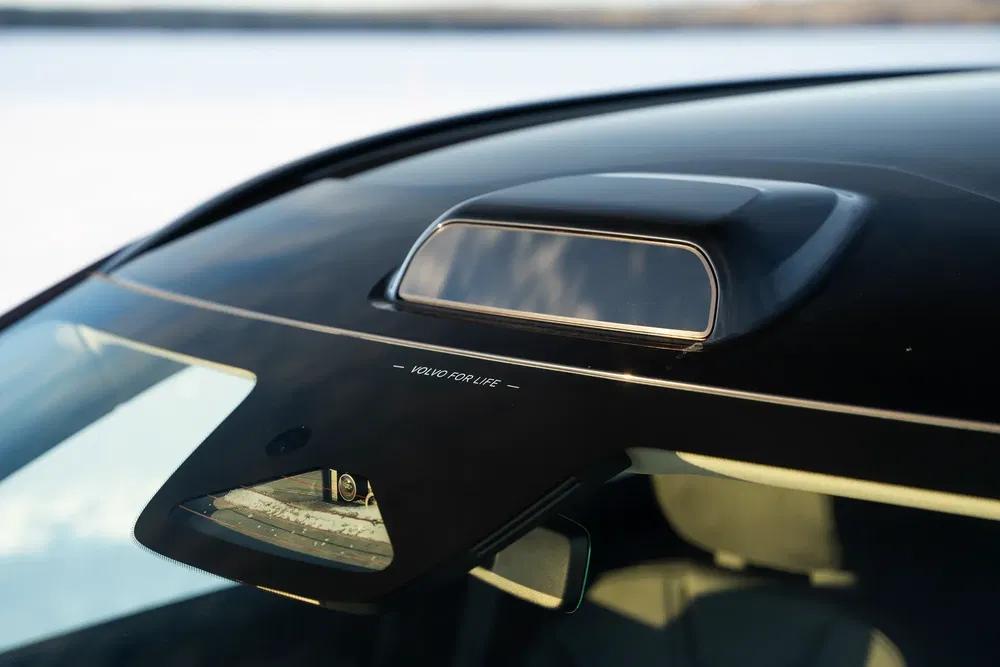
Automotive LiDAR has become an important sensing technology in the development of Advanced Driver Assistance Systems (ADAS), autonomous driving platforms, and next-generation vehicle perception systems.
As automotive manufacturers and Tier 1 suppliers develop increasingly sophisticated perception architectures, selecting the right LiDAR sensor is no longer just a technical decision. It is also a strategic procurement decision involving product performance, supplier qualification, documentation, supply continuity, and long-term commercial requirements.
For automotive OEMs, Tier 1 suppliers, and engineering organizations, choosing an unsuitable LiDAR product or an unreliable sourcing partner can introduce significant risks to development schedules and purchasing plans.
A sensor that performs well in a laboratory demonstration may still require extensive validation before it can be integrated into an automotive platform.
This guide explains how automotive engineering and procurement teams should evaluate LiDAR sensors and suppliers, covering technical specifications, integration requirements, product lifecycle, sourcing, and supply chain considerations.
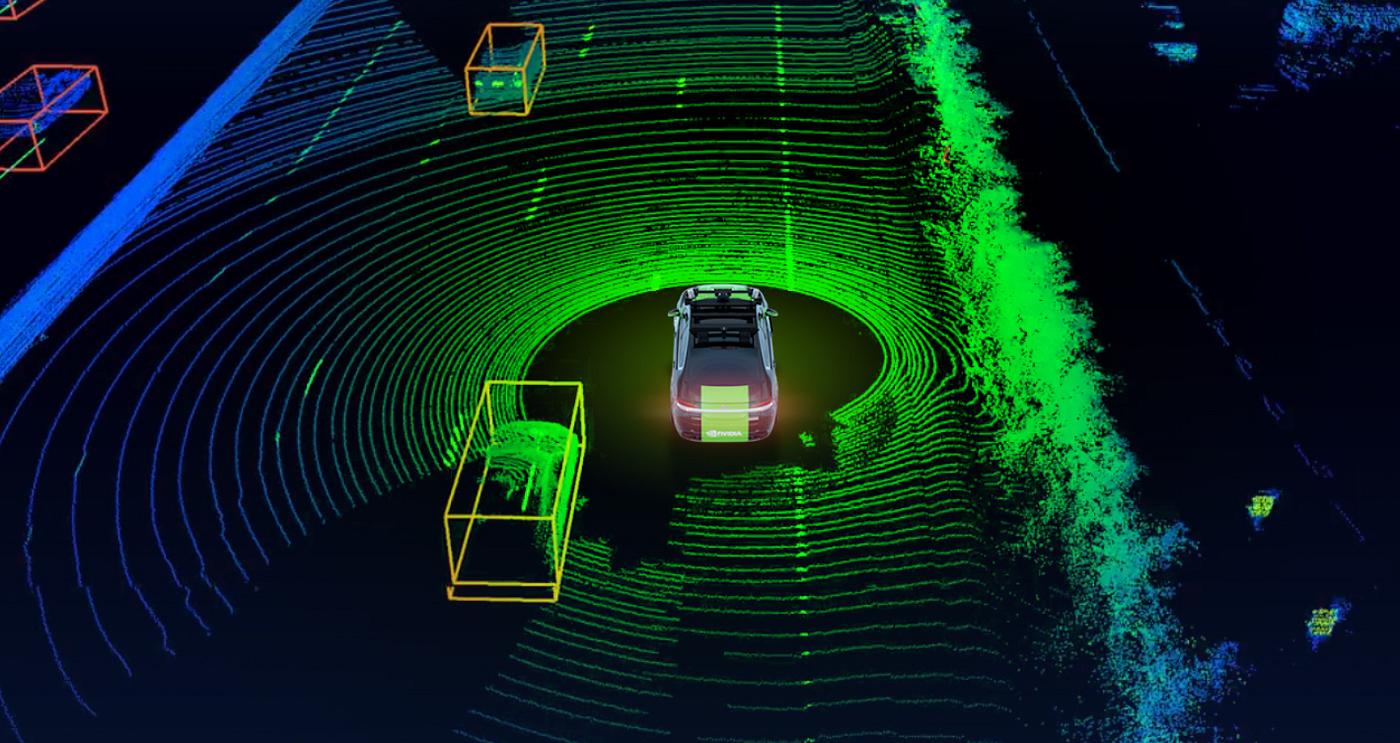
1. Understand the Automotive LiDAR Application Before Selecting a Sensor
The first step in automotive LiDAR procurement is defining the intended application.
Different vehicle platforms and ADAS architectures have different sensing requirements. A sensor designed for long-range forward perception may not be suitable for every surround-view or close-range application.
Typical automotive LiDAR applications include:
- Forward-facing perception for ADAS.
- Autonomous driving development.
- Object detection and classification.
- Road geometry and obstacle perception.
- Surround sensing.
- Sensor fusion with cameras and radar.
- Autonomous vehicle research and validation.
Before comparing products, engineering teams should identify the operating conditions and performance requirements of the target platform.
Important questions include:
- What is the required detection range?
- What target reflectivity should be considered?
- What horizontal and vertical field of view is required?
- What angular resolution is needed?
- What is the expected operating speed?
- What environmental conditions must the sensor withstand?
- How will LiDAR data be integrated with camera and radar systems?
A clear application definition helps procurement teams avoid selecting products based on specifications that do not match the actual vehicle requirements.
2. Evaluate Key Automotive LiDAR Performance Specifications
Automotive LiDAR products should be compared using consistent test conditions and clearly defined technical parameters.
Marketing specifications alone are insufficient for making an engineering decision.
Detection Range and Target Reflectivity
Detection range is one of the most frequently discussed LiDAR specifications.
However, maximum detection range should always be evaluated together with target reflectivity, measurement conditions, and detection criteria.
For example, a detection range measured against a highly reflective target should not be directly compared with a measurement taken at 10% reflectivity.
Automotive engineering teams should review:
- Detection range at specified reflectivity levels.
- Target size and test conditions.
- Detection probability or measurement criteria, where available.
- Performance under different environmental conditions.
This provides a more meaningful basis for comparing automotive LiDAR sensors.
Field of View (FOV)
Field of view determines how much of the surrounding environment a sensor can observe.
Horizontal FOV influences lateral coverage, while vertical FOV determines the vertical area covered by the sensor.
The required FOV depends on the sensor’s mounting position, vehicle geometry, and perception architecture.
Angular Resolution
Angular resolution affects the spatial separation between measurements.
Higher resolution may provide more detailed point cloud information, but the practical value depends on detection distance, scanning pattern, target characteristics, and the perception algorithms being used.
Point Cloud Rate and Frame Rate
Point cloud rate and frame rate are important for applications requiring frequent environmental updates.
Engineering teams should consider how the sensor’s output rate fits into the vehicle’s data processing architecture and real-time perception requirements.
Measurement Accuracy
Measurement accuracy and repeatability should be evaluated using the manufacturer’s technical documentation and relevant validation tests.
These parameters may influence object localization, sensor fusion, and environmental perception.
Automotive LiDAR Evaluation Table
| Parameter | Evaluation Focus |
|---|---|
| Detection Range | Range under specified reflectivity and test conditions |
| Horizontal FOV | Lateral coverage |
| Vertical FOV | Vertical coverage |
| Angular Resolution | Spatial detail |
| Point Cloud Rate | Data output capacity |
| Frame Rate | Update frequency |
| Measurement Accuracy | Distance measurement performance |
| Minimum Detection Distance | Close-range sensing |
| Environmental Protection | Resistance to specified environmental conditions |
| Operating Temperature | Suitability for vehicle operating environments |
The best sensor is not necessarily the one with the highest value in every category. It is the one that satisfies the complete system requirements.
3. Compare Automotive LiDAR Technologies and Product Architectures
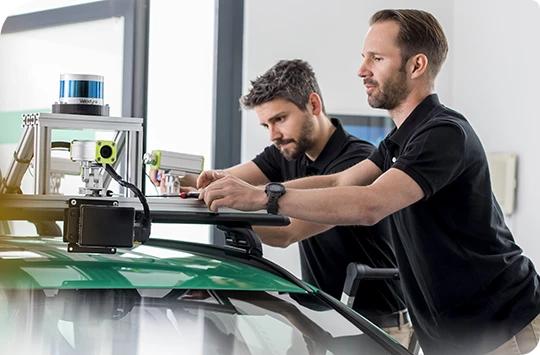
Automotive LiDAR technology includes several architectures, each with different design considerations.
Mechanical LiDAR
Mechanical LiDAR uses moving components to scan the surrounding environment.
These products are useful in various development, research, and perception applications, depending on their design and environmental specifications.
Solid-State and Semi-Solid-State LiDAR
Solid-state and semi-solid-state architectures are designed to reduce or eliminate certain types of mechanical scanning components.
Different products may use different scanning and optical technologies, so buyers should avoid assuming that all solid-state LiDAR products share identical performance or integration characteristics.
Flash LiDAR
Flash LiDAR illuminates a scene and captures reflected light across an area, rather than relying on conventional point-by-point scanning.
It may be suitable for particular sensing applications depending on range, resolution, and system requirements.
FMCW LiDAR
Frequency-Modulated Continuous-Wave LiDAR uses frequency-modulated laser signals and can provide velocity-related information through Doppler measurement.
Its system architecture and evaluation criteria differ from conventional time-of-flight LiDAR.
For procurement teams, the important question is not which architecture sounds most advanced. It is whether the technology meets the vehicle platform’s performance, integration, cost, and validation requirements.
4. Evaluate Leading Automotive LiDAR Manufacturers
Automotive LiDAR procurement often involves comparing products from multiple manufacturers.
Some manufacturers have developed extensive product portfolios serving automotive and autonomous driving applications.
Examples include:
Hesai
Hesai develops LiDAR products for automotive and other sensing applications.
Automotive engineering teams may evaluate its products based on detection range, point cloud performance, field of view, packaging, and system integration requirements.
RoboSense
RoboSense provides LiDAR products and perception-related technologies for automotive and robotics applications.
When evaluating a particular RoboSense model, buyers should review its specific technical documentation, interfaces, and intended application.
Seyond
Seyond develops LiDAR technologies for automotive and intelligent sensing applications.
Its products may be considered in automotive perception and autonomous driving evaluations, depending on project requirements.
Product Comparison Should Be Model-Specific
Comparing manufacturers at the company level is not sufficient.
Procurement and engineering teams should compare exact product models using:
- Official datasheets.
- Detection performance under equivalent conditions.
- Field of view and angular resolution.
- Physical dimensions and installation requirements.
- Electrical interfaces.
- Software and integration resources.
- Product lifecycle information.
- Commercial availability.
A model-to-model comparison is more useful than a general ranking of manufacturers.
5. Check Automotive Integration and System Compatibility

A LiDAR sensor must work within the complete vehicle perception system.
Before purchasing samples or approving a product for further evaluation, engineering teams should review its integration requirements.
Hardware Integration
Confirm:
- Sensor dimensions and weight.
- Mounting position and mechanical interfaces.
- Power supply requirements.
- Ethernet or other supported communication interfaces.
- Connector and cable specifications.
- Thermal management requirements.
Software Integration
Confirm:
- SDK availability.
- Supported operating systems.
- ROS or ROS 2 driver availability, where relevant.
- Point cloud data formats.
- Time synchronization requirements.
- Firmware compatibility.
- Configuration and diagnostic tools.
Sensor Fusion
Automotive perception systems frequently combine information from multiple sensing technologies.
LiDAR may be integrated with cameras, radar, GNSS, and inertial measurement systems.
Engineering teams should therefore assess:
- Timestamp accuracy and synchronization.
- Coordinate system definitions.
- Extrinsic calibration requirements.
- Data latency.
- Point cloud consistency.
- Compatibility with the perception software architecture.
A sensor should not be approved solely because it can produce point cloud data. Its complete integration behavior must be validated within the intended system.
6. Understand Automotive Quality and Supplier Qualification Requirements
Automotive procurement typically involves more extensive supplier qualification than standard industrial purchasing.
The exact requirements depend on the OEM, Tier 1 supplier, vehicle platform, and project stage.
Potential areas of evaluation include:
Quality Management
Buyers may request information about the manufacturer’s quality management system and applicable certifications.
Automotive Quality Requirements
Depending on the application, procurement teams may review IATF 16949-related requirements, production quality controls, and supplier qualification procedures.
Functional Safety
If functional safety is relevant to the system architecture, engineering teams should review the applicable safety documentation and the manufacturer’s stated development scope.
Product Reliability
Environmental, vibration, temperature, and durability test information may be required depending on the application.
Change Management
Hardware revisions, firmware updates, component changes, and product lifecycle notifications should be managed through appropriate supplier processes.
Traceability
Product identification, serial number records, and applicable manufacturing or supply documentation may be required.
An important distinction is that a product supplier, sourcing partner, and original manufacturer may have different responsibilities.
Enterprise buyers should identify the actual manufacturer and understand which documents and commitments can be provided by each party.
7. Evaluate Product Lifecycle and Long-Term Availability
Automotive projects can have development and production cycles extending over several years.
A LiDAR product that is available today may undergo revisions, receive a successor model, or eventually reach end of life.
This creates potential procurement risks.
Before approving a product for a long-term project, buyers should ask:
- Is the model currently in production?
- Is there an announced product lifecycle plan?
- Are hardware revisions expected?
- How are firmware updates communicated?
- Is there a successor product?
- Will replacement models maintain mechanical and electrical compatibility?
- Can the supplier support repeat purchasing?
If a product is upgraded or discontinued, engineering teams should not assume that the replacement is interchangeable.
Any alternative should undergo appropriate technical review and validation.
Product lifecycle planning is especially important when the same sensor configuration is expected to be used across multiple development and production phases.
8. Plan Automotive LiDAR Procurement and Delivery Schedules
Automotive development projects often have strict schedules.
A delayed LiDAR shipment can affect prototype assembly, perception testing, system validation, and other engineering activities.
Procurement teams should distinguish between different purchasing stages.
Engineering Evaluation
Initial quantities may be required for laboratory testing, development vehicles, or prototype integration.
Validation and Testing
Additional units may be needed for environmental testing, system validation, and expanded engineering activities.
Production Preparation
Larger quantities may be required as the program moves toward production readiness.
Recurring Procurement
Ongoing supply may be necessary for replacement units, engineering changes, or subsequent production requirements.
For each stage, buyers should confirm:
- Required quantities.
- Target delivery dates.
- Available inventory.
- Replenishment lead times.
- Potential partial shipment arrangements.
- Product configuration consistency.
- Warranty and after-sales procedures.
A phased procurement plan can help align supply arrangements with project milestones.
9. Prepare an Automotive LiDAR RFQ That Meets Enterprise Requirements
A detailed RFQ helps suppliers provide more accurate commercial and delivery information.
For automotive projects, the RFQ should include more than a product name and quantity.
Recommended Automotive LiDAR RFQ Information
| Category | Required Information |
|---|---|
| Manufacturer | Hesai, RoboSense, Seyond, etc. |
| Part Number | Exact model and configuration |
| Quantity | Sample, validation, or production quantity |
| Application | ADAS, autonomous driving, perception |
| Technical Requirements | Required performance and interfaces |
| Delivery Schedule | Target date or phased delivery plan |
| Destination | Country and delivery address |
| Documentation | Required technical and quality documents |
| Warranty | Required warranty conditions |
| Commercial Terms | Currency, Incoterms, payment requirements |
For larger procurement projects, an Excel RFQ is particularly useful when multiple LiDAR models or different delivery batches are involved.
It also allows suppliers to identify missing information before preparing the quotation.
10. How a Multi-Brand LiDAR Sourcing Partner Can Support Automotive Projects
Automotive engineering organizations may evaluate different manufacturers during product development.
Managing multiple sourcing channels can create additional administrative work for procurement teams.
A multi-brand LiDAR sourcing partner may help coordinate:
- Product and model inquiries.
- Multi-manufacturer quotation requests.
- Product availability checks.
- Procurement and delivery coordination.
- Technical documentation requests.
- International shipping arrangements.
- Product-related technical communication.
The supplier’s actual role should always be transparent.
Buyers should verify product sourcing arrangements, manufacturer relationships, warranty responsibilities, and the availability of applicable documentation.
A professional sourcing partner should help simplify procurement without overstating its authorization or manufacturing capabilities.
Conclusion: Build a Reliable Automotive LiDAR Procurement Strategy
Automotive LiDAR procurement requires close coordination between engineering, purchasing, quality, and supply chain teams.
The right purchasing decision should consider sensor performance, system compatibility, product lifecycle, documentation, supplier qualifications, availability, and long-term supply arrangements.
For OEMs and Tier 1 suppliers, a structured evaluation process can reduce sourcing uncertainty and help ensure that the selected products align with the technical and commercial requirements of the project.
The objective is not simply to purchase an automotive LiDAR sensor.
It is to establish a dependable sourcing process that supports engineering development, validation, and future procurement requirements.
Looking for an Automotive LiDAR Supplier?
LIDARSEEK supports international customers sourcing LiDAR products for automotive, ADAS, autonomous driving, robotics, and industrial sensing applications.
Our multi-brand product portfolio includes solutions from Hesai, RoboSense, Seyond, and Livox.
Whether your team is sourcing evaluation samples, comparing automotive LiDAR models, or preparing a larger procurement requirement, we can assist with:
- Automotive LiDAR product inquiries.
- Multi-brand sourcing coordination.
- Product availability and lead-time checks.
- Commercial quotations.
- Technical product information.
- International shipping arrangements.
Send us your required part numbers, quantities, project requirements, and delivery destination.
Contact LIDARSEEK to discuss your automotive LiDAR procurement requirements.
Website: https://lidarseek.com/
Email: sales@lidarseek.com
Frequently Asked Questions
1. What should automotive OEMs consider when selecting a LiDAR supplier?
OEMs should assess product performance, manufacturer qualifications, technical documentation, product traceability, integration requirements, lifecycle planning, supply continuity, and warranty conditions.
2. What is the difference between automotive LiDAR and industrial LiDAR?
Automotive LiDAR is designed for specific vehicle sensing applications and may have different performance, environmental, packaging, and validation requirements compared with industrial LiDAR. The actual requirements depend on the intended application.
3. Which automotive LiDAR manufacturers should buyers evaluate?
Depending on project requirements, buyers may evaluate manufacturers such as Hesai, RoboSense, and Seyond. Product comparisons should be based on specific models and official technical documentation.
4. Why is detection range at 10% reflectivity important?
Reflectivity affects the amount of laser energy returned to the sensor. Specifying target reflectivity helps make detection range comparisons more meaningful, although test conditions and detection criteria must also be consistent.
5. What documents should be requested when purchasing automotive LiDAR?
Depending on project requirements, buyers may request datasheets, manuals, interface specifications, product identification information, applicable conformity documents, warranty terms, and relevant quality documentation.
6. Can automotive LiDAR sensors be purchased in bulk?
Bulk procurement depends on the specific model, availability, sourcing conditions, and delivery schedule. Buyers should submit the required part numbers and quantities to obtain a project-specific quotation.
7. How should buyers handle discontinued automotive LiDAR models?
Confirm the manufacturer’s lifecycle status and evaluate any successor product through engineering review. Check mechanical dimensions, interfaces, performance, firmware, software compatibility, and validation requirements before approving a replacement.









