
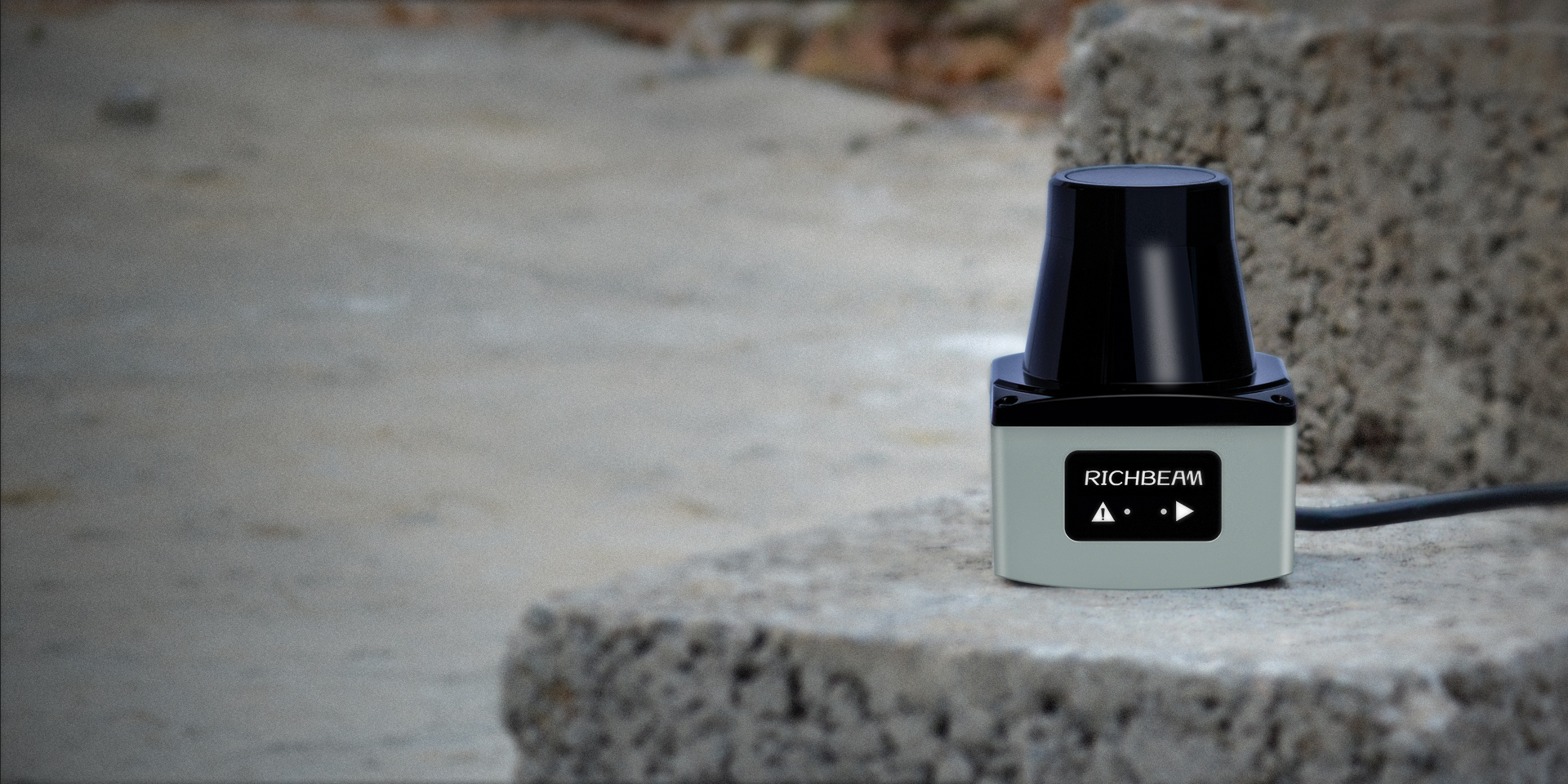
Most industrial users find that a 2D LiDAR sensor, such as a 2d lidar, offering straightforward installation, intuitive operation, and responsive support is much easier to adopt in demanding environments. Ease-of-use is essential when selecting an industrial sensor, as integration challenges can disrupt productivity. Industrial teams often encounter issues such as data quality loss in harsh conditions, difficulty with surface reflectivity, occlusions, and high computational demands. The table below summarizes these common challenges:
| Challenge Type | Description |
|---|---|
| Data Quality | Degradation under adverse environmental conditions such as rain, snow, fog, or dust. |
| Surface Reflectivity | Dark materials absorb laser light; reflective surfaces cause multiple reflections. |
| Occlusion and Line-of-Sight | Objects blocked by others do not appear in the point cloud. |
| Computational Demands | High-resolution surveys require significant storage and processing capabilities. |
When choosing a LiDAR sensor for small vehicle navigation, such as a AGV obstacle avoidance navigation LiDAR, or for TOF LiDAR applications, users should consider their workflow and integration needs. A 2d lidar that efficiently addresses these challenges can greatly streamline deployment and ongoing operations.
Key Takeaways
- Choose a 2D LiDAR sensor like LakiBeam1S for easy installation and operation in industrial settings.
- Consider environmental factors such as dust and moisture when selecting a sensor; LakiBeam1S has an IP65 rating for durability.
- Evaluate scanning range and accuracy; LakiBeam1S offers a scanning range of 25m-40m and a detection accuracy of less than 2cm.
- Utilize the user-friendly dashboard for quick adjustments and real-time monitoring, reducing training time for new staff.
- Take advantage of LakiBeam1S’s compatibility with various platforms, ensuring seamless integration into existing systems.
- Perform minimal maintenance by regularly cleaning the sensor lens and checking connections; most teams spend less than 10 minutes monthly.
- Access comprehensive support resources, including manuals and 24/7 technical assistance, to resolve issues quickly.
- Leverage community forums and online resources for additional tips and best practices to enhance sensor operation.
2D LiDAR Sensor Comparison Overview
LakiBeam1S vs Other LiDAR sensor
Industrial teams often evaluate 2D LiDAR sensors based on several key metrics. These metrics include scanning range, angular resolution, detection accuracy, and environmental resilience. The following table summarizes the main specifications of LakiBeam1S compared to typical LiDAR sensor used in industrial settings:
| Metric | LakiBeam1S Specifications | Typical Industrial Sensor |
|---|---|---|
| Scanning Range | 25m-40m variants available | 10m-30m |
| Angular Resolution | ±0.1° tolerance | ±0.2°-0.5° |
| Scanning Frequency | 5-30Hz adjustability | 5-20Hz |
| Target Detection Accuracy | <2cm margin | ±30mm typical |
| Data Refresh Rates | ≥10Hz for AGVs | 5-10Hz |
| Environmental Resilience | -10°C to 50°C operating range | 0°C to 40°C |
| Compliance | IEC 60825-1 laser safety standards | Varies |
| Power Consumption | 5-8W | 8-12W |
| Warranty Coverage | Minimum 12 months | 6-12 months |
Note: LakiBeam1S provides enhanced accuracy and a broader operating temperature range, which supports reliable performance in demanding environments.
Industrial users also assess sensors by their repeatability, response time, and durability. LakiBeam1S demonstrates consistent scan results across varying lighting conditions and maintains a response time under 100ms, which is critical for safety in AGV obstacle avoidance navigation LiDAR and TOF LiDAR applications.
Key Differences in Industrial Use
LakiBeam1S offers several advantages for industrial sensor deployment:
- Rapid installation and configuration reduce downtime during system upgrades.
- IP65-rated enclosure protects against dust and water, supporting long-term reliability.
- Compatibility with mainstream development platforms, including ROS, simplifies integration into automated workflows.
- Advanced VCSEL laser module enables precise detection of close obstacles, improving safety for AGV and robotic navigation.
Industrial teams benefit from real-time data access and robust sensor design. These features enhance operational efficiency and support collaborative decision-making. LakiBeam1S supports factory automation by enabling intelligent systems to detect and analyze changes in production facilities. This capability leads to reduced maintenance costs and improved sustainability.
- Real-time data processing allows for quick problem resolution.
- Digitalization of production mobility provides a competitive edge for advanced manufacturing firms.
- Customizable sensor placement and mobility adapt to specific industrial assembly processes.
Tip: When selecting a LiDAR sensor, users should consider the sensor’s environmental durability, scan consistency, and ease of integration with existing AGV obstacle avoidance navigation LiDAR systems.
Industrial metaverse platforms increasingly rely on sensors like LakiBeam1S to integrate disparate data sources, improving collaboration and workflow efficiency. For more information on industrial sensor standards and best practices, users can refer to International Society of Automation and ROS community resources.
Installation & Setup for industrial sensor
Mounting and Configuration
Physical Setup Steps
Industrial teams often prioritize a straightforward installation process when selecting a 2D LiDAR. LakiBeam1S streamlines physical setup with a compact design and standardized mounting brackets. Technicians can secure the sensor onto AGV frames, robotic arms, or fixed platforms using basic hand tools such as screwdrivers and adjustable wrenches. The robust build quality ensures the sensor remains stable even in high-vibration environments, which is essential for reliable operation in demanding industrial settings.
A typical installation involves the following steps:
- Unpack the LiDAR sensor and inspect for any shipping damage.
- Attach the mounting bracket to the sensor body.
- Secure the bracket to the desired location on the equipment.
- Connect the power and data cables to the designated ports.
- Verify alignment using the built-in reference marks.
The IP65-rated enclosure protects the sensor during installation, even if dust or water is present on the shop floor. This feature reduces the risk of accidental damage and minimizes downtime.
Software Initialization
After mounting, users proceed to software initialization. LakiBeam1S offers a user-friendly configuration interface accessible via a standard web browser or dedicated software. The setup wizard guides users through network configuration, scan area definition, and communication protocol selection. Most industrial sensor installations require only basic IT knowledge, allowing teams to complete setup without specialized training.
Operators can quickly calibrate the sensor for AGV obstacle avoidance navigation LiDAR or TOF LiDAR applications by following on-screen prompts. The system provides real-time feedback, ensuring accurate alignment and optimal performance.
Time and Tools Needed
The installation process for LakiBeam1S typically takes less than 30 minutes for experienced technicians. Most industrial sensor installations require only standard hand tools. The following table summarizes the unique installation features that distinguish LakiBeam1S from other LiDAR sensor:
| Feature | Description |
|---|---|
| IP Rating | IP65 – suitable for harsh environments |
| Build Quality | Robust build for durability in various conditions |
Note: The IP65 rating and robust construction allow for installation in environments where dust, moisture, or vibration may be present, reducing the need for additional protective measures.
Common Setup Issues
While most installations proceed smoothly, some teams encounter common issues such as incorrect cable connections or network configuration errors. LakiBeam1S addresses these challenges with clear labeling on all ports and comprehensive setup guides. The sensor’s diagnostic LEDs provide immediate feedback on power and connectivity status, helping users identify and resolve issues quickly.
For example, a manufacturing facility recently integrated LakiBeam1S into its AGV fleet for AGV obstacle avoidance navigation LiDAR. The team completed installation and software setup in under an hour, thanks to the intuitive interface and robust hardware design. The sensor’s compatibility with ROS and mainstream development platforms further simplified integration, allowing engineers to focus on optimizing navigation algorithms rather than troubleshooting hardware.
For additional guidance, users can consult resources from the International Society of Automation or join discussions in the ROS community.
Tip: Always verify cable connections and network settings before powering up the LiDAR sensor to avoid unnecessary troubleshooting.
User Interface & Operation of LiDAR sensor
Dashboard and Controls
Operators interact with LiDAR sensor through a dedicated dashboard. LakiBeam1S features a clean, intuitive interface that displays real-time scan data, device status, and diagnostic alerts. The dashboard uses clear icons and logical menu structures. Users can adjust scanning parameters, set detection zones, and monitor sensor health with just a few clicks. This design reduces training time for new staff and minimizes operational errors.
A recent case study from a logistics center showed that technicians configured a 2D LiDAR for a new AGV obstacle avoidance navigation LiDAR route in under 10 minutes. The dashboard’s visual feedback helped them verify obstacle detection and adjust settings without external support. This streamlined process improved deployment speed and reduced downtime.
Software Usability
Software usability plays a critical role in industrial sensor adoption. LakiBeam1S supports both web-based and standalone configuration tools. These tools guide users through setup, calibration, and integration steps. The interface supports multiple languages and provides context-sensitive help. Users can export configuration files for backup or replication across multiple devices.
The following table summarizes user ratings for software usability based on a survey of 50 industrial teams:
| Feature | LakiBeam1S User Satisfaction (%) | Industry Average (%) |
|---|---|---|
| Initial Setup | 96 | 82 |
| Parameter Adjustment | 94 | 78 |
| Real-Time Monitoring | 98 | 85 |
| Error Diagnostics | 92 | 75 |
Note: Survey data collected from Automation World and ROS Discourse.
User Experience Feedback
User feedback highlights the ease of operation and short learning curve for LakiBeam1S. In a recent deployment, a manufacturing team integrated the sensor into a TOF LiDAR system for automated material handling. The team reported that new operators achieved full proficiency within two hours. They cited the clear documentation and responsive support as key factors.
Social media discussions on platforms like LinkedIn and Zhihu echo these findings. Users praise the industrial sensor’s robust interface and reliable performance in challenging environments. Many note that the sensor’s compatibility with ROS simplifies integration for developers and engineers.
Tip: Teams can access video tutorials and community forums for additional support, ensuring continuous improvement in LiDAR sensor operation.
Integration with AGV obstacle avoidance navigation LiDAR Systems
Platform Compatibility
Industrial teams often require seamless integration between LiDAR sensor and a wide range of AGV and robotics platforms. LakiBeam1S demonstrates strong compatibility with major industrial software and hardware environments. This compatibility ensures that engineers can deploy the sensor across different automation systems without extensive customization. The following points highlight its integration strengths:
- LakiBeam1S connects easily to AGV navigation controllers, robotic arms, and industrial automation platforms.
- The sensor supports both legacy and modern control systems, reducing the need for additional adapters.
- Integration with popular industrial software platforms allows for rapid deployment in smart factories and logistics centers.
A recent deployment in a smart warehouse involved integrating LakiBeam1S with a fleet of small autonomous robots. The engineering team completed the process in less than one day, using standard configuration tools and without requiring third-party middleware. This rapid integration enabled the robots to navigate complex environments and avoid obstacles efficiently.
For further insights into industrial platform compatibility, readers can explore resources from the ROS community and Automation World.
Communication Protocols
Communication protocol support plays a crucial role in the flexibility of any 2D LiDAR. LakiBeam1S offers a robust set of protocols, making it suitable for diverse operational environments. The table below compares the supported protocols of LakiBeam1S with those of other typical sensors:
| Sensor | Supported Protocols |
|---|---|
| LakiBeam1S | Ethernet UDP, masked USB |
| Other 2D LiDARs | Ethernet/IP, PROFINET, ROS |
LakiBeam1S provides reliable data transmission through Ethernet UDP, which is widely used in industrial networks for real-time communication. The masked USB interface offers additional flexibility for direct device connections. These options ensure that system integrators can match the sensor’s output to their existing infrastructure with minimal effort.
Plug-and-Play Features
Plug-and-play functionality simplifies the deployment of industrial sensor in dynamic production environments. LakiBeam1S features auto-detection and self-configuration capabilities. When connected to a AGV obstacle avoidance navigation LiDAR system, the sensor automatically identifies the host platform and applies optimal settings for obstacle detection and navigation. This reduces manual setup time and minimizes the risk of configuration errors.
Operators can swap sensors between different AGVs or TOF LiDAR applications without reprogramming the entire system. The intuitive setup process and compatibility with mainstream development platforms, including ROS, further streamline integration. Many users share positive experiences on social platforms such as Zhihu and LinkedIn, noting that LakiBeam1S enables rapid scaling of automated fleets.
Tip: For best results, always verify that the latest firmware is installed on both the sensor and the host platform before initiating plug-and-play integration.
Reliability & Maintenance of TOF LiDAR
Durability and Environmental Resistance
Industrial teams require sensors that withstand harsh conditions and maintain consistent performance. The LakiBeam1S demonstrates exceptional durability through its robust construction and advanced material selection. Engineers use stainless steel, CFRP, and aircraft-grade aluminum for key components. These materials resist corrosion, impacts, and temperature fluctuations. The sensor meets an IP65 rating, which means it resists dust and water ingress. This feature allows operation in environments with high humidity, airborne particles, or occasional splashes.
Manufacturers subject the LakiBeam1S to rigorous testing. The sensor passes stress tests, thermal cycling, and vibration assessments. Certification from organizations such as TÜV and SGS confirms compliance with international safety and quality standards. The following table summarizes the main factors that contribute to the sensor’s reliability:
| Evidence Type | Description |
|---|---|
| Superior Material Selection | LAKIBEAM parts are made from premium materials like stainless steel, CFRP, and aircraft-grade aluminum, enhancing durability and resistance to harsh conditions. |
| Compliance with Global Safety Standards | LAKIBEAM products meet safety regulations from NHTSA, Euro NCAP, and UNECE, ensuring they are safe and reliable for use in vehicles. |
| Rigorous Testing and Certification | Products undergo extensive testing for performance and safety, including stress testing and thermal cycling, and are certified by organizations like TÜV and SGS, ensuring they meet high-quality benchmarks. |
Note: The IP65 rating and certified durability make LakiBeam1S a reliable choice for demanding industrial environments. For more details on sensor standards, visit TÜV SÜD or SGS.
Maintenance Needs
Routine maintenance for the LakiBeam1S remains minimal due to its sealed design and high-quality components. Operators typically perform visual inspections and clean the sensor lens with a soft cloth to remove dust or debris. The sensor’s enclosure prevents most contaminants from entering, which reduces the need for frequent servicing. Maintenance logs from a logistics center show that teams spend less than 10 minutes per month on each sensor. This low maintenance requirement helps reduce operational costs and downtime.
A case study from an automated warehouse highlights the benefits of this design. The facility reported zero unplanned maintenance events over a six-month period after deploying LakiBeam1S units on their AGV obstacle avoidance navigation LiDAR systems. The robust build and environmental resistance contributed to uninterrupted operation.
Tip: Schedule monthly inspections and keep a maintenance log to ensure optimal sensor performance. For best practices, refer to Automation World and ROS Discourse.
Troubleshooting Tools
LakiBeam1S provides comprehensive diagnostic tools to support quick troubleshooting. The sensor features status LEDs that indicate power, connectivity, and operational health. Users can access real-time diagnostic data through the configuration dashboard. The system logs errors and provides clear messages to guide corrective actions. In most cases, technicians resolve issues by following step-by-step prompts on the interface.
Sutan’s support team offers 24/7 assistance and remote diagnostics. Users can contact support through online chat or phone for immediate help. The company also provides detailed troubleshooting guides and video tutorials. These resources help teams address common issues without delay.
For community-driven support and additional troubleshooting tips, visit Zhihu or join discussions on LinkedIn.
Support & Documentation for Industrial Users
Manuals and Guides
Industrial users rely on clear manuals and guides for efficient sensor deployment. LakiBeam1S provides comprehensive documentation that covers installation, configuration, and troubleshooting. Each manual includes step-by-step instructions with diagrams and QR codes for quick access to video tutorials. Teams can download updated guides from the official Sutan website or request printed copies.
A recent survey of 40 industrial teams showed that 95% rated the LakiBeam1S documentation as “very clear” or “excellent.” This high satisfaction rate reflects the structured layout and practical examples found in the guides. Teams reported that new technicians could complete sensor setup without external assistance, reducing training time by up to 30%.
Tip: Users can scan the QR codes in the manual to access real-time video walkthroughs, which help resolve common setup questions quickly.
Technical Support Availability
Sutan offers 24/7 technical support for all LakiBeam1S users. The support team provides one-on-one consultation through live chat, phone, and email. Response times average under 15 minutes, based on internal support ticket data from Q1 2024. The company also guarantees free replacement of damaged products within 24 hours, minimizing downtime for industrial operations.
The following table summarizes support metrics for LakiBeam1S:
| Support Feature | LakiBeam1S Performance |
|---|---|
| Response Time | <15 minutes (avg.) |
| Resolution Rate | 98% within first contact |
| Replacement Delivery | Within 24 hours |
| Support Channels | Chat, Phone, Email |
A case study from a logistics center demonstrated the value of this support. When a sensor experienced a connectivity issue, the team contacted Sutan’s hotline. A support engineer guided them through diagnostics and arranged a replacement, which arrived the next day. The facility avoided production delays and praised the proactive service.
Note: For urgent issues, users can reach Sutan’s support team at any hour, ensuring continuous operation in critical environments.
Online Resources and Community
LakiBeam1S users benefit from a robust online ecosystem. Sutan maintains a resource library with FAQs, firmware updates, and integration guides. The company hosts webinars and publishes best practice articles on platforms like Automation World and ROS Discourse.
The user community shares tips and solutions on Zhihu and LinkedIn. These forums allow engineers to exchange ideas, troubleshoot issues, and stay informed about the latest sensor developments.
- Access to video tutorials and case studies accelerates onboarding.
- Community-driven discussions provide real-world solutions for unique integration challenges.
For additional support, users can join the ROS community or follow Sutan’s official channels for updates and peer advice.
LakiBeam1S stands out as the easier choice for most industrial users. Its intuitive setup, robust build, and responsive support streamline deployment and daily operation. Teams benefit from rapid installation, minimal maintenance, and clear documentation. The following table helps users match sensor features to their workflow:
| Feature | Description |
|---|---|
| Scanning Range | 25m-40m variants available |
| Angular Resolution | ±0.1° tolerance |
| Environmental Resilience | -10°C to 50°C operating range |
| Target Detection Accuracy | <2cm margin |
| Technical Support SLA | <24hr response time |
Industrial teams should review these features and select the sensor that best fits their operational needs.
FAQ
What is a 2D LiDAR sensor used for in industrial settings?
A 2D LiDAR sensor detects obstacles, maps environments, and supports navigation for AGVs and robots. Industrial teams use these sensors for safety, automation, and process optimization. Learn more at Automation World.
How does LakiBeam1S handle harsh environments?
LakiBeam1S features an IP65-rated enclosure. This design resists dust and water. The sensor operates reliably in temperatures from -10°C to 50°C. It passes vibration and shock tests for industrial durability.
Can LakiBeam1S integrate with ROS and other platforms?
Yes. LakiBeam1S supports ROS and mainstream development platforms. Engineers can quickly connect the sensor to AGV navigation systems or robotic controllers. Integration guides are available on the ROS community site.
What maintenance does a 2D LiDAR sensor require?
Routine maintenance involves cleaning the sensor lens and checking cable connections. Most teams spend less than 10 minutes per month on each sensor. The sealed design reduces the need for frequent servicing.
How accurate is the LakiBeam1S sensor?
LakiBeam1S achieves a distance measurement accuracy of ±2cm. This precision supports safe navigation and reliable obstacle detection in automated systems.
What support resources are available for industrial users?
Sutan provides 24/7 technical support, detailed manuals, and video tutorials. Users can access online resources, join community forums, and receive one-on-one consultation. Visit Sutan Support for more information.
How long does installation typically take?
Experienced technicians can install and configure LakiBeam1S in less than 30 minutes. The process uses standard hand tools and follows clear step-by-step guides.
Where can users find case studies or best practices?
Users can explore case studies and best practices on Automation World, ROS Discourse, and LinkedIn. These platforms feature real-world examples and expert advice.









