
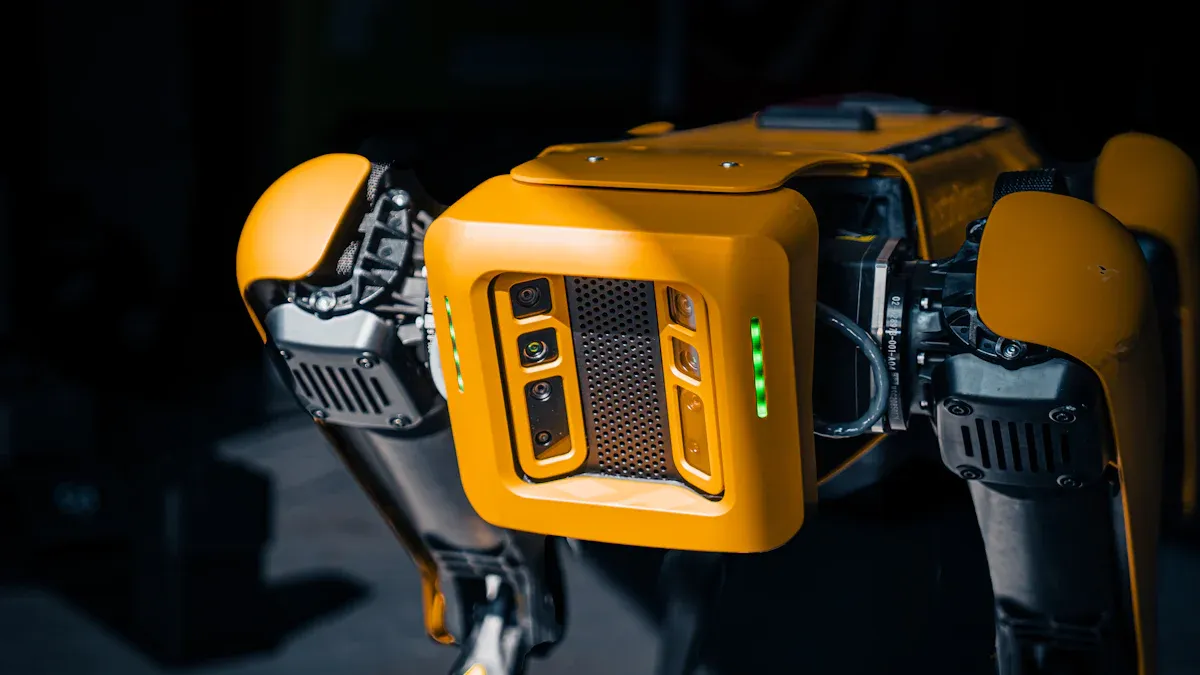
You need robots that can see and react well. The LSLidar C16 gives fast and exact data with lidar technology. You get a wide view all around and steady performance, even in hard places. This helps your robots find obstacles early, move safely, and deal with new things easily.
Key Takeaways
- The LSLidar C16 gives robots very accurate 3D sensing. Robots can spot obstacles well and avoid hitting them.
- The C16 lets robots see all around with a 360° view. It also has a ±30° vertical angle. This helps robots know what is happening everywhere near them.
- Robots can make maps right away with the C16. They can notice new obstacles fast and stay safe. This helps robots work better in busy places.
- The C16 has an IP67 rating and works in many kinds of weather. Robots can use it in rain or dust without problems.
- The C16 works easily with robot operating systems like ROS and ROS2. This makes setting it up simple and helps robots use lidar technology faster.
Lidar Capabilities for Detection
3D Sensing Precision
Robots need to see in three dimensions. The LSLidar C16 lets robots do this with its advanced 3D sensing. It uses Time of Flight measurement. This means it sends laser beams and checks how long they take to return. This helps robots know the exact distance to objects.
Here is a table that shows the main technical features that boost 3D sensing precision:
| Specification | Value |
|---|---|
| Number of Laser Beams | 16 |
| Detection Distance | Up to 150 m |
| Measurement Accuracy | ±3 cm |
| Minimum Vertical Angular Resolution | 2° |
| Measurement Method | Time of Flight |
With 16 laser beams, robots scan many spots at once. The ±3 cm accuracy helps robots find small things. For example, in a warehouse, a robot can see a box close to a wall. This stops bumps and keeps robots moving well.
Tip: Robots with high-precision lidar can make detailed maps. This is important for jobs like delivery, cleaning, or security.
If you want to learn more about how lidar works, you can visit Robotics Tomorrow.
Wide Coverage Angles
Robots must see all around to stay safe. The LSLidar C16 gives a 360° horizontal view and a vertical angle of ±30°. This wide coverage lets robots scan floors, walls, and things above or below.
- The LSLidar C16 has a horizontal coverage angle of 360°.
- It features a minimum vertical angular resolution of 2°.
- Wide horizontal coverage helps robots scan everywhere.
- The vertical resolution of 2° helps spot things at different heights.
Here is a table that explains why wide coverage matters:
| Aspect | Description |
|---|---|
| Recommended FOV | A scanning field of at least 270° is ideal for comprehensive obstacle detection. |
| Coverage Benefits | A wider FOV allows the robot to detect objects across multiple directions, improving its situational awareness and decision-making capabilities. |
Picture a robot moving in a busy factory. With 360° scanning, it can see a forklift behind it or a pallet nearby. The vertical angle helps spot low objects or hanging wires. This keeps robots safe and aware everywhere.
Lidar Data Accuracy
Good data helps robots make smart choices. The LSLidar C16 collects hundreds of thousands of points each second. This gives robots a clear and detailed view of their space. The centimeter-level precision lets robots tell a small step from a big box.
For example, in a self-driving car, lidar helps spot curbs, people, and other cars. In a logistics center, robots find the best way around obstacles, even small or moving ones.
Note: High-resolution lidar data helps robots react quickly and plan better paths. This makes robots safer and more efficient.
You can see more about lidar applications in robotics on IEEE Spectrum.
Enhancing Obstacle Evasion
Real-Time Mapping
Robots need to react quickly to new obstacles. The LSLidar C16 helps robots make a map of their area right away. It gathers up to 320,000 data points every second. This fast data helps robots notice changes fast. In a busy warehouse, a robot can see a box that falls or a person who steps in front. The robot changes its map right away and picks a safe path.
Tip: Using lidar for real-time mapping helps robots dodge sudden obstacles and keep moving.
Here is a table that shows how real-time mapping helps robots avoid obstacles:
| Feature | Benefit for Robots |
|---|---|
| 320,000 points/sec | Finds small and quick objects |
| 360° horizontal view | Spots things from every direction |
| ±30° vertical angle | Sees things above and below |
Reliable Performance
Robots must work in many places. The LSLidar C16 has an IP67 rating. This keeps out dust and water. Robots can work outside or in dusty factories. The lidar works even in rain or on wet floors. You do not need to worry about the sensor breaking in tough spots.
The C16 works in temperatures from -20℃ to +60℃. Robots can work in cold rooms or hot outdoor areas. This big temperature range means you can trust your robot in any weather.
- IP67 rating: Blocks dust and water
- Wide temperature range: Works in cold and hot places
- Strong build: Handles rough spots
Environmental Adaptability
Robots often face rain, fog, or dust. These things make it hard for some sensors to see. The LSLidar C16 uses a special filter. This filter removes fake points from rain or dust. Robots can still find real obstacles, even when it is hard to see.
Tests show the C16 can see through thick dust and still spot targets. In a mine, a robot can move safely even when dust is everywhere. In rain, delivery robots can keep working and not miss things on the road.
Note: The C16’s filter helps robots avoid obstacles in bad weather. This means robots stop less and stay safer.
If you want to learn more about lidar in tough places, you can visit Robotics Business Review.
Navigation Benefits
Safety and Collision Avoidance
You want your robot to stay safe and not crash. The LSLidar C16 helps your robot see obstacles early. It reacts fast to things in its way. With centimeter-level accuracy, your robot can spot small items like tools or cables on the ground. The wide scanning angles let your robot look in every direction. This way, it does not miss anything around it. If your robot is in a busy warehouse or on a crowded street, it can stop or turn before hitting something. This keeps your robot and people nearby safe.
Tip: Check your sensors often to help your robot avoid crashes and get the best data.
Path Planning Efficiency
You want your robot to pick the best path and save time. The LSLidar C16 helps by making accurate 3D maps of the area. Your robot uses these maps to plan paths that avoid things and reach goals faster. The 3D Lidar SLAM AGV Solution by LeiShen Intelligent shows how robots use real-time navigation and obstacle avoidance to plan better routes. With a 360° multi-line lidar system, your robot can sense up to 200 meters away. It works with other sensors for steady movement. This lets many robots work together and choose the best paths. It helps more robots work at once in places like factories or warehouses.
Here is a table that shows how advanced lidar helps robots plan paths:
| Feature | Benefit for Robots |
|---|---|
| Accurate 3D mapping | Better route choices |
| Real-time navigation | Faster obstacle evasion |
| Multi-machine scheduling | More robots, less waiting |
System Integration
You want your robot to connect with your systems easily. The LSLidar C16 works with ROS and ROS2, which are popular robot operating systems. This makes it easy to add the sensor and use its data. The device has international certifications like CE, RoHS, and SGS. This means it meets safety and quality rules. If you need help, you get quick support and free replacement within 24 hours if something breaks. This means you spend less time fixing things and more time using your robot.
Note: Easy setup and strong support help you build robots you can trust for any job.
Use Cases
Indoor Robotics
The LSLidar C16 works in many indoor robots. In warehouses, robots must find boxes and people. The lidar helps them see clearly and move safely. In factories, robots work where there is a lot of dust. The C16 can block out dust and still give good data. At ports, robots face bright lights. The C16 can handle strong lights, so robots keep working well.
Here is a table that shows how the C16 works in different indoor places:
| Application Area | Performance Metrics |
|---|---|
| Warehouse Automation | Better at finding things, steady point clouds |
| Factory Automation | Good at seeing and blocking dust |
| Port Automation | Can work even with bright lights |
Robots with the C16 can work longer and make fewer mistakes. You can learn more about warehouse robots on Robotics Business Review’s LinkedIn.
Autonomous Vehicles
You can use the C16 in self-driving cars and delivery robots. The lidar gives a full 360-degree view. This helps your robot see cars, people, and roadblocks. The fast data lets your robot react quickly to changes. For example, if someone walks into the street, your robot can stop in time. This keeps people and your robot safe. Many cities use robots with lidar for delivery and patrol. These robots work all day and night, even in rain or fog.
Industrial Automation
The C16 helps make factories safer and more productive. The lidar helps robots find things and not crash. It works well in places with dust or fog. The C16 gives steady and correct data, so robots can work faster and make fewer mistakes.
Here is a table that shows important features for factory robots:
| Feature | Description |
|---|---|
| Detection Accuracy | Finds things better with new upgrades |
| Stability | Gives steady point clouds for good data |
| Anti-Interference | Works well even with bright lights |
| Dust and Fog Testing | Tested many times for dust and fog, works better |
| Dust Recognition and Filtering | Sees and blocks dust for better sensing |
You can use the C16 in jobs like moving goods, security, and transport. This helps your robots work better and stay safe.
You can make your robots smarter and safer with the LSLidar C16. This lidar gives you fast, accurate data for better obstacle detection and evasion. Your robots adapt to new spaces and work well in tough weather.
LiDAR gives you strong depth information, even in bad weather or low light. This helps your robots map and move in busy cities.
Choose the LSLidar C16 to boost your robot’s navigation and efficiency.
FAQ
What makes the LSLidar C16 suitable for robot navigation?
You get high-speed 3D scanning, wide coverage, and strong accuracy. The C16 helps your robot detect obstacles early and move safely in busy or changing environments.
Can the LSLidar C16 work outdoors in bad weather?
Yes. The C16 has an IP67 rating. You can use it in rain, dust, or fog. It filters out false signals, so your robot keeps working in tough conditions.
How do you connect the LSLidar C16 to your robot?
You can use ROS or ROS2 for easy integration. The C16 supports these systems, so you can add it to your robot’s software quickly.
What is the maximum detection range of the LSLidar C16?
The C16 detects objects up to 150 meters away. This long range helps your robot spot obstacles early and plan safe paths.
Why is lidar important for robot safety?
Lidar gives your robot a detailed 3D view. You can avoid collisions, map your space, and react to new obstacles fast. This keeps your robot and people safe.









