
Automotive LiDAR has become one of the most important sensing technologies for advanced driver assistance systems (ADAS), autonomous vehicles, intelligent transportation, and next-generation mobility platforms.
For automotive engineers, robotics companies, autonomous driving startups, system integrators, and procurement teams, one question often comes before everything else:
How much does automotive LiDAR cost? Request a Quote →
The answer is more complicated than simply looking at the price of one sensor.
Automotive LiDAR prices can vary significantly depending on detection range, field of view, point rate, resolution, scanning technology, environmental performance, integration requirements, manufacturer, order quantity, and intended application.
A sensor designed for research and development may have a very different price from a LiDAR designed for large-scale vehicle production.
Similarly, a short-range LiDAR for blind-spot or low-speed applications does not necessarily need the same specifications as a long-range LiDAR designed for highway autonomous driving.
For buyers, the objective should therefore not be:
Find the cheapest automotive LiDAR.
Instead, the better objective is:
Find the most cost-effective automotive LiDAR that meets the technical requirements of the project.
This guide explains automotive LiDAR pricing from a practical purchasing perspective. We will examine what affects price, how to compare different LiDAR solutions, how much performance you actually need, how bulk pricing works, and how international buyers can reduce procurement costs.
1. What Is Automotive LiDAR?
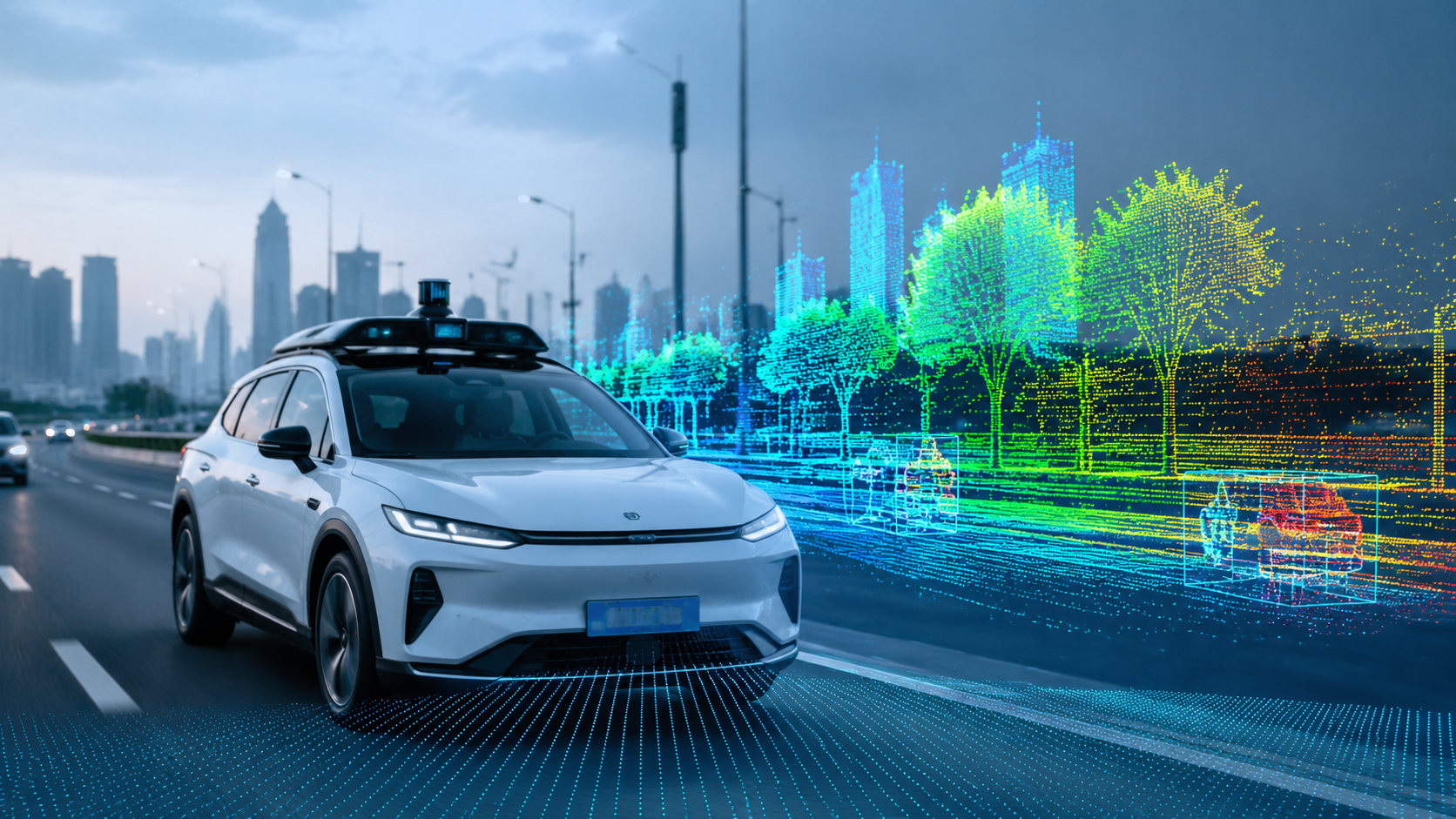
Automotive LiDAR is a laser-based sensing technology designed to provide vehicles with detailed information about their surrounding environment.
Unlike cameras, which primarily capture visual information, LiDAR measures distance using laser pulses.
The resulting data can help an autonomous driving system understand:
- Vehicle distance
- Pedestrian position
- Road boundaries
- Obstacles
- Barriers
- Traffic infrastructure
- Roadside objects
- Vehicle position relative to surroundings
LiDAR can be particularly useful in situations where accurate distance measurement is important.
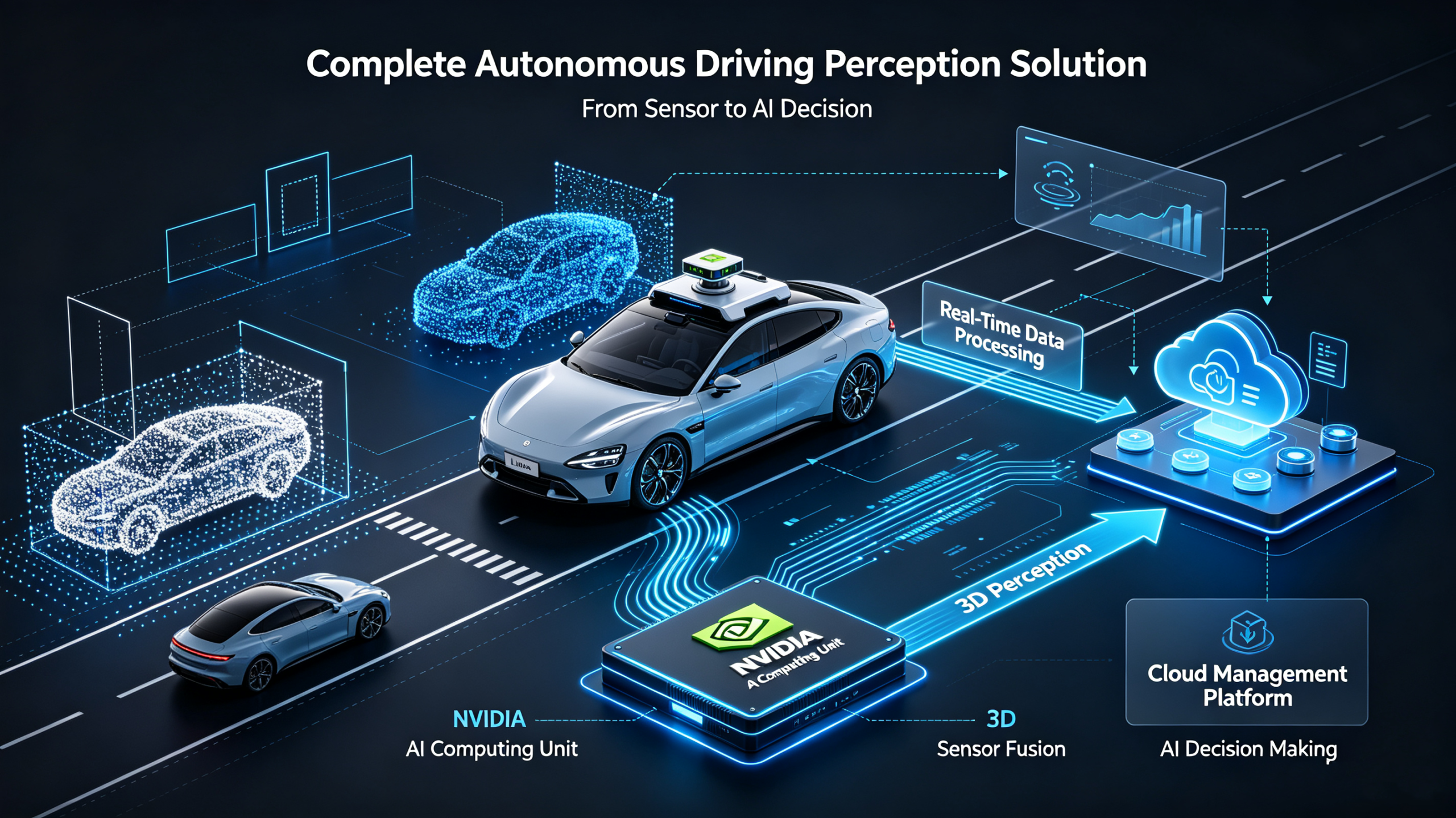
A modern autonomous driving system may combine LiDAR with:
- Cameras
- Radar
- GNSS
- IMU
- Ultrasonic sensors
- HD maps
- AI perception software
LiDAR should therefore be viewed as one part of a larger perception system.
2. Why Is Automotive LiDAR Important for ADAS?
Advanced Driver Assistance Systems increasingly require reliable environmental perception.
ADAS functions can include:
- Forward collision warning
- Automatic emergency braking
- Adaptive cruise control
- Lane-related functions
- Object detection
- Pedestrian detection
- Blind-spot monitoring
- Parking assistance
Different ADAS functions require different levels of sensing performance.
For example, a low-speed parking system may not need the same LiDAR range as a highway driving system.
This distinction is important when purchasing LiDAR.
If your application only requires short-range perception, selecting a very expensive long-range LiDAR may unnecessarily increase the system cost.
3. How Much Does Automotive LiDAR Cost?
There is no single automotive LiDAR price.
The market includes a broad range of products designed for different applications and stages of development.
A buyer may encounter:
- Development LiDAR
- Prototype LiDAR
- Short-range automotive LiDAR
- Mid-range automotive LiDAR
- Long-range LiDAR
- High-resolution LiDAR
- Solid-state LiDAR
- Scanning LiDAR
- Production-oriented LiDAR
Prices can therefore vary substantially.
Rather than publishing one fixed automotive LiDAR price, professional suppliers generally evaluate the specific model, quantity, application and destination.
For example, the price of:
1 prototype sensor
may be completely different from:
100 sensors for pilot production
or:
10,000 sensors for a vehicle program.
This is why automotive LiDAR buyers should request project-based pricing when evaluating commercial programs.
4. What Determines Automotive LiDAR Price?
Several factors can significantly affect automotive LiDAR cost.
Detection Range
Range is one of the most important specifications.
A short-range LiDAR may be suitable for low-speed applications.
A long-range sensor can provide earlier detection of distant objects, which can be valuable for high-speed autonomous driving.
However, greater range generally requires more advanced sensing performance.
Therefore:
Higher range can increase LiDAR cost.
But range should always be evaluated together with the actual application.
Resolution
Higher resolution allows the sensor to capture more detailed information about objects.
This can be important for:
- Object detection
- Classification
- Tracking
- Mapping
- Autonomous driving
However, extremely high resolution may not be necessary for every application.
Buyers should determine the minimum useful resolution before selecting a product.
Point Rate
Point rate indicates how much 3D point-cloud data a LiDAR can generate.
Higher point rates can provide richer environmental information but can also increase:
- Processing requirements
- Data bandwidth
- Storage requirements
- System complexity
For production vehicles, these factors should be considered as part of the overall system design.
Field of View
Field of view determines how much of the surrounding environment the LiDAR can observe.
A wider field of view can reduce blind areas.
However, the optimal FOV depends on where the sensor will be installed.
A forward-facing LiDAR and a roof-mounted 360-degree LiDAR may have very different requirements.
5. Short-Range vs Long-Range Automotive LiDAR
Not every vehicle needs long-range LiDAR.
This is an important point for controlling procurement costs.
Short-Range Automotive LiDAR
Potential applications include:
- Parking
- Low-speed autonomous driving
- Surround perception
- Blind-spot detection
- Urban mobility
- Robotics
The primary advantage is that the system can potentially use a lower-cost sensor while still meeting application requirements.
Long-Range Automotive LiDAR
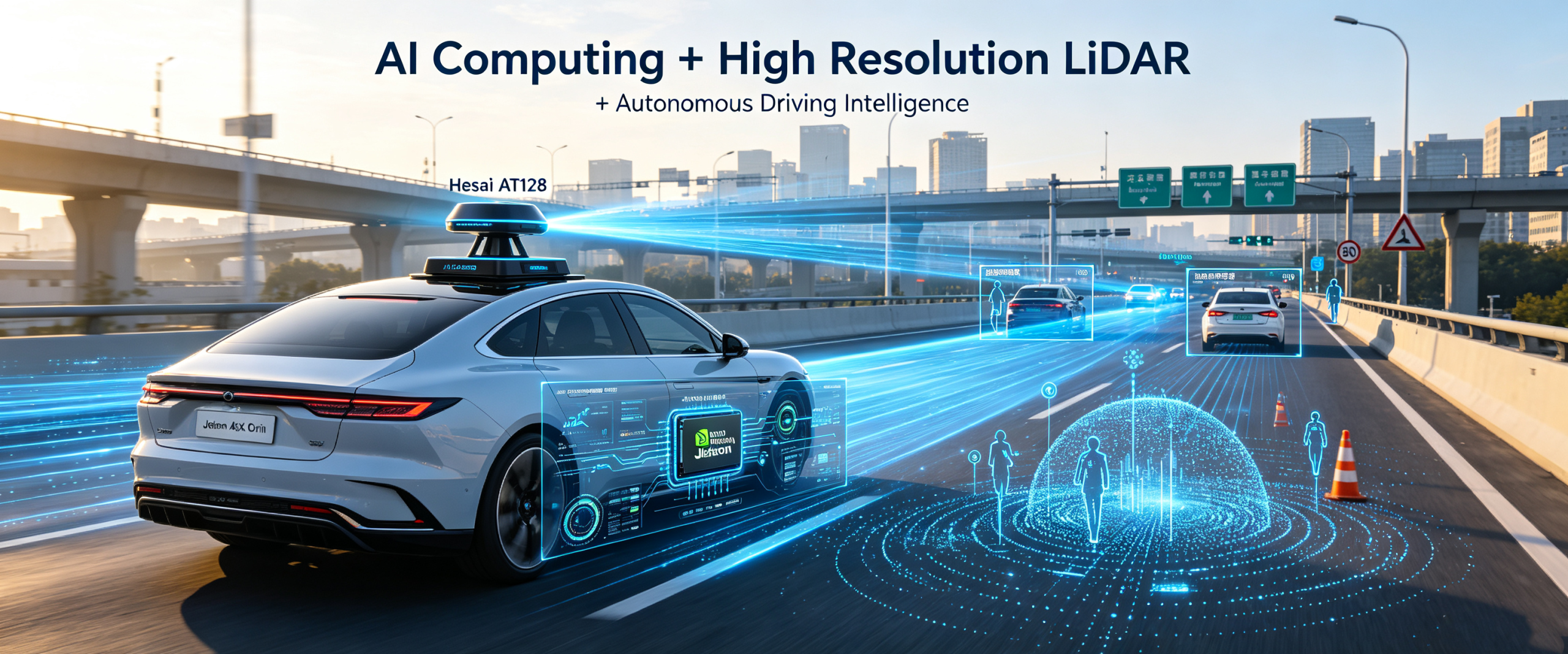
Long-range LiDAR is more relevant to applications such as:
- Highway driving
- High-speed autonomous driving
- Advanced perception
- Long-distance obstacle detection
For these applications, detecting an object earlier can provide the vehicle with more time to respond.
However, long-range performance typically comes with higher cost.
Therefore, buyers should not pay for long-range capability unless the project actually needs it.
6. Automotive LiDAR for ADAS
ADAS represents a broad range of technologies.
A vehicle may use different sensors depending on its target level of automation.
For example, a parking assistance system may have completely different requirements from an advanced highway driving system.
When evaluating automotive LiDAR for ADAS, consider:
Driving Speed
Higher speeds generally increase the importance of detection range and response time.
Environment
Urban environments can contain:
- Pedestrians
- Bicycles
- Cars
- Trucks
- Road signs
- Barriers
- Construction equipment
Weather
Outdoor automotive systems may need to operate under challenging conditions.
Mounting Location
The position of the sensor can affect:
- Field of view
- Detection area
- Occlusion
- Mechanical integration
Computing System
The vehicle’s perception computer needs to process the LiDAR data in real time.
7. Automotive LiDAR for Autonomous Driving
Autonomous driving places greater demands on perception systems.
A vehicle may need to understand the environment continuously and detect objects at different distances and heights.
Automotive LiDAR can contribute to:
- 3D environmental perception
- Object detection
- Object tracking
- Free-space detection
- Road geometry understanding
- Mapping
- Localization
For autonomous driving developers, sensor performance is important, but so are:
- Software compatibility
- Data interfaces
- Synchronization
- Calibration
- Reliability
- Environmental specifications
- Long-term availability
A sensor that performs well in a laboratory but is difficult to integrate may not be the best commercial choice.
8. LiDAR Resolution and Price
Resolution is another area where buyers can easily overspend.
A common mistake is assuming:
Higher resolution always means better value.
That is not necessarily true.
Suppose a vehicle only needs to detect relatively large objects at long range.
An extremely high-resolution sensor may provide more data than the perception system actually needs.
The additional cost may therefore provide limited practical value.
A better purchasing approach is to determine:
What is the smallest object the system needs to detect?
At what distance?
At what vehicle speed?
These requirements can help determine an appropriate resolution.
9. LiDAR Field of View and Price
Field of view is particularly important in automotive applications.
A forward-facing LiDAR may prioritize:
- Long range
- High resolution
- Narrower forward FOV
A roof-mounted sensor may prioritize:
- Wide horizontal coverage
- 360-degree perception
- Consistent environmental observation
Again, there is no universally perfect configuration.
The best option depends on the vehicle architecture.
For procurement teams, this means comparing products based on the actual sensing area required rather than simply choosing the sensor with the largest specification.
10. Solid-State vs Mechanical LiDAR
Automotive LiDAR technologies include several different architectures.
Two commonly discussed categories are:
Mechanical LiDAR
Mechanical or mechanically scanning LiDAR systems use moving components to scan the environment.
They have historically been important in LiDAR development and can offer strong sensing capabilities.
However, automotive applications may place significant emphasis on:
- Reliability
- Size
- Vibration resistance
- Long-term durability
- Manufacturing scalability
Solid-State LiDAR
Solid-state LiDAR generally minimizes or eliminates certain mechanical scanning components.
Potential advantages include:
- Compact size
- Automotive integration
- Scalability
- Reliability potential
- Flexible installation
However, actual performance and price depend on the specific technology and product.
Buyers should compare the actual specifications rather than assuming one architecture is automatically better.
11. Automotive LiDAR for Development vs Production
This is one of the most important distinctions for automotive LiDAR buyers.
R&D Purchase
A startup or research team may only need:
- 1–5 units
- Development interfaces
- SDK
- Data access
- Evaluation software
The unit price may be relatively high because the order quantity is small.
The priority is often:
Get the sensor quickly and start development.
Pilot Production
A pilot program may require:
- 10–100 units
- Stable supply
- Consistent product configuration
- Technical support
- Repeat purchasing
At this stage, procurement teams should begin negotiating project pricing.
Volume Production
A commercial automotive program may require:
- Hundreds
- Thousands
- Tens of thousands
- Potentially much larger quantities
At this scale, unit price becomes extremely important.
Even a small reduction in unit cost can create substantial savings.
For example:
If a program requires 10,000 sensors and the unit price is reduced by $50:
10,000 × $50 = $500,000
That is why volume procurement should be negotiated as a project rather than treated as a standard retail purchase.
12. How to Reduce Automotive LiDAR Procurement Costs
There are several practical strategies.
1. Define Your Requirements Before Asking for Price
Do not simply send:
“Please send automotive LiDAR price.”
Instead provide:
- Required range
- FOV
- Resolution
- Quantity
- Application
- Vehicle type
- Destination
- Target delivery date
This allows suppliers to recommend products more accurately.
2. Compare Equivalent Products
Compare:
Range vs Range
Resolution vs Resolution
FOV vs FOV
Interface vs Interface
rather than comparing brands based only on reputation.
3. Request Multiple Options
Ask suppliers for:
- Recommended model
- Lower-cost alternative
- Higher-performance alternative
This provides a better understanding of the available price/performance range.
4. Request Bulk Pricing
If your project requires more than a few units, request a volume quotation.
5. Evaluate the Complete System Cost
The cheapest LiDAR sensor may not produce the lowest total cost.
Consider:
- Sensor
- Computer
- Software
- Integration
- Calibration
- Installation
- Shipping
- Maintenance
13. Automotive LiDAR Bulk Pricing
For B2B buyers, quantity can have a major impact on pricing.
A typical procurement process could be:
Sample
1–5 units
Purpose:
Technical validation
↓
Pilot
10–100 units
Purpose:
System validation
↓
Production
100+ units
Purpose:
Commercial deployment
The exact quantities vary by project.
The important point is that the price structure should be discussed according to the customer’s expected purchasing volume.
If your company expects to purchase 1,000 units over the next year, tell the supplier.
Even if you only need 10 units for the initial pilot, your expected production volume can help suppliers understand the commercial opportunity.
14. How to Choose an Automotive LiDAR Supplier
Price is important, but supplier reliability is equally important.
Before purchasing, ask:
Is the product actually available?
A product listed online may not always be immediately available.
What is the lead time?
This matters particularly for development schedules.
Can the supplier support international shipping?
For US and European customers, reliable logistics can simplify procurement.
Is technical documentation available?
You may need:
- Datasheets
- User manuals
- SDK
- Interface specifications
- CAD files
- Calibration information
Can you obtain samples?
Sample evaluation is highly recommended before a major procurement decision.
Can you obtain project pricing?
For B2B applications, project-based pricing can be much more useful than a standard online price.
15. Why Buy Automotive LiDAR Through LIDARSEEK?
LIDARSEEK focuses on helping international customers source LiDAR sensors at competitive prices.
Rather than treating every customer as a standard retail transaction, we can evaluate procurement requirements based on:
Model + Quantity + Application + Destination
This approach is particularly useful for:
- Autonomous driving startups
- ADAS developers
- Robotics companies
- Automotive suppliers
- System integrators
- Research organizations
- Engineering teams
- OEM projects
LIDARSEEK provides access to LiDAR products across multiple application categories, including:
- Automotive LiDAR
- 2D LiDAR
- 3D LiDAR
- Industrial LiDAR
- Robotic LiDAR
- Mapping LiDAR
If you already know the model you need, you can send us the model and quantity for a quotation.
If you are still comparing different sensors, send us your technical requirements and we can help identify suitable options.
17. Automotive LiDAR Price: What Should Buyers Actually Compare?
When comparing automotive LiDAR products, use a structured evaluation.
| Factor | Why It Matters |
|---|---|
| Price | Determines hardware cost |
| Range | Determines detection distance |
| Resolution | Determines perception detail |
| FOV | Determines coverage |
| Point rate | Determines data density |
| Accuracy | Determines measurement quality |
| Size | Affects vehicle integration |
| Weight | Affects installation |
| Interface | Affects system integration |
| Software | Affects development time |
| Environmental rating | Affects reliability |
| Availability | Affects production planning |
| Lead time | Affects project schedule |
| Quantity pricing | Affects production cost |
This approach makes it easier to distinguish between cheap, expensive, and genuinely cost-effective LiDAR.
18. Frequently Asked Questions
How much does automotive LiDAR cost in 2026?
Automotive LiDAR prices vary significantly depending on the technology, model, range, resolution, application, quantity and supplier. Development units and production quantities can have very different unit prices.
For an accurate price, provide the exact model and quantity to a LiDAR supplier.
Why is automotive LiDAR more expensive than some industrial LiDAR?
Automotive LiDAR can require additional performance and reliability characteristics, including environmental durability, vibration resistance, automotive integration, high-speed perception and production requirements.
The exact cost depends on the product.
Is automotive LiDAR necessary for ADAS?
Not every ADAS system requires LiDAR.
ADAS architectures can combine cameras, radar, LiDAR and other sensors depending on the required functionality.
However, LiDAR can provide valuable depth and 3D environmental information for certain advanced perception applications.
Is long-range LiDAR worth the extra cost?
It depends on the application.
Long-range LiDAR can be valuable for high-speed autonomous driving because it provides more time to detect distant objects.
For low-speed applications, the additional range may not justify the higher price.
What is the cheapest automotive LiDAR?
There is no single universally cheapest automotive LiDAR because products differ significantly in specifications and intended applications.
A better approach is to define your required specifications and compare suitable models based on price and performance.
Can I buy automotive LiDAR for an R&D project?
Yes. Development and evaluation units are commonly used by research teams, startups and engineering departments before larger procurement.
Can I get automotive LiDAR bulk pricing?
Yes. If you are purchasing multiple units, provide the expected quantity when requesting a quotation.
For larger projects, project-based pricing may be available.
How can I reduce automotive LiDAR costs?
The most effective approaches include comparing multiple models, avoiding unnecessary specifications, requesting project pricing, negotiating volume orders and evaluating total system cost.
What information should I provide to get an automotive LiDAR quotation?
Ideally provide:
Model + Quantity + Application + Destination + Required Delivery Date
If you do not know the exact model, provide your required range, FOV, resolution and application.
Can LIDARSEEK help find an affordable automotive LiDAR?
Yes. LIDARSEEK can help customers compare available LiDAR products according to application and budget.
If price is your main concern, tell us your target specifications and quantity so we can evaluate suitable cost-effective options.
Can I order one automotive LiDAR sensor?
For development and evaluation purposes, customers can request sample quantities depending on the specific product.
Contact us with the model you need and we can check availability and pricing.
19. Request an Automotive LiDAR Quote
Choosing an automotive LiDAR should be based on more than the lowest advertised price.
The right solution should balance:
Performance + Price + Availability + Integration + Long-Term Supply
If you are developing an ADAS system, autonomous vehicle, intelligent vehicle, or automotive perception platform, LIDARSEEK can help you evaluate suitable LiDAR options.
Send us:
LiDAR Model:
Quantity:
Application:
Required Range:
Destination Country:
Target Delivery Date:
Our team can help check:
- Product availability
- Current pricing
- Bulk pricing
- Lead time
- Shipping options
- Alternative models
Get Our Best Automotive LiDAR Price
Looking for a more competitive automotive LiDAR price?
Send us your required model and quantity.
If you are comparing multiple LiDAR products, tell us your target specifications and budget. We can help you identify suitable options before you make a purchasing decision.









