
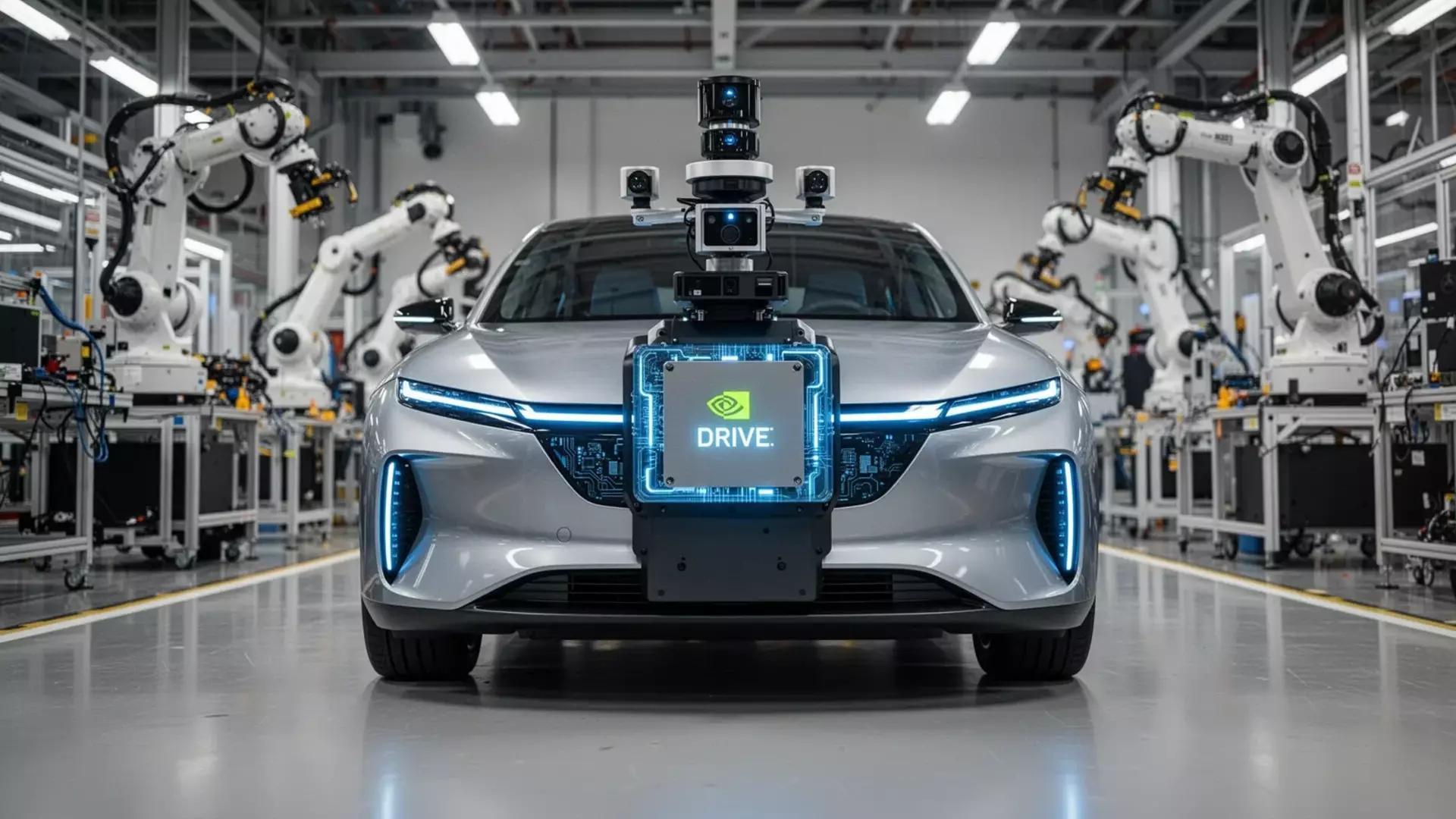
Automotive LiDAR procurement is more complex than purchasing a standard electronic component.
For automotive OEMs, Tier 1 suppliers, ADAS developers, and autonomous driving technology companies, selecting the right LiDAR sensor involves much more than comparing detection range, point cloud density, or unit price.
A sensor must fit the vehicle’s perception architecture, meet technical and environmental requirements, integrate with existing hardware and software, and support the project’s production schedule.
A product that performs well in a laboratory may still require significant engineering work before it can be deployed in a vehicle program.
Furthermore, purchasing a small quantity for engineering evaluation is very different from establishing a sourcing arrangement for hundreds or thousands of sensors.
This guide explains ten important factors automotive procurement and engineering teams should evaluate before selecting an automotive LiDAR supplier.
1. Understand the Intended Automotive Application
The first step is to define the sensor’s intended function within the vehicle.
Different automotive applications have different sensing requirements.
| Application | Typical LiDAR Requirements |
|---|---|
| Forward ADAS Perception | Long-range detection and high-resolution forward coverage |
| Highway Autonomous Driving | Long-range environmental perception |
| Urban Autonomous Driving | Detection of vehicles, pedestrians, cyclists, and road objects |
| Autonomous Parking | Near-field perception and obstacle detection |
| Robotaxi | Multi-directional environmental perception |
| Autonomous Delivery Vehicles | Surrounding perception and obstacle detection |
| Intelligent Transportation | Road and infrastructure monitoring |
For example, a forward-facing automotive LiDAR may prioritize long-range detection and high-resolution perception.
A sensor used for low-speed autonomous parking may have different coverage and near-field requirements.
Before requesting quotations, clarify the intended function, installation location, and required sensing performance.
This prevents suppliers from recommending products based only on headline specifications.
2. Evaluate Detection Range Under Comparable Conditions
Detection range is one of the most frequently compared LiDAR specifications.
However, maximum detection distance should never be evaluated without considering the measurement conditions.
Important factors include:
- Target reflectivity
- Detection probability
- Measurement accuracy
- Ambient light conditions
- Target size
- Weather and environmental conditions
- Horizontal and vertical coverage
For example, a manufacturer’s advertised maximum range may be measured using a relatively reflective target under specified test conditions.
The same sensor may have a different effective detection distance for a darker or smaller object.
When comparing automotive LiDAR products, ask manufacturers or suppliers for the relevant datasheets and test conditions.
Make sure that different models are compared using equivalent measurement criteria.
Procurement recommendation: Do not select a LiDAR based solely on the longest advertised detection range. Evaluate the complete performance profile against the vehicle’s actual perception requirements.
3. Compare Resolution and Point Cloud Performance
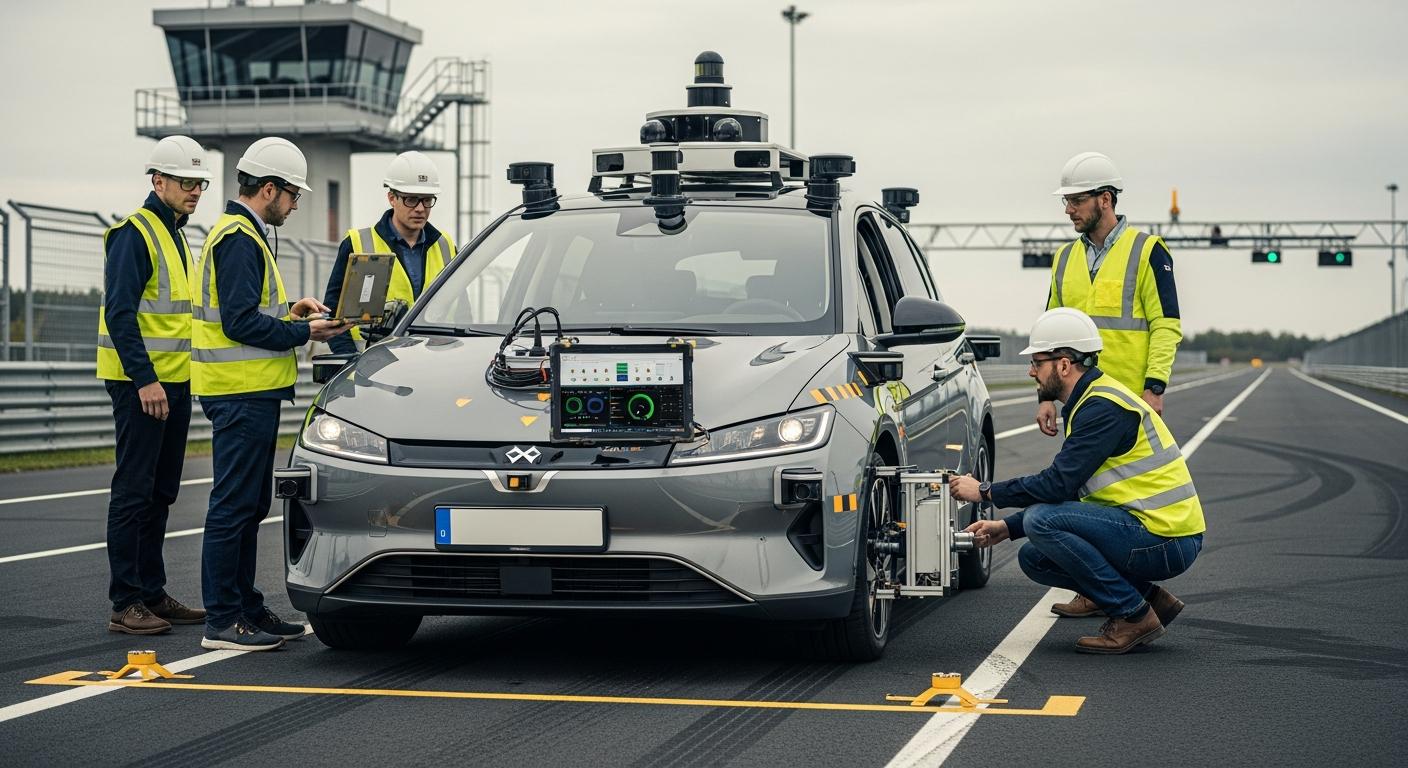
Detection range alone does not determine how much useful environmental information a LiDAR provides.
Point cloud characteristics are equally important.
Automotive engineering teams should evaluate:
Vertical Resolution
Determines the angular separation between vertically distributed measurements.
Horizontal Resolution
Influences the level of detail captured across the horizontal field of view.
Point Rate
Describes the number of measurement points generated over a given period.
Frame Rate
Affects how frequently updated environmental information becomes available.
Field of View
Determines the area covered by the sensor.
These parameters influence the perception system’s ability to identify and process road users and environmental objects.
For example, high-resolution point clouds may be particularly valuable for applications requiring detailed object perception at longer distances.
However, higher point rates also introduce data-processing and bandwidth considerations.
Engineering teams should evaluate the relationship between sensor performance and onboard computing capacity.
4. Verify Automotive Environmental and Reliability Requirements
Automotive sensors operate in environments that are considerably more demanding than typical indoor applications.
Depending on the vehicle platform and installation position, a LiDAR may be exposed to:
- Temperature variation
- Vibration
- Mechanical shock
- Dust and water
- Road contamination
- Solar radiation
- Long operating hours
- Repeated thermal cycling
Before selecting a sensor, review the manufacturer’s environmental specifications and available validation documentation.
Important items include:
| Evaluation Item | What to Verify |
|---|---|
| Operating Temperature | Supported temperature range |
| Storage Temperature | Permitted storage conditions |
| Vibration | Applicable vibration test results |
| Shock | Mechanical shock specifications |
| IP Rating | Dust and water protection |
| EMC | Relevant electromagnetic compatibility information |
| Durability | Available reliability and lifecycle test documentation |
Do not assume that every LiDAR marketed for automotive applications has identical qualification status.
Ask for documentation applicable to the exact model and hardware revision being considered.
5. Confirm Automotive Qualification and Compliance Documentation
For automotive OEM and Tier 1 projects, qualification and compliance documentation can be important parts of supplier evaluation.
However, different standards and certifications address different aspects of product development, manufacturing, and system safety.
Depending on the project, procurement teams may need to review:
- IATF 16949 quality management system certification, where applicable
- ISO 26262 functional safety documentation, where applicable
- Automotive environmental validation reports
- Electromagnetic compatibility test reports
- Product change management procedures
- Manufacturing quality documentation
- Traceability and inspection records
An important distinction:
A manufacturer’s quality management certification does not automatically mean that every product is functionally safety-certified.
Likewise, a sensor’s automotive application does not automatically make it suitable for every ADAS or automated driving safety function.
Ask suppliers to identify exactly which documents are available for the specific product.
For safety-related applications, the OEM and system integrator must evaluate the complete system architecture and applicable safety requirements.
6. Evaluate Software Compatibility and Vehicle Integration
Automotive LiDAR is part of a larger perception system.
The sensor must communicate with the vehicle’s computing and processing architecture.
Before purchasing, confirm:
- Communication interface
- Supported data formats
- SDK and API availability
- Timestamp handling
- Synchronization capabilities
- Calibration requirements
- Diagnostic information
- Firmware compatibility
- Integration documentation
For development projects, also identify the target computing platform and software environment.
Some engineering teams use ROS or ROS 2 during prototype development, while production vehicle platforms may use different software architectures.
It is important to distinguish development-tool compatibility from production-vehicle integration requirements.
Ask suppliers to provide the appropriate technical documentation before finalizing the purchasing decision.
7. Check Product Lifecycle and Long-Term Availability
Automotive development programs often have long timelines.
A sensor that is readily available during prototype development may not necessarily have the same availability throughout the entire vehicle program.
This creates an important procurement risk.
Before selecting a supplier, clarify:
- Product lifecycle status.
- Current production status.
- Product discontinuation policy.
- Hardware revision management.
- Firmware update policy.
- End-of-life notification procedures.
- Availability of replacement products.
For OEM programs, changes in sensor hardware or firmware may require additional engineering evaluation.
A replacement model should never be assumed to be a direct substitute simply because it belongs to the same product family.
Ask suppliers to communicate any changes that could affect mechanical, electrical, optical, or software compatibility.
8. Evaluate Supply Capacity and Batch Delivery Capability
Automotive procurement requires more than confirming whether a supplier can provide a few evaluation units.
A production program may require a staged delivery arrangement.
For example:
| Project Stage | Illustrative Requirement |
|---|---|
| Engineering Evaluation | 2–5 units |
| Prototype Development | 5–20 units |
| Design Validation | 20–50 units |
| Pilot Production | 50–200 units |
| Production Deployment | Based on vehicle production demand |
These figures are examples only. Actual quantities vary by vehicle program.
When sourcing larger quantities, confirm:
- Available stock
- Additional sourcing lead time
- Quantity allocation
- Batch delivery arrangements
- Expected dispatch schedule
- Supply continuity
- Shipping arrangements
If the project has a fixed vehicle testing or production deadline, communicate the schedule early.
A realistic delivery commitment is more valuable than an attractive quotation based on unconfirmed availability.
9. Compare Total Procurement Cost, Not Just Unit Price
The lowest unit price does not always represent the lowest project cost.
Automotive procurement teams should consider the total cost associated with acquiring and integrating the sensor.
A practical comparison may include:
| Cost Component | Consideration |
|---|---|
| Sensor Unit Price | Base product cost |
| Accessories | Cables, connectors and mounting components |
| Engineering Resources | Integration and testing effort |
| Software Support | SDK and documentation availability |
| Logistics | Freight and delivery arrangements |
| Customs | Applicable import duties and taxes |
| Warranty | Coverage and service conditions |
| Supply Risk | Potential impact of delays or discontinuation |
For projects requiring multiple sensor models or brands, a standardized quotation comparison can help procurement teams make better purchasing decisions.
Always confirm whether shipping, customs clearance, duties, and taxes are included in the quoted commercial terms.
10. Evaluate Supplier Communication and Technical Support
A supplier’s ability to communicate accurately is an important part of automotive procurement.
Engineering and purchasing teams often need clarification on:
- Product specifications
- Model differences
- Technical documentation
- Hardware revisions
- Available quantities
- Lead times
- Warranty conditions
- Delivery schedules
Before placing a production order, evaluate whether the supplier can provide clear and consistent information.
For international projects, communication should also cover commercial terms, export documentation, shipping arrangements, and after-sales coordination.
A supplier who understands both technical product requirements and international procurement procedures can help reduce unnecessary communication between engineering and purchasing departments.
Automotive LiDAR RFQ Checklist
Before contacting suppliers, prepare the following information.
Technical Requirements
- Intended vehicle application
- Preferred LiDAR brand and model
- Required detection range
- Horizontal and vertical field of view
- Resolution and point rate requirements
- Environmental specifications
- Communication interface
- Software and computing platform
Commercial Requirements
- Estimated quantity
- Prototype or production requirement
- Required delivery schedule
- Destination country
- Preferred shipping method
- Warranty requirements
- Payment terms
Documentation Requirements
- Product datasheet
- Technical manual
- Environmental specifications
- Available qualification documents
- SDK and software resources
- Product lifecycle information
- Product revision information
Providing these details allows suppliers to prepare more accurate quotations and helps procurement teams compare different offers.
Which Automotive LiDAR Brands Should OEMs Consider?
Automotive LiDAR technology is evolving, and different manufacturers offer different product architectures and performance characteristics.
Several brands are worth evaluating depending on the project requirements.
Hesai
Hesai offers automotive and other LiDAR product families, including the AT128 and other sensors designed for different perception applications.
RoboSense
RoboSense provides LiDAR solutions across automotive and robotics applications, including automotive-oriented product families such as EM4.
Seyond
Seyond offers LiDAR solutions for autonomous driving and other intelligent perception applications, including the Robin product family.
The right choice depends on the intended vehicle function, technical requirements, integration architecture, documentation, supply conditions, and project budget.
Always compare exact product models rather than assuming that products from the same manufacturer have identical capabilities.
How LIDARSEEK Supports Automotive LiDAR Procurement
LIDARSEEK provides multi-brand LiDAR sourcing and intelligent perception products for automotive developers, robotics companies, and industrial technology businesses.
Our portfolio includes products from manufacturers such as Hesai, RoboSense, Livox, Seyond, and other sensing technology providers.
For automotive-related projects, we can help customers with:
Multi-Brand Product Sourcing
Evaluate available product options from different LiDAR manufacturers.
Model Selection Assistance
Identify potential products based on technical requirements and application scenarios.
Project-Based Quotation
Prepare quotations based on model, quantity, destination, and delivery requirements.
Availability and Lead Time Coordination
Check sourcing arrangements and discuss delivery schedules for prototype and production requirements.
Technical Documentation
Assist customers in obtaining available product specifications, manuals, and integration resources.
We work with customers at different purchasing stages, from initial engineering evaluation to larger project sourcing requirements.
Frequently Asked Questions
1. What should automotive OEMs consider when purchasing LiDAR?
Key factors include detection performance, resolution, environmental specifications, software compatibility, available qualification documentation, lifecycle, supply capacity, and total procurement cost.
2. What is the difference between automotive LiDAR and robotics LiDAR?
Automotive LiDAR products are developed for vehicle-related sensing applications and may have different environmental, integration, qualification, and lifecycle requirements from general robotics LiDAR products. The suitability of a specific model must be evaluated against the intended application.
3. Can I request automotive LiDAR samples before bulk purchasing?
Availability depends on the product and sourcing arrangements. For engineering evaluation, confirm the exact model, hardware revision, available documentation, and delivery schedule before ordering.
4. Can suppliers support large automotive LiDAR orders?
Supply arrangements depend on manufacturer availability, order quantity, production schedules, and commercial conditions. Confirm allocation and delivery arrangements before committing to a vehicle program.
5. Can I compare Hesai, RoboSense, and Seyond products through LIDARSEEK?
Yes. Customers can share their technical requirements and preferred models to request product comparisons and quotations for available options.
Request an Automotive LiDAR Quotation
Are you sourcing LiDAR sensors for an ADAS development program, autonomous vehicle project, or automotive OEM application?
LIDARSEEK can help you evaluate different product options and coordinate sourcing based on your project requirements.
To receive a more accurate quotation, please share:
- Preferred manufacturer and model
- Estimated quantity
- Intended automotive application
- Required delivery schedule
- Destination country
Whether you need a few engineering evaluation units or a larger production-related order, our team is ready to discuss your sourcing requirements.
Contact LIDARSEEK
Website: https://lidarseek.com/
Email: lidarseektech@gmail.com
Request an Automotive LiDAR Quotation
LIDARSEEK – LiDAR Sensors and Intelligent Perception Solutions for Automotive, Robotics, and Industrial Applications.









