
Introduction: The LiDAR Revolution Is Expanding Far Beyond Passenger Vehicles
For many years, the phrase “LiDAR sensor” was almost exclusively associated with autonomous vehicles. Whenever people discussed self-driving technology, they imagined expensive sensors mounted on robotaxis navigating complex urban streets. While autonomous driving remains one of the most important applications of LiDAR technology, a much larger transformation is quietly taking place across multiple industries. Today, advanced 3D LiDAR sensors are becoming essential components in warehouse automation, autonomous delivery robots, unmanned ground vehicles, robot dogs, industrial inspection systems, smart city infrastructure, and drone mapping solutions.
As artificial intelligence continues to evolve from software-based applications toward physical AI systems capable of interacting with the real world, the demand for accurate environmental perception has increased dramatically. Cameras can provide rich visual information, but they struggle in darkness, glare, fog, rain, and highly dynamic environments. Radar can detect objects over long distances but often lacks the spatial precision required for navigation and obstacle avoidance. This is where LiDAR technology has become indispensable.
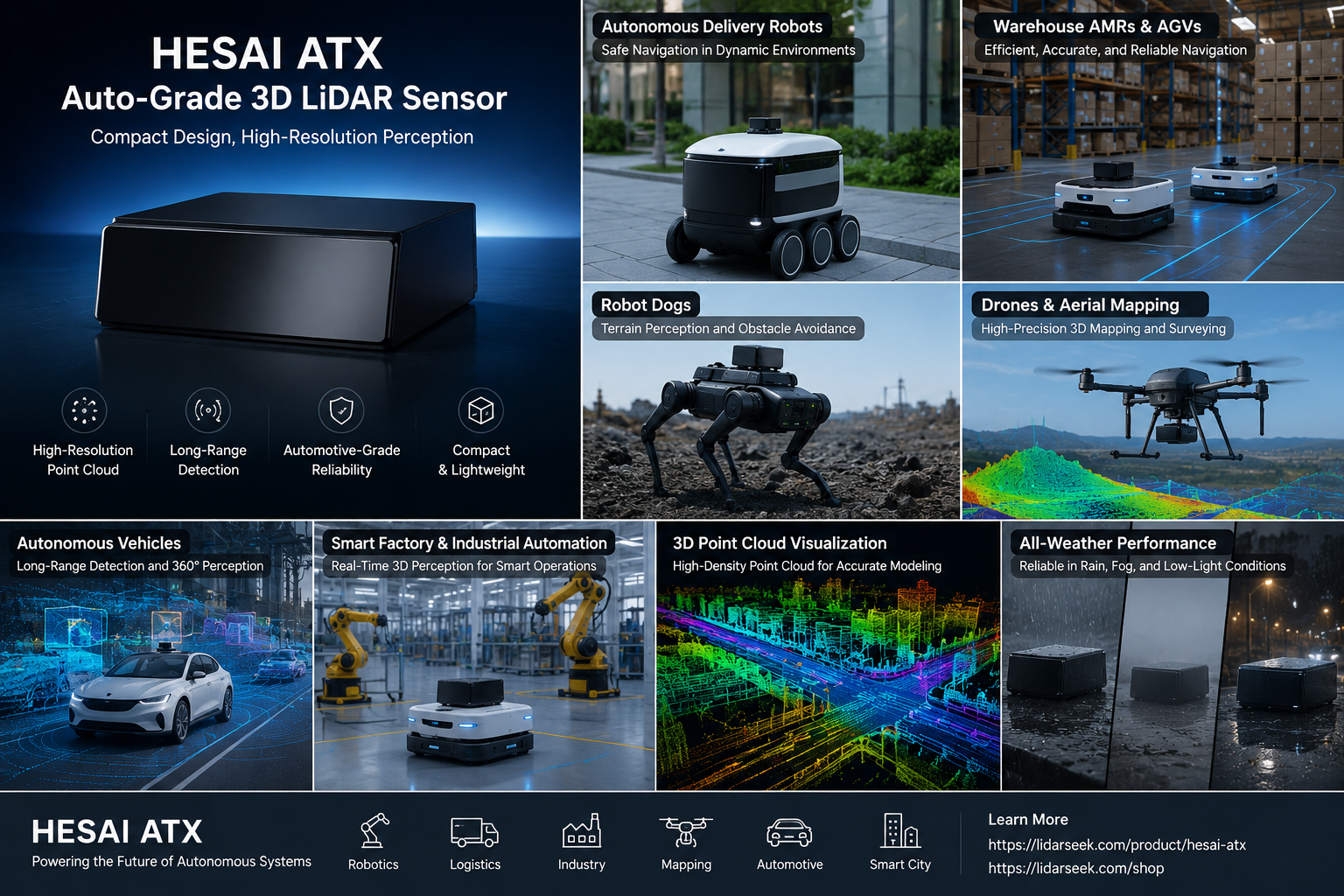
The Hesai ATX represents a new generation of automotive-grade LiDAR technology designed to deliver high-performance 3D perception while maintaining the reliability and durability required for real-world deployment. Originally developed with advanced vehicle perception requirements in mind, the capabilities of the Hesai ATX extend far beyond automotive applications. Its compact design, high-resolution point cloud generation, long-range detection capabilities, and robust environmental adaptability make it an ideal solution for modern robotic systems seeking to achieve autonomous operation in increasingly complex environments.
As organizations worldwide accelerate investments in automation, intelligent logistics, unmanned systems, and AI-powered robotics, the role of advanced LiDAR sensors is becoming more critical than ever before. Companies searching for a high-performance lidar sensor, a reliable robot lidar solution, or an automotive-grade 3D lidar sensor are increasingly recognizing the value that technologies like the Hesai ATX can bring to their projects.
Product Page:
Why Modern Robotics Requires Advanced 3D LiDAR Sensors
The robotics industry has experienced extraordinary growth during the last decade. What began as simple automation systems operating within controlled factory environments has evolved into sophisticated robots capable of navigating crowded warehouses, public sidewalks, airports, hospitals, manufacturing facilities, and outdoor industrial sites.
The primary challenge facing every autonomous robot is perception. Before a robot can make intelligent decisions, it must first understand its environment accurately. It needs to identify obstacles, recognize moving objects, estimate distances, generate maps, determine its own location, and continuously update this information as conditions change.
Traditional sensor technologies often struggle to meet these requirements simultaneously. Cameras provide visual detail but can be affected by lighting conditions. Ultrasonic sensors offer limited range. Radar excels at long-range detection but may lack precise object geometry.
A high-quality 3D LiDAR sensor bridges these gaps by creating detailed three-dimensional representations of the surrounding environment. Thousands or even millions of measurement points are collected every second, producing accurate point clouds that enable robots to perceive the world with remarkable precision.
The Hesai ATX contributes to this capability by generating dense environmental data that supports advanced perception algorithms, simultaneous localization and mapping (SLAM), obstacle avoidance systems, route planning, object classification, and autonomous navigation. As AI-powered robots become more intelligent, the quality of perception data becomes a key differentiator between successful deployments and operational failures.
For businesses planning to buy lidar sensors for robotics applications, selecting a sensor capable of delivering automotive-grade reliability can significantly improve long-term performance and reduce maintenance costs.
How Autonomous Delivery Robots Depend on LiDAR Technology

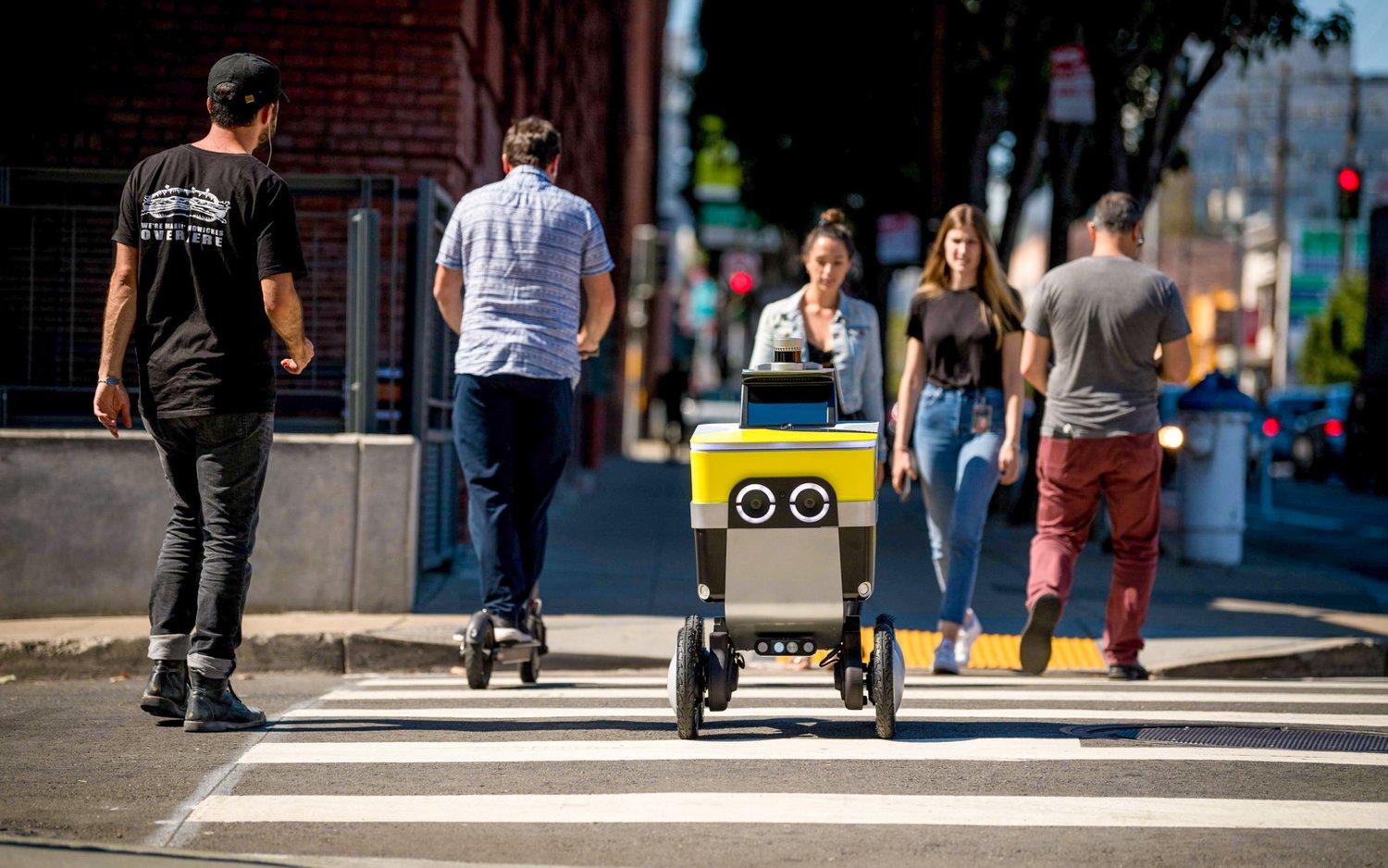
The rapid growth of e-commerce and last-mile logistics has created significant demand for autonomous delivery robots. These robots are increasingly being deployed across university campuses, residential communities, business parks, airports, hospitals, and smart city environments.
Unlike vehicles operating on structured roads, delivery robots must navigate highly unpredictable environments. Pedestrians may suddenly change direction. Children may run across pathways. Cyclists, pets, construction zones, and temporary obstacles create constantly evolving navigation challenges.
A delivery robot cannot rely solely on GPS because positioning accuracy may not be sufficient for precise navigation. Cameras alone may struggle during nighttime operation or adverse weather conditions. LiDAR sensors provide the detailed spatial awareness required for safe autonomous movement.
The Hesai ATX enables delivery robots to continuously scan their surroundings and generate highly accurate three-dimensional maps. This allows robots to identify static structures such as walls, curbs, benches, and lamp posts while simultaneously tracking dynamic objects such as pedestrians and bicycles.
As urban logistics networks continue to expand, reliable robot lidar systems will become one of the foundational technologies enabling scalable autonomous delivery operations. Companies developing next-generation delivery robots increasingly seek sensors that combine high accuracy, long operational life, and reliable performance across varying environmental conditions.
Warehouse Automation and the Rise of Intelligent AMRs
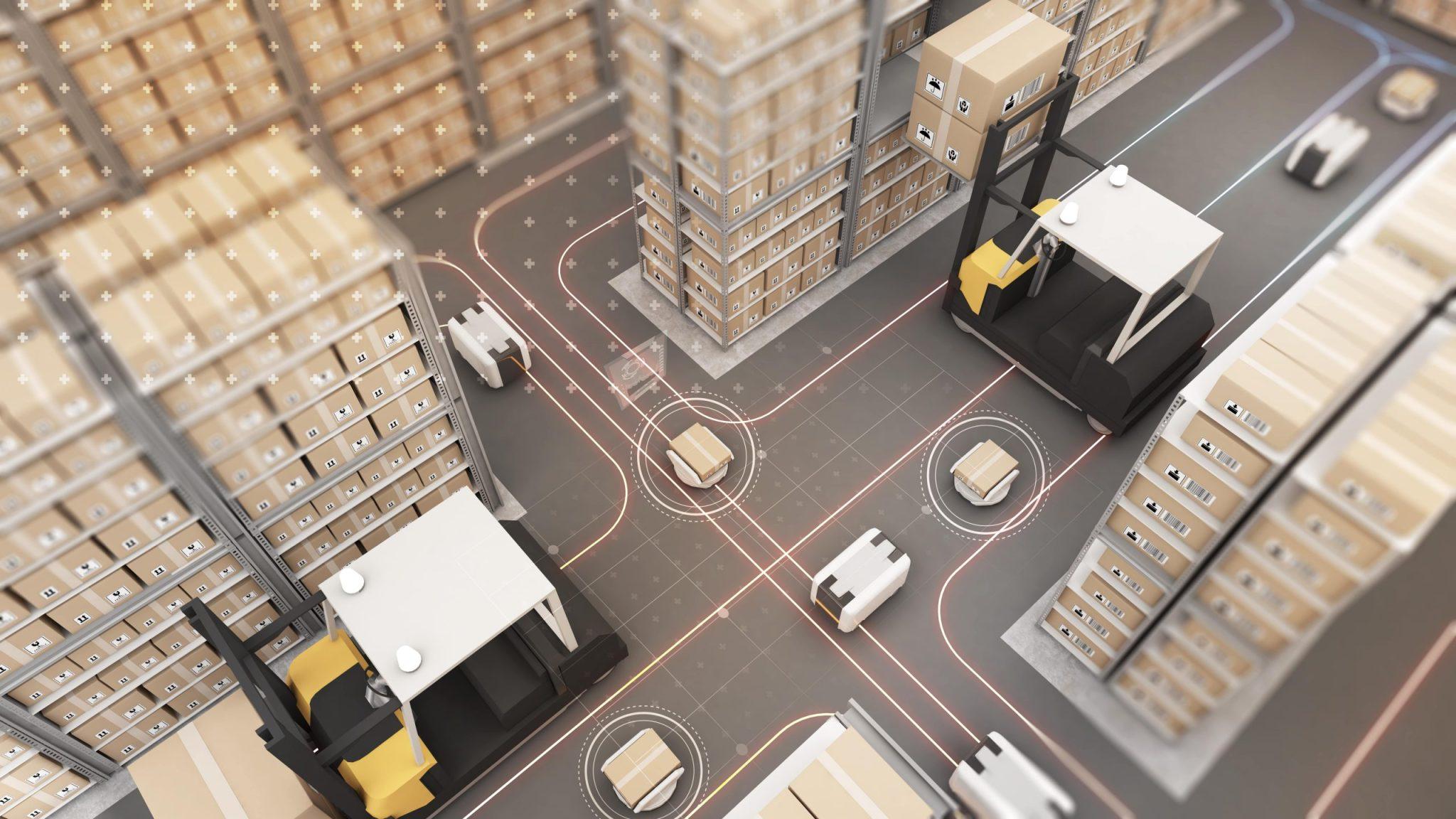
Warehouses have become some of the most technologically advanced environments in modern industry. The rise of e-commerce, same-day delivery expectations, and labor shortages has accelerated adoption of Autonomous Mobile Robots (AMRs) and Automated Guided Vehicles (AGVs).
Unlike traditional AGVs that follow predefined paths, modern AMRs dynamically navigate warehouse environments. They can avoid obstacles, reroute around congestion, collaborate with human workers, and optimize transportation routes in real time.
This level of autonomy requires exceptional environmental awareness. Robots must understand aisle layouts, shelving systems, pallet locations, forklifts, workers, and moving inventory.
The Hesai ATX offers a compelling solution for these environments because it provides detailed three-dimensional perception data capable of supporting advanced warehouse navigation systems. Dense point cloud information allows robots to build accurate facility maps while continuously updating environmental information as conditions change.
In large distribution centers, even small improvements in navigation efficiency can translate into significant operational savings. By enabling more precise obstacle avoidance and route planning, advanced LiDAR technology contributes directly to improved productivity and reduced downtime.
As warehouse operators continue their transition toward fully automated facilities, demand for industrial-grade robot lidar systems is expected to grow substantially.
Robot Dogs: The Emerging Frontier of Autonomous Mobility
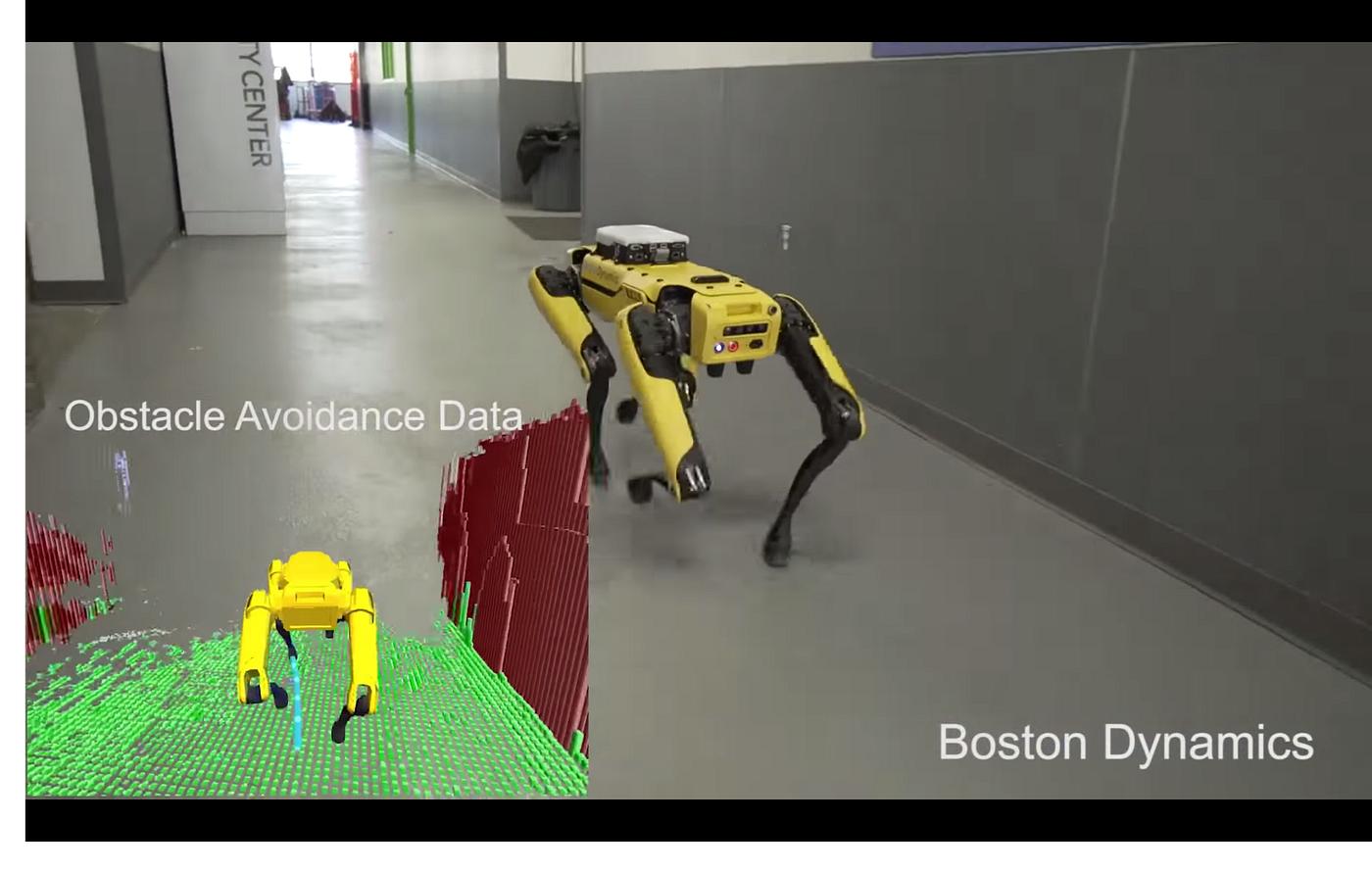
Among the most exciting developments in modern robotics is the rise of quadruped robots, commonly known as robot dogs. These machines are rapidly moving beyond research laboratories and entering real-world applications including industrial inspection, security patrols, infrastructure monitoring, disaster response, mining operations, and military reconnaissance.
Robot dogs face unique perception challenges. Unlike wheeled robots operating on relatively flat surfaces, quadruped robots must navigate stairs, uneven terrain, rocky environments, slopes, debris fields, and complex industrial facilities.
Accurate depth perception becomes absolutely critical. A robot dog must continuously evaluate terrain conditions while identifying obstacles and selecting stable footholds.
The Hesai ATX provides valuable environmental awareness by generating detailed three-dimensional representations of surrounding terrain. This enables robot dogs to perform advanced terrain analysis, obstacle detection, path planning, and environmental mapping.
As industries increasingly deploy autonomous inspection systems in hazardous or difficult-to-access locations, robot dogs equipped with high-performance LiDAR sensors are becoming powerful tools for enhancing operational safety and efficiency.
The combination of AI-driven decision-making and high-resolution LiDAR perception is helping transform robot dogs from experimental platforms into practical commercial solutions capable of delivering measurable business value.
Drone Mapping and the Future of Digital Twin Technology
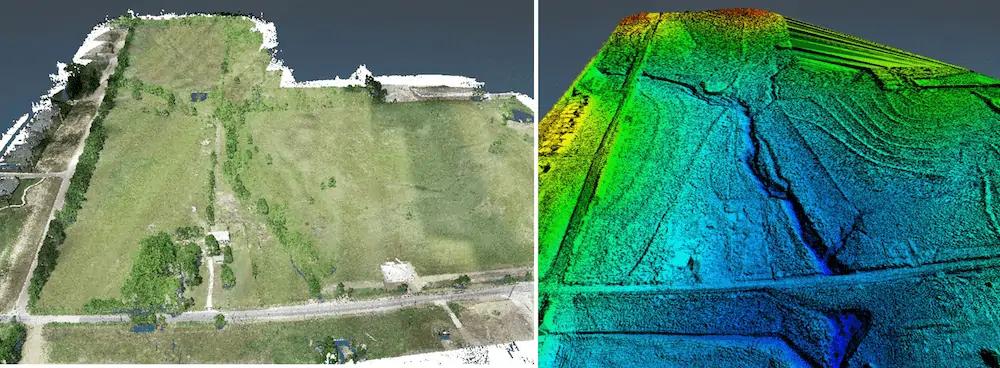
While drones have traditionally relied on cameras for aerial data collection, LiDAR-equipped drones are opening entirely new possibilities for mapping, surveying, and infrastructure inspection.
Drone-based LiDAR systems can generate highly accurate three-dimensional models of terrain, vegetation, buildings, utility networks, and transportation infrastructure. Unlike traditional photogrammetry methods, LiDAR can often penetrate vegetation and capture ground elevation data beneath tree canopies.
Industries benefiting from drone LiDAR mapping include:
- Construction
- Mining
- Forestry
- Agriculture
- Transportation
- Utilities
- Environmental monitoring
- Urban planning
As digital twin technologies become increasingly important, organizations require accurate spatial datasets to create virtual representations of physical assets.
The precision offered by advanced LiDAR sensors allows engineers, planners, and asset managers to develop detailed digital models that support predictive maintenance, infrastructure planning, and operational optimization.
Although drone payload requirements differ from automotive applications, many perception technologies developed for automotive-grade LiDAR systems contribute directly to improvements in aerial mapping solutions.
Why Automotive-Grade LiDAR Is Becoming the Standard for Robotics
One of the most important trends in the robotics industry is the adoption of automotive-grade technologies. Automotive systems must operate reliably across extreme temperatures, varying weather conditions, vibration environments, and long operational lifecycles.
These same requirements exist in industrial robotics.
Robots deployed in warehouses, factories, ports, construction sites, mining facilities, and logistics hubs must operate consistently under demanding conditions. Downtime can be costly, making reliability a critical factor when selecting perception hardware.
The Hesai ATX benefits from engineering principles developed for automotive applications, including robust environmental performance, high durability standards, and advanced perception capabilities.
As the boundaries between automotive autonomy and robotic autonomy continue to blur, sensors originally developed for intelligent vehicles are increasingly becoming foundational technologies for next-generation robotic systems.
Organizations evaluating automotive lidar sensors for robotics projects often discover that these solutions provide the performance, reliability, and scalability necessary for long-term deployment success.
The Future of Physical AI Depends on High-Quality Perception
Artificial intelligence is entering a new phase often referred to as Physical AI. Rather than existing solely within software applications, AI systems are increasingly being embedded into machines capable of interacting directly with the physical world.
Delivery robots, warehouse AMRs, autonomous forklifts, robot dogs, drones, agricultural machines, and industrial inspection systems all represent examples of Physical AI in action.
However, AI can only be as effective as the data it receives.
Without accurate environmental perception, even the most advanced AI algorithms struggle to make reliable decisions. LiDAR sensors provide the spatial intelligence necessary for machines to understand and navigate their surroundings safely.
As machine autonomy becomes more sophisticated, demand for high-performance 3D lidar sensors will continue to accelerate. Technologies like the Hesai ATX are positioned to play a central role in this transformation by enabling machines to perceive the world with unprecedented accuracy and reliability.
The future of robotics will not be defined solely by artificial intelligence software. It will be equally shaped by the sensors that provide machines with the ability to see, understand, and interact with the world around them.
Frequently Asked Questions (FAQ)
1. What is the Hesai ATX?
The Hesai ATX is an automotive-grade 3D LiDAR sensor designed for advanced environmental perception in autonomous systems.
2. Can Hesai ATX be used for robots?
Yes. It is suitable for AMRs, AGVs, delivery robots, inspection robots, and robot dogs.
3. Is Hesai ATX suitable for autonomous vehicles?
Yes. It was originally developed for automotive applications and supports advanced perception capabilities.
4. What industries use LiDAR sensors?
Automotive, logistics, robotics, construction, mining, agriculture, security, and drone mapping industries all use LiDAR technology.
5. What is robot lidar?
Robot lidar refers to LiDAR sensors integrated into robotic systems for navigation, mapping, and obstacle avoidance.
6. How does LiDAR improve obstacle avoidance?
LiDAR creates precise 3D environmental maps that allow robots to detect and avoid obstacles in real time.
7. Can LiDAR work at night?
Yes. LiDAR is an active sensing technology and performs effectively in low-light or nighttime conditions.
8. Is LiDAR better than cameras?
LiDAR and cameras are complementary technologies. LiDAR provides accurate depth information while cameras provide visual detail.
9. Can Hesai ATX support SLAM?
Yes. High-quality point cloud data can support SLAM-based localization and mapping applications.
10. Is LiDAR useful for warehouse automation?
Absolutely. LiDAR enables navigation, collision avoidance, route planning, and fleet coordination.
11. Can robot dogs use LiDAR sensors?
Yes. LiDAR helps robot dogs understand terrain, avoid obstacles, and navigate complex environments.
12. Is LiDAR important for drone mapping?
Yes. LiDAR allows drones to generate highly accurate 3D maps and digital terrain models.
13. Why choose automotive-grade LiDAR?
Automotive-grade sensors offer enhanced reliability, durability, and environmental performance.
14. Where can I buy Hesai ATX?
You can learn more about the product at:









