
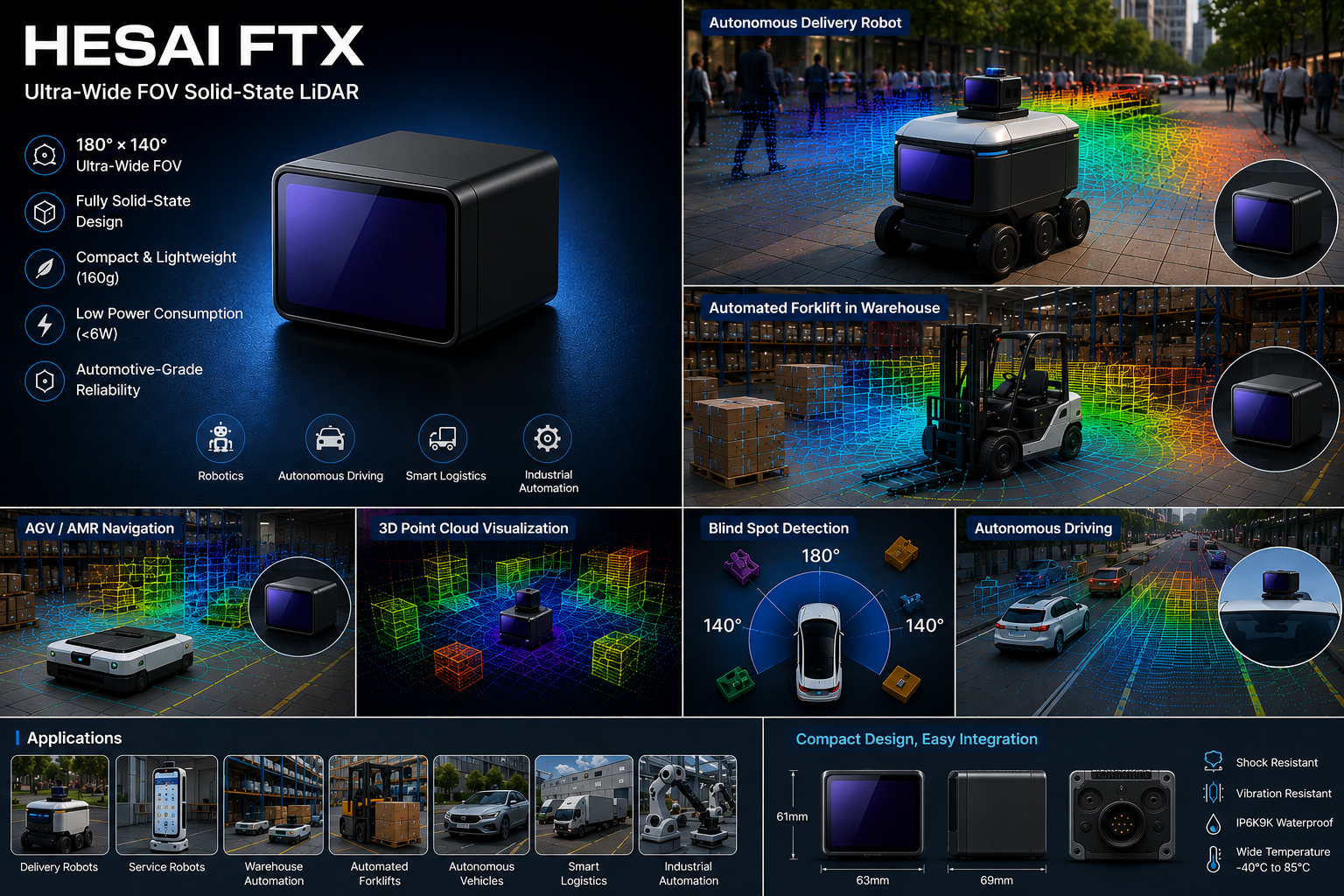
The Growing Demand for High-Performance LiDAR Sensors
The global automation industry is experiencing unprecedented growth. From autonomous delivery robots navigating busy city sidewalks to intelligent forklifts operating in massive warehouses, modern machines are becoming increasingly capable of making decisions without human intervention. Behind this transformation lies one critical technology that often receives less attention than artificial intelligence but plays an equally important role: the LiDAR sensor.
As businesses continue searching for reliable solutions related to buy lidar sensor, robot lidar, 3D lidar sensor, and automotive lidar sensor, the industry is rapidly moving toward more compact, reliable, and intelligent sensing systems. While cameras, radar, and ultrasonic sensors all contribute to machine perception, none provide the precise three-dimensional environmental awareness that LiDAR technology delivers. This is why LiDAR has become one of the most important components in autonomous vehicles, warehouse automation systems, logistics robots, autonomous mobile robots (AMRs), automated guided vehicles (AGVs), delivery robots, and advanced driver assistance systems.
Among the latest innovations in this field, the Hesai FTX has attracted significant attention from robotics engineers, autonomous vehicle developers, and industrial automation companies. Designed as a fully solid-state ultra-wide field-of-view LiDAR sensor, the Hesai FTX addresses one of the most difficult challenges in autonomous navigation: eliminating blind spots while maintaining a compact and highly reliable design. For companies building next-generation autonomous platforms, understanding how the Hesai FTX can improve perception capabilities is becoming increasingly important.
Why Accurate Perception Is More Important Than Ever
Many people assume that artificial intelligence is the most important technology behind autonomous systems. While AI is certainly essential, even the most sophisticated algorithms cannot function properly without accurate environmental data. Autonomous robots and vehicles must constantly understand where they are, identify obstacles, predict movement patterns, and make safe navigation decisions in real time. Every one of these functions depends on perception.
Traditional sensing technologies each have limitations. Cameras provide rich visual information but struggle in poor lighting conditions, direct sunlight, fog, rain, and darkness. Radar performs well in adverse weather but lacks the spatial resolution needed to accurately identify object shapes and positions. Ultrasonic sensors offer basic obstacle detection but have limited range and cannot generate detailed environmental models.
LiDAR solves these challenges by actively measuring distance using laser pulses. Rather than estimating depth from images, a LiDAR sensor directly calculates the position of surrounding objects and generates a highly detailed three-dimensional point cloud. This enables robots and vehicles to perceive their environment with remarkable precision. Whether operating inside a warehouse or navigating urban streets, LiDAR provides the reliable spatial awareness required for safe and autonomous operation.
As industries become increasingly dependent on automation, the need for advanced LiDAR solutions continues to grow. Companies looking to buy LiDAR sensors are no longer focused solely on range; they are seeking solutions that deliver superior field of view, reliability, compact integration, and real-world performance.
Understanding the Hesai FTX: A New Generation of Automotive LiDAR Sensor Technology
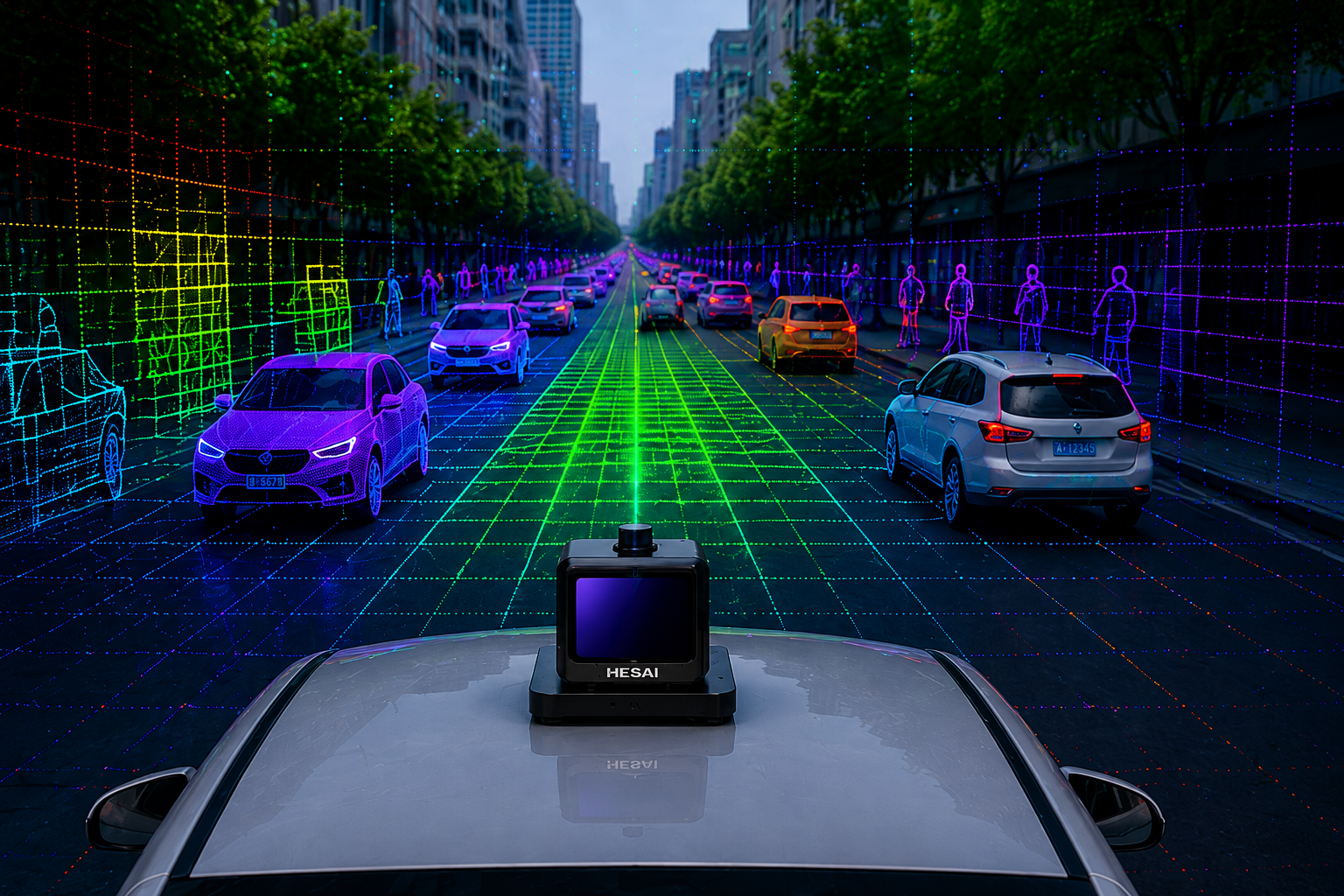
The Hesai FTX represents a significant evolution in LiDAR design philosophy. Unlike traditional mechanical LiDAR systems that rely on moving components to scan the environment, the FTX adopts a fully solid-state architecture. This design improves durability, reduces maintenance requirements, and enables seamless integration into a wide variety of robotic and automotive platforms.
One of the most notable characteristics of the Hesai FTX is its exceptionally wide field of view. Blind spots have long been a challenge for autonomous systems. Robots and vehicles often struggle to detect obstacles located close to their sides, corners, or immediately in front of them. These blind spots can lead to navigation errors, safety risks, and operational inefficiencies.
The Hesai FTX was specifically developed to address this issue. Its ultra-wide perception coverage enables continuous monitoring of areas that traditional sensors frequently miss. For autonomous vehicles, this means enhanced awareness around the vehicle perimeter. For logistics robots and autonomous forklifts, it means improved detection of workers, pallets, shelving systems, and dynamic obstacles within crowded operational environments.
Beyond its field-of-view advantages, the compact form factor of the FTX allows engineers to integrate the sensor into platforms where space is limited. This flexibility is particularly valuable in robotics applications, where sensor placement often determines overall system performance.
The Role of Robot LiDAR in Autonomous Mobile Robots
Autonomous Mobile Robots have become one of the fastest-growing segments of industrial automation. These robots are now widely used in manufacturing facilities, fulfillment centers, hospitals, airports, and commercial buildings. Their primary responsibility is transporting materials and goods efficiently while avoiding collisions and adapting to changing environments.
Robot LiDAR technology serves as the foundation of these capabilities. By continuously generating three-dimensional environmental data, LiDAR enables robots to perform localization, mapping, path planning, and obstacle avoidance simultaneously. Without accurate LiDAR data, autonomous navigation becomes significantly more difficult and less reliable.
The Hesai FTX is particularly well-suited for these applications because of its ability to provide detailed near-field perception. In warehouse environments, obstacles often appear unexpectedly. Workers may cross robot pathways, pallets may be relocated, and equipment may be temporarily positioned in navigation zones. The ability to detect and respond to these changes instantly is critical for maintaining operational efficiency and safety.
As businesses increasingly invest in automation, the demand for robot LiDAR solutions that offer high reliability and simplified integration continues to rise. The Hesai FTX addresses these requirements while providing the performance needed for modern industrial robotics.
How Hesai FTX Enhances Robot Obstacle Avoidance
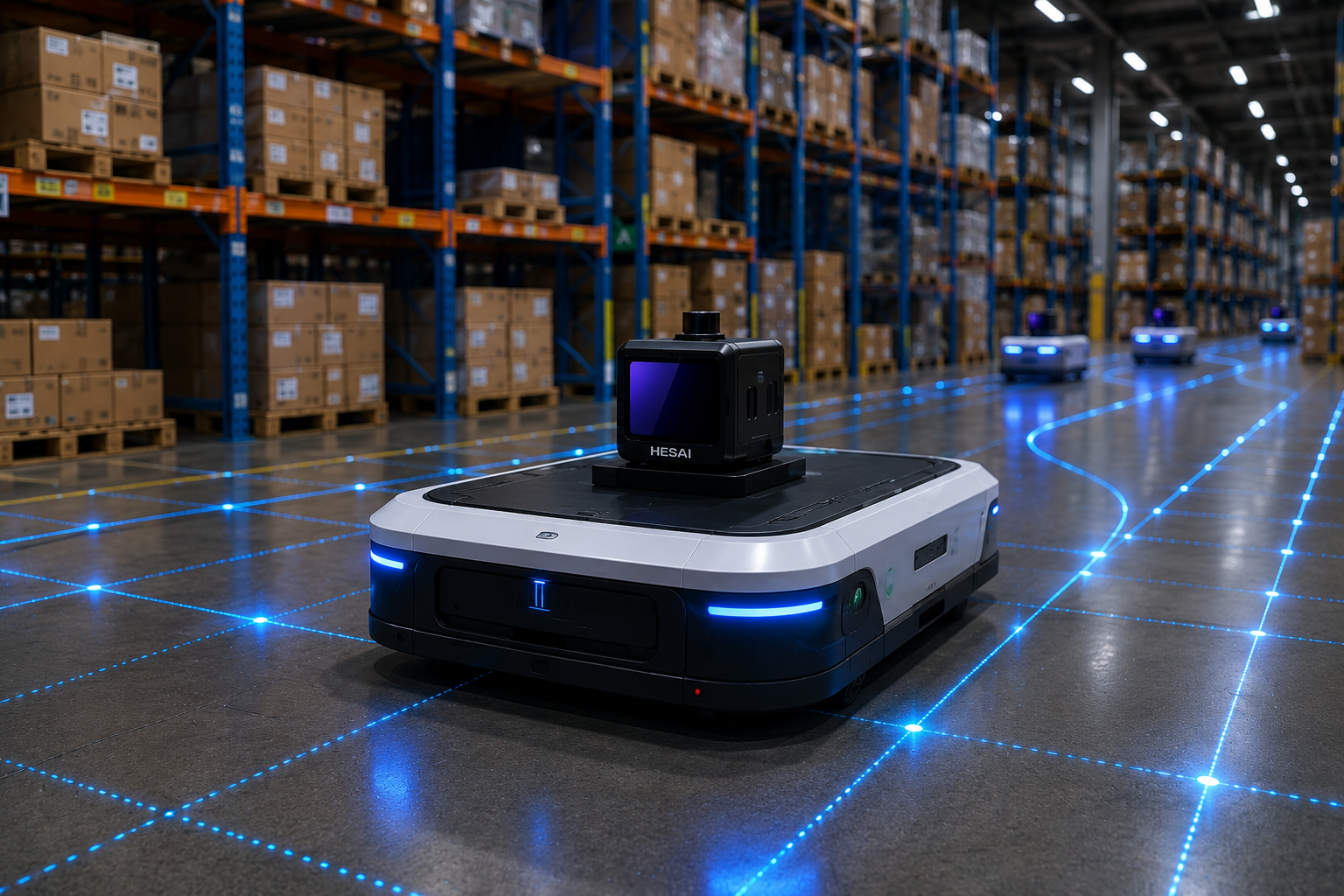
Obstacle avoidance is one of the most important functions in autonomous robotics. A robot’s ability to safely navigate its environment directly impacts productivity, safety, and user confidence. Advanced obstacle avoidance requires more than simply detecting the presence of objects; it requires understanding their precise location, size, shape, and movement.
The Hesai FTX contributes significantly to obstacle avoidance performance by providing comprehensive environmental awareness. Its wide coverage helps eliminate perception gaps that might otherwise prevent a robot from detecting nearby obstacles. This is especially important in environments where people and machines operate together.
In logistics centers, robots often move through narrow aisles lined with inventory racks. Forklifts, workers, and other robots may enter navigation paths unexpectedly. The FTX’s detailed point cloud data allows autonomous systems to identify potential hazards early and adjust their routes accordingly. This proactive approach improves both operational safety and efficiency.
The same benefits apply to service robots operating in public environments. Whether navigating shopping malls, hospitals, airports, or office buildings, robots equipped with advanced LiDAR technology can move more naturally and safely among people.
Autonomous Delivery Robots and Last-Mile Logistics
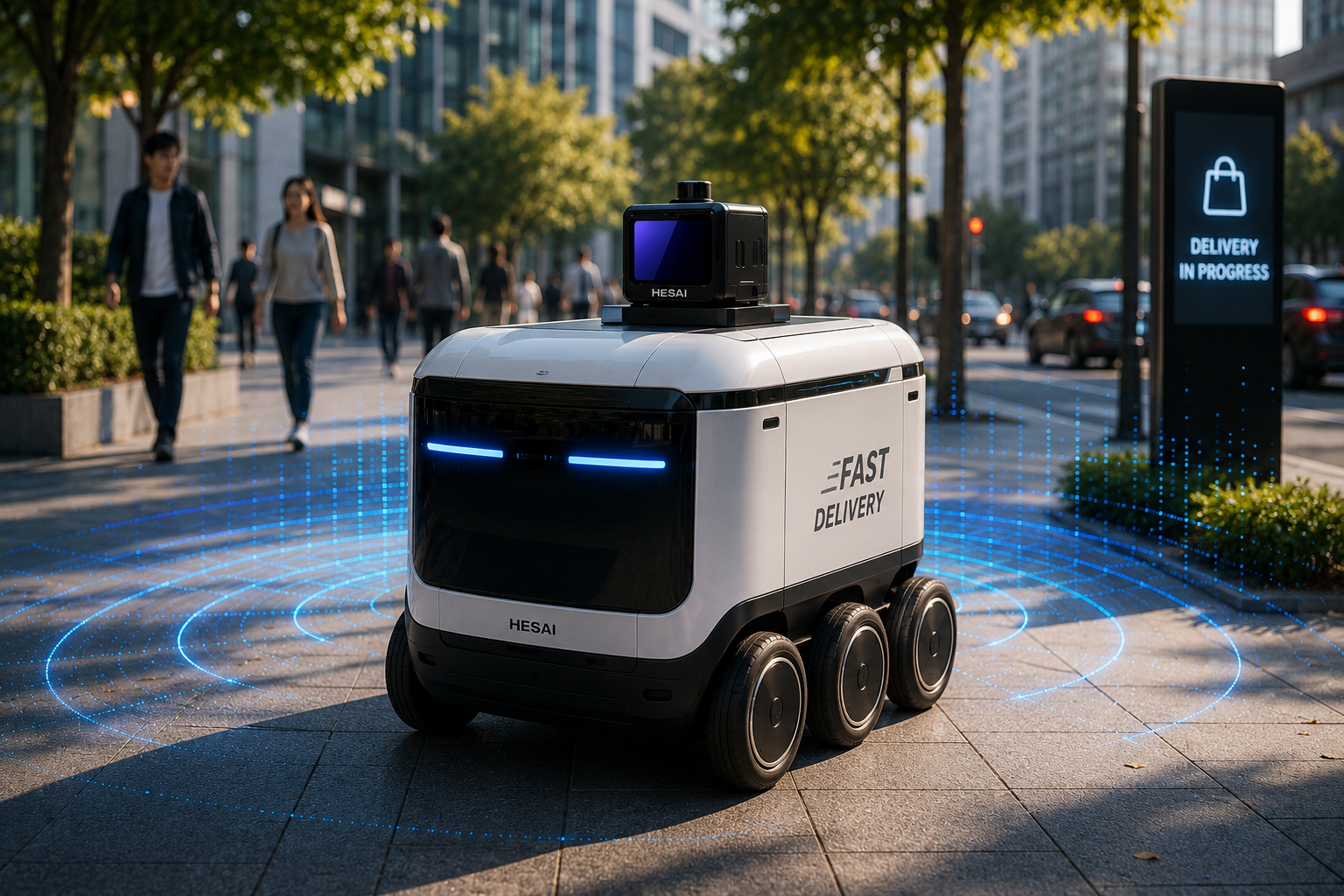
The last-mile delivery market has become one of the most competitive sectors in modern logistics. Companies are under constant pressure to reduce delivery times, lower operating costs, and improve customer satisfaction. Autonomous delivery robots have emerged as a promising solution to these challenges.
Unlike warehouse robots that operate within controlled environments, delivery robots face unpredictable real-world conditions. They must navigate sidewalks, avoid pedestrians, detect bicycles, cross intersections, and adapt to changing terrain. This complexity places enormous demands on perception systems.
The Hesai FTX provides several advantages for delivery robot applications. Its wide field of view enables comprehensive monitoring of surrounding areas, reducing the likelihood of blind-spot-related incidents. Its compact size allows easy integration into small robotic platforms, while its solid-state architecture supports long-term reliability in outdoor deployments.
As urban delivery networks continue expanding, high-performance 3D LiDAR sensors will become increasingly important. Robots capable of safely navigating complex public environments will have a significant competitive advantage, making advanced LiDAR technology a strategic investment for delivery platform developers.
Why Automated Forklifts Need Advanced 3D LiDAR Sensors
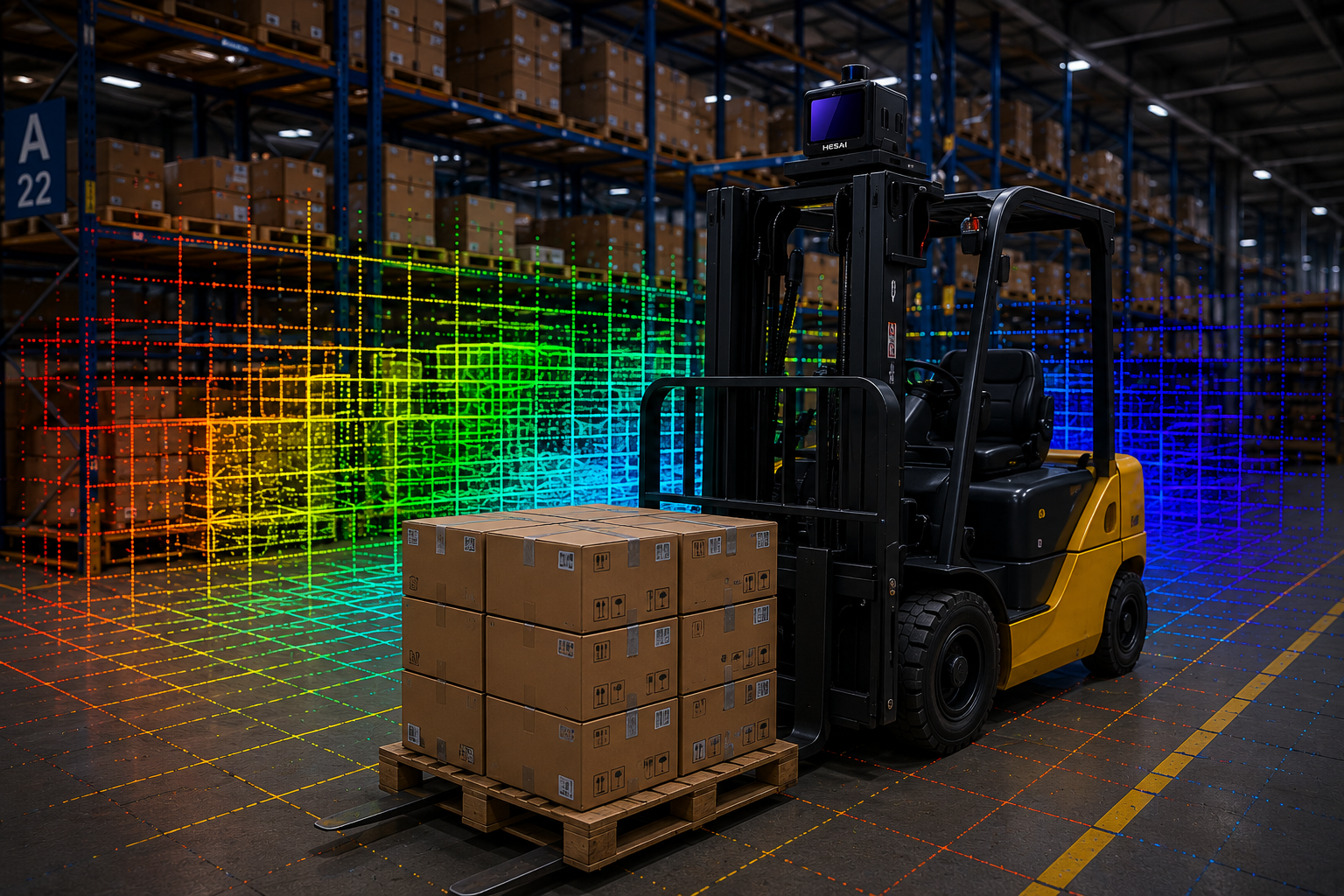
Warehouse automation is undergoing a rapid transformation. Labor shortages, rising operational costs, and increasing e-commerce demand are driving companies toward automated material handling solutions. Autonomous forklifts have become a key component of this transformation.
Operating a forklift autonomously presents unique perception challenges. Unlike passenger vehicles, forklifts frequently maneuver in confined spaces, transport oversized loads, and interact closely with workers. Accurate environmental awareness is essential for preventing accidents and maintaining productivity.
The Hesai FTX provides the near-field perception capabilities necessary for these environments. By monitoring areas surrounding the vehicle, the sensor helps identify obstacles that might otherwise remain undetected. This enhanced awareness improves navigation accuracy and contributes to safer operations.
Furthermore, the detailed environmental data generated by the FTX can support advanced warehouse management systems, enabling more efficient routing, dynamic obstacle avoidance, and optimized material handling workflows.
Automotive LiDAR Sensor Technology and the Future of Autonomous Driving
Although the Hesai FTX offers significant benefits for robotics applications, its roots lie in automotive LiDAR sensor technology. The automotive industry has invested billions of dollars into autonomous driving research, leading to major advancements in perception systems.
Modern autonomous vehicles require an unprecedented level of environmental understanding. They must detect vehicles, pedestrians, cyclists, road markings, and countless other objects under diverse operating conditions. LiDAR has become one of the most trusted technologies for achieving this capability.
The innovations developed for autonomous vehicles are increasingly being adopted by robotics companies. Automotive-grade LiDAR sensors offer the reliability, durability, and performance required for large-scale deployment. By leveraging these technologies, robotics developers can accelerate product development while benefiting from years of automotive engineering advancements.
This convergence between automotive and robotics industries is expected to continue driving innovation across both sectors. As LiDAR technology becomes more affordable and capable, its adoption will expand into new applications and markets.
How to Choose the Right LiDAR Sensor
For engineers and organizations evaluating LiDAR solutions, selecting the right sensor requires careful consideration. While performance specifications are important, successful deployment depends on matching sensor capabilities to application requirements.
Field of view is often one of the most critical factors. Wider coverage reduces blind spots and improves environmental awareness. Detection range determines how far the sensor can perceive objects, while resolution affects the level of detail available for object recognition and mapping.
Reliability is equally important. Sensors deployed in industrial and outdoor environments must withstand vibration, temperature fluctuations, dust, moisture, and continuous operation. Solid-state designs such as the Hesai FTX offer significant advantages in these conditions.
Integration requirements should also be considered. Compact sensors simplify installation and reduce design constraints. Lower power consumption can extend operating time for battery-powered robots and mobile platforms.
Organizations planning to buy LiDAR sensors should evaluate both current and future needs to ensure long-term scalability and return on investment.
Explore More Professional LiDAR Solutions
For robotics developers, autonomous vehicle manufacturers, warehouse automation companies, and industrial integrators seeking advanced perception technology, additional solutions can be explored through the LiDARSeek product portfolio.
By evaluating multiple sensor options, businesses can identify the LiDAR platform that best aligns with their technical requirements and deployment objectives.
Frequently Asked Questions (FAQ)
What is the Hesai FTX?
The Hesai FTX is a fully solid-state automotive-grade LiDAR sensor designed for ultra-wide blind-spot perception.
Is Hesai FTX suitable for autonomous mobile robots?
Yes, it is highly suitable for AMRs, AGVs, delivery robots, and warehouse automation platforms.
What makes a 3D LiDAR sensor different from a camera?
A LiDAR sensor directly measures distance and generates accurate three-dimensional point cloud data.
Why is LiDAR important for robot obstacle avoidance?
LiDAR provides precise environmental awareness that enables robots to detect and avoid obstacles safely.
Can Hesai FTX be used in autonomous vehicles?
Yes, the sensor is designed using automotive-grade technology suitable for advanced autonomous systems.
What industries use robot LiDAR?
Warehousing, logistics, manufacturing, healthcare, agriculture, transportation, and smart city applications.
Is solid-state LiDAR better than mechanical LiDAR?
Solid-state LiDAR generally offers improved reliability, durability, and easier integration.
How does LiDAR improve warehouse automation?
LiDAR enables autonomous navigation, obstacle avoidance, localization, and real-time mapping.
What should I consider before buying a LiDAR sensor?
Field of view, range, resolution, reliability, power consumption, and integration requirements.
Can LiDAR operate in darkness?
Yes, LiDAR performance is largely independent of ambient lighting conditions.
Is LiDAR necessary for autonomous forklifts?
LiDAR significantly enhances safety and navigation accuracy in forklift automation applications.
What is the future of automotive LiDAR sensors?
Automotive LiDAR technology is expected to play a major role in autonomous driving, robotics, and industrial automation.
This channel showcases real-world autonomous driving, robotics, smart logistics, and LiDAR perception demonstrations that complement the applications discussed throughout this article.









